

Previous name: Empire Flodden
Official Number: 180885
Class: WAVE CLASS Replenishment Oiler (modified)
Pennant No: X137 / A242
Laid down: 1 September 1944
Builder: Furness Shipbuilding Company, Haverton Hill
Launched: 19 February 1946
Into Service: 1 April 1946
Out of service: December 1969 - laid up
Fate: 1972 sold for breaking up
Items of historic interest involving this ship: -
Background Data: A need for fast tankers to bring oil into the country had been envisaged early in the Second World War, but by the time the material had been collected and the Yards had space to build them, the need had largely passed and the original design of diesel-engined ships was abandoned. Instead, the standard 12,000t Class being built were given sharper bows and sterns and turbine engines with water tube boilers. In all, twenty one of this type were built and were offered to the Admiralty, who wanted faster tankers for the Pacific Fleet Train. The Admiralty took twenty of them (the final vessel being completed commercially for Oil and Molasses Tankers Ltd, London as BEECHWOOD) and renamed them with the WAVE nomenclature. Performance varied considerably from ship to ship and they underwent various modifications in their rigs for RAS work. The eight best ones were finally given an extensive refit, with extra accommodation added to the Bridge Deck and extra turbo cargo pumps and derricks to make them more satisfactory for Fleet work. Initially expensive to run, they recouped some of their expensive repair bills by earning revenues from charter work after the Korean War. From this Class was evolved the TIDE CLASS oilers.
1 September 1944 laid down
19 February 1946 launched by Furness Shipbuilding Co Ltd, Haverton Hill as Yard Nr: 378 named EMPIRE FLODDEN for the MoWT
April 1946 completed as WAVE BARON and was placed under the initial management of Gow, Harrison & Co Ltd., Glasgow
10 July 1946 sailed the River Tees later passing the Lloyds Signal Station on Flamborough Head sailing south
4 October 1946 sailed Colombo for Bombay and Abadan
11 October 1946 sailed Bombay
16 October 1946 arrived at Abadan
18 October 1946 sailed Abadan for Hong Kong
30 October 1946 passed Singapore
17 November 1946 sailed Hong Kong for Colombo
27 November 1946 sailed Colombo for Abadan
4 December 1946 at Abadan
6 December 1946 sailed Abadan for Malta
16 December 1946 sailed Suez
17 December 1946 sailed Port Said
27 December 1946 sailed Suez
13 January 1947 at Aden
22 January 1947 arrived at Abadan
23 January 1947 sailed Abadan for Port Said
3 February 1947 sailed Port Said for Malta
13 February 1947 sailed Malta for Abadan
16 February 1947 arrived at Port Said
21 February 1947 passed Aden
22 March 1947 at Old Kilpatrick Oil Fuel Depot, River Clyde
29 April 1947 sailed from Aden for Abadan
9 June 1947 arrived Suez
15 June 1947 sailed Abadan for LEFO
15 August 1947 sailed Abadan
21 August 1947 passed Aden
26 August 1947 sailed Port Said for LEFO
27 September 1947 arrived at Port Said from Falmouth
7 October 1947 berthed at Abadan
22 March 1948 Mr W E Burke RFA appointed as Chief Engineer Officer
30 March 1948 Captain Sidney T Dunster OBE RFA appointed as Master
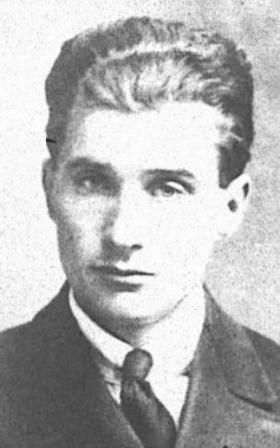
Captain Sidney T Dunster RFA
1 April 1948 transferred to Admiralty Director of Stores management
12 July 1948 passed the Lloyds signal station on the Lizard sailing westwards
7 August 1948 passed the Lloyds signal station on the Lizard sailing westwards
20 August 1948 arrived at Trinidad from Devonport
23 August 1948 sailed from Trinidad for LEFO
5 September 1948 berthed at Portsmouth Harbour
9 September 1948 sailed from Portsmouth Harbour
13 December 1948 passed the Lloyds signal station on the Lizard sailing westwards
7 January 1949 passed the Lloyds signal station on the Lizard sailing eastwards
1 February 1949 arrived at Abadan
6 February 1949 sailed Abadan
6 March 1949 at Brisbane, Queensland, Australia the Customs seized 500 contraband cigarettes
11 April 1949 sailed Abadan for LEFO
17 April 1949 sailed Aden
13 May 1949 alongside at Palmers Yard, River Tyne
22 June 1949 alongside at Palmers Yard, River Tyne
6 July 1949 passed the Lloyds Signal Station on Flamborough Head sailing south bound
29 July 1949 sailed Abadan
12 August 1949 arrived and then sailed from Port Said for LEFO
23 August 1949 arrived at Abadan
29 August 1949 sailed Abadan
25 September 1949 sailed Abadan for Port Said
3 October 1949 sailed Aden for Port Said
21 October 1949 arrived at Suez
28 October 1949 sailed from Port Said
2 November 1949 sailed Malta for Abadan
6 November 1949 sailed Suez
15 November 1949 arrived at Abadan
27 November 1949 sailed from Port Said
2 December 1949 passed Gibraltar sailing west bound
11 December 1949 Captain Frank A Shaw RFA appointed as Master
19 December 1949 sailed Suez
23 December 1949 arrived Aden
29 December 1949 arrived at Abadan
18 January 1950 passed Gibraltar sailing westbound
25 January 1950 Mr D F Gorrie RFA appointed as Chief Engineer Officer
30 January 1950 passed the Lloyds signal station on the Lizard sailing westwards
8 February 1950 arrived at Port Said while on passage from Falmouth to Abadan
18 February 1950 sailed Suez for Abadan
27 February 1950 arrived at Abadan
13 March 1950 sailed Port Said
25 March 1950 sailed Gibraltar for Abadan
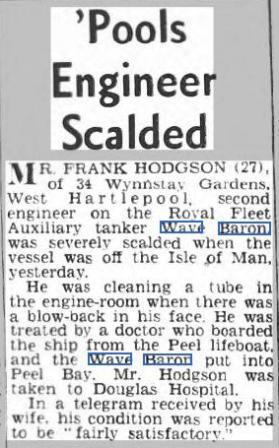
16 July 1950 while at sea off Peel, Isle of Man 2nd Engineer Frank Hodgson RFA was severely scalded on the face, chest and abdomen, arms and legs - he was clearing a tube in the engine room when the accident happended. The ship put into Peel Bay and the Peel life-boat was launched with a doctor on board. After treatment the Officer was placed in a ship's life-boat, which was towed to the quayside by the life-boat. He was admitted to Noble's Hospital, Douglas and detained
17 July 1950 the Hartlepool Northern Dail Mail reported that -
20 September 1950 Captain Frederick L Finch RFA appointed as Master
3 October 1950 sailed Curaçao for Gibraltar
19 December 1950 sailed Abadan for Fremantle, Australia
26 December 1950 arrived at Colombo, Ceylon
5 January 1951 mail from the Cocos-Keeling Islands could not be picked up by the RMS Orion as usual and so was collected by the Wave Baron and posted in Colombo, Ceylon endorsed with the cache 'per Wave Baron'. Such envelopes are collectors items.
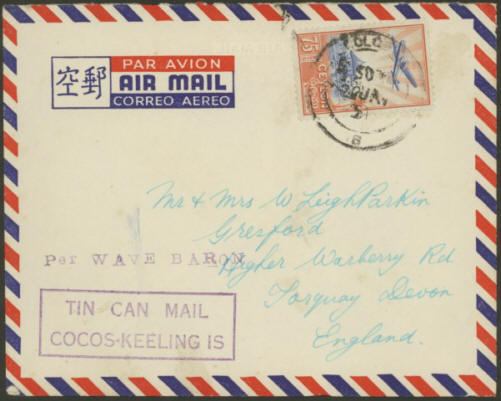
The above cover was sold in Australia in 2006 for $1,900 (Aus)
6 January 1951 berthed at Fremantle, Western Australia
8 January 1951 sailed Fremantle, Western Australia for Colombo, Ceylon
7 February 1951 arrived at Suez
8 February 1951 sailed Port Said
13 February 1951 arrived at Aranci Bay
20 February 1951 arrived at Port Said
21 February 1951 sailed Suez
2 March 1951 at Abadan
4 March 1951 sailed Abadan for Gibraltar
10 March 1951 passed Aden
9 April 1951 sailed Suez
13 May 1951 Captain Edmund H Butterworth RFA appointed as Master
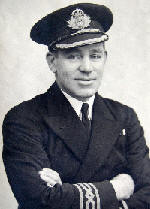
Captain Edmund H Butterworth RFA
22 May 1951 passed Gibraltar sailing east bound
June July 1953 saw service during the Korean War along with 18 other RFA’s
1 June 1951 passed Aden
4 July 1951 arrived the River Tyne for Swan Hunters Yard
7 August 1951 Mr G F Mathews RFA appointed as Chief Engineer Officer
15 October 1951 arrived at Gibraltar
10 November 1951 sailed Gibraltar
13 November 1951 berthed at Malta with a cargo of FFO for the tank farm from Curacao
14 November 1951 instead of discharging her FFO put to sea and RAS'ed with HMS ILLUSTRIOUS 100 miles North West of Malta. The RAS took 8 hours and the Wave Baron returned to Dolphin Wharf, Malta
20 November 1951 passed Gibraltar sailing west bound
1952 Awarded Battle Honour - Korea 1952
28 March 1952 sailed Singapore for Mena Al Ahmadi
2 May 1952 at Swansea (see note (2) below)
20 May 1952 arrived at Aruba
6 June 1952 sailed Gibraltar
10 July 1952 sailed Colombo, Ceylon for Mena Al Ahmadi
12 August 1952 at Greenock (see note (2) below)
9 September 1952 arrived at Aruba
29 September 1952 arrived at Hebburn on Tyne from Gibraltar
30 December 1952 berthed at Palmers Hebburn for refit or repair together with RFA WAVE VICTOR
1 April 1953 Captain Herbert A Shacklock RFA appointed as Master
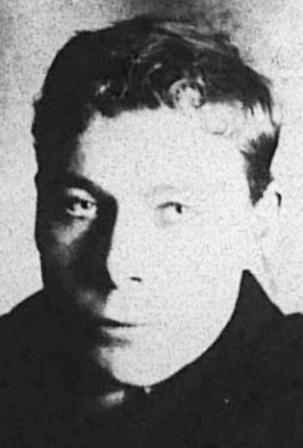
Captain Herbert A Shacklock RFA
18 April 1953 at Palmers, Hebburn on Tyne in refit together with RFA WAVE VICTOR
20 May 1953 deployed in Naval Exercises with 38 other ships and 80 aircraft in the English Channel. Some of the ships involved were HMS's BOXER and DUCHESS, the French ships FS's Montcalm and Gloire and the French submarines Laubie and Sirene together with the Dutch warship HMNLS Soemba
2 July 1953 arrive Trinidad
9 July 1953 sailed Trinidad for Gibraltar
20 July 1953 arrived at Gibraltar from Trinidad
8 August 1953 berthed at Palmers, Hebburn from Portsmouth
25 August 1953 sailed Palmers, Hebburn for Swansea
11 November 1953 sailed Trinidad for Cristobal
15 November 1953 sailed Balboa
10 December 1953 RAS'ed with HMNZS BLACK PRINCE and HMS SHEFFIELD in the Pacific
11 December 1953 the Sydney Sun newspaper reported ...
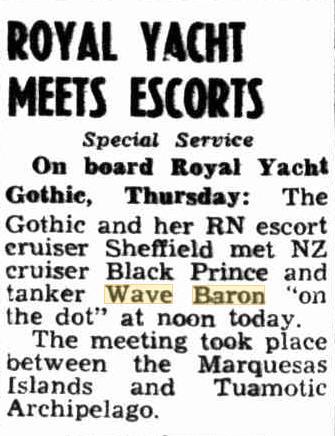
12 December 1953 the Melbourne Argus newspaper reported ...
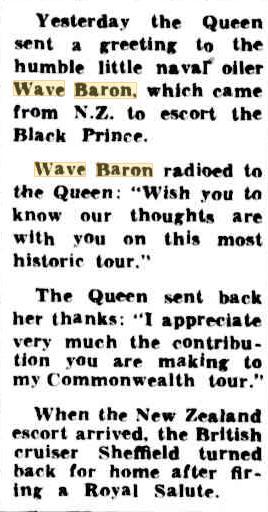
23 December 1953 arrived Chowder Bay, Mosman, NSW Australia
26 December 1953 sailed Chowder Bay, Mosman, NSW Australia for Trincomalee, Ceylon
10 January 1954 arrived Trincomalee, Ceylon
15 February 1954 sailed Hong Kong for Bahrein
3 March 1954 sailed Bahrein for Malta
13 March 1954 arrived at Port Said
18 March 1954 sailed Malta for Naples
22 March 1954 sailed Naples for Gibraltar
30 March 1954 sailed Gibraltar
19 April 1954 berthed at Smiths, River Tyne from Rosyth
26 April 1954 Mr J Wilson RFA appointed as Chief Engineer Officer
25 May 1954 sailed the River Tyne for Sheerness. The same day the Shields Daily News reported ...
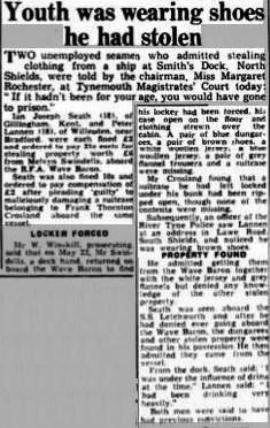
27 July 1954 was in refit at the Greenock Dockyard Company, Port Glasgow
31 August 1954 Fireman James Black discharged dead from a fractured skull. The ship was alongside at Point a Pierre, Trinidad. He was buried in an unmarked grave in Paradise Cemetery, San Fernando, Trinidad
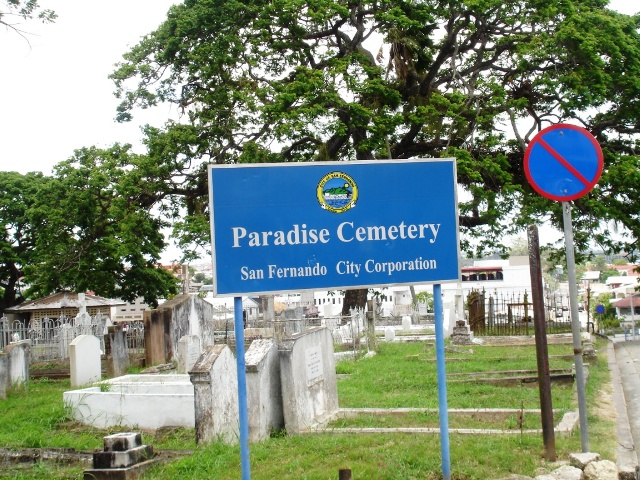
Paradise Cemetery, San Fernando - image taken by Jerome Lee, RFHAS member
15 September 1954 berthed at Rosyth from Trinidad. Police Officers boarded the ship from both the Fife Constabulary and the Admiralty Constabulary
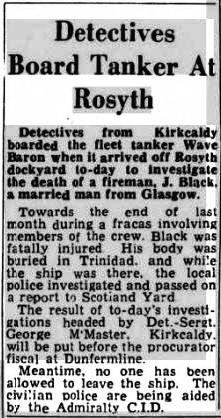
Press report from the Aberdeen Evening Press of 15 September 1954
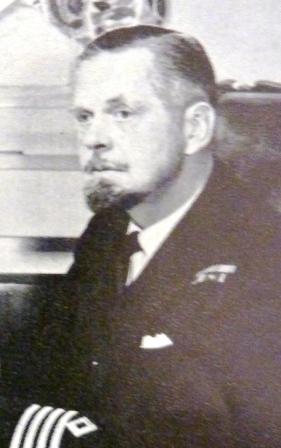
16 September 1954 Captain Joe Dines RD RFA (Commander RNR) appointed as Master
1 October 1954 passed Gibraltar sailing east bound
13 October 1954 arrived at Aden
10 November 1954 arrived at Port Said
26 November 1954 arrived at Bahrein
29 November 1954 sailed Bahrein for Port Said
4 December 1954 passed Aden
8 December 1954 arrived at Suez
11 December 1954 sailed Port Said for Bahrein
16 December 1954 sailed Aden for Bahrein
20 December 1954 arrived at Bahrein
3 January 1955 sailed Suez for Aden
7 January 1955 arrived at Aden
10 January 1955 sailed Aden for the Persian Gulf
15 January 1955 arrived at Bahrein
27 June 1955 arrived at Aruba
29 Jult 1955 arrived at Trinidad
6 April 1956 Mr William J Brown OBE DSC RFA appointed as Chief Engineer Officer
20 July 1955 passed Gibraltar sailing west bound for Trinidad
1 November 1955 arrived at Gibraltar
4 November 1955 berthed at Malta
9 December 1955 passed Gibraltar sailing west bound
26 April 1956 Mr F Barclay RFA appointed as Chief Engineer Officer
25 May 1956 sailed Bermuda
17 August 1956 arrived Falmouth from Devonport
27 September 1956 sailed Malta
13 October 1956 arrived at Gibraltar
1 January 1957 passed Dover west bound
28 May 1957 at Palmers, Jarrow on Tyne in refit
supported Operation Grapple- the British H-bomb tests at Christmas Island in the Pacific Ocean - along with 16 other RFA’s

22 August 1957 berthed at the Naval Yard, River Tyne
16 October 1957 Captain G B A Livesay RFA appointed as Master
29 October 1957 in refit at Palmers, Jarrow on Tyne
16 November 1957 deployed on Operation Grapple and carried 194 tons 4cwt of cargo to Christmas Island
23 May 1958 sailed Port Said
23 July 1958 sailed from Curaçao for LEFO
4 August 1958 arrived at Portsmouth
8 September 1958 arrived Greenock
13 September 1958 deployed in support of RN units off Iceland during 1st Cod War until 29 September 1958
4 October 1958 arrived at the River Clyde at the Admiralty Oil Fuel Depot at Ol Kilpatrick
10 October 1958 Mr P K Coles RFA appointed as Chief Engineer Officer
20 November 1958 deployed in support of RN units off Iceland during 1st Cod War until 27 November 1958
18 December 1958 sailed the River Tyne for Rosyth
1 January 1959 at Rosyth
20 January 1959 deployed in support of RN units off Iceland during 1st Cod War until 6 February 1959
11 February 1959 at Rosyth
9 March 1959 deployed in support of RN units off Iceland during 1st Cod War until the end of the month
31 March 1959 at Rosyth
25 April 1959 deployed in support of RN units off Iceland during 1st Cod War until the middle of May 1959
15 May 1959 at Leith Docks
24 June 1959 deployed in support of RN units off Iceland during 1st Cod War until 11 July 1959
22 July 1959 at Plymouth
27 July 1959 Mr Harry G May RFA appointed as Chief Engineer Officer
1 November 1959 deployed in support of RN units off Iceland during 1st Cod War until 25 November 1959
22 December 1959 deployed in support of RN units off Iceland during 1st Cod War until 6 January 1960
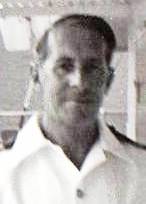
18 January 1960 Captain Ronald V Warren DSC RFA appointed as Master
9 February 1960 deployed in support of RN units off Iceland during 1st Cod War until 22 February 1960
11 March 1960 in collision with the tug ENERGY
7 May 1960 Mr V J Cooney RFA appointed as Chief Engineer Officer
7 July 1960 arrived at Grand Harbour, Malta from Gibraltar
16 July 1960 sailed Malta to sea for exercises
20 July 1960 sailed Malta to Messina
27 July 1960 arrived at Grand Harbour, Malta
29 July 1960 sailed Malta for Gibraltar
9 August 1960 sailed Malta
September 1960 engaged in Exercise Sword Thrust within the Arctic Circle with HMS's HERMES, ARK ROYAL, GAMBIA and four destroyeres
8 December 1960 Captain Basil V Dobbie RFA appointed as Master
10 January 1961 deployed in support of RN units off Iceland during 1st Cod War until 22 January 1961
24 January 1961 at Invergordon
17 April 1961 sailed Malta for exercises with RN and other Nato Allies together with RFA TIDE AUSTRAL, RFA BROWN RANGER, RFA SEA SALVOUR and RFA FORT DUQUESNE
5 June 1961 off Iceland RASed (stern) with HMS DUNCAN - 90 tons of FFO supplied
9 June 1961 off Iceland RASed with HMS DUNCAN
11 June 1961 off Iceland RASed with HMS DUNCAN - 50 tons of FFO supplied
15 June 1961 off Iceland Surgeon Lieutenant from HMS DUNCAN transferred to undertake surgery on the Ships Writer the ship RASed with HMS DUNCAN
19 June 1961 off Iceland RASed with HMS DUNCAN
30 August 1961 at Devonport
7 March 1962 the Newcastle Evening Chronicle reported that ...
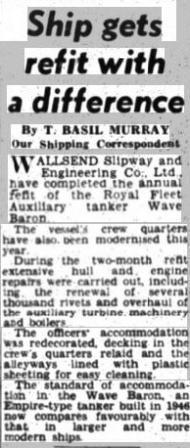
28 May 1962 sailed Malta with RFA FORT DUQUESNE and RFA FORT ROSALIE (1) together with HMS BLAKE and other RN units to visit Barcelona
1 June 1962 to 7 June 1962 berthed at Barcelona
9 June 1962 to 13 June 1962 berthed at Palma, Majorca
14 June 1962 at Gibraltar where CID Officers from New Scotland Yard boarded to take passage to HMS BELFAST which was in the Atlantic returning home from Trinidad to investigate allegations of drug smuggling on the cruiser. Some $3,000,000 worth of heroin and opium had been discovered onboard after the ship had sailed from Honolulu in May 1962
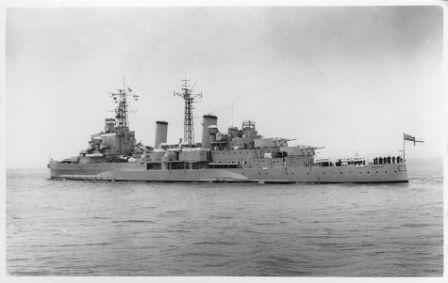
HMS BELFAST
8 August 1962 in collision with the tanker THORNESS
4 September 1962 at Bermuda Deck Storekeeper Donald William Williamson discharged dead - having suffered a fractured skull in a fall. He was buried at St. Paul's Church, Paget, Bermuda
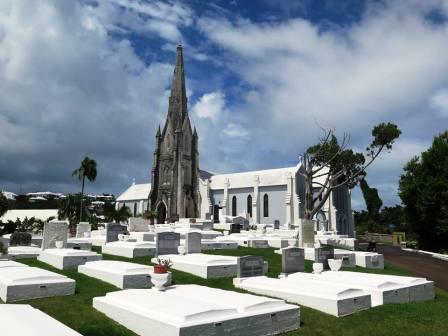
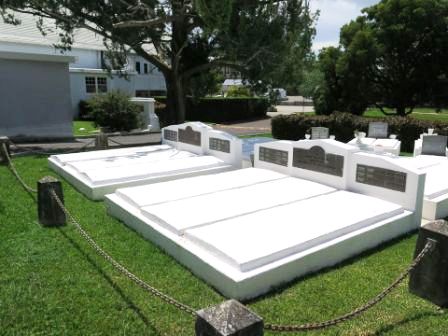
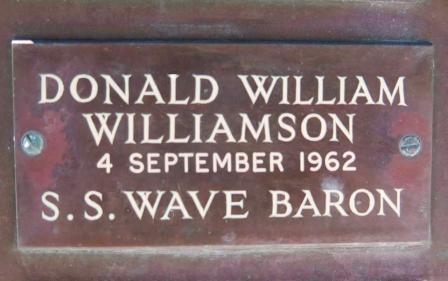
Above three images kindly taken, donated & © Martin Buckley
8 September 1962 the Bermuda Recorder reported that -
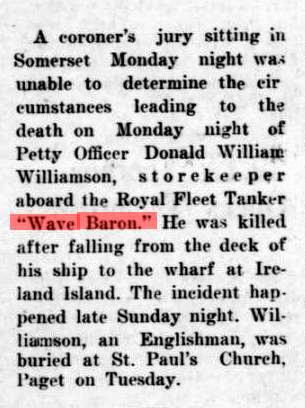
16 October 1962 Captain David P Kindersley RFA appointed as Master
24 January 1963 Captain Alistair C Gibson RFA appointed as Master
1 February 1963 Mr J B Jackson RFA appointed as Chief Engineer Officer
30 October 1963 sailed Malta for exercises - in collision with HMT SEA GIANT at No: 3 Buoy, Grand Harbour
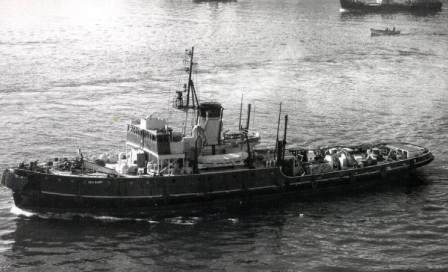
HMT Sea Giant
12 November 1963 sailed Malta for the UK
20 January 1964 Commodore (E) J A MacPherson RFA appointed as Chief Engineer Officer
20 April 1964 in collision with HMT SEA GIANT at Grand Harbour
24 June 1964 sailed Malta for Argostoli
8 October 1964 in collision with HMS PORTCULLIS at Grand Harbour, Malta
17 November 1964 in the Indian Ocean off Karachi RAS'ed HMS MOWHAWK
19 December 1964 Mr Ronald C Putt MID RFA appointed as Chief Engineer Officer
31 December 1964 Captain E D J Evans RFA appointed as Master
20 January 1965 Captain Charles E C Phipps RFA appointed as Master
18 January 1965 at Newcastle on Tyne
23 January 1965 sailed the River Tyne for Portland arriving 25 January 1965
1 February 1965 sailed Portland on exercises returning to Portland on 8 February 1965
10 February 1965 sailed Portland on exercises arriving the River Clyde the next day
15 February 1965 sailed the River Clyde on exercises arriving at Lough Foyle on 17 February 1965
19 February 1965 sailed Lough Foyle for Trinidad arriving 3 March 1964
5 March 1965 sailed Trinidad for the Falkland Islands arriving 24 March 1965
30 March 1965 sailed the Falkland Islands for Trinidad arriving 14 April 1965
16 April 1965 sailed Trinidad for Bermuda arriving 20 April 1965
22 April 1965 sailed Bermuda for Trinidad arriving 26 April 1965
27 April 1965 sailed Trinidad for Freetown arriving 6 May 1965
8 May 1965 sailed Freetown for Malta arriving 17 May 1965
8 June 1965 sailed Malta for RASing returning 17 May 1965
29 June 1965 in collision with the ferry Cleddau Queen at Milford Haven
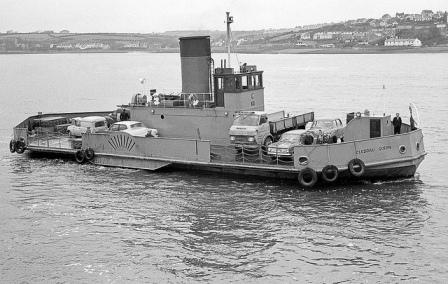
Ferry Cleddau Queen
11 September 1965 at Plymouth
16 October 1965 at Bowling
20 October 1965 Mr L Cochrane RFA appointed as Chief Engineer Officer
1 February 1966 sailed Malta for the UK
12 April 1966 in collision with the Coaling Jetty at Portland and Mr K O'Neill RFA appointed as Chief Engineer Officer
21 April 1966 at Chatham Dockyard
5 May 1966 at Greenock
9 August 1966 berthed at Simonstown Dockyard, South Africa
5 October 1966 Captain Archibald Murchie RFA appointed as Master
15 December 1966 Mr D G P Wells RFA appointed as Chief Engineer Officer
28 January 1967 Captain David P Kindersley RFA appointed as Master
10 June 1967 along with RFA LYNESS RAS'ed with HMS VICTORIOUS
27 to 31 January 1968 supported HM ships in abortive search for the missing Israeli submarine Dakar
25 March 1968 Captain R J Lockwood RFA appointed as Master
19 April 1968 Mr V J Cooney RFA appointed as Chief Engineer Officer
10 January 1969 berthed at Simonstown Dockyard, South Africa
15 August 1969 berthed at Simonstown Dockyard, South Africa
28 October 1969 arrived at Devonport for the last time
December 1969 destored and laid up Devonport
5 February 1972 placed on disposal list and offered for sale 'as lying' at Devonport Dockyard in the Times of this day
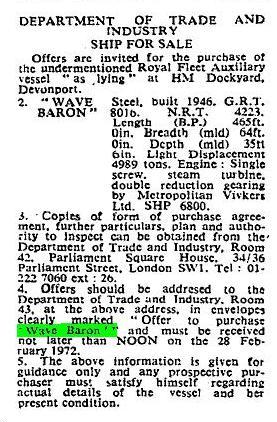
March 1972 purchased for £ 6,500 by N.V. Intershitra, a Dutch Trading House then again resold.
23 April 1972 arrived at Bilbao in tow for breaking up by Revalorizacion de Materials SA
Notes:
- The Israeli submarine DAKAR was originally HMS TOTEM and was one of 3 “T” Class acquired by Israel. The others were HMS TRUNCHEON which was handed over to the Israeli Navy at Gosport on 9 January 1968 renamed DOLPHIN and HMS TURPIN renamed LEVIATHAN in 1965..They underwent a major refit and DAKAR commissioned into the Israeli Navy on 10 November 1967. She was on her way from the U.K. to Haifa when she was lost on 26 January 1968.. Although a full-scale “Subsmash” routine was carried out, no trace of the DAKAR or her crew of 69 was found, until February 1969 when a distress buoy from the lost submarine was found by an Arab on the beach about 4 miles north of Khan Yunis in the Gaza Strip. The wreck of the submarine was found on 28 May 1999 at a depth of 2,950 metres. The conning tower was salvaged in October 2000 and underwent a process of preservation before being placed near the harbour that was her last intended destination. The conning tower was dedicated at the Israel Naval Museum in Haifa on 31 May 2003
- From the Discharge Book of Fred W J Raddon