

Ships starting with M
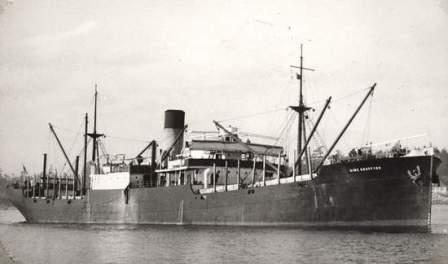
True Name HMS King Gruffydd
Previous name: AMBATIELOS War Trooper
Official Number: 167645
Class: Special Service Freighter - Q ship
Pennant No: X28 F116
Laid down:
Builder: HK & Whampoa, Kowloon, Hong Kong
Launched: 11 October 1919
Into Service: 1939
Out of service: 17 March 1943
Fate: Torpedoed and Sunk
Items of historic interest involving this ship: -
Background Data:
In 1939 Winston Churchill gave authority for a number of merchantmen to be requisitioned for service as Q-ships, although for security purposes they were referred to as Special Service Freighters. A fleet of nine small mainly coal-burning vessels were acquired , six for deep-sea work and three for coastal work. All were commissioned as HM ships under their original names but were given RFA cover names and on entering harbour and while in harbour they wore the Blue Ensign, behaved as RFA’s and adopted the RFA commercial practices. None of them was really suitable for their intended roles and met with a complete lack of success. Their Q-ship service officially ended on 2 March 1941
11 October 1919 Launched by Hong Kong & Whampoa Dock Co Ltd, Hong Kong as Yard Nr: 564 named WAR TROOPER for the Shipping Controller and was purchased by Nicolas E. Ambatielos, Argostoli while fitting out
December 1919 completed as AMBATIELOS for the above owners
28 January 1920 sailed Colombo for Rotterdam
13 February 1920 sailed Port Said
10 May 1920 sailed Queenstown, Ireland for Hampton Roads
22 October 1920 arrived at Philadelphia from Cardiff
17 July 1921 sailed Port Said for Marseilles
15 January 1923 the Lincolnshire Echo reported -

June 1923 auctioned by order of the Admiralty Marshall following a dispute with the owners who had failed to take delivery; purchased by King Line Ltd (Dodd, Thomson & Co Ltd, Managers) London and renamed KING GRUFFYDD
2 October 1923 arrived at Philadelphia from Fowey
5 May 1924 arrived at Portland, Dorset from Bahia Blanca
23 September 1924 sailed Callao for San Francisco
1 December 1924 sailed Colon
6 May 1925 sailed Durban, South Africa for Australia
19 June 1925 arrived at Walaroo from Port Thevenard
29 June 1925 arrived at Albany from Walaroo1 July 1925 after loading bunkers sailed Albany for Durban, South AFrica
3 June 1927 arrived Port Piries, South Australia to load zince concentrates
15 June 1927 sailed Port Pirie, South Australia for Avonmouth
18 July 1927 arrived Port Natal
20 July 1927 sailed Port Natal
13 August 1927 sailed St Vincent, Cape Verde Islands
28 August 1927 arrived at Avonmouth
10 September 1927 sailed Avonmouth
17 September 1928 at Rosario, Argentina Able Seaman George Browning discharged dead from drowning
6 May 1929 on board 1st Mate Thomas L Simpson discharged dead - committed suicide by shooting

1st Mate Thomas L Simpson
20 June 1930 sailed Las Palmas for Falmouth
2 July 1930 berthed at London from Bunbury, Australia with four stowaways as passengers. Captain Leonard W Litton was Master
8 July 1930 arrived at Hull
1930's laid up at Liverpool during the Depression
16 February 1931 passed the Lloyds Signal Station on the Lizard sailing west bound
25 February 1932 sailed Las Palmas having loaded bunkers
24 April 1932 sailed Bahai Blanca for Maderia
1 June 1932 passed Southend
2 July 1932 ship under repair at T W Greenwell & Co Ltd., South Dock, Sunderland
25 April 1933 sailed Falmouth passing the Lloyds Signal Station on the Lizard sailing west
25 May 1933 at Liverpool
16 November 1933 sailed from Barry Roads but had to put back when the main stop valve stop chest burst
21 February 1934 sailed Port Natal for Las Palmas
19 March 1934 cleared Las Palmas for Falmouth
8 September 1934 arrived at Melbourne
15 September 1934 sailed Port Piries, South Australia for Melbourne and UK ports
4 December 1934 at Brunswick Dock, Liverpool Fireman and Trimmer Jacob Lutis discharged dead after he disappeared

Fireman & Trimmer Jacob Lutis
19 December 1934 sailed Barry for Tampico
8 March 1935 berthed at Sydney, NSW
22 March 1935 berthed at Adelaide
9 May 1935 sailed Port Pirie, South Australia for Shanghai via Port Lincoln
18 August 1935 ship signalled her owners that the port bunkers were on fire but the Master considered he could secure control. The ship was 250 miles NE Singapore
20 August 1935 the ship being on fire was reported in the Western Daily Press -

21 August 1935 the ship further reported that the fire was not extinguished but was being subdued. The ship was 215 miles from Sabang, Sumatra
22 August 1935 arrived at Sabang. Hull not damaged by the fire
23 August 1935 sailed from Sabang for Aden
7 October 1935 sailed Tampico for Australasian ports
18 November 1936 berthed at Los Angeles
19 November 1936 sailed Los Angeles
14 April 1937 arrived Kingston, Jamaica from Pacific ports
10 June 1937 arrived at New York
19 June 1937 sailed New York
29 July 1937 sailed Balboa
2 October 1937 at Victoria, British Columbia
5 October 1937 at Port Alberni
24 November 1937 at Immingham
2 December 1937 arrived at Hull
9 December 1937 arrived at Barry in ballast
17 December 1937 radioed she was 25 nmiles SW of Lands End for Port Natal
21 February 1938 at Port Sudan
29 March 1938 at Port Natal
29 April 1938 sailed St Lucia
19 June 1938 arrived at Rotterdam
24 June 1938 arrived River Tyne
17 May 1939 sailed Falmouth and passed the Lloyds Signal Station on the Lizard sailing west
19 May 1939 radioed she was 500 miles SW of Valentia
7 June 1939 sailed Christobal for Vancouver
30 June 1939 arrived Vancouver
4 July 1939 sailed New Westminster
11 July 1939 sailed Port Alberni
31 July 1939 arrived at Balboa, Panama when on passage from Vancouver to Hull
14 September 1939 requisitioned by the Admiralty for conversion into a Special Service Freighter by Chatham Dockyard
21 October 1939 commissioned as HMS KING GRUFFYDD
17 November 1939 conversion completed. Cover name RFA MAUNDER. Complement 99 under command of Commander Edward M Loly R.N. Armed with 7 x single 4-inch guns, 4 x Lewis machine guns, 4 x single 21-inch torpedo tubes and 100 x depth charges
26 November 1939 sailed Sheerness for work-up in the Solent area
2 December 1939 on completion of work-up sailed from the Solent.
19 December 1939 arrived Gibraltar
1 January 1940 sailed Gibraltar
11 January 1940 arrived in the Solent area and to Southampton arriving 14 January 1940
3 March 1940 sailed Southampton arriving Gibraltar 26 March 1940
5 April 1940 sailed Gibraltar returning 16 April 1940
17 April 1940 sailed Gibraltar to Freetown arrviing 7 May 1940
12 May 1940 sailed Freetown to Simonstown Dockyard arrving 7 June 1940
15 June 1940 sailed Simonstown Dockyard to Durban arrving 20 June 1940
21 June 1940 sailed Durban to Mauritius 15 July 1940
22 July 1940 sailed Mauritius returning 14 August 1940
20 August 1940 sailed Mauritius to Durban arrving 30 August 1940
4 September 1940 sailed Durban returning 24 September 1940
2 October 1940 sailed Durban returning 23 October 1940
26 October 1940 entered dry dock at Durban
1 November 1940 undocked from dry dock in Durban
22 November 1940 sailed Durban to Colombo arriving 11 December 1940
16 December 1940 sailed Colombo returning 6 January 1940
16 January 1940 sailed Colombo returning 6 January 1940
16 January 1940 sailed Colombo to Durban arriving 9 February 1940
12 March 1941 openly hoisted the White Ensign for service as an Armed Merchant Cruiser with Pennant Nr: F 116 then served in the East Indies
1 May 1941 East Indies Service ended
13 May 1941 with HMIS CLIVE took part in Operation Chapter - Cape Guardafui Channel the most easterly point of Africa. In order to facilitate the passage in this channel it was decided to undertake a combind operation to captrure and operate the Cape Guardafui lighthouse and to clear the north east corner of Italian Somaliland. This was done and the Italian troops there had immediately surrendered
20 May 1941 sailed with 23 officers and 96 prisoners of war and landed them at Aden on 24 May 1941
4 June 1941 joined the Red Sea Force
22 June 1941 sailed Aden
5 August 1941 berthed at Simontown Dockyard
14 August 1941 sailed from Simonstown Dockyard
1 September 1941 at Port Elizabeth reconditioning for return to commercial service
22 September 1941 transferred to MoWT control as KING GRUFFYDD
8 January 1942 sailed Port Elizabeth independently to Cape Town arriving 12 January 1942
13 March 1942 sailed Cape Town independently to Rio de Janeiro arriving 28 March 1942
5 April 1942 sailed Rio de Janeiro independently to Freetown arriving 18 April 1942
4 May 1942 sailed Freetown in convoy SL109 to Loch Ewe arriving 28 May 1942
31 May 1942 sailed Loch Ewe in convoy WN290 to Kirkwall arriving the next day
3 June 1942 sailed Kirkwall in convoy WN291 to Methil arriving the next day
6 June 1942 sailed Methil in convoy FS822 to Hull arriving the next day
15 July 1942 sailed Hull in convoy FN761 to Methil arriving 17 July 1942
17 July 1942 sailed Methil in convoy EN112 to Loch Ewe arriving 19 July 1942
19 July 1942 sailed Loch Ewe and joined convoy ON114 until it dispersed on 4 August 1942. Then sailed independently to New York arriving the next day
6 August 1942 sailed New York independently to Norfolk arriving 8 August 1942
23 August 1942 sailed Norfolk independently to New York arriving 26 August 1942
29 August 1942 sailed New York for Cape Cod Bay
2 September 1942 at Cape Cod Bay joined convoy BX36 to Halifax arriving on 4 September 1942
5 September 1942 sailed Halifax in convoy SC99 to the Clyde arriving 20 September 1942
4 October 1942 sailed the Clyde in convoy ON136 to New York arriving on 26 October 1942
28 October 1942 sailed New York independently to Philadelphia arriving the same day
15 November 1942 sailed Philadelphia independently to New York arriving the next day
25 November 1942 sailed New York in convoy SC111 but returned to Sydney, Cape Breton Island with collision damage on 3 December 1942
10 December 1942 sailed Sydney, Cape Breton Island in convoy SH68 to Halifax arriving 13 December 1942
16 December 1942 sailed Halifax in convoy SC113 to Liverpool arriving 2 January 1943
24 January 1943 sailed Liverpool in convoy ON163 to New York arriving 17 February 1943
5 March 1943 sailed New York in convoy SC122 to the UK
17 March 1943 while en route in convoy SC 122 from New York to Loch Ewe she was torpedoed by U338 (Kapitänleutnant Manfred Kinzel) and sunk with 24 of the crew being killed at 51°55N 32°41W. They are remembered with pride on the Tower Hill Memorial. The ship was carrying a cargo of steel, tobacco and explosives. The German U-Boat arm referred to attack on convoy SC122 and HX 229 as "Geleitzug Nummer 19". Of the fifty ships in convoy SC122 nine were sunk with a total weight of 53,094 tons. Those rescued from King Gruffydd were taken on board the Convoy Rescue Ship Zamalek. With a total of 165 survivors rescued from ships in this convoy the Zamalek sailed under escort directly to Gourock where they were landed on 22 March 1943.
Notes:
- This ship was a Q ship - a commissioned Naval vessel which would assume its RFA name on entering harbour to hide its genuine identity. She never served as an RFA.
Official Number
Class: Naval Armaments Vessel
Pennant No:
Laid down:
Builder: Philip & Son Ltd, Dartmouth
Launched:
Into Service: 25 June 1946
Out of service:
Fate: 1973 Broken up at Briton Ferry
Items of historic interest involving this ship: -
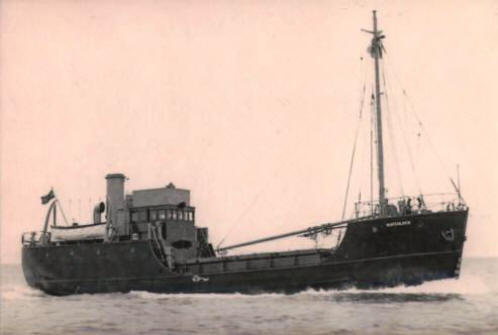
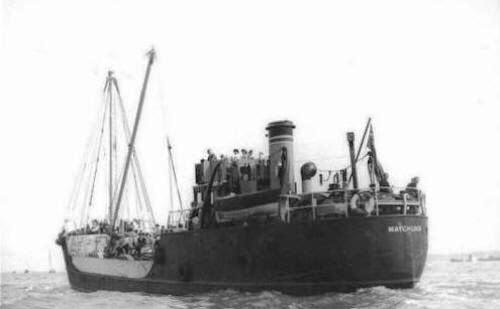
Background Information: - One of a group of coasters which were not normally classed as RFA’s They are included here as the ancestors of the more modern ammunition ships. They were ordered by the Admiralty just prior to, during or just after WW2
Career Data:
July 1944 ordered at a contract price of £27,705
1946 launched by Philip & Son Ltd, Dartmouth as Yard Nr 1129 named MATCHLOCK
25 June 1946 completed at a cost of £27,705
8 February 1948 berthed at Crombie sailing the same day
12 June 1948 berthed at Crombie
2 July 1950 passed the Lloyds Signal Station on the Lizard sailing east
19 July 1954 sailed Dover
1973 laid up at Pembroke Dock
1973 purchased by T.W. Ward Ltd for demolition at Briton Ferry
Notes:
- Based at Fort WIlliam and at Chatham between 1949 and 1959
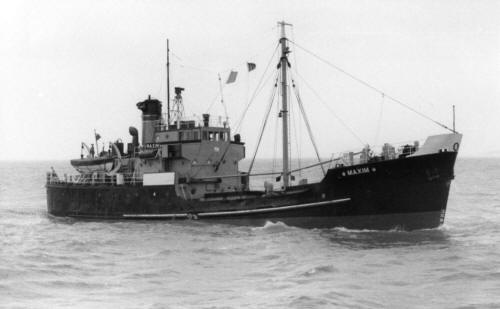
Official Number
Class: GATLING CLASS Armament Stores Carrier
Pennant No: A 377
Laid down:
Builder: Lobnitz & Co Ltd, Renfrew
Launched: 6 August 1945
Into Service: 14 November 1945
Out of service:
Fate: Scrapped 15 November 1977
Items of historic interest involving this ship: -
Background Information: - One of a group of five coasters which were not normally classed as RFA’s They are included here as the ancestors of the more modern ammunition ships These five ships were designed by the Director of Naval Construction to the requirements of the Naval Armament Department. They were designed for Pacific Operations to carry ammunition from larger ships offshore which were of too deep a draught to go close inshore to the coastal areas or small harbours and had their bottoms strengthened to permit grounding when loaded if required. This was a 1943 plan connected with a future invasion of Japan. As there was no requirement to carry large naval guns they were provided with two cargo holds. The order for them was placed in October 1944 and none of them was completed before the end of hostilities, which meant that only one of them (GATLING) was needed to proceed to the Far east to assist in the rehabilitation of Singapore. GATLING and NORDENFELT were completed to mercantile standards and were registered and classed with Lloyds Register and were run on National Maritime Board conditions, while the other three were on “Yard Craft” Dockyard agreements and were completed with naval style accommodation.
6 August 1945 launched by Lobnitz & Co Ltd, Renfrew as Yard Nr 1086 named MAXIM
14 November 1945 completed with naval-type accommodation
30 November 1945 sailed Hollyhead for Plymouth
11 April 1947 passed the Lloyds Signal Station on the Lizard sailing east
5 September 1947 passed the Lloyds Signal Station on the Lizard sailing east
19 May 1948 passed the Lloyds Signal Station on the Lizard sailing east
14 July 1948 passed the Lloyds Signal Station on the Lizard sailing west
27 August 1948 passed the Lloyds Signal Station on the Lizard sailing east
10 September 1948 passed the Lloyds Signal Station on the Lizard sailing west
15 December 1948 passed the Lloyds Signal Station on the Lizard sailing west
24 February 1949 passed the Lloyds Signal Station on the Lizard sailing east
3 March 1949 passed the Lloyds Signal Station on the Lizard sailing west
29 March 1949 passed the Lloyds Signal Station on the Lizard sailing east
12 December 1949 passed the Lloyds Signal Station on the Lizard sailing east
18 November 1949 sailed Hollyhead for Plymouth
20 December 1949 passed the Lloyd's Signal Station on the Lizard sailing west
15 June 1953 was part of the Coronation Fleet Review at Spithead
13 March 1960 was anchored about two miles off Harwich, Essex when the ship's liberty boat got into difficulties and over turned. Eight crew members in the boat were thrown into the water. Six were rescued, albeit requiring hospital treatment for exposure and two others - a Stoker Harris and Ordinary Seaman G Crumpton both from Devonport were lost.
15 November 1977 arrived Briton Ferry for demolition by T.W. Ward Ltd.
Notes:
- Based at Naval Armaments Depots Milford Haven and Plymouth between 1945 to 1959
Due to the large amount of information on the 4 RFA Maine's that have sailed in the RFA, there are now seperate cards for each vessel.
Please select one of the Maine's below.


RFA Maine (3)

Previous name: Panama
Official Number: 115276
Class: Hospital Ship
Pennant No: X24
Laid down:
Builder: Fairfield, Govan
Launched: 8 March 1902
Into Service: August 1920
Out of service: 21 February 1947
Fate: Broken up
Items of historic interest involving this ship: -
Background Data: See explanatory notes.
8 March 1902 launched by Fairfield Shipbuilding & Engineering Co Ltd, Govan as Yard Nr: 419 named PANAMA for Pacific Steam Navigation Co, Liverpool
May 1902 completed. Carried 130 x 1st Class passengers. Maiden voyage Liverpool - Montevideo - Valparaiso
29 May 1902 sailed Liverpool to Spain, Portugal, Brazil and the Falkland Islands. Captain John D MacPherson was the ship's Master with 17 cabin passengers and 8 steerage passengers
31 May 1902 arrived at La Pallice
1 June 1902 sailed from La Pallice
14 June sailed from Pernambuco
23 June 1902 arrived at Monte Video
2 July 1902 arrived at Cornel
17 July 1902 sailed from Cornel
18 August 1902 sailed Vigo for Liverpool
4 September 1902 sailed Liverpool to Spain, Portugal, Brazil and the Falkland Islands. Captain John D MacPherson was the ship's Master with 28 cabin passengers and 6 steerage passengers
9 September 1902 sailed Vigo
17 November 1902 Able Seaman Albert Winkler discharged dead from natural causes
27 December 1902 sailed Pernambuco for Valparaiso
17 February 1903 sailed Pernambuco for Liverpool
19 March 1903 sailed Liverpool to Spain, Portugal, Brazil and the Falkland Islands
3 May 1903 at Lisbon Greaser William Mills discharged dead - found drowned
14 May 1903 at Quito Chief Engineer Officer John E Hill discharged dead from fever
27 May 1903 sailed Liverpool for Lisbon, Tangier, Palma, Algiers, Gibraltar, Oporto and Vigo. Captain William H Lawrenson was the ship's Master
9 June 1903 sailed Vigo for Liverpool
28 June 1903 sailed La Pallice for Valparaiso
13 September 1903 sailed Vigo to Liverpool
1 October 1903 sailed Liverpool to Spain, Portugal, Brazil and the Falkland Islands with 38 steerage passengers. Captain Walter Styer was the ship's Master
25 October 1903 sailed Montevideo
17 December 1903 sailed Lisbon for Liverpool
22 December 1903 berthed at Liverpool
7 January 1904 sailed Liverpool to Spain, Portugal and South America. Captain Walter Styer was the ship's Master
14 January 1904 sailed Lisbon
1 February 1904 berthed at Montevideo
24 February 1904 sailed Coronel
28 March 1904 sailed La Pallice for Liverpool
30 March 1904 berthed at Liverpool
14 April 1904 sailed Liverpool to Spain, Portugal and South America. Captain Walter Styer was the ship's Master
4 May 1904 sailed Valparaiso
8 May 1904 berthed at Montevideo
7 June 1904 sailed Punta Arenas
19 June 1904 sailed Pernambuco
30 June 1904 sailed Lisbon for Liverpool
4 July 1904 berthed at Liverpool
23 July 1904 sailed Liverpool to Spain, Portugal, South America and the Falkland Islands
27 July 1904 sailed Lisbon for South America
7 September 1904 sailed Coronel for Liverpool
27 October 1904 Liverpool to France, Spain, Portugal, South America and the Falkland Islands. Captain Walter Styer was the ship's Master
30 October 1904 sailed La Pallice, France for La Coruna, Spain
14 November 1904 in collision with the Italian ss Orinone off Bahia. Struck on the port quarter. No apparent damage to the Panama, both vessels continued with their respective voyages
16 November 1904 sailed Rio de Janeiro for Valparaiso
11 January 1905 sailed Lisbon for Liverpool
2 February 1905 sailed Liverpool to France, Spain, Portugal and South America
13 February 1905 at 17.54N 24.21W 3rd class passenger Lorenzoni Romea Bruno discharged dead from natural causes
26 April 1905 berthed at Liverpool from Valparaiso with 37 passengers
11 May 1905 sailed Liverpool to France, Spain, Portugal and South America
17 August 1905 sailed Liverpool for France, Spain, Portugal and South American Ports. Captain Walter Styer was the ship's Master
11 September 1905 sailed Rio De Janerio to Valparaiso
27 January 1906 off Bahia Captain James Murray discharged dead from natural causes
14 February 1906 berthed at Liverpool from Valpariaiso with 95 passengers
1 March 1906 sailed Liverpool for ports on the west coast of South America with 128 passengers. Captain Walter Styer was the ship's Master
4 April 1906 arrived at Coronel
5 April, 1906 at Coronel passener Julis Salvador Hernandez discharged dead from natural causes
18 April 1906 sailed Coronel for Liverpool
23 May 1906 berthed at Liverpool from Port Stanley, Falkland Islands, Valpariso, Chile, Montevideo, Cape Verde etc with 87 passengers. Captain Walter A Splatt was Master
7 June 1906 sailed Liverpool to South American ports and Port Stanley, Falkland Islands with 44 cabin passengers. Captain Walter A Splatt was Master
19 October 1911 at Pisco Saloon Steward Enrique N Del Prado discharged dead from natural causes
21 December 1912 sailed Liverpool for South American ports with Captain Lewis Richards as Master
7 January 1914 at sea passenger Valeriana P V de Perea discharged dead from natural causes
22 April 1915 sailed Liverpool for Barbados, Panama, Trinidad and Valpariaso and other South American ports with 16 passengers. Captain Walter Styer was the ship's Master
25 July 1915 chartered by the Admiralty for service as a Hospital Ship name unchanged.
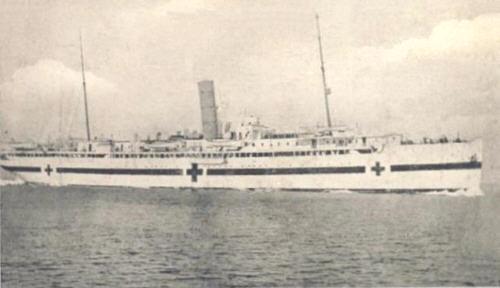
HMHS Panama before she was renamed RFA Maine (3)
16 September 1915 at sea at 36.40N 0.0W Private Norman Fawcett Crosland No: 11679 6th Battalion Kings Own Royal Regiment from Lancashire discharged dead from the effects of an operation - amputation of leg. Buried at sea and remembered with pride on the Helles Memorial, Turkey
16 October 1915 sailed the Dardenelles to Malta with wounded from Gallipoli
31 October 1915 sailed Malta to the UK
27 January 1916 sailed Malta to Naples
4 February 1916 arrived at Naples and transfered 319 wounded to HMHS Britannic
1 July 1916 at Southampton Trimmer Frederick Snelgrove discharged dead - natural causes
5 July 1916 in the English Channel Lieutenant F E Sutcliffe, 16th Battalion West Yorkshire Regiment discharged dead from effects of heart failure from a compound fracture of the femur. He is buried in grave 330, Heptonstall Slack Baptist Cemetery, Yorkshire. The CWGC have Lieutenant Sutcliffe as Robert Sutcliffe. The Register of Deceased Passengers 1916 identify him at Lieutenant F E Sutcliffe. Lieutenant Sutcliffe had been injured at the Battle of the Somme
11 July 1916 in the English Channel Corporal K Rheinschmidt, Private M Merkel, Private Y Eirgle and Private J Rohwedder, all German Prisoners of War, discharged dead suffering from the effects of their injuries. All four are buried in the Military Cemetery, Netley, Hampshire


22 September 1916 in the English Channel Lance Corporal G/13842 Walter W Bysouth 23rd Bn., Middlesex Regiment discharged dead from a gun shot wound to the groin and secondary bleeding. Buried in Netley Military Cemetary, Hampshire in grave CE1855
1 November 1916 sailed Le Havre to Southampton with wounded
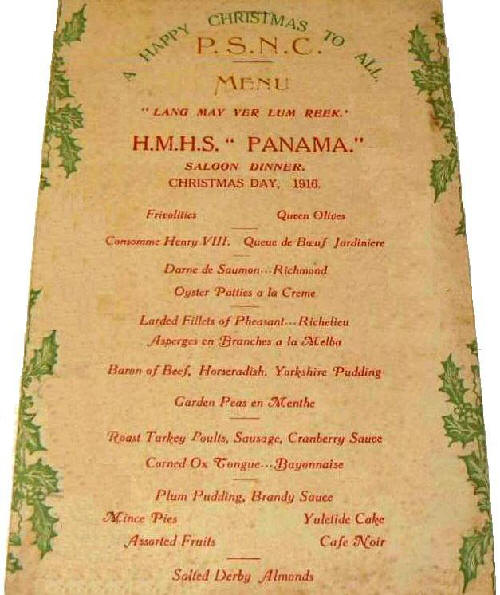
Christmas Day Menu 1916
19 December 1916 arrived at Stavros, Greece
27 January 1917 sailed Salonika with 1 patient
31 January 1917 berthed at Hamilton Wharf, Malta patient discharged
2 February 1917 at Hamilton Wharf, Malta commenced embarking patients leaving for England - 11 patients and 7 passengers together with four prisoners of war - 3 Austrian and 1 German - all 4 being mental patients. Sailed Malta
6 February 1917 berthed at Gibraltar. Sailed Gibraltar
7 February 1917 at Sea. One of the Austrian mental patients at exercise on deck threw himself overboard. He had previously been fitted with a life jacket. A boat was lowered and the patient was recovered within 12 minutes
11 February 1917 anchored off Netley in Southampton Water. Patients discharged
12 February 1917 sailed Southampton. Anchored off Cowes, Isle of Wight all wards were disinfected by spraying with Formalin and Glycerine
13 February 1917 sailed Cowes for Le Havre
14 February 1917 alongside at Le Havre commenced embarkation of 399 patients. Sailed from Le Havre at 23.45hrs
15 February 1917 berthed at Southampton Docks and disembarkation of patients commenced. When disembarkation complete moved to No: 34 berth to load bunkers
16 February 1917 to 18 February 1917 coaling ship. Loaded 1,524 tons of bunker coal
19 February 1917 sailed No: 34 berth, Southampton Docks in heavy fog. Anchored off Netley then to Cowes, Isle of Wight where the ship anchored still in fog.
20 February 1917 to 22 February 1917 at anchor off Cowes, Isle of Wight in fog.
22 February 1917 sailed Cowes in slight fog to Le Havre, anchoring off that port
23 February 1917 berthed alongside at Le Havre and commenced embarkation of patients. Embarked 404 patients then sailed for St Helens, Isle of Wight where she anchored in heavy fog
24 February 1917 sailing from St Helens, Isle of Wight delayed due to heavy fog. Sailed at 12 noon but anchored off Calshot owning to heavy fog. Later sailed for Southampton and disembarkation of patients. Sailed at 1800hrs for Le Havre
25 February 1917 anchored off Le Havre later berthing alongside the port quay. Commenced embarking 398 patients. Having embarked the patients sailed for Southampton
26 February 1917 berthed at Southampton commenced disembarkation of patients. Having disembarked all the patients sailed Southampton for Le Havre. At 23.59hrs anchored off Le Havre
27 February 1917 berthed alongside at Le Havre and commenced embarking patients
28 February 1917 at Le Havre completed embarkation of 409 patients and sailed but due to fog anchored off the port. Sailed for Southampton arriving 11 hours later. Disembarkation of patients commenced - completed at 18.00hrs
1 March 1917 sailed Southampton for Le Havre but forced to anchor off Netley due to fog. Sailed but anchored off Cowes, Isle of Wight again due to fog. Later sailed for Le Havre after a 9 hour delay
2 March 1917 anchored off Le Havre. Later berthed alongside at Le Havre and commenced embarking patients. Embarkation completed sailing for Southampton
3 March 1917 anchored in Southampton Water off Calshot. Later moved up to off Netley and anchored again. Two hours later berthed in Southampton and commenced disembarkation of patients. 3pm sailed Southampton and anchored off Cowes. A further 6 hour delay occured before sailing for Le Havre
4 March 1917 anchored off Le Havre. Was able to enter the post after a 14 hour delay and berthed alongside 1 hour later
5 March 1917 commenced embarking 404 patients. Sailed for Southampton anchoring off Netley at 6pm
6 March 1917 berthed in Southampton and commenced disembarkation. The ship was inspected by Field Marshal John D P French, 1st Earl of Ypres KP, GCB, OM, GCVO, KCMG, ADC, PC Commander in Chief Home Forces. Sailed Southampton at 3pm and anchored off Cowes, Isle of Wight Later sailed for Le Havre
7 March 1917 anchored of Le Havre. Enter the post and berthed at 12 noon. Embarked 324 patients and sailed at 8pm for Southampton
8 March 1917 at 8am berthed at Southampton Docks and disembarked the patients. Sailed from Southampton at 2pnm and anchored off Cowes, Isle of Wight
9 March 1917 at anchor off Cowes, Isle of Wight - thick fog
10 March 1917 sailed from Cowes at 2pm for Le Havre arriving and anchoring at 10pm
11 March 1917 entered Le Havre and berthed alongside at 9am. Commenced embarking 413 patients. Sailed at 12 noon for Southampton, anchoring off St Helens at 8pm delayed by fog
12 March 1917 sailed for Southampton but delayed by fog. Anchoring off Netley but berthed alongside by 9am dismebarking the patients. Captain P J A Seccombe RAMC and Captain J G Scott RAMC discharged ashore their places onboard being taken by Captain W A Thompson RAMC and Lieutenant A P Thom RAMC. 2pm sailed from Southampton and anchored at 3pm off Cowes, Isle of Wight
13 March 1917 sailed for Le Havre at 12 noon. Anchored off that port at 9pm
14 March 1917 entered the Port of Le Havre and berthed alongside at 1.30am. 406 patients were embarked by 11am and the ship sailed for Southampton
15 March 1917 anchored off Netley. ALongside at Southampton at 10am with the patients being discharged. Sailed Southampton at 2pm and anchored off Cowes, Isle of Wight at 3pm
16 March 1917 sailed Cowes, Isle of Wight for Le Havre at 3am anchoring off that port at 12 noon
17 March 1917 at anchor all day off Le Havre awaiting orders
18 March 1917 entered Le Havre and berthed at 6.30pm
19 March 1917 embarkation of 407 patients commenced at 2pm and was completed by 3.45pm. The ship sailed for Southampton at 5.30pm and suffered a cold and uncomfortable passage
20 March 1917 anchored off Netley at 4.30am and was alongside at Southampton by 9am. Disembarkation of the patients followed and was completed by 12 noon. Captain W A Thompson RAMC was relieved from duty onboard (reason not shown). 3pm sailed from Southampton and anchored off Netley
21 March 1917 and 22 March 1917 remained at anchor off Netley
23 March 1917 at Southampton entered dry dock remaining there until 25 March 1917
26 March 1917 floated out of dry dock and moved to No 34 berth at Southampton to load bunker coal
28 March 1917 coaling completed
1 April 1917 sailed Southampton at 7.10am and anchored off Cowes, Isle of Wight at 11am until 10 April 1917
10 April 1917 together with three other hospital ships sailed from Cowes at 4am under escort. At 11.45am off the entrance to Le Havre Roads HMHS Salta, immediatley in front of HMHS Panama, struck a mine and sank within 10 minutes. Anchored off Le Havre.
11 April 1917 entered Le Havre and berthed. 397 patients were embarked
12 April 1917 at anchor in Le Havre Roads
13 April 1917 sailed Le Havre Roads with four other Hospital Ships for Southampton under escort. Arrived Southampton and berthed at 7.30pm disembarking patients
14 April 1917 sailed Southampton Docks at 6.30am and anchored off Netley. Sailed Netley at 7.30pm for Le Havre. Blackout enforced
15 April 1917 arrived at Le Havre Roads at 4.30am. Entered the port and berthed by 2.30pm 398 patients embarked by 11pm
16 April 1917 sailed for Southampton at 2.30am under escort arriving at 1.30pm. The patients were disembarked by 3.45pm
17 April 1917 at 6.30am sailed Southampton for Le Havre anchoring in Le Havre Roads at 3.30pm. Entered the port at 4.15pm and commenced to embark 388 patients at 6.30pm
18 April 1917 8pm sailed Le Havre for Southampton under escort. The weather was repoted as hazy with a choppy sea
19 April 1917 at 8.30am berthed at Southampton and disembarked the patients. 12.30pm Disembarkation completed. 7.30pm sailed Southampton
20 April 1917 at 5.30am anchored in Le Havre Roads. Entered the port and berthed alongside by 8am. Commenced embarking 398 patients. Embarkation complete and sailed Le Havre for Southampton under escort at 8.15pm
21 April 1917 at 6.30am anchored off Netley. By 8.30am alongside at Southamton and discharged patients - one orderly relived from duty on board (reason not shown)
22 April 1917 at 6.30am sailed Southampton docks and anchored off Netley. Orderlies in wards given instruction by medical officers how to remove helpless patients from their cots
23 April 1915 at 7pm sailed for Le Havre
24 April 1917 3.40am anchored in Le Havre Roads. Entered the port and berthed alongside. Commenced embarking 369 patients. Embarkation completed and sailed for Le Havre Roads at 3.30pm to anchor. Sailed for Southampton under escort at 9pm
25 April 1917 at 7am anchored off Netley. 8.30am berthed alongside at Southampton and disembarked patients
26 April 1917 6.30am sailed Southampton to anchor off Netley. Sailed for Le Havre at 7pm
27 April 1917 at 4.15am anchored in Le Have Roads. 7am berthed alongside and embarked 402 patients. Sailed 5pm for Le Havre Roads to anchor. Sailed for Southampton at 9pm under escort
28 April 1917 at 6.30am anchored off Netley. 8.30am berthed alongside at Southampton and disembarked patients
29 April 1917 6.30am sailed Southampton to anchor off Netley. Sailed for Le Havre at 8pm. The weather was fine
30 April 1917 at 5.30am berthed at Le Havre and embarked 413 patients. Sailed 6pm for Le Havre Roads to anchor. Sailed for Southampton at 9pm under escort
1 May 1917 at 7am anchored off Netley. 9am berthed alongside at Southampton and disembarked patients
2 May 1917 6.30am sailed Southampton to anchor off Netley
3 May 1917 berthed at No 34 berth at Southampton to load bunker coal
5 May 1917 coaling complete
8 May 1917 at 12.30pm at Southampton moved to No 37 berth
12 May 1917 at 11am moved to No 22 berth. Red and green navigation lights removed. Ship painted 'slate grey' and a gun was mounted aft. At 7pm sailed for Le Havre
13 May 1917 at 5.00am berthed at Le Havre and embarked 399 patients. Sailed 3.45pm for Le Havre Roads to anchor. Sailed for Southampton at 9.30pm under escort
14 May 1917 at 6.30am anchored off Netley. 8.45am berthed alongside at Southampton and disembarked patients. Sailed at 7pm for Le Havre
15 May 1917 at 7.00am berthed at Le Havre and embarked 401 patients. Sailed 7pm for Le Havre Roads to anchor. Sailed for Southampton at 9.45pm under escort
16 May 1917 at 7.15am anchored off Netley. 8.00am berthed alongside at Southampton and disembarked patients
17 May 1917 at 6.30am sailed from Southampton and anchored off Netley
18 May 1917 7.15pm sailed Netley for Le Havre
19 May 1917 at 5.45am alongside at Le Havre and embarked 410 patients. Sailed 8pm for Le Havre Roads to anchor. Sailed for Southampton at 9.45pm under escort. There was heavy fog and the passage was delayed
20 May 1917 at 6am anchored off Sandown Bay. Delayed by fog. 9.30am anchorage moved to off St Helens. 12.30pm berthed at Southampton and disembarked patients. Received an order stating that the future designation of hospital ships had been changed to 'Ambulance Transports', to be armed, the Red Cross flag was to be dispensed with and the restrictions as to the conveyance of Military personnel and materials automatically withdrawn
21 May 1917 6.30am sailed Southamton Docks and anchored off Netley
23 May 1917 7pm sailed for Le Havre
24 May 1917 at 5.15am berthed at Le Havre and commenced embarking 416 patients. Sailed Le Havre at 9.30pm for Southampton under escort
25 May 1917 9am berthed at Southampton Docks - patients disembarked
26 May 1917 6.30am sailed Southamton Docks and anchored off Netley
30 May 1917 at 7pm sailed Netley with American 'Base Hospital No 2, Columbia University - Presbyterian Hospital' onboard. This unit had been loaned to the British Government for service in the British Hospitals at Etretat. The Unit was under the command of Major L L Hopwood USR and was composed of 252 persons - 26 officers, 155 enlisted men, 65 female nurses and 6 clerks. Source - Message from the US Consul at Le Havre to the US Secretary of State at Washington
31 May 1917 at 5.15am berthed at Le Havre from Southampton. At 10am disembarked the USA 'Base Hospital No 2, Columbia University - Presbyterian Hospital' staff
1 June 1917 at 2pm at Le Havre embarked 452 patients sailing at 5.30pm and anchoring at Le Havre Roads. At 10pm sailed for Southampton under escort
2 June 1917 at 6.30am anchored off Netley and at 8.30am berthed alongside at Southamton. Patients disembarked. 20 rifles and 1,000 rounds of ammunition taken onboard
4 June 1917 at Southampton commenced loading bunker coal
6 June 1917 at Southampton coaling completed
7 June 1917 6.30am sailed Southampton and anchored off Cowes
11 June 1917 at 7pm sailed Cowes for Le Havre. Orderlies engaged in rifle drill
12 June 1917 berthed at Le Havre. 11am Orderlies engaged in rifle drill. 1pm commenced embarkation of 409 patients. 5.45pm sailed Le Havre and anchored in Le Havre Roads. 10pm sailed for Southampton under escort
13 June 1917 8am berthed at Southampton. 10am patients commenced disembarking - completed by 12 noon
14 June 1917 6.30am sailed Southampton Docks and anchored off Netley at 7.15am. At 2pm Orderlies engaged in rifle drill
15 June 1917 6.30am Orderlies engaged in rifle practice. 7pm sailed Netley for Le Havre. The weather was recorded as fine
16 June 1917 berthed at Le Havre
17 June 1917 at Le Havre. At 1pm commenced embarking 412 patients. 9.30pm sailed Le Havre for Southampton under escort
18 June 1917 8.30am berthed alongside at Southampton Docks. The disembarkation of the patients commenced at 10am. The painting of the ship 'Light Grey' commenced
20 June 1917 at 6.30am sailed from Southampton Docks and anchored off Netley at 7.15am
21 June 1917 Major J M Martin DSO RAMC relieved from duty on board after handing over appointment as O.C. Troops to Captain Robert Wilson RAMC. The ship sailed for Le Havre at 6.30pm
22 June 1917 at 3.30am anchored in Le Havre Roads. 9am entered the port of Le Havre and secure alongside at 10am. At 2pm commenced embarking 404 patients. 4pm embarkation completed. Sailed for Southampton at 9.15pm
23 June 1917 at 8am berthed at Southampton Docks and disembarked the patients
24 June 1917 at 6.30am sailed Southampton Docks and anchored off Netley
25 June 1917 at 3pm moved anchorage to one off Cowes, Isle of Wight
26 June 1917 off Cowes the orderlies were engaged in musketry practice
28 June 1917 off Cowes between 10am and 12 noon various drills undertaken - Life boat stations, handseats, Fireman's Lift and musketry practice
29 June 1917 at 7pm sailed for Le Havre
30 June 1917 berthed at Le Havre. Orderlies engaged in musketry practice
1 July 1917 to 7 July 1917 alongside at Le Havre with the orderlies engaged in musketry practice
8 July 1917 at Le Havre commenced embarkation of 394 patients and 7 naval passengers. 3.30pm sailed Le Havre and anchored in Le Havre Roads. 10pm sailed for Southampton under escort. The weather was reported as fine
9 July 1917 berthed at Southampton Docks and patients and passengers disembarked
10 July 1917 sailed Southampton Docks and anchored off Netley.
17 July 1917 at 5pm boat drill and then sailed Netley for Le Havre
18 July 1917 anchored in Le Havre Roads
19 July 1917 berthed alongside at Le Havre and embarked 505 patients. Sailed for and anchored at Le Havre Roads
20 July 1917 at 10pm sailed from Le Havre Roads for Southampton under escort. The weather was reported as fine
21 July 1917 berthed at Southampton Docks with patients being disembarked
22 July 1917 sailed Southampton Docks and anchored off Cowes
24 July 1917 while still at anchor off Cowes the O.C RAMC inspected the Dispensary, the Medical and Surgical Stores and Equipment. There was boat drill
25 July 1917 sailed from Cowes anchorage for Le Havre
26 July 1917 3.15am anchored in Le Havre Roads. Berthed alongside in Le Havre port at 4.45pm and commenced the embarkation of 492 patients. 8pm sailed for Le Havre Roads and anchored. 10pm sailed for Southampton under escort. Weather repoorted as fine
27 July 1917 berthed at Southampton Docks and discharged the patients
28 July 1917 at 8am sailed Southampton Docks and anchored off Cowes 6pm sailed for Le Havre
29 July 1917 at 4.30am anchored in Le Have Roads. 4.30pm berthed alongside in Le Havre port and commenced embarking 453 patients. The ship sailed for Southampton at 9.30pm under escort
30 July 1917 7am anchored off Netley before berthing in Southampton Docks at 8.30am. The disembarkation of the patients commenced at 2pm and was completed by 3.45pm. The ship moved to No: 49 berth
3 August 1917 at 6pm sailed from Southampton Docks anchoring off Netley at 6.30pm
5 August 1917 sailed from Netley at 6.30pm for Le Havre
6 August 1917 at 4.10am anchored in Le Havre Roads until 3.15pm when berthed alongside at Le Havre. Embarked 450 patients
7 August 1917 12.15am sailed Le Havre and anchored in Le Havre Roads until 9.30pm when she sailed for Southampton under escort in fine weather
8 August 1917 at 6.20am anchored off St. Helens, Isle of Wight. Anchorage moved to off Netley at 10am then alongside in Southampton Docks at 3pm. Patients disembarked. 6.30pm sailed for Le Havre
9 August 1917 4.30am anchored in Le Havre Roads. At 12.45pm entered the Port of Le Havre and berthed alongside. Embarked 439 patients sailing at 4.45pm and anchoring in Le Havre Roads at 5.30pm. Sailed for Southampton under escort at 9.30pm
10 August 1917 at 9am berthed at Southampton Docks and disembarked the patients. Sailed for Le Havre at 5.30pm
11 August 1917 5am anchored in Le Have Roads. At 3pm entered the Port of Le Havre and berthed alongside. Embarked 460 patients sailing at 8.30pm and anchoring in Le Havre Roads at 9.15pm
12 August 1917 sailed for Southampton under escort at 9.30pm
13 August 1917 at 7am anchored off Netley then alongside in Southampton Docks at 8.30am. Patients disembarked. 6pm sailed for Le Havre
14 August 1917 8am berthed alongside at Le Havre. Embarked 468 patients sailing by 8.45pm and then sailed for Southampton under escort
15 August 1917 at 8am berthed at Southampton Docks and disembarked the patients
16 August 1917 sailed Southampton Docks and anchored off Cowes, Isle of Wight for boiler repairs
23 August 1917 at 7pm sailed Cowes, Isle of Wight for Le Havre. Sea moderately rough. It was raining
24 August 1917 6am berthed at Le Havre and embarked 450 patients sailing at 4.30pm. Anchored at Le Havre Roads until sailing for Southampton under escort at 8.45pm
25 August 1917 9am berthed at Southampton Docks and disembarked the patients
26 August 1917 6.30am sailed Southampton docks and anchored at Cowes, Isle of Wight. Sailed Cowes at 7pm for Le Havre
27 August 1917 5.30am anchored in Le Havre Roads until 10am when berthed alongside in Le Havre. Embarked 448 patients
28 August 1917 9.30pm sailed from Le Havre for Soutampton under escort
29 August 1917 at 10.45am anchored off Netley. Alongside at Southampton at 2.15pm when the patients were disembarked
30 August 1917 at 7am sailed from Southampton and anchored off Cowes, Isle of Wight
31 August 1917 at 10am while at anchor off Cowes the RAMC detachment were subject to a kit inspection
5 September 1917 sailed from the Cowes anchorage at 7pm in foggy weather for Le Havre
6 September 1917 at 3.10am while on passage to Le Havre in collision with a patrol trawler in foggy weather - further details currently unknown. 5.20am alongside at Le Havre. 9.45am commenced embarking 460 patients sailing at 12 noon. Anchored in Le Havre Roads until 9pm then sailed under escort to Southampton in clear fine weather
7 September 1917 at 5.25am anchored in St Helens Bay, Isle of Wight. Berthed alongside at Southampton Docks at 9am when the patients were disembarked
8 September 1917 at 7am sailed from Southampton and anchored off Netley
9 September 1917 at 7pm sailed from Netley for for Le Havre in fine weather with a calm sea
10 September 1917 at 5am alongside at Le Havre. 411 patients were embarked and by 8pm sailed for Southampton under escort
11 September 1917 at 8.30am berthed alongside at Southampton and disembarked the patients
12 September 1917 at 10am sailed from Southampton and anchored off Netley
13 September 1917 off Netley the RAMC detachment paraded for a kit inspection and all the ships crew and detachment underwent boat drill at 12 noon
15 September 1917 at 7pm sailed from Netley for Le Havre
16 September 1917 at 5am anchored in Le Havre Roads berthing alongside by 8am
17 September 1917 2.15pm commenced the embarkation of 442 patients. At 7.30pm sailed from Le Havre for Southampton under escort. The weather was fine and the sea was calm
18 September 1917 at 3.45am anchored in St Helens Bay. By 8.15am was alongside in Southampton Docks and the disembarkation of the patients was commenced. The disembarkation was completed by 12 noon
19 September 1917 at 7am sailed from Southampton Docks and anchored off Cowes, Isle of Wight
21 September 1917 at 2.30pm sailed from the Cowes anchorage and commenced gun practice. At 4.10pm anchored in St Helens Roads. At 8.30pm sailed for Le Havre with a calm sea and fine weather
22 September 1917 at 4.50am anchored in Le Havre Roads. By 9am berthed alongside in Le Havre Docks and commenced to embark 417 patients. Sailed from Le Havre at 2pm and anchored in Le Havre Roads. At 8pm sailed for Southamton under escort
23 September 1917 at 8.15am anchored off Netley moving alongside in Southampton Docks at 1.45pm where the patents were disembarked
24 September 1917 12am sailed Southampton Docks and anchored off Netley
25 September 1917 6pm sailed from Netley anchorage for Le Havre
26 September 1917 4.50am anchored at Le Havre Roads. 2.50pm berthed alongside in Le Havre harbour and embarked 514 patients sailing at 6.45pm with escort for Southampton
27 September 1917 3am anchored off St. Helens, Isle of Wight. Moved anchorage at 4.35am to East Brambles and moved again to an anchorage off Netley at 7.30am. Alongside at Southampton Docks at 2pm and the patients were discharged
28 September 1917 commenced loading bunker coal
30 September 1917 completed loading bunkers
1 October 1917 6.30am sailed Southampton Docks and anchored off Cowes, Isle of Wight at 8.30am
4 October 1917 7.30am sailed from Cowes anchorage. Anchored off Hythe at 8.55am and then entered dry dock at Southampton at 10.10am
10 October 1917 2pm left dry dock and moved to alongside at Southampton No: 37 berth. 7.30pm sailed Southampton Docks and at 8.10pm anchored off Netley
11 October 1917 at 6pm sailed from Netley for Le Havre
12 October 1917 at 4.20am anchored in Le Havre Roads. By 4.45pm berthed alonsgide in Le Havre and embarked 432 patients
13 October 1917 at 6.30am sailed from Le Havre quayside and at 7.35am anchored in Le Havre Roads. Sailed for Southampton at 8pm under escort
14 October 1917 5am anchored in St Helens Bay, Isle of Wight. 7.30am anchored off Netley. 9am alongside at Southampton and disembarking the patients. Sailed Southampton at 12.30pm and anchored at Netley. 6pm sailed for Le Havre
15 October 1917 6am alongside at Le Havre and embarked 418 patients. 10.30am sailed Le Havre and anchored in Le Havre Roads. 8pm sailed for Southampton under escort
16 October 1917 4am anchored in St Helens Bay, Isle of Wight. 8.15am alongside at Southampton and disembarking the patients. Sailed Southampton at 12.45pm and anchored at Netley. 6pm sailed for Le Havre. The sea was very rough
17 October 1917 4.40am anchored at Le Havre Roads. 1.15pm alongside at Le Havre and embarked 453 patients. 7.30pm sailed for Southampton under escort
18 October 1917 4am anchored in St Helens Bay, Isle of Wight. 8.30am alongside at Southampton and disembarking the patients. Sailed Southampton at 12.30pm and anchored at Netley. 6pm sailed for Le Havre
19 October 1917 3.20am anchored at Le Havre Roads. 8.30am alongside at Le Havre and embarked 452 patients. 11am sailed and anchored in Le Havre Roads. 7.30pm sailed for Southampton under escort
20 October 1917 3.40am anchored in St Helens Bay, Isle of Wight. 9.15am alongside at Southampton and disembarking the patients. Sailed Southampton at 5.30pm for Le Havre
21 October 1917 at 3.40am anchored at Le Havre Roads. 9.15am alongside at Le Havre and embarked 458 patients. 1pm sailed and anchored in Le Havre Roads. 8pm sailed for Southampton under escort
22 October 1917 at 4.50am anchored in St Helens Bay, Isle of Wight. 5.35am anchorage moved to off Cowes due to fog and 7.05am anchored off Netley, 1.45pm alongside at Southampton and disembarking the patients
23 October 1917 sailed Southampton at 6.30am and anchored off Netley. 6pm sailed for Le Havre
24 October 1917 at 2.40am anchored at Le Havre Roads. 7.10am alongside at Le Havre and embarked 450 patients. 11am sailed and anchored in Le Havre Roads. 8pm sailed for Southampton under escort
25 October 1917 at 8.30am anchored in St Helens Bay, Isle of Wight. 12 noon alongside at Southampton and disembarking the patients. 2.45pm sailed Southampton and anchored off Netley
26 October 1917 at 6pm sailed Netley for Le Havre
27 October 1917 at 4.00am anchored at Le Havre Roads. 12 noon alongside at Le Havre and embarked 450 patients.
28 October 1917 at 5.10pm embarked 7 British Officers and 3 German Officers as patients. Thus total number of patients now 460. 7.15pm sailed Le Havre for Southampton under escort
29 October 1917 at 7.40am anchored in St Helens Bay, Isle of Wight. 8 am alongside at Southampton and disembarking the patients. 5pm sailed Southampton for Le Havre
30 October 1917 at 5.30am anchored at Le Havre Roads. 12.30pm alongside at Le Havre and embarked 439 patients. 7pm sailed for Southampton under escort
31 October 1917 3.45am anchored in St Helens Bay, Isle of Wight. 6.30am anchored off Netley. 8.30 am alongside at Southampton and disembarking the patients. 11.45am sailed Southampton and anchored off Netley
1 November 1917 5pm sailed for Le Havre. Anchored in St Helens Bay, Isle of Wight at 8.32pm due to fog. 9.30pm sailed for Le Havre
2 November 1917 at 7am anchored at Le Havre Roads. 1.45pm alongside at Le Havre and embarked 457 patients. 8.30pm sailed for Southampton under escort
3 November 1917 5.10am anchored in St Helens Bay, Isle of Wight. 7am anchored in Stokes Bay owing to fog 11.50am anchored off Netley. 1pm alongside at Southampton and disembarking the patients. 3.45pm sailed Southampton and anchored off Netley
4 November 1917 5.05pm sailed for Le Havre
5 November 1917 at 2am anchored at Le Havre Roads. 10.45am alongside at Le Havre and embarked 453 patients. 2.30pm sailed for Le Havre Roads and anchored. 7.15pm sailed for Southampton under escort
6 November 1917 3.10am anchored in St Helens Bay, Isle of Wight. 5.30am anchored off Netley. 8.45am alongside at Southampton and disembarking the patients. 12.45pm sailed Southampton and anchored off Netley
7 November 1917 5pm sailed for Southhampton Docks and berthed alongside
8 November 1917 at Southampton commenced coaling ship
10 November 1917 12 noon completed coaling ship. 5.30pm sailed Southampton for Le Havere. Rough seas
11 November 1917 at 4am anchored at Le Havre Roads. 12 noon alongside at Le Havre and embarked 392 patients. 5pm sailed for Le Havre Roads and anchored. 8pm sailed for Southampton under escort
12 November 1917 3.20am anchored in St Helens Bay, Isle of Wight. 7am anchored off Netley. 2.15pm alongside at Southampton and disembarked the patients. 4.15pm moved to Berth No: 33 at Southampton. 5.15pm embarked 134 US Nursing Sisters and 1 US Medical Officer. 6.15pm sailed for Le Havre
13 November 1917 at 5am anchored at Le Havre Roads. 8.15am alongside at Le Havre with the US Nursing staff being disembarked and 449 patients being embarked. 11.30am sailed for Le Havre Roads and anchored. 6.30pm sailed for Southampton under escort
14 November 1917 2.20am anchored in St Helens Bay, Isle of Wight. 5.20am anchored off Netley. 8.45am alongside at Southampton and disembarked the patients. 11.15am sailed from Southampton and anchored off Cowes
15 November 1917 5pm sailed for Le Havre
16 November 1917 at 2am anchored at Le Havre Roads. 8am alongside at Le Havre and 450 patients were embarked. 11.45am sailed for Le Havre Roads and anchored. 5.30pm sailed for Southampton under escort
17 November 1917 2am anchored in St Helens Bay, Isle of Wight by 4.30am there was thick fog. 7.30pm sailed and anchored off Netley
18 November 1917 6.45am alongside at Southampton and disembarked the patients. 11am sailed from Southampton and anchored off Netley. 3.15pm anchored in St Helens Bay, Isle of Wight. 7.45pm sailed for Le Havre
19 November 1917 at 2.50am anchored at Le Havre Roads. 9.15am alongside at Le Havre and 392 patients were embarked. 11.15am sailed for Le Havre Roads and anchored. 5.pm sailed for Southampton under escort
20 November 1917 1.30am anchored in St Helens Bay, Isle of Wight. 3.40am anchored off Netley. 8.45am alongside at Southampton and disembarked the patients. 12 noon sailed from Southampton and anchored off Netley
21 November 1917 at 7pm sailed for Le Havre. 8.30pm anchored in St Helens Bay, Isle of Wight. 9pm sailed for Le Havre
22 November 1917 at 5.20am anchored at Le Havre Roads. 8.30am alongside at Le Havre and 450 patients were embarked. 12.30pm sailed for Le Havre Roads and anchored. 6.30.pm sailed for Southampton under escort
23 November 1917 2am anchored in St Helens Bay, Isle of Wight. 4am anchored off Netley. 4.15pm alongside at Southampton and disembarked the patients
24 November 1917 at Southampton Docks moved to No:22 berth for boiler cleaning, repairs and painting the ship
9 December 1917 sailed for Le Havre from Southampton Docks
10 December 1917 at 5.25am anchored at Le Havre Roads. 5pm alongside at Le Havre and 403 patients were embarked. 7.45.pm sailed for Southampton under escort
11 December 1917 4.10am anchored in St Helens Bay, Isle of Wight. 5pm alongside at Southampton and disembarked the patients. 7.15pm sailed for Le Havre
12 December 1917 4.10am anchored in Le Havre Roads. 5pm alongside at Le Havre and embarked 462 patients. 7.45pm sailed for Southampton under escort
13 December 1917 at 4.25am anchored in St Helens Bay, Isle of Wight. 6.55am anchored off Netley. 2.15pm alongside in Southampton Docks with the patients being disembarked
14 December 1917 6.30am sailed Southampton Docks and anchored off Netley. 4pm sailed from the anchorage off Netley for Le Havre
15 December 1917 1.50am anchored in Le Havre Roads. 11.30am alongside at Le Havre and embarked 424 patients. 8.15pm sailed for Southampton under escort. The sea was calm and the weather fine
16 December 1917 at 4.30am anchored in St Helens Bay, Isle of Wight. 7.20am anchored off Netley. 8.45am alongside in Southampton Docks with the patients being disembarked
17 December 1917 at 6.35am sailed Southampton Docks and anchored off Netley. 5pm sailed from the anchorage off Netley for Le Havre
18 December 1917 at 2.45am anchored at Le Havre Roads. 10am alongside at Le Havre and 439 patients were embarked. 3.15pm sailed for Le Havre Roads and anchored. 5pm sailed for Southampton under escort
19 December 1917 at 1am anchored in St Helens Bay, Isle of Wight. 3am anchored off Netley. 2pm alongside in Southampton Docks with the patients being disembarked
20 December 1917 at 6.40am sailed Southampton Docks and anchored off Netley. 6.30pm sailed from the anchorage off Netley for Le Havre
21 December 1917 at 4.30am anchored at Le Havre Roads. 1pm alongside at Le Havre and 445 patients were embarked. 11.30pm sailed for Southampton under escort
22 December 1917 at 10.30am anchored off Netley. 2.30pm alongside in Southampton Docks with the patients being disembarked
23 December 1917 at Southampton Docks moved to berth No: 37 and embarked 9 Nursing Sisters (QAIMNSR) for passage to Le Havre. 7pm sailed for Le Havre
24 December 1917 at 6.15am anchored at Le Havre Roads. 8.30am alongside at Le Havre and 402 patients were embarked. 5pm sailed for Southampton under escort
25 December 1917 at 1.30am anchored in St Helens Bay, Isle of Wight. 3.30am anchored off Netley. 8am alongside in Southampton Docks with the patients being disembarked
26 December 1917 at 7am sailed Southampton Docks and anchored off Netley
30 December 1917 at 5pm sailed from the Netley anchorage for Le Havre
31 December 1917 at 2.45am anchored at Le Havre Roads. 9.30am alongside at Le Havre and 445 patients were embarked. 2.25pm sailed Le Havre and anchored in Le Havre Roads. 5pm sailed for Southampton under escort
1 January 1918 at 1.10am anchored in St Helens Bay, Isle of Wight. 3am anchored off Netley. 8.30am alongside in Southampton Docks with the patients being disembarked. 4pm sailed for Le Havre
2 January 1918 at 1.45am anchored at Le Havre Roads. 10.15am alongside at Le Havre and 393 patients were embarked. 3pm sailed Le Havre and anchored in Le Havre Roads. 5pm sailed for Southampton under escort
3 January 1918 at 12.20am anchored in St Helens Bay, Isle of Wight. 2.30am anchored off Netley. 8.30am alongside in Southampton Docks with the patients being disembarked
4 January 1918 at 6.30am sailed from Southampton and anchored off Netley. At 1pm sailed to sea for gun practice. At 3.45pm anchored in St Helens Bay, Isle of Wight. 5.30pm sailed for Le Havre
5 January 1918 at 12.30am anchored at Le Havre Roads. 10.15am alongside at Le Havre and 384 patients were embarked. 4.45pm sailed Le Havre for Southampton under escort
6 January 1918 at 1am anchored in St Helens Bay, Isle of Wight. 3am anchored off Netley. 9am alongside in Southampton Docks with the patients being disembarked. 12.45pm moved to No: 34 berth
7 January 1918 at Southampton Docks commenced coaling
9 January 1918 at 4pm finished coaling. At 4.30pm sailed for Le Havre
10 January 1918 at 3.30am anchored at Le Havre Roads. 10am alongside at Le Havre and 450 patients were embarked. 4.30pm sailed for Southampton under escort. Sea calm, weather fine
11 January 1918 at 1.50am anchored in St Helens Bay, Isle of Wight. 4am anchored off Netley. 8.15am alongside in Southampton Docks with the patients being disembarked. 12.20pm sailed Southampton Docks and anchored off Netley
12 January 1918 at 4.30pm sailed for Le Havre
13 January 1918 at 3.10am anchored at Le Havre Roads. 8.15am alongside at Le Havre and 459 patients were embarked. 7.15pm sailed for Southampton under escort. Sea calm, weather fine
14 January 1918 at 4.30am anchored in St Helens Bay, Isle of Wight. 8.15am alongside in Southampton Docks with the patients being disembarked
15 January 1918 6.30am sailed Southampton Docks and anchored off Netley
16 January 1918 at 5pm embarked 41 Nursing Sisters. 6pm sailed for Le Havre
17 January 1918 at 4.45am anchored in Le Havre Roads
18 January 1918 at 12 noon berthed alongside at Le Havre
19 January 1918 the Nursing Sisters were disembarked and 421 patients were embarked. At 4.30pm sailed for Southampton under escort. The sea was calm and the weather was fine
20 January 1918 at 12.20am anchored in St Helens Bay, Isle of Wight. 2am anchored off Netley. 8.45am alongside in Southampton Docks with the patients being disembarked
21 January 1918 at 6.30am sailed Southampton Docks and anchored off Netley
24 January 1918 at 6pm sailed from Netley for Le Havre. The sea was calm and the weather was fine
25 January 1918 at 3.30am anchored in Le Havre Roads. At 8.20am while at anchor was struck by HMT Hunslet.

HMT Hunslet after World War 1 when she had been renamed as Waganda
11.15am berthed alongside at Le Havre and commenced embarking 442 patients. At 6.15pm sailed Le Havre and anchored in the Roads owing to thick fog
26 January 1918 at 11.30am sailed Le Havre Roads for Southampton anchoring in St Helens Bay at 6.45pm. At 8.25pm while at anchor Private James Dunsire Campbell No: 18996 Black Watch, 3rd Royal Highlanders disappeared (over the side?) and was logged as discharged dead. He is remembered with pride on the Hollybrook Memorial, Southampton. At 9pm anchored off Netley
27 January 1918 at 12.30pm berthed alongside at Southampton and the patients were discharged. At 2.30pm sailed from Southampton and anchored off Netley
28 January 1918 6.30pm sailed from off Netley to Le Havre
29 January 1918 at 3.25am anchored at Le Havre Roads. 12.30pm alongside at Le Havre and 394 patients were embarked. 8.40pm sailed for Southampton under escort. Sea calm, weather fine
30 January 1918 at 4.55am anchored in St Helens Bay, Isle of Wight. Moved anchorage at 7.20am to off Calshot owing to fog. At 12.50pm alongside in Southampton Docks with the patients being disembarked
31 January 1918 at 6.30am moved to No 34 berth and commenced loading bunker coal
2 February 1918 at Southampton Docks coaling complete
4 February 1918 at 2pm sailed Southampton and anchored off Netley
5 February 1918 4.30pm sailed Netley anchorage for Le Havre
6 February 1918 2.50am anchored in Le Havre Roads. Berthed alongside at Le Havre
8 February 1918 at Le Harve at 8a.m commenced embarking 449 patients. AT 5.30pm sailed Le Havre for Southampton under escort
9 February 1918 at 1.55am anchored in St Helens Bay, Isle of Wight. Moved anchorage at 5.15am to off Netley. At 10am alongside in Southampton Docks with the patients being disembarked
10 February 1918 at 7.30am sailed Southampton and anchored off Netley
15 February 1918 sailed from Netley anchorage for Le Havre
16 February 1918 at 12.55am anchored at Le Havre Roads. 11am alongside at Le Havre and 388 patients were embarked. 3.30pm sailed Le Havre and anchored at Le Havre Roads. 8.30pm sailed for Southampton under escort. Sea calm, weather fine
17 February 2018 at 5.45am anchored in St Helens Bay, Isle of Wight. At 10am alongside in Southampton Docks with the patients being disembarked
18 February 1918 6pm sailed Southampton and anchored off Netley
19 February 1918 embarked 99 US Nursing Sisters
20 February 1918 at 11am one nurse disembarked to Shirley Isolation Hospital with measles
25 February 1918 4.30pm moved from Netley anchorage an anchorage in St Helens Bay, off the Isle of Wight. 7pm sailed for Le Havre
26 February 1918 2.25am anchored at Le Havre Roads. 8.30am alongside at Le Havre and 132 patients were embarked. 4pm US Nursing Sisters disembarked
27 Fberuary 1918 2.45pm while still alongside at Le Havre and a total of 436 patients had been embarked. 8pm sailed for Southampton under escort. Sea moderately rough
28 February 1918 at 5am anchored in St Helens Bay, Isle of Wight. At 8.30 am alongside in Southampton Docks with the patients being disembarked
1 March 1918 at 5pm sailed from Southampton Docks for Le Havre
2 March 1918 at 2.30am anchored at Le Havre Roads. 11am alongside at Le Havre and 448 patients were embarked. 9.45pm sailed Le Havre and anchored at Le Havre Roads
3 March 1918 at 4pm at Le Havre 2 patients were discharged
4 March 1918 at 6.30pm sailed from Le Havre for Southampton under escort
5 March 1918 at 3.30am anchored in St Helens Bay, Isle of Wight. At 5.40am moved anchorage to off Netley. At 9.45am alongside in Southampton Docks with the patients being disembarked
6 March 1918 at 6.30am sailed Southampton Docks and anchored off Netley
8 March 1918 at 5pm sailed from Netley anchorage for Le Havre. The sea was calm and the weather was fine
9 March 1918 at 2.20am anchored at Le Havre Roads. 9am alongside at Le Havre and 405 patients were embarked. 5pm sailed Le Havre and anchored at Le Havre Roads. 6.30pm sailed for Southamton under escort
10 March 1918 at 2.30am anchored in St Helens Bay, Isle of Wight. At 4.45am moved anchorage to off Netley. At 8.15am alongside in Southampton Docks with the patients being disembarked
11 March 1918 sailed Southampton Docks and anchored off Netley
12 March 1918 berthed in Southampton Docks outboard of the ss Gloucester Castle for boiler cleaning
18 March 1918 at Southampton Docks moved to No: 29 berth for loading bunker coal
20 March 1918 at Southampton Docks coaling completed. 2.45pm sailed and anchored off Netley. %.30pm sailed from the Netley anchorage for Le Havre
21 March 1918 2.45am anchored outside Le Havre Roads due to fog. 11am berthed alongside at Le Havre and embarked 369 patients. 6.30pm sailed from alongside Le Havre and anchored at 7pm in Le Havre Roads due to fog
22 March 1918 anchored all day in Le Havre Roads due to thick fog - unable to sail
23 March 1918 6.30pm sailed Le Havre Roads for Southampton under escort
24 March 1918 at 3.50am anchored in St Helens Bay, Isle of Wight. At 9.15am alongside in Southampton Docks with the patients being disembarked. Sailed Southampton Docks at 11.15am and anchored off Netley. 6.30pm sailed from Netley anchorage for Le Havre
25 March 1918 4.35am anchored at Le Havre Roads. 8am berthed alongside at Le Havre and embarked 482 patients. 8pm sailed from Le Havre for Southampton under escort
26 March 1918 at 4am anchored in St Helens Bay, Isle of Wight. At 6.30am moved anchorage to off Netley. At 10am alongside in Southampton Docks with the patients being disembarked. Sailed Southampton Docks at 12.45pm and anchored off Netley. 5.30pm sailed from Netley anchorage for Le Havre
27 March 1918 3.30am anchored at Le Havre Roads. 9.30am berthed alongside at Le Havre and embarked 487 patients. 1.45pm left Le Havre quayside for Le Havre Roads. 7.45pm sailed from Le Havre Roads for Southampton under escort
28 March 1918 at 3.20am anchored in St Helens Bay, Isle of Wight. At 6.30am moved anchorage to off Netley. At 8am alongside in Southampton Dock. At 10am Lieutenant John Neil MC, Argyll & Sutherland Highlanders attached to 61st Company M.G. Corp discharged dead from wounds sustained in warfare. Buried in Glasgow (Craigton) Cemetery in grave D589.The disembarkation of the patients commenced being completed by 2pm. Sailed Southampton Docks at 5.30pm for Le Havre
29 March 1918 5am anchored at Le Havre Roads. 8am berthed alongside at Le Havre and embarked 500 patients. 9pm sailed from Le Havre for Southampton under escort in fine weather with a calm sea
30 March 1918 at 6am anchored in St Helens Bay, Isle of Wight. At 9am moved anchorage to off Netley. At 11.30am alongside in Southampton Docks with the patients being disembarked. Sailed Southampton Docks at 6.15pm sailed for Le Havre
31 March 1918 5.20am anchored at Le Havre Roads. 4pm berthed alongside at Le Havre and embarked 489 patients.10pm sailed from Le Havre for Southampton under escort in fine weather with a calm sea
1 April 1918 at 9am anchored off Netley. By 12 noon alongside in Southampton Docks with the patients being disembarked. 3pm One nursing sister and one member of the WAAC embarked for passage to Le Havre. Sailed Southampton Docks at 6.15pm sailed for Le Havre
2 April 1918 6.30am anchored at Le Havre Roads. 11.45am berthed alongside at Le Havre and embarked 512 patients. 2.45pm sailed from Le Havre and anchored in Le Havre Roads. 8.15pm sailed from Le Havre Roads for Southampton under escort and in fine weather with a calm sea
3 April 1918 at 4.40am anchored in St Helens Bay, Isle of Wight. At 7.55am moved anchorage to off Netley. At 9.15am alongside in Southampton Docks with the patients being disembarked
4 April 1918 at 6.30am sailed Southampton Docks and anchored off Netley. 5pm sailed from the Netley anchorage for Le Havre in fine weather and with a calm sea
5 April 1918 5.15am anchored at Le Havre Roads. 11.45am berthed alongside at Le Havre and embarked 519 patients.Also embarked 2 nurses as guard for a WAAC mental patient. 6pm sailed from Le Havre and anchored in Le Havre Roads. 10pm sailed from Le Havre Roads for Southampton under escort and in fine weather with a calm sea
6 April 1918 at 5.30am anchored in St Helens Bay, Isle of Wight. At 8.40am alongside in Southampton Docks with the patients being disembarked. Embarked one nurse for passage to Le Havre
7 April 1918 at 6.30am sailed Southampton Docks and anchored off Netley. 6pm sailed from the Netley anchorage for Le Havre in fine weather and with a calm sea
8 April 1918 3am anchored at Le Havre Roads. 10am berthed alongside at Le Havre and embarked 529 patients. 8.30pm sailed from Le Havre Roads for Southampton under escort and in fine weather with a calm sea
9 April 1918 at 5.20am anchored in St Helens Bay, Isle of Wight. At 8am alongside in Southampton Docks with the patients being disembarked
10 April 1918 at 6.30am sailed Southampton Docks and anchored off Netley
11 April 1918 6.30pm sailed Netley anchorage for Le Havre in fine weather and with a calm sea
12 April 1918 3.45am anchored at Le Havre Roads. 11am berthed alongside at Le Havre and embarked 510 patients. 9.15pm sailed from Le Havre for Southampton under escort and in fine weather with a calm sea
13 April 1918 at 4.55am anchored in St Helens Bay, Isle of Wight. At 8am alongside in Southampton Docks with the patients being disembarked. Captain J M Lazenby RAMC relieved from duty onboard by Captain J J Pirrie RAMC
14 April 1918 at 6.30am sailed Southampton Docks and anchored off Netley
15 April 1918 6pm sailed Netley anchorage for Le Havre in fine weather and with a calm sea
16 April 1918 3.10am anchored at Le Havre Roads. 2.45pm berthed alongside at Le Havre and embarked 531 patients.
17 April 1918 12.15am sailed from Le Havre for Southampton under escort and in fine weather with a calm sea
18 April 1918 at 6.50am anchored in St Helens Bay, Isle of Wight. At 10am alongside in Southampton Docks with the patients being disembarked.
19 April 1918 at 6.30am sailed Southampton Docks and anchored off Netley. 6.30pm sailed Netley anchorage for Le Harve
20 April 1918 4.25am anchored at Le Havre Roads. 7.15am berthed alongside at Le Havre and embarked 516 patients. 8.45pm sailed from Le Havre for Southampton under escort and in fine weather with a calm sea
21 April 1918 at 6am anchored in St Helens Bay, Isle of Wight. At 9.30am alongside in Southampton Docks with the patients being disembarked. 12.30pm moved to No: 21 Berth at Southampton Docks
22 April 1918 at Southampton commenced loading bunker coal
23 April 1918 at 5.30pm at Southampton completed coaling and sailed for Le Havre. 8.45pm anchored in St Helens Bay owing to slight fog. 10.30pm sailed from the anchorage for Le Havre
24 April 1918 8am berthed alongside at Le Havre and embarked 504 patients. 9pm sailed from Le Havre for Southampton under escort and in fine weather with a calm sea
25 April 1918 at 4.40am anchored in St Helens Bay, Isle of Wight. At 8.15am alongside in Southampton Docks with the patients being disembarked
26 April 1918 at 6.30am sailed Southampton and anchored off Netley
27 April 1918 at 6.15pm sailed from Netley anchorage for Le Havre
28 April 1918 at 3.30am anchored at Le Havre Roads. 10am berthed alongside at Le Havre and embarked 470 patients. 2pm sailed from Le Havre Quay and anchored in Le Havre Roads. 9pm sailed from Le Havre Roads for Southampton under escort and in fine weather with a calm sea
29 April 1918 at 5.20am anchored in St Helens Bay, Isle of Wight. At 8.15am alongside in Southampton Docks with the patients being disembarked
30 April 1918 6.30am sailed Southampton and anchored off Netley. 1.45pm sailed for gun practice before anchoring at St Helens Bay off the Isle of Wight at 3.45pm. At 9pm sailed for Le Havre with a moderately rough sea
1 May 1918 3.25am anchored at Le Havre Roads. 12.15pm berthed alongside at Le Havre and embarked 497 patients. 5.15pm sailed and anchored in Le Havre Roads. 10pm sailed from the anchorage for Southampton under escort and in foggy weather
2 May 1918 at 8.15am alongside in Southampton Docks with the patients being disembarked
3 May 1918 6.28am sailed Southampton Docks and anchored off Netley
4 May 1918 at 3.30pm while anchored off Netley embarked 10 VAD nurses, 1 Officer QMAAC and 40 other ranks QMAAC. 6pm sailed for Le Havre in fine weather and with a calm sea
5 May 1918 at 4am anchored at Le Havre Roads. 9.20am berthed alongside at Le Havre and embarked 308 patients. 4pm embarked 3 Nursing Sisters and 17 other ranks QMWAAC on leave. 9pm sailed from the anchorage for Southampton under escort and in fine weather and with a calm sea
6 May 1918 at 7.05am anchored in St Helens Bay, Isle of Wight. At 9.30am alongside in Southampton Docks with the patients being disembarked
7 May 1918 6.30am sailed Southampton Docks and anchored off Netley
8 May 1918 ay 1.30pm sailed Netley anchorage for gun practise then anchored in St Helens Bay at 3.35pm. 8pm sailed for Le Harve with a calm sea and fine weather
9 May 1918 at 4.15am anchored in Le Havre Roads. Berthed alongside at Le Havre and embarked 340 patients and 16 nurses and three QMWAAC other ranks for passage to England. Sailed for England under escort
10 May 1918 at 5.45am anchored in St Helens Bay off the Isle of Wight. 8.15am alongside at Southampton Docks and dismebarked the patients and passengers
11 May 1918 at 6.35am sailed Southampton Docks and anchored off Netley
14 May 1918 at 6pm sailed from Netley anchorage and anchoring in St Helens Bay off the Isle of Wight. At 8.15pm sailed for Le Havre in a calm sea and with fine weather
15 May 1918 at 3.40am anchored in Le Havre Roads moving alongside the Le Havre Quay at 12.20pm. Commenced embarking 492 patients at 1.30pm and sailed for Le Havre Roads and anchored at 5.35pm. At 10.15pm sailed for Southampton under escort again in a calm sea and with fine weather
16 May 1918 at 9am berthed alongside at Southampton Docks and disembarked patients
17 May 1918 at 6.30am sailed Southampton Docks and anchored off Netley. At 6pm sailed from the Netley anchorage and anchored in St Helens Bay, off the Isle of Wight. 8pm sailed for Le Havre
18 May 1918 4.08am anchored in Le Havre Roads. At 6.43am berthed alongside at Le Havre Quay and commenced embarking 482 patients. At 5pm embarked 2 Nurses and 14 other ranks QMWAAC as passengers. At 8pm sailed from Le Havre and anchored in Le Havre Roads. At 10pm sailed for Southampton under escort
19 May 1918 at 8.45am berthed alongside at Southampton and disembarked the patients and the passengers
20 May 1918 6.30am sailed Southampton and anchored off Netley
21 May 1918 at 8pm sailed from the Netley anchorage and anchored in St Helens Bay, Isle of Wight. Sailed from St Helens Bay for Le Havre
22 May 1918 at 5.50am berthed alongside at Le Havre Quay and commenced embarking 500 patients. Two nursing sisters were also embarked as passengers. 9.30pm sailed Le Havre for Southampton under escort
23 May 1918 at 9.15am berthed alongside at Southampton Docks and disembarked the patients and passengers
24 May 1918 at 6.40am sailed from Southampton Docks and anchored off Netley
26 May 1918 at 6pm sailed from Netley anchorage and anchored in St Helens Bay off the Isle of Wight. At 8pm sailed St Helens Bay for Le Havre
27 May 1918 at 3.30am anchored at Le Havre Roads. At 10.15am berthed alongside at Le Havre Quay and embarked 300 patients plus 4 Nurses, 1 Officer QMWAAC and 9 other ranks as passengers. At 10pm sailed Le Havre Quay for Southampton under escort
28 May 1918 at 9am alongside at Southampton Docks and disembarked the patients and passengers
29 May 1918 at 6.30am sailed Southampton Docks and anchored off Netley
1 June 1918 at the Netley anchorage embarked 1 Officer and 71 nurses from the USA and 2 officers QMWAAC for passage to Le Harve. At 6pm sailed for St Helens Bay, off the Isle of Wight and anchored. 8.15pm sailed for Le Havre
2 June 1918 at 5.20am berthed alongside at Le Havre Quay and commenced disembarking the passengers
3 June 1918 at 10.15am at Le Havre Quay commenced embarking 476 patients and 11 Nursing Sisters for passage. At 7.15pm sailed from Le Havre Quay and anchored in Le Havre Roads. At 9.45pm sailed from Le Havre Roads for Southampton under escort
4 June 1918 at 9am berthed at Southampton Docks and commenced disembarking the patients and passengers. At 1.30pm the ship moved to No 20 berth. AT 3pm commenced coaling
6 June 1918 at Southampton Docks at 6pm finished coaling
7 June 1918 at 12 noon sailed Southampton Docks and anchored off Netley
8 June 1918 6.30pm sailed from the Netley anchorage and anchored in St. Helens Bay off the Isle of Wight at 7.50pm. 8.10pm sailed St Helens Bay for Le Havre the weather was fine and the sea was calm
9 June 1918 at 5.40am anchored in Le Havre Roads. By 9.15am had moved to alongside Le Havre Quay and commenced embarking 501 patients. At 8pm embarked one Nursing Sister for duty with one sick QMAAC worker. At 10pm sailed from Le Havre under escort. The sea was very rough
10 June 1918 at 8.25am anchored in St Helens Bay off the Isle of Wight. At 11am alongside at Southampton Docks and commenced disembarking the patients and the Nursing Sister
11 June 1918 at 6.35am sailed Southampton Docks and anchored off Netley
12 June 1918 at 2pm sailed to sea for gun practice. 4pm anchored in St Helen's Bay off the Isle of Wight. At 8.30pm sailed from St Helen's Bat for Le Havre. The weather had improved - the sea was calm and the weather fine
13 June 1918 at 5am alongside the Le Havre Quay. At 10.30am commenced embarking 468 patients including 416 repatriated prisoners from Switzerland. At 9.55pm sailed for Southampton under escort
14 June 1918 at 9.30am berthed alongside at Southampton Docks and commenced disembarkation. At 1.10pm sailed from her berth and anchored off Netley
18 June 1918 at 5.55pm sailed from the Netley anchorage and at 7.35pm anchored in St Helen's Bay off the Isle of Wight. 8.20pm sailed for Le Havre under escort. The sea was choppy and it was raining
19 June 1918 at 5.10am anchored in Le Havre Roads. By 8am was berthed alongside Le Havre Quay. At 10.10am commenced embarking 480 patients. At 9.40pm sailed for Southampton under escort
20 June 1918 at 9.50am berthed alongside Southampton docks and commenced disembarking the patients
21 June 1918 6.30am sailed from Southampton Docks and anchored off Netley
24 June 1918 at 6.30pm sailed from the Netley anchorage and at 8pm anchored in St Helen's Bay off the Isle of Wight. 8.30pm sailed for Le Havre under escort
25 June 1918 at 5.10am anchored in Le Havre Roads. By 11.30am was berthed alongside Le Havre Quay. At 12.25pm commenced embarking 446 patients. At 8.30pm embarked one Nursing Sister for duty with 1 sick Sister and 2 sick QMAAC workers. At 9.45pm sailed for Southampton under escort
26 June 1918 at 9am berthed alongside Southampton docks and commenced disembarking the patients
27 June 1918 moved to No: 34 berth at Southampton docks
1 July 1918 at 12.20pm at Southampton docks entered No: 5 dry dock
4 July 1918 at 7am at Southampton docks undocked for No: 34 berth
5 July 1918 at 9am sailed from Southampton Docks and anchored off Netley
6 July 1918 at 3.10pm embarked 4 USA nurses, 27 Other ranks QMAAC & 2 VAD GS. 6.30pm sailed for Le Havre
7 July 1918 at 4am anchored in Le Havre Roads. By 10.30am was berthed alongside Le Havre Quay. At 2pm commenced embarking 413 patients. At 3.30pm embarked 15 USA Nurses as passengers. At 9.30pm sailed for Southampton under escort
8 July 1918 at 7am anchored off Netley. At 8.45am berthed alongside at Southampton docks and commenced disembarking the patients and passengers
9 July 1918 at 6.40am sailed from Southampton Docks and anchored off Netley
16 July 1918 at 2pm sailed from Netley anchorage to sea for gun practice. At 3.30pm anchored in St. Helens Bay off the Isle of Wight. 8pm sailed for Le Havre
17 July 1918 at 4.10am anchored in Le Havre Roads. By 6am was berthed alongside Le Havre Quay. At 11.15am commenced embarking 347 patients and 3 Nursing Sisters as passengers. 7pm sailed from alongside to Le Havre Roads and anchored. At 10pm sailed for Southampton under escort
18 July 1918 at 8.45am berthed alongside at Southampton docks and commenced disembarking the patients and passengers
19 July 1918 at 6.40am sailed from Southampton Docks and anchored off Netley
26 July 1918 at 5.30pm moved anchorage to St. Helens Bay off the Isle of Wight. 8pm sailed for Le Havre with a rough sea and raining
27 July 1918 at 4.50am anchored in Le Havre Roads. By 2.30pm was berthed alongside Le Havre Quay and commenced embarking 455 patients. 5.15pm sailed from alongside to Le Havre Roads and anchored. At 9.45pm sailed for Southampton under escort. Sea calm and fine weather
28 July 1918 at 8.45am berthed alongside at Southampton docks and commenced disembarking the patients. At 11.15am sailed from Southampton Docks and anchored off Netley
30 July 1918 at 4.30pm embarked 1 USA officer and 40 nurses. At 6.30pm sailed for Le Havre
31 July 1918 at 5am anchored in Le Havre Roads. By 2.50pm was berthed alongside Le Havre Quay and commenced embarking 497 patients. 5.05pm sailed from alongside to Le Havre Roads and anchored. At 10.45pm sailed for Southampton under escort. Sea calm and fine weather
1 August 1918 at 7.50am anchored off Netley. 1.30pm berthed alongside at Southampton Docks and commenced disembarkation of the patients
2 August 1918 at 6.40am sailed from her berth and anchored off Netley. At 2pm sailed from Netley anchorage to sea for gun practice and then at 3.40pm anchored in St Helens Bay, off the Isle of Wight. At 7.45pm sailed for Le Havre
3 August 1918 at 3.40am anchored in Le Havre Roads. By 10.0am was berthed alongside Le Havre Quay and commenced embarking patients (Number not quoted). At 10.30pm sailed for Southampton under escort
4 August 1918 8.30am berthed alongside at Southampton Docks and commenced disembarkation of the patients
5 August 1918 at 6.40am sailed from her berth and anchored off Netley. At 6pm sailed for Le Havre from the Netley anchorage
6 August 1918 at 3.55am anchored in Le Havre Roads. By 12 noon was berthed alongside Le Havre Quay and commenced embarking 412 patients. At 9.45pm sailed for Southampton under escort. The sea was moderately rough
7 August 1918 8.30am berthed at Southampton Docks and commenced discharging the patients. At 11.30am moved to No: 44 Berth and commenced loading bunker coal
8 August 1918 still loading bunker coal all day
9 August 1918 at 5.30pm finished loading bunker coal. At 6.45pm sailed Southampton Docks and anchored off Netley
10 August 1918 6pm sailed from Netley anchorage for Le Havre. At 9.40pm the 'tail' of the Starboard Otterboard was carried away after striking a hostile submarine. The submarine was sighted astern and was attacked by the escorting destroyer. Four depth charged were dropped
11 August 1918 at 4.50am anchored in Le Havre Roads. By 11.45am was berthed alongside Le Havre Quay and commenced embarking 450 patients. At 4.50pm sailed and anchored in Le Havre Roads. At 9.45pm sailed for Southampton under escort
12 August 1918 at 7.40am anchored off Netley. By 9am was berthed alongside at Southampton Docks and commenced discharging patients. At 1pm sailed from Southampton Docks and anchored off Netley. One USA Officer and forty eight nurses were embarked for France. At 6.30pm sailed Netley anchorage for Le Havre
13 August 1918 at 5.20am anchored in Le Havre Roads. By 12.30pm was berthed alongside Le Havre Quay and commenced embarking 492 patients. At 5.15pm nine Nursing Sisters were embarked as passengers for passage to Southampton. At 5.30pm sailed and anchored in Le Havre Roads. At 9.45pm sailed for Southampton under escort
14 August 1918 at 8.30am was berthed alongside at Southampton Docks and commenced discharging the patients and passengers.
15 August 1918 6.30am sailed from her berth and anchored off Netley. At 6pm sailed for Le Havre from the Netley anchorage
16 August 1918 at 5am anchored in Le Havre Roads. By 11.30am was berthed alongside Le Havre Quay and commenced embarking 469 patients. At 2.45pm sailed and anchored in Le Havre Roads. At 9.30pm sailed for Southampton under escort.
17 August 1918 at 9.10am anchored off Netley. By 10.15am was berthed alongside at Southampton Docks and commenced discharging patients. At 1.15pm sailed from Southampton Docks and anchored off Netley. At 6.30pm sailed Netley anchorage for Le Havre
18 August 1918 at 4.30am anchored in Le Havre Roads. By 11.45am was berthed alongside Le Havre Quay and commenced embarking 409 patients and a mental guard of 24 N.C.O.'s and men At 10.50pm sailed for Southampton under escort
19 August 1918 at 10.15am anchored off Netley. By 1.40pm was berthed alongside at Southampton Docks and commenced discharging patients and the guard.
20 August 1918 at 6.30am sailed from Southampton Docks and anchored off Netley
22 August 1918 at 4.30pm embarked 1 USA Officer & 108 nurses. 18 Nursing Sisters (British & Australian), 33 VAD members and 3 Officers & 25 other ranks of QMAAC. At 6.30pm sailed for Le Havre from Netley anchorage. The weather was fine and the sea was calm
23 August 1918 at 6.25am anchored in Le Havre Roads. By 10.30am was berthed alongside Le Havre Quay disembarked the passengers and commenced embarking 474 patients. 9pm one patient and one Other Ranks RAMC disembarked. At 10.15pm sailed for Southampton under escort
24 August 1918 at 10.15am berthed at Southampton Docks and commenced disembarked the patients. At 6.15pm sailed for Le Havre
25 August 1918 at 5.05am anchored in Le Havre Roads and by 12 noon was alongside the Le Havre Quay. At 4.45pm commenced embarking 489 patients. Sailed for Southampton at 11.15pm under escort. The wind was strong, the sea choppy but the visibility was clear
26 August 1918 at 10am anchored off Netley Hospital. By 2pm was alongside Southampton Quay and commenced discharging the patients
27 August 1918 at 6.30am sailed from Southampton Docks and anchored off Netley Hospital. At 6pm sailed for Le Havre with a strong wind, rough sea and it was raining. At 9.53pm the escort was in collision with the ships starboard bow but no damaged was suffered
28 August 1918 at 4.15am anchored in Le Havre Roads and by 1.40pm was alongside the Le Havre Quay. At 2pm commenced embarking 438 patients and 10 Nursing Sisters as passengers. At 5.30pm sailed Le Havre Quay and anchored in the Roads. Sailed for Southampton at 9pm under escort. The sea was moderately rough but the weather was fine
29 August 1918 at 7am was alongside Southampton Quay and commenced discharging the patients and passengers. At 11.30am sailed Southampton Docks and anchored off Netley. At 6.15pm sailed from the Netley anchorage for Le Havre. The sea was calm and the weather fine
30 August 1918 at 5.45am anchored in Le Havre Roads and by 3.30pm was alongside the Le Havre Quay. At 5.45pm commenced embarking 463 patients. At 8.15pm sailed for Southampton under escort. The sea was moderately rough with a strong breeze
31 August 1918 at 4.55am anchored in St Helens Bay off the Isle of Wight. At 8am berthed alongside Southampton Docks and commenced disembarking the patients. 1 Officer and 3 Others ranks embarked for passage to Le Havre. 11.30am sailed Southampton Docks and anchored off Netley Hospital. At 6pm sailed for Le Havre
1 September 1918 at 5.30pm was alongside the Le Havre Quay. At 6pm commenced embarking 458 patients. At 8pm sailed for Southampton under escort. The sea was moderately rough with a strong breeze
2 September 1918 at 7.30am anchored off Netley moving to a berth in Southampton Docks at 9.30am, At 10am commenced disembarking the patients. Sailed at 12.30pm from Southampton Docks and anchored off Netley. At 6pm sailed for Le Havre, the sea was calm and the weather fine
3 September 1918 at 4am anchored in Le Havre Roads and by 9.30am was alongside the Le Havre Quay. At 2pm commenced embarking 389 patients and one nurse as a passenger. At 10.30pm sailed for Southampton under escort. The sea was calm and the weather fine
4 September 1918 at 8am anchored off Netley moving to a berth in Southampton Docks at 1.45pm, At 2.45pm commenced disembarking the patients and the one passenger. Sailed at 5.30pm moved to No: 34 berth to load bunker coal
5 September 1918 at 6.30pm sailed Southampton Docks for Le Havre
6 September 1918 at 5am anchored in Le Havre Roads. By 12 noon was alongside Le Havre Quay and commenced embarking 490 patients. Also embarked one nurse for duty with a sick VAD and a QMAAC. At 9.45pm sailed for Southampton under escort
7 September 1918 at 9am berthed at Southampon Docks and commenced disembarking the patients sailing at 11.45am to anchor off Netley. At 6.30pm sailed for Le Havre. Private W J Ball, Royal Army Medical Corp discharged dead. He is buried at Ste. Marie Cemetery, Le Havre in grave Div.62 V D 3

Courtesy and © of The War Graves Photographic Project
8 September 1918 at 4.55am anchored in Le Havre Roads. By 3pm berthed alongside Le Havre Quay and at 5.45pm commenced embarking 435 patients
9 September 1918 at 9am at Le Havre Quay disembarked 22 patients and embarked a further 58 patients thus sailing at 10.45am with a total of 471 patients onboard. At 11.30am anchored in Le Havre Roads. Sailed to Southampton at 8.30pm under escort. The sea was very rough, there was a strong wind and it was raining
10 September 1918 at 9am berthed alongside at Southampton Docks and commenced disembarking patients. Sailed from Southampton Docks at 12.40pm and anchored off Netley Hospital. At 5.30pm embarked 1 USA Officer and 48 Nurses. At 6.30pm sailed from off Netley and anchored at St Helens Bay off the Isle of Wight. At 10.15pm sailed from St Helens Bay for Le Havre under escort. The sea was rough and it was raining
11 September 1918 at 6.45am anchored in Le Havre Roads. By 3.30pm berthed alongside Le Havre Quay
12 September 1918 at 9am commenced embarkation of 450 patients. 12 noon sailed Le Havre Quay and anchored in Le Havre Roads. 10.30pm sailed for Southampton under escort. The sea was rough and there was a strong wind
13 September 1918 at 10.45am at Southampton Docks berthed alongside and the disembarkation of the passengers commenced. At 12.45pm sailed Southampton Docks and anchored off Netley Hospital. At 3pm 1 Officer and 48 nurses from the USA embarked for passage to Le Havre
14 September 1918 at 4am anchored in Le Havre Roads. At 4.30pm berthed alongside Le Havre Quay
15 September 1918 at 9am commenced embarking 389 patients. 11am the embarkation of patients was completed and the ship sailed to anchor in Le Havre Roads. At 8pm sailed for Southampton
16 September 1918 at 5.20am anchored in St Helens Bay off the Isle of Wight. At 8am berthed alongside at Southampton Docks and commenced the disembarkation of the patients. At 11.30am the disembarkation was completed and the ship sailed, anchoring off Netley Hospital
17 September 1918 at 6pm moved anchorage from off Netley Hospital to St Helens Bay off the Isle of Wight. 9pm sailed for Le Havre
18 September 1918 at 5.30am anchored in Le Havre Roads. By 12.40pm berthed alongside Le Havre Quay
19 September 1918 at 11am at Le Havre Quay commenced the embarkation of 443 patients together with one medical Officer and seven nurses for passage to Southampton. At 8.30pm sailed for Southampton under escort
20 September 1918 at 6am anchored in St Helens Bay off the Isle of Wight. By 9am was berthed at Southampton Docks and commenced the disembarkation of the patients and passengers
21 September 1918 at 6.35am sailed from Southampton Quay and anchored off Netley Hospital. At 6.30pm sailed for Le Havre. The sea was moderately rough
22 September 1918 at 5.20am anchored in Le Havre Roads. By 2pm the ship was alongside Le Havre Quay and the embarkation of 490 patients commenced. At 11pm sailed for Southampton under escort
23 September 1918 at 10.15am anchored off Netley Hospital. By 12.40pm berthed alongside Southampton Quay and the disembarkation of the patients was commenced. At 7pm sailed for Le Havre
24 September 1918 at 6am was anchored in Le Havre Roads. At 2.20pm was berthed alongside Le Havre Quay and the embarkation of 322 patients commenced
25 September 1918 at 3.30am sailed from Le Havre Quay for Southampton under escort. At 1.30pm anchored off Netley Hospital and by 3.45pm had moved to a berth alongside Southampton Docks and had commenced disemabrking the patients. At 6.30pm moved to Berth 34 at Southampton Docks to load bunker coal
27 September 1918 while still at Southampton Docks embarked one officer and twenty nine other ranks of QMAAC and seven VAD members. At 7pm sailed for Le Havre
28 September 1918 at 6.30am anchored in Le Havre Roads and by 11.30am alongside at Le Havre Quay. The passengers were disembarked
29 September 1918 at Le Havre Quay at 10.45am the embarkation of 414 patients commenced. The ship sailed at 5.20pm and anchored in Le Havre Roads sailing for Southampton under escort by 8pm
30 September 1918 at 5am anchored in St Helens Bay off the Isle of Wight. By 7.25am the ship moved anchorage to one off Netley Hospital. At 1.50pm was berthed at Southampton Docks and the disembarkation of the patients commenced
1 October 1918 at 6.30am sailed from Southampton Docks to the anchorage off Netley Hospital. At 6pm sailed from the Netley anchorage for Le Havre
2 October 1918 at 4.45am anchored in Le Havre Roads. at 6pm was berthed on Le Havre Quay and commenced embarking 443 patients. At 10.30pm sailed for Southampton under escort
3 October 1918 at 9.45am anchored off Netley Hospital. At 12.30pm berthed alongside at Southampton Docks and commenced the disembarkation of the patients. At 6.50pm sailed from Southampton docks for Le Havre
4 October 1918 at 5.25am anchored in Le Havre Roads. By 10.15am was alongside Le Havre Quay and commenced embarking 506 patients and 9 nurses, as passengers, for Southampton. At 8pm sailed Le Havre under escort.
5 October 1918 at 5.05am anchored in St Helens Bay off the Isle of Wight. By 7.30am had moved anchorage to off Netley Hospital. At 1pm alongside Southampton docks and the disembarkation of the patients had commenced. At 7pm embarked 11 Nursing sisters for passage to Le Havre. At 7.15pm sailed for Le Havre. There was a strong breeze and a rough sea
6 October 1918 at 6.30am anchored in Le Havre Roads. By 12 noon berthed alongside Le Havre Quay and the Nursing sisters were disembarked. At 3.15pm the embarkation of 457 patients had commenced. At 7.30pm one lady doctor RAMC, 3 Nursing sisters and a Sgt Major embarked as passengers. At 9pm sailed for Southampton under escort
7 October 1918 at 9am anchored off Netley Hospital. By 5.15pm moved to a berth at Southampton Docks and the passengers and patients were disembarked
8 October 1918 6.30am left Southampton docks and anchored off Netley Hospital. At 6pm embarked 1 officer and 33 nurses from the US Medical Corps
9 October 1918 at 5.30pm sailed from the Netley anchorage for Le Havre
10 October 1918 at 3.35am anchored in Le Havre Roads. Berthed at Le Havre Quay at 3.10pm and the American passengers were disembarked. 423 patients were embarked and at 9.30pm the ship sailed for Southampton under escort
11 October 1918 at 5.50am was anchored in St Helens Bay off the Isle of Wight. At 8.15am moved anchorage to off Netley Hospital. At 9.20am berthed alongside at Southampton Docks and the disembarkation of the patients was commenced. This disembarkation was completed by 12.30pm and the ship sailed for Le Havre at 6.30pm in a calm sea and with fine weather
12 October 1918 at 4.30am anchored in Le Havre Roads. By 2.20pm berthed alongside Le Havre Quay
13 October 1918 at 8am the embarkation of 442 patients and 3 QMAAC Other Ranks for passage to England was commenced. Completed by 9.50am. The ship moved from its berth to Le Havre Roads where it anchored at 11.15am. Sailed at 7.30pm for Southampton under escort
14 October 1918 at 4.15am anchored in St Helens Bay off the Isle of Wight. By 7.30am the ships anchorage had moved to off Netley Hospital. At 12.10pm berthed at Southampton Docks and the disembarkation of the passangers was undertaken
15 October 1918 at 6.30am sailed from Southampton Docks and anchored off Netley Hospital. Life Boat drill was practiced at 12 noon. Sailed at 2.30pm for Le Havre
16 October 1918 at 1.40am anchored in Le Havre Roads
17 October 1918 at 8.25am berthed on Le Havre Quay. At 9.45am commenced embarking 399 patients. 11.20am sailed from Le Havre and anchored in Le Havre Roads. At 7.50pm sailed for Southampton under escort
18 October 1918 at 3.40am anchored in St. Helens Bay off the Isle of Wight. At 6.30am moved anchorage to one off Netley Hospital. Berthed at Southampton Docks at 12.15pm and commenced disembarking the patients. Embarked 1 USA Officer, 30 USA nurses and 3 VAD General service for passage to Le Havre. At 5.50pm sailed from Southampton Docks for Le Havre
19 October 1918 at 6.20am anchored in Le Havre Roads. At 8.45pm berthed alongside Le Havre Quay
20 October 1918 at 8.30am commenced embarking 471 patients and this was completed at 10.15am. At 10.45am sailed from Le Have Quay and anchored in the Roads. At 8pm sailed for Southampton under escort
21 October 1918 at 5.05am anchored in St Helens Bay off the Isle of Wight. Berthed at Southampton Docks at 8.30am and the disembarkation of the patients was commenced. The disembarkation was completed by 12 noon and the ship sailed at 1pm anchoring off Netley Hospital at 1.35pm. At 5pm sailed from the anchorage for Le Havre. The sea was calm but it was raining.
22 October 1918 at 4.15am anchored in Le Havre Roads. At 11.50am berthed at Le Havre Quay At 12.15pm commenced the embarkation of 454 patients and at 9.30pm sailed for Southampton under escort
23 October 1918 at 6.10am anchored in St Helens Bay off the Isle of Wight. The ship moved anchorage at 9.50am to off Netley Hospital and she was berthed at Southampton Docks at 11.50am. The disembarkation of the patients was commenced. The disembarkation was completed by 3.30pm
24 October 1918 at 6.30am sailed from Southampton Docks and anchored off Netley Hospital. Sailed at 3.30pm for Le Havre
25 October 1918 at 1.30am anchored in Le Havre Roads berthing alongside Le Havre Quay at 2.45pm
26 October 1918 at Le Havre Quay at 9.35am commenced embarking 393 patients. Sailed from the Quay at 12.15pm and anchored in Le Havre Roads. At 8pm sailed for Southampton under escort. The sea was calm and the weather was fine
27 October 1918 at 4am anchored in St Helens Bay off the Isle of Wight. The ship moved anchorage at 6.55am to off Netley Hospital and she was berthed at Southampton Docks at 8.50am. The disembarkation of the patients was commenced and completed by 12 noon. At 12.15pm moved to No: 38 berth for boiler cleaning, repairs and the loading of bunker coal
5 November 1918 sailed Southampton Docks at 3.30pm and anchored of Netley Hospital
6 November 1918 at 3.30pm sailed for Le Havre from Netley anchorage
7 November 1918 at 1am anchored in Le Havre Roads. By 11.15am berthed alongside at Le Havre Quay and commenced embarking 470 patients. At 10pm sailed for Southampton under escort
8 November 1918 at 6.45am anchored in St Helens Bay off the Isle of Wight. At 9.05am had moved anchorage to off Netley Hospital. At 1pm alongside Southampton Docks and commenced disembarking the patients. One Officer, one Other Rank both of the RAMC embarked for passage to Le Havre. At 7.30pm sailed from Southampton Docks for Le Havre
9 November 1918 at 3.33am anchored in Le Havre Roads. By 11.15am berthed alongside at Le Havre Quay and commenced embarking 462 patients. By 2pm left the Le Havre Quay and anchored in Le Havre Roads. At 7pm sailed for Southampton under escort
10 November 1918 at 3.50am anchored in St Helens Bay off the Isle of Wight. At 7am had moved anchorage to off Netley Hospital. At 8.30am alongside Southampton Docks and commenced disembarking the patients. The disembarkation was completed by 12.15pm
11 November 1918 at 6.30am sailed from Southampton Quay and anchored off Netley Hospital. At 6.30pm sailed from the anchorage off Netley Hospital for Le Havre
12 November 1918 at 6.30am anchored in Le Havre Roads moving alongside Le Havre Quay at 3.10pm
13 November 1918 at Le Havre Quay at 9.45am commenced the embarkation of 453 patients. At 1.30pm sailed from Le Havre Quay and anchored in Le Havre Roads. At 7pm sailed for Southampton under escort
14 November 1918 at 3.50am anchored in St Helens Bay off the Isle of Wight. At 6.30am had moved anchorage to off Netley Hospital. At 8.30am alongside Southampton Docks and commenced disembarking the patients. At 11.30am sailed Southampton Docks and anchored off Netley Hospital
21 November 1918 sailed from the Netley anchorage for Le Havre. At 11.59pm anchored in Le Havre Roads
22 November 1918 at 11am berthed alongside Le Havre Quay and commenced embarking 367 patients. Also embarked one Sister, Four RAMC Other Ranks and Fourteen QMAAC Other Ranks. At 4pm anchored in Le Havre Roads. At 7pm sailed for Southampton under escort. The sea was calm and the weather fine
23 November 1918 at 3.20am anchored in St Helens Bay off the Isle of Wight. At 5.30am had moved anchorage to off Netley Hospital. At 8.30am alongside Southampton Docks and commenced disembarking the patients. At 12.50pm moved to No: 37 berth at Southampton Docks to load stores.
24 November 1918 at 8pm sailed Southampton Docks for Rotterdam
25 November 1918 anchored in fog
26 November 1918 sailed at 7am but anchored at 7.55am due to fog. Sailed again at 9.45am but forced to anchor again at 10.10am due to fog. At 11.30am sailed once more and berthed alongside at Rotterdam at 4pm
27 November 1918 at Rotterdam moved berths at 4.20pm
28 November 1918 at 12.30pm embarked 117 patients
29 November 1918 at 1pm embarked a further 75 patients
30 November 1918 still alongside at Rotterdam. At 2pm embarked a further 36 patients and at 10pm yet a further 10 patients were embarked. The total number of patients thus embarked was 238
1 December 1918 at Rotterdam. At 11.15am a further 135 patients were embarked.
2 December 1918 at 11.30am a further 8 patients were embarked making a total of 381 patients were onboard. At 2pm sailed from Rotterdam and at 4.15pm anchored in the River Maas
3 December 1918 at 5am sailed from the River Maas for Southampton. There was a heavy sea with strong winds. At 7.45pm anchored off Dover
4 December 1918 11am sailed from the Dover anchorage. At 8.10pm anchored off the Nab End Lightship
5 December 1918 at 7am sailed from the Nab End Lightship anchorage to Southampton Docks berthing at 10.15am. The patients were disembarked from 11.30am. The ship sailed from Southampton Docks for Rotterdam at 10pm
6 December 1918 at sea in a calm sea and with a slight mist. at 4pm anchored off Orford Ness
7 December 1918 7am sailed from the anchorage and berthed alongside at Rotterdam at 6pm
8 December 1918 the wards were examined by the Officer Commanding the troops
10 December 1918 at 4.45pm at Rotterdam moved berths. 11pm The Medical team were detailed to assist with the repatriation of Prisoners in Hospital
11 December 1918 at 11.30am at Rotterdam embarked 12 cot and 20 sitting patients
12 December 1918 at Rotterdam embarked 3 cot and 21 sitting patients
13 December 1918 at Rotterdam embarked Officers 2 cot and 4 sitting patients, Other Ranks 8 cot and 24 sitting patients
14 December 1918 at Rotterdam Other Ranks embarked 5 cot and 34 sitting patients
15 December 1918 at Rotterdam Officer emarked 1 sitting case, Other Ranks embarked 2 cot and 23 sitting patients
16 December 1918 at Rotterdam the ship was inspected by the British Consul General
17 December 1918 at Rotterdam - Officer emarked 1 sitting case, Other Ranks embarked 3 cot and 39 sitting patients and one cot civilian patient. The total number of patients onboard were 203
18 December 1918 at 6am sailed from Rotterdam for Southampton in a moderate SW gale
19 December 1918 at 4.30pm berthed alongside at Southampton and commenced disembarking the patients
20 December 1918 at Southampton Docks moved to No: 39 berth to load bunker coal
21 December 1918 at Southampton Docks still loading bunker coal
22 December 1918 at Southampton Docks completed coaling ship at 5pm. At 7pm sailed for the St Helens Bay, off the Isle of Wight anchorage
23 December 1918 at 7am sailed from the St Helens Bay, off the Isle of Wight anchorage for Rotterdam. 7.10pm anchored off Orford Ness
24 December 1918 at 5am sailed from the Orford Ness anchorage. Passed numerous floating mines - attempts to explode them was unsuccessful. At 7.10pm berthed at Rotterdam outboard of the ss Guildford Castle
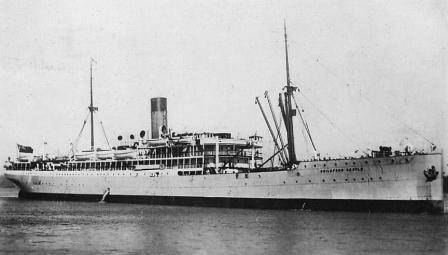
ss Guildford Castle
28 Deccember 1918 berthed moved to alongside the Quay at Rotterdam. The ship was visited by Col. C B Lawson RAMC the Medical Advisor to the Repatriation Committe
29 December 1918 at Rotterdam at 10.30am embarked 3 cot patients and 53 sitting patients - all Other Ranks
30 December 1918 at Rotterdam embarked 8 cot patients and 31 sitting patients - all Other Ranks
31 December 1918 at Rotterdam embarked 9 cot patients and 59 sitting patients - all Other Ranks
1 January 1919 at Rotterdam embarked 1 cot patient - Officer and 9 cot patients and 7 sitting patients - Other Ranks
2 January 1919 at Rotterdam embarked 4 cot patients - Officers and 9 cot patients and 10 sitting patients - Other Ranks
3 January 1919 at Rotterdam embarked 25 cot patients and 89 sitting patients - Other Ranks
4 January 1919 at Rotterdam embarked 10 cot patients and 27 sitting patients - Other Ranks. At 6am sailed for Southampton in a moderate gale
5 January 1919 at 11am berthed at Southampton Docks and disembarked the patients
7 January 1919 at Southampton Docks commenced loading bunker coal
8 January 1919 at Southampton Docks completed loading bunker coal. At 13.45 moved to No: 22 berth and commenced embarking 398 sick and wounded German Prisoners of War. At 8.30pm sailed Southampton Docks for Rotterdam. The sea was rough with a strong wind
9 January 1919 at 7am anchored off Dover. 10.15am sailed for Rotterdam. At 4pm anchored off Norford Ness
10 January 1919 sailed for Rotterdam. Sighted numerous floating mines. AT 5.30pm anchored in mid stream at Rotterdam
11 January 1919 at 9.30am the disembarkation of the German Prisoners of War was commenced under the supervision of the Dutch authorities at Park Kade. At 2pm moved to Lloyd Ka de
12 January 1919 embarked 34 patients
13 January 1919 embarked 13 patients
14 January 1919 embarked 13 patients. At 12 noon Boat Drill and Danger Stations
15 January 1919 embarked 7 patients
17 January 1919 embarked 2 patients
18 January 1919 embarked 1 patient
19 January 1919 embarked 6 patients
20 January 1919 embarked 14 patients and 12 Nursing Sisters as passengers to England on completion of thier duties at the Clearing Station at Lloyd Kade
21 January 1919 at 6am sailed for Le Havre. At 3.30pm arrived off the English Coast and at 9pm anchored off Deal
22 January 1919 at 6.10am sailed for Le Havre. 5.30pm anchored in Le Havre Roads. At 11.55pm berthed alongside at Le Havre Quay
23 January 1919 at 5.20am 118536 Gunner Merrifield R G RFA 267 Seige Battery died from pneumonia. Gunner Merrifield was buried at Ste Marie Cemetery, Le Havre in Grave Div 64 VI C1. At 10.30am two other patients were disembarked both suffering from Pneumonia and Pleurisy and admitted to No: 2 General Hospital, Le Havre. At 2pm commenced embarking 320 patients. At 4.15pm sailed for Southampton
24 January 1919 at 00.05am anchored in St Helens Bay, off the Isle of Wight. At 7.45am moved anchorage to one off Netley Hospital . At 9.15am berthed alongside at Southampton Docks and commenced disembarking the patients
25 January 1919 at 6.35am sailed Southampton Docks and anchored off Netley Hospital
27 January 1919 at 8pm sailed for Le Havre
28 January 1919 at 5.35am anchored in Le Havre Roads. At 8.30am alongside at Le Havre Quay and commenced embarking 451 patients and 4 passengers. At 12.10pm sailed for Southapton and at 9.45pm anchored off Netley Hospital
29 January 1919 at 8pm berthed alongside at Southampton Docks and disembarked the patients and passengers
30 January 1919 at 6.50am sailed from Southampton Docks and anchored off Netley Hospital
31 January 1919 at 1am sailed for Le Havre. At 10am anchored in Le Havre Roads. At 11.45am berthed alongside Le Havre Quay and commenced embarking 442 patients and 11 Other Rank passengers
1 February 1919 at 12.15am sailed from Le Havre. At 10.15am berthed at Southampton docks and commenced disembarking the patients
2 February 1919 at 6.25am sailed from Southampton Docks and anchored off Netley Hospital. At 9pm sailed Netley anchorage for Le Havre
3 February 1919 at 6.10am anchored in Le Havre Roads. 3pm alongside Le Havre Quay and commenced embarking 445 patients. By 6pm embarkation complete. At 9.15pm sailed for Soutahmpton. The sea was calm and the weather was fine
4 February 1919 at 8.30am berthed at Southampton Docks. 11am commenced disembarkation of the patients
5 February 1919 at 7am at Southampton Docks moved to No: 35 berth to load bunker coal
7 February 1919 at 12 noon coaling complete. moved to No: 22 berth and commenced embarking 411 German patients (prisoners of war) to convey them to Rotterdam. 7.30pm sailed Southampton for Rotterdam
8 February 1919 at 6.45am at sea patient German Prisoner of war Private Fritz Bohme of 186 Active Infantry Regiment reported found dead in a padded cell. At 11am a Court of Enquiry was held and found that Private Bohme had died from self inflicted strangulation whilst mentally unsound. At 12.40pm Private Bohme was buried at sea at 51.51N 1.34E
9 February 1919 at 12 noon berthed alongside at Rotterdam and commenced the disembarkation of the Prisoner of War patients. At 4pm moved to Lloyd Kade berth. At 6.30pm embarked 33 patients and 1 Nurse as a passenger
10 February 1919 at 6.20am sailed for Le Havre
11 February 1919 at 6.15am anchored in Le Havre Roads. By 12.45pm berthed alongside Le Havre Quay. at 9pm commenced the embarkation of a further 433 patients. 11pm sailed for Southampton
12 February 1919 at 8.30am alongside at Southampton Docks and commenced the disembarkation of the patients and one passenger. At 12.40pm the ship moved to No: 25 berth
14 February 1919 at 7.30pm sailed for Le Havre
15 February 1919 weather foggy. At 5.15am anchored outside Le Havre Roads. At 12.35pm the ship moved anchorage to Le Havre Roads
16 February 1919 at 12 noon berthed alongside Le Havre Quay and embarked 446 patients. 4pm sailed for Southampton
17 February 1919 at 1.22am anchored off Netley Hospital. At 9am berthed alongside Southampton Docks and disembarkation of the patients commenced
18 February 1919 at Southampton sailed at 6am and anchored off Netley Hospital. At 8pm sailed for Le Havre
19 February 1919 at 4.45am anchored in Le Havre Roads. At 1.45pm berthed at Le Havre Quay and commenced the embarkation of 463 patients. At 11.15pm sailed for Southampton
20 February 1919 at 9.15am berthed at Southampton Docks and commenced disembarking the patients
21 February 1919 at 6.20am sailed from Southampton Docks and anchored off Netley Hospital
22 February 1919 at 12 noon moved from Netley anchorage to No: 22 berth Southampton Docks and commenced the embarkation of a total of 383 German prisoners for repatriation together with 3 Officers and 24 Others ranks of the Dutch Red Cross. At 7.30pm sailed for Rotterdam. At 9.30pm anchored in St Helens Bay off the Isle of Wight
23 February 1919 at 6am sailed for Rotterdam. At 7.30pm anchored off Orford Ness
24 February 1919 at 6am sailed from the Orford Ness anchorage to Rotterdam. Arrived at 4.30pm and berthed alongside the quay.
25 February 1919 8am commenced the disembarkation of the repatriated prisoners. At 11.45am embarked 2 British Other Ranks as patients and 3 British Officers as passengers. 4pm sailed Rotterdam and anchored off the River Maas
26 February 1919 sailed for Le Havre
27 February 1919 at 3.45am anchored in Le Havre Roads. At 8.30pm berthed alongside Le Havre Quay and embarked a total of 410 patients. At 10.15pm sailed for Southampton
28 February 1919 at 7.20am anchored off Netley Hospital. By 12.55pm berthed alongside Southampton Docks and disembarked the patients. Captain J G F Hosken RAMC (T) took over as O C Troops in relief of Major W H Scott, RAMC
1 March 1919 at 4pm at Southampton Docks moved to No: 45 berth for loading bunker coal and boiler cleaning
11 March 1919 embarked patients for Le Havre - 1 Officer and 11 Other Ranks (French) and 1 Officer and 63 Other Ranks (Serbian)
12 March 1919 at 9am sailed Southampton Docks and anchored off Netley Hospital. At 6pm sailed from Netley anchorage for Le Havre
13 March 1919 at 3.15am anchored in Le Havre Roads. At 8pm alongside Le Havre Quay. At 8.15pm disembarked the French and Serbian patients and commenced embarking 438 patients together with 18 passengers. At 10pm sailed for Southampton
14 March 1919 at 8.45am berthed at Southampton Docks and disembarked the patients and passengers
15 March 1919 at 7am sailed from Southampton Docks and anchored off Netley Hospital. At 7pm sailed for Le Havre
16 March 1919 at 5am anchored in Le Havre Roads. At 8.30am berthed alongside Le Havre Quay and embarked 73 patients together with 2 RAMC Officers as passengers
17 March 1919 at Le Havre Quay embarked a further 316 patients. At 12 noon sailed for Southampton. The sea was calm and the weather fine
18 March 1919 at 8am berthed alongside at Southampton Docks and commenced the disebarkation of the patients and passengers. At 7pm sailed for Le Havre
19 March 1919 at 4.15am anchored in Le Havre Roads. At 12 noon berthed alongside at Le Havre Quay and commenced the embarkation of 275 patients. At 3pm sailed Le Havre in fine weather. At 10.45pm anchored off St Helens, Isle of Wight
20 March 1919 at 6.15am sailed from the anchorage off the Isle of Wight and berthed at Southampton Docks at 9am. At 10am commenced the disembarkation of the patients which was completed by 11.05am
21 March 1919 at 7am sailed from Southampton Docks and anchored off Netley Hospital
24 March 1919 at 2pm berthed alongside at Southampton Docks and commenced embarking 384 German Prisoners of War (patients) and 18 German medical staff. 7pm sailed for Rotterdam
25 March 1919 at 1pm anchored off Orford Ness
26 March 1919 at 5.15am sailed from the Orford Ness anchorage for Rotterdam. At 4.15pm berthed alongside at Rotterdam
27 March 1919 at Rotterdam. At 10.30am commenced the disembarkation of the German patients and medical staff which was completed by 2.05pm
28 March 1919 at 4.30am sailed from Rotterdam for Le Havre, The sea was moderately rough
29 March 1919 at 10am anchored in Le Havre Roads
30 March 1919 at 10.30am alongside Le Havre Quay and commenced embarking 215 patients and 31 passengers. 2pm sailed from Le Havre for Southampton. 11.15pm anchored off Netley Hospital
31 March 1919 at 7.15am alongside at Southampton Docks and commenced the disembarkation of the patients and the passengers
1 April 1919 at Southampton Docks. At 2.30pm commenced the embarkation of 383 German prisoner of war patients and 21 German prisoner of war medical staff
2 April 1919 at Southampton Docks. A main steam pipe in the engine room burst
3 April 1919 at Southampton Docks at 2.30pm commenced transferring the German POW patients and their medical staff to the Ambulance Transport Goorka. 4pm transfer completed
4 April 1919 at Southampton Docks moved to No: 32 berth for loading bunker coal
7 April 1919 at Southampton Docks completed loading bunker coal
8 April 1919 sailed from Southampton Docks at 11am and anchored off Netley Hospital
10 April 1919 at 11.30am moved from the Netley Hospital anchorage to Southampton Docks and commenced the embarkation of 17 Officers and 389 Other Ranks patients - German Prisoners of War. At 8.45pm sailed for Rotterdam
11 April 1919 at 5.10pm S/M 7519 E Schierge, a German POW patient jumped overboardand was presumed drowned. A Court of Enquiry was held at 8pm. 10.10pm anchored off the Hook of Holland
12 April 1919 at 6am sailed for Rotterdam and berthed alongside. 10.45am commenced disembarkation of the German POW patients. Arrangements for the provision of a midday meal was cancelled by the Dutch Authorities. At 3.05pm sailed for Southampton. At 6pm anchored off the Hook of Holland
14 April 1919 at 4.45am anchored off Netley Hospital. At 5.15pm anchorage moved to off Cowes, Isle of Wight where the ship remained at anchor until 23 April 1919
23 April 1919 at 12.35pm sailed from the Cowes Anchorage tp Southampton Docks. At 2.20pm berthed alongside and commenced the embarkation of 35 Other ranks patients - German Prisoners of War
24 April 1919 at Southampton Docks at 3pm additional embarkation of 20 Officers and 308 Others ranks patients - German Prisoners of War. At 7.05pm sailed for Rotterdam
25 April 1919 at 8.45pm anchored off the Hook of Holland
26 April 1919 at 5am sailed for Rotterdam from the Hook anchorage berthing alongside at 9am. The disembarkation of the 343 German Prisoners of War patients was completed by 11.30am. At 3.15pm sailed for Le Havre. AT 7pm anchored in the North Sea off the 'D' Light vessel. The sea was rough and the weather stormy
27 April 1919 anchored off Deal at 4.30pm
28 April 1919 sailed from the Deal anchorage at 5am and anchored in Le Havre Roads at 3.30pm
29 April 1919 at 6.30pm berthed alongside Le Havre Quay
30 April 1919 at 9am at Le Havre commenced the embarkation of 37 Officers, 15 Sisters and 350 Other Ranks patients plus 5 passengers. At 6.30pm sailed for Southampton
1 May 1919 at 3.45 anchored off Netley Hospital. At 8.30am berthed alongside in Southampton Docks and commenced the disembarkation of the patients and passengers - completed at 12 noon
2 May 1919 at 7.30am sailed from Southampton Docks and anchored off Netley Hospital until 5 May 1919
5 May 1919 at 1.30pm sailed from the Netley anchorage to Dry Dock in Southampton Docks. Remained in the Dry Dock until 12 May 1919
12 May 1919 flooded up out of the Dry Dock and sailed for the Netley Hospital anchorage. Remained at anchor until 16 May 1919
16 May 1919 at 6.30pm sailed Netley Hospital anchorage for Le Havre
17 May 1919 at 2.30am berthed at Le Havre Quay. At 9.50am commenced the embarkation of 5 Officers and 361 Other Rank patients together with 10 passengers. At 1.05pm sailed Le Havre for Southampton. At 9.30pm anchored off Netley Hospital
18 May 1919 at 8am sailed from the Netley Hospital anchorage to Southampton Docks and disembarked the patients and passengers
19 May 1919 sailed from Southampton Docks at 7.30am and anchored off Netley Hospital until 25 May 1919
25 May 1919 at 8am moved from the Netley Hospital anchorage to Southampton Docks
26 May 1919 at Southampton Docks loading bunker coal until 28 May 1919
28 May 1919 at 4.30pm sailed Southampton Docks and anchored off Netley Hospital until 3 June 1919
3 June 1919 at 4am sailed from the Netley Hospital anchorage with one lady passenger (Ministry of Shipping) to Le Havre. At 12.05pm berthed alongside the Quay at Le Havre and embarked 11 Officers and 344 Other Ranks as patients with one passenger. At 10pm sailed for Southampton Docks
4 June 1919 at 6.50am anchored off Netley Hospital. At 8.20am to Southampton docks and disembarked the patients and the passenger
5 June 1919 sailed at 6.15am from Southampton Docks and anchored off Netley Hospital
6 June 1919 sailed from Netley anchorage to Le Havre. At 1.20pm anchored in Le Havre Roads. 4pm entered Le Havre Harbour and berthed on the Quay. Commenced embarking 36 Officers and 287 Other Ranks as patients with 5 mental guards. At 7.15pm sailed for Southampton
7 June 1919 at 3.10am anchored off the Nab Light Vessel in thick fog. At 11.05am sailed for Southampton berthing alongside at 1.45pm. Commenced disembarking the patients and the mental guards. At 3.45pm the disembarkation was completed
8 June 1919 sailed Southampton Docks and anchored off Netley Hospital remaining at anchor until 18 June 1919
18 June 1919 moved from Netley anchorage to alongside at Southampton Docks until 26 June 1919
26 June 1919 sailed from Southampton Docks at 7pm and anchored off Netley Hospital
1 July 1919 sailed from Netley anchorage for Le Havre berthing alongside Le Havre Quay at 1.25pm. Commenced embarking patients. The embarkation was completed at 9.10pm and the sailed for Southampton at 9.30pm
2 July 1919 at 6.30am anchored off Netley Hospital. At 8.15am moved to alongside Southampton Docks and disembarked the patients
3 July 1919 sailed Southampton Docks at 6.30am for Le Havre. At 3.45pm berthed alongside Le Havre Quay. Commenced embarking patients until 6.30pm
4 July 1919 7am recommenced the embarkation of patients until 7.45am. At 8am sailed for Southampton. At 4.45pm berthed alongside at Southampton Docks and disembarked the patients
6 July 1919 until 9 July 1919 remained berthed at Southampton Docks
10 July 1919 sailed from Southampton at 6.30am for Le Havre anchoring in Le Havre Roads at 3.30pm. At 6pm entered Le Havre Harbour and berthed on the Quay. Commenced embaring some of the patients at 7.15pm until 7.30pm
11 July 1919 at Le Havre Quay recommenced embarking the patients at 9.15am. Completed the embarkation at 11.45am and sailed for Southampton. Berthed at Southampton Docks at 6.55pm and disembarked the patients
12 July 1919 at Southampton Docks sailed at 6.15am for Le Havre berthing alongside at Le Havre Quay at 3.40pm. Commenced embarking the patients until this was completed at 5.30pm. At 5.50pm sailed for Southampton
13 July 1919 at 2.40am anchored off Netley Hospital moving to a berth in Southampton Docks at 7am. At 10am commenced the disembarkation of the patients which was completed at 11.20am
14 July 1919 at 6.45am sailed Southampton Docks and anchored off Netley Hospital remaining at anchor until 18 July 1919
18 July 1919 berthed alongside at Southampton Docks at 11.45am remaining at this berth until 24 July 1919
25 July 1919 at 7.30am sailed Southampton Docks for Le Havre berthing alongside Le Havre Quay at 4.50pm. The embarkation of the patients commenced until 7pm
26 July 1919 at Le Havre Quay at 8.45am recommenced the embarkation of the patients which was completed at 10.05am. Sailed for Southampton at 11.15am. At 7.05pm berthed alongside at Southampton Docks commencing the dismbarkation of the patients. This was completed by 9.10pm
27 July 1919 at 7.30am sailed Southampton Docks for Le Havre berthing alongside Le Havre Quay at 4.30pm
28 July 1919 at Le Havre Quay at 11.15am embarking patients this was completed by 12.15pm. Sailed for Southampton at 1.15pm and anchored off Netley Hospital at 9.20pm
29 July 1919 moved from the Netley Anchorage at 7.40am to Southampton Docks berthing alongside at 8.50am. Commenced the disembarkation of the patients at 10am. This was completed at 11.20am. The ship remained alongside at Southampton until 1 August 1919
1 August 1919 at 8am sailed Southampton Docks for Le Havre. At 5.20pm berthed at Le Havre Quay
2 August 1919 at Le Havre Quay. At 9.40am commenced the embarkation of patients. Embarkation completed and sailed at 12 noon for Southampton. Berthed at at Southampton Docks at 9.50pm and commenced the disembarkation of the patients.
3 August 1919 at Southampton Docks. By 00.50am finished disembarkation of patients. At 7.30am recommenced disembarkation of patients which was completed at 7.50am. At 8.15am sailed for Le Havre. At 5.20pm berthed alongside Le Havre Quay and commenced the embarkation of patients. By 6.40pm stopped the embarkation for the night
4 August 1919 at Le Havre Quay the embarkation of patients recommenced at 8.50am and was completed by 10am. At 10.20am sailed from Le Havre Quay for Southampton. At 7.10pm anchored off Netley Hospital
5 August 1919 at 7.35am moved from the Netley anchorage to Southampton Docks. At 10am commenced the disembarkation of the patients and this was completed at 12.40pm. Remained berthed at Southampton Docks until 15 August 1919
15 August 1919 at 4.45pm sailed from Southampton Docks for Le Havre
16 August 1919 berthed alongside Le Havre Quay at 1.45am. At 9.30am commenced the embarkation of patients. This embarkation was completed at 11am and the ship sailed for Southampton at 12 noon. At 8.30pm anchored off Netley Hospital
18 August 1919 at 7.30am moved from the Netley anchorage to Southampton Docks and at 10.15am commenced the disembarkation of the patients. The disembarktion was completed by 12.05pm. Remained alongside at Southampton Docks until 20 August 1919
20 August 1919 at 6.30am sailed from Southampton Docks for Le Havre Quay. Berthed alongside at Le Havre at 4.15pm
21 August 1919 at Le Harve Quay at 5.35am the embarkation of patients commenced and was completed by 7am. At 7.20am the ship sailed from Le Havre for Southampton. Berthed alongside at Southampton Docks at 4.15pm. The disembarkation of the patients commenced 4.50pm and was completed by 6.40pm. The ship sailed for Le Havre at 7.30pm
22 August 1919 at 4.30am anchored in Le Havre Roads. By 8.35am berthed alongside at Le Havre Quay. At 11am commenced enbarking the patients which was completed at 11.55am. At 12.05pm sailed for Southampton. At 8.55pm anchored off Netley Hospital
23 August 1919 at 7.05am moved from the Netley anchorage to alongide at Southampton Docks. At 10.05am commenced the disembarkation of the patients which was completed by 11.35am. At 5pm sailed for Le Havre
24 August 1919 at 1.30am anchored in Le Havre Roads. At 7.35am moved from the anchorage to alongside at Le Have Quay at 8.30am. At 10.20am commenced the embarkation of the patients which was completed at 11.25am. At 11.45am sailed for Southampton anchoring off Netley Hospital at 8.05pm
25 August 1919 at 7.40am moved from the Netley anchorage to Southampton Docks berthing at 8.25am. At 9.45am commenced the disembarkation of the patients which was completed at 11.05am. Remained alongside at Southampton Docks until 27 August 1919
27 August 1919 sailed Southampton Docks and anchored off Netley Hospital
28 August 1919 sailed from the Netley anchorage at 7.05pm for Le Havre
29 August 1919 at 3.40am anchored in Le Havre Roads. 6am entered Le Havre Harbour and berthed alongside the Quay. At 11.55am commenced embarking patients until 1.20pm
30 August 1919 at Le Havre Quay at 2.20pm recommenced embarking patients until 2.55pm when the embarkation was completed. At 4.20pm sailed for Southampton
31 August 1919 at 1.20am anchored off Netley Hospital moving to Southampton Docks at 7am. Alongside at her berth at 8.10am. At 10.40am commenced the disembarkation of the patients and this was completed at 3.30pm. The ship remained alongside at Southampton Docks until 5 September 1919
5 September 1919 at 7am sailed Southampton Docks for Le Havre. At 4.40pm berthed at Le Havre Quay. At 5.50pm commenced embarking the patients. This embarkation stopped for the night at 8.10pm
6 September 1919 at Le Havre Quay at 10.10am recommenced the embarkation of the patients which was completed at 11am. The ship sailed for Southampton at 11.35am to anchor off Netley Hospital
7 September 1919 at 7am the ship moved to Southampton Docks being secured alongside her berth at 7.50am. At 10.10am the disembarkation of the patients commenced and this was completed by 11.40am. The ship remained at her berth until 11 September 1919
11 September 1919 at Southampton entered dry dock and remained there until 19 September 1919
19 September 1919 at 11.45am moved out of the dry dock at Southampton and berthed alongside by 12.30pm
22 September 1919 at Southampton Docks commenced loading bunker coal until 26 September 1919 then remained berthed alongside
3 October 1919 at Southampton commenced the embarkation of passengers for Malta and Alexandria
9 October 1919 at Southampton with 358 passengers embarked sailed for Malta and Alexandria at 5.50pm
10 October 1919 noon position 48.13N 5.25W having sailed 232 nmiles
11 October 1919 noon position 43.52N 8.57W having sailed 300 nmiles
12 October 1919 noon position 38.53N 9.33W having sailed 305 nmiles
13 October 1919 noon position 36.02N 5.09W having sailed 317 nmiles. Passed Gibraltar. At 2pm the RAMC detachment mustered for a kit inspection
14 October 1919 noon position 36.41N 1.30E having sailed 315 nmiles. At 4.30pm a fire and boat drill for all onboard
15 October 1919 noon position 36.41N 7.59E having sailed 324 nmiles
16 October 1919 noon position 36.16N 14.00E having sailed 303 nmiles. At 2.40pm arrived at Malta disembarking 156 of the passengers. Distance sailed since noon 37 nmiles.8.40pm sailed Malta
17 October 1919 noon position 36.46N 18.09E having sailed 189 nmiles
18 October 1919 noon position 33.04N 23.47E having sailed 298 nmiles
19 October 1919 noon position 31.33N 29.17E having sailed 295 nmiles. At 3.30pm arrived at Alexandria, Egypt berthing alongside by 4.30pm
20 October 1919 at Alexandria at 1pm disembarking 202 passengers. Moved berth and secured to a buoy in the harbour
21 October 1919 at Alexandria secured to a harbour buoy
22 October 1919 at 6pm sailed Alexandria
23 October 1919 noon position 34.12N 21.41E having sailed 209 nmiles since sailing from Alexandria
24 October 1919 at 7am arrived at Marsina. 4pm commenced the embarkation of 535 patients. 4.20pm sailed from Marsina
25 October 1919 noon position 32.29N 32.35E having sailed 227 nmiles since sailing from Marsina
26 October 1919 at 7am arrived at Alexandria and by 11am berthed alongside the Quay. The disembarkation of patients commenced at this time and was completed by 6pm. The RAMC detachment were not allowed ashore as Alexandria had been declared out of bounds to troops due to disturbances. Embarked 1 British Officer and 3 Egyptians as passengers
27 October 1919 anchored off Alexandria
28 October 1919 sailed Alexandria. Fire and boat drill practiced
29 October 1919 at 9.40am arrived at Beirut and the passengers disembarked. 2pm commenced the embarkation of 575 patients 3 RAMC passengers and 4 Indians as guards for the Mental patients. The embarkation was completed by 5.15pm. At 5.40pm sailed from Beirut
30 October 1919 at sea on passange from Beirut to Alexandria
31 October 1919 at 7am arrived at Alexandria and anchored in the harbour. The ship was in quarantine until 3 November 1919
4 November 1919 at Alexandria moved to alongside the ports quay. At 9am the disembarkation of the patients was commenced. This was completed at 2.40pm
5 November 1919 moved to an anchorage off Alexandria. Commenced loading bunker coal
6 November 1919 coaling completed. At 5.10pm sailed Alexandria for Mersina arriving at 6.40am 8 November 1919
8 November 1919 at Mersina. At 9.30am commenced the embarkation of patients - this was completed at 1.30pm when 420 patients had been embarked. 2.30pm sailed from Mersina for Alexandria arriving 10 November 1919
10 November 1919 at 6.40am at Alexandria. At 10am commenced the disembarkation of patients which was completed by 5.30pm
11 November 1919 until 13 November 1919 remained berthed alongside at Alexandria
14 November 1919 at 7.40am sailed Alexandria with 1 Nursing Sister as a passenger. Fire and Boat Drill was carried out and a whist drive was organised by the RAMC Recreation Club onboard
16 November 1919 at 7.30am arrived at Mersina. The embarkation of patients was commenced at 10am - 73 patients were embarked. Also embarked 1 Officer, 1 Other Rank and 20 Indian Other Ranks were embarked for Beirut. Also 1 Indian Army Officer and 1 Native servant were embarked for Alexandria. At 1pm sailed for Beirut
17 November 1919 ar 7.40am arrived at Beirut. The Nursing Sister and the passengers for Beirut from Mersina disembarked. At 10am embarked 344 patients. Also embarked 1 Nursing Sister and 1 Officer, passengers to Alexandria. At 2pm sailed from Beirut
19 November 1919 arrived at Alexandria anchored off in quarantine until 22 November 1919
22 November 1919 berthed alongside the Quay at Alexandria. The disembarkation of the patients and passengers commenced. This disembarkation was completed by 3.30pm
23 November 1919 and 24 November 1919 berthed alongside at Alexandria
25 November 1919 at 8am sailed Alexandria with 1 British Officer & 1 British Other rank embarked at passengers
26 November 1919 at 1pm arrived at Beirut. The two passengers diembarked. At 2.30pm commenced embarking 437 patients. Also embarked for Alexandria 2 British Officers and 2 British Other ranks. 2 Indian Officers and 5 Indian Other ranks. At 6.10pm sailed Beirut
27 November 1919 at 9.17pm at 31.52N 30.54E patient Private A/454856 Samuel James RASC (Canteens) discharged dead from malaria and cardiac failure.
28 November 1919 at 7am arrived at Alexandria in quarantine. At 7pm the body of Private James was removed from the ship. He is buried in Alexandria (Hadra) War Memorial Cemetery in grave G29. The ship remained in quarantine until 2 December 1919
2 December 1919 moved to alongside the Quay at Alexandria and commenced disembarking the patients at 9am. This was completed by 3pm
3 December 1919 remained berthed at Alexandria
4 December 1919 at 7.50am sailed Alexandria with one passenger for Beirut
5 December 1919 at 10.40am arrived and anchored off Beirut. At 5pm moved and berthed alongside at Beirut
6 December 1919 at 8am commenced embarking the 427 patients. This was completed by 12 noon. At 1pm sailed from Beirut
7 December 1919 at 5pm arrived off Alexandria and anchored - in quarantine
9 December 1919 while still at anchor and in quarantine the Master and the OC Troops inspected the cold storage. Everything was found in order
10 December 1919 off Alexandria at anchor - in quarantine
11 December 1919 at 12 noon moved from the anchorage at Alexandria to alongside for disembarkation of the patients
12 December 1919 until 14 December 1919 berthed alongside and loading bunker coal
15 December 1919 at 8am sailed from Alexandria for Beirut with two passengers
16 December 1919 at 10.20am arrived off Beirut and anchored. At 4pm made fast to a buoy
17 December 1919 at 9.30am at Beirut commenced embarking 425 patients and 2 passengers for Alexandria. At 1.30pm sailed from Beirut. The weather was stormy
18 December 1919 on passage to Alexandria. The sea was calmer. At 5.40pm arrived at Alexandria and anchored in quarantine
19 December 1919 to 21 December 1919 at anchor off Alexandria still in quarantine
22 December 1919 quarantine lifted and the ship berthed in Alexandria. At 2pm commenced disembarkation of the patients
23 December 1919 to 28 December 1919 alongside at Alexandria
29 December 1919 at 7.40am sailed from Alexandria for Beirut
30 December 1919 at 11.30am arrived off Beirut and anchored
31 December 1919 berthed alongside at Beirut at 8.30am and commenced embarking 157 patients at 9.30am. Embarkation of patients completed at 11am. Also embarked as passengers 3 British Officers, 11 British Nursing Sisters and 1 American lady. At 11.30am sailed from Beirut
2 January 1920 anchored off Alexandria in quarantine
3 January 1920 moved to alongside the quay at Alexandria. The patients and passengers were disembarked
4 January 1920 until 8 January 1920 remained berthed at Alexandria
9 January 1920 embarked 20 Turkish POW Officers, 417 Turkish POW Other ranks, 1 Turkish medical Officer, 1 Interpreter - a total of 439. Also embarked 1 British Medical Officer attached for duty. Sailed from Alexandria at 6.30pm
12 January 1920 arrived off Constantinople and anchored
13 January 1920 while at anchor off Constantinople disembarked the Turkish Prisoners of War
15 January 1920 sailed from Constantinople
16 January 1920 at sea, strong winds and snow
17 January 1920 at 10.30am anchored off Novorossisk
19 January 1920 the ship moved alongside at Novorossisk and commenced embarking patients
20 January 1920 still at Novorossisk the embarkation of patients continued. Embarked 498 Russian patients, 34 Russain medical staff, 34 British Other ranks. Also embarked as passengers 4 British Officer and 2 YMCA. At 2.30pm sailed from Novorossisk
22 January 1920 at 10am arrived at Constantinople. The 34 British Other ranks and 6 passengers disembarked. At 8.20pm sailed Constantinople
23 January 1920 at 5am at 40.40N 27.22E Cossack A Mansonoff, a Russain patient of the 34th Cossack Regiment discharged dead - heart failure. He was buried at sea at 11am
24 January 1920 at 10.30pm 36.11N 19.31E Military Clerk Peter Protopopoff, a Russain patient was discharged dead - natural causes
25 January 1920 at 3.30am at 36.07N 18.18E Private William Dolyonko, a Russain Patient was discharged dead - natural causes. Both Protopopoff and Dolyonkno were buried at sea at 11.15am. At 6.45pm the ship arrived at Malta and anchored in the quarantine Harbour
27 January 1920 10 patients suffering from Typhus and 1 Russian Sister were transferred ashore to the Isolation Hospital
31 January 1920 loaded bunker coal. A further 27 cases of Typhus , 2 Russian Doctors, 5 Russian Nursing Sisters and 6 Russian Orderlies were transferred ashore to the isolation hospital. At 6.50pm one Russian Private Demetrius Lochhomoieff discharged dead - natural causes. At 7.50pm the ship sailed with the remaining Russian patients and Medical staff onboard
1 February 1920 at 8am Russian Private Demetrius Lochhomoieff who died the previous day was buried at sea
3 February 1920 arrived off Salonica at 1.30pm and anchored
4 February 1920 berthed at Salonica. A ships steward - Mr Bailey - discharged to hospital ashore as a suspected case of typhus
6 February 1920 still alongside at Salonica. Another ships steward - Mr Orchard - discharged to hospital ashore as a suspected case of typhus
7 February 1920 alongside at Salonica two of the Royal Army Medical Corp - a Corporal Lander and a Private Wardle - both discharged ashore for hospital observation. At 11am all crew and RAMC were given medical inspection. At 2pm commenced the embarkation of British Officers and Other ranks plus Turkish Prisoners of War - a total of 590. At 4.20pm sailed from Salonica
8 February 1920 arrived off Channak at 10am
9 February 1920 arrived at Tuzia Bay and anchored - the ships was in quarantine.
15 February 1920 at 8am the Turkish Prisoners of War were disembarked. Medical inspections of the crew and troops remaining onboard were undertaken. At 2pm the Turkish Prisoners of War were re-embarked. At 3.45pm sailed from Tuzia Bay. At 5.30pm arrived at Constantinople and anchored
16 February 1920 at anchor at Constantinople the Turkish Prisoners of War were disembarked
17 February 1920 at anchor at Constantinople. Two British Other Ranks were discharged ashore for hospital obervation
24 February 1920 embarked 68 British Officers, 75 Indian patients, 19 Indian Orderlies, 286 Muleteers plus a Naval Officer together with his wife and 3 children, 2 nursing sisters and 4 Other Ranks. 9.20pm sailed from Constantinople
27 February 1920 at 2.40pm arrived at Famagusta, Cyprus and disembarked 286 Muleteers and 2 British Officers. At 6.40pm sailed for Alexandria
29 February 1920 arrived at Alexandria and disembarkation took place
1 March 1920 & 2 March 1920 remained berthed alongside at Alexandria
3 March 1920 at Alexandria embarked as patients 8 British Officers, 2 Sisters, 131 British Other ranks. Embarked as passengers 48 British Officers, 8 Sisters, 101 British Others ranks and 6 civilians. At 6.50pm sailed for Malta
6 March 1920 arrived at Malta
7 March 1920 at Malta embarked as patients 3 British Officers, Naval Others ranks 41 and 4 British Army Other ranks. Embarked 8 British Officers and 2 civilians as passengers and disembarked 4 civilian passengers from Alexandria. At 1.40pm sailed for Gibraltar
11 March 1920 at 7.30am arrived at Gibraltar. One British Officer (Passenger) disembarked. 15 Naval Other ranks and 10 British Army Other ranks embarked as patients. 5.30pm sailed for England
14 March 1920 in the Bay of Biscay with strong winds and very rough seas
16 March 1920 at 9am berthed at Southampton and all passengers and patients disembarked. At 3pm sailed for Liverpool
18 March 1920 arrived at Liverpool
19 March 1920 to 25 March 1920 berthed at Liverpool
26 March 1920 to 29 March 1920 in dry dock
30 March 1920 to 8 April 1920 alongside at Liverpool
9 April 1920 at 9.15pm sailed from Liverpool for Marseilles, France
15 April 1920 at 2.20am passed Gibraltar. Lance Corporal 393035 Joseph Grundy Robinson, Royal Army Medical Corp discharged dead. He had been discharged from the ships crew on 5 April 1919 for medical reasons. He is buried in West Pelton (St. Pauls) Churchyard, Durham

Courtesy and © of The War Graves Photographic Project
17 April 1920 at 1pm berthed at Marseilles, France
18 April 1920 alongside at Marseilles, France and embarked 79 Indian patients and 11 Orderlies
19 April 1920 alongside at Marseilles, France and the embarkation of patients continued with 32 patients, 4 Orderlies, 21 British Other ranks amd 2 IMS Officers. At 3.40pm sailed for Alexandria
24 April 1920 at 12.30pm arrived at Alexandria and berthed alongside. Disembarkation commenced and was completed
27 April 1920 at Alexandria embarked 121 Turkish prisoners of war
28 April 1920 at Alexandria embarkation continued with 373 Turkish prisoners of war, 36 Turkish Officers, 1 Turkish Medical Officer, I British Officer, 19 British Other ranks and 2 passengers. At 3pm sailed for Constantinople
30 April 1920 at 39.54N 26.05E Prisoner of War Ismail Selim, Turkish Army discharged dead - dysentry - buried at sea. At 3pm arrived off Channak and embarked 1 British Officer and 1 Australian Other rank as passengers. Sailed for Constantinople
1 May 1920 at 5am arrived off Constantinople and anchored. At 11am commenced disembarkation
2 May 1920 embarked 1 British and 1 Russian Officer as passengers for Alexandria. At 8.10pm sailed from Constantinople. At 11.45pm received radio orders to return to Constantinople
3 May 1920 at 3.10am arrived at Constantinople
4 May 1920 disembarked the British and Russian Officer and sailed, at 5.30pm, for Batoum
6 May 1920 arrived off Batoum and anchored
9 May 1920 berthed alongside at Batoum and embarked 16 patients and 2 passengers
11 May 1920 at Batoum embarked a further 3 patients and 10 passengers
12 May 1920 at Batoum disemarked 6 passengers and moved out of the harbour to an anchorage
13 May 1920 while at anchor off Batoum embarked 2 passengers at at 6pm sailed for Constantinople
15 May 1920 arrived at Constantinople
16 May 1920 at Constantinople disembarked patients and passengers
17 May 1920 at 8pm sailed from Constantinople for Alexandria
20 May 1920 arrived off Alexandria and anchored in quarantine
23 May 1920 berthed alongside the quay at Alexandria
24 May 1920 at Alexandria No 205038 Private Burgess A of the RAMC detachment discharged to hospital ashore
25 May 1920 at Alexandria embarked 494 Turkish Prisoners of War, 1 British RAMC Doctor and 2 Nursing sisters for duty onboard together with 1 Russian Doctor as a passenger. At 3pm sailed for Constantinople
28 May 1920 arrived off Chanak at 8am. Passed through the Dardenelles and arrived at Constantinople at 7pm
29 May 1920 at anchor off Constantinople. Prisoners of War disembarked
1 June 1920 at anchor off Constantinople. 1 British Officer embarked as a patient. At 6pm sailed for Alexandria
4 June 1920 arrived off Alexandria - in quarantine
5 June 1920 & 6 June 1920 anchored of Alexandria - still in quarantine
7 June 1920 berthed alongside the quay at Alexandria
8 June 1920 at Alexandria embarked 1 British Officer, 2 Matrons & 1 Wardress for duties onboard. 123 Turkish PoW's & Internee's, 5 Indian Other ranks, & 1 Lady & child as passengers. At 5pm sailed for Constantinople
11 June 1920 arrived off Chanak at 7am. AT 7pm arrived at Constantinople
12 June 1920 at Constantinople. Disembarked the passengers and Turkish PoW. The 1 British Officer, two Matrons and 1 Wardress were transferred to ss Huntslip
14 June 1920 at Constantinople embarked 1 Serbian Officer, 7 British Other Ranks & 7 Russian Orderlies. At 9pm sailed for Salonica
16 June 1920 arrived at Salonica at 7am. Disembarked 1 Serbian Officer, 7 British Other Ranks.
17 June 1920 at Salonica embarked 472 Russian patients, 6 Doctors, 17 Nursing Sisters & 28 Orderlies
18 June 1920 at Salonica embarked 4 British Officers, 3 British Other Ranks, 1 Serbian Officer, 7 Ladies & 2 children. Sailed at 2pm from Salonica
19 June 1920 arrived at Constantinople
20 June 1920 at Constantinople disembarked 4 British Officers, 3 British Other ranks, 1 Serbian Officer, 4 passengers and 7 orderlies. Embarked 1 British Officer, 2 Ladies & 1 Serbian Other Rank. At 2pm sailed for Sevastopol
30 September 1920 at 4pm off Mudros. Embarked one British Officer as a patient. At 6pm sailed for Malta
3 October 1920 berthed at Malta sailing for Gibraltar later in the day
7 October 1920 at 8pm arrived off Gibraltar sailing 45 mins later
11 October 1920 at sea Bandsman Alexander Ross McLaren MSM, 1st Bn Gordon Highlanders discharged dead - dysentry. He is buried in Liberton Churchyard and Cemetery, Edinburgh in grave H57
12 October 1920 berthed at Southampton Docks and disembarked all patients and passengers
14 October 1920 sailed Southampton Docks and anchored off Netley
15 October 1920 to 21 October 1920 destored all medical stores and equipment. Troops disbanded
October 1920 purchased by the Admiralty and renamed MAINE (3). Taken in hand for conversion by Portsmouth Dockyard. Estimated cost of purchase and conversion was £225,435
14 February 1921 Mr Cecil E Harland RFA appointed as Chief Engineer Officer
1 March 1921 Surgeon Captain David W Hewitt CB, CMG, MB, FRCS Royal Navy appointed in charge of the Royal Naval Medical detachment onoard
Surgeon Captain David W Hewitt CB, CMG, MB, FRCS Royal Navy
9 March 1921 underwent inclining experiments at Portsmouth Dockyard
1 May 1921 Captain Richard Narramore Smardon RFA appointed as Master
24 February 1922 the Hampshire Telegraph reported ...

13 March 1922 Paymaster Lieutenant Commander A S Whyham Royal Navy appointed to the ship
23 March 1922 in the Portsmouth Evening News -

30 March 1922 sailed Portsmouth Harbour to Stokes Bay
31 March 1922 conversion work completed. Actual expenditure was £276,453

8 May 1922 at Portsmouth Dockyard while painting the ships side and following falling some 30 feet onto a pontoon Seaman Charles Vaughan was badly injured and taken to hospital

Seaman Vaughan subsequently died on 21 May 1922 at Portsmouth Hospital. At an inquest was held by the Portsmouth Coroner on 23 May 1922 touching on the death of Seaman Vaughan
15 May 1922 sailed Portsmouth for service in the Mediterranean
24 May 1922 arrived Malta and took over the Hospital Ship duties from RFA BERBICE. Her routine duties were that of Base Hospital Ship for flotilla of submarines and destroyers at Marsamuscetto and accompanying the Fleet on routine cruises
27 July 1922 the Admiralty was given authority by an Order in Council to spend two pence a day for the provision of a Royal Marine or Royal Naval rating as a barber onboard
12 August 1922 Chief Petty Officer (Cook) Charles Dash a patient from HMS CENTURION discharged dead
1922 to 1924 was mainly in Turkish waters based on Constantinople
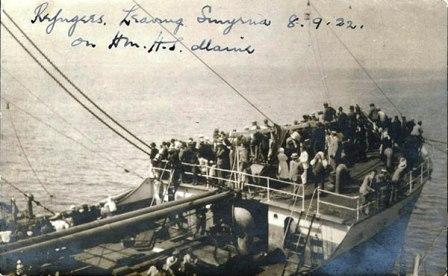
RFA Maine 3 leaving Smyrna on 8 September 1922 with refugees
15 September 1922 arrived Grand Harbour, Malta carrying 407 refugees from Smyrna who had fled to escape the atrocities being committed by the Young Turks against all European races there after the outbreak of war between the Greeks and the Turks

14 February 1923 conducted full basin trials at Chatham Dockyard after a refit
23 February 1923 sailed Chatham Dockyard for the Mediterranean
23 April 1923 Assistant Steward Arthur Randel Harding discharged dead from heart failure
16 May 1923 Surgeon Lieutenant Commander William G Thwaytes MD Royal Navy appointed to the medical team onboard
Surgeon Lieutenant Commander William G Thwaytes MD Royal Navy
19 October 1923 arrived at Plymouth Sound from the Mediterranean
22 October 1923 sailed Plymouth Sound for Portsmouth
23 October 1923 arrived at Portsmouth Dockyard to pay off
29 December 1923 sailed from Portsmouth Dockyard to Devonport arriving the next day
8 March 1924 involved in Fleet Manoeuvers off the Balearic Islands
17 March 1924 arrived at Gibraltar from Pollensa
19 March 1924 the Western Morning News reported ...

26 March 1924 Surgeon Lieutenant Commander Guy W Woodhouse BA Royal Navy appointed to the medical team onboard
Surgeon Lieutenant Commander Guy W Woodhouse BA Royal Navy
2 June 1924 Surgeon Commander Thomas R L Jones Royal Navy appointed to the medical team onboard
Surgeon Commander Thomas R L Jones Royal Navy
4 June 1924 in the House of Commons during question time it was reported the ships boilers were in a very poor condition and the Malta Dockyard had, during her current refit, been directed to replace them with new boilers
7 February 1925 re-entered Fleet service after refit at Malta
24 March 1925 went to the rescue of British registered steam trawler Roche Castle which radioed she was sinking at 40°45N 09°5W. She was 36 miles SW by W from the trawler when she received the radio message
28 March 1925 berthed at Portsmouth Dockyard
17 April 1925 sailed from Portsmouth Dockyard
2 June 1925 joined the Mediterrean Fleet on exercises from Malta visiting various ports in France, Italy and Spain
20 June 1925 Lieutenant Ean Charles Colville Greenlees Royal Navy a patient from HMS LUCIA died of enteric fever on board while the ship was involved in the Mediterrean Fleet's summer manoeuvers at Rosas Bay
23 June 1925 sailed Rosas Bay for Pollensa
24 July 1925 berthed at Malta with the Fleet exercises ending
11 August 1925 Surgeon Captain William Wallace Keir CMG MB KHS MiD Chevalier de Legion d'Honour Royal Navy appointed to lead the medical team onboard
Surgeon Captain William W Keir CMG MB KHS MiD Chevalier de Legion d'Honour Royal Navy - photo taken in 1898

24 September 1925 at Volo Labourer Giachino Grima a patient from RFA PERTHSHIRE discharged dead - fractured base of the skull
8 December 1925 when in Chatham Dockyard broke her mooring in very rough weather and was blown into HMS WHIRLWIND, a destroyer, causing damage to both vessels
29 January 1926 Paymaster Lieutenant Warren S Wright Royal Navy from HMS MALAYA discharged dead
11 May 1926 Lieutenant Alfred P Dewing Royal Navy from HMS DAUNTLESS discharged dead
8 June 1926 Surgeon Commander Harold G Padwick DSO BA Royal Navy appointed to the ship as a Specialist in anesthetics
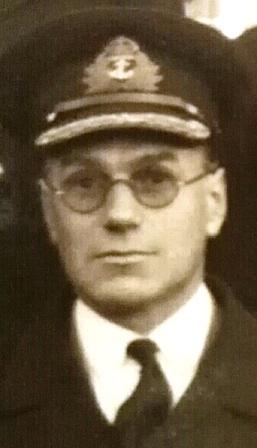
Surgeon Commander Harold G Padwick DSO BA Royal Navy
31 August 1926 the canteen fund onboard made a donation of £3.0.0d to the National Memorial to Queen Alexandria
19 January 1927 preparing to sail Malta in the company of the First Cruiser Squadron bound for Singapore
26 January 1927 at Malta
30 January 1927 sailed Malta for Suez with the gunboats HMS APHIS and HMS LADYBIRD and escorted by HMS's WANDERER and WOLLVERINE
4 February 1927 in transit of the Suez Canal

21 February 1927 arrived at Singapore bound for China - sailed 23 February 1927
4 March 1927 berthed at Hong Kong
6 August 1927 at Wei-Hai-Wei a patient Royal Marine Charles Henry Hill, Royal Marine Light Infantry discharged dead from double pneumonia. Royal Marine Hill was buried in the Royal Naval Cemetery at Wei-Hai-Wei
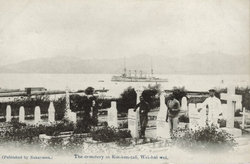
Royal Naval Cemetery at Wei-Hai-Wei
22 August 1927 at Wei-Hai-Wei
15 November 1927 arrived at Singapore from Hong Kong, anchored in the roads and sailed the same day for Colombo, Ceylon
19 November 1927 at Colombo, Ceylon
21 November 1927 sailed Colombo, Ceylon
3 December 1927 at Port Said
7 December 1927 at Malta
17 December 1927 berthed at Portsmouth Harbour sailing the next day to sea
19 December 1927 Surgeon Captain James H Ferguson CBE Royal Navy appointed in command of the Royal Naval medical team onboard. Surgeon Commander Hamlet M Whelan Royal Navy appointed to the medical team onboard
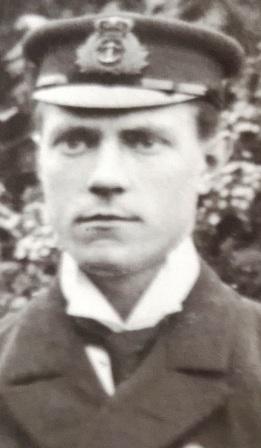
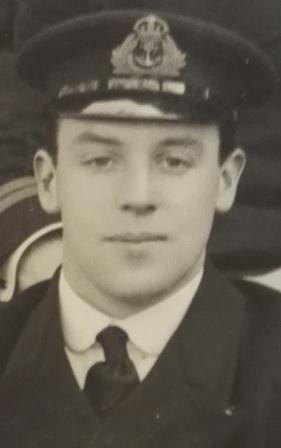
(left) Surgeon Captain James H Ferguson Royal Navy - photo take in 1898
(right) Surgeon Commander Hamlet M Whelan Royal Navy - photo taken in 1913
20 February 1928 during a storm broke her mooring in Grand Harbour, Malta and ran aground
25 April 1928 under orders to sail Malta with RFA PERTHSHIRE, HMS EAGLE and other RN ships to provide medical assistance to those injured in the Greek Earthquake of the 23 April 1928
21 June 1928 Surgeon Lieutenant Commander John F Ainley MB Royal Navy appointed as specialist in opthalmics
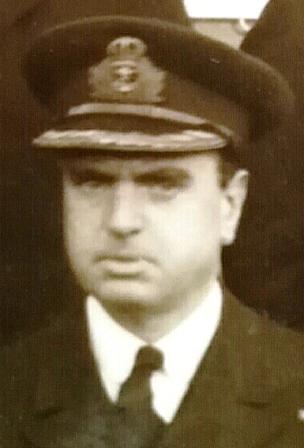
Surgeon Lieutenant Commander J F Ainley MB Royal Navy
28 July 1928 Surgeon Commander R A Brown MB Royal Navy appointed to the medical team onboard
7 September 1928 sailed Malta to Messina with the Mediterranean Fleet as part of it's summer cruise arriving on 8 September 1928 where she remained until 17 September 1928
18 September 1928 at Spalato until 25 September 1928
25 September 1928 at Sebenico until 3 October 1928
3 October 1928 at Brioni Island until 12 October 1928
12 October 1928 at Fiume until 19 October 1928
20 October 1928 at Ragusa until 27 October 1928
29 October 1928 arrived back at Malta
1 April 1929 at Gibraltar one rating from HMS ROYAL OAK admiitted for treatment to an injury
2 April 1929 at Gibraltar one Midshipman and the ships Padre from HMS ROYAL OAK admitted for treatment
26 July 1929 was involved in the treatment of several of the crew of HMS DEVONSHIRE when she suffered a turret explosion in the Aegean. Seventeen of the crew of HMS Devonshire were killed as a result of the explosion Most are buried in the Naval Reservation of the cemetery on the island of Volos

HMS Devonshire
August 1929 Surgeon Captain Arthur R Thomas OBE FRCS Royal Navy appointed to lead the medical team onboard
4 November 1929 sailed Malta for Devonport and Portsmouth to land invalids and then Chatham where she entered refit
7 December 1929 at Chatham while in refit and during a gale broke away from her moorings dragged across the basin and hit HMS WHIRLWIND, a destroyer, causing damage to both ships
24 June 1930 at Chatham Mr Charles A Smith RFA appointed as Chief Engineer Officer
Chief Engineer Officer Charles A Smith RFA
15 July 1930 Surgeon Captain Alexander McCloy Royal Navy appointed in command of the Royal Naval medical team onboard. For the previous three years he had been at Haslar Naval Hospital
29 July 1930 sailed Sheerness for Spithead
30 July 1930 arrived at Spithead and sailed later the same day for Malta
16 January 1931 sailed Malta with Units of the Mediterrean Fleet on its Winter cruise
10 August 1930 sailed Argostoli for Malta
7 January 1932 sailed Malta with the Mediterranean Fleet on its Winter cruise
9 February 1932 Lieutenant John H Buckley Royal Navy from HMS/m OTWAY discharged dead
26 May 1932 Mr T Perrett RFA appointed as Chief Engineer Officer
31 May 1932 at Malta
13 August 1932 at Corfu one rating admitted for treatment from HMS ROYAL OAK
15 August 1932 off Corfu was inspected by HRH's The Prince of Wales and Prince George who also inspected RFA PERTHSHIRE
14 January 1933 Surgeon Captain Francis J Gowans MB BS Royal Navy appointed in command of the Royal Naval medical team onboard
17 March 1934 a patient, Commissioned Shipwright Louis A Thomas from HMS ROYAL OAK discharged dead - he is buried in North Front Cemetery, Gibraltar
29 June 1934 arrived Plateau, Greece
12 July 1934 sailed Corfu for Argostoli, Greece
13 July 1934 arrived Argostoli, Greece
22 July 1934 arrived at Phalerum Bay, Greece
21 September 1934 sailed from Abbazia, Italy for Polar
24 October 1934 arrived at Malta together with HMS's BRYONY, CYCLOPS, SANDHURST and SEARCHER
22 April 1935 sailed from Gibraltar for Malta together with the First & Fourth Destroyer Flotillas
25 May 1935 at Holy Trinity Church, Sliema, Malta 2nd Engineer Officer Wallace George Downing RFA married Doris Lizzie Harris
17 June 1935 sailed Malta on passage to Portsmouth Harbour
27 June 1935 berthed at Portsmouth Harbour
16 July 1935 sailed from Portsmouth Harbour to participate in the King George V Silver Jubilee Fleet Review at Spithead as the Host Ship for Government guests. Her Hospital Ship colours were removed for the occasion with the permission of the ICRC. She carried approximately 500 Government - invited guests including Winston Churchill. Returning to Portsmouth Harbour to berth at the end of the day
22 July 1935 sailed from Portsmouth Harbour
18 October 1935 at Alexandria, Egypt as the Italian liner Ausonia entered port after a voyage from Haifa when two boilers exploded and an outbreak of fire occurred on board killing three and injured twenty three of the crew. The injured were taken to the MAINE where a further three died while on her
7 December 1935 Surgeon Lieutenant J L S Coulter Royal Navy part of the medical team onboard awarded Parkes Memorial Prize for 1935 with his essay 'Preparation for Tropical Service in the Royal Navy'
31 December 1935 with RN ships attended the site of the crash of an Imperial Airways Short S8 Calcutta flying boat G-AASJ off Alexandria. Three crew members and nine passengers were killed, Captain V G Wilson, the flying boats pilot was saved and was transfered to RFA MAINE

Imperial Airways Short S8 Calcutta flying boat G-AASJ
March 1936 stationed at Alexandria engaged on duties as Fleet Hospital Ship to ships working in connection with the Abyssinian Troubles
30 April 1936 Captain William Whiteley RFA appointed as Master
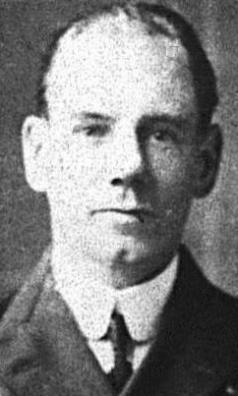
Captain William Whiteley RFA
24 June 1936 the Patients Welfare fund received a donation of £10/0/0d from HMS QUEEN ELIZABETH's Canteen Welfare Fund on the occasion of the Battleship paying off
18 July 1936 at sea while on passage from Alexandria to Malta a patient Chief Skipper Gerald Stephenson RNR from HMS SYRINGA discharged dead from septic pneumonia
July 1936 to July 1938 was mainly employed on duties dealing with the care and evacuation of refugees as a result of the Spanish Civil War. During this time she steamed 20,996 miles and carried 6,574 refugees of 41 different nationalities
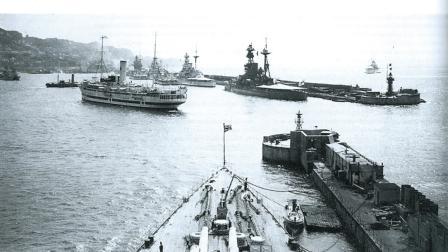
5 August 1936 sailed Valencia with 150 refugees
22 August 1936 arrived at Marseilles, France
September 1936 on loan to the War Office during the Palestinian Troubles and was based at Haifa
11 October 1936 arrived at Alexandria, Egypt with wounded British soldiers from Jaffa
21 November 1936 at Alexandria, Egypt discharging patients ashore

28 January 1937 at Corfu with HMS QUEEN ELIZABETH and HMS ABERDEEN
30 March 1937 three hundred refugees, mostly from the Chilean Embassy at Madrid, were evacuated from Valencia to Marseilles
31 March 1937 at sea a passenger - Journalist Basil Andrew Murray discharged dead from natural causes
12 May 1937 berthed at Gibraltar from Valencia
14 May 1937 sailed Gibraltar for Almeria
16 May 1937 arrived at Gibraltar with fourteen injured crew members from HMS HUNTER
25 May 1937 sailed Gibraltar with 450 loyalist refugees who had been ordered to leave the colony by the authorities. They were taken to Valencia, the loyalist war time capital
10 June 1937 Mr F C Reynolds RFA appointed as Chief Engineer Officer
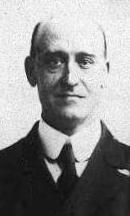
Chief Engineer Officer Frederick C Reynolds RFA
15 June 1937 arrived at Malta from Valencia
18 July 1937 at Valencia Spanish refugee Joaquin Rodiguez discharged dead from natural causes
21 July 1937 arrived at Marseilles from Spain with 345 refugees
27 July 1937 sailed from Valencia, Spain for Marseilles with 400 Spanish refugees of the Civil War. Prior to sailing was bombed by rebel aircraft - the bombs missed
8 August 1937 at Grand Harbour, Malta during the RFA Aquatic Sports RFA CHERRYLEAF (1) won the Valenzia Cup for the boat race, a trophy that the crew of RFA MAINE (3) had held for the previous two years
17 August 1937 at Zeitun, Malta Leading Fireman Cumbo Vincent discharged dead following an accidental death ashore
15 September 1937 arrived Malta from Patras with HMS BARHAM
20 September 1937 humanitarian aid - sailed from Malta to Valencia to evacuate refugees during the Spanish Civil War. She embarked 2016 persons of 11 different nationalities and took them to safety in Marseilles
29 September 1937 Surgeon Captain F C Wright Royal Navy took over command of the Royal Naval medical team on the ship
17 October 1937 at sea at 40°45N 02°00E a refugee from Madrid - Eugenia Berdie aged 78 discharged dead - natural causes
20 October 1937 arrived Marseilles after a fire had occurred on her upper bridge which caused considerable damage
23 October 1937 sailed Valencia for Marseilles
24 November 1937 the outline of requirements for a new Naval Hospital Ship were submitted to the Third Sea Lord
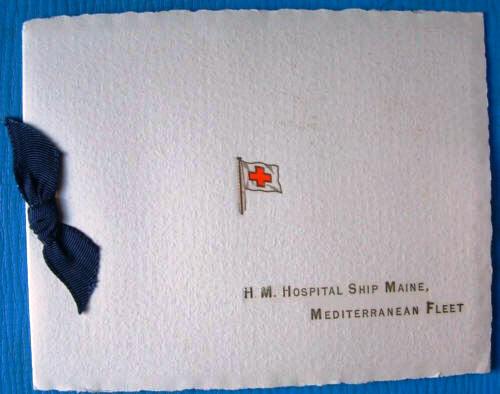
RFA Maine's Christmas Card for 1937
29 January 1938 at Malta a Royal Naval patient, Able Seaman Anthony Taylor from HMS ST. ANGELO discharged dead - meningitus
3 March 1938 during a storm in Malta broke her moorings and ran aground - no damage was caused and no danger to the crew existed. Tugs quick managed to get lines on board
21 July 1938 sailed Navarin for Split
13 August 1938 arrived at Split
12 September 1938 sailed Malta with the Mediterranean Fleet on its Autumn Cruise
14 September 1938 anchored off Navarin, Greece
19 September 1938 sailed Navarin, Greece
20 September 1938 anchored off Aegina, Greece
26 September 1938 sailed Aegina, Greece and anchored off Phalerumbay, Greece
27 September 1938 at sea patient Stoker Felice Gatt from HM Tug ROYSTERER discharged dead from a stroke
3 October 1938 sailed from Phalesrumbay, Greece
4 October 1938 anchored off Poros Bay, Greece
10 October 1938 sailed Poros Bay, Greece
12 October 1938 berthed at Alexandria, Egypt
4 November 1938 sailed Alexandria, Egypt
8 November 1938 berthed at Grand Harbour, Malta
26 February 1939 sailed Malta for Gibraltar arriving 2 March 1939
March 1939 a replacement for RFA MAINE (3) was provided for in the Naval Estimates as it was considered that Maine (3) was past her economical life - as reported in the Glasgow Herald of 1 March 1939 - page 8
9 March 1939 at Gibraltar a patient - Petty Officer Stoker Aubrey William Jack Howell from HMS BARHAM discharged dead from heart failure
22 March 1939 sailed Gibraltar for Bordighera arriving 26 March 1939
1 April 1939 sailed Bordighera to Malta arriving 3 April 1939
3 May 1939 sailed from Malta and 31 RN warships of the Mediterranean Fleet for the East Mediterranean cruise
15 July 1939 Surgeon Captain M S Moore MD B.Ch., D.Ph., Royal Navy took over command of the Royal Naval medical team on the ship
5 August 1939 arrived at Alexandria
16 August 1939 at Alexandria a patient - Ordinary Seaman Stanley Swift from HMS MALAYA discharged dead from natural causes
1 July 1940 a patient, Officers Cook Joseph Taylor from HMS MEDWAY discharged dead. He was buried in Alexandria (Chatby) Military and War Memorial Cemetery in grave G144
12 July 1940 at Alexandria a crew member from HMAS PARRAMATTA was admitted ill
21 July 1940 berthed at Alexandria. Also in harbour was HMAS SYDNEY and the submarine depot ship HMS MEDWAY
27 July 1940 a patient, Able Seaman Walter Bromley from HMS ROYAL SOVEREIGN discharged dead. He was buried in Alexandria (Chatby) Military and War Memorial Cemetery in grave G152
13 September 1940 Leading Telegraphist Alfred Bassford from HMS JERVIS discharged dead. He was buried in Alexandria (Chatby) Military and War Memorial Cemetery in grave N14
11 November 1940 at Alexandria a patient, Leading Cook Henry Vidall from HMS DECOY discharged dead. He is buried in Alexandria (Chatby) Military & War Memorial Cemetery in grave N72.
13 November 1940 at Alexandria a patient, Ordinary Seaman Vivian Russell Hart from HMS DECOY discharged dead. He is buried in Alexandria (Chatby) Military & War Memorial Cemetery in grave N59
14 November 1940 at Alexandria a patient, Leading Steward Antonio Camenzuli from HMS DECOY discharged dead. He is buried in Alexandria (Chatby) Military & War Memorial Cemetery in grave N70
28 May 1941 at Alexandria a patient, Signalman Peter Stanley Collier from HMS WARSPITE discharged dead. He is buried in Alexandria (Chatby) Military & War Memorial Cemetery in grave P31
9 January 1941 at Alexandria a patient, Stoker 1st Class Robert Fagg from HMS LIVERPOOL discharged dead. He is buried in Alexandria (Chatby) Military & War Memorial Cemetery in grave N94
1 June 1941 at Alexandria a patient, Able Seaman Arthur Cunningham from HMS CALCUTTA discharged dead. He is buried in Alexandria (Chatby) Military & War Memorial Cemetery in grave P124
2 June 1941 at Alexandria two patients, Able Seaman Leonard Arthur Finch from HMS KELLY and Marine Leonard Francis Owen from HMS WARSPITE were both discharged dead. They are both buried in Alexandria (Chatby) Military & War Memorial Cemetery in graves P49 and P91 respectively
16 June 1941 at Alexandria a patient, Able Seaman George Smith Sidey from HMS AUCKLAND discharged dead. He is buried in Alexandria (Chatby) Military & War Memorial Cemetery in grave P95
28 June 1941 16 June 1941 at Alexandria a patient, Able Seaman Hugh Donnelly from HMS AUCKLAND discharged dead. He is buried in Alexandria (Chatby) Military & War Memorial Cemetery in grave P109
30 June 1941 at Alexandria a patient, Leading Seaman Henry Thomas Southall from HMS AUCKLAND discharged dead. He is buried in Alexandria (Chatby) Military & War Memorial Cemetery in grave P69
21 July 1941 Fireman Samuel Farrugia discharged dead. He is buried in Alexandria (Hadra) War Memorial Cemetery.
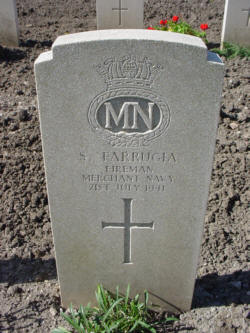
The grave of Samuel Farrugia
Image courtesy of British War Graves - with thanks
27 July 1941 a patient, Assistant Steward Hector Micallef from RFA RELIANT (1) discharged dead - stroke
3 September 1941 Assistant Steward E Sammut discharged dead. He is buried in the Alexandra (Hadra) War Memorial Cemetery
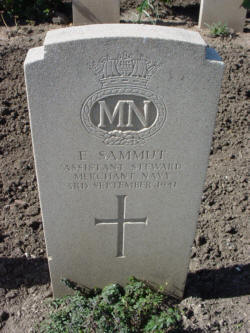
The grave of E Sammut
Image courtesy of British War Graves - with thanks
6 September 1941 bombed while in Alexandria Harbour - Able Seaman Emanuel Mamo, Steward Antonio Soldato, Assistant Steward George Montebello and Surgeon Commander Robert W Nesbitt Royal Navy were all discharged dead. All are buried in Alexandria (Hadra) War Memorial Cemetery. 15 were injured by a near miss.
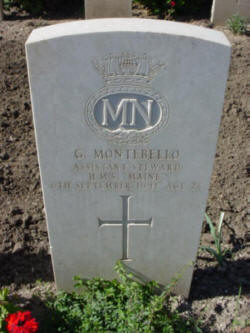
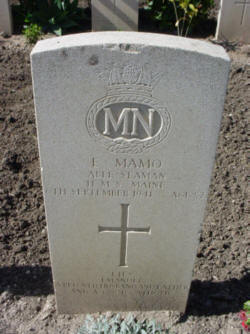
The grave of George Montebello The grave of Emanuel Mamo
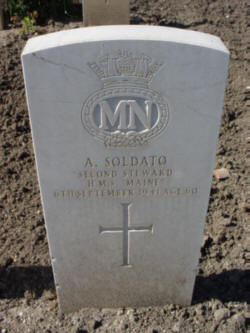
7 December 1941 Sick Berth Attendant Edward L Folkes D/MX 65400 discharged dead. He is buried in Alexandria (Hadra) War Memorial Cemetery in grave 2 H 4
29 December 1941 at Alexandria patient Engine Room Artificer 4th Class William Arthur Fowell from HMS/m THRASHER discharged dead. He is buried in the Alexandra (Hadra) War Memorial Cemetery in grave 1.A.5
21 January 1942 at Alexandria Chief Petty Officer Stoker Josiah Bennetto discharged dead - heart failure. He is buried in Alexandra (Hadra) War Memorial Cemetery in grave 1 B 1

10 February 1942 Surgeon Captain R A W Ford LRCP Royal Navy appointed in command of the medical staff
5 May 1942 at Alexandria patient Stoker 1st Class John Michael Goodwin of HMS ERICA discharged dead. He is buried in Alexandra (Hadra) War Memorial Cemetery in grave 1 E 26
1 July 1942 having sailed from Alexandria arrived at Ismalia
2 September 1942 sailed from Ismalia to Port Said for bunkering and stores, on completion retruned to her formed anchorage
12 September 1942 her Chief Engineer, whilst being repatriated to the U.K. on the Cunard liner LACONIA was killed when the latter was torpedoed and sunk by German Submarine U-156 in the South Atlantic approx 360 miles NE of Ascension Island in position 05.10 S 11.25 W whilst sailing independently from Suez to the U.K
25 October 1942 at Ismalia placed into quarantine after a patient on board who had been admitted from the Greek Destroyer Queen Olga was found to have the plague
November 1942 berthed at Alexandria
December 1942 to early January 1943 dry docked and fitted with a de-gaussing coil
13 January 1943 sailed Alexandria to Benghasi
19 January 1943 sailed Benghasi to Alexandria carrying 300 casualties
10 February 1943 sailed Alexandria to Benghasi
17 February 1943 sailed Benghasi to Alexandria carrying 302 casualties
27 February 1943 sailed Alexandria to Benghasi
4 March 1943 sailed Benghasi to Alexandria carrying 299 casualties
9 March 1943 sailed Alexandria to Benghasi
12 March 1943 sailed Benghasi to Alexandria carrying 301 casualties
23 March 1943 sailed Alexandria to Tripoli (L)
27 March 1943 sailed Tripoli (L) to Benghasi carrying 300 casualties
29 March 1943 sailed Benghasi to Tripoli (L)
31 March 1943 sailed Tripoli (L) to Alexandria carrying 300 casualties
11 April 1943 sailed Alexandria to Tripoli (L)
15 April 1943 sailed Tripoli (L) to Benghasi carrying 300 casualties
17 April 1943 sailed Benghasi to Tripoli (L)
19 April 1943 sailed Tripoli (L) to Alexandria carrying 300 casualties
25 April 1943 sailed Alexandria to Tripoli (L)
29 April 1943 sailed Tripoli (L) to Alexandria carrying 300 casualties
21 May 1943 sailed Alexandria to Tripoli (L)
25 May 1943 sailed Tripoli (L) to Alexandria carrying 300 casualties
11 June 1943 sailed Alexandria to Malta
15 June 1943 berthed at Malta
30 June 1943 sailed Malta to Alexandria carrying 300 casualties escorted by HMS ROCKWOOD
6 July 1943 sailed Alexandria to Tripoli (L)
4 August 1943 sailed Tripoli (L) to Syracuse
6 August 1943 sailed Syracuse to Tripoli (L) carrying 300 casualties
9 August 1943 sailed Tripoli (L) to Syracuse
11 August 1943 sailed Syracuse to Tripoli (L) carrying 307 casualties
14 August 1943 sailed Tripoli (L) to Alexandria carrying 295 casualties
16 August 1943 Mr J G Glynn RFA appointed as Chief Engineer Officer
29 August 1943 sailed Alexandria to Tripoli (L) with 64 protected personnel, 10 Canadian invalids and personal baggage only
3 September 1943 sailed Tripoli (L) to Augusta
5 September 1943 sailed Augusta-Syracuse to Philippeville carrying 300 casualties
10 September 1943 sailed Philippevile to Augusta
15 September 1943 sailed Augusta to Vibo Valentia
19 September 1943 sailed Vibo Valentia to Reggio
19 September 1943 sailed Reggio to Catania
20 September 1943 sailed Catania to Algiers carrying 300 casualties
1 October 1943 sailed Algiers to Catania - speed of advance 8.5kts
5 October 1943 sailed Catania to Tripoli (L) carrying 309 casualties
8 October 1943 sailed Tripoli (L) to Alexandria carrying 300 casualties
During the period 13 January 1943 to 12 October 1943 sailed a total of 23,009 nm and carried 5,413 casualties. The Master commended the following officers to the Admiralty - Chief Officer Maddock RFA, 2nd Officer Townsend RFA, Radio Officer Fremaux RFA, Chief Engineer Officer Robert Blacklock RFA, 2nd Engineer Officer Bright RFA, Acting 3rd Engineer Officer McVey RFA and Electrical Officer Paul RFA
27 July 1944 Surgeon Captain N A H Barlow MRCS LRCP Royal Navy appointed in Command of the medical staff
Between October 1944 to February 1945 served in Greek waters
22 July 1945 at Malta 2nd Steward Anthony Spagnol discharged dead from a coronary thrombosis
7 December 1945 in the London Gazette of this day on page 5993 Captain Robert Grimer DSC RFA was awarded a Mention in Despatches
15 November 1945 Captain Cyril F Cunningham RFA appointed as Master
Captain Cyril F Cunningham RFA
27 May 1946 at Malta Able Seaman Markus Masonis from the Greek Navy Ship Acheloos discharged dead from a fractured skull
21 June 1946 at Malta Lieutenant Commander Edwin Michael Britton RN (A) discharged dead. Suffered multiple burns and injuries as the result of an aircraft accident at the Royal Naval Air Station at HMS FALCON on 3 June 1946
22 October 1946 grounded and damage when attending to support HMS SAUMAREZ and HMS VOLAGE when the two RN ships were mined in the Corfu Channel. She sustained extensive damage to her keel. Returned home to the River Forth
21 February 1947 paid off at Malta
6 June 1947 sailed for the last time from Malta to Rosyth for destoring. The ship had to return having found a stowaway who was landed and arrested by the Police. She sailed again reaching some 17 miles off land when a second stowaway was found in the galley asking the cook for food. Maine returned to Grand Harbour and landed this second stowaway who also was also arrested by the Police.
8 July 1948 arrived at Bo'ness for breaking up by P & W McClellan & Sons
Notes:
During WW2, carrying the international identification number 1, she was the oldest hospital ship afloat. In spite of this she carried out valuable work in the Mediterranean, handling some 13,514 patients. She evacuated Army wounded from Crete and served at Alexandria assisting with 8th Army casualties where she was extensively damaged although none of her patients was harmed. At the end of the War she was at Piraeus tending Army casualties from the Greek Civil War.
RFA Maine (4)
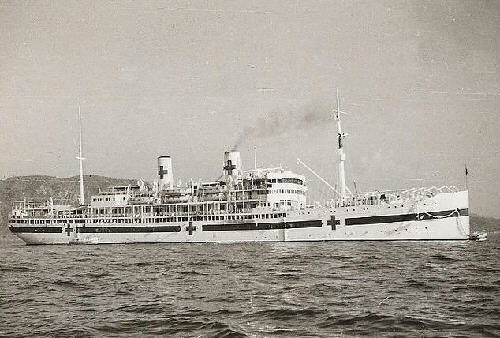
Previous names: Leonardo da Vinci, Ship 289, Empire Clyde, Hospital Ship 54
Official Number: 159356
Class: Hospital Ship
Pennant No: B394
Laid down:
Builder: Ansaldo San Giorgio - Muggiano
Launched: 28 December 1924
Into Service: 1945
Out of service: 25 May 1954
Fate: Broken up
Items of historic interest involving this ship: -
1919 ordered as one of six sister ships, originally designed as cargo steamers but completed with extensive passenger accommodation
28 December 1924 launched by Ansalso San Giorgio, La Spezia as Yard Nr 192 named LEONARDO DA VINCI for Transatlantica Italiana Societe Anonima di Navigazione, Genoa.
May 1925 completed for her owners‘ South American service
24 May 1925 maiden voyage Naples - Palermo - Boston - New York as there was little or no immediate demand for her services to the South Atlantic. Completed two round voyages, the results of the second one being extremely disappointing
September 1925 the Ansaldo Group’s bankers went bankrupt, resulting in the collapse of the whole Group, of which the owners were a part
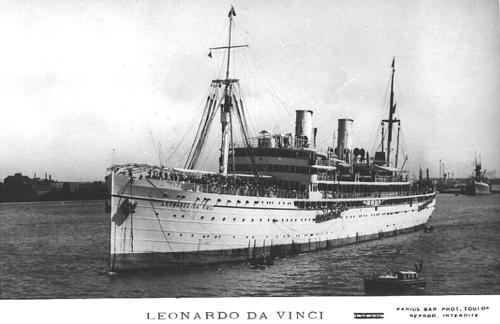
November 1925 her first South American sailing took place
22 December 1925 shares were taken over by Credito Italiano and a new Company was formed - Compagnia Italiana Transatlantica (CITRA) which took over ownership
laid up
7 December 1929 passed Gibraltar sailing west bound
12 December 1929 berthed at West India Dock, London
1934 the Company was again in financial difficulties and the ship was sold to Tirrenia Line, another CITRA company, after having been on charter to them for some time previously. Her name remained unchanged
28 February 1935 at Messina in collision with Italian ship Viminale which had dragged her anchor in a gale. Suffered slight damage - details from Lloyds Casualty reports published in the Times Newspaper dated 2 March 1935
23 October 1935 at Naples in very bad weather bumped continually into the steamer Maria C. Details of damage not noted but reported in the Lloyds Casualty reports published in the Times Newspaper dated 24 October 1935
1936 suffered a serious fire and had to be reconstructed
17 December 1936 the structure of Italian Government subsidised lines was reorganised on a regional basis and resulted in the 4 remaining sister ships ( 2 having been previously sold off ) being transferred to the ownerships of Lloyd Triestino, names unchanged. This ship was employed on carrying Italian art treasures to the USA and UK and as a troopship. She carried the Viceroy of Abbysinia and his Staff
18 May 1940 sailed Genoa independently
24 May 1940 arrived Port Said for Suez Canal transit
25 May 1940 sailed Suez independently
31 May 1940 arrived Aden
31 May 1940 sailed Aden
11 February 1941 captured by the cruiser HMS HAWKINS at Kismayu during the Somaliland Campaign. She had put to sea but was intercepted and put back to port where her crew sabotaged her engines
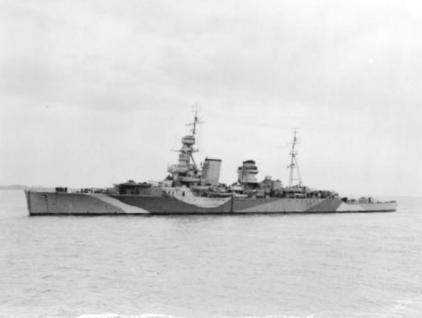
HMS HAWKINS
14 February 1941 handed over to Ellerman Lines, London for management and sailed for temporary repairs at Mombasa
21 April 1941 at Mombasa
7 October 1941 temporary repairs completed - sailed Mombasa to Bombay arriving 22 October 1941
Between 22 October 1941 and 21 September 1942 undergoing further repairs at Bombay
1942 Captain William J Merchant (of Ellerman Lines) appointed as Master

Captain William J Merchant
29 June 1942 at Bombay Junior Engineer Officer R J Bushe discharged dead from multiple burns accidentally received
4 August 1942 at Bombay Junior 3rd Engineer Officer Samuel Tonner discharged dead from multiple burns accidentally received
21 September 1942 sailed Bombay to Durban and remained there until 23 November 1942 undergoing more repairs
23 November 1942 sailed Durban independently to Cape Town arriving 27 November 1942 where further repairs were undertaken
3 December 1942 sailed Cape Town independently to Pemambuco arriving 19 December 1942
31 December 1942 sailed Pemambuco independently to Trinidad arriving 10 January 43
January 1943 her name was cancelled and she was simply known as Ship 289
24 January 1943 sailed Trinidad in Convoy TAG38 to Guantanamo arriving on 29 January 1943
29 January 1943 sailed Guantanamo in Convoy GN 38 to New York arriving 4 February 1943. While in New York more repairs were undertaken
17 February 1943 sailed New York to Hampton Roads arriving the next day
February 1943 to March 1943 her engines were removed at Newport News
5 March 1943 sailed Hampton Roads in tow
7 March 1943 arrived Baltimore for conversion into a Hospital Ship after which she was taken over by the MoWT and renamed EMPIRE CLYDE under management of City Line, London as an Army Hospital Ship
11 May 1943 at the General Hospital, Baltimore Panniwallah Arfanulla Mayinulla discharged dead from a fractured skull
27 August 1943 sailed Baltimore to New York arriving the next day
2 September 1943 sailed New York in Convoy HX 255 to the Clyde arriving 15 September 1943 having detached from the Convoy
2 April 1944 sailed from Glasgow to Gourock. Army medical team unpacked medical stores. The Officer Commanding the Army medical detachment was Lt. Col A E Campbell RAMC
4 April 1944 sailed the Clyde independently to Gibraltar arriving 9 April 1944 at 2100hrs. Embarked one patient (an Italian POW who had TB and was being repatriated). Sailed at 2330hrs for Algiers arriving 11 April 1944. Embarked more patients
13 April 1944 sailed Algiers for Naples arriving on 15 April 1944. Patients disembarked
16 April 1944 sailed Naples independently to Avonmouth
20 April 1944 T/190063 Driver John Thomas Davies RASC suffering from TB discharged dead. Buried at sea 21 April 1944 at 38 51N 12 32W. He is remembered with pride on the Brookwood Memorial
25 April 1944 at Avonmouth 452 patients disembarked
30 April 1944 sailed Avonmouth independently to Gibraltar arriving 5 May 1944
5 May 1944 sailed Gibraltar to Naples arriving 8 May 1944
9 May 1944 at Naples embarked 423 patients sailing at 1600hrs the same day
12 May 1944 following an accident in the engine room two of the ships engineers were badly injured. Engineers shown in the ships War Diary as Mr Armstrong and Mr Carson. Mr Carson suffered burns to his right hand (3rd degree) left hand, left and right legs and face. Both admitted to ward D6
18 May 1944 berthed at Princes Landing stage, Liverpool - patients disembarked
19 May 1944 sailed Liverpool for Glasgow arriving 20 May 1944 and berthed in KGV Dock No3 for additional facilities and equipment to be installed
24 May 1944 sailed Glasgow to Gibraltar for orders
29 May 1944 a call to Gibraltar resulted in orders being received to sail to Naples
30 May 1944 while at sea at 2200hrs ship subject to attack by twin engine aircraft at the stern of the vessel. Subsequent investigation found bullets and bullet marks on B & C decks astern
1 June 1944 berthed at Naples
2 June 1944 embarkation of 404 patients commenced and then sailed Naples passing through the Straits of Gibraltar on 5 June 1944
11 June 1944 arrived Glasgow - KGV Dock. Patients partly disembarked this day the remaining disembarked on 12 June 1944
27 June 1944 sailed Glasgow KGV Dock and anchored in Loch Long
28 June 1944 to 25 August 1944 at Loch Long training the medical detachment
26 August 1944 sailed Loch Long to Faslane
29 August 1944 secured into AFD at Helensborough
6 September 1944 moved to the Gareloch
19 September 1944 at the Gareloch Chief Saloon Boy Hingoo X Tegallee discharged dead - stroke
16 October 1944 anchored off Loch Long
19 October 1944 sailed the Loch Long independently to Gibraltar. While on passage part of the port propeller broke off and a fracture was discovered in the rudder
25 October 1944 arrived at Gibraltar
28 October 1944 entered dry dock at Gibraltar
31 October 1944 floated out of the dry dock after repairs to the rudder and the propeller
1 November 1944 sailed Gibraltar independently to Bone
3 November 1944 arrived at Bone and embarked 77 patients - all Italian POW's being repatriated then sailed Bone independently to Naples
4 November 1944 anchored in Naples Bay
6 November 1944 berthed alongside at Naples. The Italian patients were landed
7 November 1944 embarked 419 patients and sailed Naples independently to Liverpool
10 November 1944 passed Gibraltar
16 November 1944 berthed at Liverpool at the Prince's Landing stage and disembarked the patients
19 November 1944 sailed Liverpool independently to Naples
24 November 1944 passed Gibraltar
27 November 1944 arrived at Naples and embarked 162 British and Canadian patients
28 November 1944 sailed Naples independently to Taranto
29 November 1944 berthed at Taranto oil jetty to load bunkers. Moved berth in Taranto harbour and embarked 271 Polish patients
30 November 1944 sailed Taranto passing Gibraltar on 4 December 1944 and arriving off Falmouth 9 December 1944
9 December 1944 sailed Falmouth independently to Southampton arriving the next day
11 December 1944 to 15 December 1944 in dock at Southampton
16 December 1944 sailed Southampton independently to Falmouth arriving the next day
17 December 1944 sailed Falmouth independently to Gibraltar
21 December 1944 sailed Gibraltar independently to Naples Bay arriving 24 December 1944
25 December 1944 berthed at Naples
26 December 1944 embarked 381 patients and sailed Naples independently to Algiers arriving 28 December 1944
28 December 1944 embarked 36 patients sailed Algiers, passing Gibraltar on 30 December 1944 to Gourock on the Clyde arriving 3 January 1945
5 January 1945 underwent repairs at KGV Dock, Glasgow
6 January 1945 sailed the Clyde independently passing Gibraltar on 11 January 1945 and arrived Algiers on 12 January 1945
12 January 1945 embarked 179 patients and sailed Algiers independently to Palermo arriving 14 January 1945
14 January 1945 disemarked 161 patients (Italians) and then sailed Palermo independently to Catania arriving the next day
15 January 1945 embarked 135 patients and sailed Catania independently to Taranto arriving 16 January 1945 where all patients were disembarked
17 January 1945 to 1 February 1945 at anchor off Taranto
2 February 1945 sailed Taranto independently to Salonika arriving 5 February 1945
6 February 1945 at Salonika embarked 41 patients
7 February 1945 sailed Salonika independently to Piraeus arriving the next day
8 February 1945 embarked 81 patients
10 February 1945 sailed Piraeus independently to Taranto arriving 12 February 1945 where all patients were disembarked
13 February 1945 at Taranto while moving berth grounded for a short time - no damage. Then sailed the same day to Catania
15 February 1945 sailed Catania independently to Naples arriving 16 February 1945
17 February 1945 embarked 430 patients
19 February 1945 sailed Naples independently to Glasgow arriving 26 February 1945. All patients disembarked
27 and 28 February 1945 engines giving cause for concern resulted in them being examained for defects and then entered refit for major engine repairs - still under repair in May 1945
31 May 1945 taken over for use as a Naval Hospital Ship, name unchanged for service with the British Pacific Fleet
30 June 1945 in the North Atlantic around 37°36’N 67°43W passed USS General A W Greely (AP141) (Source ship log of USS General A W Greely)
27 July 1945 sailed the Clyde, to Gibraltar 1 August 1945 to Taranto arriving 6 August 1945
6 August 1945 sailed Taranto independently to Port Said arriving 10 August 1945
11 August 1945 sailed Suez having embarked approximately 200 New Zealand troops (both injured and just being repatriated) independently to Aden arriving 16 August 1945
16 August 1945 sailed Aden independently to Colombo arriving on 23 August 1945
25 August 1945 sailed Colombo independently to Freemantle arriving 5 September 1945
7 September 1945 sailed Freemantle independently to Wellington, New Zealand arriving 18 September 1945
18 September 1945 berthed at Aotea Quay Wharf, Wellington, New Zealand to discharged 55 patients - wounded New Zealand forces
29 September 1945 sailed Wellington, New Zealand independently to Manus, Admiralty Islands arriving 9 October 1945
11 October 1945 sailed Manus, Admiralty Islands independently to Shanghai arriving 19 October 1945
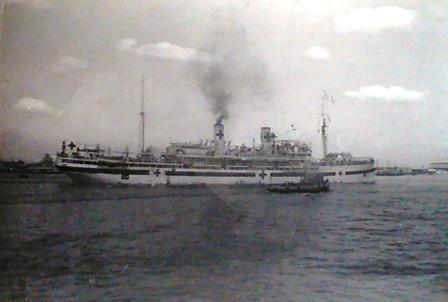
22 October 1945 sailed Shanghai independently to Hong Kong arriving 27 October 1945 with more than 400 British Internees - mostly hospital cases

Report from the Dundee Courier of 23 October 1945
October 1945 became Base Hospital Ship at Hong Kong
26 November 1945 at Hong Kong patient Able Seaman Henry Glencross from HMS BERRY HEAD discharged dead with multiple injuries and shock - buried in Hong Kong Cemetery in section 17B grave 10239
1 January 1946 at Hong Kong a Royal Naval patient Leading Stoker Donald Tate from HMS BERMUDA discharged dead - natural causes - buried in Sai Wan War Cemetery in grave II F 7
22 February 1946 at Hong Kong patient Able Seaman Norman Mitchell from HMS WIDEMOUTH BAY discharged dead - head injury - buried in Sai Wan War Cemetery in grave II F 9
13 April 1946 at Hong Kong patient Able Seaman Norman Bennett from HMS WHITESAND BAY discharged dead - natural causes - buried in Sai Wan War Cemetery in grave II F 6
20 April 1946 at Hong Kong at Hong Kong patient 1st Class Stoker Hossain Eshak from HMIS CANVERY discharged dead - natural causes
21 May 1946 at sea at 21.00N 110.00E passenger Yu Har Chai a 7 month old child being repatriated discharged dead - natural causes
22 May 1946 arrived at Hong Kong together with HMS WHIMBREL with 576 repatriated Chinese from Hainan, including 65 stretcher cases and 511 who were ill. The majority of the repatriates were Hong Kong Chinese who had been taken to Hainan during the war and used as forced labour
9 July 1946 arrived Kure, Japan and sailed two days later
21 July 1946 arrived Singapore. Undergoing repairs from 26 July 1946. Sailed 30 August 1946 for Hong Kong but returned to Singapore on 11 September 1946
1 November 1946 sailed Singapore
5 December 1946 arrived Sydney, NSW from Hong Kong
12 December 1946 sailed Sydney with sick British soldiers and sick Italian prisoners of war

Loading patients at Sydney, NSW before sailing to the UK
14 December 1946 arrived at Melbourne, Victoria, Australia from Sydney, NSW. Sailed 17 December 1946 to Freemantle with repatriated Italian prisoners of war
23 December 1946 at Perth, Western Australia - members of the Australian Red Cross boarded the vessel leaving extra food for the patients and crew
27 December 1946 at sea at 18.07S 101.35E Italian prisoner of war Santucci Concettino discharged dead - presumed drowned
2 January 1947 arrived Trincomalee and sailed the next day to Colombo
4 January 1947 arrived Colombo
6 January 1947 sailed Colombo to Suez arriving 16 January 1947
16 January 1947 Surgeon Captain Douglas M Beaton OBE LRCP Royal Navy and Surgeon Commander V G Horan MB BCh Royal Navy appointed to the Medical Team on the ship
17 January 1947 sailed Port Said to Naples
22 January 1947 sailed Naples for Malta
23 January 1947 berthed at Malta from Naples and the Far East
10 April 1947 the Indian crew were transferred to the HM Transport Lancashire which sailed this day from Malta for Port Said and Bombay
14 April 1947 transferred to Admiralty ownership
25 April 1947 formally transferred 'by bill of sale' to the Admiralty
6 September 1947 Captain Stanley G Kent OBE RFA appointed as Master while the ship was RFA Empire Clyde
18 December 1947 Mr Edward B Morton RFA appointed as Chief Engineer Officer
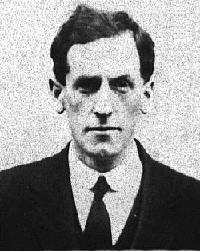
Chief Engineer Officer Edward B Morton RFA
1 January 1948 renamed RFA Maine (4)
24 July 1948 berthed in Grand Harbour, Malta

17 August 1948 Mr Charles Scott DSC RFA appointed as Chief Engineer Officer
29 January 1949 arriving at Malta

29 March 1949 Mr Harold Ringshaw RFA appointed as Chief Engineer Officer
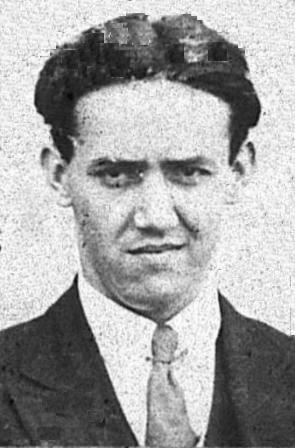
Chief Engineer Officer Harold Ringshaw RFA
1949 was reduced to reserve status at Malta
16 July 1949 Surgeon Captain J C Souter Royal Navy took over command of the Royal Naval medical team on the ship
19 September 1949 after a refit she again proceeded East to Hong Kong for Far East Station duties
28 October 1949 arrived at Honk Kong after a slow passage from Malta - her speed being reduced by engine defects
30 October 1949 supported with medical supplies and water HMS Belfast which was saving lives from a Chinese vessel which was stranded on the Pratas Islands with about 600 passengers onboard
1 March 1950 sailed Hong Kong with the British Far East Fleet to Subic Bay, Philippines to serve as base Hospital ship during combined exercises with the US Navy. Thence to Singapore for a short refit
20 April 1950 at Hong Kong as the base Hospital Ship
22 May 1950 sailed Hong Kong with units of the Far East Fleet for a summer cruise in Japanese waters
20 June 1950 on the outbreak of the Korean War she was at Kobe, Japan as the only Hospital Ship in the area. She was placed at the disposal of United Nations Forces and dealt with the initial evacuation of US casualties from Pusan. Throughout she operated from Hong Kong, Sasebo and sometimes Kure and handled large numbers of British and Commonwealth personnel. She was awarded the Korea 1950 Battle Honour.
14 July 1950 arrived at Pusan, Korea. Between 16 July 1950 and 16 September 1950 the ship made eight trips from Korea to Japan and carried 37 casualties to Fukuoka, 1,558 casualties to Osaka and 254 casualtites to Yokohama - a total of 1,849 casualties. The medical staff also treated 2,115 US personnel and up to 1,006 cases of surgery were performed. The Japanese port of Fukuoka was only used once due to it being a shallow water port and the fact that Maine had to anchor some 3½ miles away from the port with the patients being taken ashore via a US Air Force air sea rescue launch
4 August 1950 while at sea US Army PFC's Donald E Sellers and Ronald E Kendall both discharged dead from the effect of wounds received in warfare. PFC Donald Sellers' mortal remains were returned to the United States of America and he is buried in Highland Home Cemetery, Jamestown, ND, USA. PFC Ronald Kendall's mortal remains were returned to the United States of America and he is buried in Bowman Cemetery, Bowman, North Dakota, USA
5 August 1950 while at sea US Army PFC Elbert Miller discharged dead from the effect of wounds received in warfare. PFC Miller's mortal remains were returned to the United States of America and he is buried in Nowata Memorial Cemetery, Nowata, Oklahoma, USA
11 August 1950 while at sea US Army Sergeant Roselio J Torres and US Army PFC William R Weitman both discharged dead from the effect of wounds received in warfare. Sergeant Torres' mortal remains were returned to the United States of America and he is buried in BEAVER CEMETERY, BEAVER, PA., USA and PFC William R Weitman's mortal remains were returned to the United States of America and he is buried in Watermelon Creek Baptist Church Cemetery, Mendes,GA, USA
12 August 1950 while at sea US Army PFC George A Poulson discharged dead from the effect of wounds received in warfare. PFC George A Poulson's mortal remains were returned to the United States of America and he is buried in Wataga Cemetery, Wataga, IK, USA

RFA Maine in dry dock at Kure, Japan
30 October 1950 arrived at Hong Kong with 57 wounded British troops
1 December 1950 Mr Frederick O Brims RFA appointed as Chief Engineer Officer until 17 January 1951. Chief Engineer Officer Brims had sailed from the UK to join RFA Maine (4) on ss Corfu but reported sick upon arrival at Hong Kong. He was recommended for invaliding from the Service on 14 February 1951. He sailed from Hong Kong on the Empire Fowey on 22 February 1951. He was discharged medically unfit and granted a pension on 1 May 1951
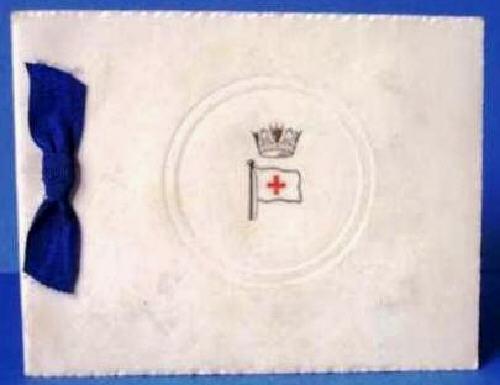
12 January 1951 Captain William W Peddle RFA appointed as Master
Captain William W Peddle RFA
3 February 1951while at Kure, Japan received an urgent surgical cot case from HMS UNICORN
7 March 1951 Mr David L Walls RFA appointed as Chief Engineer Officer
22 June 1951 at Kure, Japan

Captain G H Strachan MC, 8th Hussars, and his bride formerly Nurse Miss Sheila Doreen Gammage at their reception aboard RFA Maine on 22 June 1951. Their wedding had been conducted at the Church of England Garrison Church at Kure
19 August 1951 Surgeon Lieutenant H M James RAN from HMAS ANZAC admitted suffering from typhus
27 September 1951 at Kure, Japan along with RFA BROWN RANGER together with RN and RAN warships
10 October 1951 lost a propeller while on a westward passage through the Shimonoseki Straits. Taken under tow by USS Reclaimer [ARS-42] and USS Yuma [ATF-94]
18 November 1951 at Sasebo, Japan Assistant Steward Ng Tsui Chung having been admitted from RFA GREEN RANGER discharged dead from natural causes
8 January 1952 at Sasebo, Japan Able Seaman Arthur Walden having been admitted from RFA WAVE PREMIER discharged dead from natural causes
1 December 1952 USS Ashtabula (AO51) on fire in Sasebo Harbour. 2 killed, one missing and 9 injured and damaged a repair ship Ajax moored alongside. Doctors and nurses from the MAINE boarded USS Ashtabula to treat the injured
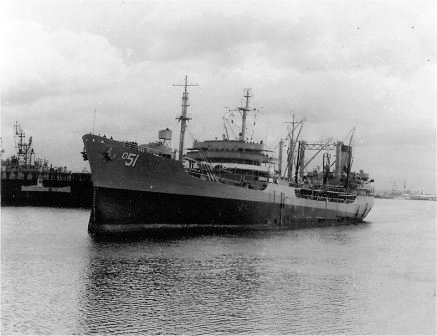
USS Ashtabula - AO51
9 December 1952 Mr A Morton RFA appointed as Chief Engineer Officer
1 February 1953 Captain Russell G Edmonds RFA appointed as Master
7 March 1953 during the ships refit at Hong Kong a medical team of Surgeon Commanders Denis W Pratt Royal Navy and B W Watford Royal Navy plus two Sick Berth ratings was set up on the island of Paengyong-do, Korea servicing the local garrison and local inhabitants
11 May 1953 sailed Hong Kong to Korea to embark repatriated Britisk sick and wounded Prisoners of War
22 May 1953 the President of South Korea awarded the Presidential Unit Citation of the Republic of Korea to RFA Maine for meritorious service in the Korean War theatre from February 1951 to July 1952

Presidential Unit Citation of the Republic of Korea
6 March 1954 the Government announced that RFA MAINE (4) was to be sold
9 March 1954 offered the ship for sale in The Times newspaper "as lying" at Hong Kong -

26 April 1954 her operational Service ended at Hong Kong
20 May 1954 towed from the Royal Naval dockyard, Hong Kong
25 May 1954 sold for demolition to local Hong Kong breakers
June 1954 broken up at Hong Kong
22 February 1972 British Registry closed
Notes:
- As Empire Clyde served in the British Pacific Fleet - hence the B pennant number
RFA Maine (1)

Previous name: Swansea
Official Number: 94303
Class: Hospital Ship
Laid down:
Builder: William Gray & Company, West Hartlepool
Launched: 8 June 1887
Into Service: 1905
Out of service: 17 June 1914
Fate: Ran aground off the Isle of Mull and wrecked
Items of historic interest involving this ship: -
8 June 1887 launched by Wm Gray & Co, West Hartlepool as Yard Nr: 322 named SWANSEA for Baltimore Storage & Lighterage Co Ltd, London
July 1887 completed as a cattle and cargo ship
22 December 1887 passed the Lloyds Signal Station on the Lizard sailing east bound when on passage from Philadelphia for London
7 January 1888 while on passage from Baltimore to London and off Start Point with a general cargo and some cattle was in collision with the trawler Nimble from Brixham which sank. The Skipper and three hands from the trawler were all drowned. The Swansea stopped, lowered two boats and rescued one other hand who was in an exhaused state
21 January 1888 the Times newspaper reported -

25 March 1888 berthed at New York
4 August 1888 berthed at New York
17 November 1888 berthed at New York
1888 purchased by Maine Shipping Co (Williams, Torrey & Field Ltd, Managers) London and renamed MAINE
4 February 1889 arrived at Gravesend for Tilbury Docks from Baltimore
10 February 1889 sailed Gravesend from Tilbury Docks for Swansea
18 February 1889 sailed Swansea for Philadelphia
4 March 1889 docked at Philadelphia
2 October 1889 while on passage from London to Philadelphia passed the Lloyds Signal Station on the Lizard sailing west
17 October 1889 docked at Philadelphia
4 January 1890 arrived at Gravesend from Baltimore
13 March 1890 at Philadelphia in hospital Able Seaman Hy Potter discharged dead from Pneumonia
26 March 1890 at sea at 46.52N 62.24W Able Seaman George Ripley discharged dead from injuries sustained when he fell from aloft
3 January 1891 sailed Baltimore for London
17 March 1891 off Blackwell Point, River Thames while inbound from Baltimore to Deptford and Tilbury Dock was in collision with the steamer Glenorchy outward bound for Penang. The Glenorchy suffered damage to her anchor stock and guard rails. The Maine suffered damage to her port side underwater and was leaking slightly
16 May 1891 arrived from Baltimore passing Gravesend for Tilbury Dock
4 July 1891 in Lower Hope, River Thames in collision with the steamer Heinrich Cruse of Kiel, Germany outward bound. The Maine suffered damage to her stem and bows and the Heinrich Cruse was badly damaged on the starboard side abaft fore rigging. Source the Times newspaper of 6 July 1891
1892 registered owners now Atlantic Transport Co Ltd, London name unchanged
14 May 1892 passed Dover for London
7 October 1892 sailed Swansea for Philadelphia and Baltimore
18 October 1892 berthed at Philadelphia from Swansea
24 February 1893 sailed Gravesend for Swansea and Philadelphia
19 June 1893 arrived Philadelphia from Swansea
15 September 1893 passed Browhead while on passage from Swansea to Baltimore
30 October 1893 sailed Gravesend and passed Dover for Swansea and Philadelphia
8 February 1894 passed Prawle Point while on passage from Gravesend to Philadelphia
18 June 1899 off Beachy Head, English Channel 2nd Steward John Neil found missing believed drowned - discharged dead
11 October 1899 the Boer War broke out in South Africa and the Mr Barnard N Baker, President of the Atlantic Transport Co. Ltd. immediately offered the ship to the British Admiralty for use as a Hospital Ship, but because of the high costs involved in altering and fitting her out, the offer, although eagerly accepted, was not acted upon promptly
6 November 1899 at Liverpool the American Chamber of Commerce in that city voted to donate £100 towards the fund to equip and run the Maine as a Hospital Ship during the Boer War
12 November 1899 three doctor and five nurses sailed from New York to London be part of the medical team on the Maine. They sailed on the Atlantic Transport Line ship Mesaba. The Doctors were Dr George E Dodge, Dr Harry H Rodman and Dr Charles H Weber. The nurses were Miss M E Hibbard, Miss Virginia Ludekens, Miss Jennie A Manly, Miss Sarah C McVean and Miss Margaret J McPherson.

Hospital Ship Maine
15 November 1899 Dr Julian Mayo Cabell, the Chief Surgeon of the American team sailed from New York for Liverpool on the RMS Oceanic. He had been granted six months leave of absence from the Columbia Hospital, Washington
18 November 1899 a concert was held at Clarridges Hotel, Mayfair to raise money for equipment for the ship having been organised by Mrs James Brown Potter. Over £2,000 was raised.
19 November 1899 sixteen male nurses, ten orderlies and two apothcaries under the charge of Dr Thomas W Hastings sailed from New York to London to join the crew of the Maine on the Atlantic Transport Line ship Manitou. The nurses were Charles S. Austin, Victor C. Bates, A. H. Chapman, Stephen Crick, George T. Cole, Ralph W. Ellsworth, Furman M. Green, Leon M. Howard, W. C. Kuder, Charles Nast, John M. McClintock, John J. Reilly, W. B. Rust, Theodore V. Speer, A. Bunner Vallance and Archibald Gillies. The orderlies were Otto Ranstrom, W. D. Ross, Charles C Brien, Charles H Rudgreen, P. M. Rayner, Ernest Wynne, Dudley Vivian, J. H. Kase, Robert Lowndes and Henry Niderer. The two apothcaries were Albert Spotts and Herbert Haigh
23 November 1899 the fund to fit out the ship now totalled in excess of $90,000 excluding money raised at Claridges Hotel by Mrs James Brown Potter
1899 fitted out as a Hospital Ship by Fletcher, Son & Fearnall at Limehouse Reach on the Thames. Her conversion cost more than £41,000. The five wards on the ship were named Columbia, Britannia, Whitelaw Reid, Baker and Committee

Surgeons from the Hospital Ship Maine
4 December 1899 the Officers, Medical Staff and crew were presented to Queen Victoria at Windsor Castle
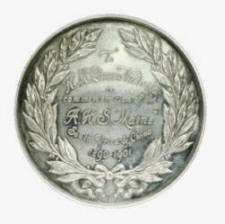
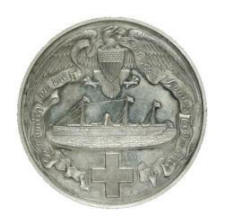
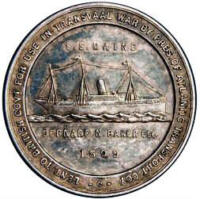
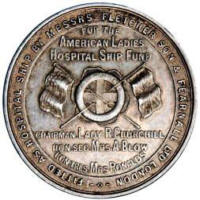
Members of the public were invited to purchase the above medal thus making funds to cover the ships operating costs
16 December 1899 at West India Docks, London HRH the Duke of Connaught presented HM The Queen's flag to Lady Randolph Churchill and the Committee for raising the money to convert the ship into a hospital ship. The flag - a Union Flag with a red cross in it's centre was raised by the Duke who was accompanied by HRH the Duchess of Connaught and the Princess Louise of Lorne. The ship was blessed by the Bishop of Islington. (Details from the New York Tribune of 17 December 1899)

Surgeon Lt. Col Hensman and the Nursing Sisters from the Hospital Ship Maine
17 December 1899 a fund raising banquet was held at Carlton Hotel, Pall Mall, London in aid of the American Hospital Ship Fund. The Directors of the Hotel gave the banquet and the flowers with which the tables were decorated, and the entire suite of rooms on the ground floor was placed at the disposal of the ladies committee. The entertainment was arrnaged by Mrs Arthur Paget and Mme Von Andre, assisted by Mr Cesar Ritz, the Manager of the Hotel. A central table was reserved for the HRH's Duke & Duchess of Connaught, and with their Royal Highnesses sat the Marquis of Lorne, Mr Choate (the American Ambassador) and Mrs Choate, Lady Randolph Churchill, Mrs Paget, Mrs Rolands, the Countess of Mar and Kellie, Mr & Mrs Blow, the Russian Ambassador, the Austrian Ambassador, Lord Chales Montague, Lord Algenon Gordon-Lennox, Lord Glenesk, and Mr Montague Guest. The company which numbered about 300, also included Prince Christrian, Sir Henry Drummond Wolff and Princess Dolgorouki. The banquet realized £2,000 worth the equivalent of over £200,000 to-day (2012)
The banquet's menu -
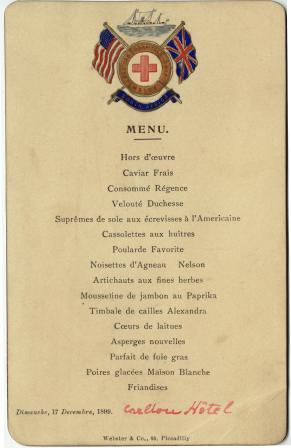
Donated by & Copyright of UNLV Libraries, Special Collections.
19 December 1899 the Times Newspaper of this day reported on collections for the fitting out of the Hospital Ship Maine - some of those who made a donation were listed as - "Absent-minded Beggar" 5sh and "Prince" a Collie dog 3sh 3d
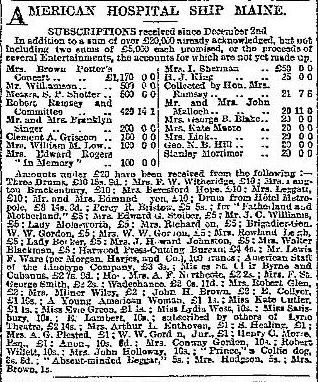
23 December 1899 sailed Gravesend for Cape Town, South Africa for service during the Boer War where she was chiefly used a the Base Hospital Ship at Durban
24 December 1899 the New York Daily Tribune newspaper reported ...

30 December 1899 the Graphic Newspaper published ...

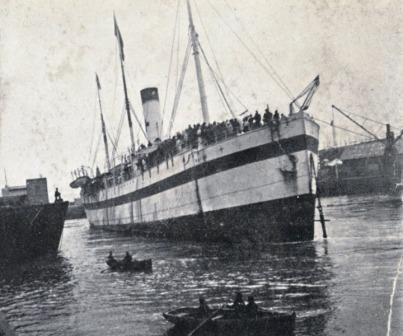
3 January 1900 arrived at Las Palmas on way to the Cape sailing the next day
6 January 1900 arrived at Maderia
21 January 1900 arrived at Cape Town
29 January 1900 arrived Durban. Winston Churchill’s mother served as a nurse onboard and at one stage even treated her youngest son Jack Spencer Churchill there
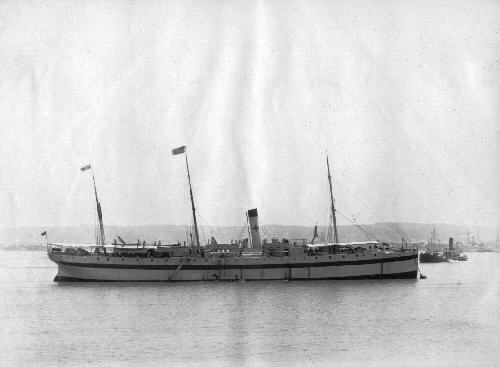
8 February 1900 a telegram from Durban reported that the ship now held 140 patients which included 69 injured - mostly from Colenso and Spion Kop - 16 cases of dysentry, 14 of rheumatism, 3 of enteric fever and 4 of ague
13 February 1900 a tea dance in New York raised over $6,000 for the fund to maintain and run the ship
8 March 1900 a Ball was organised in aid of funds for the Hospital Ship Maine at the Grand Hotel, Rome. Some 400 guests were attended

Wounded and sick Officers on the Hospital Ship Maine at Durban
17 March 1900 sailed from Durban for Cape Town arriving 21 March 1900

24 March 1900 sailed from South Africa with a full complement of cot cases
29 March 1900 the Lord Mayor of London donated £2,000 for the fund to maintain and run the ship
4 April 1900 a concert in aid of the finances to run the Maine took place at the Crystal Palace
15 April 1900 arrived at Maderia while on passage to Southampton. While at Maderia a soldier - Sergeant J Grantham of the 2nd Battalion Royal Fusiliers discharged dead - he was buried in Maderia with full military honours
23 April 1900 berthed at Southampton with 12 Officers and 151 wounded men on board
3 May 1900 William Benjamin Toulman, a labourer, pleaded Guilty at Southampton Borough Police Court to the larcency of various items valued together at 9sh 8d from the Maine while at Southampton. Toulman was working on the ship at the time.and was stopped at the Dock gate with the items hidden on his person. He was sentenced to two months hard labour

Press report from the Hampshire Advertiser of 5 May 1900
3 May 1900 sailed Southampton for a second trip to Durban, South Africa. During the period she was berthed at Southampton the ship was dry docked and improvements to the facilities were undertaken these included the provision of a mortuary on the main deck
21 May 1900 at 11.12S 1.42W Hospital Orderly Otto C Raustrom discharged dead from meningitis
29 May 1900 arrived at Table Bay
9 June 1900 sailed Table Bay for Southampton with 11 officers and 149 men as patients. Lieut -Colonel Hensman, Royal Army Medical Corp was in command of the medical team onboard
12 June 1900 the Shields Daily News reported -

26 June 1900 arrived at Funchal, Maderia and sailed the same day for Southampton
2 July 1900 passed Ushant
9 July 1900 the Executive Committee placed the ship at the disposal of the Admiralty for service in China as it was belived she would be of greater use in Chinese waters rather than at South Africa. This offer was made as the South African War was coming to a close and Maine had successfully fulfilled her mission there.
12 July 1900 sailed Southampton for Taku (China) for service during the Boxer Rebellion under the command of Captain F S Stone
17 July 1900 passed Gibraltar
21 July 1900 passed Malta
25 July 1900 arrived at Port Said
6 August 1900 it was reported in the Times newspaper that a series of further donations for the Executive Committee running the Maine had been received. This included a further grant from the Lord Mayor of London for £1,000 numerous smaller donations and one £1 from Miss Janotha's black cat for 'Good Luck'
10 August 1900 sailed from Colombo, Ceylon
14 August 1900 the St James's Gazette reported -

18 August 1900 passed Singapore
25 August 1900 berthed at Hong Kong
29 August 1900 the Principal Medical Officer onboard reported that at Hong Kong they were loading stores and provisions for 3 months service away from the Colony. Doctors Shine and MacWhirter joined the Medical staff
31 August 1900 sailed Hong Kong for Wei-hai-wei
18 September 1900 arrived at Wei-hai-wei, China. Two further US surgeons joined the ship
26 September 1900 sailed Wei-hai-wei, China for Taku to collect invalids
10 October 1900 arrived at Wei-hai-wei, China from Taku with invalids comprising of 8 officers and 28 non commissioned officers and men of the British Forces and 2 officers and 69 non commissioned officers and men of the American Expeditionary Force on board. Sailed to Nagasaki
16 October 1900 was at Nagasaki shortly to sail to Yokohama with invalids from the Taku Forts
20 October 1900 arrived at Yokohama
3 November 1900 sailed from Yokohama
7 November 1900 arrived at Wei-hei-wei, China
9 November 1900 sailed from Wei-hei-wei
10 November 1900 arrived at Taku
18 November 1900 sailed from Taku
20 November 1900 arrived at Wei-hei-wei, China after calling at Chefoo for bunkers
21 November 1900 reported by telegram from Wei-hai-wei that a further group of invalids had been received on board comprising 6 officers and 66 non commissioned officers and men of the British Forces and 3 men of the American Expeditionary Force

Sick and wounded on the Hospital Ship Maine
26 November 1900 arrived at Hong Kong
1 December 1900 sailed Hong Kong for Southampton with 108 sick and wounded onboard
27 December 1900 the South Wales Daily News carried an advertisment from Colemans & Company Ltd., Norwich concerning one of their products -

31 December 1900 sailed Port Said for Southampton
13 January 1901 returned to Southampton with 4 officer and 138 others ranks patients all of whom had come from China with the exception of 34 patients who had been admitted onboard at Malta. The patients were all discharged and admitted to Netley Hospital. After her China Station service it was planned that she would be laid up
20 March 1901 the Portsmouth Evening News reported ...

5 April 1901 arrived at Gibraltar sailing later for Malta to join the Mediterrean Squadron as a Hospital Ship
13 May 1901 berthed at Portsmouth from Malta with 66 patients from the Mediterranean Fleet
16 May 1901 the Daily Public Ledger newspaper of Maysville, Kentucky reported ...

29 June 1901 formally presented to the Admiralty and renamed HMHS MAINE
2 July 1901 at Marlborough House H. M. The King received Mrs George Cornwallis West, the Dutchess of Marlborough and other American ladies who formed the Committee which had managed the Hospital Ship Maine during the South African War
12 July 1901 sailed Portsmouth for Southampton
21 November 1901 at Larnaca, Cyprus together with HMS GLADIATOR
6 December 1901 arrived at Malta from Platea
22 December 1901 sailed Malta for Corfu

HMHS Maine
14 January 1902 arrived at Malta
18 January 1902 sailed from Malta for Alexandria calling at Platea and Suda Bay, Crete
20 February 1902 at Alexandria
21 March 1902 sailed Malta for the UK with invalids and time expired men onboard
29 March 1902 the Magazine Navy and Army Illustrated published three images of the Hospital Ship Maine -

HMHS Maine - the Upper Deck facing aft

HMHS Maine - the Operating Theatre

HMHS Maine - one of the wards
31 March 1902 arrived at Portsmouth from the Meditterrean
6 April 1902 sailed Portsmouth to Southampton
12 April 1902 the Hampshire Telegraph reported

22 May 1902 sailed Malta with 89 patients on board for Portsmouth
6 June 1902 sailed Portsmouth for the Mediterranean
17 June 1902 vide the London Gazette of this date on page 3965 & 3967 in a despatch dated 1 March 1902 from Field Marshal Earl Robert KG GCB VC Etc reported to the Secretary of State for War, the War Office that the following from HMHS Maine should be recognised
Major J Meek MD Royal Army Medical Corps
G E Dodge Esq BS MD Civil Surgeon
T W Hastings Esq BA Civil Surgeon
Mrs George Cornwallis-West
Miss Eleanor Charlotte Warrender
Staff-Sergeant (now Sergeant Major) S J How, Royal Army Medical Corps
Mr J J Reilly Male Nurse
Mr W B Ruth Male Nurse
24 June 1902 vide the London Gazette of this date on page 4193 Superintentdent Miss E M Chadwick, Army Nursing Service and Mrs George Cornwallis-West (Lady Randolph Churchill) both shown as serving on the HMHS Maine were awarded the Royal Red Cross
6 December 1902 arrived at Plymouth with one officer and eighteen men from a Military Hospital at Malta who had been invalided home
February 1903 nine officers were awarded the Sea Transport Medal with either the South Africa bar, the China bar or both bars
Sea Transport Medal
Those who received the medal were -
Captain F Stone - both bars. Chief Officer W Johnston - both bars. 2nd Officer B W Griffiths - both bars. 3rd Officer A P Cooke - both bars. Chief Engineer Officer T G Richardson - both bars. 2nd Engineer Officer J Barrett - both bars, 3rd Engineer Officer J N Cairns - both bars, 3rd Engineer Officer J W Anderson - South Africa bar only. Purser J G Whyman - both bars
19 March 1903 a question was raised in the House of Commons by Mr Harold Tennant, MP for Berwickshire to the Government as to why the South African War Medal was issued to male American orderlies and nurses but was refused for the five female certified nurses in charge. The Government stated they had issued the instructions
29 April 1903 the China War Medal 1900 was awarded to male American Nurses who had joined the ship prior to her depature to South Africa in 1899 and remained onboard when she deployed to provide medical assistance at the Taku Forts, China during the Boxer Rebellion. Those who received the medal were J. J. Reilly, W. B. Ruth, J. F. McClintock, Victor Bates, L M Howard, Charles Austin and Archibald Gillies (details from the New York Tribune)
9 October 1903 following a Order in Council the Wardmaster was granted an allowance of 6d a day
27 May 1904 off Cap de Gatt patient Stoker Dan Gear from Naval Store Ship Aquarius (later to be come RFA Aquarius) discharged dead - tumor on the brain
28 May 1904 the Army & Navy Gazette reported -

30 May 1904 at Gibraltar a patient, Ships Boy Oscar Solomon of HMS IRRESISTIBLE dischared dead from double pneumonia
10 June 1904 arrived at Malta
1 August 1904 sailed Malta for Beirut
16 August 1904 while at sea a patient, Midshipman Roland G A Saunders, Royal Navy from HMS VENERABLE discharged dead from Enteric Fever
17 August 1904 together with HMS MONTAGU and three destroyers sailed from Cyprus
20 August 1904 while at sea off Rhode Island a patient, Midshipman Douglas George Inkpen, Royal Navy from HMS MONTAGUE discharged dead from Enteric Fever
30 August 1904 while at sea a patient, Assistant Paymaster Prosper Claude Conrad De La Rue, Royal Navy from HMS VENERABLE discharged dead from typhoid fever. He was buried the next day in the British Cemetery at Smyrna
30 September 1904 sailed Cephalonia for Malta
1 October 1904 berthed at Malta
20 March 1905 sailed Malta for Navarino Bay
10 May 1905 sailed Malta for Gibraltar and Portsmouth with 70 naval and 40 military invalids onboard
17 May 1905 in the House of Commons the Government's Ships Bill was debated and it was explained that the Bill was needed due to the existence of the Hospital Ship Maine, the distilling ship Aquarius and other Fleet Auxiliaries as well as ships owned by other Government Departments which did not form part of Her Magesty's Navy. The Bill enabled the King by order in Council to make regulations bringing these vessels under the provisions of the Merchant Shipping Act 1894 and Naval Discipline Act
19 May 1905 berthed at Portsmouth with naval invalids being sent to the Royal Naval Hospital at Haslar. The military invalids were sent to the Netley military hospital
19 June 1905 Dundee Evening telegraph reported ...

18 June 1905 arrived at Gibraltar
19 June 1905 Surgeon Algernon C Bean Royal Navy appointed to the Royal Naval detachment on board
11 July 1905 sailed Portsmouth
18 July 1905 arrived at Plymouth
27 July 1905 arrived at Gibraltar with HMS VENUS
1 August 1905 arrived at Malta from Gibraltar
5 August 1905 sailed Malta for Gibraltar and England
1905 taken over as an RFA when the service was formed and renamed RFA MAINE (1)
12 August 1905 Stoker William P McQuirk of HMS COMMONWEALTH when as a patient onboard discharged dead from a cerebal abscess - he was buried in Plymouth Cemetery
15 August 1905 arrived at Portsmouth and Fleet Surgeon Daniel J P McNabb Royal Navy appointed i/c of Royal Naval detachment on board
26 August 1905 sailed Portsmouth for Malta
4 September 1905 arrived at Malta
15 Septekmber 1905 at Phalcrum with the Mediterrean Fleet
28 September 1905 sailed Lemnos for Malta arriving 1 October 1905
5 October 1905 sailed Malta
8 October 1905 berthed at Gibraltar
10 October 1905 sailed Gibraltar for Devonport
14 October 1905 berthed at Devonport sailing for Portsmouth the same day
15 October 1905 berthed at Portsmouth
25 October 1905 sailed Portsmouth for Malta
30 October 1905 berthed at Gibraltar
3 November 1905 arrived at Malta
30 November 1905 Staff Surgeon Walter H O Garde Royal Navy appointed to the Royal Naval detachment on board
9 December 1905 sailed Malta for Gibraltar
14 December 1905 berthed at Gibraltar sailing the same day for Plymouth
19 December 1905 arrived at Plymouth sailing the same day for Portsmouth
20 December 1905 berthed at Portsmouth
27 December 1905 berthed on North Slip Jetty, Portsmouth
2 January 1906 moored on No: 5 buoy in Portsmouth Harbour
6 January 1906 sailed Portsmouth for Gibraltar
11 January 1906 berthed at Gibraltar leaving the same day for Malta
16 January 1906 arrived at Malta from Gibraltar
31 January 1906 sailed from Malta with Vice Admiral Sir J T Grenfell and invalids onboard for Gibraltar and Portsmouth
6 February 1906 berthed at Marseilles and landed Vice Admiral Sir J T Grenfell, second in command of the Mediterranean Fleet
21 March 1906 sailed Malta for Gibraltar
27 March 1906 sailed Gibraltar for Devonport and Portsmouth
1 April 1906 berthed at Portsmouth
14 April 1906 sailed Portsmouth for Gibraltar
24 April 1906 arrived at Malta from Gibraltar
22 May 1906 sailed Portsmouth for Gibraltar and Malta
31 May 1906 arrived at Malta from Gibraltar
12 June 1906 sailed Malta for Gibraltar
16 June 1906 berthed at Gibraltar and sailed the same day for Plymouth
21 June 1906 arrived Plymouth from Gibraltar
22 June 1906 berthed at Portsmouth
3 July 1906 sailed Portsmouth for Gibraltar
14 July 1906 arrived at Malta from Gibraltar
18 July 1906 sailed Malta for Gibraltar
24 August 1906 arrived at Malta from Gibraltar
24 September 1906 sailed Malta for Gibraltar
5 October 1906 Staff Surgeon Ernest S Reid MB appointed to the ship which was berthed on South Railway Jetty, Portsmouth Harbour
20 October 1906 berthed at Malta from Gibraltar
3 November 1906 sailed Malta for Gibraltar
13 November 1906 arrived at Portsmouth Harbour and berthed on South Railway Jetty
19 November 1906 entered the large basin at Portsmouth Dockyard for a refit
27 November 1906 in No: 12 dry dock at Portsmouth Harbour
29 December 1906 still in No: 12 dry dock at Portsmouth
8 January 1907 moved from No: 12 dry dock to No: 5 basin
20 January 1907 arrived Gibraltar

RFA Maine (1) arriving at Gibraltar Harbour
7 February 1907 Surgeon Charles T Baxter appointed to the Royal Naval detachment on board
11 February 1907 at Hampshire Assizes before His Honour Mr Justice Grantham two young men appeared on an indictment charging them with robbery with violence of a silver watch valued at £2 the property of Donkeyman Michaeal Warburton a member of the crew of RFA MAINE at Portsea in November 1906. They both pleaded not guilty. After hearing the evidence the jury found both men guilty of simple robbery. They admitted to having previous convictions. One was sentenced to 18 months imprisonment with hard labour the other was sentenced to 18 months in a Borstal institution
19 August 1907 sailed Smyrna for Lemnos with HMS MINERVA
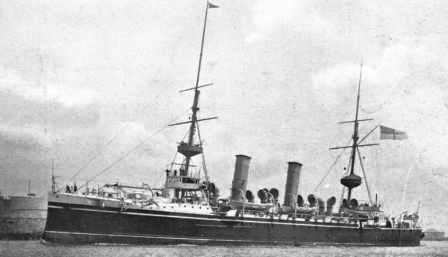
HMS MINERVA
7 September 1907 sailed Constantinople with HMS HUSSAR to join the Mediterrean Fleet which was anchored at Lemnos
October 1907 Fleet Surgeon Frederick J A Dalton Royal Navy appointed i/c of Royal Naval detachment onboard
22 October 1907 deployed with units of the Royal Navy near Rosyth
27 October 1907 together with RFA AQUARIUS and some 47 units of the Royal Navy anchored both up stream and down stream of the Forth Rail Bridge
30 October 1907 berthed at Portsmouth
8 January 1908 sailed Malta for Gibraltar
12 January 1908 arrived at Gibraltar
13 January 1908 sailed Gibraltar for the UK
17 January 1908 arrived at Plymouth

RFA Maine (1) in 1908
18 January 1908 sailed Plymouth
19 January 1908 arrived at Portsmouth sailing on 28 January 1908
1 February 1908 arrived at Gibraltar sailing the same day
5 February 1908 arrived at Malta
15 February 1908 anchored in Hawich Harbour
31 March 1908 arrived at Aberdeen from Invergordon
3 April 1908 berthed at Provost Blaikie's Quay, Aberdeen loading 350 tons of bunker coal and provisions
4 April 1908 sailed Aberdeen to take up duties with the Channel Fleet
15 June 1908 Surgeon Richard Willan Royal Navy appointed to the Royal Naval detachment on board
1 July 1908 Captain Alfred C Dunn RFA (Commander RNR) appointed as Master
15 July 1908 anchored to the west of the Forth Bridge
6 April 1909 Staff Surgeon John R Muir MB Royal Navy appointed to the Royal Naval detachment on board
7 April 1909 arrived an Portsmouth and discharged Naval and Military invalids from Malta and Gibraltar
9 April 1909 anchored off Dalmore in the Moray Firth
3 May 1909 a sailor from HMS LORD NELSON received onboard following an accident where he had fallen astride a boom, sustained serious injuries and was requiring an operation
11 May 1909 berthed at Provost Blaike's Quay, Aberdeen to load naval stores
22 June 1909 arrived at Oban to join the Fleet
2 July 1909 arrived at Kirkwall
14 July 1909 arrived at Foynes and received hospital cases before sailing to Berehaven
30 July 1909 Fleet Surgeon Herbert L Penny Royal Navy appointed i/c of Royal Naval detachment onboard
20 September 1909 berthed at Aberdeen for bunkers and boiler water
14 October 1909 sailed Cromarty for Queenstown, Sheerness and Portsmouth Harbour
20 October 1909 arrived at Portsmouth Harbour
1 November 1909 passed Gibraltar
10 November 1909 sailed Portsmouth Harbour for Malta for a crew change returning to the UK via Gibraltar
2 December 1909 arrived at Portsmouth Harbour landing patients for Haslar Naval Hospital
23 March 1910 sailed Sheerness for Malta
6 July 1910 in collision with the wooden topsail schooner Gordon in Portland Harbour. Both ships were damaged. At a subsequent hearing the Master of MAINE was held totally to blame
13 July 1910 at Berehaven with HMS CYCLOPS
16 July 1910 received four injured sailors from HMS SUTLEJ which suffered an 'on board' explosion off Berehaven

25 July 1910 Surgeon Richard Connell MB BA appointed to the Royal Naval detachment on board
27 July 1910 participated in the Torbay Fleet Review by King George V as the Naval Hospital Ship of the Grand Fleet
1 August 1910 berthed at Portsmouth
16 October 1910 berthed at Aberdeen to load 500 tons of water
17 December 1910 arrived at Spithead from Gibraltar
24 December 1910 berthed on No:6 Buoy in Portsmouth Harbour
16 January 1911 sailed Stokes Bay to join the Fleet
15 February 1911 entered Portsmouth Harbour from Spithead
11 March 1911 in a hearing before the Admiralty Division of the High Court proceeding were taken against the Master of the Maine (Captain Alfred C Dunn RFA) by the owners of the schooner Gordon. The Captain of RFA Maine was held to be totally to blame
26 August 1911 at Invergordon
20 September 1911 arrived Aberdeen for bunkers, water and stores
29 September 1911 an explosion in a Portsmouth Dockyard work shed killed two workmen. The explosion was caused by a gas cylinder which came from the Maine which was under a gas pressure test.
4 October 1911 at an inquest touching on the deaths of the two workmen (see above) held by the Portsmouth Borough Coroner returned a verdict of accidental death
10 October 1911 Staff Surgeon Charles G C Ross MB BA appointed to the Royal Naval detachment on board
19 October 1911 anchored in the River Forth above the Forth Bridge and off Queensferry
13 November 1911 Staff Surgeon Maurice T Male MB appointed to the Royal Naval detachment on board
29 February 1912 arrived at and berthed at Portsmouth Harbour
6 May 1912 undertook Basin trials of the machinery at Chatham Dockyard after a refit
7 May 1912 sailed Chatham for Sheerness to adjust compasses
10 June 1912 Fleet Surgeon Ernest C Lomas MB FRCS Ed. DSO Royal Navy appointed i/c of Royal Naval detachment onboard
20 June 1912 at Portsmouth Harbour on No: 1 buoy
26 June 1912 berthed on C1 Coaling Depot at Portsmouth Harbour
5 July 1912 sailed Portsmouth Harbour to Stokes Bay
6 July 1912 arrived at Spithead together with 1st., 2nd., 3rd., 4th. and 5th. Battle Squadrons numerous cruisers and destroyers
9 July 1912 sailed Spithead
18 July 1912 anchored in the River Forth above the Forth Bridge and off Queensferry with HMS's BLAKE, CIRCE, SEAGULL and JASON
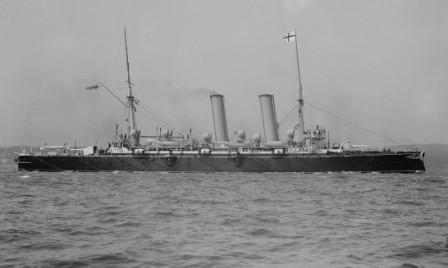
HMS BLAKE
25 July 1912 sailed from Portsmouth Harbour
15 October 1912 Assistant Paymaster W R Roe Royal Navy appointed
6 March 1913 arrived at and berthed at Portsmouth
18 April 1913 Staff Surgeon T W Myles Royal Navy appointed to the Royal Naval detachment on board
19 April 1913 sailed Sheerness for Berehaven
27 May 1913 anchored at Lamlash
4 July 1913 sailed Portsmouth Harbour for Spithead
9 July 1913 the Portsmouth Evening News carried as small adverisment for a Third Cook who was required 'at once' onboard
1 August 1913 berthed at Portsmouth
2 August 1913 sailed Portsmouth for Queensferry
September 1913 Captain Alexander M Tarver RFA was Master
13 October 1913 Staff Surgeon Duncan G Addison-Scott MB Royal Navy appointed to the Royal Naval detachment on board
22 October 1913 arrived at Sheerness from Scottish waters
23 October 1913 berthed at Portsmouth from Sheerness
3 December 1913 arrived at Spithead to allow the crew Christmas leave
14 January 1914 Staff Surgeon Arthur R Thomas FRCS Ed appointed to the Royal Naval detachment on board
17 January 1914 sailed Portland for Vigo
21 February 1914 various ships of the Home Fleet while returning to the UK from Arosa Bay suffered from the effects of very rough weather. One sailor was lost overboard and six were injured, two so seriously that they were transfered to the Maine for treatment
24 April 1914 sailed Chatham Dockyard for Lamlash
27 April 1914 arrived at Lamlash with HMS's HERCULES, COLOSSUS, SUPERB, NEPTUNE, TEMERAIRE, COLLINGWOOD, SAPHO, EXE and CHERWELL
17 June 1914 grounded in thick fog and was wrecked on the east of coast of the Isle of Mull on a small island named Eilean Straide Eun (Frank Lockwood's Island) about two miles north of the entrance to Loch Buie with serious damage forward. No casualties (From the Oban Times 20 June 1914)
18 June 1914 thirty five patients from the grounded Maine arrived at Campbeltown onboard HMS SWIFT
20 June 1914 salvage attempts were abandoned due to her age and potential salvage bill

RFA Maine (1) aground with her lifeboats lowered
22 June 1014 the Scotsman newspaper reported -

6 July 1914 wreck sold locally for scrap
23 September 1969 vessel found in deep water broken up and spread over a wide area. Of interest to the Royal Commission on the Ancient and Historical Monuments of Scotland
3 June 2012 the ships steam cutter - RN Steam Cutter No 438 - sailed as part of the Queen's Diamond Jubilee pageant on the River Thames with her crew dressed in the uniforms of the time
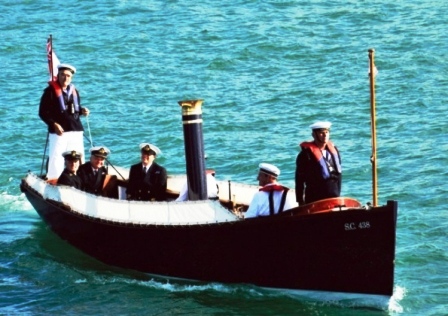
Notes:
1. Members of the St. John Ambulance Brigade served as orderlies on the MAINE. After being used on the run from England to South Africa, the ship was used on a single journey to China to bring home wounded from the campaign against the “Boxers”. This qualified the crew for the China War Medal 1900 without clasp.
2. Only eleven members of the St. John Ambulance Brigade served on the MAINE as orderlies and received the China War Medal. All had previously qualified for the Queen’s South Africa Medal, whether aboard MAINE or elsewhere.
RFA Maine (2)
Previous name: Heliopolis, Mediator
Subsequent name: Heliopolis, Methven, Borden, Perseus
Official Number: 120650
Class: Hospital Ship
Pennant No:
Laid down:
Builder: D & W Hendersen Ltd (Meadowside)
Launched: 1 December 1905
Into Service: 17 February 1913
Out of service: 1 March 1916
Fate: Broken Up
Items of historic interest involving this ship: -
1 December 1905 launched by D & W Henderson & Co Ltd, Partick as Yard Nr 448 named HELIOPOLIS for Alliance Steamship Co Ltd ( Harris & Dixon Ltd, Managers) London
January 1906 completed
6 July 1906 sailed London docks. Captain H R Kelley was the Master
21 August 1906 arrived at Fremantle, Western Australia
4 September 1906 arrived at Albany, Western Australia
18 October 1906 arrrived at Singapore
6 November 1906 arrived at Hong Kong having suffered damage through very rough weather
4 December 1906 arrived at Newcastle, NSW, Australia
16 February 1907 in the Bristol Channel in collision with ss Orianda with fourteen of the Orianda's crew being drowned -

Press cutting from the Northampton Mercury of 22 February 1907
On arrival at Cardiff the HELIOPOLIS was found to have damage to her bows and had been holed, she entered the Mount dry dock for repairs. The Master of the ss Orianda - Captain John Williams, the Mate - G Jones and the 2nd Mate - R Hunter were among those who drowned
8 March 1907 arrived at Malaga, Spain
15 March 1907 at 16°36N 21°20W passenger Ranon Alonzo Gerrera (infant) discharged dead - natural causes
16 March 1907 at 21°31N 18°26W passenger Natindad Salado Anada (infant) discharged dead - pneumonia
17 March 1907 at 7°28N 25°14W passenger Incarnation Martin (infant) discharged dead - natural causes
26 March 1907 at 30°48S 49°31W passenger Maria Gonzalez (child) discharged dead - natural causes and at 30.41S 49.31W passenger Enginia Sanchez (infant) discharged dead - bronchitis
29 March 1907 at 42°55S 59°18W passenger Danophilo Marfil (child) discharged dead - colitis
30 March 1907 at 46°25S 63°41W passenger Antonio Tantaella (infant) discharged dead - meningitis
1 April 1907 at 52°56S 70°33W passenger Antonia Parejo Sobo (infant) discharged dead - gastritis
9 April 1907 at 35°10S 90°23W passenger Francisca Martin Rubia - discharged dead - natural causes
10 April 1907 at 32°35S 99°17W passenger Jose Genero Guena (infant) discharged dead - also passenger Antonio Roma Ocania also discharged dead - both from pneumonia
14 April 1907 at 21.09S 116.28W passenger Maria Lopez discharged dead - pneumonia. At 21.09S 116.23W passenger Francisca Ortiz discharged dead - pneumonia
15 April 1907 at 17.36S 120 08W passenger Josefa Fernandez (infant) discharged dead - gastritis
19 April 1907 at 3.17S 133.42W passenger Francisca Arco discharged deat - heat exhaustion
24 April 1907 at 14.7N 150.22W passenger Ana Valazeo (infant) discharged dead - natural causes
25 April 1907 at 18.06N 153.50W passenger Ana Medina (infant) discharged dead - natural causes
9 July 1907 at 06.21S 50.36E passenger Chin Chi discharged dead - fractured skull. At 05.59S 51.10E passenger Yan Tong Ming discharged dead - tuberculous
25 May 1907 arrived Hong Kong
4 March 1908 registered owners now Century Shipping Co Ltd (Harris & Dixon Ltd, Managers) London name unchanged
15 May 1908 sailed Alexandria for Naples and Marseilles
12 July 1908 at Marseilles, France Fireman Emin Achmed discharged dead from shock from scalding and internal injuries
1911 / 1912 Navy Estimates made provision for an additional naval hospital ship to be registered under the Merchant Shipping Act 1906, Section 80 at an estimated cost of £68,838 and to be named MEDIATOR
17 February 1913 purchased by the Admiralty for £60,000 for conversion into a Hospital Ship To be taken in hand at Pembroke Dock for the necessary work to be carried out at a cost of about £48,000
18 February 1913 to 19 February 1913 inspected by RN Fleet Surgeon and Naval Construction and Engineering Staff for her suitability for conversion into a Hospital Ship
15 May 1913 Admiralty records indicated that she should be renamed MEDIATOR
6 July 1914 the Admiralty decided that she should be renamed MAINE (2)
14 July 1914 was renamed MAINE (2) after the loss of MAINE (1)
7 March 1916 conversion never fully completed and ship was considered by some as totally unsuitable for this conversion and for service as a Hospital Ship.

The Admiralty, auctioneers Fuller, Horsey, Sons and Casell offered her for sale by auction at the Baltic & Shipping Exchange, London on 1 March and she was resold to her former owners for £105,000. The cost of reconverting her to a cargo carrying steamer was £40,000 on completion of which her name reverted to HELIOPOLIS
3 October 1916 at sea Fireman's Cook Kow Hung discharged dead - accidental death
28 December 1916 at sea Quartermaster Shong Lee Ching discharged dead - natural causes
15 May 1917 purchased by Canadian Pacific Railway Co, Liverpool name unchanged
24 June 1917 sailed Barry on her first sailing for Canadian Pacific
20 August 1917 renamed METHVEN by her owners
3 December 1917 berthed at London from Montreal
30 December 1918 sailed Liverpool for Vancouver via the Panama Canal for service in the Pacific
12 January 1919 arrived at St. Johns, New Brunswick
19 January 1919 sailed St. John, New Brunswick for Vancouver
15 March 1919 arrived at Vancouver
22 April 1919 arrived Hong Kong to commence her owners service from that port
20 November 1919 arrived Shanghai from Vancouver
8 December 1919 berthed at the Main Wharf, Tanjong Pagar, Singapore
25 March 1920 at 17.50N 113.30E Fireman Cheung Tak discharged dead - fell overboard - drowned
29 March 1920 arrived at Singapore from Vancouver
12 July 1920 berthed at Singapore
21 August 1921 berthed at Empire Dock, Singapore
March 1922 sailed Hong Kong via the Suez Canal to return to North Atlantic service
22 March 1922 renamed BORDEN by her owners
8 September 1923 arrived Barbados
3 October 1923 sailed Quebec for the West Indies
16 December 1923 sailed Barbados for St. Johns NB
30 December 1923 sailed St John NB for the West Indies
7 March 1924 arrived St. Johns NB from Demerara
15 March 1924 sailed St. Johns NB for Bermuda
26 October 1926 purchased by G.E. Kulukundis, Piraeus and renamed PERSEUS
1928 purchased by Culicids & Costomeni, Syra, Greece name unchanged
1930 purchased by Atlanticos Steamship Co, Syra, Greece name unchanged
24 August 1932 arrived for breaking up by F. Bertorelli, Genoa
Notes:
1. The image above is as she was as the s.s. Heliopolis

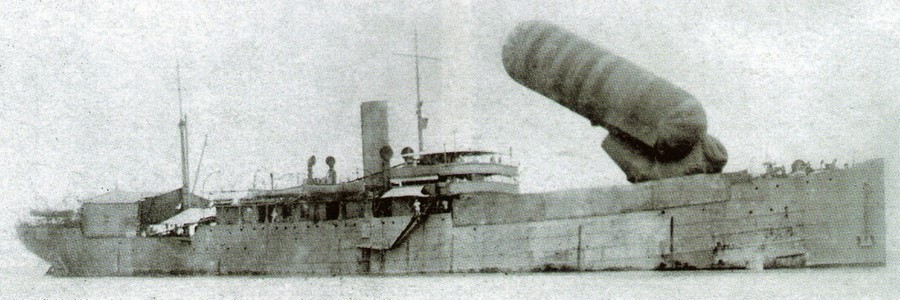
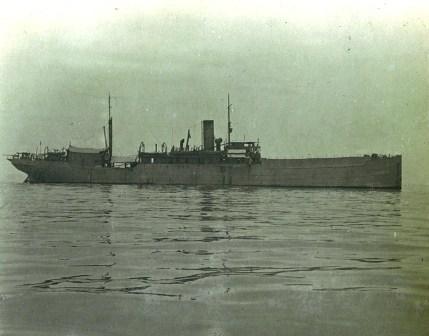
Subsequent name: Huntball, Phorus
Class: Kite Balloon ship
Official Number: 112782
Pennant No: 4.17
Laid down:
Builder: Sir James Laing & Sons Ltd., Deptford Yard
Launched: September 1900
Into Service: 20 August 1917
Out of service: 1920
Fate: Sold commercially
Items of historic interest involving this ship: -
27 September 1900 berthed at Hartlepool from Sunderland
24 December 1900 sailed Middlesborough for Gravesend
4 January 1901 from London passed Beachy Head
5 January 1901 sailed Dartmouth to Maderia, St. Helena and Cape Town
10 January 1901 sailed Teneriffe
24 January 1901 sailed St Helena
31 January 1901 arrived Table Bay
17 June 1901 arrived Algoa Bay from Table Bay
7 September 1901 Captain Edward D Jenkins was the Master
26 November 1901 arrived at Colombo from Calcutta
1 July 1902 berthed on the River Tyne at Middle Dock Buoys
9 August 1902 sailed Millwall Docks, London to Maderia, St. Helena and Cape Town
21 September 1902 arrived at Simon's Town Bay
7 December 1902 sailed Algiers when on passage from Calcutta to New York
21 January 1903 sailed from New York
19 April 1903 arrived at Calcutta from Delagoa Bay
28 May 1903 when on passage to New York from Calcuta passed Malta
20 June 1903 arrived at New York
22 September 1903 sailed Delagoa Bay
5 December 1903 sailed Algiers while on passage from Boston to Calcutta
25 March 1904 arrived at Natal from New York
9 August 1904 passed the Lloyds Signal Station on Flamborough Head sailing north
13 August 1904 berthed at Brigham & Cowan's Quay on the River Tyne
29 September 1904 when on passage from London to Yokohama passed Cape Spartel
28 October 1904 berthed at Singapore from London
9 November 1904 arrived at Hong Kong
30 December 1904 berthed at Singapore from Hong Kong
8 May 1905 arrived at Colombo
16 May 1905 sailed Singapore for Hong Kong
12 July 1905 berthed at Singapore from Hong Kong
2 November 1905 sailed Singapore for Hong Kong and Japan
17 April 1906 arrived Singapore from London
25 April 1906 arrived at Hong Kong from Middlesborough sailing the same day for Yokohama
3 August 1906 passed Perim
30 August 1906 while on passage from Calcutta to Philadelphia suffered engine failure while off Nantucket. Signalled the Cunard Mail Steamer Carmania which reported the situation on the Liners arrived at Queenstown on 4 September 1906
31 December 1906 sailed South Africa (port not listed) to Port Pirie, Australia to load
22 February 1907 sailed Sydney, NSW, Australia for Dunkirk and London
17 April 1907 berthed at Dunkirk
19 April 1907 berthed at the Port of London to discharge
26 April 1907 before Grays Petty Sessions George Burgess, a Tilbury Docks winch driver was charged with stealing two ignots of copper from the ship and worth £2. He pleaded Not Guilty. The Magistrates' found him Guilty and sentenced him to one months imprisonment with hard labour. The defendant asked to pay a fine instead but this was refused
12 October 1907 passed Perim while on passage from Calcutta to Boston
19 October 1907 at a hospital at Suez Lascar Seaman Chance Golamp discharged dead from pneumonia
9 February 1908 sailed Singapore for Taku, Muroran and Otora
24 May 1908 at sea at 5.48N 36.33E Fireman Osmanelle, Coal Trimmer Mohd. Bessie and Fireman Mushrullee Camil all discharged dead from berri beri
26 May 1908 sailed Colombo for St Nazaire
30 May 1908 at sea Coal Trimmer Asmatallee Mahomed discharged dead - missing believed drowned
28 July 1908 four crew members removed from the ship at the River Tyne

Press report of 29 July 1908 from Yorkshire Post
8 August 1909 sailed Gravesend for Beria
15 September 1909 sailed Beira for London
13 December 1909 arrived at Gibraltar from Saigon
29 January 1910 at South West India Dock, Port of London loading for Natal, Dalgoa Bay and Beira
27 April 1910 sailed Galle
25 July 1910 arrived at Natal from London
28 August 1910 berthed at Port Adelaide, Australia
3 September 1910 prior to sailing from Port Adelaide a crew muster revealed two of the crew were missing - one from Colombo, Ceylon and the other an African American who had jumped ship
13 September 1910 sailed Sydney, NSW, Australia for other Australian and South African ports
22 September 1910 the Master, Francis O Potts appeared before Port Adelaide Police Court charged with having allowed the two missing crew members - prohibited immigrants - to enter Australia. He was fined £100 in respect of each prohibited immigrant and 20/- costs
22, 23 and 24 September 1910 the details of the two crew members who had jumped ship were advertised with the offer of a reward of £10 each in both The Register and The Advertiser - two newspapers in circulation in Adelaide, South Australian over three days
24 September 1910 both former crew members and as such prohibited immigrants arrested some distance from Adelaide on a farm.
26 September 1910 the two former crew members who had jumped ship - Frank Dean and Pitchary Kandiah appeared before Port Adelaide Police Court charged with desertion - they both pleaded guilty and were sent to prison for seven days
25 January 1911 passed Gibraltar while on passage from Calcutta for Dunkirk
15 June 1911 sailed Melbourne for Delagoa Bay
14 July 1911 sailed Delagoa Bay
11 August 1911 sailed East London, South Africa
18 September 1911 sailed Colombo, Ceylon
28 October 1911 arrived at Suez when on passage from Calcutta to Dunkirk
15 January 1912 arrived at Delagoa Bay from London
18 January 1912 arrived at Beira
20 January 1912 sailed Beira for Melbourne
13 February 1912 berthed at Melbourne
2 April 1912 at Durban, South Africa
7 July 1912 sailed from Gravesend to Cape Town passed Dover
3 September 1912 berthed at Albany from Natal
7 September 1912 sailed Melbourne for Sydney
9 September 1912 arrived at Sydney, NSW from Natal
11 October 1912 arrived at Surbaya from Newcastle, NSW
21 October 1912 sailed Surabaya for Tanjong Prick
15 November 1912 sailed Port Pirie, South Australia for Sydney, NSW to load cargo
11 December 1912 sailed Sydney for Melbourne
11 January 1913 arrived Colombo from Melbourne
24 January 1913 arrived at Suez
16 February 1913 arrived Antwerp
4 June 1913 sailed Melbourne
7 June 1913 arrived Wallaroo from Melbourne
17 June 1913 sailed Port Adelaide for South African ports
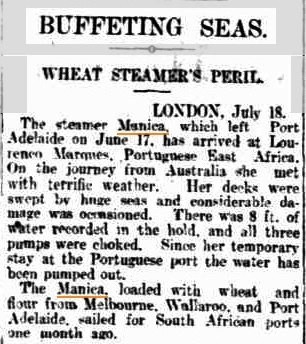
28 July 1913 arrived Durban from Australian ports
31 July 1913 sailed Durban for Cape ports
27 September 1913 arrived Bunbury from Cape Town
13 October 1913 sailed Bunbury
21 November 1913 arrived at Durban from Bunbury
22 November 1913 sailed Durban for Sydney, NSW
16 December 1913 berthed at Sydney, NSW
21 February 1914 arrived at Colombo from Melbourne
28 February 1914 Trimmer Ramazaalla Mozaffualla discharged dead - missing at sea
6 March 1914 arrived at Suez from Colombo
31 July 1914 arrived at Marseilles from Karachi
16 November 1914 arrived at Adelaide, Australia from Beira
25 January 1915 at Sea Donkeyman Eana Doolla discharged dead - missing believed drowned
11 February 1915 passed Beachy Head sailing east bound
12 February 1915 arrived at Port of London from Port Natal, South Africa
11 March 1915 hired as a Kite Balloon ship by the Admiralty - at a time she was unloading a cargo of copper bars, bales of sheepskins, bales of wool, drums of crude glycerine and manure from Sydney, NSW, Australia
22 March 1915 commissioned as HMS MANICA with RNR Officers and MMR crew. Engineer Lieutenant Robert A Mackenzie RNR appointed as Chief Engineer Officer


Engineer Lieutenant Robert A Mackenzie RNR
25 March 1915 Chief Steward Joseph Clement Dent discharged dead - natural causes. He is buried in Birkenhead (Flaybrick Hill) Cemetery and remembered on a screen wall
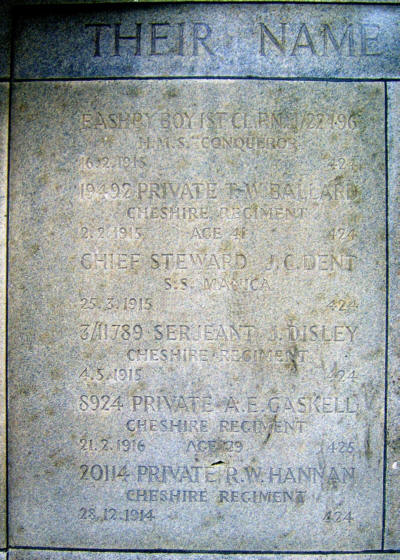
Courtesy and © of The War Graves Photographic Project
28 March 1915 sailed the UK for the Eastern Mediterranean
13 April 1915 arrived off Lemnos
14 April 1915 balloon raised in a trial ascent to 2,000 feet
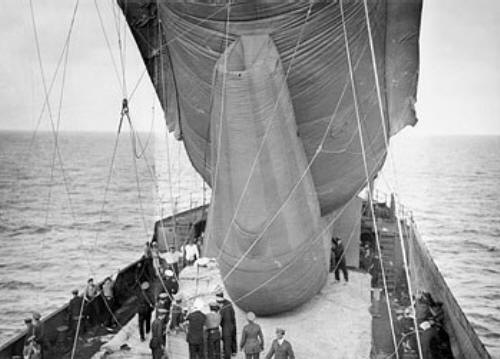
A 'Drachen' type balloon is held steady aboard while its observer waits to climb into the basket, off the Gallipoli coast, summer 1915.
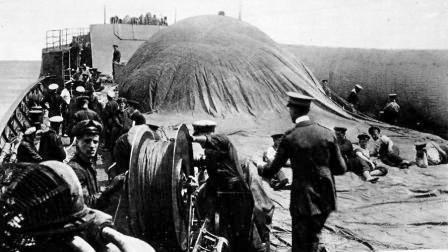
Image of Manica's balloon on deck from the Illustrated War News in 1915
19 April 1915 spotters from Manica's balloon directed shelling onto a Turkish encampment
24 April 1915 spotters directed fire onto Gaba Tepe, where the Turkish Barracks were destroyed
25 April 1915 the balloon, with its two observers, was in the air from 0521hrs to 1405hrs constantly reporting on the activities associated with Anzac Cove for almost nine hours, while the ANZAC troops were scrambling up the cliffs, one of the observers sighted the Turkish battleship TURGUT REIS (ex-German SMS WEISSENBURG) in the Narrows. HMS TRIUMPH was contacted by wireless, and it's balloon-directed fire forced the Turkish warship to withdraw
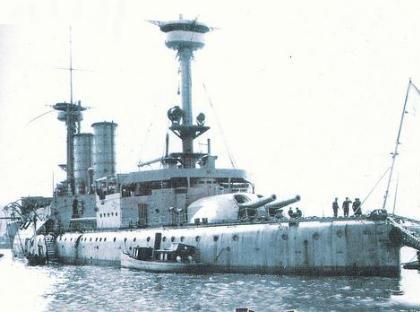
Turkish battleship TURGUT REIS
26 April 1915 the ships balloon made seven ascents in support of the ANZAC operations
27 April 1915 the observers was also spotting for HMS TRIUMPH and HMS QUEEN ELIZABETH the Royal Navy's newest and most powerful battleship, and the first in the world to mount 381 millimetre (15 inch) guns - during the afternoon QUEEN ELIZABETH blew up an armament store at Kojadere.
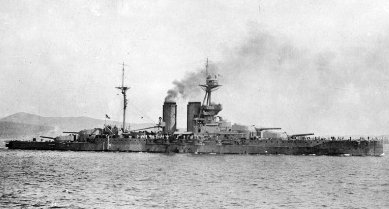
HMS QUEEN ELIZABETH in 1915
The same day the balloon's crew sighted Turkish transport ships near Najara, apparently heading for Maidos or Kilia Liman. QUEEN ELIZABETH was put on to the largest ship, the SCUTARI which was hit and sunk after three shots, at a range of 11.3 kilometres (7 miles)
28 April 1915 while spotting for British battleships - two field batteries silenced and several guns destroyed
30 April 1915 while spotting for British battleships - Chanak shelled which burnt for two hours. Subject to enemy fire - balloon recovered and steamed out of range
2 May 1915 while spotting for British battleships - battery of 8" guns shelled - three direct hits
3 May 1915 at Gaba Tepe attacked by enemy aircraft attacked and dropped three bombs all missed
8 May 1915 while spotting for British battleships - four batteries silenced
12 May 1915 while spotting for British battleships - a house reported to be the Turkish headquarters destroyed
25 June 1915 HMS LORD NELSON fired 55 shells at Chanak with Manica spotting for her
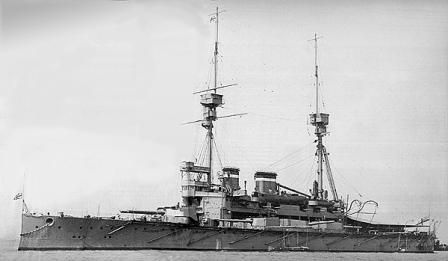
HMS LORD NELSON
10 July 1915 unable to spot for the British Battleships due to high winds
2 August 1915 sailed from Kephalo Bay arriving at Suvla Bay at 20:00hrs
11 August 1915 at Suvla a Taube fighter bomber dropped one bomb which fell between HMS CHATHAM and MANICA
12 August 1915 while supporting the landings at Suvla was subject to a torpedo attack by the German submarine UB-8 which missed. The torpedo was fired from 500 yards and passed under the ship, two days later a similar attack with two torpedoes also failed
14 August 1915 arrived at Kephalo Bay
27 November 1915 with the ship in refit the First Sea Lord was planning for her deployment off German East Africa - this was at the request of General Sir Horace Smith-Dorrien GCB etc who had been chosen to lead an expedition against German East Africa and did not have sufficient equipment
25 December 1915 Commander Wallace E Whittingham RNR appointed in command

Commander Wallace E Whittingham RNR
18 February 1916 at Birkenhead in No 4 dry dock at Camell Lairds. Recommissioned
19 February 1916 floated out of dry dock and towed by tugs to a berth alongside HMS CAMPANIA
21 February 1916 commenced loading bunkers
22 February 1916 loaded 994 tons of bunker coal
23 February 1916 at Birkenhead under repair in shipyard basin
6 March 1916 moved by 3 tugs from the basin. Anchored mid stream
10 March 1916 sailed Birkenhead to Gibraltar carrying a small seaplane in addition to her kite balloon arriving 16 March 1916
19 March 1916 at Gibraltar, commenced loading bunkers - 169 tons of coal received. Sailed Gibraltar with MFA LADY CORY WRIGHT and RN escort to Port Said arriving 27 March 1916
28 March 1916 at Port Said commenced coaling - 411 tons received. At 14:00hrs commencing unmooring ship - port anchor fouled another ship's anchor - 17:20hrs cleared port anchor - starboard anchor weighed - entered Suez Canal - transitted the Canal
30 March 1916 at Suez
31 March 1916 sailed Suez for Mombasa arriving 11 April 1916 when she took on a local 'Native' crew. (To quote the wording of the ships Official Log for the period)
14 April 1916 sailed Mombasa to Zanzibar
15 April 1916 at Zanzibar - collier 'Anglier' came alongside to commence bunkering
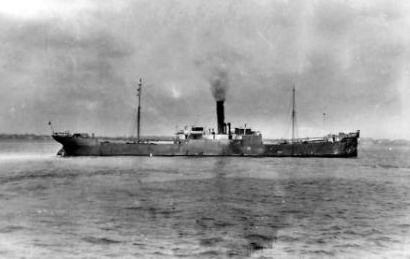
Collier Anglier
21 April 1916 sailed Zanzabar on operation duties to deploy balloon off German East Africa
1 May 1916 anchored off Zanzibar
9 May 1916 sailed Zanzibar
12 May 1916 off German East Africa hoisted out her sea plane for a trial flight
15 May 1916 returned to Zanzibar and hoisted out her sea plane for a flight
16 May 1916 at Zanzibar hoisted out her sea plane for a flight
19 May 1916 off German East Africa her balloon ascended to observe the town of Lindi
20 May 1916 while on patrol off German East Africa ran aground. On being towed off by HMS HYACINTH and HMS CHALLENGER the towing cable fouled the propellor - cleared in 32 minutes
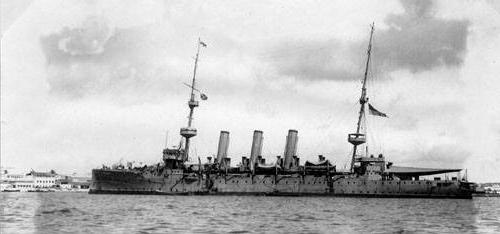
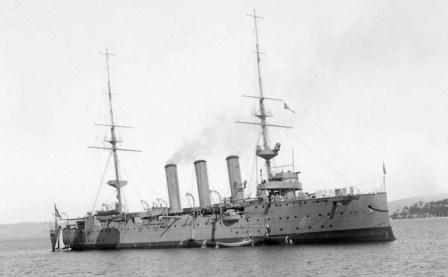
HMS HYACINTH HMS CHALLENGER
22 May 1916 off Lindi, German East Africa hoisted out her sea plane for observation purposes
23 May 1916 HMS THISTLE alongside
27 May 1916 balloon ascended
29 May 1916 twice hoisted out her sea plane for observation purposes
22 June 1916 arrived at Zanzibar
23 June 1916 sailed Zanzibar
30 June 1916 arrived at Zanzibar and sailed the same day
3 July 1916 arrived at Zanzibar
7 July 1916 during air operations the ship's sea plane was hit by anti aircraft fire and one of it's floats was damaged
8 July 1916 at Tanga Bay received onboard a wounded officer from HMS SEVERN with that ships surgeon
9 July 1916 returned to Tanga Bay - balloon raised
10 July 1916 sailed Tanga Bay
11 July 1916 at Zanzibar moved alongside collier 'August Belmont' to coal ship. Cast off to anchorage the next day
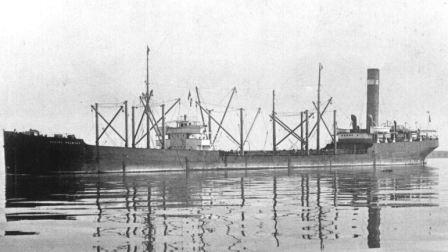
Collier August Belmont
13 July 1916 near Karange Island in company of HMS TALBOT
14 July 1916 at Karange Island - balloon raised
20 July 1916 at Tanga - sailed
1 August 1916 at Sadani
3 August 1916 at Sadani - balloon raised
6 August 1916 Fireman Hugh Patrick Foy. MMR discharged dead. On returning to the ship via the liberty boat he fell between the boat and the ship and was drowned. He is buried in Dar es Salaam War Cemetery
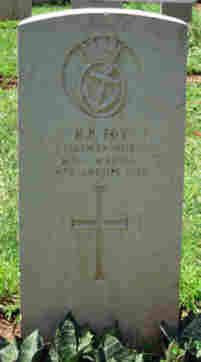
Courtesy and © of The War Graves Photographic Project
14 August 1916 sailed Zanzibar in company of HMS VENGEANCE (Flag) and HMS CHALLENGER for Bagamoyo arriving the next day and anchored.
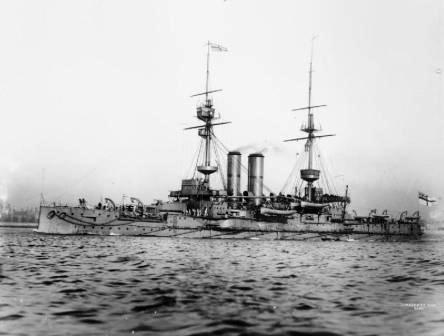
HMS VENGEANCE
15 August 1916 at Bagamoyo raised her kite balloon for spotting. The ship's seaplane took off but through an engine defect landed at the mouth of the Kingangi River but returned to the ship undamaged
22 August 1916 at Zanzibar sailed returning the same day
25 August 1916 under way from Zanzibar exercising raising balloon
26 August 1916 collier "Queen Alexandra" alongside at Zanzibar to re-coal ship all day
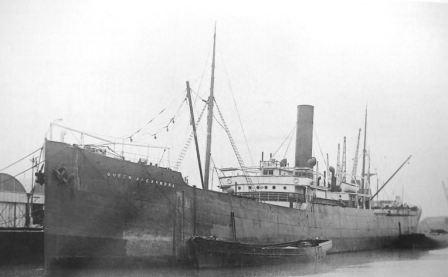
Collier Queen Alexandra
27 August 1916 arrived Bagamoyo sailing the same day
29 August 1916 water boat alongside at Zanzibar received 40 tons of water
2 September 1916 anchored off Mbudya Island - balloon up
13 September 1916 together with boats from HMS's VENGENANCE, TALBOT, HIMALAYA and PRINCESS assisted by the Gunboats HMS's THISTLE and RINALDO and the transport BARJORA when 200 Marines, 700 Indian Troops, 200 Zanzibar and Mafia African Rifles 12 Naval Machine Guns, 2 Hotchkiss guns and 950 porters were landed at Mikindani (Reference a Supplement to the London Gazette of 15 June 1917 page 5960)
15 September 1916 anchored off Simba Uranga
16 September 1916 still anchored off Simba Uranga - sailed with balloon up
17 September 1916 anchored at Mohoro Bay
27 September 1916 while berthed at Zanzibar a court of enquiry held onboard into the death of Fireman Hugh Patrick Foy (see above)
10 October 1916 arrived at Kilwa Kivinje and anchored
17 October 1916 a member of the native crew died of typhoid malaria - buried at sea at 7° 50S. 39° 40E.
23 October 1916 a member of the native crew died of typhoid malaria - buried at sea off Mafia Island, German East Africa
4 November 1916 off Rufugi - diver from Flagship employed to clear obstructions to hull
13 Movember 1916 off Rufugi - seaplane propeller damaged through rough water - seaplane recovered and housed.
14 November 1916 off Rufugi - received stores and water from collier
20 November 1916 at Zanzibar - received 263 tons of water from a water boat
21 November and 22 November 1916 at Zanzibar - collier alongside re-coaled ship
30 November 1916 sailed from Tirene Bay
10 December 1916 HMS SEVERN secured alongside
12 December 1916 arrived at Niororo Island
17 December 1916 sailed from Tirene Bay
21 December 1916 arrived at Niororo Island and sailed the same day
December 1916 the ships company produced a sods opera -
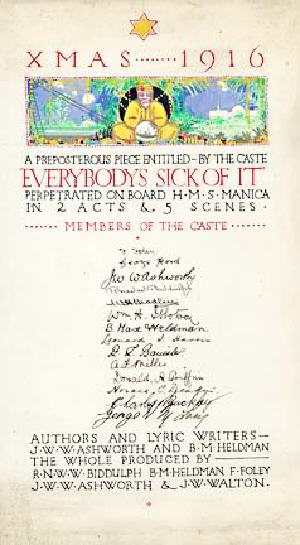
29 December 1916 arrived at Tirene Bay
30 December 1916 arrived at Niororo Island with HMS TRENT
1 March 1917 at Kilwa Kisiwani the ships Sea Plane landed by HMS PRINCESS which was at anchor having just coaled
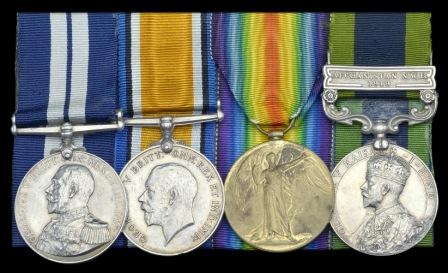
Medals awarded to Petty Officer (Air Mechanic) Thomas R Johnston DSM who served on Manica from June 1916 to April 1917. The DSM was Gazetted on 22 February 1918
(image courtesy of Dix Noonan Web)
21 March 1917 Air Mechanic 1st Class John D Woolger RNAS discharged dead. He is buried in Dar es Salaam War Cemetery in grave 2 G 16
25 March 1917 weighed and sailed from Zanzibar
13 May 1917 General Servant Edward Hewitt Buckley MMR 489728 discharged dead - having died from heat stroke. General Servant James Barton MMR 384357 discharged dead - having died from typhoid fever. Both are remembered with pride on the Plymouth Naval Memorial
August 1917 converted into a tanker and renamed Huntball at Bombay
15 April 1918 purchased by the Admiralty and placed under commercial management
30 December 1918 arrived at Singapore from Colombo
2 February 1919 arrived at Singapore from Balik Papan
11 March 1919 sailed Singapore
24 March 1919 arrived at Adelaide from Newcastle, Australia when 2nd Engineer Officer Robert Earnshaw was found to be suffering from pneumonia. He was removed to the Isolation Hospital at Torrens Island and the ship was placed in 7 days quarantine
7 April 1919 at the Isolation Hospital, Torrens Island, Port Adelaide, South Australia 2nd Engineer Officer Robert Earnshaw discharged dead - natural causes - pneumonia. He had signed on the ship in December 1918
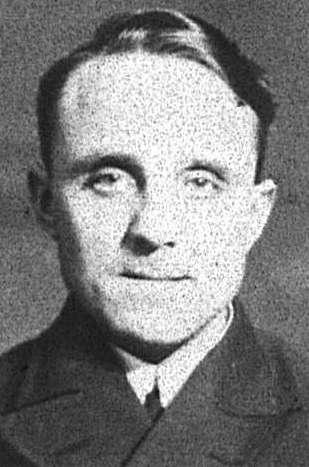
2nd Engineer Officer Robert Earnshaw
9 April 1919 berthed at Fremantle for bunkers while enroute to Durban
27 June 1919 sailed Colombo for Singapore
1919 sold to Anglo-Saxon Petroleum Co Ltd
5 May 1920 in Kings Dock (Dry Dock) at Singapore
14 May 1920 alongside at Singapore
1920 renamed by Anglo-Saxon Petroleum Co Ltd as Phorus
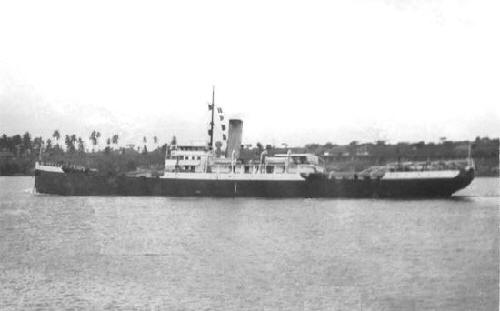
ss Phorus
2 April 1921 berthed at Singapore from Bombay
19 October 1921 sailed from Balik Papan for Shanghai
27 November 1921 at Batavia
20 June 1922 at Singapore
24 August 1922 at Tarakan
7 September 1922 sailed Nagasaki for Saitozaki
28 September 1922 sailed Singapore for Bombay
16 November 1922 in dry dock at Singapore
29 December 1922 sailed Tarakan for Yokohama
11 January 1923 at Yokohama
15 February 1923 at Hong Kong
15 April 1923 arrived at San Francisco from Aamori
19 July 1923 sailed Yokohama for Hong Kong
13 January 1924 sailed Tarakan for Fremantle
4 February 1924 arrived at Balik Papan from Fremantle
29 February 1924 sailed Tarakan for Nagasaki
22 November 1924 sailed Fremantle for Tarakan
31 July 1925 in dry dock at Singapore
23 October 1925 sailed Fremantle for Tarakan
19 July 1927 berthed at Singapore with a cargo of 'liquid fuel' from Tarakan - information from the Singapore Free Press
21 September 1925 sailed Perim for Port Sudan
23 December 1925 sailed Bombay for Singapore
3 March 1927 sailed Fremantle, Western Australia for Balik Papan
22 September 1927 sailed Singapore for Balik Papan
5 October 1927 sailed Balik Papan for Mombasa
17 December 1927 sailed Manila for Tarakan
14 June 1928 arrived at Wellington, New Zealand to discharge a cargo of petrol - Captain Victor R Trigg in command
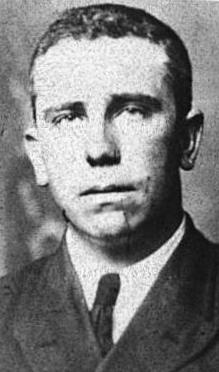
Captain Victor R Trigg
30 December 1928 sailed Melbourne for Tarakan to load
14 March 1929 sailed Port Freemantle to Tarakan to load
24 April 1929 sailed Singapore for Auckland New Zealand - due 13 May 1929
14 May 1929 berthed Wellington from Auckland, New Zealand
16 May 1929 sailed Wellington, New Zealand for Borneo
27 May 1929 passed Thursday Island while on passage from New Zealand to Balik Papan
5 June 1929 berthed at Balik Papan
3 September 1929 berthed at Port Freemantle from Tarakan to discharge crude oil
5 September 1929 sailed Port Freemantle to Tarakan to load
8 January 1930 berthed at Port Adelaide from Tarakan and discharged 3,000 tons of crude oil
12 January 1930 berthed at Melbourne from Port Adelaide
5 May 1930 passed Thursday Island while on passage to Sydney, NSW
10 May 1930 berthed at Sydney, NSW from Tarakan
13 May 1930 sailed Sydney, NSW to Balik Papan
24 May 1930 while on passage from Sydney, NSW to Balik Papan stood by midway between Atamboea and Darwin on the route that Miss Amy Johnson's flight from the UK to Australia was taking - the aircraft passed the ship at 11am South Austrlian time.
3 July 1931 arrived Osaka to be broken up.

Previous name: Mount Royal, HMS Marlborough, RFA Rangol
Subsequent name: British Maple
Official Number: 109498
Class: Emergency Wartime Purchase LEAF Group Freighting Tanker
Pennant No: Y7.174
Laid down:
Builder: C S Swan & Hunter Ltd., Wallsend
Launched: 17 August 1898
Into Service: 6 July 1915 (as RFA Rangol)
Out of service: 4 October 1919 sold to Commercial interests and renamed
Fate: Arrived for breaking up on 25 January 1933
Items of historic interest involving this ship: -
Background Data: During WW1, eighteen vessels of varying types were acquired second hand and converted or purchased and converted while on the stocks or in a few cases building as tankers. Some were converted after serving with the Dummy Battleship Squadron by the insertion of cylindrical tanks into their holds. All were originally intended to operate as RFA’s, however owing to reasons of international law and the operation of the US Neutrality Act, these oilers became Mercantile Fleet Auxiliaries, being renamed with the LEAF nomenclature and placed under civilian management, although operationally they remained under Admiralty control
17 August 1898 launched by C.S. Swan & Hunter Ltd, Wallsend as Yard Nr 230 named for the Beaver Line service of Elder Dempster & Co Ltd, Liverpool as Mount Royal
November 1898 completed as a cargo liner
30 November 1898 sailed on her maiden voyage from the Tyne to New Orleans
22 December 1898 arrived at New Orleans
3 January 1899 sailed New Orleans for Liverpool
21 January 1899 arrived at Liverpool
26 April 1899 sailed Gravesend
19 May 1899 first voyage from the Tyne to Montreal
3 July 1899 first voyage from London to Quebec. Completed 2 round trips
22 July 1899 at Montreal Able Seaman B S McKenzie discharged dead - found drowned
15 August 1899 sailed Montreal to Gravesend
17 September 1899 arrived London from Montreal, Canada
5 November 1899 first voyage from Naples, Italy to Cape Town, South Africa as a Boer War Transport.
1 December 1899 arrived at Cape Town with 345 mules from Gibraltar and 1,902 mules from Naples
2 December 1899 sailed Cape Town for Port Elizabeth
5 December 1899 berthed at Port Elizabeth
5 January 1900 sailed Las Palmas for Liverpool
12 February 1900 first voyage from Liverpool to Cape as a Boer War Transport
22 March 1900 at 32°00S 16°00E steering North West
4 June 1900 at Hospital, Port Elizabeth Able Seaman Robert Brickley discharged dead - fracture of spine
23 July 1900 first voyage from New Orleans to Cape Town as a Boer War transport. Completed six round voyages in all
24 July 1900 at 24°55N 49°17W Fireman James Philbean found missing from the ship at sea - discharged dead
24 December 1900 at Tynemouth Jubilee Infirmary, North Shields Able Seaman Herman Braemninger discharged dead - from injuries suffered when he fell down the ships hold
25 December 1900 sailed Shields for New Orleans
5 February 1901 at 23°42N 32°10W passenger Charles Raglan discharged dead - natural causes
28 July 1901 sailed New Orleans with 1,000 remounts for Cape Town
2 October 1901 arrived at New Orleans from Algoa Bay
6 November 1901 at Cuxhaven on the River Elbe the Sea Pilot H. Skode collapsed and died from a heart attack
21 December 1901 arrived at New Orleans from Natal
13 January 1902 sailed New Orleans for Cape Town with 1,040 horses on board
16 July 1902 arrived St Vincent, Cape Verde
25 July 1902 arrived at Port Elizabeth, South Africa
28 August 1902 sailed from Barry, South Wales
25 November 1902 sailed from the River Tyne
21 December 1902 arrived at New Orleans
5 February 1903 the Shields Daily News reported -

18 February 1903 sailed the River Tyne
2 March 1903 when on passage from the River Tyne to Port Eads put back to Roath Basin, Cariff after suffering damage from severe weather
6 April 1903 acquired by Canadian Pacific Railway Co, Liverpool name unchanged
7 May 1903 sailed Quebec for Cardiff
27 June 1903 arrived Montreal from London
19 July 1903 passed Gravesend while on passage from Montreal to London
18 September 1903 sailed London for Montreal
1 October 1903 arrived Quebec from London
9 October 1903 passed Cape Ray
9 November 1903 entered dry dock at Cardiff with damage to the keel which occurred in September 1903
16 November 1903 on board Hamadryad Hospital ship, Cardiff Able Seaman Robert Thomas discharged dead from accidental injury
8 January 1904 arrived at Galveston from Cardiff
17 March 1904 passed Dover when on passage from the River Tyne to New Orleans
26 March 1904 Chief Cook Salvatore Portelli discharged dead - consumption
8 September 1904 arrived the Mersey from Montreal
20 October 1904 when on passage from Liverpool to Montreal passed Fastnet
20 November 1904 while on passage from Montreal to Liverpool passed Brow Head
21 November 1904 arrived at Liverpool
17 March 1905 arrived at New Orleans from the River Tyne
23 June 1905 arrived at Liverpool from Montreal
19 May 1906 arrived at Antwerp from London for Montreal, Canada
22 September 1906 passed Prawle Point when on passage from Montreal to London
15 November 1906 sailed Gravesend for New Orleans
16 November 1906 passed St Catherines Point
10 December 1906 passed Sand Key
13 December 1906 arrived at Galveston
1907 converted to carry 1500 x 3rd Class passengers in just 10 days
May 1907 sailed on her first voyage from London to Canada
6 July 1907 at Skeena River Steward Archie Willis discharged dead - drowned
3 October 1907 sailed Gravesend for Montreal via Antwerp
6 December 1907 sailed Antwerp for St. John's, Novia Scotia with over 300 passengers
10 December 1907 passed the Lloyds Signal Station on the Lizard
December 1907 suffering machinery breakdown while about 250 miles west of Fastnet during very heavy weather. Reported as missing while crossing the North Atlantic
3 January 1908 the Shields Daily News reported ...

7 January 1908 berthed at Queenstown, Ireland. Her passengers were transfered to ss Montrose which sailed from Queenstown on the 11 January 1908. The ss Montrose was then reported as missing when it failed to arrive at St. John's on the 21 January 1908. Arrived late
7 January 1908 at 51°31W 8°57W passenger Jacob Faut (child) discharged dead - pneumonia
20 July 1908 arrived at Quebec from London
2 September 1908 arrived at Quebec on passage from Antwerp to Montreal
2 October 1908 passed North Foreland while on passage from London and Antwerp to Montreal
11 July 1909 while on passage from London and Antwerp to Montreal passed Cape Ray
31 August 1909 while on passage from London and Antwerp to Montreal passed Heath Point
1 October 1909 while on passage from London to Montreal radioed giving her position as 125 miles west of the Lizard
29 October 1909 while on passage from Montreal to London radioed giving her position as 100 miles west of Brow Head
12 May 1910 sailed Gravesend via Antwerp for Montreal
27 May 1911 at 45°51N 52°25W passenger Joseph Walach discharged dead - natural causes
2 June 1910 arrived Quebec
7 June 1910 sailed Montreal for London
17 June 1910 passed Belle Isle
21 June 1910 passed Gravesend
28 March 1913 at 50°06N 3°55W passenger Kasimir Mietla (infant) discharged dead - pneumonia
16 October 1913 at 53°35N 33°24W passenger Rudolph Weich (child) discharged dead - chicken pox
28 October 1914 was hired by the Admiralty for conversion into the Dummy Battleship HMS MARLBOROUGH, on completion of which she was based at Loch Ewe.
6 July 1915, with the disbandment of the DBS Squadron she had cylindrical tanks inserted into her holds and served as the oiler RFA RANGOL,
10 July 1916 purchased by the Admiralty
17 November 1916 her management was transferred to Lane and MacAndrew and she became the oiler transport renamed MAPLELEAF
4 May 1917 arrived at Port Arthur, Texas
11 June 1917 arrived at Greenock
21 October 1917 she was narrowly missed by a torpedo in the Atlantic.
07 November 1917 she was transferred to the Shipping Controller
4 January 1918 berthed at London from Port Arthur, Texas with one passenger. The Master was Captain Llewellyn Nicholas
9 Augsut 1918 arrived at Greenock, River Clyde from Port Arthur, Texas with one passenger (DBS?)
21 October 1918 at Sea Chief Cook Fred James Nixon discharged dead - through natural causes
25 October 1918 Fireman James Wilson discharged dead - through natural causes - buried at sea in the presence of the Commisioned Escort Ship HMS CORONADO at 49°36N 12°36W
27 November 1918 sailed Plymouth for Port Arthur, Texas
13 December 1918 arrived at Charles SC from Plymouth
16 January 1919 sailed Norfolk VA for Lough Swilly
3 February 1919 arrived at Greenock
4 October 1919 purchased by the British Tanker Co
19 October 1919 renamed BRITISH MAPLE
20 November 1919 sailed Newport News for Rotterdam
27 November 1919 sailed Halifax, NS
11 December 1919 passed the Lloyds Signal Station on the Lizard towing the s.s. War Zephyr
13 December 1919 arrived at Plymouth Sound towing s.s. War Zephyr. The tow had lasted over one week from a position 1,000 miles west of The Lizard after the War Zephyr's main shaft had broken. The tow had parted once during the week in very heavy weather
15 December 1919 berthed at Rotterdam
12 January 1920 sailed Dartmouth for Tampico
19 February 1920 sailed Newport News for Alexandria
14 March 1920 arrived at Port Said from Tampico
29 March 1920 at Dixie Hospital, Hampton Fireman Samuel Bowning discharged dead - natural causes
3 April 1920 anchored at Gibraltar from Tampico for orders
18 April 1920 sailed Fayal for Newport News
16 June 1920 arrived at Gibraltar from Newport when on passage to Alexandria
22 October 1920 sailed the River Tyne for Newport News
15 November 1920 the Master and crew of Mapleleaf took proceedings against the Master and crew of the War Zephyr (see above) in the Admiralty Division of the High Court
25 November 1920 sailed New Orleans for Rotterdam
3 December 1920 sailed Newport News
29 December 1920 the Western Times reported -


20 January 1921 arrived at Halifax from Dartmouth
28 January 1921 berthed at Newport News
7 February 1921 sailed Tampico for Newport News
16 February 1921 sailed Newport News for Dartmouth
15 March 1921 sailed from Hull in ballast to Newport News
26 March 1921 at a hospital at Newport News, USA 2nd Steward Thomas Sergenson Rathbone discharged dead from natural causes. He had, in November 1918, served on RFA Orangeleaf (1)
2nd Steward Thomas Sergenson Rathbone
7 April 1921 signaled the US Naval Communications Service that the ship was at 32°38N 78°59W
28 April 1921 sailed Newport News
9 May 1921 on passage from Tampico for Avonmouth
12 May 1921 berthed at Avonmouth from Newport News with 3 DBS
16 May 1921 sailed Avonmouth
4 June 1921 arrived Norfolk, VA from Avonmouth
12 June 1921 berthed at Port Eads
15 June 1921 sailed New Orleans
21 June 1921 arrived at Newport News from New Orleans
9 July 1921 berthed at Hull from New Orleans
1 September 1921 arrived at Newport News and sailed the same day
19 September 1921 arrived at Thameshaven
24 September 1921 arrived at the River Tyne
6 June 1922 arrived at Hamble in Southampton Water to act as a bunker depot ship
10 December 1932 sold for £3,500 for demolition at Rosyth by Metal Industries Ltd
27 December 1932.arrived Rosyth
25 January 1933 breaking up commenced
12 May 1933 the remaining hulk was transferred to Charlestown to hold oil residues.
1934 was transferred back to Rosyth
6 March 1935 demolition was finally completed
Notes:
When Elder Dempster sold their Canadian interests (Beaver Line) to the Canadian Pacific Railway Co for the sum of £1,417,500, a total of 14 ships plus 3 tugs were involved in the deal and these were as follows: LAKE CHAMPLAIN (RFA RUTHENIA), LAKE ERIE(RFA SAXOL), LAKE MANITOBA, LAKE MICHIGAN, MILWAUKEE, MONTCALM (RFA CRENELLA), MONTEAGLE, MONTEREY, MONTEZUMA (RFA ABADOL), MONTORT, MONTREAL, MOUNT ROYAL(RANGOL), MOUNT TEMPLE & MONTROSE and the 3 Liverpool tugs AFRICAN, BEAVER & OTTER

Previous name: HMS Mariner
Subsequent name:
Class: MARINER CLASS Sloop (originally)
Pennant No: W35
Laid down: 8 January 1883
Builder: Devonport Dockyard, Plymouth
Launched: 23 June 1884
Into Service: 1916
Out of service: 19 February 1929
Fate: Sold for breaking up
Items of historic interest involving this ship: -
Background Data: She was one of a Class of 6 gun vessels designed by Nathaniel Barnaby, the Royal Navy Director of Naval Construction, which were all re-rated as sloops before they entered service. The Class consisted of: HM ships ACORN, ICARUS, MARINER, MELITA, RACER and REINDEER, three of which were converted into Salvage Vessels. They were originally powered by a two cylinder horizontal compound expansion steam engine produced by Hawthorn Leslie
23 June 1884 launched by HM Dockyard, Devonport as Yard Nr as a gun vessel named HMS MARINER
26 November 1884 re-rated as a sloop
9 March 1885 Engineer Aldred Palmer appointed
19 March 1885 commissioned for Particular Service. Hull cost £37,156 and her machinery £12,841
12 May 1885 sailed Devonport with HMS Racer (later to become RFA Racer), HMS Mercvury and HMS Conquest
14 May 1885 berthed at Queenstown harbour
22 May 1885 anchored at Bantry Bay
10 June 1885 joined the British Evolutionary Squadron formed to test the practical efficiency of the material of the Fleet
1 September 1885 proceeded to the Mediterranean then to the East Indies
25 September 1885 arrived at Suez and sailed the next day for Suakin. Commander John Durnford Royal Navy was in command
1 October 1885 arrived at Suakin and sailed the next day for Aden
20 May 1886 captured a slave dhow Kibibi and two slaves
4 August 1886 arrived at Mauritius with other RN ships including HMS Reinderr (later to become RFA Reindeer)
17 September 1886 berthed at Reunion with other RN ships sailing 21 September 1886
6 December 1886 arrived at Bombay with other RN ships
29 December 1886 arrived at Rangoon from Trincomalee
15 September 1887 arrived at Zanzibar from Madagascar with HMS Bacchante (flagship)
6 December 1887 the Admiralty paid prize money to the Commanding Officer, Officers and crew for the capture of the slaves and dhow Kibibi on 20 May 1886
8 December 1887 Commander Charles R Arbuthnot Royal Navy appointed in command inlieu of Commander John Durnford Royal Navy who was appointed in command of HMS Defiance on this day
1 May 1888 sailed Zanzibar for Aden
10 January 1889 recommissioned at Trincomalee and employed in the blockade of the East African coast
18 December 1889 arrived at Bombay
13 April 1891 captured a dhow Hannah Lake
1891 at the Cape of Good Hope and West Africa
29 November 1891 arrived at and sailed from Mombassa
12 January 1892 sailed Port Said
5 February 1892 sailed Malta
13 February 1892 due to heavy weather was forced to berth at Algiers to bunker and then continue her voyage to Gibraltar
16 February 1892 berthed at Gibraltar
20 February 1892 sailed Gibraltar for Devonport. Her departure had been delayed by bad weather
26 February 1892 arrived at Plymouth
21 March 1892 prize money paid by the Admiralty to the Commanding Officer, Officers and crew for the capture of the dhow Hannah Lake was paid this day
23 March 1892 paid off at Devonport
1892 to 1894 in reserve at Devonport
26 July 1901 hawsers strung between the ship and HMS REINDEER have become part of the defence at Devonport
November 1915 taken in hand by Hawthorn Leslie for conversion into a Salvage Vessel
28 August 1917 Chief Stoker William Merritt discharged dead. He is buried in Portsmouth's Kingston Cemetery in grave 10.13 1/2

Courtesy and © of The War Graves Photographic Project
1 November 1917 Lieutenant John William Miskin RNR appointed in command. Discharged 4 December 1918 to HMS Victory
12 September 1918 Engineer Lieutenant Charles A Munro RNR appointed as Chief Engineer Officer
1 December 1918 Lieutenant William Pryce-Thomas RNR appointed in command
10 March 1919 Assistant Steward Elliott Egerton Whitehead MMR 976082 discharged dead. Buried at Birkinhead (Flaybrick Hill) Cemetery.

Courtesy and © of The War Graves Photographic Project
1919 to 1921 under management of Liverpool Salvage Association
1922 to 1929 laid up
26 August 1924 berthed in No: 3 Basin, Portsmouth Harbour
14 October 1925 berthed in No: 3 Basin Portsmouth Harbour
31 July 1926 berthed in No: 3 Basin, Portsmouth Harbour
21 October 1926 berthed in No: 3 Basin, Portsmouth Harbour
8 December 1926 berthed in No: 3 Basin, Portsmouth Harbour
7 January 1927 berthed in No: 3 Basin, Portsmouth Harbour
1928 placed on the disposal list
19 February 1929 purchased by Hughes Bolckow & Co Ltd for demolition at Blyth
25 March 1929 sailed from Portsmouth Harbour
Ships of the same name
Mariner. A gun brig of 180 bm, 80 x 23 feet by Pitcher of Northfleet launched on the 4 April 1801. Armed with 2 x 23 pdr carronade, 10 x 18 pdr. Sold out of service on the 29 September 1814.
Mariner. A brig of 481 bm built by Pembroke Dock and launched on the 19 October .5 feet, armed with 4 x 32 pdr carronade, 12 x 32 pdr. Sold on the 12 June 1865.
Mariner. An Algerine class minesweeper built at Port Arthur and launched on the 9 May 1944, she was sold to the Burmese Navy on the 18 April 1958 and renamed Yan Myo Aung. Laid up and deleted in 1982.

Previous name: HMS Ringdove
Subsequent name: Telima
Official Number: 132764
Class: REDBREAST CLASS Gunboat (originally)
Pennant No: X37 / X40
Laid down: 1 June 1888
Builder: HM Dockyard, Devonport
Launched: 30 April 1889
Into Service: 7 December 1915
Out of service: 22 January 1920
Fate: Sold out of service commerically
Items of historic interest involving this ship: -
Background Data: She was one of a Class of 9 gunboats 2 of which were converted into Salvage Ships, designed by Sir William Henry White, the Royal Navy Director of Naval Construction in 1888, which were the last of the composite-hulled gunboats built for the Royal Navy. The Class consisted of HM ships GOLDFINCH, LAPWING, MAGPIE, REDBREAST, REDPOLE, RINGDOVE, SPARROW, THRUSH and WIDGEON
30 April 1889 launched by HM Dockyard, Devonport as the composite gunboat HMS RINGDOVE
November 1889 conducted trils off Malta - reached 11 knots in a 'choppy sea'
16 September 1890 commissioned for service in Australian waters with Lieutenant Commander E Bain, Royal Navy in command
4 October 1890 underwent a three hour full power trial off Plymouth developing 709 horse power and speeds of upwards of 13 knots
13 October 1890 underwent further trials over ten days in the Channel
12 November 1890 delayed at Plymouth pending the Admiralty's decision as to whether the 1st Lieutenant - Lieutenant Philip J Hodges Royal Navy - should be Court Martialed over a personal matter
24 November 1890 arrived at Gibraltar to bunker - sailed 26 November 1890 for Malta
2 December 1890 arrived at Malta
19 December 1890 arrived at Port Said
30 December 1890 arrived at Aden and sailed 2 January 1891
20 January 1891 sailed Colombo, Ceylon for Australia
2 February 1891 arrived at Batavia and sailed the same day
17 February 1891 arrived at Thursday Island
22 February 1891 sailed Thursday Island
21 July 1891 arrived at Brisbane from the Solomon Islands
24 August 1891 arrived at Cooktown from New Guinea
23 April 1897 arrived at Tandjong Priok and sailed 26 April 1897 for the Seychelles
15 May 1897 arrived at the Seychelles
21 May 1897 sailed the Seychelles for Aden
28 May 1897 arrived at Aden
31 May 1897 sailed Aden for England
8 June 1897 arrived at Port Said, sailing the next day for Malta
15 June 1897 arrived at Malta and sailed 21 June 1897 for Plymouth
28 June 1897 arrived at Gibraltar from Malta, sailing the same day for Plymouth
4 July 1897 returned to Devonport
17 July 1897 paid off into the fleet reserve at Devonport
15 October 1897 underwent a two hour trial in the Channel off Plymouth
9 November 1897 recommissioned at Devonport for a further 4 years service - Commander Ralph P Ayscough Royal Navy in command
18 November 1897 sailed Devonport
3 December 1897 arrived at Malta from Gibraltar
13 December 1897 sailed Malta for Port Said
17 December 1897 arrived at Port Said
27 December 1897 arrived at Aden
30 December 1897 sailed Aden for Colombo
13 January 1898 arrived at Colombo
17 January 1898 sailed Colombo for Sydney, NSW
18 February 1898 sailed Thursday Island for Sydney, NSW
28 February 1898 arrived at Townsville and sailed the next day for Sydney, NSW
17 March 1898 arrived at Sydney NSW
20 May 1907 Lieutenant W W Wilson Royal Navy appointed in command
18 December 1912 Lieutenant L M Darbyshire Royal Navy in command
1914 to 1915 on the Examination Service at Queenstown, Ireland
November 1915 taken in hand for conversion into a Salvage Vessel
7 December 1915 Was renamed MELITA
3 January 1916 Engineer Lieutenant Walter M Murdoch RNR appointed as Chief Engineer Officer. He signed off on 1 October 1917
29 January 1916 Lieutenant Horace A Gauld RNR appointed in command. He was transferred on 17 April 1917 to RFA Racer
26 June 1916 at Torr Point, Ireland salvaged the Ammunition Carrier No: 68
4 July 1916 Stoker Petty Officer Hugh Rooney discharged dead - drowned. He was cremated at Edinburgh (Seafield) Crematorium and remembered on the Screen Wall in the Cemetery

Courtesy and © of The War Graves Photographic Project
21 July 1916 salvaged ss Canada at the Maidens, near Larne
30 July 1916 salvaged the ss Arival on Islay
30 October 1916 at Montrose the lock gates became impossible to open and RFA MELITA attended and lifted the dock gates allowing the Transport Dawlois to proceed to sea
1917 re-entered service as a Salvage Vessel
17 April 1917 Lieutenant John W Miskin RNR appointed in command. Had previously been Chief Officer.
2 July 1917 Rigger Albert Seager logged as deserting. He had signed on on 27 May 1916
1 October 1917 Engineer Lieutenant William H Reynolds RNR appointed as Chief Engineer Officer
16 October 1917 Lieutenant William Pryce-Thomas RNR appointed in command. He previously served as the Chief Officer of RFA Racer
Lieutenant William Pryce-Thomas RNR
29 November 1917 Rigger John F Harwood discharged dead. He had signed on on the 26 May 1916. He drowned at Leith, Scotland and is buried in an unmarked grave in Edinburgh (Seafield) Cemetery.
Panel 6 remembers Rigger Harwood
12 January 1918 HMS Opal and HMS Narborough, both destroyers reported missing while enroute to Scapa Flow in heavy snow. RFA Melita advised not required for the search as the destroyers must be assumed to have foundered.
14 January 1918 wreckage of two destroyers found at Windwick Bay at 58 46N 2 0W RFA Melita directed to sail to Aberdeen. One survivor (AB William Sissons) from HMS Opal found. Court of Enquiry set up.
6 July 1918 Rigger George Metcalf logged as deserting. He had signed on 6 May 1918.
4 September 1918 Fireman John A Gordon logged as deserting. He had signed on on 5 September 1917
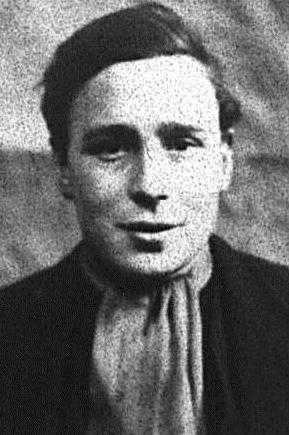
Fireman John A Gordon
18 September 1918 Lieutenant James Elias RNR appointed in command
19 June 1919 safely salvaged HMS TRYPHON which was aground on the Island of Tenedos
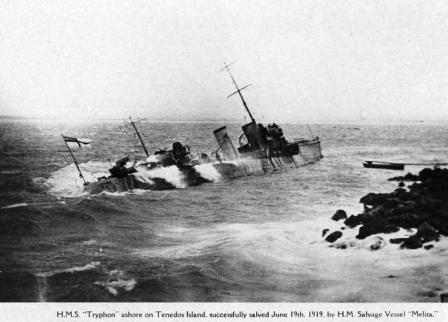
© IWM Q7701
27 June 1919 offered for sale by the Admiralty - advertised in the Times

22 January 1920 sold to Ship Salvage Corporation (J.R. Delanet, Manager) Plymouth and was renamed TELIMA
9 March 1920 arrived Albert Dock, Hull for bunkers from Bridlington
13 March 1920 involved with other ships in the salvage of a Norwegian ship Morgana which lost her propeller off the Yorkshire coast. Awarded £300 in a subsequernt claim in the Admiralty division of the High Court and reported in the Times on the 23 June 1920
21 December 1920 at Gravesend brought in by towing the steamer Limehouse to anchor after being salvaged
6 June 1921 at 54.52N 5.34W Labourer Albert Oldershaw discharged dead - missing at sea presumed drowned
13 February 1922 at Harwich alongside the Dutch steamer BW3. The ss BW3 while on passage from London to Newcastle suffered her pumps being chocked and had 4 feet of water in her engine room. The vessel had her engine room pumped dry
10 February 1924 stood by ss Brook after the ss Brook had been in collision with the ss Capulin. Brook's afterhold was full of water
1926 reported broken up during the 2nd quarter of this year
Ships of the same name
Melita. An Algerine class minesweeper built by Redfern, Toronto and launched on the 8 December 1942, she was reduced to a drill ship in April 1947 and renamed Satellite. Arrived at Rees, Llanelli for breaking up on the 25 February 1959.
Battle Honours for this Vessel: NORMANDY 1944, ATLANTIC 1945, EAST INDIES 1945.


Subsequent name: Juan Olavarriaga, Iberia, Virgen de Begona,, Euzkera, Elanchove
Official Number: 114846
Class: Collier
Pennant No: P92 / X28 / Y3.1928
Laid down: 1900
Builder: Northumberland Shipbuilding Co Ltd, Howden-on-Tyne
Launched: 27 November 1901
Into Service: 1908
Out of service: 1920
Fate: Sold commercially
Items of historic interest involving this ship: -
Background Data: Soon after the turn of the 20th Century, the Admiralty acquired a number of small tankers and store ships and from the experiments conducted with these tankers was obtained the experience which resulted in the building of a large number of tankers of various sizes which were especially designed for their task of refuelling warships. None of these early ships were sister ships, and they became the first Admiralty vessels to fall into the new RFA category on its inception in 1905
27 November 1901 launched by Northumberland Shipbuilding Co Ltd, Howden-on-Tyne as Yard Nr: 97 named MERCEDES for Christie & Co Ltd, Cardiff
14 December 1901 the Shields Daily Gazette reported ...

11 February 1902 ran trials on completion. She was designed for the carriage of coal and other goods from Australia and New Zealand to the West Coast of North America, Hong Kong and Japan then back to New Zealand
22 February 1902 sailed the River Tyne
24 February 1902 arrived at Cardiff
6 March 1902 sailed Cardiff for Hong Kong
13 July 1902 berthed at Westport, New Zealand to load coal for Hong Kong
19 July 1902 Wah Chin, a native of Canton was found smothered and dead in the stoke hold, discharged dead. He was buried at sea while the ship was on passage to Hong Kong from Westport, New Zealand
31 July 1902 the Master reported to the authorities at Wellington, New Zealand he had been diverted to Wei-Hai-Wei to refuel 11 British warships. He also reported that plague was prevelant in Hong Kong and those who had succumbed could be seen floating in the harbour - he estimated that 30 - 40 deaths a day were occuring in the Colony
27 August 1902 arrived at Hong Kong from Wellington, New Zealand
13 September 1902 passed Thursday Island while on passage from Hong Kong to Westport, New Zealand
30 September 1902 a member of the public in Westport, New Zealand was found in possession of uncustomed tobacco which he had obtained from a member of the crew. The member of the public was charged £6.00 triple the customs duty evaded in the local Magistrates' Court
11 October 1902 Captain Richard J Carter, the Master, appeared before Wellington Magistrates' Court, New Zealand charged with four breaches of the Shipping and Seaman's Act in that he left four member of the crew at Hong Kong with discharge certificates. He was fined £25 and costs of £3.17sh
20 December 1902 sailed Westport, New Zealand for Homg Kong
21 January 1903 sailed Hong Kong
24 January 1903 passed Kalavite Point, 30 miles south of Manila
25 January 1903 passed Sambanga
14 February 1903 berthed at Brisbane, Australia to replenish bunkers while on passage from Hong Kong to New Zealand to load cargo
20 February 1903 sailed Brisbane
5 March 1903 sailed Westport, New Zealand to Hong Kong with 3,000 tons of coal
4 May 1903 at the Magistrates' Court at Westport two Chinese crew members were fined £25 and £3 15sh respectively in default 6 months imprisonment for being in possession and attempting to sell uncustomed tobacco, cigars and cigarettes
4 June 1903 the Commodore and Superintending Transport Officer at Hong Kong certified that the ship with her Master - Captain John S McGregor - at this date in His Majesty's service were fit in all respects for the service on which she was employed and complete, according to her Charter party and the Transport Regulationsin hull, spars, stores, machinery, boilers and crew and that the Master has, since the date of the last certificate, conducted himself properly, been obedient to command, and complied with the Regulations and Instructions furnished for his guidance, with the exception that the ship was delayed 1½ days at Hong Kong after sailing orders had been given for her to proceed to Wei-Hai-Wei owing to the ship being under arrest. This 1½ days arrest was due to the process of law over a debt owed to a private firm for repairs to the ship. The Admiralty advised the owners that they would deduct one days hire - £81-11-6d in the sum they paid the owners for the hire of the vessel
10 June 1903 arrived at Hong Kong
28 July 1903 berthed at Westport, New Zealand from Hong Kong
9 August 1903 sailed Wellington, New Zealand
26 October 1903 while on passage from Hong Kong to Westport, New Zealand passed Goode Island this day
January 1904 vessel detained at Westport by the authorites for over one month - reason not known
31 January 1904 sailed Westport, New Zealand for Hong Kong
12 March 1904 arrived at Hong Kong
1 May 1904 arrived at Wellington, New Zealand
19 May 1904 passed Thursday Island while on passage to Hong Kong from New Zealand
31 May 1904 berthed at Hong Kong from New Zealand laden with 7,000 tons of coal to be discharged at Kowloon for the Admiralty - information from the China Mail
10 June 1904 sailed Hong Kong for Nagasaki, Japan
3 December 1904 sailed Hong Kong
7 January 1905 sailed Wellington for Westport
9 January 1905 sailed Westport for Hong Kong
11 February 1905 arrived at Hong Kong
12 February 1905 sailed from Hong Kong for Wai-hai-Wei
25 February 1905 sailed from Wei-hai-Wei for Hong Kong
1 June 1905 at Mirs Bay with HMS HOGUE - information from The Straits Times
14 July 1905 arrived at Hong Kong
21 August 1905 alongside HMS IPHIGENIA supplying bunker coal

HMS IPHIGENIA
18 September 1905 alongside HMS DIADEM and supplied bunker coal. Then moved to alongside HMS SUTLEJ supplying 600 tons of bunker coal
19 September 1905 having coaled overnight supplied 900 tons to HMS SUTLEJ then moved to alongside HMS HOGUE to suuply bunker coal
12 October 1905 arrived at Tokio
16 October 1905 alongside HMS ANDROMEDA and supplied 1,000 tons of bunker coal
9 November 1905 went alongside HMS SUTLEJ and supplied 1,200 tons of bunker coal
27 November 1905 arrived at Hong Kong from Wei Hai Wei
1906 chartered by the Admiralty for £23,336 for service as an MFA based on the China Station
23 May 1906 sailed from Woosung with the British China Squadron on its annual cruise ending at Wei- Hai-Wei on 17 August 1906
6 January 1907 berthed at Singapore from Hong Kong with coal for the British China Squadron - Captain John S McGregor was Master
10 January 1907 at the Civil Hospital, Hong Kong 3rd Officer Alfred Williams discharged dead - natural causes
16 January 1907 at Singapore Roads HMS ENCOUNTER alongside for coaling
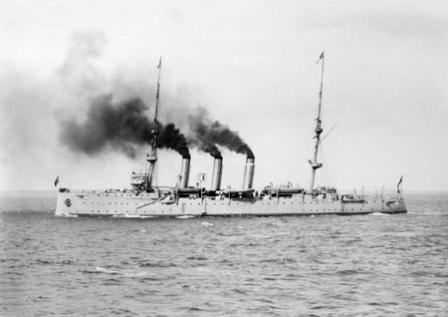
HMS ENCOUNTER
6 April 1907 sailed Hong Kong
April 1907 grounded at the entrance to Yokohama - refloated on 24 April 1907 undamaged


20 October 1907 charter expired but was extended until 19/01/08
June 1908 purchased by the Admiralty for £37,250. She was based at Devonport, basically on coal freighting duties between Bristol, the Channel Area and Portland
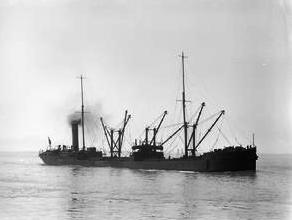
26 July 1908 at 16.05N 17.50W Fireman Kwi Pang discharged dead - natural causes. Buried at sea
14 August 1908 at T Pier, Woolwich Arsenal Fireman Tong Chong discharged dead - angina
18 August 1908 the Daily News newspaper reported ....

24 August 1908 entered the Channel Dry Dock at Cardiff
29 January 1909 entered Queen Alexandra Dock, Cardiff
27 April 1909 at Portsmouth Harbour while berthed alongside the floating coal depot C1 and discharging part of her coal cargo into the C1 when a loaded coal bucket was being hoised from the ships hold the contents emptied onto the deck of the C1 coal depot. A coal labourer Tom Albert from Portsea was struck by large lumps of coal. He was transferred to the Royal Naval Hospital at Haslar for treatment of head injuries but died
24 May 1909 berthed on North Slip Jetty, Portsmouth
29 May 1909 at Spithead alongside HMS BELLEROPHON supplying her with bunker coal
5 June 1909 passed the Lloyds Signal Station on the Lizard sailing east bound
6 June 1909 passed the Lloyds Signal Station at Beachy Head sailing east bound
22 July 1909 berthed in No: 5 basin, Portsmouth Dockyard
28 August 1909 anchored at Spithead
10 September 1909 berthed on North Railway Jetty, Portsmouth Harbour
16 September 1909 at Barry Dock Able Seaman Charles Thomas Brimming discharged dead having fallen into No: 1 hold and suffered head injuries. Taken to the town's hospital but died
9 October 1909 arrived at Portsmouth Harbour from sea
13 October 1909 moored on to No: 4 buoy at Portsmouth Harbour
4 November 1909 moored on No: 6 buoy at Portsmouth Harbour
23 November 1909 moored on No: 5 buoy at Portsmouth Harbour
17 March 1910 arrangements were made for the Crew to be paid weekly instead of monthly and the Master was instructed to cater into the bond for the safe custody of the money
6 June 1910 The Western Morning News reported that

September 1910 fitted with a modified Metcalfe Rig ex TORRIDGE, a steam collier chartered from the Torridge Steamship Co Ltd (W.J. Tatem & Co, Managers) Cardiff which operated under Admiralty Orders as a Mercantile Fleet Auxiliary, for coaling-at-sea experiments
6 September 1910 berthed at Portsmouth Harbour
8 September 1910 berthed on the C1 coal lighter
28 September 1910 passed the Lloyds Signal Station on the Lizard sailing east
28 October 1910 the Barry Dock News reported -

14 November 1910 berthed on South Railway Jetty, Portsmouth Harbour
17 November 1910 anchored in Stokes Bay
9 December 1910 berthed on South Railway Jetty
28 December 1910 berthed on the C1 coal lighter
31 December 1910 berthed on Fountain Jetty, Portsmouth Harbour
11 March 1911 moored on No: 4 buoy, Portsmouth Harbour
13 March 1911 entered No: 14 dry dock Portsmouth Harbour for refit
26 March 1911 passed Prawle Point
30 March 1911 moored to No: 15 buoy, Portsmouth Harbour
31 March 1911 berthed on the C1 coal lighter
20 June 1911 passed St Catherines Point sailing west when on passage from Portsmouth to Cardiff
24 June 1911 passed the Lloyds Signal STation on the Lizard sailing east
27 July 1911 at Barry Docks loaded but unable to sail because of industrial action by dockers
2 October 1911 her Master queried whether or not he could issue railway passes to men proceeding on leave but was informed that arrangements with the Railway Companies did not permit this
3 January 1912 at anchor at Spithead
8 January 1912 berthed alongside HMS ORION to supply bunker coal at Portsmouth Harbour
29 February 1912 berthed in the Tidal Basin, Portsmouth Harbour
1912 conducted inconclusive coaling-at-sea trials with the battleship HMS DOMINION
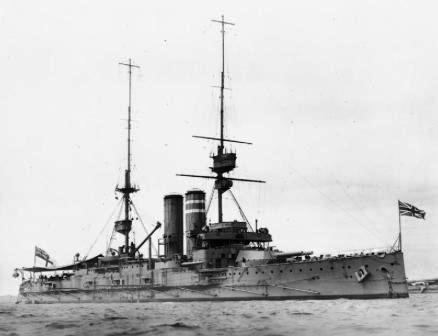
HMS DOMINION
5 March 1912 at anchor at Spithead
20 March 1912 arrived at Devonport
27 March 1912 sailed Devonport
8 May 1912 sailed Portsmouth Harbour for Spithead
28 May 1912 arrived at Portsmouth Harbour from Cardiff and berthed alongside Coaling Depot No: 1
8 June 1912 sailed Portsmouth Harbour
20 June 1912 arrived at Portsmouth Harbour
21 June 1912 sailed Portsmouth Harbour
26 June 1912 sailed Portsmouth Harbour for Spithead
6 July 1912 at Portsmouth moved alongside Coaling Depot No: 1
22 July 1912 at Portsmouth Harbour on No: 4 buoy
23 July 1912 at Portsmouth Harbour moved at Coaling Depot No: 4
7 August 1912 sailed Portsmouth Harbour for Spithead
12 August 1912 at Portsmouth alongside HMS HINDUSTAN
5 September 1912 sailed Portsmouth Harbour
21 September 1912 at Portsmouth Harbour berthed on No: 1 Coaling Jetty
30 September 1912 arrived at Portsmouth Harbour and berthed on No: 1 Coaling Jetty
8 October 1912 arrived at Portsmouth Harbour and berthed on No: 1 Coaling Jetty
7 November 1912 sailed Portsmouth Harbour to Spithead
3 December 1912 sailed Portsmouth Harbour to Spithead
12 December 1912 arrived Portsmouth Harbour
23 December 1912 arrived at Portsmouth Harbour
2 January 1913 berthed alongside HMS BLACK PRINCE which was on North Railway Jetty and coaling her
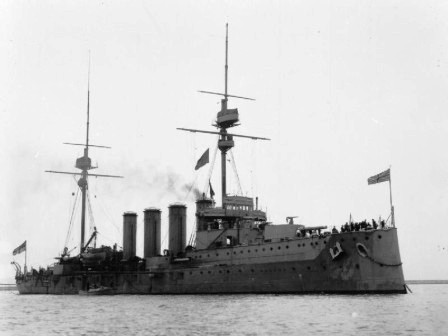
HMS BLACK PRINCE
6 January 1913 moved berths at Portsmouth Harbour to South Railway Jetty
14 January 1913 arrived at Portmouth Harbour
20 January 1913 berthed on HMS VENERABLE which was moored on No: 4 Buoy, Portsmouth Harbour coaling her
22 January 1913 changed berths to alongside No: 1 Coaling Jetty
April 1913 was fitted with W/T
3 April 1913 arrived at Portsmouth Harbour and berthed alongside No: 1 Coaling Jetty
7 April 1913 at Portsmouth Harbour berthed alongside HMS ST. VINCENT to coal her
11 April 1913 sailed Portsmouth Harbour to Spithead returning later and berthed alongside No: 1 Coaling Jetty
16 May 1913 arrived at Portsmouth Harbour sailing later in the day to Spithead
19 May 1913 sailed Portsmouth Harbour
24 May 1913 arrived at Portsmouth Harbour berthing on Boat House Jetty
14 June 1913 arrived at Portsmouth Harbour
7 August 1913 at Roath Basin, Cardiff Ordinary Seaman James Hackett discharged dead - having drowned
18 August 1913 moved berths at Portsmouth Harbour to South Railway Jetty
19 August 1913 sailed Portsmouth Harbour to Spithead
September 1913 Captain John E Edwards RFA (Commander RD RNR) was Master
17 November 1913 at Portsmouth Harbour berthed on No: 1 Coaling Jetty
3 December 1913 sailed Portsmouth Harbour to Spithead
12 December 1913 arrived at Portmouth Harbour
16 December 1913 at Portsmouth Harbour moved berths to alongside HMS ALBERMARLE
2 January 1914 arrived Portsmouth Harbour
5 January 1914 moved berth to No: 1 Coaling Jetty, Portsmouth Harbour
8 January 1914 moved berth in Portsmouth Harbour to Gosport Oil Fuel Jetty
14 January 1914 at Portsmouth Dockyard moved to No 1 Coaling Depot
19 January 1914 sailed Portsmouth Harbour to Spithead
12 March 1914 berthed at Penarth Docks
10 April 1914 arrived at Spithead
11 April 1914 moved from Spithead to alongside HMS PRINCESS ROYAL on North Slip Jetty
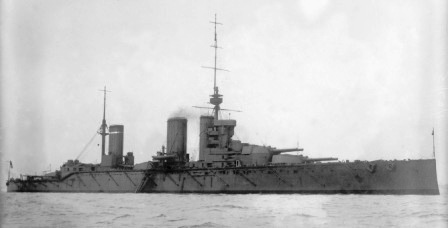
HMS PRINCESS ROYAL
12 April 1914 at Portsmouth Harbour
17 April 1914 at Portsmouth Dockyard moved to No 1 Coaling Depot
30 April 1914 at Portsmouth Harbour moved berths to North Railway Jetty
1 May 1915 at Portsmouth Dockyard moved to No 1 Coaling Depot
June 1914 sailed to Birka Sound in the Baltic with part of the Grand Fleet.
14 June 1914 arrived at Kronstadt. Her crew were entertained by Russians. She then returned to the U.K. to take part in a Naval Review
12 July 1914 arrived Portsmouth Harbour
25 July 1914 at Portsmouth Harbour moved to No 1 Coaling Depot
3 November 1914 at Cromarty Firth with HMS DRYAD alongside loading 55 tons of bunker coal
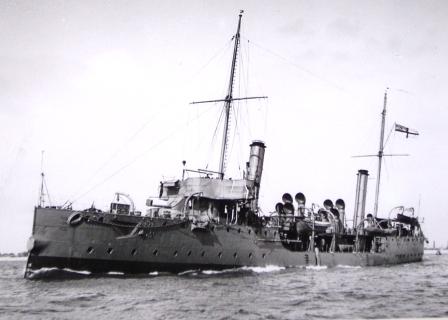
HMS DRYAD
1 January 1915 at Longhope. Captain John E Edwards RFA was still the ships Master until 16 June 1915
15 January 1915 Stoker Frederick James Strickland discharged dead from a fractured base of the skull. He is buried in Osmondwall Cemetery, Island of Hoy
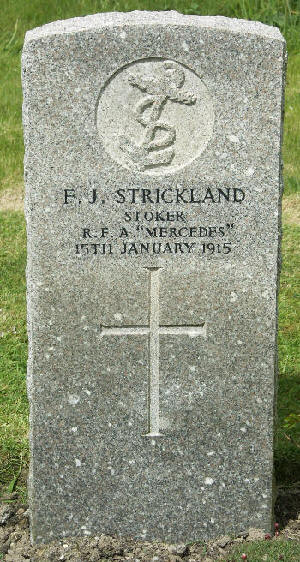
Courtesy and © of The War Graves Photographic Project
22 January 1915 at Cardiff
1 February 1915 Mr F S Davis RFA appointed as Chief Engineer Officer. He had previously served on RFA BURMA
20 February 1915 at Cardiff Second Steward Alfred Steere and Greaser W Regan both logged as having deserted

Second Steward Alfred Steere
23 April 1915 at Barry
1915 during a refit at Cardiff, ballast tanks were fitted for carrying fuel oil and she then proceeded to Loch Ewe where she acted as W/T ship
15 June 1915 Lieutenant James D Ashworth RNR appointed in command
Lieutenant James D Ashworth RNR
30 June 1915 at Longhope, Orkneys
24 July 1915 and 25 July 1915 at Scapa Flow with HMS ACACIA alongside loading 300 bags of coal as bunkers
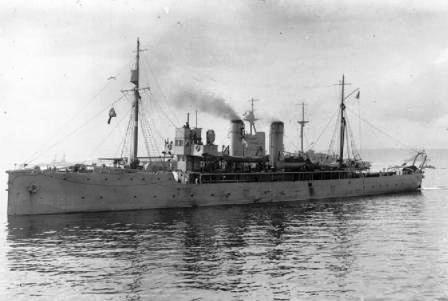
20 August 1915 and 21 August 1915 at Scapa Flow with HMS ACACIA alongside loading coal as bunkers
7 October 1915 at Longhope HMS TENBY CASTLE alongside to load 171 tons of bunker coal
9 October 1915 at Longhope HMS TENBY CASTLE cast off
11 November 1915 at Scapa Flow with HMS ACACIA alongside loading coal as bunkers
18 November 1915 at Scapa Flow with HMS ACACIA alongside loading coal as bunkers
14 November 1916 Engineer Lieutenant Tom Perrett RNR appointed as Chief Engineer Officer. He remained in this appointment until 14 November 1917
19 February 1917 Lieutenant W Watson RNR appointed in command until 18 December 1917
6 October 1917 Stoker J Stanley logged as deserted. He had signed on on the 15 July 1917 also Stoker James Murphy logged as deserted. He had signed on on 6 September 1916
October 1917 docked at Birkenhead to discharge mercantile ratings then proceeded to Cardiff to be handed over to commercial managers
30 November 1917 deployed as a collier until 20 January 1918 under commercial management of H. Rees Jones & Co, Cardiff
21 January 1918 re-deployed as a sugar transport bringing her cargo from Cuba until 13 April 1918
14 April 1918 re-deployed as a collier again
11 July 1918 in convoy from Hampton Road to London suffered engine defects and dropped out of the convoy
14 July 1918 back in convoy but still with engine defects
15 August 1918 re-deployed as an Expeditionary Force Transport D 2618
2 December 1918 Expeditionary Force Transport duties ended
27 February 1919 sailed from Cardiff
12 March 1919 arrived at Malta
5 May 1919 at Constantinople
7 August 1919 at Constantinople
25 September 1919 at Beikos Bay with HMS EMPRESS alongside receiving 190 tons of coal
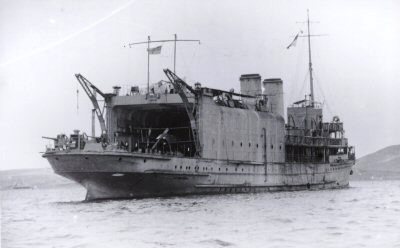
HMS EMPRESS
31 October 1919 at Malta
6 November 1919 at Constantinople
20 December 1919 at Malta
18 February 1920 arrived at Constaninople
20 March 1920 at Malta discharging arms and war materials seized by the Army at Constantinople
15 April 1920 sailed Malta
10 May 1920 at Gibraltar
19 May 1920 at Plymouth
19 June 1920 signed new Home Trade articles and sailed Devonport
20 June 1920 achored at Spithead
21 June 1920 berthed at Portsmouth Harbour - signing off the crew
28 July 1920 purchased for £27,500 by Harris & Dixon Ltd, London., name unchanged
31 July 1920 sailed Portsmouth Harbour
1921 sold to J.Olavarriaga and registered at Bilbao, Spain and renamed JUAN OLAVARRIAGA
1923 sold to F Sainz & Inchaustegui, same port of registry and renamed IBERIA
1925 sold to F Zugadi y Cia S en C, same port of registry and renamed VIRGEN DE BEGONA
1926 owners became Compania Naviera Euzkera, Bilbao with her previous owners as Managers and renamed EUZKERA.Later that year management was passed to Jesus de Azcarreta, Bilbao
7 September 1928 while on passage from Huelva to Bordeaux broke adrift and went ashore at Quoyrice Bank. 5 tugs failed to get the ship off the Bank and steps were taken to lighten the vessel and she was finally re-floated.
1934 sold to Cia Maritima Elanchove, same port of registry and renamed ELANCHOVE
22 October 1936 sailed Bilbao for Cardiff
25 October 1936 foundered in a storm 150 miles off Bilbao while on passage from Bilbao to Cardiff with a cargo of iron-ore, she broke in two. Only one member of the crew was rescued.

Previous name:
Subsequent name:
Class: TRINCULO Class Dockyard Mooring Vessel
Pennant No: X41 / X42
Laid down:
Builder: Bow, McLchan & Co, Paisley
Launched: 22 February 1916
Into Service: May 1916
Out of service: 1950
Fate: Sold commercially
Items of historic interest involving this ship: -
Background Data: Some official lists, marked as “Lists of RFA’s” show vessels which spent some time as RFA’s during the First World War. These records are extremely sketchy and some of these vessels were “Yard Craft”, partially or wholly Dockyard manned, partly by RNR or Reserve Fleet personnel. Some of the Depot Ships staffed by skilled civilian Dockyard workers were for a time White Ensign. The Director of Stores was understood to be concerned with their manning and operationally they remained under Admiralty control
22 February 1916 launched by Bow, Mclachan & Co Ltd, Paisley as Yard Nr: 321 named MESSENGER
18 March 1916 Engineer Lieutenant Thomas Dobbie RNR appointed as Chief Engineer Officer
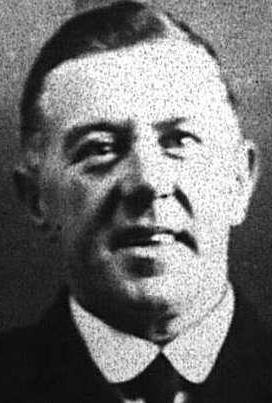
Engineer Lieutenant Thomas Dobbie RNR
29 March 1916 Lieutenant John W B Turner RNR appointed in command
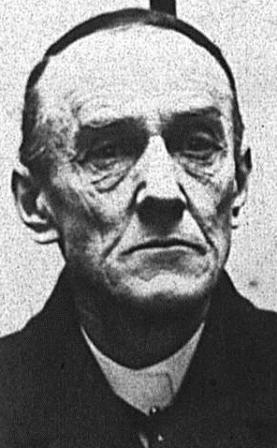
Lieutenant John W B Turner RNR
May 1916 completed. On Boom Defence duties at Granton
31 January 1917 Lieutenant Frank J Delamotte RNR appointed in command
23 October 1917 Able Seaman Arthur Ross MMR 516610 discharged dead after being drowned. He is buried in the Methilmill Cemetery, Wemyss, Fife
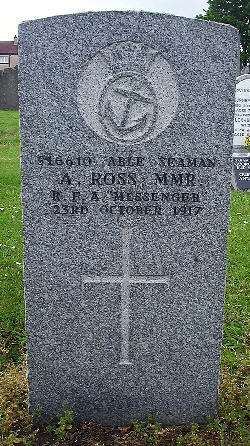
Courtesy and © of The War Graves Photographic Project
24 October 1917 Engineer Lieutenant George Alderson RNR appointed as Chief Engineer Officer
14 January 1918 Lieutenant John W Pegden RNR appointed in command
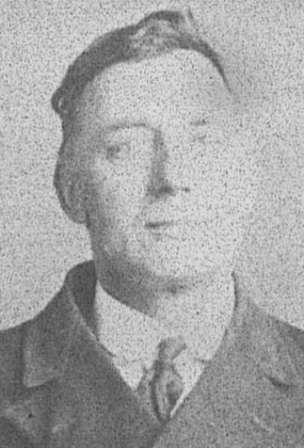
Lieutenant John W Pegden RNR
28 February 1918 Assistant Steward Harry James Brooks MMR 786928 discharged dead. Remembered on the Plymouth Naval Memorial
1918 boom defence duties ended and reverted to a Mooring Vessel
June 1959 sold out of service at Malta
Notes:
1. Final Fate Unknown
Ships of the same name
Messenger. A dogger of 6 guns captured from the Dutch in 1672. Sold in 1673.
Messenger. An advice boat of 73 bm built at Plymouth in 1694. The ship foundered in the Atlantic in November 1701.
Messenger. (ex Duke of York) wood paddle vessel of 733 bm, 156 x 32.5 feet, purchased on the 28 August 1830. Sold on the 22 November 1861.
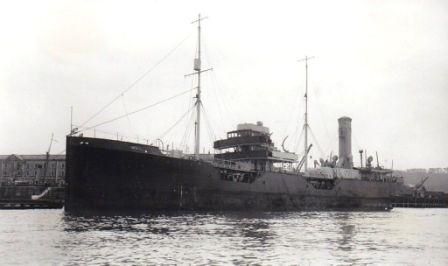

Subsequent name: Whitebrook. Irene M
Official Number: 139159
Class: FIRST 2000t CLASS Harbour Tanker
Pennant No: X 02 / X43 / A143
Laid down:
Builder: Caledon Ship Building & Eng Co., Dundee
Launched: 17 June 1916
Into Service: October 1916
Out of service: 1948
Fate: Sold commercially
Items of historic interest involving this ship: -
Background Data: The five ships in this Class, although not sisterships, were similar and were all Admiralty-designed. RFA MIXOL and RFA THERMOL were both unsatisfactory as far as their stability went, and 200 tons of permanent ballast was always carried in nos 1 and 3 tanks, which were never pumped out. RFA TREFOIL and RFA TURMOIL (1) were experimental ships which were mechanically unsatisfactory and they were little used
6 March 1916 Engineer Lieutenant Commander Thomas Ripley RD RNR appointed as Chief Engineer Officer
17 June 1916 launched by Caledon Shipbuilding & Engineering Co Ltd., Dundee as Yard Nr: 250 named MIXOL
September 1916 the Admiralty commenced censorship of mail from ships at the start of World War 1. Stamps showing an item had been censored were applied to the outside of the envelope
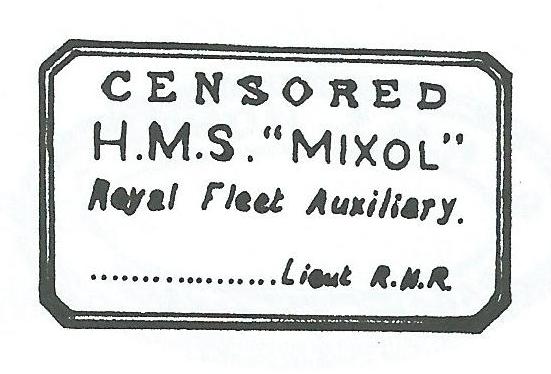
1 September 1916 Lieutenant William H Harvey RNR appointed in command. He signed off on 17 August 1917 to take command of RFA Vitol and subsequently RFA Dredgol. He was demobilised on 28 January 1920
19 September 1916 4th Engineer Albert T Warne RFA was appointed to RFA Mixol. He was appointed as 3rd Engineer on 31 January 1917 and 2nd Engineer on the 27 July 1917. He was also appointed Engineer Sub-Lieutenant RNR
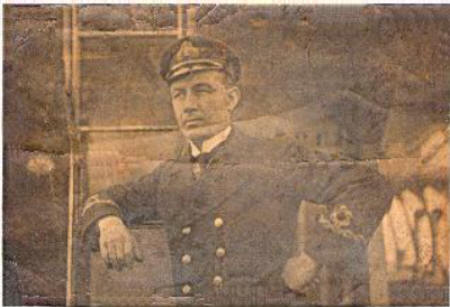
Engineer Sub-Lieutenant Albert T Warne RNR
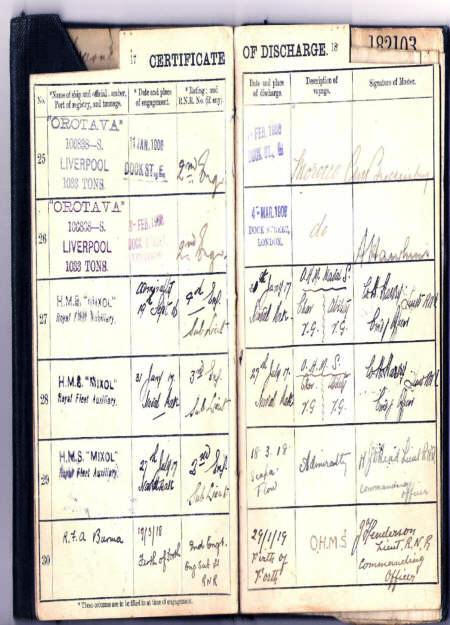
October 1916 completed
18 December 1916 at Scapa Flow alongside HMS RENOWN refuelling her
11 February 1917 & 12 February 1917 at Scapa Flow alongside HMS AVENGER to refuel her
17 May 1917 Fireman P Shinnock logged as deserted while the ship was at Glasgow
12 June 1917 Engineer Lieutenant John W Younger RNR appointed as Chief Engineer Officer
12 August 1917 Lieutenant William J D Read RNR appointed in command He signed off on 16 May 1918 to take command of RFA Thermol where he signed off on 31 December 1919
23 August 1917 at Lough Swilly HMS ATTACK alongside to be refuelled - 63 tons of FFO supplied
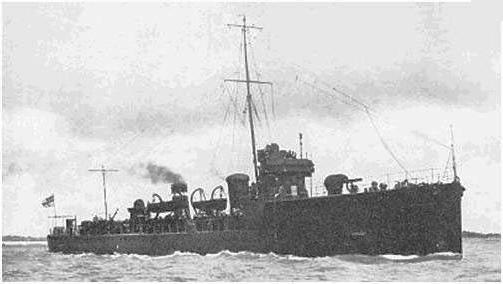
HMS ATTACK
27 August 1917 at Lough Swilly HMS ATTACK alongside to be refuelled
20 September 1917 Ship's Cook H Humphreys logged as deserted.
18 March 1918 Engineer Sub-Lieutenant Albert T Warne RNR discharged at Scapa Flow to RFA Burma
16 May 1918 Lieutenant David E A Jones RNR appointed in command. He signed off on 23 January 1919 when he took command of RFA Black Dragon in Gibraltar.
Lieutenant D E A Jones RNR
3 June 1918 Ordinary Seaman David Alfred Hodge discharged dead
19 June 1918 while berthing alongside a Battle Cruiser in open water to refuel her Able Seaman Thomas W Johnson fell between the ships into the sea. He was in imminent danger of being crushed between the two vessels. Donkeyman John Allan MMR jumped into the sea to save him exposing himself also to imminent danger of being crushed. He kept the Able Seaman afloat until a rope could be thrown down to him. He caused the Able Seaman to be rescued before using the rope to safe himself. Donkeyman John Allan was awarded the Albert Medal for Gallantry in saving life at sea
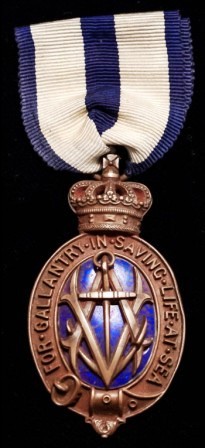
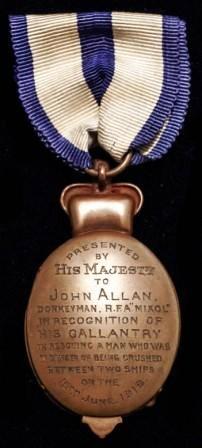
Donkeyman John Allan's Albert Medal
Images used with consent of the copyright owner -
17 July 1918 Engineer Lieutenant G Nixon RNR appointed as Chief Engineer Officer
21 September 1918 the Scotsman Newspaper reported on this day ...

21 October 1919 off Copenhagen stopped and examined by HMS GALATEA
1 November 1919 Captain Harry Y Third RFA appointed Master until 31 March 1920. He then took command of RFA Philol
Captain Harry Y Third RFA
1 November 1919 crew transfered to B of T articles
8 November 1919 at Liban, in the Baltic alongside HMS EREBUS refuelling her with 300 tons FFO
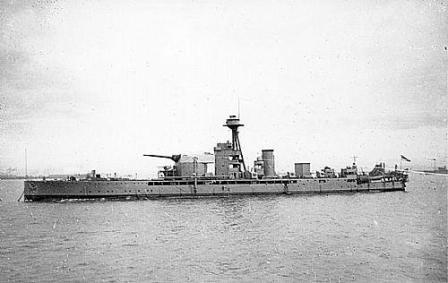
HMS EREBUS
16 November 1919 at Liban, in the Baltic alongside HMS EREBUS refuelling her with 100 tons FFO
15 and 16 December 1919 alongside HMS DAUNTLESS at Liban, in the Baltic refuelling her with 390 tons of FFO
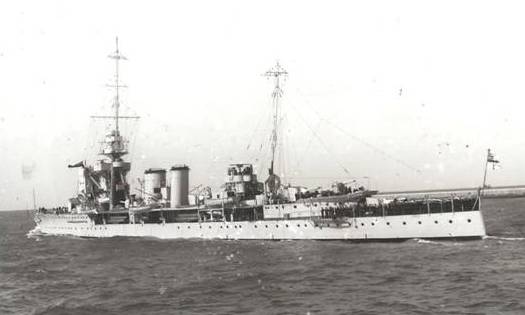
HMS DAUNTLESS
1 April 1920 Chief Officer Seymour H Biggs RFA appointed as Acting Master until 16 April 1920
18 April 1920 Captain W Watson RFA appointed as Master - resigned from Admiralty Service 28 April 1920
28 April 1920 Captain Richard D Williams RFA appointed as Master previously on RFA Appleleaf (1)
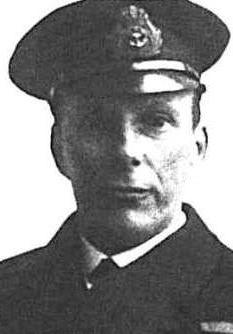
Captain Richard D Williams RFA
20 May 1920 at Chatham RN Hospital Pumpman Frederick Charles Cusheon discharged dead - cancer of the kidney

Pumpman Frederick C Cusheon RFA
7 August 1920 Master, Officers and crew signed a Home Trade Agreement
30 October 1920 on Yard Craft Agreement
24 February 1921 berthed at Grangemouth from Rosyth in ballast
4 July 1921 Mr G Nixon RFA appointed as Chief Engineer Officer. He had previosly served as Chief Engineer Officer of RFA FEROL and RFA PETROBUS
15 February 1923 arrived at Grangemouth from Rosyth in ballast
16 February 1923 sailed from Grangemouth for Rosyth
28 February 1923 sailed from Grangemouth for Rosyth
1 March 1923 arrived at Grangemouth from Rosyth in ballast, loaded and sailed for Rosyth the same day
28 August 1923 berthed at Grangemouth from Rosyth in ballast
29 August 1923 sailed Grangemouth for Rosyth with cargo
1923 to 1935 as her stability was unsatisfactory, she was laid up with RFA THERMOL in the large drydock at Gibraltar
25 April 1925 Chief Engineer Officer Leonard H Taylor RFA reported to the Admiralty with regard to his RNR training he was Chief Engineer Officer on RFA Mixol at Gibraltar

Chief Engineer Officer Leonard H Taylor RFA
1935 reactivated during the Italo-Abyssinian Conflict, but was found to be unsuitable so she returned to the UK and was placed in reserve
19 June 1936 Captain William H Green RFA appointed as Master
25 September 1938 passed the Lloyds Signal Station on the Lizard being towed by the tug Neptunia west bound
26 September 1938 arrived at Cardiff from Devonport in tow of the tug Neptunia for dry docking and survey

Tug Neptunia
10 December 1938 passed the Lloyds Signal Station on the Lizard sailing west
15 December 1938 passed the Lloyds Signal Station on the Lizard sailing east
21 December 1938 passed the Lloyds Signal Station on the Lizard sailing east
22 December 1938 sailed Plymouth
27 December 1938 passed the Lloyds Signal Station on the Lizard sailing west
24 January 1939 at Plymouth. Mr Robert A Higgie RFA appointed as Temporary Chief Engineer Officer
Temporary Chief Engineer Officer Robert A Higgie RFA
6 March 1939 at Rosyth
tons of steel was removed to improve her stability
3 September 1939 in reserve at Devonport
13 September 1939 sailed Rosyth for Scapa Flow under the escort of HMS MATABELE - arrived on 14 September 1939
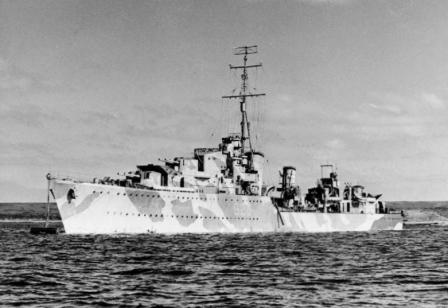
HMS MATABELE
17 September 1939 at Scapa Flow alongside HMS EMERALD refuelling her with 1,054 tons of FFO
19 September 1939 at Scapa Flow alongside HMS ROYAL OAK and HMS ROYAL SOVEREIGN to refuel them

HMS ROYAL SOVEREIGN
27 September 1939 at 0715hrs at Scapa Flow alongside HMS HOOD on her port side to refuel her - slipped at 1300hrs
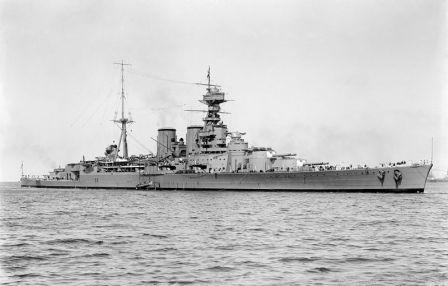
HMS HOOD
7 October 1939 at 1315hrs at Scapa Flow alongside HMS HOOD to refuel her - slipped at 1550hrs
10 October 1939 at Scapa Flow alongside HMS GLASGOW refuelling her
17 October 1939 at Scapa Flow with HMS SHARPSHOOTER alongside to be refuelled

HMS SHARPSHOOTER
2 November 1939 at Scapa Flow with HMS SHARPSHOOTER alongside to be refuelled
27 November 1939 at Scapa Flow alongside HMS's GLASGOW and NORFOLK refuelling them
1 December 1939 at Scapa Flow alongside HMS NORFOLK refuelling her
1 January 1940 at Scapa Flow until 20 February 1940
21 February 1940 in Methil Roads
10 March 1940 at Scapa Flow alongside HMS NORFOLK to refuel her
13 March 1940 at Scapa Flow alongside HMS MANCHESTER refuelling her - 982 tons FFO supplied
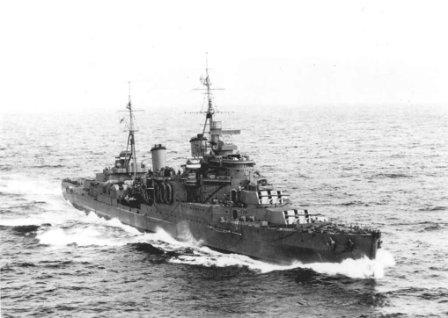
HMS MANCHESTER
8 April 1940 sailed Leith to Rosyth
7 May 1940 Captain Edward Mills RFA appointed as Master
26 May 1940 Mr Francis Easey, RFA, Chief Engineer Officer discharged dead. He is buried in the New MacHar Cemetery, Aberdeenshire
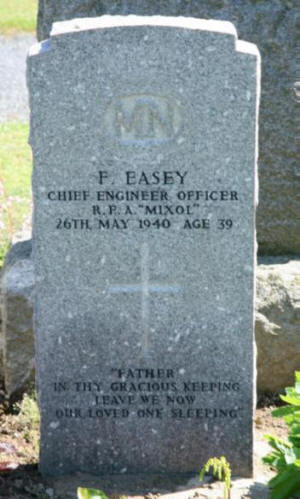
Courtesy and © of The War Graves Photographic Project
29 May 1940 Mr Matthew Blair RFA appointed as Chief Engineer Officer
9 June 1940 to 4 December 1940 at Scapa Flow
18 July 1940 at Scapa Flow alongside HMS YORK refuelling her with 170 tons of fuel oil
22 July 1940 at Scapa Flow alongside HMS YORK refuelling her with 171 tons of fuel oil
10 August 1940 at Scapa Flow alongside HMS BARHAM to refuel her
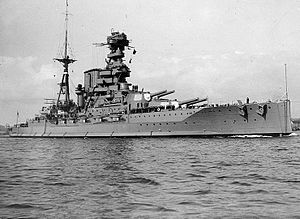
HMS BARHAM
1 September 1940 refuelling HMS HOOD alongside at Scapa Flow
24 October 1940 at Scapa Flow alongside HMS PHOEBE refuelling her
1 November 1940 at Scapa Flow alongside HMS PHOEBE refuelling her
11 November 1940 Mr L Cowell RFA appointed as Chief Engineer Officer
2 December 1940 sailed Methil in escorted convoy EN35 to Oban - arrived on 6 December 1940
7 December 1940 arrived the Clyde
6 January 1941 at Greenock with HMAS NIZAM alongside being refuelled
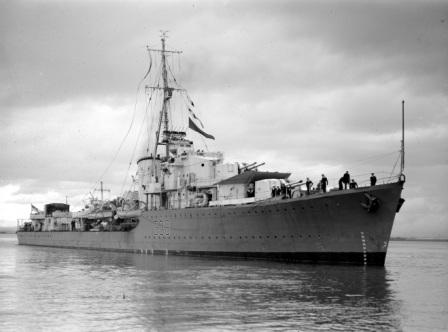
HMAS NIZAM
17 January 1941 arrived at Tail of Bank
24 January 1941 at Glasgow
3 February 1941 arrived at the River Clyde sailing the same day
10 March 1941 under repair at the Clyde
26 April 1941 at Holy Loch HM Submarine CLYDE came alongside to be refuelled
November 1941 Captain Edward E A Le Sage RFA appointed as Master

13 November 1941 Captain Ernest W J Rousell RFA appointed as Master

26 November 1941 at Scapa Flow alongside HMS DUKE OF YORK refuelling her with 493 tons of FFO

HMS DUKE OF YORK
11 December 1941 at Scapa Flow alongside HMS DUKE OF YORK refuelling her with 835 tons of FFO
25 February 1942 Mr R B Burgh RFA appointed as Chief Engineer Officer
4 April 1942 at Scapa Flow alongside USS TUSCALOOSA (CA37) to refuel her - Source War Diary of US ship
21 May 1942 at Scapa Flow alongside USS TUSCALOOSA (CA37) to refuel her - Source War Diary of US ship
11 July 1942 at Scapa Flow alongside HMS KING GEORGE V refuelling her
21 July 1942 at Scapa Flow alongside USS TUSCALOOSA (CA37) to refuel her - Source War Diary of US ship
USS TUSCALOOSA (CA37)
31 July 1942 at Scapa Flow alongside HMS JAMAICA refulling her with 514 tons of FFO
HMS JAMAICA
2 August 1942 at Scapa Flow alongside USS TUSCALOOSA (CA37) to refuel her - Source War Diary of US ship
8 August 1942 at Scapa Flow alongside HMS KING GEORGE V refuelling her
22 August 1942 at Scapa Flow alongside HMS KING GEORGE V refuelling her
25 August 1942 at Scapa Flow alongside HMS JAMAICA refuelling her with 216 tons of FFO
27 August 1942 at Scapa Flow alongside HMS JAMAICA refuelling her with 169 tons of FFO
28 August 1942 at Scapa Flow alongside HMS JAMAICA refuelling her with 127 tons of FFO
30 August 1942 at Scapa Flow alongside HMS KING GEORGE V refuelling her
9 September 1942 Captain Edward M Rae DSC RFA appointed as Master
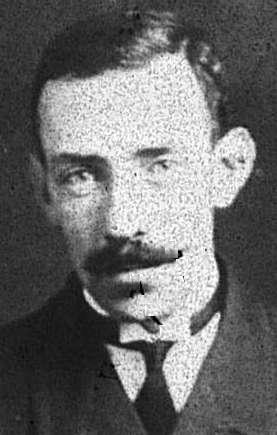
Captain Edward M Rae DSC RFA
24 September 1942 at Scapa Flow alongside HMS KING GEORGE V refuelling her
23 October 1942 at Scapa Flow alongside HMS KING GEORGE V refuelling her
31 October 1942 at Scapa Flow alongside HMS KING GEORGE V refuelling her
19 November 1942 at Scapa Flow alongside HMS KING GEORGE V refuelling her. RFA PETRONEL was also alongside her at the same time supplying fresh water
3 December 1942 at Scapa Flow alongside HMS HOWE refuelling her. Cast off 4 December 1942
5 December 1942 at Scapa Flow alongside HMS KING GEORGE V refuelling her. RFA SPA was alongside her at the same time supplying fresh water
11 December 1942 at Scapa Flow alongside HMS KING GEORGE V refuelling her
17 December 1942 at Scapa Flow alongside HMS KING GEORGE V refuelling her
2 January 1943 Mr J Cook RFA appointed as Chief Engineer Officer
15 January 1943 at Scapa Flow alongside HMS HOWE refuelling her
27 January 1943 at Scapa Flow alongside HMS HOWE refuelling her
4 February 1943 at Scapa Flow alongside HMS ANSON refuelling her - 84 tons of FFO transferred
13 February 1943 at Scapa Flow alongside HMS NEWFOUNDLAND refuelling her - 325 tons of FFO transferred
20 February 1943 at Scapa Flow alongside HMS ANSON refuelling her - 446 tons of FFO transferred
27 February 1943 at Scapa Flow alongside HMS NEWFOUNDLAND refuelling her - 450 tons of FFO transferred
6 March 1943 sailed Loch Ewe in unescorted convoy WN401 to Methil - arrived on 7 March 1943
6 May 1943 sailed Methil in unescorted convoy EN225 to Scapa Flow - arrived on 7 May 1943
20 May 1943 at Scapa Flow alongside HMS HOWE refuelling her. RFA PETRONEL was alongside at the same time supply fresh water
27 May 1943 escorted into Scapa Flow by HMS CHIDDINGFOLD
29 July 1943 at Scapa Flow alongside HMS ANSON refuelling her - 1,266 tons of FFO transferred
10 August 1943 at Scapa Flow alongside HMS ANSON refuelling her - 512 tons of FFO transferred
22 October 1943 at Scapa Flow alongside HMS QUEEN ELIZABETH refuelling her - 481 tons of FFO transferred
12 September 1943 at Scapa Flow alongside HMS LONDON refuelling her
HMS LONDON
17 September 1943 at Scapa Flow alongside HMS LONDON refuelling her - 260 tons of FFO transferred
24 September 1943 at Scapa Flow alongside HMS ANSON refuelling her - 443 tons of FFO transferred. RFA Spa was also alongside at the same time supplying fresh water
27 September 1943 at Lyness
1 November 1943 at Scapa Flow alongside HMS QUEEN ELIZABETH refuelling her - 443 tons of FFO and 37 tons of diesel transfered
3 December 1943 at Scapa Flow alongside HMS BELLONA refuelling her
8 December 1943 at Scapa Flow alongside HMS BELLONA refuelling her
12 December 1943 at Scapa Flow alongside HMS BELLONA refuelling her
16 December 1943 at Scapa Flow alongside HMS QUEEN ELIZABETH refuelling her - 805 tons of FFO transferred
3 January 1944 at Scapa Flow alongside HMS BELLONA refuelling her
19 February 1944 Mr Clifford N Ansell OBE RFA appointed as Chief Engineer Officer
18 April 1944 sailed Loch Ewe in unescorted convoy WN572 to Methil - arrived 20 April 1944
25 April 1944 at Glasgow
15 October 1944 at Scapa Flow alongside HMS BELLONA refuelling her
20 October 1944 at Scapa Flow alongside HMS BELLONA refuelling her with 900 tons of FFO
25 October 1944 at Scapa Flow alongside HMS BELLONA refuelling her
28 October 1944 at Scapa Flow alongside HMS BELLONA refuelling her
1 January 1945 Captain Ernest C Rogers RFA appointed as Master
Captain Ernest C Rogers RFA
15 March 1945 at Scapa Flow alongside HMS IMPLACABLE to refuel her
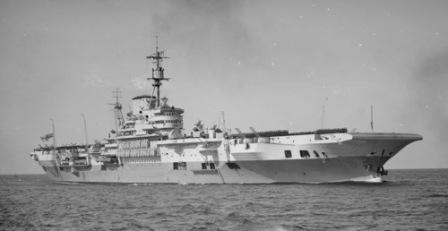
HMS IMPLACABLE
1 April 1945 at Lyness
15 April 1945 Captain Robert M Shaw RFA was Master
17 April 1945 berthed at Lyness Jetty to load. RFA FRESHWELL was berthing on her when her starboard anchor caused damage by striking Mixol's port quarter, creating a hole in a plate for 2 feet by 2 feet, sheering rivets connecting knee bracket with the frame and bending frame and deck stringer
5 June 1945 sailed Scapa Flow to Lerwick arriving the same day
30 June 1945 sailed Lerwick to Rosyth
4 July 1945 Mr F Campbell RFA appointed as Chrief Engineer Officer
7 July 1945 sailed Grangemouth eith a cargo of FFO
10 July 1945 arrived at Grangemouth in ballast
11 July 1945 sailed Grangemouth with a cargo of FFO
12 July 1945 arrived at Grangemouth in ballast
14 July 1945 sailed Grangemouth with a cargo of FFO
17 July 1945 arrived at Grangemouth in ballast
18 July 1945 sailed Grangemouth
20 July 1945 sailed Grangemouth
23 July 1945 arrived at Grangemouth in ballast
24 July 1945 sailed Grangemouth
25 July 1945 arrived at Grangemouth in ballastr
26 July 1945 sailed Grangemouth
31 July 1945 in Charlestown Roads when at anchor - the Polish destroyer SLAZAK was coming alongside to refuel when she struck Mixol amidships on the port side causing damage to the port lifeboat, davits, rails and stanchions
1 August 1945 arrived at Grangemouth to load cargo
2 August 1945 sailed Grangemouth
13 August 1945 at Rosyth
20 August 1945 at Rosyth in collision with RNorNS Buttercup which was coming alongside. A plate was holed in the fresh water tank
28 September 1945 HM King George VI inspected the Master, Officers and men of the MIXOL and the BLACK RANGER on the quarter deck of HMS RODNEY while reviewing the Home Fleet in the Firth of Forth off Rosyth
3 October 1945 sailed from Rosyth to Leith Docks arriving the same day
21 November 1945 berthed at Dundee
1 January 1946 arrived the River Tyne from Rosyth berthing on Jarrow Quay Corner
14 February 1946 Captain Arthur J D Gosney RFA appointed as Master
10 March 1946 sailed the River Tyne for Sheerness
16 April 1946 Mr J Hall RFA appointed as Chief Engineer Officer
27 February 1947 berthed at Dover Harbour from Sheerness to discharge cargo. Sailed the same day
11 March 1947 Captain Richard L Barber MID RD RFA (Lieut-Commander RNR) appointed as Master
3 August 1947 Mr G A Calvert RFA appointed as Chief Engineer Officer
19 September 1947 Captain Douglas S Norrington RD RFA (Lieut-Commander RNR) appointed as Master
1948 sold to Whitebrook Shipping Co Ltd (Counties Ship Management Co Ltd, Managers) London
20 February 1948 renamed WHITEBROOK by her owners
28 October 1949 grounded near Marseilles, France and reported in the Aberdeen press of 29 October 1949 -

1951 purchased by Nolido Compania de Navegacion S.A. (Marcou & Sons (Shipbrokers) Ltd, Managers) Panama and renamed IRENE M
5 July 1951 arrived the River Tyne and berthed on Lawe Oil Wharf
14 August 1951 sailed the River Tyne for Salt End, Hull
8 April 1952 berthed at Jarrow Oil Wharf, River Tyne
28 April 1952 arrived the River Tyne from Thames Haven berthing on the Jarrow Oil Wharf
6 June 1952 arrived the River Tyne from Thames Haven berthing on the Jarrow Slake
18 November 1952 sailed from Hamburg, Germany for Hull
1953 appeared in the casualty lists when her boilers failed completely in the English Channel near the Royal Sovereign Lightship, she sent out an SOS and was towed into the Thames by Dover tugs
27 December 1953 arrived at Antwerp for breaking up
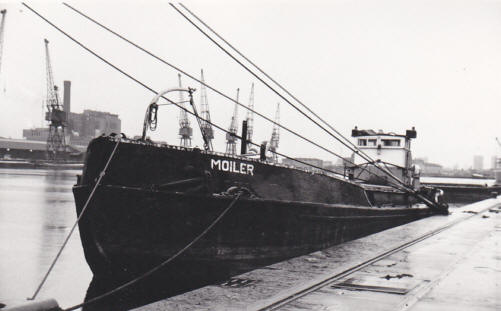
Moiler on 25 November 1973 at King George V Dock, London
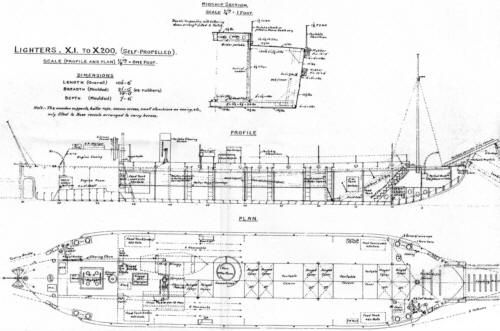
X craft general Class plan
Courtesy and © of Dave Mallard
Previous name: X75
Subsequent name:
Official Number: 167940
Class: X Class Lighter
Pennant No: X75
Laid down:
Builder: Short Bros, Pallion
Launched: 1915
Into Service: August 1915
Out of service:
Fate:
Items of historic interest involving this ship: -
November 1916 based at Cromarty
August 1917 Skipper John Campbell RNR appointed in command
9 March 1918 Skipper John M Flak RNR appointed in command
29 November 1918 at Rosyth alongside HMS CASTOR supplying water. RFA SCOTOL was also alongside HMS CASTOR at the same time refuelling her

HMS CASTOR
19 June 1919 at Rosyth alongside HMS CASTOR supplying water
31 October 1919 at Rosyth alongside HMS CASTOR supplying 34 tons of water
10 November 1919 at Rosyth alongside HMS CASTOR supplying water
31 January 1920 at Rosyth alongside HMS CASTOR supplying water
August 1936 laid up at Rosyth
1 March 1941 at Rosyth alongside HMS HOOD supplying water
HMS HOOD
10 February 1947 at Southampton registered as MOILER under reference 57/47 in the Registry Book
1967 owned by Ham River Grit Co. Ltd., London, later Hall Dredging Ltd

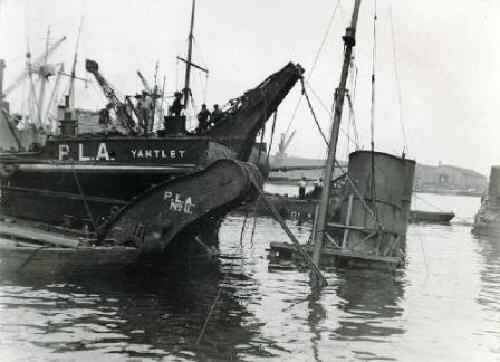
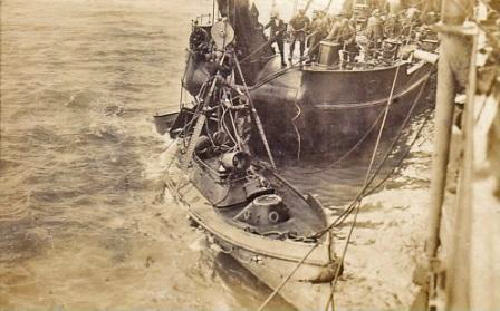
Previous name: Trinculo
Subsequent name: Yantlet
Class: Mooring Vessel
Official Number: 147478
Pennant No: X.34 / X.44
Laid down:
Builder: Fleming & Ferguson, Clyde
Launched: 20 November 1915
Into Service: 1916
Out of service: December 1922
Fate: Sold to commercial interests
Background Data:
Some official lists, marked as “Lists of RFA’s” show vessels which spent some time as RFA’s during the First World War. These records are extremely sketchy and some of these vessels were “Yard Craft”, partially or wholly Dockyard manned, partly by RNR or Reserve Fleet personnel. Some of the Depot Ships staffed by skilled civilian Dockyard workers were for a time White Ensign. The Director of Stores was understood to be concerned with their manning and operationally they remained under Admiralty control.
Items of historic interest involving this ship: -
January 1916 renamed Mollusc

11 February 1916 Lieutenant William O Jones RNR appointed in command
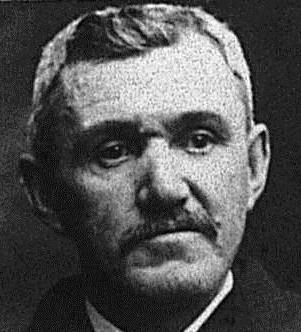
Lieutenant William O Jones RNR
25 February 1916 Engineer Lieutenant Cecil A Wade RNR appointed as Chief Engineer Officer
21 August 1916 off Bridlington together with RFA THRUSH salvaged 7 x 6" guns, 1 x HA Gun, searchlights and other gear from HMS FALMOUTH which had been sunk by the German Submarine U63
30 January 1917 Lieutenant Arthur C Horne RNR appointed in command
16 November 1918 Deck Hand John Samuel Corringham Dennis discharged dead. He was buried at Grimsby (Scartho Road) Cemetery.
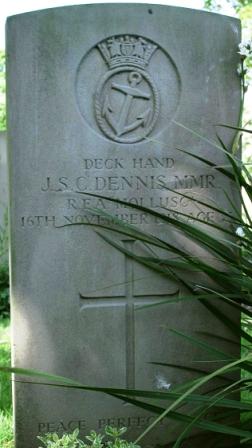
Courtesy and © of The War Graves Photographic Project
21 November 1918 Able Seaman Arthur Samuels discharged dead. He was buried at Grimsby (Scartho Road) Cemetery.
30 November 1918 Able Seaman Patrick Glanville MMR 500659 discharged dead. He was buried at Hull Western Cemetery.
7 December 1918 Fireman Henry Pawsey MMR discharged dead. He was buried at Grimsby (Scartho Road) Cemetery.

Courtesy and © of The War Graves Photographic Project
10 December 1918 Linesman (Divers Mate) John Brymner discharged dead. He was buried at Glasgow Eastern Necropolis.
December 1922 sold to the Port of London Authority, London EC3 and renamed Yantlet
12 March 1926 arrived at Ramsgate, Kent to assist in the fitting of new lock gates
2 July 1926 off Leigh, Essex in the Thames Estuary - wreck removal
10 August 1931 off the Nore Lighship discovered the wreck of a Dutch warship sunk in 1667. Destroyed by explosives
1941 the uppermost image above of PLA Yantlet involved in salvage work
10 August 1948 Nottingham Journal reported -

1948 owned by H W Black - name unchanged
June 1955 broken up at Grays, Essex


Subsequent name:
Official Number: 140408
Class: SECOND 2000t BELGOL CLASS Tanker
Pennant No: X 66 / X 45
Laid down:
Builder: Central Yard, William Gray, West Hartlepool
Launched: 5 July 1917
Into Service: 20 November 1917
Out of service: 21 May 1942
Fate: Sunk
Items of historic interest involving this ship: -
Background Data: There were ten ships in this Class, all Admiralty designed of which five were named after Allied countries while the other five were given names indicating power or speed, all with the OL suffix. three of them, RFA’s FRANCOL, MONTENOL and SERBOL had upright funnels with a single tall mast close by, while the remainder had a raking funnel and two raking masts. During WW2 the mainmast was removed from these.
5 July 1917 Launched by Wm Gray & Co Ltd, West Hartlepool as Yard Nr: 887 named MONTENOL
1 June 1917 Engineer Lieutenant John Burnie RNR appointed as Chief Engineer Officer. Signed off on 11 July 1917 on being transferred to RFA RAPIDOL as Chief Engineer Officer.
7 August 1917 Engineer Lieutenant Richard G Sibun RNR appointed as Chief Engineer Officer
11 October 1917 Lieutenant George P Wilkinson RNR appointed in command. He had previously been in command of RFA SERBOL
Lieutenant George P Wilkinson RNR
10 November 1917 at London registered as MONTENOL under reference 333/17 in the Registry
20 November 1917 completed
20 November 1917 Greaser Arthur Nevin logged as deserted. He had signed on on 13 November 1917. Having had previously served on RFA FERNLEAF
26 December 1917 Signalman & Able Seaman J Leggett logged as deserted. He had signed on on the 11 October 1917
31 December 1917 at Rosyth alongside HMS GALATEA refuelling her
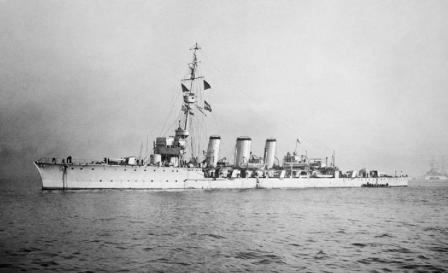
HMS GALATEA
15 February 1918 Stoker J Sewell logged as deserted. He had signed on on the 13 November 1917
13 August 1918 the Police Gazette of this day listed among those who were wanted for Deserting or being Absentees from H M Services - Able Seaman John Fitzgerald MMR
21 October 1918 Stoker Albert Green, MMR 774816, discharged dead thorough illness. He was buried in and remembered on the Screen Wall of the City of London & Tower Hamlets Cemetery. He had signed on on the 13 November 1917

17 December 1918 Third Officer Stewart M Evans RFA appeared before a court martial charged with being drunk on board. The charged was not proved and he was acquitted. Sub Lieutenant Arthur S Belyea RNR appeared before a court martial charged with (a) making an irregular issue of rum and (b) drunk on board . The first charge was found proved and the second charge not proved. Adjudged to be severely reprimanded. Third Officer Evans was promoted Second Officer on the 22 December 1918 and appointed to RFA EBONOL

3rd Officer Stewart M Evans RFA
6 January 1919 Assistant Cook H Mills, MMR 869963, logged as being absent. He was arrested at Northampton. He had signed on on 16 January 1918
13 May 1919 Engineer Lieutenant David J Rees RFA appointed as Chief Engineer Officer
28 May 1919 a number of Turkish citizens who had been detailed in the Bekir Aga Prison for alleged Armenian persecution were removed to Malta on board HMS Princess Ena
1 August 1919 Captain Wm Alfred Wooster RFA appointed as Master
Captain Wm Alfred Wooster RFA
26 August 1919 refuelled alongside HM Monitor M29 in the Black Sea - 13.5 tons of FFO supplied
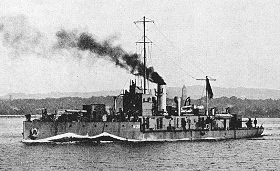
HM Monitor M29
29 August 1919 refuelled alongside HM Monitor M29 at Ochakov with 7 tons of fuel oil
18 October 1919 arrived at Smyma and berthed alongside HMS CENTAUR to refuel her. Later sailed Smyma
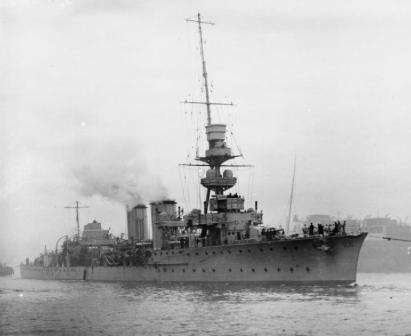
HMS CENTAUR
24 December 1919 Stoker G Zarb Discharged to Detention. He had signed on on 5 September 1919
1 March 1920 Greaser Laurence Mangion discharged dead. He had signed on on 6 December 1919
2 March 1920 HMS TORCH alongside to be refuelled at Novorossisk - received 76 tons of fuel oil
17 May 1920 Captain George St. L Capsey RFA appointed as Master
29 July 1920 Mr Frederick C Pavitt RFA appointed as Chief Engineer Officer
8 December 1920 at Batumi Poti, Georgia, in the Black Sea alongside HMS TORCH refuelling her with 120 tons FFO and 1.4 tons of culinary coal
20 July 1921 at Buyukdere with HMS TORCH alongside being refuelled with 29 tons of FFO
1 October 1921 all 59 Turkish prisoners at Malta were returned to Turkey on RFA Montenol and HMS Crysanthemum
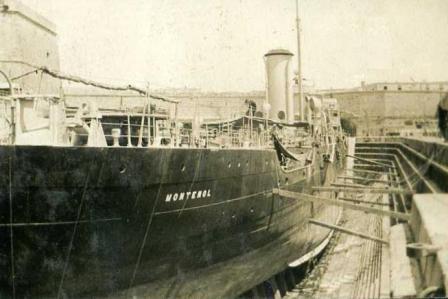
7 November 1921 at Constantinople with HMS TORCH berthed alongside being refuelled
16 December 1921 Captain William T Williams RFA appointed as Master
Captain William T Williams RFA
6 July 1923 Mr Percy E C Ogden RFA appointed as Chief Engineer Officer
28 November 1923 Captain W A Wooster RFA appointed as Master
2 July 1925 Mr John H Collings RFA appointed as Chief Engineer Officer
Chief Engineer Officer John H Collings RFA
16 October 1925 Mr David E Morgan MIMarE RFA appointed as Chief Engineer Officer
Chief Engineer Officer David E Morgan MIMarE RFA
10 May 1926 Captain Reginald J Harland RFA appointed as Master
Captain Reginald J Harland RFA
13 January 1927 Mr Leonard H Taylor RFA appointed as Chief Engineer Officer
Chief Engineer Officer Leonard H Taylor RFA
4 May 1928 Captain John B Hurst RFA appointed as Master
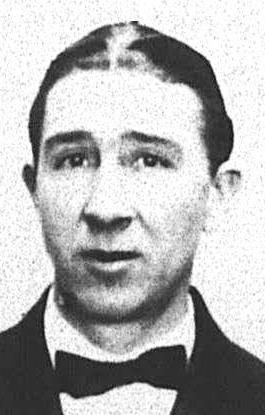
Captain John B Hurst RFA
27 December 1928 Mr F C Pavitt RFA appointed as Chief Engineer Officer
2 July 1929 Captain John B Hurst RFA appointed as Master
7 August 1929 Mr William W Ridgway RFA appointed as Chief Engineer Officer
10 September 1929 Captain Thomas Drever RFA appointed as Master
10 October 1929 arrived at Palermo together with HMS's ROYAL SOVEREIGN and RESOLUTION
12 June 1930 at Grand Harbour, Malta alongside HMS ROYAL OAK refuelling her - 922 tons of FFO supplied
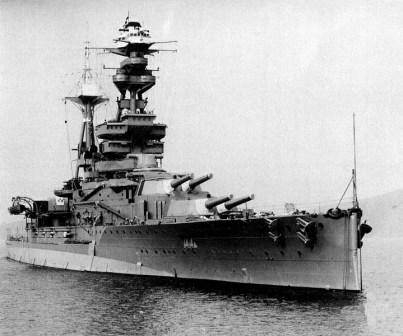
HMS ROYAL OAK
20 July 1930 berthed at Malta
5 August 1930 Captain A Peters RFA appointed as Master
14 July 1931 Captain George E Thickett RFA appointed as Master and Mr David E Morgan MIMarE RFA appointed as Chief Engineer Officer
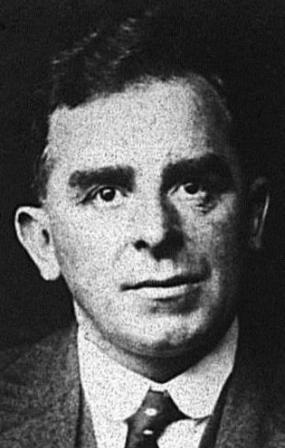
Captain George E Thickett RFA
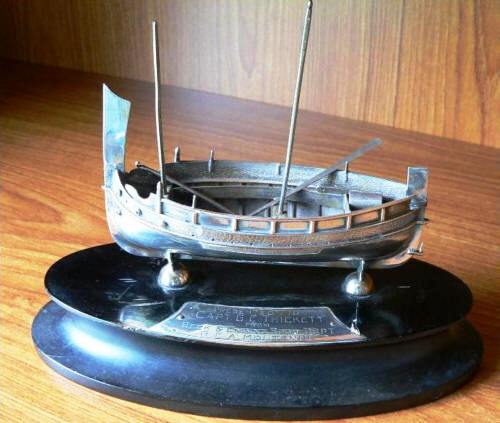
Engraved 'Presented to Captain G E Thickett from Deck and Engine Room Dept R F A Montenol'
28 October 1931 berthed at Malta with RFA Perthshire
in reserve at Rosyth
7 June 1935 sailed Grangemouth for Rosyth in ballast
5 October 1935 Captain Thomas C Robinson RFA (Lieutenant Commander RN (Rtd) appointed as Master
1 February 1936 has paravanes fitted and the Admiralty write to the Grangemouth Dock Company who had undertaken the work
Courtesy Falkirk Council Archives
19 July 1936 sailed Malta for the UK
24 November 1936 berthed at Portsmouth Harbour
26 November 1936 sailed from Portsmouth Harbour
recommissioned as Fleet Attendant Oiler on the Biscay Coast, based at La Rochelle, during the Spanish Civil Warand then in the Haifa and Alexandria areas
1 January 1937 Captain William H Green RFA appointed as Master
8 January 1937 Mr Frederick C Reynolds RFA appointed as Chief Engineer Officer
Chief Engineer Officer Frederick C Reynolds RFA
5 February 1937 called at Gibraltar while on passage from Devonport to Vigo
21 July 1937 Captain John P Tugwood DSC RD RFA appointed as Master
Captain John P Tugwood DSC RD RFA
28 January 1938 Mr William C Elliott RFA appointed as Chief Engineer Officer
22 February 1938 berthed at Portsmouth Harbour
23 February 1938 sailed from Portsmouth Harbour
18 March 1938 berthed at Portsmouth Harbour
23 March 1938 sailed from Portsmouth Harbour
27 March 1938 berthed at Portsmouth Harbour
31 March 1938 sailed from Portsmouth Harbour
2 April 1938 sailed Plymouth for Portsmouth
5 April 1938 berthed at Portsmouth Harbour
6 April 1938 sailed from Portsmouth Harbour
8 April 1938 arrived at Plymouth from Portsmouth
11 April 1938 berthed at Portsmouth Harbour
12 April 1938 sailed from Portsmouth Harbour
20 April 1938 berthed at Portsmouth Harbour
21 April 1938 sailed from Portsmouth Harbour
30 April 1938 berthed at Portsmouth Harbour
28 May 1938 sailed from Portsmouth Harbour
9 June 1938 passed the Lloyds Signal Station on the Lizard sailing eastwards
4 August 1938 arrived at Plymouth from Rosyth
6 September 1938 Captain James C Lodge RFA appointed as Master
28 October 1938 arrived at Plymouth from Rosyth
4 December 1938 arrived the River Wear from Rosyth
5 December 1938 until 21 December 1938 at Sunderland in the dry-dock of T W Greenwell & Co in refit
22 December 1938 sailed Sunderland for Portsmouth in ballast
24 December 1938 berthed at Portsmouth Harbour
3 January 1939 sailed from Portsmouth Harbour
4 April 1939 Chief Officer Edward Mills RFA appointed as Temporary Master
10 April 1939 arrived at Plymouth from Gibraltar
1 May 1939 Mr Harold Ringshaw RFA appointed as Chief Engineer Officer
Chief Engineer Officer Harold Ringshaw RFA
9 June 1939 Captain Herbert A Shacklock RFA appointed as Master
Captain Herbert A Shacklock RFA
26 June 1939 at Portland alongside HMS ROYAL OAK refuelling her
28 July 1939 sailed from Portsmouth Harbour
4 August 1939 at Invergordon with HMS's MATABELE and TARTAR alongside being refuelled
HMS MATABELE
7 August 1939 at Invergordon - ran aground
10 August 1939 sailed Invergordon
30 August 1939 at Scapa Flow with HMS MATABELE alongside being refuelled
31 August 1939 at Scapa Flow with HMS SHARPSHOOTER alongside being refuelled
HMS SHARPSHOOTER
3 September 1939 at the outbreak of World War 2 was in Scapa Flow
15 September 1939 at Sullom Voe alongside HMS EDINBURGH refuelling her with 644 tons FFO
28 September 1939 at Scapa Flow alomgside HMS EFFINGHAM refuelling her
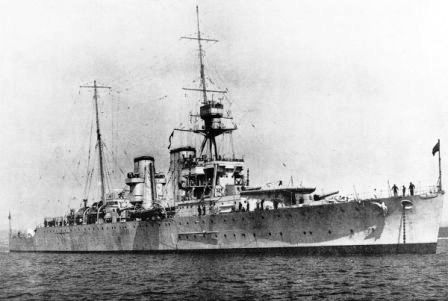
HMS EFFINGHAM
2 October 1939 at 1155hrs at Loch Ewe alongside HMS HOOD refuelling her - slipped at 1325hrs
HMS HOOD
12 October 1939 at 0745hrs at Loch Ewe alongside HMS HOOD refuelling her - slipped at 1330hrs
28 October 1939 Mr Henry S Edwards RFA appointed as Chief Engineer Officer
31 October 1939 at 1100hrs at Greenock alongside HMS HOOD refuelling her
2 November 1939 alongside HMS SHOOTER at Greenock refuelling her
11 December 1939 at Scapa Flow alongside HMS GLASGOW refuelling her
12 December 1939 at Scapa Flow alongside HMS BERWICK refuelling her
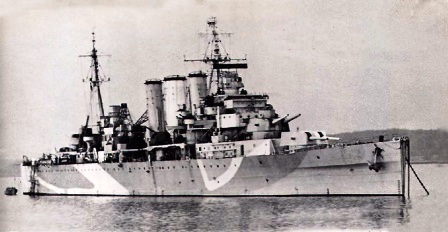
HMS BERWICK
21 December 1939 at Scapa Flow alongside HMS GLASGOW refuelling her
24 December 1939 at Scapa Flow alongside HMS MANCHESTER to refuel her - supplied 360 tons of FFO
HMS MANCHESTER
20 January 1940 at Scapa Flow alongside HMS BERWICK refuelling her
11 February 1940 at Scapa Flow alongside HMS NORFOLK to refuel her
15 February 1940 arrived at the Clyde escorted by HMS MOHAWK
18 February 1940 on the Clyde with another oiler (not named and non RFA) alongside HMS WARSPITE refuelling her with 1,998 tons of FFO
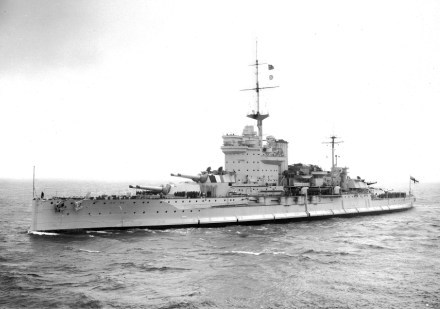
HMS WARSPITE
29 February 1940 at Scapa Flow alongside HMS NORFOLK to refuel her similtaneously with RFA BELGOL also refuelling the heavy cruiser
13 April 1940 Captain Donald B C Ralph RFA appointed as Master. Whilst at anchor off the Tail of the Bank, she was hit by the BP tanker BRITISH COURAGE
22 July 1940 anchored at Kilcreggan until 27 July 1950 deployed as a Fuel Oil depot ship for the River Clyde
5 September 1940 sailed the Clyde in escorted convoy WN13 to Scapa Flow arriving on the 8 September 1940
11 September 1940 refuelled HMS Hood at Scapa Flow
11 September 1940 to 20 April 1941 at Scapa Flow
4 October 1940 at Scapa Flow with HMS PHOEBE alongside to refuel
9 October 1940 Mr Graham W Martin RFA appointed as Chief Engineer Officer
11 October 1940 HMS's MATABELE and PUNJABI sailed Scapa Flow at 0800 escorting MONTENOL to Skaalefjord, Faroes, Islands. At 1330, a German submarine was reported by aircraft five miles north of this force, 16 miles 020° from Sule Skerry. PUNJABI investigated the contact without locating the submarine, and then rejoined MATABELE and MONTENOL
18 October 1940 HMS's DOUGLAS and ISIS escorted MONTENOL back to Scapa Flow
8 November 1940 refuelled alongside HMS BULLDOG at Skaalefjord
21 April 1940 sailed Loch Ewe for Stornaway
4 June 1940 sailed Loch Ewe
6 June 1940 arrived the Clyde anchorage
15 September 1940 at Scapa Flow until 8 April 1941
20 April 1941 sailed Scapa Flow and passed Dunnet Head for Loch Ewe
July 1941 Captain Horace W Taylor RFA appointed as Master
10 July 1941 at Greenock. Captain Frederick L Finch RFA appointed as Master
11 July 1941 HMS ICARUS sailed Ardrossan at 0500 escorting tanker MONTENOL to Loch Alsh
20 July 1941 requested for OAS trials in the Clyde area
30 August 1941 in company with the cruiser HMS DUNEDIN she rendezvoused with the battle cruiser HMS REPULSE
8 September 1941 at Tail of the Bank alongside HMS DUKE OF YORK refuelling her with 732 tons of FFO
HMS DUKE OF YORK
25 October 1941 at Greenock alongside HMS ROBERTS to refuel her
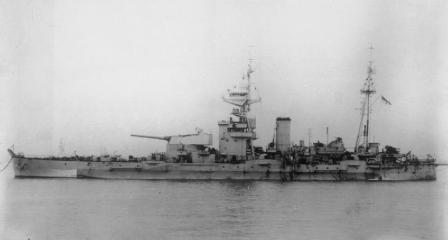
HMS ROBERTS
19 November 1941 equipped for fuelling escorts, she sailed with her own escort of the corvette HMS BERGAMOT to join Convoy SL 93, transferring to Convoy OS11 with the Freetown Escort Force
27 December 1941 in collision with the Clyde ferry ss DUCHESS OF MONTROSE off Gourock. The ferry was repaired on the Clyde
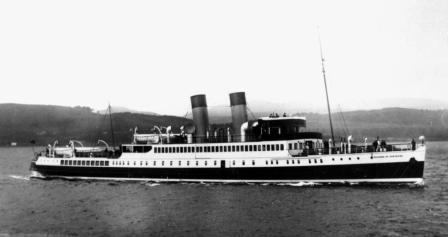
ss DUCHESS OF MONTROSE
20 January 1942 sailed the Clyde in convoy ON58 but returned the next day
14 February 1942 sailed the Clyde
24 March 1942 under repair on the river Clyde. Repairs completed 2 April 1942.
12 May 1942 sailed Liverpool in escorted convoy OS28 towards Freetown
21 May 1942 torpedoed by German U-Boat U159 (Kapitänleutnant Helmut Witte) off the West Coast of Africa at 36°41N, 22°45W while part of convoy OS28 and was badly damaged. Four of the crew died.
22 May 1942 sunk by gunfire from the corvette HMS WOODRUFF
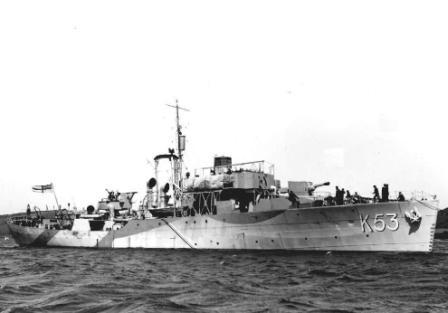
HMS WOODRUFF
.
Reproduced with permission of the MOD

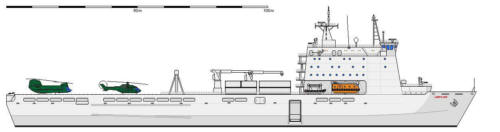
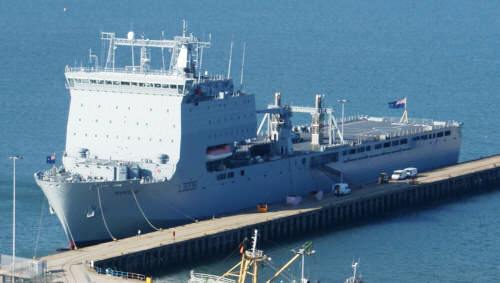
RFA Mounts Bay at Portland with her new engine exhausts
Subsequent name:
Official Number: 9240770
Class: BAY CLASS Landing Ship Dock (Auxiliary)
Pennant No: L3008
Laid down: 14 January 2002
Builder: BAE Systems, Govan
Launched: 19 April 2004
Into Service: 13 July 2006
Crew Number: 58
Out of service:
Fate:
Items of historic interest involving this ship: -
Background Data:
In April 2000 an Invitation to Tender was issued for the design and build of two Alternative Landing Ships Logistics to replace RFA’s SIR PERCIVALE and SIR GERAINT which were to enter service in 2004 and 2005. Options would be provided for up to a further three vessels to replace the remainder of the ageing LSL,s. Three U.K.yards submitted bids - Appledore Shipbuilders Limited, BAE Systems and Swan Hunter (Tyneside) Ltd. On 26 October 2000 an official announcement was made that 4 new ships would be built in a £300 million deal and that subject to negotiation of satisfactory terms and conditions, Swan Hunter (Tyneside) Ltd would be selected as lead shipyard for the programme. Two ships would be built at Wallsend with the other two being built to the Swan Hunter design by BAE Systems Marine at Govan. The ships would be based on the very successful Dutch ROTTERDAM design, but enlarged to give greater payload carrying capacity.
19 November 2001 ordered along with RFA CARDIGAN BAY
14 January 2002 laid down - being built in 7 blocks
19 April 2004 launched by BAE Systems Marine, Govan as Yard Number 0323 named MOUNTS BAY. The Lady Sponsor was Lady Band, wife of Admiral Sir Jonathon Band KCB, CinC FLEET. Named after Mounts Bay in Cornwall. When launched she struck a quay wall causing minor damage to her port quarter
May 2005 original in service date
8 September 2005 sailed Scotstoun for 2 weeks of sea trials
10 December 2005 delivered at a cost of £108 million pounds - source Hansard & National Audit Office report
15 December 2005 Captain Ross G Ferris OBE RFA appointed as Commanding Officer. Ship accepted and moved to Faslane
Captain Ross G Ferris OBE RFA
10 January 2006 sailed HMNB Faslane
13 January 2006 arrived Portland Harbour
22 February 2006 sailed Portland Harbour
24 February 2006 arrived at Portsmouth and berthed on the NW Wall
24 March 2006 sailed Portsmouth Harbour
27 March 2006 at Portland. Captain (X) Trevor Isles RFA appointed as Commanding Officer until 26 August 2006
3 April 2006 sailed Portland Harbour
4 April 2006 after exercises in Lyme Bay at anchor in Portland Anchorage
6 April 2006 to Portland Q4 pier
21 April 2006 at Portland
24 April 2006 to sea from Portland Harbour for sea trials then to Portland anchorage
29 April 2006 arrived Devonport berthing on D Buoy after part of her First of Class trials
3 May 2006 sailed Devonport to commence FOST Work-Up
6 May 2006 at St Peter Port
7 May 2006 sailed St Peter Port
8 May 2006 arrived at Portsmouth
12 May 2006 sailed Portsmouth
13 May 2006 arrived at Portland Harbour
19 May 2006 sailed from Portland Harbour to berth at Marchwood Military Port the same day
24 May 2006 sailed Marchwood Military Port and anchored in the Solent off Brown Down
26 May 2006 sailed the Solent anchorage for Plymouth
28 May 2006 arrived Plymouth Harbour making fast to C Buoy
30 May 2006 sailed Plymouth Harbour on exercises
1 June 2006 carried out loading trials with 539 ASRM / 17 Port Regt RCT
2 June 2006 berthed Devonport at number 16 wharf
4 June 2006 sailed Devonport
9 June 2006 arrived Plymouth Harbour making fast to D Buoy
10 June 2006 sailed Plymouth
16 June 2006 berthed Devonport at number 16 wharf
19 June 2006 sailed Devonport
24 June 2006 arrived at Portsmouth Harbour berthing on the NW wall
26 June 2006 sailed Portsmouth to Portland arriving the same day
30 June 2006 sailed Portland
2 July 2006 arrived at Plymouth
4 July 2006 sailed Plymouth returning the next day
10 July 2006 sailed Plymouth
13 July 2006 in service date
14 July 2006 arrived at Plymouth
17 July 2006 sailed Plymouth
20 July 2006 arrived at Plymouth
25 July 2006 completed her FOST Training. Sailed Plymouth for Falmouth
2 August 2006 Post-Acceptance Maintenance Period at Falmouth
30 August 2006 at Falmouth. Captain (X) Trevor Isles RFA appointed as Commanding Officer until 8 September 2006
4 September 2006 Operation VELA, a three month deployment to West Africa, was under the command of Commander UK Amphibious Group, Commodore Phil Jones. The VELA deployment involved a significant number of Royal Navy and Royal Fleet Auxiliary ships, the Royal Marine Commandos and helicopters. The Task Group included HMS Albion, HMS Ocean, HMS Southampton, HMS Argyll, RFA Wave Knight (2), RFA Mounts Bay, RFA Sir Bedivere, RFA Fort Austin, HMS Enterprise, RFA Diligence, RFA Oakleaf (2), Mine Counter Measure Squadron 1 and a Fleet submarine together with the Fleet Lead Commando Group, consisting of 40 Commando Royal Marines, 59 Commando Independent Engineering Squadron, 29 Commando Royal Artillery and 539 Assault Squadron Royal Marines. Also involved were elements of Fleet Diving Unit 2 and 849 (B) Flight from RNAS Culdrose. Embarked in HMS OCEAN for the deployment a Tailored Air Group (TAG) was formed, consisting of Sea King helicopters of 845 Naval Air Squadron, 846 Naval Air Squadron, Merlin Mk 1 aircraft from 820 Naval Air Squadron and Lynx helicopters of 847 Naval Air Squadron. The Vela task group conducted an amphibious exercise, Exercise Green Eagle, in Sierra Leone.
9 September 2006 sailed from Queens Wharf, Falmouth then returned to Falmouth after sea trials after post acceptance maintenance
15 September 2006 First Sea Lord Admiral Sir Jonathan Band, KCB, accompanied by Lady Sarah Band, attended a Service of Dedication for the ship at Falmouth Docks where Lady Band, the ship's sponsor, was the guest of honour. Over 350 guests were invited to attend the event with music provided by the Royal Marine Band from Devonport
18 September 2006 sailed Falmouth for Marchwood Military Port to load stores
19 September 2006 berthed at Marchwood Military Port
21 September 2006 sailed Marchwood Military Port
22 September 2006 arrived at Cawsands Bay and anchored
23 September 2006 sailed from Cawsands Bay
26 September 2006 berthed at Lisbon alongside
1 October 2006 sailed from Lisbon
11 October 2006 Exercise Green Eagle commenced
20 October 2006 anchored off Sierra Leone during Operation Vela (see above)
24 October 2006 until 27 October 2006 engaged in Operation Vela
11 November 2006 berthed alongside at Las Palmas
16 November 2006 sailed Las Palmas for Marchwood Military Port
21 November 2006 berthed at Marchwood Military Port
5 December 2006 sailed Marchwood Military Port
9 December 2006 berthed alongside at Sorreisa, Norway
10 December 2006 sailed from Sorreisa, Norway
16 December 2006 berthed at Portland and Captain (X) Trevor Isles RFA appointed as Commanding Officer
19 December 2006 sailed Portland on sea trials anchoring overnight
20 December 2006 berthed at Portland
23 January 2007 sailed Portland on sea trials
24 January 2007 berthed at Portland
28 January 2007 sailed Portland
1 February 2007 arrived at Marchwood Military Port then sailed the same day to Portland
2 February 2007 berthed at Portland
6 February 2007 sailed Portland
8 February 2007 the port side Fast Rescue Craft was deployed for training. The automatic release hook did not release and the 2 man crew were thrown into the sea. They were rescued after 10 minutes and returned to the ship unharmed. There was a Marine Accident Investigation
9 February 2007 berthed at Marchwood Military Port
12 February 2007 sailed Marchwood Military Port
13 February 2007 berthed at Flushing
16 February 2007 arrived at Marchwood Military Port sailing later the same day for Portland
17 February 2007 arrived at Portland
8 March 2007 at Portland
12 March 2007 at Portland
21 March 2007 sailed Portland
22 March 2007 arrived at Dover
25 March 2007 sailed from Dover
26 March 2007 arrived at Portland
30 March 2007 sailed from Portland
1 April 2007 arrived at Falmouth and entered No: 2 Dry Dock
10 April 2007 moved from No: 2 Dry Dock to Queens Wharf, Falmouth
12 April 2007 sailed from Falmouth on trials
14 April 2007 returned from trials and berthed at Falmouth
15 April 2007 ship granted the Freedom of Falmouth
18 April 2007 sailed Falmouth for Greenock
20 April 2007 at Tail o the Bank with HMS BANGOR
21 April 2007 to 3 May 2007 exercise Neptune Warrior with RFA LARGS BAY
1 May 2007 participated in the Carina Deployment to the Baltic together with RFA LARGS BAY
4 May 2007 berthed at Marchwood Military Port from Gothenburg
5 May 2007 sailed Marchwood Military Port for the Baltic and involvement in Exercise Noble Mariner until 28 May 2007
30 May 2007 sailed Marchwood Military Port for La Pallice
1 June 2007 at La Pallice
2 June 2007 sailed La Pallice
3 June 2007 berthed at Marchwood Military Port
4 June 2007 sailed Marchwood Military Port for exercises off Browndown Camp in the Solent and then to La Pallice arriving 8 June 2007
10 June 2007 sailed La Pallice
12 June 2007 arrived at Marchwood Military Port
14 June 2007 sailed Marchwood Military Port for Falmouth
15 June 2007 berthed at Dutchy Wharf, Falmouth for a Maintenance Period
22 June 2007 entered No: 2 Dry Dock at Falmouth
4 July 2007 floated out of No: 2 Dry Dock and berthed on Dutchy Wharf at Falmouth. Captain (X) Richard Taylor RFA appointed as Commanding Officer
14 July 2007 sailed Falmouth for Marchwood Military Port arriving the next day
16 July 2007 sailed Marchwood Military Port for Zeebrugge arriving the next day
18 July 2007 sailed Zeebrugge for Marchwood Military Port arriving the same day
25 July 2007 sailed Marchwood Military Port for Abaeron arriving 27 July 2007
30 July 2007 sailed Abaeron for Leith arriving 1 August 2007
1 August 2007 to 24 August 2007 at Ocean Quay, Leith, Edinburgh. Flagship to FOSNNI Rear Admiral Charles A Johnston-Burt and to RM Association of Scotland
25 August 2007 sailed Leith Docks for Portland arriving 27 August 2007
17 September 2007 sailed Portland for Cawsand arriving the next day and anchored
15 September 2007 Captain (X) Ross Ferris OBE RFA appointed as Commanding Officer
20 September 2007 arrived at Marchwood Military Port
25 September 2007 sailed Marchwood Military Port for an exercise which included RFA's ARGUS, FORT ROSALIE (2) and LARGS BAY
5 October 2007 arrived at Falmouth Bay from Portland
6 October 2007 sailed Falmouth Bay for Devonport berthing on No: 1 Jetty
13 October 2007 sailed Devonport and engaged in Exercise Sea Spear
15 October 2007 berthed at No: 20 Jetty at Den Helder
20 October 2007 sailed Den Helder still engaged in Exercise Sea Spear
25 October 2007 berthed at Amsterdam until 27 October 2007
28 October 2007 berthed at Marchwood Military Port and Captain (X) Richard Taylor RFA appointed as Commanding Officer
29 October 2007 to 9 November 2007 deployed to Harstad, Northern Norway
30 October 2007 sailed Marchwood Military Port
10 November 2007 at Marchwood Military Port and Captain (X) Ross Ferris OBE RFA appointed as Commanding Officer
11 to 16 November 2007 participated in amphibious exercise on Kenpack Sands, Lizard Peninsula along with Dutch warships Johan de Witte and Rotterdam together with RFA's LARGS BAY and LYME BAY
11 November 2007 Rememberance Ceremonies at Marchwood Military Port
12 November 2007 sailed Marchwood Military Port
13 November 2007 arrived at Falmouth Bay
15 November 2007 sailed from Falmouth Bay
16 November 2007 berthed at Portland
20 November 2007 sailed Portland for Poole
23 November 2007 berthed at Portland
5 January 2008 sailed Portland
6 January 2008 arrived at Dundee
7 January 2008 sailed from Dundee for Bogen
12 January 2008 sailed Bogan
14 January 2008 berthed at Marchwood Military Port
15 January 2008 sailed Marchwood Military Port
19 January 2008 arrived at Hellebogen
20 January 2008 sailed Hellebogen to Bogen arriving the next day
21 January 2008 sailed Bogen for Portland arriving 25 January 2008
27 January 2008 sailed Portland for Browndown and Plymouth arriving 2 February 2008
5 February 2008 sailed Plymouth for Glasgow
9 February 2008 anchored in the River Clyde off Port Glasgow
10 to 15 February 2008 alongside KGV Dock at Glasgow
15 February 2008 sailed the River Clyde to Hammerfest, Norway arriving 20 February 2008
21 February 2008 at Rypefjord, Norway sailing for Bogen
9 March 2008 sailed Bogen for Dundee arriving 12 March 2008
13 March 2008 sailed Dundee to Browndown arriving 15 March 2008 then onward to Portland arriving the next day
24 March 2008 Temporary Acting Captain (X) Richard Taylor RFA appointed as Commanding Officer
Captain (X) Richard Taylor RFA
26 March 2008 sailed for Rota, Spain to join in the Spanish led Espabras Exercise to Brazil. The only British participant
30 March 2008 at Rota, Spain embarking Spanish Marines
3 April 2008 Captain (X) Richard Taylor RFA presented to the Principe de Asturias Phillipe (the future King of Spain)
13 April 2008 sailed Rota, Spain for Las Palmas, Gran Canaria
17 April 2008 arrived at Las Palmas, Gran Canaria
18 April 2008 sailed Las Palmas, Gran Canaria for Rio de Janerio
1 May 2008 arrived at Rio de Janeiro
5 May 2008 sailed Rio de Janeiro
16 May 2008 arrived at Salvador
18 May 2008 sailed Salvador
2 June 2008 berthed at Portland
7 June 2008 sailed Portland for Falmouth Bay
8 June 2008 alongside at Dutchy Wharf, Falmouth
14 July 2008 in dry dock at Falmouth
28 July 2008 sailed Falmouth
1 August 2008 at St. Peter Port, Guernsey, Channel Islands anchorage
3 August 2008 sailed St. Peter Port, Guernsey
8 August 2008 at New Quay (Wales) Regatta until 11 August 2008
13 August 2008 at Belfast until 19 August 2008
21 August 2008 at Fowey Regatta until 25 August 2008
26 August 2008 at Plymouth
27 August 2008 at Bournemouth Air Show until 1 September 2008
1 September 2008 berthed at Portland
4 September 2008 sailed from Portland to Portland anchorage
6 September 2008 sailed Portland anchorage for Plymouth arriving the next day
7 September 2008 sailed Plymouth
12 September 2008 alongside at Loch Ewe
17 September 2008 arrived at Peel, Isle of Man sailing the same day
19 September 2008 at Marchwood Military Port
23 September 2008 Captain (X) Ross Ferris RFA appointed as Commanding Officer. The same day sailed Marchwood Military Port for La Rochelle
25 September 2008 arrived at La Rochelle
29 September 2008 sailed La Rochelle
2 October 2008 arrived at Faslane on the Clyde to participate in Exercise Joint Warrior 02
6 October 2008 sailed Faslane
10 October 2008 arrived Loch Eribol
12 October 2008 sailed Loch Eribol
13 October 2008 arrived Loch Ewe
15 October 2008 sailed Loch Ewe
17 October 2008 arrived at Plymouth
23 October 2008 sailed Plymouth participated in Staff College Sea Days in the English Channel along with RFA FORT AUSTIN
24 October 2008 arrive Portland
7 November 2008 sailed Portland
8 November 2008 arrived at Marchwood Military Port
11 November 2008 sailed Marchwood Military Port
12 November 2008 arrived at Portland
27 November 2008 sailed Portland
29 November 2008 arrived at Plymouth
5 December 2008 alongside at Devonport
9 December 2008 sailed Plymouth Sound ('C' Buoy) for week 2 of FOST work up
13 December 2008 on 'C' Buoy, Playmouth Sound
15 December 2008 sailed Plymouth Sound ('C' Buoy) for week 3 of FOST work up
19 December 2008 berthed on 'Q' Pier at Portland
18 January 2009 sailed Portland
25 January 2009 berthed on No: 4 berth, Marchwood Military Port
27 January 2009 sailed Marchwood Military Port
28 January 2009 on 'C' Buoy, Plymouth Sound
2 February 2009 sailed Plymouth Sound to participate in Exercise SW Sword
5 February 2009 on 'C' Buoy, Plymouth Sound
6 February 2009 sailed Plymouth for Exercise Sun Sword returning to Plymouth on 10 February 2009
11 February 2009 sailed Plymouth for Marchwood Military Port arriving 13 February 2009
16 February 2009 sailed Marchwood Military Port for Portland arriving the same day
22 February 2009 sailed Portland for Gibraltar arriving 27 February 2009
2 March 2009 sailed Gibraltar to Kusadasi, Turkey
13 March 2009 with HMS OCEAN berthed at Kusadasi North Pier, Turkey
18 March 2009 sailed Kusadasi, Turkey for Exercises
29 March 2009 with RFA FORT AUSTIN and HMS OCEAN berthed at Izmir, Turkey
31 March 2009 sailed Izmir, Turkey to Plymouth arriving 8 April 2009
9 April 2009 sailed Plymouth for Marchwood Military Port arriving the same day
20 April 2009 sailed from Marchwood Military Port to Portland arriving the next day
24 April 2009 sailed Portland for Hebburn on Tyne arriving 27 April 2009
23 May 2009 sailed from Hebburn, River Tyne to Portland arriving 25 May 2009
1 June 2009 sailed Portland return there on 5 June 2009
8 June 2009 sailed Portland for Liverpool
13 June 2009 and 14 June 2009 alongside the QM2 Berth at Liverpool
15 June 2009 sailed Liverpool to Portsmouth berthing on the Sheer Jetty, Portsmouth Harbour on 16 June 2009
20 June 2009 sailed from Portsmouth to take part in a joint Indo-UK Naval Exercise until 25 June 2009 together with RFA FORT ROSALIE, HMS's WESTMINSTER and LANCASTER together with INS Delhi, INS Brahmaputra and the Indian Navy replenshipment ship INS Aditya
26 June 2009 berthed at Sheer Jetty, Portsmouth Harbour
29 June 2009 sailed Portsmouth Harbour for Den Helder berthing at Berth 20 on 3 July 2009
6 July 2009 sailed Den Helder for Portland Harbour arriving the next day
27 July 2009 sailed Portland Harbour deep water berth returning to Q2/4 Pier, Portland Harbour on 31 July 2009
6 August 2009 sailed Portmouth Harbour for County Wharf, Falmouth arriving the next day
10 August 2009 sailed Falmouth for Pollock Dock, Belfast arriving 12 August 2009
17 August 2009 sailed Belfast for Portland Harbour arriving the next day
19 August 2009 sailed Portland Harbour and anchored off Bournemouth
24 August 2009 sailed from Bournemouth anchorage to Plymouth Sound making fast to 'C' Buoy
3 September 2009 moved from Plymouth Sound to 15/16 Wharf at Devonport
4 September 2009 Captain Gerard A Patterson RFA appointed as Commanding Officer
Captain G A Patterson RFA
8 September 2009 sailed Devonport to Portland Harbour arriving 25 September 2009
2 October 2009 sailed from the River Tyne
4 October 2009 at Portland
5 October 2009 sailed Portland and berthed on Wharf 6 & 7 at Devonport
14 October 2009 sailed Devonport for Portmouth arriving the next day
5 November 2009 sailed Portsmouth
6 November 2009 a British fisherman from the beam trawler Koremeloem fell overboard roughly 20 miles off Hastings, East Sussex. He was rescued by a French helicopter and landed on Mounts Bay but the fisherman died. An inquest on 23 July 2010 at Torquay Town Hall recorded a verdict of 'accidental death'
8 November 2009 berthed at Dundee - Eastern Wharf
9 November 2009 sailed Dundee
13 November 2009 berthed at Hadstad RoRo Wharf
14 November 2009 sailed Hadstad
20 November 2009 berthed at Portland
18 December 2009 arrived on the River Tyne
11 January 2010 sailed the Tyne after being berthed at A & P's yard at Hebburn for a full survey
8 February 2010 Assistant Cook David Stephen Trotter discharged dead
12 February 2010 involved with Royal Marine and Army Units in Operation Cold Response at Harstad, Norway
8 March 2010 berthed at Dundee
5 April 2010 at Portland
14 April 2010 commenced a refit at Falmouth
12 May 2010 dry docked at Falmouth
8 July 2010 flooded out of dry dock at Falmouth
11 August 2010 completed refit at Falmouth
13 December 2010 alongside at Portland
3 April 2011 anchored in the Solent big ships anchorage
29 April 2011 off Plymouth
3 June 2011 berthed in Malta GC
21 June 2011 anchored in the Solent big ships anchorage
5 August 2011 sailed Portsmouth Naval Base
15 August 2011 anchored of Bournemouth
16 August 2011 alongside at Portland
18 September 2011 off Dunoon, Argyll, Scotland
17 October 2011 sailed Marchwood Sea Mounting Centre and anchored in the Solent big ships anchorage off Browndown Camp
9 January 2012 at Portland the Defence Secretary Philip Hammond boarded the ship for a meeting with the Dorset Police to discuss security at the part of the Olympic Games being held locally
16 January 2012 sailed Faslane Naval Base
1 April 2012 sailed Duchy wharf, Falmouth to sea
9 April 2012 sailed Marchwood Military Port berthing at Porland the same day
12 April 2012 sailed Portland to Plymouth arriving the same day
14 April 2012 sailed Plymouth
16 April 2012 off Greenock Esplanade with Naval units from the Royal Navy, the USA, Denmark, Norway, France, Canada, Germany (FGS Emden - F210, FGS Hessen - F221, FGS FrankfurtAm Main - A1412) and the Netherlands. Sailed for Exercise Joint Warrior off Scotland
3 May 2012 sailed Plymouth Sound
4 May 2012 berthed at Marchwood Military Port
8 May 2012 sailed Marchwood Military Port
11 May 2012 berthed at Portland
14 May 2012 sailed Portland
24 June 2012 alongside at Rotterdam, Holland
30 June 2012 at Plymouth with HMS ARGYLL conducted a steam past as part of the Armed Forces Day with HMS ARGYLL, firing a 21-gun salute in honour of the presence of The Earl of Wessex
6 September 2012 Captain (X) David J Buck RFA appointed as Commanding Officer
13 October 2012 berthed at Gibraltar
27 October 2012 alongside at Toulon, France
19 November 2012 berthed at Malta GC with HMS BULWALK, HMS ILLUSTRIOUS and MV Hartland Point
20 November 2012 the ship was visited by the Commodore in Chief - the Earl of Wessex and the Countess of Wessex. Later the Countess presented to St Johns Ambulance, Malta GC two ambulances which had been donated by the East Midland Ambulance Service and conveyed to the islands by RFA Mounts Bay
22 November 2012 sailed from Grand Harbour, Malta GC
1 May 2013 at Falmouth and Captain Gerard A Patterson RFA appointed as Commanding Officer
22 July 2013 at Falmouth
19 August 2013 berthed at Gibraltar with RFA LYME BAY and HMS WESTMINSTER
22 August 2013 sailed Gibraltar
22 October 2013 at Falmouth
11 December 2013 at Plymouth Sound
14 February 2014 at Falmouth
12 May 2014 berthed at Falmouth
10 August 2015 Captain (X) David J Buck RFA appointed as Commanding Officer and Captain (E) Richard M Maddock RFA appointed as Chief Engineer Officer

Captain (X) David J Buck RFA
19 October 2015 Captain (E) Paul Petersen RFA appointed as Chief Engineer Officer
17 November 2015 sailed Falmouth
15 December 2015 Captain (X) Richard Taylor RFA appointed as Commanding Officer
19 January 2016 berthed at Gibraltar with Lieutenant General Edward Davis CB CBE the new Governor of Gibraltar onboard to take up his appointment
January 2016 the newly formed "Special Purpose Task Group" (SPTG) set up for deployments to the Mediterranean. The task group is formed around Zulu Company of the Arbroath-based 45 Commando Royal Marines. Additional enabling personnel from 29 Regiment Royal Artillery, 17 Port and Maritime Regiment of the Royal Logistic Corps, 24 Engineer Regiment, and 30 (Information Exploitation) Commando Royal Marines were attached to provide specialist capabilities and expertise. The Task Group has been deployed on RFA Mounts Bay
5 March 2016 at Split, Croatia. Assigned to Standing NATO Maritime Group 2 (SNMG2) in support of the migrant crisis in the Aegean Sea where she patrolled the Straits off the island of Lesbos detecting, reporting and escorting over 350 migrants to safety
18 March 2016 Captain (E) Richard M Maddock RFA appointed as Chief Engineer Officer
11 April 2016 berthed at Gibraltar
14 April 2016 Captain (X) David J Buck RFA appointed as Commanding Officer
11 May 2016 while the ship was berthed in Gibraltar, the Foreign Secretary - the Rt Hon Philip Hammond MP - came on board to meet the Commanding Officer and the crew
30 May 2016 sailed Gibraltar
22 June 2016 Captain (E) Charles Stevenson RFA appointed as Chief Engineer Officer
13 August 2016 Captain (X) Christopher G Clarke MBE RFA appointed as Commanding Officer
1 September 2016 anchored in Gibraltar Bay
19 September 2016 joined HMS's OCEAN and BULWARK together with MV Eddystone Point on a joint expeditionary deployment to the Mediterrean and the Middle East. Other RN, US and French Naval vessels were reported to be joining the deployment later
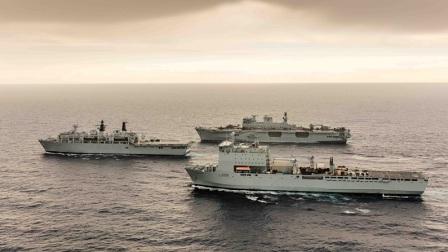
14 October 2016 berthed at Grand Harbour, Malta
14 December 2016 sailed 'D' Buoy, Plymouth Sound to sea
17 December 2016 arrived at Plymouth Sound
21 December 2016 Captain (X) David J Buck OBE RFA appointed as Commanding Officer
4 February 2017 Sea Cadets from the Junior Section of the Falmouth & Penryn Sea Cadet Unit visited the ship
18 February 2017 Sea Cadets from the Truro & Padstow Sea Cadet Unit visited the ship
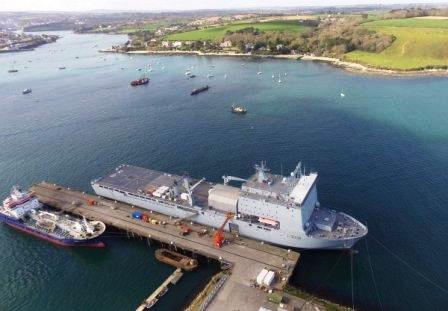
RFA Mounts Bay berthed at Falmouth
25 February 2017 Sea Cadets from the Senior Section of the Falmouth & Penryn Sea Cadet Unit visited the ship
23 April 2017 Captain (X) Christopher Clarke MBE RFA appointed as Commanding Officer
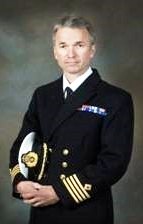
Captain (X) Christopher Clarke MBE RFA
6 May 2017 sailed Falmouth
10 May 2017 at Falmouth anchorage
11 May 2017 sailed from Falmouth anchorage
12 May 2017 berthed at Portland Harbour
25 May 2017 sailed Portland Harbour to Marchwood Military Port berthing the same day then sailing six hours later for Plymouth Sound arriving 26 May 2017
29 May 2017 sailed Plymouth Sound returning later the same day and mooring on Buoy D
30 May 2017 sailed Plymouth Sound
8 June 2017 sailed Plymouth Sound
9 June 2017 berthed at Falmouth
11 June 2017 sailed Falmouth
30 June 2017 took over as APT(N) from RFA WAVE KNIGHT (2) at Fort de France, Martinique
8 July 2017 anchored off Governor's Beach, Grand Cayman and landed vehicles, stores etc
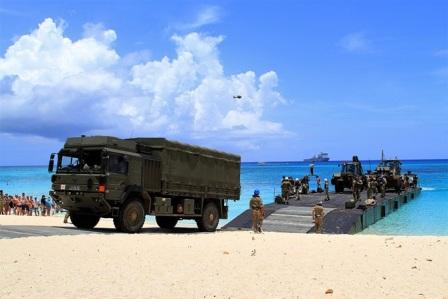
10 July 2017 Captain (E) Gareth H Coomber RFA appointed as Chief Engineer Officer
1 August 2017 at Montserrat seeking with the local Police Force fields of marijuna plants - nine suspected fields were sighted by the ship Wildcat helicopter crew

17 August 2017 Captain (X) Stephen J Norris RFA appointed as Commanding Officer
24 August 2017 Captain (E) Nicholas S P Pilling RFA appointed as Chief Engineer Officer
6 September 2017 off Anguilla to provide support and assistance after Hurricane Irma had hit the island
7 September 2017 at Anguilla provided repairs to the Islands hospital and a Police Station and six tonnes of aid
9 September 2017 arrived at the British Virgin Islands to provide support and assistance after Hurricane Irma had caused serious damage to the island
22 September 2017 near Puerto Rico the ships embarked helicopter rescues a woman and her children from a capsized ship after Hurricane Maria
2 October 2017 at St Martins refuels from HNLMS Karel Doorman
19 November 2017 berthed at Key West, Florida
10 December 2017 sailed from Key West, Florida
15 December 2017 berthed at Bermuda
28 December 2017 Captain David J Buck OBE RFA appointed as Commanding Officer
4 January 2018 berthed at Nassau, Bahamas to refuel
5 January 2018 sailed from Nassau, Bahamas
12 January 2018 berthed at Road Town, British Virgin Islands and a work part of 17 crew members and embarked military personel were engaged in assisting in the clearing up after Hurricanes Irma and Maria had hit the islands at the end of 2017. The two venues which are repaired and cleared up were the Emergency Response Centre and the Elmore Stoutt High School.
Panoramic view of Road Town, BVI and the damage caused
Damage caused to the class rooms
RFA Mounts Bay's working party clearing a class room
Mounts Bay's volunteers and the BVI Governor
RFA Mounts Bay alongside at Road Town, BVI
15 January 2018 sailed Road Town, British Virgin Islands
17 January 2018 arrived off Anguilla for a 3 day visit
22 January 2018 berthed at Willemstad, Curaçao for a SMP
26 January 2018 a party from the ship visited the Commonwealth War Graves plot at Roodeweg Cemetery, Curaçao and laid a wreath
3 February 2018 sailed from Willemstad, Curaçao
8 February 2018 at St Johns, Antigua
10 February 2018 sailed from St Johns, Antigua
12 February 2018 berthed at Bridgetown, Barbados and Captain (E) Robert C Stevenson RFA appointed as Chief Engineer Officer
14 February 2018 a party from the ship visited the Barbados Military Cemetery
and cleaned the memorial
15 February 2018 sailed from Bridgetown, Barbados
22 February 2018 berthed at Cartagena, Columbia
26 February 2018 sailed from Cartagena, Columbia
1 March 2018 berthed at Kingston, Jamaica
6 March 2018 sailed from Kingston, Jamaica
10 March 2018 anchored in the Bahia de Amatigue in the Gulf of Honduras
16 March 2018 sailed from the Bahia de Amatigue in the Gulf of Honduras
19 March 2018 anchored off West Caicos, Turks & Caicos working alongside local law enforcement authorities, and regional partners, to conduct maritime and aerial surveillance and interdiction operations against the illegal landing of Haitain immigrants
29 March 2018 arrived at Charleston, South Carolina for a maintenance period
30 April 2018 Captain (E) Craig A Holden RFA appointed as Chief Engineer Officer
15 May 2018 sailed from Charleston, South Carolina
18 May 2018 berthed at Mayport Basin, Mayport Naval Station, Florida sailing later the same day to sea
22 May 2018 berthed at Miami, Florida. Captain (X) Peter N Selby RFA appointed as Commanding Officer
27 May 2018 sailed from Miami, Florida
31 May 2018 anchored off George Town, Grand Cayman
2 June 2018 sailed from George Town, Grand Cayman anchorage
8 June 2018 berthed at Nassau, Bahamas
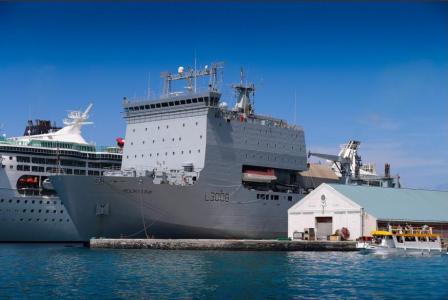
RFA Mounts Bay when berthed in the Bahamas
1 July 2018 sailed from Road Town, British Virgin Islands
3 July 2018 anchored off Anguilla
4 July 2018 sailed from the Anguilla anchorage
7 July 2018 berthed at Willemstad, Curaçao
22 July 2018 sailed from Willemstad, Curaçao
25 July 2018 anchored at Little Bay, Montserrat
30 July 2018 arrived at Road Town, British Virgin Islands
1 August 2018 sailed Road Town, British Virgin Islands
2 August 2018 berthed at San Juan, Puerto Rico
4 August 2018 sailed from San Juan, Puerto Rico
Ships of the same name
Mounts Bay. (ex Loch Kilbirnie) a frigate of the “Bay” class launched by Pickersgill on the 8 June 1945. She served in the Korean War and was awarded the Korean War Battle Honour. Transferred to the Portuguese Navy on the 9 May 1961 and renamed Vasco da Gama. Sold on the 21 December 1971 for scrap.