Ships starting with O

RFA Ships starting with O

RFA Oakleaf

RFA Oakleaf (1)


MONTEZUMA_383


Previous name:               Montezuma, HMS Iron Duke, RFA Abadol
Subsequent name:

Official Number:              110604 

Class:                              Emergency Wartime Construction LEAF Group Freighting Tanker

Pennant No:                   Y7.172

Laid down:
Builder:                           Alexander Stephens & Co., Glasgow
Launched:                      11 July 1899
Into Service:                  7 July 1915

Out of service:               25 July 1917
Fate:                              Torpedoed and sunk by UC41 off the Butt of Lewis


Items of historic interest involving this ship: -


Background Data:   During WW1, 18 vessels of varying types were acquired second hand and converted or purchased and converted while on the stocks or in a few cases building as tankers. Some were converted after serving with the Dummy Battleship Squadron by the insertion of cylindrical tanks in their holds. All were originally intended to operate as RFA’s, however owing to reasons of international law and the operation of the US Neutrality Act, these oilers became Mercantile Fleet Auxiliaries, being renamed with the LEAF nomenclature and placed under civilian management, although operationally they remained under Admiralty control


11 July 1899  launched by Alexander Stephen & Sons Ltd, Linthouse as Yard Nr 383 named   MONTEZUMA for the Beaver Line service of Elder Dempster & Co Ltd, Liverpool

September 1899 completed as a cargo liner

12 September 1899 sailed on her maiden voyage from Greenock to New Orleans arriving on 2 October 1899

22 October 1899 she commenced the first of 8 round voyages from New Orleans to Cape Town as a Boer War Transport carrying 1,885  mules. 31 died on the voyage. The ship arrived at Cape Town on 22 November 1899

23 December 1899 berthed at New Orleans from Cape Town

24 December 1899 sailed New Orleans for Halifax 

5 January 1900 delayed at Halifax when typhoid fever broke out among the crew

1901 was transferred to the British & African Steam Navigation Co Ltd (Elder, Dempster  & Co Ltd, Managers) , Liverpool name unchanged

20 August 1902 resuming commercial service

7 October 1902 at Cardiff loaded with 9,000 tons of coal for Boston - to break a US coal miners strike

14 January 1903 sailed Barry for New York

6 April 1903 acquired by Canadian Pacific Railway Co - name unchanged

17 July 1903 berthed at King Edward Pier, Monteal from Barry

12 December 1903 berthed at New Orleans from London

1904 converted to carry 1000 x 3rd Class passengers

March 1904 sailed on her first voyage from London - Antwerp - St John, N.B

8 May 1904 commenced a regular London - Antwerp - Quebec - Montreal run carrying Continental emigrants

29 July 1906 in collision with British steamer Kilmore off the West Hinder light vessel. Reported from Flushing that the Montezuma was badly damaged with the fore peak filled with water. The Kilmore sank. 

28 August 1906 arrived at Quebec

5 November 1906 in an action in the Admiralty Division of the High Court the accident (above) was heard and the Kilmore was adjudged to be totally at fault

26 June 1907 sailed Antwerp to Quebec arriving on the 1 July 1907. Members of the Mennonite community were among some of the immigration passengers

19 May 1908 sailed Montreal to London

12 January 1910 sailed Antwerp to St John's arriving 27 January 1910

9 April 1911 passenger died of Typhoid at 49.40N 17.37W - buried at sea

11 April 1911 passenger died of Typhoid at 47.26N 35.48W - buried at sea

12 April 1911 passenger died of Typhoid at 47.03N 37.36W - buried at sea

14 April 1911 passenger died of Pneumonia at 44.08N 47.03W - buried at sea

18 April 1911 passenger died of Pneumonia at St Johns, New Brunswick

5 July 1911 sailed Antwerp to Quebec

19 July 1911 arrived at Quebec from Antwerp

13 February 1912 passed Gravesend enroute to St Johns, New Brunswick

20 May 1912 signalled when 70 miles west of the Lizard enroute to London from Montreal

10 July 1912 arrived at Quebec from Antwerp

14 January 1913 passed Dover enroute to St Johns, New Brunswick

3 June 1913 radioed that she was 160 miles southwest of Brow Head while on passage from Montreal to London

20 June 1913 passed the Lizard while on passage from London to Montreal - Captain Griffiths was her Master

23 June 1913 while on passage to Montreal sighted the remains of a Norwegian three masted barque Glenmark of 1,357 tons adrift in the Atlantic, unmanned and drifting. The masts had been carried away, as had her lifeboats

7 July 1913 at Montreal 4th Engineer Alexander Barr discharged dead - he drowned

19 August 1913 arrived Quebec while on passage from London to Montreal

27 August 1913 sailed Montreal enroute to Liverpool

7 October 1913 berthed at Quebec

18 November 1913 berthed at Quebec while on passage from London to Montreal

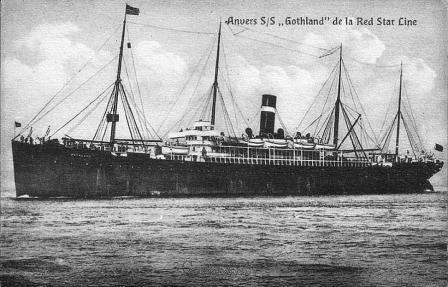
24 June 1914 went to the assistance of the Belgian Red Star liner Gotland which had gone aground on the Gunner Rocks near the Bishops Rock Lighthouse while on passage from Montreal to Rotterdam. Further assistance was provided the the liner Ascanius and mail steamer Lyonesse from the Scilly Isles which was towing life boats. A lifeboat from the Gotland fell from the davits and its passengers were thrown into the sea. They were rescused by a life boat. Reported in the New York Tribune newspaper.
12 September 1914 was hired by the Admiralty  to ferry part of the Canadian Expeditionary Force to Britain.

2 November 1914 conversion into the Dummy Battleship HMS IRON DUKE commenced. 

20 December 1914 conversion completed and based at Loch Ewe then at Scapa Flow.

31 May 1915 Engineer Walter J Rigby RNR discharged dead - killed in an engine room accident. He is remembered with pride on the War Memorial, at Grange Hill, West Kirby, Cheshire

6 July 1915 DBS Squadron disbanded

07 July 1915 purchased by the Admiralty  had cylindrical tanks inserted into her holds, and entered service as the oiler RFA ABADOL.

7 February 1917 her management was transferred to Lane and MacAndrew and she became the oiler transport OAKLEAF

23 February 1917 ceased to be classed as an RFA

25 July 1917 while on passage from Invergordon to Port Arthur, Texas was torpedoed and sunk without warning by UC 41 (Oberleutnant zur See Hans Forste) in position 59.01 N 07.26 W approximately 64 miles NW of the Butt of Lewis without fatalities. The U Boat suffered an internal explosion on the 21 August 1917 and sank in the Tay estuary at 56 25N 02 35W. The entire crew were killed.


Notes:


When Elder Dempster sold their Canadian interests (Beaver Line) to the Canadian Pacific Railway Co for the sum of £1,417,500, a total of 14 ships plus 3 tugs were involved in the deal and these were as follows: LAKE CHAMPLAIN (RFA RUTHENIA), LAKE ERIE(RFA SAXOL), LAKE MANITOBA, LAKE MICHIGAN, MILWAUKEE, MONTCALM (RFA CRENELLA), MONTEAGLE, MONTEREY, MONTEZUMA (RFA ABADOL), MONTORT, MONTREAL, MOUNT ROYAL(RANGOL), MOUNT TEMPLE & MONTROSE and the 3 Liverpool tugs AFRICAN, BEAVER & OTTER


RFA Oakleaf (2)
 

Oakleaf_1986


RFA Oakleaf 2


Previous name:                         Oktania
Subsequent name:

Official Number:                        389540

Class:                                      THIRD LEAF CLASS Support Tanker

Pennant No:                            A111

Laid down:
Builder:                                   A B Uddevalla, Sweden
Launched:                               2 July 1981
Into Service:                           14 August 1986
Out of service:                         2007
Fate:                                      Broken up 2010


Items of historic interest involving this ship: -


Background Data:   On 27 October 1978 it was announced that the MoD (N) was to charter 2 laid up STaT 32 standard product tankers which had originally formed part of a 4-ship order for commercial owners. After 3 of the ships had been laid down, the owners ran into financial difficulties and found that they were unable to accept the new ships. As they were the only mercantile order then in hand, the builders completed the 3 ships, and after running trials, they were laid up, 2 at Liverpool and 1 at Birkenhead. After some time had elapsed, the builders took over ownership of the ships by forming 3 subsidiary companies which then offered the ships for sale or charter. These eventually became RFA’s APPLELEAF (3), BRAMBLELEAF (3) and ORANGELEAF (3). Some years later, the 4th ship from this original order was built as RFA BAYLEAF (3). All 4 ships had additional accommodation and full RAS capabilities fitted and became useful units in the Fleet. Later on, a 5th vessel was chartered and was renamed RFA OAKLEAF (2), but she differed considerably from the earlier 4 Leafs


2 July 1981 Launched by Uddervallavarvet Aktiebolaget, Uddevalla as Yard Nr 312 named OKTANIA for Rederi AB Oktetten, Stockholm

29 March 1985 approval given to charter her to replace RFA PLUMLEAF (2)

June 1985 purchased by James Fisher & Sons, Barrow-in-Furness for bare-boat charter to the MoD (N)

7 September 1985 arrived on the Tyne for formal docking and inspection

September 1985 approval granted by Lloyds Register and the Admiralty Ship’s Name and Badge Committee for her new name

December 1985 invitations to tender for her conversion were issued

15 January 1986 her Ship’s Badge was officially presented to her

17 February 1986 arrived Falmouth for conversion by Falmouth Shiprepairer Ltd.

19 February 1986 conversion work began

11 August 1986 conversion completed at a cost of approximately £5m

13 August 1986 ran sea trials in Falmouth Bay

14 August 1986 formally renamed OAKLEAF(2) by Mrs Patricia Kemp, the wife of Mr Anthony Kemp, DST (SF)

26 August 1986 sailed Falmouth for Plymouth to store and then to Portland for BOST

28 September 1986 sailed Portland on her maiden voyage to Fort Lauderdale

17 September 1987 arrived Portsmouth for the first time

3 November 1987  Mr Robert Settle RFA appointed Chief Engineer Officer. The ship was berthed at Rosyth
13 September 1988 to 20 September 1988 humanitarian relief - supported the frigate HMS ACTIVE in relief ops after Hurricane Gilbert had hit Grand Cayman and Jamaica

23 September 1993 to ( December 1993 humanitarian aid - Supported Operation Snowdon - supported the frigate HMS ACTIVE in international interdiction operations during political problems in Haiti

17 September 1994 to 30 September 1994 In Operation Spartan - supported HM ships in Maritime Interdiction Operations off  Haiti

5 January 1995 Captain (E) Robert Settle RFA appointed as Chief Engineer Officer
5 January 1995 at Plymouth

July 1995 while supporting the West Indies Guard ship HMS Southampton provided assistance following volcanic activity on the Island of Montserrat 

6 September 1995 to 15 September 1995 humanitarian aid - with the destroyer HMS SOUTHAMPTON she provided relief teams to Anguilla after Hurricane Luis had devastated the area

2 June 1997 to 22 August 1997 routine docking

10 October 1997 with the survey ship HMS HERALD she provided medical assistance to an injured   yachtsman who was transferred to OAKLEAF and then by helicopter to Spain.

14 May 1999 Captain Pat Thompson OBE RFA appointed as Commanding Officer

14 February 2000 to 21 April 2000 in refit

21 April 2001 to 30 April 2001 berthed at Gibraltar

15 August 2001 to 16 August 2001 berthed at Algerciras, Spain

17 August 2001 to 27 August 2001 berthed at Gibraltar

3 September 2001 to 5 September 2001 berthed at Malaga, Spain

22 November 2001 to 27 November 2001 berthed at Malaga, Spain

17 December 2001 to 7 January 2002 berthed at Gibraltar

16 January 2002 to 18 January 2002 berthed at Algeciras, Spain

18 January 2002 to 25 January 2002 berthed at Gibraltar

26 August 2002 to 22 September 2002 contractor support period

7 April 2003 to 30 May 2003 routine docking

18 August 2004 berthed at Gibraltar sailing on 27 August 2004

September 2004 purchased by MoD (N)

September 2004 Captain Kim Watts RFA in command

31 January 2005 berthed at Gibraltar from Plymouth sailing on 2 March 2005

19 August 2005 humanitarian aid - rescued 2 fishermen adrift in the Straits of Gibraltar after their boat had sunk and landed them at Gibraltar

19 August 2005 berthed at Gibraltar from Plymouth sailing on 20 September 2005

25 September 2005 berthed at the oil fuel depot at the Gare Loch

28 August 2006 berthed at Gibraltar sailing on 7 September 2006

27 September 2006 berthed at Gibraltar

3 December 2006 in the River Clyde

12 March 2007 arrived Portsmouth for the last time to lay-up for disposal

April 2007 announced that she would be reduced to “zero manning” along with RFA BRAMBLELEAF (3)

September 2007 on the Disposal List at Portsmouth

26 September 2008 due to leave Portsmouth in tow, but the proposed sale fell through

29 September 2010 left Portsmouth under tow of the tug Mega One to ship breakers in Turkey
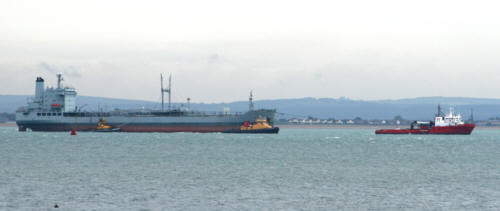
RFA_Oakleaf_tug_Mega_One_29.09


22 October 2010 arrived under tow at Aliaga, Turkey for breaking up by Leyal Ship Recycling Ltd


Oakleaf A111 breakup 4


31 January 2011 reported by Leyal Ship Recycling Ltd that RFA Oakleaf (2) had been completely dismantled and recycled in accordance with all EU waste management legislation

RFA Oakol

RFA Oakol (1)

 
RFA Oakol


Previous name:
Subsequent name:             Orthis,  Orthis Maru

Official Number:                  142307

Class:                                SECOND 1000 t CREOSOL CLASS Harbour Oiler

Pennant No:                      X46

Laid down:             
Builder:                              William Gray & Co. Hartlepool (South Yard)
Launched:                          22 September 1917 
Into Service:                       9 March 1918
Out of service:                    1920
Fate:                                  Sold out of service to commercial interests


Items of historic interest involving this ship: -


Background Data:   On the outbreak of WW1, the Admiralty embarked on a further programme of tanker construction for the newly-formed RFA Service. Eventually there were 18 ships in this Class, 12 of which were named after trees with the OL suffix, while the remainder had names connected with the oil industry also with the OL suffix. 4 of the Class were diesel engined and were sold after the Armistice but the rest, being triple expansion steamers, had long and successful service


22 September 1917 Launched by Wm. Gray & Co Ltd, West Hartlepool as Yard Nr 889 named  OAKOL(1)

6 November 1917 Engineer Lieutenant J W Jay RNR appointed as Chief Engineer Officer

11 November 1917 Lieutenant H E E Bate RNR appointed in command until 9 July 1918 when he was appointed in Command of RFA Petrobus

18 February 1918 Greaser Jos Rowland MMR 96061 logged as deserted but apparently returned to the ship. He was then discharged on 20 March 1918 and signed on RFA Ebonol

3 April 1918 Stewards Boy W J Davies logged as deserting. He had signed on on the 26 January 1918.

3 May 1918 Donkeyman L Hacking logged as deserting. He had signed on on the 29 December 1917

10 July 1918 Lieutenant John H T Lewis RNR appointed in command

John H T Lewis

Lieutenant John H T Lewis RNR

4 October 1918 Lieutenant Robert A Prichard RNR appointed in command. He his previous appointment had been RFA Sprucol. He was demobilised on 23 January 1920

19 November 1918 Donkeyman W Hamilton logged as deserting. He had signed on on 25 May 1918

3 January 1919 Engineer Lieutenant George Redpath RNR appointed as Chief Engineer Officer

1 April 1919 Greaser E G Townsend MMR 994276 logged as deserting. He had signed on on 7 December 1917.

3 September 1919 Greaser Christopher Connell MMR 944003 logged as deserting. He had signed on on 23 August 1919

12 September 1919 Greaser John Robson MMR 1004738 and Greaser Robert Hosie MMR 1007118 both logged as deserting. Greaser Robson had signed on on 23 August 1919 and Greaser Hosie had signed on on the 9 September 1919

17 September 1919 engines were disabled and she was towed to the Humber for repairs

22 October 1919 Ordinary Seaman J C Wright MMR 977207 logged as deserting. He had signed on on the 1 May 1919.

12 November 1919 Fireman Pat Fox MMR 997968 logged as deserting. He had signed on on 14 October 1919.

29 January 1920 sold to Anglo Saxon Petroleum Co Ltd., London and renamed Orthis. Used on Lake Maracaibo duties.


helderline.nl-orthis-2879

As the Shell tanker Orthis


2 March 1925 Transferred to Taikoku Senpaku KK (Rising Sun Petroleum, Co Ltd, Managers) Yokohama and renamed ORTHIS MARU.

1934  Broken up at Japan


RFA Oakol (2)

RFA Oakol


Previous name:
Subsequent name:

Official Number:                     181505

Class:

Pennant No:                          A300

Laid down:                            12 December 1945           
Builder:                                  Lobnitz & Co. Renfrew
Launched:                             28 August 1946
Into Service:                          1 November 1946
Out of service:                       February 1965
Fate:                                    Broken up at Ghent starting 14 November 1969


Items of historic interest involving this ship: -


7 November 1946 Captain E Payne RFA appointed as Master

6 January 1947 Mr A J R Emerson RFA appointed as Chief Engineer Officer

11 March 1948 Captain Donovan J S Newton RFA appointed as Master

5 June 1948 Mr Ciriaco G McFadzean RFA appointed as Chief Engineer Officer

16 April 1949 Captain H Oakley RFA appointed as Master

3 May 1950Mr E A Chantler RFA appointed as Chief Engineer Officer

14 December 1950 Captain J Bottomley RFA appointed as Master

1950 was deployed as part of the Royal Navy's Fleet train during the Korean War stationed as a harbour tanker at Singapore

1951 Captain S S Maddock RFA appointed as Master

22 February 1952 Mr L Cochrane RFA appointed as Chief Engineer Officer

15 October 1952 Mr J W Ritchie RFA appointed as Chief Engineer Officer

29 May 1953 Captain John Toms RFA appointed as Master

7 August 1954 Captain Douglas G Cox OBE, RFA appointed as Master

19 August 1954 Mr E Smeaton RFA appointed as Chief Engineer Officer

29 March 1955 Mr E A H Chantler RFA appointed as Chief Engineer Officer

23 March 1955 Captain W J H Roberts RFA appointed as Master

6 April 1956 Captain T H Macrow RFA appointed as Master

12 November 1956 Captain William R Town RFA appointed as Master

21 December 1956 Mr T B Willis RFA appointed as Chief Engineer Officer

9 July 1957 Mr A Bloomer RFA appointed as Chief Engineer Officer

13 January 1958 Captain Alfred W Camamile DSC, RFA appointed as Master

14 January 1958 ship ran aground in the Solent near the Needles. Towed off the next day by the tug Samson she continued on her voyage to Portland

5 June 1958 Mr R W A Hunt RFA appointed as Chief Engineer Officer

25 June 1958 Captain Alistair C Gibson RFA appointed as Master

31 July 1959 Captain J Bottomley RFA appointed as Master

11 August 1959 Mr D G P Wells RFA appointed as Chief Engineer Officer

14 December 1960 Captain W A Hiorns RFA appointed as Master

30 January 1961 at Barry Docks Donkeyman Greaser Aaron Bloor discharged dead - having died from natural causes

19 April 1961 Mr G W H Neill RFA appointed as Chief Engineer Officer

20 June 1961 Captain R E A Davies RFA appointed as Master

8 September 1961 at Portsmouth alongside HMS BERMUDA to refuel her

19 March 1962 Mr H Maddison RFA appointed as Chief Engineer Officer

19 April 1962 Captain Archibald Murchie RFA appointed as Master

27 September 1963 Captain William R Town RFA appointed as Master

18 November 1963 Mr E F Paice RFA appointed as Chief Engineer Officer

12 June 1964 Mr A D Harris RFA appointed as Chief Engineer Officer

7 September 1964 Captain G E B Harcombe RFA appointed as Master

February 1965 laid up at Devonport.

24 September 1969 sailed Devonport to Bruges for food storage purposes.

14 November 1969 broken by at Ghent by Van Heyghen Freres

RFA Ocean Salvor


RFA Ocean Salvor

RFA_Ocean_Salvor


Previous name:
Subsequent name:

Official Number:                    168769             

Class:                                     KING SALVOR Class Ocean Salvage Ship

Pennant No:                           A492

Laid down:                             2 October 1942
Builder:                                   Wm Simons & Co Ltd., Renfrew
Launched:                              31 August 1943
Into Service:                           23 September 1943
Out of service:                        November 1958
Fate:                                       Sold commercially February 1960


Items of historic interest involving this ship: -


Background Data:  There were originally 13 ships in this Admiralty-designed Class, 12 of which saw service as RFA’s. The final unit in the Class was completed as a Submarine Rescue Vessel under the White Ensign. All were basically similar and were used as Ocean Salvage Ships. They had a complement of 72 and during wartime were armed with 4 x 20 mm AA guns.


31 August 1943 Launched by Wm Simons & Co Ltd, Renfrew as Yard Nr 764 named  HMS OCEAN SALVOR

 23 September 1943 Completed under management of Risdon Beazeley Ltd

8 October 1943 sailed Liverpool in convoy OS56 arriving at Gibraltar 20 October 1943 with HMS PRINCE SALVOR

20 October 1943 sailed Gibraltar in convoy KMS29 to Port Said arriving 31 October 1943 with HMS PRINCE SALVOR

26 November 1943 sailed Suez independently to Aden arriving 30 November 1943

25 January 1944 sailed Aden independently to Massawa arriving 28 January 1944

29 January 1944 sailed Massawa independently to Aden arriving 1 February 1944

23 February 1944 took in tow Erling Brovig, a Norweigan tanker which had sailed Bandar Abbas loaded with 14,500 tons of Admiralty oil and which had been torpedoed by U510. The ships back was broken. The crew abandoned ship.  The ship reached port. 

11 April 1944 sailed Aden in convoy AJ3/2 to Colombo arriving 22 April 1944

November 1958 laid up at Pembroke Dock

30 January 1959 and 6 February 1959 offered for sale by the Admiralty in the The Thames of these dates. Lying at Pembroke Dock.

February 1960 purchased by Ship and Cargo (Salvage) Ltd, London and was to have been renamed BRITISH RECOVERY, but her name remained unchanged. It was intended that she be stationed at a major port between Suez and SIngapore - as reported in The Times of 16 February 1960

9 April 1961 was involved in attempting to save the British cargo liner 'Dara' in the Persian Gulf which had caught fire. The fire was extinguished by RN ships. The ship sank while being towed by the Ocean Salvor in 60 feet of water about 5 miles off the coast en route to Bahrain. 238 passengers and crew were killed in the explosion and fire.

March and April 1962 a Board of Enquiry into the loss of the Dara was held under the Merchant Shipping Act 1894 at 29 Lincoln's Inn Fields, London by Mr J B Naisby QC during which the Ocean Salvor action was mentioned.

October 1967 purchased by Sind Steel Corporation for demolition while lying at Karachi.


RFA Olaf

RFA Olaf


Class:                                         Olympia

Pennant No:

Laid down:
Builder:                                        Vickers Ltd., Barrow in Furness
Launched:
Into Service:
Out of service:
Fate:


Items of historic interest involving this ship: -  


Sister ship of RFA Olympia which was renamed RFA Santa Margherita. Cancelled


RFA Olalla

RFA Olalla


For details of RFA Olalla please see the entry for RFA Laureleaf


RFA Olcades


British_Beacon-05


British_Beacon


Previous name:                        British Beacon     
Subsequent name:

Official Number:                       142670

Class:                                     10000t OL CLASS Tanker

Pennant No:                           Y7.304 /  X18

Laid down:
Builder:                                   Workman Clark & Co Ltd, Belfast
Launched:                               9 September 1918
Into Service:                            9 October 1918
Out of service:                         April 1953
Fate:                                       Broken up


Items of historic interest involving this ship: -


Background Data:   Of the 6 ships in this Class, two of them were built by HM Dockyards to keep the Dockyards busy after the end of WW1 in accordance with the Colwyn Committee‘s recommendations.. two other similar ships were built for Anglo Saxon Petroleum Co Ltd, London at the same time - MUREX at Portsmouth and NASSA at Devonport - and after producing these 2 well-built ships, the finances and materials appeared to be short and the 2 built for the RFA were supposedly built with odds and ends and auxiliaries taken from outmoded warships. With their cheap and second-hand fittings they had some heavy maintenance bills, which they paid for by spending most of their lives on charter. MUREX and NASSA were both broken up at Osaka in 1936


9 September 1918 launched by Workman Clark & Co Ltd, Belfast as Yard Nr 425 named  BRITISH  BEACON for the Shipping Controller

9 October 1918 completed and placed under management of British Tanker Co, London. Cost  £246,108

1919 transferred to Admiralty ownership but remained under commercial management

10 March 1919 as RFA British Beacon berthed at Hull after arriving from Philadelphia

3 August 1919 as RFA British Beacon berthed at Rangoon from Philadelphia via Alexandria

4 March 1920 as RFA British Beacon passed Sand Key, Florida

8 March 1920 as RFA British Beacon berthed at Port Arthur, Texas

19 May 1920 as RFA British Beacon berthed at Port Eads from Devonport. RFA War Hindoo berthed at the same port on the same day but from Portsmouth

18 August 1920 as RFA British Beacon berthed at Portsmouth Harbour after arriving from Tampico

3 September 1920 sailed Portsmouth Harbour

14 April 1921 as RFA British Beacon sailed Port Arthur, Texas to the Clyde

2 May 1921 as RFA British Beacon arrived at the Clyde from Port Arthur

2 June 1921 as RFA British Beacon radioed US Naval Radio Station she was 10 miles NE of St Augustine

22 June 1921 as RFA British Beacon arrived at Sheerness from Abadan via Gibraltar

7 November 1921 damaged the battle cruiser HMS RENOWN at Suez

1 February 1922 berthed at Portsmouth Harbour

4 February 1922 sailed Portsmouth Harbour

8 November 1923 to 22 December 1923 berthed on the Oil Wharf, Singapore

27 February 1924 sailed Abadan for Sydney, NSW

5 March 1924 sailed Colombo, Ceylon

27 March 1924 berthed Sydney, NSW moored to the Admiralty buoys off Garden Island

9 April 1924 while still moored to the Admiralty buoys (above) HMS DUNEDIN and HMS DRAGON berthed alongside her to be refuelled

11 April 1924 at Sydney, NSW alongside HMS REPULSE to refuel her

12 April 1924 0800 at Sydney, NSW alongside HMS HOOD to refuel her with 2,894 tons of FFO.  Cast off at 1930hrs to No: 18 buoy

25 April 1924 sailed Sydney, NSW to Balik Papan,  Borneo to load and then to Vancouver, BC, Canada

28 June 1924 at Vancouver, BC, Canada alongside HMS REPULSE to refuel her

9 July 1924 at San Francisco, USA alongside HMS REPULSE to refuel her

4 November 1924 at Ross Memorial Hospital, Dingwall Greaser William Arthur Evans discharged dead with a skull injury

26 December 1924 at Stanley Harbour Able Seaman Benjamin Jackson discharged dead - drowned

14 May 1925 at 37.25N 29.35W Chief Steward Robert Fraser discharged dead from natural causes

26 October 1929 berthed at Portsmouth Harbour

17 November 1929 sailed from Portsmouth Harbour

24 September 1930 berthed at Portsmouth Harbour

1 November 1930 sailed from Portsmouth Harbour

January 1931 to April 1931 laid up at Devonport

25 April 1932 berthed at Portsmouth Harbour

12 July 1932 sailed from Portsmouth Harbour

17 November 1933 berthed at Portsmouth Harbour

20 November 1933 sailed from Portsmouth Harbour

21 August 1934 berthed at Portsmouth Harbour

23 August 1934 sailed from Portsmouth Harbour

20 November 1934 berthed at Portsmouth Harbour

22 November 1934 sailed from Portsmouth Harbour

5 June 1936 berthed at Portsmouth Harbour

8 June 1936 sailed from Portsmouth Harbour

7 September 1936 berthed at Gibraltar from Abadan and Port Said to discharge

12 January 1937 transferred to Admiralty management and manning as an RFA and renamed  OLCADES at Rosyth

11 March 1937 berthed at Gibraltar from Abadan and Port Said to discharge

November 1937 partly fitted for defensive armament by Mackinnon, Mackenzie & Co at Bombay

11 April 1938 to 18 April 1938 towed the gate vessel HMS SANDGATE from Singapore to Trincomalee

7 July 1938 berthed at Singapore

28 October 1938 Mr G A Calvert RFA appointed as Chief Engineer Officer

November 1938 defensive armament completed and gun trials carried out

7 November 1938 Captain R H P Meyhew RFA appointed as Master

10 July 1939 Mr C J Falconer RFA appointed as Chief Engineer Officer

3 September 1939 at Portsmouth on the outbreak of WW2

29 December 1939 slightly damaged while fuelling the carrier HMS EAGLE at Mahe in the Seychelles

30 December 1939 sustained damage when fuelling the armed merchant cruiser HMS CATHAY in the    Seychelles. Repairs were carried out at Colombo the following  month

24 May 1940 grounded on an uncharted rock in Trincomalee Harbour - slight damage

24 February 1941 damaged when going alongside the cruiser HMS GLASGOW

8 March 1941 refuelled HMNZS Leander and HMAS Canberra both alongside while at anchor at Port Louis, Mauritius. HMAS Leander received 1,084 tons of FFO and HMAS Canberra 1,835 tons

1 April 1941 at Port Louis, Mauritius with HMAS Canberra alongside being refuelled - issued 810 tons of FFO

18 December 1941 berthed at Capetown, South Africa

23 December 1941 sailed Capetown for Port Louis, Mauritius - speed of advance 9½ knots

4 January 1942 arrived at Mauritius from the Cape under escort of Armed Merchant Cruiser HMS Hector to serve as the station oiler

31 January 1942 at Mauritius

31 March 1942 at Mauritius

11 May 1942 Captain William W Peddle RFA appointed as Master


PEDDLE_WM_WALTER

Captain William W Peddle RFA


22 December 1942 damaged by the South African Railways Administration tug T.H. WATERMEYER at Cape Town

28 January 1943 Mr Eric S Fielder RFA appointed as Chief Engineer Officer

1942 to 1943 crankshaft trouble reduced her to a fuelling hulk at Bombay. Her Chief Engineer, ship’s engineers and two fitters from Mazagan repaired the defect, involving handling  weights of 20 tons under tropical conditions and she re-entered full service on completion

27 April 1943 after a refit was allocated as the Base Oiler at Bombay

18 February 1944 Mr Thomas H Purvis RFA appointed as Chief Engineer Officer

13 July 1944 damaged whilst alongside and fuelling the carrier HMS VICTORIOUS

1946 replaced RFA RUTHENIA as jetty and pumping station at Woodlands Naval Tank Storage facility at Singapore until the fuel lines ashore were restored and a new jetty  was built in 1952

1952 after a serious fire at Singapore, was sold to BISCO for demolition

29 October 1952 sailed Singapore in tow of the British tug ENGLISHMAN. While crossing the Bay of Biscay, she broke adrift and again caught fire. After the fire had been extinguished, the tow was reconnected

31 January 1953 Again broke adrift during a gale and..

1 February 1953 ran aground at Barton Gap in Norfolk

15 April 1953 was refloated and continued in tow to Blyth

19 April 1953 arrived at Blyth for breaking up by Hughes Bolckow Shipbreaking Co Ltd.


RFA Oldbury

RFA Oldbury


For details of RFA Oldbury please see the entry for RFA Birchleaf 


RFA Oleander

RFA Oleander (1)


For details of RFA Oleander 1 please see the record of RFA Fernleaf


RFA Oleander (2)


Oleander_1922


Previous name:
Subsequent name:

Official Number:                     146640

Class:                                     10000t OL CLASS Tanker

Pennant No:                            X46

Laid down:                              1 December 1920

Builder:                                   Pembroke Dockyard
Launched:                               26 April 1922
Into Service:                           20 October 1922
Out of service:                        26 May 1940
Fate:                                       Bombed (near miss) and beached


Items of historic interest involving this ship: -


Background Data:   Of the 6 ships in this Class, 2 of them were built by HM Dockyards to keep the Dockyards busy after the end of WW1 in accordance with the Colwyn Committee‘s recommendations.. 2 other similar ships were built for commercial owners at the same time - MUREX at Portsmouth and NASSA at Devonport - and after producing these 2 well-built ships, the finances and materials appeared to be short and the 2 built for the RFA were supposedly built with odds and ends and auxiliaries taken from outmoded warships. With their cheap and second-hand fittings they had some heavy maintenance bills, which they paid for by spending most of their lives on charter.


Oleanders_bell


RFA Oleander (2) ships bell

Career Data:


1 December 1920 laid down

26 April 1922 launched by HM Dockyard, Pembroke as Yard Nr  263  named  OLEANDER (2). The Lady Sponsor was Mrs Dutton, the wife of the then Captain Superintendent of the Dockyard

21 May 1922 Mr Joseph S Harrison appointed as Chief Engineer Officer

17 July 1922 Captain W Frost  appointed as Master

20 October 1922 completed and placed under initial management of Davies & Newman Ltd, London.

3 February 1923 - berthed at Singapore

14 April 1923 alongside at the oil wharf, Kepple Harbour, Singapore

28 April 1924 berthed at the oil wharf, Kepple Harbour, Singapore from Abadan

3 May 1924 sailed Singapore for Abadan

9 May 1924 at 5.58N 86.41E 2nd Engineer Officer Charles Bertram Harwood discharged dead having been lost overboard

11 February 1925 alongside at the oil wharf, Kepple Harbour, Singapore

26 February 1925 alongside at the oil wharf, Kepple Harbour, Singapore

9 March 1925 alongside at the Oil Wharf, Kepple Harbour, Singapore at the same time as RFA War Sirdar

1 July 1925 alongside at the oil wharf, Kepple Harbour, Singapore

15 October 1925 sailed from Portsmouth Harbour

21 December 1925 Captain W Frost RFA appointed as Master

13 February 1927 in the English Channel near Dungeness in thick fog was in collision with Royal Mail Steamer Nebraska. RFA Oleander extensively damaged and leaking oil.

5 August 1927 Mr Frederick C Pavitt RFA appointed as Chief Engineer Officer

27 June 1928 Mr Charles A Smith RFA appointed as Chief Engineer Officer

18 February 1929 berthed at Portsmouth Harbour

1 March 1929 sailed from Portsmouth Harbour

19 February 1929 Captain W Frost RFA appointed as Master

18 December 1929 Mr Charles E Wrate RFA appointed as Chief Engineer Officer


Charles_E_Wrate_CEO

Chief Engineer Officer Charles E Wrate RFA


29 July 1930 Mr Clifford N Ansell RFA appointed as Chief Engineer Officer

27 September 1930 berthed at Portsmouth Harbour

1 October 1930 sailed from Portsmouth Harbour

5 May 1931 Mr T Perrett RFA appointed as Chief ENgineer Officer

10 July 1931 Captain W Frost RFA appointed as Master

6 October 1932 Mr Chales A Smith RFA appointed as Chief Engineer Officer

October 1933 while in refit in Devonport Dockyard nuts were found in the machinery causing a stoppage in the main circulating engine - quoted in Parliament and in the press as deliberate sabotage (one of a number of incidents).

14 June 1934 Captain John Ross Gorrie RFA appointed as Master


John_Ross_Gorrie

Captain John Ross Gorrie RFA


15 June 1934 Mr Frederick C Reynolds RFA appointed as Chief Engineer Officer

CEO Frederick Reynolds

Chief Engineer Officer Frederick C Reynolds RFA


6 December 1934 at Horta Harbour, Azores Able Seaman Henry Gomm discharged dead from an appendicitis

8 February 1935 Captain Reginald C E Neyroud RFA appointed as Master

24 July 1935 Captain J H Jones RFA appointed as Master and Mr Clifford N Ansell RFA appointed as Chief Engineer Officer

24 May 1936 at arrived Garden Island, Sydney, Australia to discharge

6 August 1936 Captain Percival Skone-Rees RFA appointed as Master

PSR

Captain Percival Skone-Rees RFA


14 August 1936 at Gibraltar while on passage from Plymouth to Abadan in ballast

21 October 1936 berthed at Portsmouth Harbour

16 March 1937 berthed berthed at Gibraltar from abadan and Port Said to discharge cargo

30 June 1937 arrived at the new Admiralty tank farm at Chowder Bay, Mosman, NSW, Australia from Abadan to discharge. The first tanker to discharge at this facility since it was built

6 July 1937 sailed Mosman, NSW,  Australia for Abadan

13 November 1937 scraping noise heard on ship’s bottom in the Shatt-al-Arab River but no recorded damage

22 December 1937 Mr Frederick E Langer RFA appointed as Chief Engineer Officer

CEO Frederick LANGER

Chief Engineer Officer Frederick E Langer RFA

January / February 1938 fitted for defensive armament during docking. A 4” L.A. gun and mounting  was stowed  in her hold ready for fitting while a . 3” H.A. gun and mounting would  be supplied in time of emergency. Also fitted  for paravanes

25 May 1938 arrived at Williamstown, Victoria, Australia from the Persian Gulf to discharge (part cargo)

28 May 1938 arrived Garden Island, Sydney, NSW, Australia from Williamstown to discharge (part cargo)

17 February 1939 berthed at Portsmouth Harbour

20 February 1939 sailed from Portsmouth Habour

16 March 1939 carried out trials with the A frame paravane gear off Portsmouth before berthing at Portsmouth Harbour

20 March 1939 sailed from Portsmouth Harbour

31 March 1939 Captain A MacDonald RFA appointed as Master

1 April 1939 berthed at Portsmouth Harbour

6 April 1939 sailed from Portsmouth Harbour

19 August 1939 towed the lighter X 180 from Singapore to Penang

12 September 1939 grounded whilst entering Masirah Channel. Temporary repairs effected by use of cement boxes

29 September 1939 in drydock at Bombay to effect permanent repairs

31 December 1939 sailed Gibraltar in convoy HG 13 with fuel oil for Naval storage on the Clyde. Arrived at Liverpool on 10 January 1940

18 February 1940 sailed Liverpool in convoy OB 94 (in ballast) to Trinidad - convoy dispersed

29 March 1940 sailed Halifax in convoy in HX 31 with fuel oil for Devonport

30 April 1940 in collision with a hulk at Llanion - no recorded damage

12 May 1940 Convoy NS 3 sailed from the Clyde - ship joined from Scapa Flow

13 May 1940 on passage to Narvick as part of Convoy NS 3

17 May 1940 off Narvik until fighter cover was available

19 May 1940 convoy NS 3 arrived Harstad Bay

26 May 1940  seriously damaged by a near miss during an air attack in Harstad Bay, Norway  whilst in company with the carrier HMS GLORIOUS. She was beached and attempts were made to salvage her cargo. Three of her crew were injured and were taken to a Norwegian hospital.

8 June 1940 was officially classed as a total constructive loss although her remains were visible for many years


Notes:


She was the last ship built at Pembroke Dockyard for the Admiralty


Oleander (3)


Helicina-10

ss Helicina which, for a very short time, was renamed Oleander
when taken over by the Admiralty


Previous name:                     Helicina
Subsequent name:                Helicina

Official Number:                    180983

Class:

Pennant No:

Laid down:                           1945

Builder:                                Swan Hunter & Wigham Richardson, Wallsend
Launched:                            4 April 1946   
Into Service:                         Never saw service afloat as an RFA
Out of service:                         
Fate:                                    20 April 1962 broken up 


Items of historic interest involving this ship: -


Background Data:   In 1944, following the success of the American T-2 tankers, the Anglo Saxon Petroleum Co Ltd ordered 3 turbo-electric tankers of approximately 18000 tonnes from Tyneside builders. The first two of these were taken over by the Admiralty as the creation of the British Pacific Fleet Train had heralded the need for faster tankers to replace the older and slower vessels then in service. The problem was to find the capacity to build these ships. The position was unacceptable and to overcome it, compromises were reached and the two Shell tankers became stopgaps. The first of these, named HYALINA, was modified for Fleet Support Duties with the building of an OAS platform above her Upper Deck on the starboard side and the provision of state of the art OAS equipment. She commissioned as HMS OLNA, with a Naval Crew of 183 and was extensively armed with 1 x 4” gun aft, 4 x 40mm Bofors, 8 x 20mm Oerlikons on sponsors, Upper Deck stowage for depth charges on the port side, 60 lb of protective plating on the deck and side in the area of the petrol storage tanks, degaussing equipment and paravane gear. Initially it was not intended to retain her after the end of the War, but as she was so advanced, successful and much-needed, the Treasury approved her purchase in 1946. In the meantime her sister named HELICINA, which was to have been renamed HMS OLEANDER had not the War finished before her completion, was returned to her owners. HMS OLNA was converted to Merchant Ship status in 1946 and was transferred to the RFA. She was constantly used for fuelling-at-sea experiments and the ship itself and her RAS rigs underwent many modifications during her long career. The third ship in the series was not launched until 1948, also named HYALINA.


1945 laid down as HELICINA and acquired by the Admiralty along with her sister (Olna (2)) and  was renamed OLEANDER

4 April 1946  launched by Lady Godber at Swan Hunter & Wigham Richardson, Wallsend as Yard Nr 1711 named  HELICINA for the Anglo Saxon Petroleum Co Ltd, London as no longer required for Admiralty service

October 1946 completed

1958 laid up in the River Blackwater

11 April 1962 sailed under tow from the River Blackwater by the tugs TRADESMAN and SEAMAN to Blyth

20 April 1962 demolition commenced by Hughes Bolckow Ltd at Blyth


Notes:


1. While this ship never served as an RFA it is included for completeness of the history of the Service


RFA Oleander (4)


Oleander_1964


OLMEDA_Hobart_14_July_1979_Rex_Cox

RFA Olmeda at Hobart, Tasmania on 14 July 1979 © Rex Cox

Olmeda_A124-08

RFA Olmeda (ex RFA Oleander) laid up at Portsmouth in 1994 before sailing to the breakers


Previous name:
Subsequent name:                 Olmeda,  Niaxco

Official Number:                     305440

Class:                                    OLYNTHUS CLASS  Large Fleet Tanker

Pennant No:                          A124

Laid down:                            27 August 1963

Builder:                                  Swan, Hunter & WIgham Richardson, Wallsend         
Launched:                             10 July 1964              
Into Service:                          19 October 1965                  
Out of service:                       January 1994     
Fate:                                    Scrapped


Items of historic interest involving this ship: -


Background Data:  The 1962 Defence Estimates included plans for “front line support ships” which would be capable of maintaining “fleet speed” a  term which was later defined as sustained steaming at 20 knots. It was noted during the Kuwait Crisis in the summer of 1961 that the 4 oilers of the TIDE CLASS, together with OLNA (2) were the only RFA’s with this capability. Invitations to Tender were issued during 1962 and on the 4th February 1963, it was officially announced that an order had been placed for 3 ships in what became known as the OLYNTHUS CLASS. Early official references to the Class suggest that up to 6 ships were planned. They were designed by the builders to meet specific requirements and this design built on the success of the IMPROVED TIDE CLASS and when they entered service they were the largest and fastest ships in the RFA Fleet. Capable of operating 3 x Seaking helicopters, they had full hangar facilities too. 2 of the Class were renamed in 1967 to obviate confusion with the names of HM ships. When built, the Class cost approx £10½m


4 February 1963  Ordered as AO 17

27 August 1963  laid down

1964 Her Ship’s Badge was officially presented to her

10 July 1964 Launched by Swan Hunter & Wigham Richardson, Wallsend as Yard Nr 2004 named  OLEANDER. The Lady Sponsor was Lady Cary, wife of the 2nd Permanent Under Secretary of State (Royal Navy)

10 August 1964 Mr Thomas L Morton RFA appointed as Chief Engineer Officer

19 October 1965 Completed ten months after the original planned completion date 

12 July 1965 Commodore Eric Payne CBE RFA appointed as Master

12 March 1966 Humanitarian aid - assisted in the rescue of 37 of the  crew of the blazing Liberian tanker WORLD LIBERTY  which had been in collision with the Norwegian tanker MOSLI in the Red Sea. 5 crew were posted as missing

10 October 1966 Captain George Robson CBE RFA appointed as Master

19 October 1966 Mr G S Burnett RFA appointed as Chief Engineer Officer

14 January 1967 Mr Thomas L Morton RFA appointed as Chief Engineer Officer

28 August 1967 The Olynthus Class was redesignated as the Olwen Class 

16 October 1967 Was renamed OLMEDA to obviate confusion with the frigate HMS LEANDER

29 November 1967 Captain J D Fisher RFA appointed Master

4 December 1967 renaming Luncheon ceremony at Portland after refit attended by the Lady Sponsor

14 July 1968 Mr T J W Humphrey RFA appointed as Chief Engineer Officer

November 1968 took part in Naval Exercises 'Exercise Eden Apple' in the Mediterranean with 17 RN vessels and 33 other ships from Greece, Italy, the USA and France together with RFA's Olwen (2), Resource, Lyness and Tidepool

5 November 1968 berthed at Grand Harbour, Malta 

16 May 1969 Participated in the NATO Naval Review at Spithead when NATO warships were reviewed by the Queen

28 July 1969 took part in the Western Fleet Review at Torbay along with RFA‘s ENGADINE, LYNESS and RESOURCE along with the aircraft carrier HMS EAGLE and 34 other warships of the Western Fleet

24 April 1970 sailed Grand Harbour, Malta having been delayed for 24 hours by a strike of the harbour pilots

28 August 1970 acted as Flagship for Flag Officer Far East Fleet

4 August 1971 in Operation Limelight - a live BBC Television programme from the English Channel  along with RFA REGENT

27 July 1973 Humanitarian aid - rescued a survivor from the sunken yacht SEALEGS off the Lizard and landed 2  survivors at Penzance

22 September 1973 deployed in support of RN units off Iceland during 2nd Cod War until 10 October 1973

14 October 1973 deployed in support of RN units off Iceland during 2nd Cod War until 27 October 1973

25 October 1974 at Valetta Magistrates' Court Ordinary Seaman Robert Paul Gorka from the ship was found Guilty of maliciously spread false news likely to alarm public opinion or disturb good order or the public peace. He was conditionally discharged for 3 months. OS Gorka had sum across Grand Harbour from Pinto Wharf to Pariatorio Wharf where the ship was berthed at about 0200hrs. The crew were prohibited from swimming in the harbour and when asked onboard why he had been swimming in the harbour he claimed he had jumped into the water, when he saw two persons in difficulty, to their rescue. He had not suceeded and the two men had disappeared. A two hour fruitless search by the Police and a Naval Boat was undertaken.

12 December 1974 to 19 December 1974 conducted trials for FOST Portland with Wessex helicopters

6 February 1975 to 14 December 1975 stood by to the east of Malta along with HM ships TIGER, AJAX and CHARYBDIS owing to the political situation in Cyprus 

8 March 1975 berthed at Grand Harbour, Malta with five ships from the 5th Frigate Squadron

5 November 1977 berthed in Grand Harbour, Malta with RFA Lyness and HMS's Ark Royal, Fearless, Hydra, Charybdis and Plymouth

13 November 1977 sailed from Grand Harbour, Malta with RFA Lyness

March 1979 became the first RFA to be fitted with a satellite communications terminal

14 July 1979 berthed at Hobart, Tasmania with HMS Norfolk

1980 Humanitarian aid - whilst serving as Hospital Guard Ship she provided emergency medical support to the Danish tanker KRISTINE MAERSK in the Gulf of Oman whilst deployed in the area during the Iran-Iraq Conflict, along with RFA‘s OLNA (3) and FORT AUSTIN

5 April 1982 sailed Plymouth for service during Operation Corporate - the Falklands Conflict -  with 824 NAS “A” Flight embarked

19 April 1982 RASed HMS HERMES enroute to Operation Corporate

2 June 1982 RAS (L), the hospital ship ss UGANDA to port and the ambulance ship HMS HYDRA, east of the Falkland Islands, during Operation Corporate


HMS_Hydra_-_Ambulance_Ship_-_page_8

Crown Copyright via Lt Cdr Lester May RN


18 June 1982 embarked teams from 42 Commando Royal Marines at South Georgia for Operation Keyhole - the recapture of South Thule in the South Sandwich Islands.Rendezvoused with RFA REGENT and embarked a large volume of food and other stores by jackstay as a precaution in case the task group became entrapped in the rapid advance of the Antarctic ice pack

19 June 1982 took part in Operation Keyhole - the retaking of the island of South Thule - along with the frigate HMS YARMOUTH, the ice patrol vessel HMS ENDURANCE and the rescue tug SALVAGEMAN 

20 June 1982 sailed South Thule with captured Argentine PoW’s held aboard

28 June 1982 departed the Falkland Islands for home

10 July 1982 disembarked her attached Flight to RNAS Culdrose

12 July 1982 arrived Devonport after 96 continuous days at sea, having covered 30,000 miles, had supplied 185 ships with 64000 tons of FFO, diesel oil and avcat. In turn she had received 58000 tons of fuel from 10 requisitioned merchant tankers

25 January 1984 Humanitarian aid - despatched  her Doctor across to the container ship KOWLOON BAY 

13 May 1985 was awarded her 1982 Falkland Islands Battle Honours at Devonport by Captain C. G. Butterworth CMS

23 April 1987 Captain Peter J Lannin RFA appointed as Master

27 January 1988 Captain Rex A Cooper RFA appointed as Commanding Officer

August 1989 Captain David Wilson RFA in command

10 January 1991 sailed UK for service during  Operation Granby - the Gulf War

9 March 1991 Humanitarian aid - stood by the motor vessel LEGEND in the Adriatic Sea which was heavily laden  with refugees from Albania

26 May 1993 participated in the 50th Anniversary of the Battle of the Atlantic Royal Fleet Review by HRH Duke of Edinburgh off  Moelfre, Angelsey and afterwards at the Royal Seaforth Dock in Liverpool

January 1994 laid up at Portsmouth.

5 July 1994 purchased for £1.2m by Singaporean owners Makundran and renamed NIAXCO

19 July 1994 sailed under her own power from Portsmouth to the breakers yard in India

22 August 1994 arrived for breaking up at Virenda & Co at Alang, India

23 December 1994 breaking up began


Notes:


1. Was one of the seventeen tankers employed in the Mozchan on Beira Patrol duties.


RFA Oleary

RFA Oleary


For details of RFA Oleary please see the entry for RFA Dockleaf


RFA Oleaster

RFA Oleaster


For details of this RFA please go to RFA Hollyleaf 


RFA Oletta

RFA Oletta


For details of RFA Oletta please see the entry for RFA Briarleaf


RFA Olga

RFA Olga


For details of RFA Olga please see the entry for RFA Ashleaf


RFA Oligarch

RFA Oligarch 1

For details of RFA Oligarch 1 please see the entry for RFA Limeleaf


RFA Oligarch 2

 
RFA_Oligarch


Previous name:                        British Lantern

Official Number:                       142604


Class:                                      10000t OL CLASS Tanker

Pennant No:                            Y7.286  /  X12

Laid down:

Builder:                                   Workman Clark & Co Ltd, Belfast        
Launched:                               30 June 1918
Into Service:                            1 August 1918
Out of service:                         14 April  1946
Fate:                                      Scuttled


Items of historic interest involving this ship: -


Background Data:  Of the 6 ships in this Class, 2 of them were built by HM Dockyards to keep the Dockyards busy after the end of WW1 in accordance with the Colwyn Committee‘s recommendations.. 2 other similar ships were built for Anglo Saxon Petroleum Co Ltd, London at the same time - MUREX at Portsmouth and NASSA at Devonport - and after producing these 2 well-built ships, the finances and materials appeared to be short and the 2 built for the RFA were supposedly built with odds and ends and auxiliaries taken from outmoded warships. With their cheap and second-hand fittings they had some heavy maintenance bills, which they paid for by spending most of their lives on charter. MUREX and NASSA were both broken up at Osaka in 1936


30 June 1918 launched by Workman Clark & Co Ltd, Belfast as Yard Nr 424 named BRITISH LANTERN for the Shipping Controller

1 August 1918 completed and placed under management of British Tanker Co, London. Cost £206,857

24 October 1918 as British Lantern entered New York Harbour with Captain Ernest Loader as Master. The ship had sailed from Cardiff with 51 crew

22 November 1918 as British Lantern berthed at Hull from New York

21 January 1919 arrived at Avonmouth from Port Arthur

3 July 1919 sailed Port Eads to Shanghai via Colon and Honolulu

9 July 1919 sailed Balboa on passage from New Orleans to Shanghai

13 August 1919 berthed at Shanghai

17 September 1919 cleared for sailing from Singapore

7 October 1919 arrived at Suez from Singapore

5 November 1919 10.30am involved in a collision with the dock wall in Tilbury Docks

6 December 1919 sailed Gravesend for Port Arthur

1919 transferred to Admiralty ownership but remained under commercial management

29 May 1920 at Adelaide, Australia -engaged in a pumpover with RFA War Krishna in the harbour

10 June 1920 sailed to Abadan

11 August 1920 arrived at Suez from Abadan

13 August 1920 sailed Port Said for Portsmouth arriving on 26 August 1920

5 October 1920 arrived at Port Arthur from Southampton

28 October 1920 arrived at Greenock from Texas

21 November 1920 berthed at Port Arthur from Greenock

21 June 1920 berthed at Port Eads from the UK

26 January 1921 berthed at Port Arthur from the Clyde

28 January 1921 sailed Port Arthur for Devonport

15 February 1921arrived at Newport News

12 July 1921 arrived at Gravesend for Purfleet from New Orleans

14 July 1921 sailed Gravesend for Port Arthur

8 October 1921 in collision 40 miles west of the Bishops Rock with the steamer Arnaldo Da Brescia while on passage from Genoa. The Arnaldo Da Brescia arrived at Cardiff on 10 October 1921 for dry docking and extensive repairs. RFA British Lantern was damaged on her starboard side

13 July 1923 at 28.10N 50.45E Pumpman Alfred Edgecombe discharged dead - natural causes - buried at sea

22 August 1923 to the 25 August 1923 berthed at the Oil Wharf, Kepple Harbour, Singapore

22 December 1923 at Cape Town alongside HMS REPULSE refuelling her

24 December 1923 0900hrs alongside HMS HOOD at Cape Town to refuel her. Cast off at 1600hrs on account of swell - transferred 1890 tons of FFO

27 December 1923 sailed Cape Town

10 June 1924 berthed at Portsmouth Harbour

15 June 1924 sailed from Portsmouth Harbour

10 November 1924 to the 15 November 1924 berthed at the Oil Wharf, Kepple Harbour, Singapore

23 December 1924 and 24 December 1924 berthed at the Oil Wharf, Kepple Harbour, Singapore

18 December 1930 berthed at Portsmouth Harbour to be laid up until June 1931

4 July 1931 sailed from Portsmouth Harbour

June 1931 was in collision with ss Bianca - this fact was used by a Norwegian Insurance Agent named Ragnvald Dahl Prag to defraud a number of Norwgian Underwriters of £8,500 - he appeared at the Mansion House Justices Room charged with a number of counts of fraudulent conversion

10 June 1932 berthed at Portsmouth Harbour

29 June 1932 sailed from Portsmouth Harbour

12 June 1933 berthed at Portsmouth Harbour

13 June 1933 sailed from portsmouth Harbour

23 August 1933 berthed at Portsmouth Harbour

3 October 1933 sailed from Portsmouth Harbour

29 April 1935 berthed at Portsmouth Harbour

30 April 1935 sailed from Portsmouth Harbour

30 November 1936 berthed at Gibraltar from Abadan and Port Said to discharge

23 June 1937 berthed at Gibraltar from Abadan and Port Said to discharge part of her cargo which had been loaded for Gibraltar and Portsmouth

30 June 1937 berthed at Portsmouth Harbour

1 July 1937 sailed from Portsmouth Harbour

4 July 1937 transferred to Admiralty management and manning as an RFA renamed OLIGARCH (2) at Wallsend

6 July 1937 Mr L H Taylor RFA appointed as Chief Engineer Officer

13 July 1937 certificate of Registry endorsed with her new name

July 1937 fitted for defensive armament by Swan Hunter and Wigham Richardson on the Tyne

2 April 1938 berthed at Gibraltar while on passage from Malta to Trinidad in ballast

5 May 1938 berthed at Gibraltar from Trinidad to discharge cargo

1 July 1938 Captain H M Sinclair RFA appointed as Master

18 July 1938 to 27 July 1938 towed m.v. GYRO from Devonport to Malta

19 April 1939 in collision with HMT SOMERSETSHIRE at Gibraltar

3 September 1939 at Portsmouth on the outbreak of WW2

19 September 1939 sailed Southend in convoy OA7 along with RFA OLYNTHUS (1) until it dispersed on 22 September 1939

19 October 1939 sailed Lagos independently to Freetown arriving on 25 October of that year

26 October 1939 sailed Freetown independently for Jamestown St Helena

4 November 1939 sailed Jamestown, St. Helena independently to Trinidad arriving on 20 November

1 December 1939 sailed Trinidad independently

20 December 1939 sailed Freetown independently arriving Trinidad on 2 January 1940

4 January 1940 having loaded sailed Trinidad independently to Halifax arriving 16 January 1940

18 January 1940 sailed Halifax independently to Scapa Flow arriving 1 February 1940

10 February 1940 sailed Scapa Flow independently to Greenock arriving two days later

27 February 1940 Mr Clifford N Ansell RFA appointed as Chief Engineer Officer

11 March 1940 sailed Glasgow to Scapa Flow arriving on 16 March - sailed under sealed orders

24 March 1940 sailed the Clyde to Liverpool and then in convoy OB116 until dispersed arriving at Trinidad on 11 April1940

17 April 1940 sailed Trinidad independently to Halifax arriving on 27th - ten days later

30 April 1940 sailed Halifax in convoy HX 39 with a cargo of FFO arriving at Liverpool on 14 May 1940 - ship detached to Scapa Flow

19 May 1940 sailed Liverpool independently arriving at the Clyde the next day

28 May 1940 sailed Greenock in convoy NS4 arriving at Scapa Flow on 14 June 1940

3 June 1940 arrived at Harstad with other shipping under RN escort

29 June 1940 sailed Scapa Flow to Reykjavik arriving on 1 July 1940

12 August 1940 Captain William W Peddle RFA appointed as Master


PEDDLE_WM_WALTER

Captain William W Peddle RFA


7 September 1940 sent by NOIC Iceland to Reydarfiord loaded with petrol and bombs escorted by the Norwegian Patrol Vessel Honnigsvaag - Admiralty War Diary

1 December 1940 sailed Reykjavi arriving the Clyde on 7 December 1940

19 April 1941 allocated for Fleet Attendant duties in Norwegian Waters along with RFA Aldersdale

15 July 1941 sailed Oban in Convoy WN 153 along with RFA BLUE RANGER to Methil arriving on 18 July 1941

24 July 1941 sailed Scapa Flow for Seidisfjord, on the east coast of Iceland, escorted by the destroyer HMS GARLAND

27 July 1941 to 7 August 1941 sailed Seidisfjord to take part in Operation FB - supporting  Force A which  destroyed  facilities on  Spitzbergen - along with RFA WAR SUDRA

31 July 1941 refuelled Force A

1 August 1941 refuelled Force A

3 August 1941 Was detached to Seidisfjord with the destroyer HMS GARLAND and the anti-submarine trawler HMS SEALYHAM

8 August 1941 arrived Seidisfjord

19 August 1941 sailed Scapa Flow and took part in Operation Gauntlet and refuelled the troopship EMPRESS OF CANADA, HM cruisers NIGERIA and AURORA and HM destroyers ANTHONY, ANTELOPE and ICARUS at Barentsburg where the embarked Canadian troops wrecked the coal mines

24 August 1941 to 27 August 1941 supported the evacuation of 2000 Soviet miners from Spitzbergen escorted by the anti-submarine trawlers HM ships ELM and HAZEL

1 September 1941 arrived Sveagruva in company with the anti-submarine  trawlers HMS HAZEL and the Belgian VAN OOST

3 September 1941 sailed Sveagruva

5 September 1941 RASed with HMS Nigeria and HMS Aurora at Seidisfjord, Norway

14 September 1941 the Group arrived Reykjavik in company with the destroyer HMS ESCAPADE following Operations EGV 1 & 2 - the air attacks on Northern Norway. The ship was carrying 100 tons of Norwegian and Russain property. The C in C Home Fleet directed this should be off loaded in Iceland with a careful check of the inventory - details from the Admiralty War Diary

1 October 1941 Captain Albert V Barton RFA appointed as Master

15 January 1942 damaged by the British Hain Steamship Co Ltd m.v. TREHATA whilst at anchor  in Seidisfjord

12 March 1942 damaged when going alongside RFA ALDERSDALE

20 March 1942 sailed on Russain Convoy PQ 13 as escort oiler - as Force 'Q' - escorted by HMS LAMBERTON

23 May 1942 at Seidisfjord, Iceland alongside USS Rhind (DD404) and USS Wainwright (DD419) to refuel them

24 May 1942 at Seidisfjord, Iceland alongside USS Mayrant (DD402) to refuel her

30 June 1942 at Seidisfjord, Iceland alongside USS Tuscaloosa (CA37) to refuel to refuel her. Also alongside USS Rhind (DD404) to refuel her

7 July 1942 at Seidisfjord, Iceland alongside USS Rhind (DD404)

1 August 1942 under repair on the Clyde - repairs completed by 25 Augist 1942

5 August 1942 Mr Charles A Smith RFA appointed as Chief Engineer Officer


CEO_Charles_Smith

Chief Engineer Officer Charles A Smith RFA


11 August 1942 Captain Thomas Elder DSC RFA appointed as Master

2 September 1942 sailed Scapa Flow to form Force P as part of Convoy PQ 18 along with RFA BLUE RANGER and a 4-destroyer escort and preceeded the Convoy to Lowe Sound, Spitzbergen to act as an advanced fuelling facility for the escorting destroyers.

9 September 1942 with RFA Blue Ranger and RN escorts detached to form Force 'P' to establish a destroyer fuelling base at Lowe Sound, Spitzbergen for those used as escorts on the Russian convoys

12 September 1942 anchored in Axelfjord, Spitzbergen along with RFA BLUE RANGER and refuelled the escorts to Convoy PQ 18 consisting of the destroyers HM ships INTREPID,  MARNE, MARTIN, METEOR, MILNE and SCYLLA

13 September 1942 sailed as part of Convoy QP 14 along with RFA’s  BLACK RANGER and GRAY RANGER from Archangel arriving at Loch Ewe on 26 September 1942

28 October 1942 damaged when going alongside the MoWT tanker m.v. SAINTONGE

7 November 1942 sailed Loch Ewe in convoy WN358 to Methil arriving 9 November 1942

1 December 1942 to 10 December 1942 in Leith Docks, Edinburgh for repairs

12 December 1942 sailed Methil in convoy En172/2 to Loch Ewe arriving 14 December 1942

15 December 1942 sailed on Russian Convoy JW51A from Loch Ewe and arrived Kola Inlet on 25 December 1942 The Convoy consisted of 16 merchantmen

30 December 1942 sailed on Russian Convoy RA51 from Kola Inlet and arrived at the Loch Ewe on the 11 January 1943 - the convoy consisting of 14 merchantmen.

17 January 1943 sailed on Russian Convoy  JW52 from Loch Ewe and arrived at Kola Inlet on 27 January 1943. The Convoy consisted of 15 merchantmen

February 1943 in collision with RFA WAR AFRIDI

1 March 1943 sailed Kola Inlet in convoy RA53 to Seidisfjord arriving on 14 March 1943

19 March 1943 sailed Loch Ewe in Convoy WN 405 to Methil arriving 21 March 1943

21 March 1943 sailed Methil in convoy FS1069 to Southend arriving 23 March 1943

8 April 1943 under going repairs on the Tyne - repairs completed 22 April 1943

24 May 1943 as Force R carried depth charges and ammunition for the destroyers of Force H

27 May 1943 collided with the pier at Tyne Dock and was slightly damaged. The wooden pier was severely damaged and a dredger lighter was sunk. The 2nd Engineer’s proficiency allowance was suspended for 12 months. Repairs carried out by  Smith’s Dock Co Ltd, North Shields during which permanent disguise features were added. These included the fitting of a dummy funnel amidships to give her the appearance of a dry cargo vessel

30 May 1943 sailed Methil in Convoy EN 236 to Loch Ewe arriving 1 June 1943

4 June 1943 joined Convoy OS49 which had sailed Liverpool the same day

5 June 1943 the Director of Stores signalled the FOIC Tyne requesting details by letter of explosives and other dangerous loaded onto the ship and confirmation that the Ministry of War Transport's representative concurred in the stowage arrangements had been obtained - details from the Admiralty War Diary

8 and 11 June 1943 RAS'ed the B3 Ocean Escort Group which were escorting Convoys OS49 and KMS16. HMS Salveda (to become RFA Salveda) was in the same convoy

13 June 1943 Convoy OS49 split

15 June 1943 arrived at Gibraltar

22 June 1943 sailed Gibraltar in convoy GTX3 along with RFA Celerol, RFA Cherryleaf (1) and RFA Naspite in the same convoy

28 June 1943 the C in C Mediterrean issued the following signal concerning RFA's being used to carry explosives - see the entry dated 5 June 1943 above: -

Page 408

details from the Admiralty War Diary of this date

30 June 1943 torpedoed and slightly damaged by German Submarine U-453 (Kapitänleutnant Freiherr Egon Reiner von Schlippenbach) at 32°57N, 21°10E while in convoy GTX 3 - arrived in Tobruk under her own power where she was used in the harbour to fuel destroyers

21 August 1943 sailed Tobruk and joined convoy UGS 13 arriving at Alexandria the following day. RFA Cedardale sailed in the same convoy

9 September 1943 repaired at Alexandria

27 March 1944 in collision with the Norwegian tanker VIVI  at Alexandria

15 February 1945 at the Outer Harbour, Alexandria with USS Frankford (DD497) and USS Baldwin (DD624) alongside

3 January 1946 in port at Alexandria

15 February 1946 sailed Alexandria for Port Said arriving on 24 February 1946 (sailed at only 4 kts)

25 February 1946 sailed Port Said

13 April 1946 at Suez and sailed under tow

14 April 1946 scuttled at the southern end of the Red Sea loaded with obsolete ammunition at 27°30N, 34°45E


Notes:

.

1.  The PQ nomenclature for Arctic Convoys was derived from the initials of Commander Phillip Quellyn Roberts, a Planning Officer in the Admiralty

RFA Olinda

RFA Olinda


For details of RFA Olinda please see the entry for RFA Boxleaf


RFA Oliphant

RFA Oliphant


For details of RFA Oliphant please see the entry for RFA Palmleaf 


RFA Oliver

RFA Oliver


Class:                                                                   Olympia

Pennant No:

Laid down:
Builder:                                                                  Vickers Ltd Barrow in Furness
Launched:
Into Service:
Out of service:
Fate:

Items of historic interest involving this ship: -  


Ship cancelled


RFA Olivet

RFA Olivet

RFA Olivet


 For details about this ship please refer to RFA Elmleaf - ship launched at RFA Olivet but completed as RFA Elmleaf


RFA Olmeda


OLMEDA_Hobart_14_July_1979_Rex_Cox
RFA Olmeda at Hobart, Tasmania, Australia on 14 July 1979 © Rex Cox


For details of RFA Olmeda please see the record card of RFA Oleander (4) 


RFA Olna

RFA Olna (1)


Olna_1


Previous name:
Subsequent name:

Official Number:                      146149

Class:                                    10000t OL CLASS Tanker

Pennant No:                           X47

Laid down:                             14 June 1920
Builder:                                   Devonport Dockyard

Launched:                              21 June 1921
Into Service:                           10 October 1921
Out of service:                        18 May 1941
Fate:                                      Bombed and later scrapped


Items of historic interest involving this ship: -


Background Data: Of the six ships in this Class, two of them were built by HM Dockyards to keep the Dockyards busy after the end of WW1 in accordance with the Colwyn Committee‘s recommendations.. two other similar ships were built for Anglo Saxon Petroleum Co Ltd, London at the same time - MUREX at Portsmouth and NASSA at Devonport - and after producing these two well-built ships, the finances and materials appeared to be short and the two built for the RFA were supposedly built with odds and ends and auxiliaries taken from outmoded warships. With their cheap and second-hand fittings they had some heavy maintenance bills, which they paid for by spending most of their lives on charter. MUREX and NASSA were both broken up at Osaka in 1936


14 June 1920 laid down

21 June 1921 launched by HM Dockyard, Devonport as Yard Nr 1 named  OLNA (1). Named after the Olna Firth in the Shetland Islands. The launch and naming ceremony was performed by Mrs Underhill wife of Rear Admiral Edward Underhill, Superintendent of the Dockyard.

26 July 1921 Mr Henry Baker DSO RFA appointed as Chief Engineer Officer

10 October 1921 completed and placed under initial management of Davies & Newman Ltd, London

27 October 1921 sailed for London

16 June 1923 Captain Percival Skone-Rees RFA appointed as Master


PSR

Captain P Skone-Rees RFA


8 January 1924 at Mary's Hospital, Hamburg Able Seaman Mathew Reville discharged dead with a fractured skull

23 August 1925 Captain James D Ashworth RFA appointed as Master

10 September 1926 at 26.24N 55.52E Third Engineer Officer Walter Leslie Evans RFA discharged dead - natural causes - buried at sea

7 October 1927 Captain R D Williams RFA appointed as Master

31 October 1927 berthed at Portsmouth Harbour

2 November 1927 sailed from Portsmouth Harbour

31 August 1928 at Long Island Hospital, New York - Fireman Arthur Costa discharged dead after suffering with a fractured skull, a fractured right shoulder and fractured ribs

7 January 1929 Captain James D Ashworth RFA appointed as Master

1929 was used for experiments with the Oertz rudder

22 July 1929 ss Vimeria hit an iceberg off the Grand Banks. 27 July 1929 taken in tow by RFA Olna and towed towards Halifax - arriving 28 July 1929

30 October 1929 at Tampico, Florida, USA Captain William Cairns Meikle discharged dead suffering from Malaria

13 November 1929 Captain Percival Skone Rees RFA appointed as Master

28 February 1930 anchored in Stokes Bay, Gosport

17 May 1930 arrived at Gibraltar from Abadan with a cargo of oil for the Naval Base

28 July 1930 sailed from Portsmouth Harbour

15 October 1930 Mr J S Harrison RFA appointed as Chief Engineer Officer

10 November 1930 berthed at Portsmouth Harbour

15 November 1930 sailed from Portsmouth Harbour

20 January 1931 Mr Henry Baker DSO RFA appointed as Chief Engineer Officer

24 October 1931 struck by m.v. Cairnross while at anchor in St. Lawrence River in thick fog having arrived loaded from Port Arthur. RFA Olna damaged - proceeding to Montreal and arrived 25 October 1931 for survey.

3 March 1933 Captain P Skone Rees RFA appointed as Master and Mr H Baker RFA appointed as Chief Engineer Officer

31 August 1934 Mr Joseph S Harrison RFA appointed as Chief Engineer Officer

8 September 1936 at Manchester ship canal Greaser John Newby Power discharged dead by drowning - no evidence as to how he entered the water

7 October 1937 berthed at Portsmouth Harbour

9 October 1937 sailed from Portsmouth Harbour

26 October 1937 Captain I Evans RFA appointed as Master

7 November 1937 transferred to Admiralty management and manning as an RFA

16 November 1937 berthed at Gibraltar from Sheerness to discharge

3 May 1938 arrived Auckland, New Zealand

10 May 1938 sailed Auckland, New Zealand for Yokohama

27 July 1938 arrived Garden Island, Sydney, NSW, Australia  from Abadan to discharge

29 July 1938 sailed Garden Island, Sydney for Abadan to load

November 1938 undertook trials with bow protection gear - minesweeping paravane

16 November 1938 at Sunderland Fireman Lam Fatt discharged dead - natural causes

1939 ran aground on Alphee Shoal near Batticaloa, Ceylon while on passage to Trincomalee towing a battle target and with a cargo of fuel oil. She managed to back off after some hours but had badly damaged her keel and had fouled her screw with the towing wire. She was towed, leaking, to the outer approaches of Trincomalee by the cruiser HMS MANCHESTER and a boom defence vessel of the BAR Class. Her cargo was taken to the oil depot in several trips by RFA SLAVOL after which she proceeded to Bombay for extensive repairs which took several months.

16 May 1939 Mr William C Elliott RFA appointed as Chief Engineer Officer

11 June 1939 Captain Douglas N J Williams RFA (Lieutenant Commander RNR) appointed as Master

3 September 1939 at Portsmouth on the outbreak of WW2

25 September 1939 Whilst under the orders of the cruiser HMS AJAX she grounded but no damage was recorded

30 January 1940 sailed Mauritus to Port Victoria, Seychelles arriving 4 February 1940

6 February 1940 sailed Seychelles to Mauritius arriving 11 February 1940

19 April 1940 sailed Mauritius to Aden arriving 1 May 1940

2 May 1940 sailed Aden to Suez arriving 9 May 1940

18 May 1940 arrived Alexandria from Suez

29 October 1940 sailed Alexandria under escort


Olna_crew

RFA Officers and some crew members - believed taken in Crete in 1940


31 October 1940 Arrived Soudha Bay, Crete along with RFA BRAMBLELEAF (1) and escorted by  the  cruiser HMS COVENTRY to establish a fuelling base there

2 November 1940 sailed for Piraeus, Greece

3 November 1940 at Piraeus, Greece the Ship's Cook Hing Yee discharged dead - he died from natural causes - heart attack

18 February 1941 at Soudha Bay

23 April 1941 at Piraeus, Greece

18 May 1941 again at Soudha Bay, she was bombed by German aircraft and was set on fire. She was beached nearby but unfortunately burnt out. One of her Ratings was injured and he died from these injuries the following month

1945 found as a wreck at Scarramanga after the War, fit only for scrap


RFA Olna (2)


HMS_Olna_with_guns
HMS Olna in 1946 with war time armament
 
RFA_Olna_2
RFA Olna 2


Previous name:                      Hyalina, HMS Olna

Subsequent name:

Official Number:                      180853

Class:                                     Fleet Oiler

Pennant No:                           X116  /  A216

Laid down:
Builder:                                  Swan Hunter & Wigham Richardson, Wallsend. 
Launched:                              28 December 1944
Into Service:                           27 April 1945
Out of service:                        November 1966 
Fate:                                     Scrapped


Items of historic interest involving this ship: -


Background Data:


In 1944, following the success of the American T-2 tankers, the Anglo Saxon Petroleum Co Ltd ordered 3 turbo-electric tankers of approximately 18000 tonnes from Tyneside builders. The first two of these were taken over by the Admiralty as the creation of the British Pacific Fleet Train had heralded the need for faster tankers to replace the older and slower vessels then in service. The problem was to find the capacity to build these ships. The position was unacceptable and to overcome it, compromises were reached and the two Shell tankers became stopgaps. The first of these, named HYALINA, was modified for Fleet Support Duties with the building of an OAS platform above her Upper Deck on the starboard side and the provision of state of the art OAS equipment. She commissioned as HMS OLNA, with a Naval Crew of 183 and was extensively armed with 1 x 4” gun aft, 4 x 40mm Bofors, 8 x 20mm Oerlikons on sponsors, Upper Deck stowage for depth charges on the port side, 60 lb of protective plating on the deck and side in the area of the petrol storage tanks, degaussing equipment and paravane gear. Initially it was not intended to retain her after the end of the War, but as she was so advanced, successful and much-needed, the Treasury approved her purchase in 1946. In the meantime her sister named HELICINA, which was to have been renamed HMS OLEANDER had not the War finished before her completion, was returned to her owners. HMS OLNA was converted to Merchant Ship status in 1946 and was transferred to the RFA. She was constantly used for fuelling-at-sea experiments and the ship itself and her RAS rigs underwent many modifications during her long career. The third ship in the series was not launched until 1948, also named HYALINA


28 December 1944 Launched by Swan Hunter & Wigham Richardson Ltd at their Neptune Yard,  Wallsend as Yard Nr 1689 named HYALINA for the Anglo Saxon Petroleum Co Ltd, London. She was taken over by the Admiralty before completion and was modified for OAS duties.

27 April 1945 Commissioned as HMS OLNA for service with the British Pacific Fleet Train with a  Naval Crew numbering 183, commanded by a Lieutenant Commander RNR

May 1945 arrived Scapa Flow for RAS trials prior to deployment  in the Pacific

29 June 1945 sailed Curacao for Balboa

2 July 1945 sailed Balboa to Eniwetok

13 August 1945 as HMS Olna and with RFA Wave Emperor provided last RAS during War time to the British Pacific Fleet to HMS Ruler, Phesant, Findhorn, Usk, Barle and Crane plus units of the Australian and US Navies

23 August 1945 Report published on the manning, decommissioning and converting to RFA manning and  transferring her to the Director of Stores

3 October 1945 Records show that a decision of Admiralty tanker requirements reviewed the future of  OLNA (2) and her sister OLEANDER ( which never entered service)

6 October 1945 at Subic Bay

25 October 1945 sailed Subic Bay for Manus arriving 1 November 1945

8 November 1945 sailed Manus for Morotai arriving 11 November 1945

13 November 1945 sailed Morotai to Singapore and area and then onto Colombo arriving 29 November 1945

15 December 1945 sailed Colombo to Abadan arriving 22 December 1945

25 December 1945 sailed Abadan to Port Said arriving 5 January 1946

5 January 1946 sailed Port Said, passed Gibraltar 22 January 1946 to the River Tyne arriving 28 January 1946

10 January 1946 Treasury approval obtained for her formal transfer to Admiralty ownership

28 January 1946 at Swan Hunter, Tyne for docking ,repairs and alteration to Merchant Ship status.

1 February 1946 Mr M J Lawrence DSC RFA appointed as Chief Engineer Officer

20 March 1946 transferred to the RFA with a crew of just 77, name now RFA OLNA

1 April 1946 Captain Stanley G Kent OBE RFA appointed as Master

7 May 1946 ran trials off the River Tyne returning the next day

13 May 1946 caused damaged to The Commission Quay, River Tyne, North Shields while berthing.

14 May 1946 sailed the River Tyne, passed Gibraltar 18 May 1946, anchored at Suez 25 May 1946 to Abadan arriving 3 June 1946

7 June 1946 sailed Abadan to Colombo arriving 14 June 1946

15 June 1946 sailed Colombo to Singapore arriving 20 June 1946

7 July 1946 arrived at Bombay from Singapore

24 August 1946 sailed Bombay to Abadan

29 August 1946 ran aground in the Abadan River. Refloated 2 September 1946

4 September 1946 at Muscat having arrived from Abadan

7 September 1947 at Aden

10 September 1946 sailed Aden for Abadan arriving 16 September 1946

16 September 1946 sailed Abadan to Colombo arriving 25 September 1946

6 October 1946 at Port Darwin, NT, Australia

9 October 1946 sailed Port Darwin to Port Moresby

14 October 1946 sailed Port Moresby to Colombo arriving 25 October 1946

23 October 1946 at Sea Fireman Oosman Ismail discharged dead. Believed drowned by jumping over the side

26 October 1946 sailed Colombo to Abadan arriving 2 November 1946

14 November 1946 sailed Abadan passing Aden on 21 November 1946 for Suez

23 November 1946 developed leak in port main condener

25 November 1946 at Port Said sailing on 30 November 1946 to Abadan arriving 9 December 1946

10 December 1946 sailed Abadan to Colombo arriving 17 December 1946

18 December 1946 sailed Colombo to Singapore arriving 23 December 1946

27 May 1947 in refit by Barclay, Currie & Co at Stobcross Quay on the River Clyde

9 June 1947 Captain H M Sinclair RFA appointed as Master

22 June 1947 Mr Harold M Pearson RFA appointed as Chief Engineer Officer

6 September 1948 Mr A B McIntyre RD RFA (Commander (E) RNR (ret)) RFA appointed as Chief Engineer Officer

16 April 1949 Arrived Chowder Bay, Mosman, NSW, Australia from Abadan to discharge. Sailed the next day to Abadan

26 July 1949 Captain Thomas H Card OBE RFA appointed as Master

16 March 1950 Mr David C Leathley RFA appointed as Chief Engineer Officer

15 November 1950 arrived at Freemantle, Australia from Abadan

18 November 1950 sailed Freemantle, Australlia for Ceylon

21 December 1951 at sea at 26.35.30N 55.39.30E Fireman Mohamed Sab Hossien Mea discharged dead having suffered pneumonia and heart failure. Buried at sea.

30 January 1952 arrived Sydney, NSW, Australia from Singapore


RFA_Olna_31_Jan_1952_Syndey

RFA Olna (2) alongside at Sydney, NSW on 31 January 1952


5 February 1952 sailed Sydney, NSW, Australia for Bahrein

2 May 1952 Captain C F Cunningham RFA appointed as Master

September 1952 took part in Operation Mainbrace involving US and RN units in a major NATO naval exercise in the Northern North Sea and the Artic.

15 June 1953 took part in the Queen Elizabeth 11 Coronation Fleet Review at Spithead along with 6 other RFA‘s.

21 July 1953 Mr H C A Brain RFA appointed as Chief Engineer Officer

September 1953 took part in Exercise Mariner

15 May 1954 involved in a collision with HMS Bulwark while RASing in the English Channel

23 June 1954 Captain William W Peddle RFA appointed as Master


PEDDLE_WM_WALTER

Captain William W Peddle RFA


October 1954 took part in supporting the Home Fleet in Exercises 'Morning Mist' and 'Polar Mist'  (convoy exercises from Invergordon to Norway)

4 January 1955 Mr G J Mathews RFA appointed as Chief Engineer Officer

14 June 1955 with with British Royal Naval Squadron under Sir Michael Denny, Commander in Chief, Home Fleet made a week's official visit to Stockhol, Sweden

29 July 1955 Captain F A Shaw RD RFA (Lieutenant Commander RNR (Ret) appointed as Master

1956 Along with RFA FORT DUQUESNE, she starred in the film “Battle of the River Plate” with Peter Finch as Captain Langsdorff and Anthony Quale as Commodore Harewood and played the part of the German supply tanker ALTMARK

31 October 1956 deployed on Operation Musketeer - the Suez Crisis - along with RFA’s FORT SANDUSKY, RETAINER, TIDERACE and TIDERANGE where she was in Task Force 325.8, the Logistics Group supporting the carriers

27 May 1957 Whilst enroute from Malta to South America she passed the replica MAYFLOWER which was making its historic voyage from Plymouth, UK  to Plymouth, Mass, USA and exchanged flashing light signals with her

25 September 1957 Captain Alfred M Uglow RFA appointed as temporary Master until 4 October 1957

1957 to 1960 supported Operation Grapple - the British H-bomb test at Christmas Island in the Pacific Ocean - along with 16 other RFA’s


Port_London_Christmas_Island


23 July 1957 Mr D C Leathley RFA appointed as Chief Engineer Officer

13 September 1957 at the Clyde for NATO Exercise 'Strikeback'

28 October 1957 Captain Griffith O W Evans DSC RFA appointed as Master

January 1958 supporting the Home Fleet during a visit to the West Indies

15 February 1958 RASed with HMS Bermuda while on passage from Barbados to Grenada

April 1958 on the Tyne for a refit

October 1958 Fleet Train support to HMS Albion and her deployment to the Far East

7 December 1958 Donkeyman Greaser John Stroughair discharged dead - apparent natural causes - hear failure - buried at sea

January 1959 supporting HMS Albion during visit to Australia and New Zealand

23 January 1959 arrived Auckland, New Zealand

7 February 1959 to 11 February 1959 together with RFA Reliant (2) and RN units visited Hobart, Tasmania

24 June 1959 Mr K Jones RFA appointed as Chief Engineer Officer

13 July 1959 Captain Robert  H Venning RFA appointed as Master

1960 supporting units of the Far East Fleet

7 September 1960 Captain F G Edwards RFA appointed as Master

April 1961 on the Tyne for a refit

8 May 1961 supporting Fishery Protection RN units off Iceland

1 June 1961 off SE Iceland transfered mail to HMS DUNCAN

2 June 1961 off SE Iceland RASed with HMS DUNCAN

June 1961 supporting RN Units on exercises in the North Sea

30 June 1961 sailed Gibraltar supporting HMS CENTAUR during the Kuwait crisis

5 July 1961 at Port Said

6 July 1961 transited through the Suez Canal with HMS Camperdown, HMS Saintes, HMS Messina, HMS Finisterre and the aircraft carrier HMS Centaur

August 1961 supported HM carriers CENTAUR and VICTORIOUS during Operation Vantage - the Kuwait Crisis - along with 12 other RFA’s

28 August 1961 sailed Mombassa for Aden RASed with HMS Victorious off Zanzibar to Bahrain to load.

29 August 1961 Captain C Alexander DSC RFA appointed as Master

2 September 1961 sailed Singapore with RFA Reliant (2)

2 September 1961 and 7 September 1961 RASed HMS Victorious

15 September 1961 arrived Singapore

5 October 1961 sailed Singapore for Exercise 'Fotex'

13 October 1961 sailed to Hong Kong arriving 17 October 1961

25 October 1961 sailed Hong Kong for Exercise Crosstie at Subic Bay

31 October 1961 RASed USS Ticonderoga

4 to 14 November 1961 at Singapore

16 November 1961 to Mombassa still supporting HMS Victorious

22 November 1961 to Aden

29 November 1961 RASed HMS Victorious

2 December 1961 Suez northbound

5 December 1961 RASed HMS Victorious

5 December 1961 arrived at Malta

12 December 1961 involved in exercise 'Royal Flush'

14 December 1961 RASed HMS Victorious

20 December 1961 at Southampton

1 January 1962 Mr A C Hawk RFA appointed as Chief Engineer Officer

8 April 1962 supported HMS Centaur and other RN units during a courtesy visit to Istanbul

23 May 1962 Captain A Jackson OBE RFA appointed as Master

21 February 1963 RASed HMNZS Taranaki off Hong Kong

1 March 1963 rescued eight Indonesian fishermen in the Straits of Malacca whose boats engine had broken down and who had been without food and water for five days

8 March 1963 Rendevous with RFA Gold Ranger during Indonesia confrontation support

12 April 1963 at Singapore

23 April 1963 at Gan, Indian Ocean

27 April 1963 at Aden

1 May 1963 Mr I M MacFarlane RFA appointed as Chief Engineer Officer

May 1963 Suez North bound

May 1963 at Malta docking then Mediterranean Fleet tanker

19 August 1963 RASed HMS Victorious off Malta

21 October 1963 Captain John Ditchburn RFA appointed as Master

2 January 1964 sailed Singapore with HMS Victorious

February 1964 at Mombassa

March 1964 involved in Exercise 'Jet' and then Suez Canal Northbound

April 1964 at Malta in the floating dock

1966 withdrawn from service and was laid up at Devonport.

3 November 1966 advertised for sale 'as lying' at Devonport by the Ministry of Transport in the Times of this day

6 January 1967 sailed Devonport in tow after sale to Spanish breakers for £125,000

19 January 1967 arrived Castellon, Spain for breaking up by L.E.Varela Davalillo.


RFA Olna (3)


Olna_1965


RFA Olna 3


Olna_3_Profile


Previous name:
Subsequent name:                 Kos

Official Number:                     308970

Class:                                   OLYNTHUS (later OLWEN) CLASS  Large Fleet Tanker

Pennant No:                         A123

Laid down:                           2 July 1964
Builder:                                Hawthorn, Leslie at Hebburn
Launched:                            28 July 1965

Into Service:                         1 April 1966 
Out of service:                      24 September 2000 (Laid up at Portsmouth)
Fate:                                    Broken up


Items of historic interest involving this ship: -


Background Data:  The 1962 Defence Estimates included plans for “front line support ships” which would be capable of maintaining “fleet speed” a term which was later defined as sustained steaming at 20 knots. It was noted during the Kuwait Crisis in the summer of 1961 that the 4 oilers of the TIDE CLASS, together with OLNA (2) were the only RFA’s with this capability. Invitations to Tender were issued during 1962 and on the 4th February 1963, it was officially announced that an order had been placed for 3 ships in what became known as the OLYNTHUS CLASS. Early official references to the Class suggest that up to 6 ships were planned. They were designed by the builders to meet specific requirements and this design built on the success of the IMPROVED TIDE CLASS and when they entered service they were the largest and fastest ships in the RFA Fleet. Capable of operating 3 x Sea King helicopters, they had full hangar facilities too. 2 of the Class were renamed in 1967 to obviate confusion with the names of HM ships. When built, the Class cost approx £10½m


4 February 1963 ordered as AO 16

2 July 1964 laid down

28 July 1965 launched by Hawthorn Leslie Shipbuilders Ltd, Hebburn as Yard Nr 756 named  OLNA (3). The Lady Sponsor was Mrs Sydney Redmand, wife of the Deputy Under Secretary of State (Naval)

9 March 1965 Mr J R Warne RFA appointed as Chief Engineer Officer

4 November 1965 her Ship’s Badge was officially presented to her

1 April 1966 completed a year after the original planned completion date

7 February 1966 Captain A R Wheeler RD RFA appointed as Master

19 June 1966 humanitarian aid - rescued 26 survivors from the Greek liberty ship ZANETA which had sunk after developing leaks in the Arabian Sea off the Kuria Muria Islands and landed them in Aden

May 1967 refuelled the British freighter CLAN MACTAGGART at sea after the  latter had suffered a go-slow by the bunkering firms in Aden

1 June 1967 Mr George S Burnett RFA appointed as Chief Engineer Officer

21 August 1967 sailed Singapore for Albany, Western Australia

28 August 1967 The Olynthus Class was redesignated as the Olwen Class

16 September 1967 off Durban, South Africa - RAS with HMS EAGLE

22 September 1967 at Gan, Maldives alongside RFA WAVE VICTOR - hulk - pumpover

28 September 1967 off Gan RASed with HMS EAGLE and RFA STROMNESS

11 October 1967 to 25 January 1968 Was part of TF 318 - the Aden Task Force covering the final British military withdrawal from the area codenamed Operation Magister along with nine other RFA’s - and took part in the final Fleet Review along with five of the other RFA‘s involved

20 January 1968 sailed Singapore for exercises off Gan

3 February 1968 off Gan RASed RFA TIDEREACH

18 February 1968 Captain P T Taylor RFA appointed as Master

2 April 1968 at Gibraltar to load

6 April 1968 berthed at Portsmouth to discharge and clean tanks

12 April 1968 berthed at Newcastle on Tyne for refit

14 October 1968 together with HMAS SUPPLY (previous RFA Tide Austral) took part in Operation Corals Sands off North Queensland, Australia together with units of the Royal Navy, the Royal Australian Navy, the Royal New Zealand Navy and a unit from the United States Navy

7 October 1969 stood by with HMS LEANDER and Barra Life Boat after HMS FOX was driven ashore on the Island of Mingay off the Isle of Skye

19 October 1970 berthed at Grand Harbour, Malta

26 October 1970 sailed from Grand Harbour, Malta

20 August 1971 arrived Auckland, New Zealand

31 October 1971 took part in the final steam past of  17 ships from the RN, RAN, RNZN and RFA in the Far East Fleet in the Singapore Straits after the closure of the naval base there  which also included RFA‘s FORT SANDUSKY, GOLD RANGER, RELIANT (2), RESOURCE, STROMNESS, TIDEFLOW and TIDEPOOL. Immediately afterwards for 3 hectic days she  participated in Operation Curtaincall - a combined RN, RAN, RNZN and RFA Fleet Exercise off the coast of NW Malaysia 

December 1971 visited Jamestown St. Helena  

19 August 1973 deployed in support of RN units off Iceland during 2nd Cod War until 25 August 1973

1 September 1973 deployed in support of RN units off Iceland during 2nd Cod War until 6 September 1973

10 September 1973 deployed in support of RN units off Iceland during 2nd Cod War until 22 September 1973

15 July 1974 berthed at Grand Harbour, Malta from Gibraltar

10 July 1974 to 30 September 1974 stood by off Cyprus following a coup d’etat attempt and the subsequent Turkish invasion with a Task Force including the carrier HMS HERMES with 41 Commando Royal Marines and RFA’s GOLD ROVER, OLWEN (2) and REGENT

17 September 1974 along with RFA’s GREEN ROVER and STROMNESS sailed Portsmouth as part of Task Group 317.2 led by the helicopter cruiser HMS BLAKE

10 & 11 March 1975 Humanitarian aid - Operation Faldage - stood by off Kom Pong Som, Cambodia along  with the cruiser HMS BLAKE to evacuate British nationals

12 September 1975 berthed at Grand Harbour, Malta with RN Units and RFA's Bacchus (3), Lyness, Sir Galahad (1) and Sir Tristram after naval exercises

15 September 1975 sailed Malta for further naval exercises

25 September 1976 Along with RFA STROMNESS sailed Portsmouth as part of Task Group 317.4 led by the guided missile destroyer HMS ANTRIM
 
9 March 1979 berthed at Grand Harbour Malta to assist British Forces withdraw from the Island

12 March 1979 a crew member Eric John Smith was seriously injured in a fall from near the City Gate into Lascaris Ditch, Valetta. The ship sailed Grand Harbour Malta

21 May 1979 Captain Barry H Rutterford RFA appointed as Master


Barry_Rutterford

Captain Barry H Rutterford RFA

1980 was deployed to the Persian Gulf during the Iran-Iraq Conflict along with RFA’s FORT AUSTIN and OLMEDA

10 May 1982 Sailed Devonport as part of the HMS BRISTOL Task Force for service during Operation Corporate - the Falklands Conflict - with 848 NAS “B” Flight embarked - 2 x Wessex HU5 helicopters. The ships were the Type 82 destroyer HMS BRISTOL, the Leander class frigates HMS’s ANDROMEDA, MINERVA and PENELOPE, the Type 21 frigates HMS’s ACTIVE and AVENGER while the Type 42 destroyer HMS CARDIFF joined from Gibraltar during the passage southwards

23 May 1982 entered the TEZ ( Total Exclusion Zone) around the Falkland Islands

28 May 1982 operated with the carriers in the TEZ

8 June 1982 entered San Carlos Water

21 August 1982 sailed Falkland Islands for Portsmouth with the carrier HMS INVINCIBLE

17 September 1982 arrived at Portsmouth. on completion of Operation Corporate duties during which she carried out 143 RAS’s

11 January 1985 was presented with her Falkland Islands 1982 Battle Honour at Portsmouth by Rear Admiral J.C. Worsop CB, Flag Officer Portsmouth

March, 1985 involved with HMS Endurance in the major rescue of a services expedition to Brabant Island (an island off the Antartic Peninsula) at about 64.00S 63.30W and bringing those involved back to Port Stanley, Falkland Islands

28 July 1986 whilst alongside in Fort Lauderdale, Florida the ship celebrated 21 years since her launch, a party on board was attended by a number of guests.

1989 was awarded an inscribed plaque from the General Council of British  Shipping to commemorate her service on Armilla Patrol between November 1986 and 20 August 1988 when the “Accompanying Policy” was in force. Other recipients were RFA’s APPLELEAF (3), BRAMBLELEAF (3), DILIGENCE, ORANGELEAF (3) and  TIDESPRING

16 March 1989 Captain Anthony Pitt DSC RFA appointed as Commanding Officer

1 June 1989 humanitarian aid - assisted the blazing Greek tanker DRASTIRIOS 300 miles southeast of Fujairah

26 January 1990 Captain Anthony Pitt DSC RFA appointed as Commanding Officer


A_Pitt

Captain A F Pitt DSC RFA


8 August 1990 Decision taken to deploy her to the Gulf along with RFA’s FORT GRANGE and DILIGENCE following the Iraqi invasion of Kuwait

17 August 1990 sailed Devonport for Operation Granby - the Gulf War - with  2  Sea King  helicopters from 826 NAS “C” Flight embarked

24 August 1990 Along with RFA FORT GRANGE she r/v off Gibraltar with HNLMS’s WITTE  DE WITH and PIETER FLORIS

9 September 1990 Arrived Jebel Ali and within days proceeded to operate on the so-called “tanker  towline” supporting ships of the multi-national force, not just RN warships

22 October 1990 completed her 50th Gulf War RAS

December 1990 detached to Singapore for long overdue maintenance and returned to the Southern Gulf in mid-January 1990

February 1991 with the Task Group operating in the northern end of the Gulf she, along with RFA’s ARGUS and DILIGENCE, was brought forward to the vicinity of the Dhorra Oilfield, outside the range of Silkworm missiles but within the radar clutter of the rigs

18 February 1991 following the mining of USS’s PRINCETON and TRIPOLI, the Americans were  understandably unwilling to risk deploying their supply ships in the northern Gulf so OLNA (3) was offered to the USN and was gratefully accepted

11 April 1991 official Cease Fire comes into force

1991 was awarded the Kuwait 1991 Battle Honour along with 10 other RFA’s

24 May 1992 whilst operating off Scotland, she was left without power when a communications switchboard and generators  caught fire. She was taken in tow by the tug ARCTIC NANOOK while the carrier HMS ARK ROYAL stood by. The fire was eventually  contained by her crew

20 September 1993 refuelled the Fishery Protection vessel HMS Guernsey off Portland, whilst serving as FOST tanker

15 February 1994 Captain (E) Robert Settle RFA appointed as Chief Engineer Officer

12 August 1994 Captain Pat Thompson OBE RFA appointed as Commanding Officer

14  & 15 March 1995 rescued three survivors and recovered five bodies, four crew from the Greek cargo ship m.v.  PEELHUNTER which had sunk about 140 miles southeast of Catania the previous day with fifteen people on board. On the 15th she found more lifejackets and a  further two bodies and directed the Portuguese frigate NRP VASCO DA GAMA to the scene to pick them up

9 June 1995 Captain David Gerrard RFA appointed as Commanding Officer


DMG292

Captain David Gerrard RFA


January 1997 sailed U.K. as part of Task Force 327.01 - the Ocean Wave 97 Deployment to the Far East led by the carrier HMS ILLUSTRIOUS - along with RFA’s DILIGENCE,  FORT AUSTIN, FORT GEORGE, SIR GALAHAD (2), SIR GERAINT and SIR  PERCIVALE

4 May 1998 to 28 August 1998 in refit

1999 Withdrawn from service as a defence economy measure and laid up at Gibraltar

27 January 2000 Captain (E) E M Quigley RFA appointed as Chief Engineer Officer

May 2000 was reactivated to support the Fleet in place of  RFA FORT GEORGE which was engaged off Sierra Leone

June 2000 Captain James Murchie RFA was in command

July 2000 Conducted extensive trials with the new Merlin helicopter when operating to the west  of the Outer Hebrides

31 July 2000 last operational RAS was with HMS COVENTRY

4 September 2000 Captain (E) E M Quigley RFA appointed as Chief Engineer Officer

24 September 2000 laid up at Portsmouth for disposal

12 October 2000 handed over for disposal

February 2001 purchased by Eckhardt Organisation, Germany for scrap

9 March 2001 Sailed Portsmouth in tow of the St Vincent & The Grenadines-registered tug  ANGLIAN EARL for the breakers.

May 2001 reported that her and her sister ship RFA OLWEN (2) had been banned from Turkish yards owing to high asbestos content Was diverted to Greece and renamed  KOS. Finally sailed via the Suez Canal for Indian breakers

20 June 2001 arrived Alang, India for breaking up


Notes:


1.  Was one of the 17 tankers employed in the Mozchan on Beira Patrol duties

RFA Olnos

RFA Olnos


For details of RFA Olnos please see the entry for RFA Beechleaf 


RFA Olwen

RFA Olwen (1)

For details on RFA Olwen (1) please see the entry for RFA British Light


RFA Olwen (2)


Olynthus_1964


OLWEN_Hobart_14_October_1988_Rex_Cox
RFA Olwen entering Hobart, Tasmania, Australia on 14 October 1988 © Rex Cox

RFA_Olwen_-_Falklands_1982

Lower image RFA Olwen during the Falklands War ©  Brian Bilverstone


Previous name:                       RFA Olynthus               
Subsequent name:                  Kea

Official Number:                      307787

Class:                                     OLYNTHUS (later OLWEN) CLASS  Large Fleet Tanker

Pennant No:                           A122

Laid down:                             11 July 1963
Builder:                                   Hawthorne Leslie Shipbuilders Ltd, Hebburn
Launched:                              10 July 1964
Into Service:                           12 June 1965
Out of service:                        19 September 2000
Fate:                                      Broken up


Items of historic interest involving this ship: -


Background Data:  The 1962 Defence Estimates included plans for “front line support ships” which would be capable of maintaining “fleet speed”, a term which was later defined as sustained steaming at 20 knots. It was noted during the Kuwait Crisis in the summer of 1961 that the four oilers of the TIDE CLASS, together with OLNA (2) were the only RFA’s with this capability. Invitations to Tender were issued during 1962 and on the 4th February 1963, it was officially announced that an order had been placed for three ships in what became known as the OLYNTHUS CLASS. Early official references to the Class suggest that up to six ships were planned. They were designed by the builders to meet specific requirements and this design built on the success of the IMPROVED TIDE CLASS and when they entered service they were the largest and fastest ships in the RFA Fleet. Capable of operating 3 x Sea-King helicopters, they had full hangar facilities too. 2 of the Class were renamed in 1967 to obviate confusion with the names of HM ships. When built, the Class cost approx £10½m


4 February 1963 Ordered as AO 15

11 July 1963 laid down

1964 her Ship’s Badge was officially presented to her

10 July 1964 launched by Hawthorn Leslie Shipbuilders Ltd, Hebburn as Yard Nr 755 named OLYNTHUS (2)  The Lady Sponsor was Mrs E.J. Braybrook, the wife of the Director of Stores (Navy)

 10 August 1964 Mr Hugh C F Sweenie RFA appointed as Chief Engineer Officer

1 March 1965 Captain Iorwerth B Roberts RFA appointed as Master

21 June 1965 completed six months after the original planned completion date

26 June 1965 sailed from the Tyne

8 August 1965 to 11 August 1965 took part in the Clyde Royal Review along with RFA‘s BLACK RANGER, RESURGENT, ROWANOL and WAVE PRINCE

December 1965 dry docked at Southampton due to reported 'teething troubles' with her engines 

20 December 1966 in the Singapore Exercise area while flying the flag of the Commander, Far East Fleet (Vice Admiral Sir Frank Twist KCB, DSC) RASed with HMAS PARRAMATTA and took part in a CASEX A17 with RAN units together with HMS/m ANDREW and a Shackleton aircraft from No 205 Squadron, Royal Air Force from RAF Changi

15 January 1967 Captain A S McWIlliam RFA appointed as Master

15 June 1967 Mr Ken Robinson RFA appointed as Chief Engineer Officer

5 August 1967 the Lady Sponsor attended a Renaming Luncheon aboard at Portsmouth

28 August 1967 During a refit at Portsmouth was renamed OLWEN (2) to obviate confusion  with the submarine HMS OLYMPUS. Name derived from that of the daughter of  Ysbadadden who was won by  Culhwch, the nephew of  King Arthur, who firstly had  to fulfill 40 tasks, one of which was the hunting of the boar Tworch Trwyth

28 August 1967 the Olynthus Class was redesignated as the Olwen Class

March 1968 Captain George Robson CBE RFA appointed as Master

15 May 1968 Mr E Smeaton RFA appointed as Chief Engineer Officer

November 1968 took part in Naval Exercises in the Mediterranean with 17 RN vessels and 33 other ships from Greece, Italy, the USA and France together with RFA's Resource, Olmeda, Lyness and Tidepool

26 June 1969 Followed HMY BRITANNIA to an anchorage 5 cables west of the breakwater at Holyhead as one of the ships involved in the Prince of Wales’ Investiture Tour of the Principality of Wales. Other ships included the frigate HMS LLANDAFF and the minesweepers HMS’s IVESTON, LEWISTON and SHOULTON

30 June 1969 sailed Holyhead and anchored off Llandudno

3 July 1969 sailed Llandudno for an At Sea Day with the frigate HMS LLANDAFF on completion of which she anchored off Abersoch in order to refuel the minesweeper HMS SHOULTON early the following morning

28 August 1970 at 23.49N  54.45W Donkeyman Greaser Derek Gordon Phillips discharged dead - natural causes - buried at sea

19 November 1970 to 11 December 1970  humanitarian assistance - took part in Operation Burlap - to East Pakistan following extensive damage and flooding caused by a cyclone along with HM ships TRIUMPH,  INTREPID and HYDRA and RFA’s RESOURCE, SIR GALAHAD (1) and  STROMNESS

11 November 1971 Captain Barry H Rutterford RFA appointed as Master


Barry_Rutterford

Captain Barry H Rutterford RFA


19 July 1972 Captain Richard M Thorn RFA appointed as Master

24 June 1973 deployed in support of RN units off Iceland during 2nd Cod War until 10 July 1973

14 July 1973 deployed in support of RN units off Iceland during 2nd Cod War until 27 July 1973

30 July 1973 deployed in support of RN units off Iceland during 2nd Cod War until 10 August 1973

10 July 1974 to 30 September 1974 with the Task Force including the carrier HMS HERMES with 41 Commando Royal  Marines and RFA’s GOLD ROVER, OLNA (3) and REGENT, she stood by off Cyprus following a coup d’etat attempt and the subsequent Turkish invasion.

February 1975 Supported the helicopter cruiser HMS TIGER and the frigate HMS CHARYBDIS off  Cyprus during a period of heightened tension there

29 October 1975 Berthed on Yonderberry Jetty, Plymouth and at anchor in the Sound

3 November 1975 sailed Plymouth to take part in Exercise Moby Dick to the South West of Ireland

4 November 1975 RASed HMS's Hermes, Bacchante and Tartar

5 November 1975 RASed HMRCS's Fraser and Nipicon and HMS Sheffield

6 November 1975 RASed HMS's Blake, Galatea, Eskimo, Tartar, Bacchante and Skeena

7 November 1975 RASed HMRCS Nipicon -  noon position 310 miles WNW of Fastnet Rock

8 November 1975 RASed HMS Hermes -  noon position 100 miles off west coast of Ireland

9 November 1975 RASed HMS's ESKIMO, TARTAR, BLAKE and GALATEA

10 November 1975 RFA Pearleaf pumped over to Olwen and RFA Olna pumped over to RFA Olmeda

11 November 1975 RASed USS JOSEPHUS DANIELS (Guided Missile Destroyer), HMS Blake and Galatea

12 November 1975 RASed HMS Hermes

13 November 1975 Noon position 200 miles NW of Cape Wrath. heading for the Faroes

14 November 1975 RASed HMS Galatea and Hermes

15 November 1975 RASed HMS Blake and USS Bowen

16 November 1975 RASed Galatea, USS Ainsworth & Paul. Simulated ammunition RAS with USS Josephus Daniels

17 November 1975 RASed HMS Hermes.  Noon position  90 miles west of Norway on NE heading

18 November 1975 Pump over from RFA Pearleaf

19 November 1975 RASed with  USS Paul, Josephus Daniels and HMS Galatea.  Trouble with steering

20 November 1975 Off the Shetlands.  RASed HMS's Blake and Hermes

21 November 1975 Off Aberdeen.  RASed HMS Devonshire and USS Fletcher. then anchored at Rosyth until 26 November 1975

27 November 1975 went alongside at Rosyth until 9 December 1975

9 December 1975 sailed Rosyth for Icelandic waters and to relieve RFA Tidepool

13 December 1975 deployed in support of RN units off Iceland during 3rd Cod War until 5 January 1976

15 January 1976 deployed in support of RN units off Iceland during 3rd Cod War until 23 February 1976

19 January 1976 off Iceland RASed with HMS BACCHANTE

21 February 1976 off Iceland RASed with HMS BACCHANTE 

24 March 1976 deployed in support of RN units off Iceland during 3rd Cod War until 22 April 1976

2 April 1976 off Iceland RASed with HMS BACCHANTE

6 April 1976 off Iceland RASed with HMS BACCHANTE

10 April 1976 Wessex 417 crewed by Lt Cdr Simmons, Lt T MacMahon, Lt A Ross and POACMN Butler left RFA Olwen and flew to a Norwegian research ship 'Harmoni'  46 miles to the north with a crew member who had suffered from bleeding on the brain. This research ship was stuck in pack ice nearly four hundred miles inside the Arctic Circle. A US Air Force Hercules from Keflavik assisted in finding the Harmoni. RFA Olwen was inside the ice field with the ice being up to 15 feet thick. The sick seaman was brought back to RFA Olwen and with the assistance of the Hercules exited from the ice pack. She sailed to Jan Mayen Island where the helicopter was again used to transfer the patient ashore and a two engined Norwegian plane was waiting to take him to Norway.

26 May 1976 deployed in support of RN units off Iceland during 3rd Cod War until 1 June 1976

5 April 1977 with RFA REGENT and RN units anchored at Marsaxlokk, Malta

26 April 1977 moored in Grand Harbour Malta

12 June 1977 in the English Channel RASed with HMAS's Brisbane and MELBOURNE together with HMNZN CANTERBURY 

25 November 1977 to 19 December 1977 along with RFA RESOURCE, the frigates HMS ALACRITY and HMS PHOEBE and the nuclear powered submarine HMS DREADNOUGHT was secretly despatched from Devonport to a holding area 1000 miles NE of the Falkland  Islands on  Operation Journeyman - to prevent a possible Argentinian  invasion - after 50 Argentine “scientists” landed on South  Thule

3 September 1978 while on passage from Malta to Portland, she ran aground at 0858 on the Shambles Bank to the east of Portland Bill in Dorset. RFA Typhoon, which was undergoing trials off Falmouth, was directed to make full speed to Portland and was accompanied by the civilian tug Guardsman. HMS Norfolk had a line of Olwen's bow. She was refloated at 1949 that same evening with the  additional assistance of the Dockyard tugs FOXHOUND and SHEEPDOG

5 April 1980 carried out 12 successful Sea Harrier landings on her Flight Deck. This was the first  time that a Sea Harrier had landed on the deck of an RFA at sea

7 October 1980 Along with RFA STROMNESS were the first RFA’s to be deployed on Operation Armilla - the Gulf Patrol

1982 did not see service in the Falklands Conflict as she was in refit at Gibraltar at the time. Her refit was completed ahead of schedule but she did not arrive in the South Atlantic until July 1982

9 August 1984 while serving in the Falklands Islands area she was hit by a rogue wave which killed two and injured four of her crew. The injured men were flown to the British Military Hospital at Port Stanley

6 October 1986 humanitarian aid - airlifted 2 fishermen from the Irish fishing vessel STARDUST off Northern Ireland to Kilmarnock after they had been overcome by methane gas poisoning. A third crew member was also overcome when he entered the compartment and on discovering the tragedy, raised the alarm. 

6 November 1986 humanitarian aid - assisted in the search and rescue attempt for survivors from a  ditched Chinook helicopter 2 miles east of Sumburgh Head in the Shetlands in which 45 people died. The ship scrambled her two helicopters to help in the search for the Chinook and any survivors.

13 November 1986, humanitarian aid - received a distress call from the yacht ”Burleigh” and proceeded at best speed to the last known position of the yacht, which was 95 miles from where Olwen was operating.  On reaching the now upturned yacht, Olwen launched her rescue boat with two RN divers from HMS Gannet onboard, after searching the upturned vessel, no bodies were found

13 February 1987 during the Caribtrain 1987 deployment fired six Petrel rockets as 'targets' for Royal Navym Canadian Navy and US Navy ships from 'tubs' on her flight deck


RFA_Missile 


31 October 1987 Captain Rex A Cooper RFA appointed as Master

13 June 1988 sailed Portsmouth as part of Task Group 318.1 - the Outback 88 Deployment led by the carrier HMS ARK ROYAL - along with RFA’s FORT GRANGE and ORANGELEAF (3)

4 April 1991 Captain Anthony F Pitt DSC RFA appointed as Commanding Officer


A_Pitt

Captain A F Pitt DSC RFA


29 September 1991 Steward Glen Lawrence discharged dead

10 July 1992 berthed ats Singapore

23 August 1992 Captain Brian J Waters OBE RFA appointed as Commanding Officer

January 1993 was part of Task Force 612 led by the carrier HMS ARK ROYAL in Operation Grapple - Adriatic operations

December 1993 Captain Derek N L Yeomans RFA in command

8 December 1994 Captain Brian J Waters OBE RFA appointed as Commanding Officer

28 June 1996 humanitarian aid - provided a Boarding Party to assist to control flooding in the Russian cruise liner ALLA TARASOVA off  Fraserburgh, Scotland

28 September 1996 Captain David Gerrard RFA appointed as Commanding Officer


DMG292

Captain David Gerrard RFA


30 April 1998 Captain Pat Thompson OBE RFA appointed as Commanding Officer

21 April 1999 to 14 June 1999 routine docking

1999 wthdrawn from service as an economy measure and was laid up at Portsmouth

19 September 2000 handed over for disposal; purchased by Eckhardt Organisation, Germany for scrap

January 2001 was renamed KEA for the delivery run to the breakers

2 February 2001 sailed Portsmouth in tow of the Honduras-registered tug VALIANT NADER for Aliaga, Turkey

19 February 2001 broke adrift from her tug in a storm off Gibraltar when the tug lost all power. A Spanish rescue tug from Algeciras came to her aid

26 February 2001 tow was passed to the Honduras-registered tug SIR MICHAEL

May 2001 reported that she and her sister ship RFA OLNA (3) had been banned from Turkish yards owing to high asbestos content. Diverted to Greece. Finally sailed via the Suez Canal for Indian breakers

21 July 2001 beached at Alang, India  for demolition by Shree Saibaba Ship Breaking Co


Notes:


1.  Was one of the 17 tankers employed in the Mozchan on Beira Patrol duties


RFA Olympia


For details of this RFA's service please go to RFA Santa Margherita 


RFA Olynthus

RFA Olynthus (1)


Olynthus


Previous name:                            British Star
Subsequent name:                       Pensylvania

Official Number:                           142337

Class:                                         10,000t OL CLASS Tanker

Pennant No:                               Y7.264 / X11

Laid down:                                  20 June 1917
Builder:                                       Swan Hunter & Wigham Richardson, Wallsend as Yard

Launched:                                  14 February 1918

Into Service:                               March 1918
Out of service:             
Fate:                                         Broken up


Items of historic interest involving this ship: -


Background Data:  Of the 6 ships in this Class, 2 of them were built by HM Dockyards to keep the Dockyards busy after the end of WW1 in accordance with the Colwyn Committee’s recommendations.. 2 other similar ships were built for Anglo Saxon Petroleum Co Ltd, London at the same time - MUREX at Portsmouth and NASSA at Devonport - and after producing these 2 well-built ships, the finances and materials appeared to be short and the 2 built for the RFA were supposedly built with odds and ends and auxiliaries taken from outmoded warships. With their cheap and second-hand fittings they had some heavy maintenance bills, which they paid for by spending most of their lives on charter. MUREX and NASSA were both broken up at Osaka in 1936.


20 June 1917 ordered

14 February 1918 launched by Swan Hunter & Wigham Richardson, Wallsend as Yard Nr 1040 named  BRITISH  STAR for the Shipping Controller

23 March 1918 completed and placed under management of British Tanker Co, London. Cost   £216,799

26 March 1918 having just sailed in ballast in convoy, she was torpedoed 1 mile east of the Tyne by the German submarine UB-78 (Oberleutnant zur Stoßberg) but managed to return to port for repairs

7 September 1918 re-entered service on completion of repairs

29 November 1918 berthed at Tidewater Oil Docks, New York - Captain Reginal Venning in command

30 November 1918 Fireman Charles Little discharged dead. Fireman Little was boarding the ship when he fell from the gangway into the harbour and drowned. His body was not recovered.

1 February 1919 berthed at Tideway Oil Docks, New York - Captain Robert Ross in command

17 February 1919 berthed at Liverpool from New York

16 May 1919 arrived at New Orleans from Avonmouth

19 May 1919 sailed Port Eade for London

6 June 1919 passed Prawle Point while on passage to London

18 July 1919 arrived at  Port Arthur from the Tees

1 January 1920 arrived at Port Arthur from Belfast

11 February 1920 arrived at Portsmouth Harbour

13 February 1920 sailed Portsmouth Harbour

27 March 1920 arrived at Sharpness from Port Arthur

1 April 1920 sailed Sheerness to Puerto Mexico

8 June 1920 arrived at New Orleans from Hull and London

27 June 1920 sailed New Orleans for Devonport

13 July 1920 arrived at Portsmouth Harbour

16 July 1920 sailed from Portsmouth Harbour

2 August 1920 arrived New Orleans from Portsmouth Harbour

1920 transferred to Admiralty ownership but remained under commercial management

26 January 1921 arrived at Port Arthur from Invergordon

21 April 1921 arrived at Port Arthur from Plymouth

4 June 1921 sailed Port Arthur, Texas

24 June 1921 berthed at Portsmouth Harbour

27 June 1921 sailed from Portsmouth Harbour

6 July 1922 berthed at Portsmouth Harbour

8 July 1922 sailed from Portsmouth Harbour

7 September 1922 berthed at Portsmouth Harbour

9 September 1922 sailed from Portsmouth Harbour

29 September 1922 berthed at Bermuda

3 November 1922 berthed at Portsmouth Harbour

9 November 1922 sailed from Portsmouth Harbour

11 June 1928 berthed at Portsmouth Harbour

14 June 1928 sailed from Portsmouth Harbour

23 April 1930 sailed San Pedro for Wellington, New Zealand

19 May 1930 berthed at Wellington, New Zealand to discharge 8,660 tons FFO. The ships Master was Captain J A Halcrow

22 May 1930 sailed Wellington, New Zealand to San Pedro to load

16 June 1930 sailed San Pedro for Wellington, New Zealand

14 July 1930 berthed at Wellington, New Zealand to discharge 9,000 tons of FFO

18 July 1930 sailed Wellington, New Zealand for San Pedro

14 June 1931 Collided with the sailing barge OLINDA at New Orleans. An Admiralty claim against  the owners in U.S. courts failed and the owners requested Admiralty compensation for damage and loss. The ship was deliberately kept out of U.S. ports for a while as a direct result

27 August 1935 took on charge an E Dent & Co Marine Chronometer No 47327 which had been purchased by the Admiralty in March 1898. It had been used on charge HMS Brisk, HMS Sheldrake, HMS Cadmus, HMS Active and HMS Sandwich

5 September 1935 berthed at Portsmouth Harbour

10 September 1935 sailed from Portsmouth Harbour

16 October 1936 berthed at Portsmouth Harbour

20 October 1936 sailed from Portsmouth Harbour

25 January 1937 berthed at Gibraltar from Abadan and Port Said to discharge

1 March 1937 berthed at Gibraltar from Abadan and Port Said to discharge

12 August 1937 berthed at Portsmouth Harbour

14 August 1937 sailed from Portsmouth Harbour

16 August 1937 transferred to Admiralty management and manning as an RFA and renamed  OLYNTHUS (1)

August 1937 fitted for defensive armament

23 December 1937 four Norwegian sailors rescued by the Olynthus 15 miles off Malta who had been without food or water for four days from ss Kroprins Olav in a gale

24 December 1937 berthed at Malta

3 June 1938 berthed at Malta from Port Said

6 June 1938 to 28 June 1938 towed BP TARGET from Malta to Bermuda.

29 August 1938 Captain Leslie N Hill RFA appointed as Master

10 July 1939 Mr G A Calvert RFA appointed as Chief Engineer Officer

11 August 1939 to 19 August 1939 towed BP TARGET from Gibraltar to the U.K

22 August 1939 berthed at Portsmouth Harbour

3 September 1939 – Mr W S Ritchie RFA appointed as Chief Engineer Officer. The ship was at Portsmouth on the outbreak of WW2

17 September 1939 – sailed from Devonport to join convoy OA.5 which had sailed from Southend on the 15 September 1939

18 September 1939 Suffered an engine breakdown in Convoy OA 5  and had to return to Falmouth escorted by a tug

19 September 1939 – joined convoy OA.7 which had sailed from from Southend along with RFA OLIGARCH (2), the convoy dispersed on the 22 September 1939, with RFA Olynthus proceeding to Freetown

November 1939 Supported Force G off the River Plate

8 November 1939 in company with HMS EXETER on patrol off the Falkland Islands

10 November 1939 at Mar del Plata refeulled HMS EXETER - as Olynthus sailed away from the cruiser damage was caused to the starboard side and fittings of the cruiser

13 November 1939 at Mar del Plata alongside HMS EXETER refuelling her

23 November 1939 refuelled the cruiser HMS ACHILLES

26 November 1939 at Mar del Plata alongside HMS EXETER refuelling her with 327 tons of FFO, 28 tons of diesel and naval stores

15 December 1939 Olynthus refuels HMS Ajax at Samborombon Bay, off the coast of Argentina; HMS Cumberland covers the evolution lest the German Pocket Battleship Admiral Graf Spee should attempt to attack.

17 December 1939 Olynthus refuels HMNZS Achilles off Rouen Bank, the southernmost channel of the River Plate estuary. HMS Ajax and HMS Cumberland cover the evolution.

22 December 1939 refuelled the cruiser HMS DORSETSHIRE 

30 December 1939 at Rio de Janerio then to Trinidad arriving 15 January 1940

9 February 1940 sailed Trinidad to Rio de la Plata (specially routed) and arriving at Port Stanley, Falkland Islands on 8 March 1940

24 March 1940 sailed Port Stanley, Falkland Islands to Montevideo arriving 29 March 1940

30 March 1940 sailed Montevideo to Trinidad arriving 20 April 1940

12 May 1940 sailed Trinidad to Rio de la Plata and then to Trinidad arriving 14 July 1940

1 August 1940 sailed Trinidad to Bermuda arriving 9 August 1940

17 August 1940 at Royal Naval Dockyard, Bermuda Able Seaman Tom Hughes discharged dead - drowned

9 September 1940 sailed Bermuda to Trinidad arriving 16 September 1940

2 October 1940 Sailed Bermuda in Convoy BHX 78 with a cargo of FFO

7 October 1940 Joined Convoy HX 78 which had sailed Halifax on 4 October to Liverpool arriving on 18 October

19 October 1940 arrived at the Clyde

24 October 1940 at Greenock

25 October 1940 Captain S Thomas RFA appointed as Master

26 October 1940 Mr John B Russell RFA appointed as Chief Engineer Officer

1 December 1940 sailed Glasgow to anchor at Rothesay Bay

December 1940 Allocated to Operation Truck - the proposed occupation of the Atlantic Islands -  along with RFA ORANGELEAF (1)

30 January 1941undertaking repairs on the River Clyde

8 May 1941 at Scapa Flow

14 May 1941 at anchor River Clyde

26 May 1941 sailed River Clyde to Trinidad - had to put back for defects, sailed again the same day

21 June 1941 arrived at Trinidad

23 June 1941 Port of Spain, Trinidad engine repairs for 14 days

10 August 1941 sailed Halifax in Convoy HX 144 to Iceland with a cargo of FFO arriving on 30 August 1941

31 August 1941 sailed Bowling to the River Clyde 

2 October 1941 sailed the Clyde and joined Convoy ON 22 which had sailed Liverpool the same day and which dispersed on 15 October 1941 - then independently to Curacao

28 October 1941 sailed Curacao to Freetown arriving 5 November 1941

26 November 1941 sailed Freetown to Mobile arriving 19 December 1941

19 December 1941 until 15 January 1942 at Mobile in refit

17 January 1942 sailed Mobile to Curacao arriving 23 January 1942

26 January 1942 sailed Curacao to Freetown arriving 12 February 1942

25 February 1942 sailed Freetown to Trinidad arriving 9 March 1942

17 March 1942 to 25 March 1942 at Trindad for engine and deck repairs

2 April 1942 sailed Trinidad to Table Bay, Cape Town, South Africa

22 October 1942 Captain T C Robinson RFA (Lieutenant Commander RN (retd)) appointed as Master and Mr James Paton RFA appointed as Chief Engineer Officer

13 January 1943 until  6 May 1943 in port at Bombay under repair

12 February 1943 sailed the Seychelles independently to Bombay arriving 23 February 1943

12 May 1943 sailed Bombay independently to Abadan arriving on 19 May 1943

24 May 1943 sailed Abadan independently to Bahrein arriving the same day

25 May 1943 sailed Bandar Abbas in Convoy PA 39 to Aden arriving 2 June 1943 and then independently to Mombassa arriving 7 June 1943

15 June 1943 sailed Mombassa independently to Abadan arriving 28 June 1943

3 July 1943 sailed Abadan independently to Bandar Abbas arriving 6 July 1943

6 July 1943 sailed Khasab Bay in Convoy PB 47 to Bombay arriving 12 July 1943 and then independently to Kilindini arriving on 22 July 1943

3 August 1943 sailed Mombassa independently to Diego Suarez arriving 8 August 1943

13 January 1944 sailed Diego Suarez independently to Mauritius arriving on 17 January 1944

19 January 1944 in collision with the armed merchant cruiser HMS CANTON

31 January 1944 in collision with the cruiser HMS NEWCASTLE

13 February 1944 sailed Mauritius independently to Diego Suarez arriving on 18 February 1944

24 September 1944 Mr Frederick O Brims RFA appointed as Chief Engineer Officer until 19 July 1945

13 February 1945 Captain E M Rae RFA appointed as Master

12 June 1945 sailed Diego Suarez independently to Bombay arriving on 21 June 1945

26 July 1945 Acting Captain F A Hobart RFA appointed as Master

16 October 1945 in collision with LST 3028 whilst it was coming alongside at Bombay

15 November 1945 Captain E M Rae RFA reappointed as Master

20 December 1945 sailed Bombay to Colombo arriving 25 December 1945

25 December 1945 sailed Colombo to Singapore arriving 1 January 1946

16 March 1946 at Singapore changed the Indian crew for a Singapore Chinese crew

20 October 1946 Acting Captain E Owen RFA appointed as Master

16 May 1947 transferred to the MoT for disposal at Singapore

1947 purchased by Esco Shipping & Trading Co Ltd (Japp, Hatch & Co, Managers)  London name unchanged

4 July 1947 Captain A Baxter appointed as Master

24 July 1947 sailed Singapore to Abadan arriving 14 August 1947

16 August 1947 sailed Abadan to Aden

29 August 1947 sailed Aden to Port Said

6 September 1947 sailed Port Said, passing Gibraltar 16 September 1947 to Avonmouth arriving 22 September 1947

28 September 1947 sailed Avonmouth to Cardiff arriving the next day

29 September 1947 to 7 December 1947 in refit at Cardiff

7 December 1947 sailed Cardiff to St. Johns Newfoundland arriving 22 December 1947

8 January 1948 sailed St. Johns, Newfoundland to New York arriving 14 January 1948

17 January 1948 sailed New York to Southampton arriving 3 February 1948

10 February 1948 sailed Southampton to Rotterdam arriving 12 February 1948

20 March 1948 sailed Rotterdam to Curacao arriving 14 April 1948

17 april 1948 sailed Curacao to Santos arriving 6 May 1948

10 May 1948 sailed Santos to Curacao

3 June 1948 sailed Curacao

28 June 1948 sailed Bermuda

1949 purchased for £65,000 by Ditta Luigi Pittaluga Vapori, Genoa and renamed  PENSILVANIA

April 1960 arrived Savona for breaking up.


Notes:


1. At the Battle of the River Plate, a signal was supposedly sent to her which said:” If the GRAF SPEE comes your way, let her through”


RFA Olynthus (2)


For details of this ship please go to RFA Olwen (2)


RFA Orangeleaf

RFA Orangeleaf (1)


RFA Orangeleaf


Previous name:                         RFA Bornol
Subsequent name:

Official Number:                        140300

Class:                                       5000T FAST LEAF (ex TEXOL) CLASS Fleet Attendant Tanker

Pennant No:                             X 26 / Y7.183 / X 40

Laid down:
Builder:                                    J L Thompson
Launched:                                26 October 1916   
Into Service:                            1 June 1917 
Out of service:                         1948
Fate:                                       Broken up


Items of historic interest involving this ship: -


Background Data:   All ordered in 1915, the six Admiralty-designed vessels in this Class were very advanced ships for their day. They were designed to act as Escorts on Atlantic Convoys during WW1, whilst also bringing cargoes of oil fuel from the U.S. to Britain. They were fitted with six boilers and four powerful cargo pumps with a pumping rate of 2000 tonnes per hour, which for many years was too high to be used by HM ships. They were originally planned to be named after oil bearing countries with the now usual OL suffix, but their military appearance and naval names caused difficulties with the U.S. Neutrality Act, so various modifications were made and they were then placed under commercial management and given LEAF names in common with other converted ships running as Admiralty tankers under commercial management


26 October 1916  launched by Sir Joseph L Thomson & Sons Sunderland as Yard Nr 523  named  BORNOL 

20 November 1916 Engineer Lieutenant Commander Thomas Riply RD RNR appointed as Chief Engineer Officer

28 November 1916 Lieutenant Commander William Gregory RNR appointed in command

31 May 1917 ran trials

1 June 1917 completed at a cost of £265,000. Placed under management of Lane & MacAndrew  Ltd, London as an oiler transport and  was renamed ORANGELEAF(1)

1917 to 1918 served on North Atlantic convoy duties

19 February 1918 HMS KING ALFRED while on North Atlantic Patrol out of Halifax logged she had sighted RFA Ornagleaf and RFA Pearleaf at 51 13N 30 41W

22 November 1918 entered New York with Captain David Evans RFA as Master and with a crew of 71

31 March 1919 berthed at Portsmouth from Stokes Bay

1 April 1919 sailed Portsmouth

5 April 1919 berthed at Portsmouth

7 April, 1919 sailed Portsmouth

15 November 1919 berthed at Libau in the Baltic  - a working parties from HMS EREBUS and HMS DAUNTLESS came onboard to collect naval stores

30 January 1920 berthed at Portsmouth

31 January 1920 sailed Portmouth

7 February 1920 sailed Portsmouth

25 February 1920 berthed at Portsmouth

26 February 1920 sailed Portsmouth

24 March 1920 berthed at Gibraltar from Hull

9 August 1920 at Copenhagen alongside HMS DRAGON to refuel her

4 September 1920 at Copenhagen alongside HMS DRAGON to refuel her

28 February 1921 berthed at Portsmouth Harbour

22 March 1921 sailed Portsmouth Harbour

29 March 1921 at Devonport alongside HMS DELHI and HMS WARSPITE refuelling them

1922 to 1926 in reserve at Rosyth along with four of her sisters

1926 to 1932 brought out of reserve during the General Strike and was chartered to Anglo Saxon Petroleum Co Ltd, London

9 September 1928 Mr J Atchinson RFA appointed as Chief Engineer Officer

14 September 1928 - suffered fire in boiler room while at Spithead. One Fireman - Joseph Harris who was badly burnt subsequently died at Haslar Hospital on 19 September 1928. (The Times) He is buried in Haslar Naval Cemetery Plot E Line 28 Grave 35 (The grave has no headstone)

11 January 1929 Captain R D Williams RFA appointed as Master

28 March 1929 berthed at Portsmouth Harbour

2 April 1929 sailed from Portsmouth Harbour

3 May 1929 berthed at Portsmouth Harbour

7 May 1929 sailed from Portsmouth Harbour

18 August 1929 while en route from Invergordon to Trinidad found the sailing ship Grace Hawar which was enroute from Australia to the UK after 123 days at sea and had run out of food. The Orangeleaf provided food to the ship. (The Times)

16 September 1929 berthed at Portsmouth Harbour

18 September 1929 sailed from Portsmouth Harbour

24 October 1930 berthed at Portsmouth Harbour

7 December 1930 Mr George T Beed RFA appointed as Chief Engineer Officer

CEO George T Beed

Chief Engineer Officer George T Beed RFA

22 December 1930 Captain G St.L Capsey RFA appointed as Master

31 December 1930 sailed from Portsmouth Harbour

1 January 1931 berthed at Portsmouth Harbour

3 January 1931 sailed from Portsmouth Harbour

30 March 1931 berthed at Portsmouth Harbour

2 April 1931 sailed from Portsmouth Harbour

15 June 1931 berthed at Portsmouth Harbour

23 June 1931 Mr Clifford N Ansell RFA appointed as Chief Engineer Officer

6 July 1931 sailed from Portsmouth Harbour

29 August 1931 at Point a Pierre, San Fernando, Trinidad Ordinary Seaman John H Gunn discharged dead after being accidentally drowned

1932 relieved RFA SERBOL as Bermuda Station Oiler for the America and West Indies Squadron

13 April 1932 Mr L A Sharp RFA appointed as Chief Engineer Officer

23 April 1932 berthed at Portsmouth Harbour

25 April 1932 sailed from Portsmouth Harbour

4 October 1932 Captain W Whiteley RFA appointed as Master

1 February 1933 the ship's cat - Minnie - was discharged dead at Chatham

25 January 1935 while at Bermuda received radio call from ss Valverda in the Atlantic on fire and requiring assistance in heavy seas. Orangeleaf put to sea to render assistance with HMS Frobisher. (The Times)

27 December 1935 Mr W Maybray RFA (Engineer Lieutenant RNR (ret)) appointed as Chief Engineer Officer

25 July 1936 berthed at Gibraltar from Malta for orders

5 August 1936 berthed at Gibraltar from El Ferol

14 September 1936 berthed at Gibraltar from Plymouth

21 October 1936 berthed at Gibraltar from Plymouth

2 November 1936 berthed at Gibraltar from Vigo

16 December 1936 berthed at Gibraltar from Bilbao to discharge

1937 on the West Africa Station 

11 February 1936 Captain T C Robinson RFA (Lieutenant Commander RN (Rtd)) appointed as Master

15 September 1939 sailed Kingston, Jamaica in convoy JKF.1 to Bermuda with a cargo of FFO, AVGAS and Dieso

14 October 1939 RAS'ed HMNZS Achilles 


Orangeleaf_3


RFA Orangeleaf
breaking away from
HMNZS Achilles on 14 October 1939
after replenishing her


Autumn 1939 supporting Force G - the South American Cruiser Squadron in the South Atlantic and at the time of the Battle of the River Plate on 13 December 1939

28 December 1939 sailed Colon to Trinidad arriving 2 January 1940

15 January 1940 sailed Trinidad to Jamaica arriving 20 January 1940

24 January 1940 sailed Jamaica to Bermuda arriving 30 January 1940

5 March 1940 Mr J E Hawthorn RFA appointed as Chief Engineer Officer

30 March 1940 at Bermuda with RFA Abbeydale moored alongside - fire broke out on Abbeydale which caused damage to both ships - source Admiralty War Diary dated 31 March 1940 refers

4 April 1940 sailed Bermuda to Kingston arriving 8 April 1940

14 April 1940 sailed Kingston to Trinidad arriving 28 April 1940

17 May 1940 arrived at Kingston

8 June 1940 sailed Kingston to Bermuda

11 June 1940 sailed Bermuda to Kingston arriving 21 June 1940  

13 June 1940 Captain T G Bennett RFA (Lieut-Commander RN (Retd)) appointed as Master

11 July 1940 arrived at Castries, St. Lucia

15 July 1940 sailed Castries, St. Lucia

1 October 1940 South of the Azores escorted by HMS WISHART to refuel HMS RENOWN and her four destroyers

31 January 1941 sailed Gibraltar in Operation PICKET - (air attack on Lake Omodeo Dam, central Sardinia) and Operation RESULT (the bombardment of Genoa) - in Group 4 with RN escort. Operation Result was cancelled due to bad weather but was later carried out as Operation Grog

27 April 1941 in drydock and under repair at West Key(?), USA.

9 May 1941 sailed Gibraltar to New Orleans arriving 25 May 1941

15 June 1941 sailed New Orleans to Trinidad arriving 21 June 1941

14 July 1941 sailed Trinidad to Bermuda 

15 August 1941 Captain Stanley G Kent RFA appointed as Master

22 September 1941 to 27 September 1941 under repair at Trinidad

28 September 1941 sailed Trinidad to Bermuda arriving 3 October 1941

14 October 1941 sailed Trinidad to Kingston arriving 17 October 1941

19 October 1941 sailed Kingston to Cristobal 

21 November 1941 sailed to Port Payta to arrive 24 November 1941 to reprovision and then sail on 25 November 1941 to join HMS DIOMEDE on patrol - source Admiralty War Diary page 550 of 7 November 1941 

2 December 1941 sailed Kingston to Trinidad

1 January 1942 reported as at Jamaica with RFA Bishopdale in the Admiralty War Diary of this day

16 January 1942 in collision with the British steamer s.s BOTHNIA in Convoy FTT 6 - no  recorded damage 

12 March 1942 sailed Kingston, Jamaica to Trinidad arriving 17 March 1942

8 May 1942 sailed Trinidad independently to Kingston, Jamaica arriving on the 15 May 1942

20 May 1942 sailed Kingston independently to New Orleans arriving on 29 May 1942

19 June 1942 to 23 June 1942 boiler defects repaired at New Orleans

12 August 1942 sailed New Orleans independently to Key West arriving 15 August 1942

18 August 1942 sailed Key West in convoy WAT15 to Trinidad arriving 27 August 1942

26 September 1942 Mr Harold Ringshaw RFA appointed as Chief Engineer Officer


CEO Harold Ringshaw

Chief Engineer Officer Harold Ringshaw RFA

31 December 1942 sailed Freetown in convoy FTT6 to Trinidad arriving 15 January 1943

7 January 1943 refuelled F.S. COMMANDANT DROGOU

8 January 1943 refuelled H.M.S. HYDRANGEA

9 January 1943 refuelled H.M.S's BRIDGEWATER and ARMERIA

24 January 1943 sailed Trinidad in convoy TAG38 to Guantanamo, Cuba  arriving 29 January 1943

29 January 1943 sailed Guantanamo, Cuba in convoy GN38 to New York arriving 6 February 1942

8 February 1943 under going repairs at New York completed 27 February 1942

28 February 1943 sailed New York in convoy HX 228 arriving Liverpool on 15 March 1943 and then on to the Clyde in Convoy WN 407. During the voyage across the Atlantic at 51.20N, 29.29W  RFA Orangeleaf saved 63 crew and 1 passenger from the ss Andrea F. Luckenbach -a US ammunition ship which had been torpedoed, exploded and sunk by the German submarine U221

9 March 1943 attempted to RAS USS Belknap (CG26) astern at 49.27N 36.19W - RAS abandoned due to rough sea conditions

24 March 1943 sailed Loch Ewe in convoy WN 407 arriving Methil on 26 March 1943

26 March 1943 sailed Methil in convoy FS1073 arriving on the Tyne the next day 

5 April 1943 Captain C F Cunningham RFA appointed as Master

11 June 1943 sailed the Tyne and joined convoy FN1044 arriving at Methil the next day

13 June 1943 sailed Methil in convoy EN242 to Loch Ewe arriving at Oban on the 16 June 1943 along with RFA Robert Middleton

19 June 1943 sailed Liverpool in convoy KMS 17 to Gibraltar (in ballast) and then onto Algiers. RFA's Prestol,  Abbeydale, Salveda and Salvestor were in the same convoy. At Gibraltar 29 June arriving Algiers 3 July 1943

4 July 1943 at Algiers with USS Gherardi (DD637), USS McLanahan (DD615), USS Shubrick (DD639), USS Glennon (DD620) and USS Murphy (DDG112) alongside to refuel

5 July 1943 at Algiers with USS Nelson (DD623) alongside to refuel

16 July 1943 at Algiers with USS Woolsey (DD437) alongside to refuel - 15,210 gallons of fuel oil received

17 July 1943 at Algiers with USS Herndon (DD638) alongside to refuel

23 July 1943 at Algiers with USS Brooklyn (CL40) alongside to refuel

30 July 1943 at Algiers with USS Boise (CL47) and HMS Sirius alongside to refuel

31 July 1943 at Algiers with USS Schenck (DD159) alongside to refuel - received 5,200 gallons of fuel oil

12 August 1943 at Algiers moored alongside USS Savannah (CL42) to refuel her - supplied 431,631 galls of fuel oil and 882 gallons of aviation gasoline

18 August 1943 at Algiers with USS Dallas (DD199) alongside to refuel

9 October 1943 at Algiers moored alongside USS Boise (CL47) to refuel her 

9 November 1943 at Algiers with USS Nields (DD616) alongside to refuel

13 November 1943 at Algiers alongside USS McLanahan (DD615) and USS Tillman (DD641) alongside to refuel

22 January 1944 at Algiers with USS Wainwright (DD419) alongside to refuel

2 October 1944 sailed Algiers independently to Bizerta arriving 4 October 1944 

14 October 1944 sailed Bizerta independently to Taranto arriving two days later

29 October 1944 sailed Taranto

27 March 1945 sailed Taranto independently arrived Bari the next day

30 March 1945 sailed Bari independently to Taranto arriving the next day

3 May 1945 Captain H W Flint RFA appointed as Master

16 July 1945 sailed Taranto independently to Port Said arriving 20 July 1945 for Suez Canal transit

28 July 1945 sailed Aden independently to Bombay arriving 3 August 1945

15 August 1945 Mr A W Symons RFA appointed as Chief Engineer Officer

19 August 1945 sailed Bombay

5 September 1945 arrived at Singapore in support of HMS Cleopatra and the 6th mine sweeping flotilla on the surrender of Japanese occupying forces

8 October 1945 in port at SIngapore - then sailed to Batavia

4 November 1945 at No 2 pier,Tanjong Priok harbour Batavia with HMAS Arunta alongside being refuelled with 270 tons of FFO

9 November 1945 sailed Batavia to Singapore arriving 12 November 1945

21 November 1945 sailed Singapore to Batavia arriving 6 December 1945

6 January 1946 at Batavia Fireman Sk Hoosein Mamood discharged dead having suffered from amoebic dysentery

4 February 1946 arrived at Singapore from Batavia

22 February 1946 entered the Dockyard for refit  - duration of 6 weeks

6 October 1946 sailed Singapore to Colombo arriving 13 October 1946 

18 October 1946 sailed Colombo to Abadan arriving 28 October 1946

29 October 1946 sailed Abadan

12 November 1946 arrived Port Said after Suez Canal transit

29 October 1946 sailed Abadan, passed Aden 6 November 1946. Arrived Port Said 12 November. Delayed 36 hours due to engine defects.

17 April 1947 laid up at Rosyth having been destored and was then handed over to the MoT for disposal

24 December 1947 sold to BISCO for scrap

25 January 1948 arrived for breaking up at T W Ward Ltd., Britton Ferry


RFA Orangeleaf (2)


Orangeleaf_1963


RFA Orangeleaf 2


Previous name:                      Southern Satellite

Subsequent name:

Official Number:                     186641

Class:                                    SECOND LEAF CLASS Support Tanker

Pennant No:                          A80

Laid down:                            27 November 1953
Builder:                                 Furness Shipbuilding, Haverton Hill
Launched:                             8 February 1955             
Into Service:                          25 May 1959
Out of service:
Fate:                                    Broken Up


Items of historic interest involving this ship: -


Background Data:


In June 1956 the London Commonwealth Prime Ministers’ Conference discussed Britain’s future naval strategy and the vulnerability of static bases in the face of world-wide change. Consideration was given to the provision of Fleet Trains to supply warships at sea and the Admiralty announced plans to build up a force of such ships. So began a period of major Fleet modernisation with the bareboat chartering of 8 motor tankers for freighting duties that reintroduced the LEAF names to the Fleet. These 8 vessels were all broadly similar and were bareboat chartered as replacements for the DALE and WAVE Classes. Although primarily intended for freighting duties, most of them were also capable of replenishment at sea


8 February 1955 Launched by Furness Shipbuilding & Engineering Co Ltd, Haverton-Hill  as Yard Nr  468 named SOUTHERN SATELLITE for South Georgia Co Ltd, (Chr. Salvesen &  Co Ltd, Managers) Leith

8 June 1955 completed

25 May 1959 bare-boat chartered by the Admiralty on the Clyde and renamed ORANGELEAF (2)

Refitted by Barclay, Curle & Co Ltd

28 October 1959 Mr E S R Bunker RFA appointed as Chief Engineer Officer

8 December 1959 storm bound on the River Clyde at Glasgow

18 January 1960 Captain Frederick G Edwards OBE RFA appointed as Master

12 December 1960  Mr J Brett RFA appointed as Chief Engineer Officer

July 1961 saw service during Operation Vantage - the Kuwait Crisis - along with 12 other  RFA’s

August 1962 became the first of this Class of Leaf’s to berth alongside in Portsmouth as draft  limitations  had precluded their discharge there and was open to the public over the Bank Holiday Navy Days

12 September 1962 Captain William F Curlett RFA appointed as Master

13 November 1962 Mr E Smeaton RFA appointed as Chief Engineer Officer

28 February 1963 to 24 March 1963 was at Singapore undergoing repairs after a major defect had occurred

28 May 1963 her Ship’s Badge was officially presented to her

31 May 1963 Mr J Brett RFA appointed as Chief Engineer Officer

4 January 1964 Captain Dan de V Moulds RFA appointed as Master

March 1964 After an engine breakdown was towed to Colombo by RFA TIDESPRING and  arrived there on Easter Saturday

4 June 1964 Mr E S Brazier RFA appointed as Chief Engineer Officer

22 July 1965 Captain A Jackson OBE RFA appointed as Master

4 October 1965 Mr J Brett RFA appointed as Chief Engineer Officer

6 September 1966 Captain P J McCarthy RFA appointed as Master

16 June 1967 Mr H W Jackinson RFA appointed as Chief Engineer Officer

22 April 1968 was a target for HMS Resolution which fired two dummy torpedoes at Orangeleaf. The torpedoes went under the Orangeleaf and surfaced the other side of her to be recovered and reused

1969 suffered a tank explosion whilst at Falmouth

23 May 1969 Captain J D G Gray RFA appointed as Master

13 April 1971 berthed at Simonsrown Dockyard, South Africa

14 April 1972 berthed at Simonsrown Dockyard, South Africa

6 November 1972 berthed at Simonsrown Dockyard, South Africa

12 June 1973 deployed in support of RN units off Iceland during 2nd Cod War until 20 June 1973

July 1978 arrived Singapore on expiry of her charter and was returned to her owners

12 July 1978 purchased by Goldwills (Hong Kong) Ltd for demolition

14 September 1978 arrived for breaking up after resale to Samsung Co Ltd at Seoul, South Korea


Notes:


1. Was the first of this Class of Leaf’s to use the WARRIOR berth at Pembroke to load fuel.

2. Was one of the 17 tankers employed in the Mozchan on Beira Patrol duties


RFA Orangeleaf (3)

RFA Orangeleaf

SDC10096


Leaf_Class_Drawing


Previous name:                       Hudson Progress, Balder London
Subsequent name:

Official Number:                      386245

Class:                                    THIRD LEAF CLASS Support Tanker

Pennant No:                          A110

Laid down:
Builder:                                  Cammell Laird, Birkenhead
Launched:                              12 February 1975
Into Service:                           2 May 1984

Out of service:
Fate:


Items of historic interest involving this ship: -


Background Data:


On 27 October 1978 it was announced that the MoD (N) was to charter 2 laid up STaT 32 standard product tankers which had originally formed part of a 4-ship order for commercial owners. After 3 of the ships had been laid down, the owners ran into financial difficulties and found that they were unable to accept the new ships. As they were the only mercantile order then in hand, the builders completed the 3 ships, and after running trials, they were laid up, 2 at Liverpool and 1 at Birkenhead. After some time had elapsed, the builders took over ownership of the ships by forming 3 subsidiary companies which then offered the ships for sale or charter. These eventually became RFA’s APPLELEAF (3), BRAMBLELEAF (3) and ORANGELEAF (3). Some years later, the 4th ship from this original order was built as RFA BAYLEAF (3). All 4 ships had additional accommodation and full RAS capabilities fitted and became useful units in the Fleet. Later on, a 5th vessel was chartered and was renamed  RFA OAKLEAF (2), but she differed considerably from the earlier 4 Leafs


October 1973 a loan of £4,296,160 was secured with Barclays Bank for her construction costs. Laid down

12 February 1975 launched by Cammell Laird Shipbuilders Ltd, Birkenhead as Yard Nr 1362 named  HUDSON PROGRESS for John Hudson Fuel and Shipping Ltd (Hudson Steamship Co, Managers) Brighton .The Lady Sponsor was Mrs J.E. Appleby, wife of Mr John Appleby, Managing Director of Hudson Steamship Co Ltd.

July 1975 ran builder’s trials and on completion of these was laid up at Birkenhead  and  was transferred to the ownership of Moonchase Ltd, a subsidiary of the builders

December 1976 owners and builders agreed financial terms that enabled her repossession

June 1979 purchased by Lloyds Industrial Leasing Ltd, London

26 June 1979 sailed from the Mersey for trials on the Clyde

28 June 1979 completed

July 1979 leased to Parley Augustsson (Management) AS, Oslo and renamed BALDER  LONDON

13 May 1982 sailed Portsmouth after being requisitioned for service during Operation Corporate -  the Falklands Conflict

2 May 1984 bare-boat chartered by MoD (N) and formally renamed ORANGELEAF (3) by Mr A  Kemp, DST (SF)

9 May 1984 arrived Falmouth for partial conversion

2 May 1986 conversion completed and entered operational service

September 1985 arrived on the Tyne for full conversion

13 June 1988 sailed Portsmouth as part of Task Group 318.1 - the Outback 88 Deployment led by  the carrier HMS ARK ROYAL - along with RFA’s FORT GRANGE and OLWEN (2)

1989 was awarded an inscribed plaque by the General Council of British Shipping to commemorate her service on Armilla Patrol between November 1986 and 20 August 1988 when the “Accompanying Policy” was in force. Other recipients were RFA’s APPLELEAF (3), BRAMBLELEAF (3), DILIGENCE, OLNA(3) and  TIDESPRING

19 June 1989 Mr Robert Settle RFA appointed Chief Engineer Officer

9 August 1990 supported the destroyer HMS YORK following the Iraqi invasion of Kuwait whilst  on Armilla Patrol in the Gulf when Operation Granby - the Gulf War - was approved

7 September 1990 RASed USS Reid and USS Vandegrift in the Persian Gulf

1991 Was awarded the Kuwait 1991 Battle Honour along with 10 other RFA’s

14 August 1992 Captain Pat Thompson RFA appointed as Commanding Officer

14 August 1992 to 28 August 1992 humanitarian relief - supported the destroyer HMS CARDIFF and the frigate HMS CAMPBELTOWN in the West Indies in the wake of Hurricane Andrew

April 1994 Captain Dale Worthington RFA appointed as Commanding Officer

d. worthington

Captain Dale Worthington RFA

4 July 1995 Captain Pat Thompson OBE RFA appointed as Commanding Officer

14 October 1997 to 30 October 1997 Supported the frigate HMS MONMOUTH and FS SURCOUF off Pointe Noire in West Africa on Operation Kingfisher - in readiness for evacuation during the deteriorating political situation in the Democratic Republic of the Congo

7 November 1997 together with HMS Monmouth made an informal visited to Tema, Ghana for seven days

11 February 1998 ordered to stand by off Sierra Leone with the frigate HMS MONMOUTH as part of  Operation Resilient -to provide humanitarian assistance during the Civil War in the region

18 January 1999 to 26 March 1999 in refit

2001 purchased by MoD (N)

12 July 2001 to 14 July 2001 berthed at Gibraltar

8 March 2002 to 14 March 2002 berthed at Gibraltar

22 May 2002 to 27 May 2002 berthed at Malaga, Spain

10 June 2002 to 14 June 2002 berthed at Valencia, Spain

11 September 2002 to 19 September 2002 berthed at Gibraltar

25 October 2002 to 4 November 2002 berthed at Gibraltar

8 November 2002 to 11 November 2002 berthed at Gibraltar

30 November 2002 Captain Brian J Waters OBE RFA appointed as Commanding Officer

29 November 2002 deployed with RFA Fort Victoria, HMS Marlborough and HMS Liverpool in Exercise Flying Fish while part of Naval Task Group 2003

13 January 2003 at Gibraltar

24 January 2003 berthed at Gibraltar

2 February 2003 to 28 May 2003 deployed for Operation Telic - the 2nd Gulf War - along with  13 other RFA’s

18 May 2003 to 21 May 2003 together with RFA's Sir Bedivere and Sir Percivale visited Malta

29 May 2003 returned to Portsmouth on completion of Operation Telic duties

27 June 2003 passed down the Kiel Canal, Germany

27 October 2003 to 31 October 2003 together with HMS Somerset visited Koper, Slovenia

23 January 2004 involved with Maltese and Italian authorities and aircraft in the rescue of an Italian fishing vessel Giuseppina Madre which reported it was in difficulties some 65 nautical miles SE of Malta. She stood by throughout the operation and subsequently tried to salvage the vessel but this proved impossible due to the severe weather conditions and it was abandoned

24 to 30 January 2004 at Malta

17 December 2004 berthed at Gibraltar

13 January 2005 sailed from Gibraltar

19 April 2005 berthed at Gibraltar

28 April 2005 sailed from Gibraltar

4 June 2005 anchored off Douglas, Isle of Man - LH (Cook) Keith Rice and Seaman 1A Mark Petre lost overboard.

28 June 2005 Took part in the International Fleet Review for Trafalgar 200 at Spithead along with RFA’s ARGUS, FORT GEORGE, FORT VICTORIA, SIR BEDIVERE, SIR GALAHAD (2), SIR TRISTRAM and WAVE RULER (2)

19 August 2005 berthed at Gibraltar

27 August 2005 sailed from Gibraltar

14 and 15 March 2006 chartered by the UK Maritime & Coastguard Agency (MCA) for use as a 'casualty' during Exercise Bluewater during which ships, aircraft and others facilities carried out an extensive Maritime Emergency Response and Counter Pollution exercises off the South West coast of the UK


Blue_Water_1

Operation_Bluewater_2

RFA Orangeleaf during Operation Bluewater

© MCA 2006 – both images


10 April 2006 Captain Anthony McNally RFA appointed as Commanding Officer until 1 July 2006

11 July 2006 at Torpoint

16 August 2009 on the River Clyde

22 April 2010 exit Alfred Dock, Liverpool

17 June 2010 entered Portsmouth Harbour

28 June 2010 sailed Portsmouth Harbour

August 2010 Captain Ross Ferris OBE RFA appointed as Commanding Officer

30 August 2010 moored to C Buoy, Plymouth Sound

15 October 2010 Captain Anthony McNally RFA appointed as Commanding Officer until 18 December 2010

13 November 2010 moored to D Buoy, Plymouth Sound

30 April 2011 alongside at Yonderberry Oil Fuel Depot, Devonport

8 July 2011 arrived at Devonport

18 August 2011 berthed at Gibraltar

21 August 2011 sailed Gibraltar

30 August 2011 sailed Yonderberry Pier, Devonport to sea

6 January 2012 sailed Plymouth Sound

7 February 2012 various locations south of Portland Bill

27 February 2012 sailed Plymouth Sound to sea

26 March 2012 sailed Plymouth Sound to sea

7 April 2012 20 miles ESE of Berry Head  found the trimaran Starship with crew members unwell onboard. Medical assistance was given. The Torbay lifeboat was called and the trimaran was towed into Brixham harbour

13 May 2012 sailed Plymouth Sound to sea

15 July 2012 sailed Portland to sea

20 July 2012 arrived at Plymouth Sound

26 July 2012 berthed alongside at Portland with RFA Mounts Bay also alongside

2 August 2012 sailed Portland to sea returning later the same day

8 August 2012 sailed Portland to Devonport arriving on 10 August 2012

25 August 2012 sailed Plymouth to sea

31 August 2012 arrived at Plymouth Sound

3 September 2012 sailed Plymouth Sound to sea

9 September 2012 sailed Portland Harbour to sea

21 September 2012 sailed Yonderberry Jetty, Devonport to Plymouth Sound

23 September 2012 arrived at Birkenhead

3 March 2013 sailed Liverpool

17 March 2013 sailed Liverpool

29 March 2013 arrived at Portland Harbour

RFA Oyster


Previous name: 
Subsequent name:                                                                           

Class:                                     

Pennant No:                           X3     

Laid down:                             
Builder:                                    Ropner & Son Ltd., Stockton-on-Tees
Launched:                              29 June 1915
Into Service:                          
Out of service:                        February 1922
Fate:                                         Sunk 23 November 1928


Items of historic interest involving this ship: -


1916/1917 Converted to a tanker and renamed OYSTER

8 September 1918 at Queensferry alongside HMS Sparrowhawk refuelling her with 17 tons of FFO

8 October 1918 at Rosyth alongside HMS Talbot refuelling her with 40 tons of FFO

1919 deployed to North Russia

13 October 1919 arrived at Chatham under tow from North Russia by HM Tug Retort via Lerwick

February 1922 sold to F. H. Connor, London

December 1922 WANDER, F. T. Everard & Sons and re-engined with a 2 cyl. diesel by Plenty & Son Ltd., Newbury

23 November 1928 sank in the North Sea on passage Great Yarmouth for Hull with molasses.

This site does not represent the views or opinions of the Commodore RFA or the Royal Fleet Auxiliary Service.


Should any person wish to use or copy any part of this site, it's images or articles then written permission must be obtained from the Editors.

Copyright © 2008 – 2013 Christopher J White and Peter Robinson

Powered by WebRing.

Joomla 2.5 templates - FreeTemplateSpot