

Ships starting with F

Previous name: Oleander
Subsequent name: British Fern
Official Number: 139189
Class: Emergency Wartime Construction LEAF Group Freighting Tanker
Pennant No: Y7.162
Laid down:
Builder: Napier & Miller, Old Kilpatrick
Launched: 1916
Into Service: 27 January 1917
Out of service: Sold commercially
Fate: Broken up 1931
Items of historic interest involving this ship: -
Background Data: During WW1, eighteen vessels of varying types were acquired second hand and converted or purchased and converted while on the stocks, or in a few cases building as tankers. Some were converted after serving with the Dummy Battleship Squadron by the insertion of cylindrical tanks in their holds. All were originally intended to operate as RFA’s however, owing to reasons of international law and the operation of the US Neutrality Act, these oilers became Mercantile Fleet Auxiliaries, being renamed with the LEAF nomenclature and placed under civilian management, although operationally they remained under Admiralty control.
Details of this ship were described in the Western Australian newspaper of 10 October 1921 which said that 'Special construction features of the ship include the fitting of cylindrical tanks in the holds, an innovation which few oil tankers possess. The carrying capacity of the tanks was nearly 10,000 tons and a further 1,000 tons of oil was carried as bunkers. The oil could be pumped into the tanks in about 18 hours, and, providing the shore facilities were adequate, discharging operations could be completed in 16 hours. To ensure the stability of the vessel, expansion tanks are provided, and these also serve the purpose of giving added room when the hot weather increases the volume of the cargo. Provisions against the outbreak of fire are most complete and vary according to the nature of the oil carried. The ship consumed about 28 tons of oil per day on average while a steamer of her size would require 46 tons of coal per day. One man was required to watch the fuel on an oil burner and on a steamer at least four men were employed on that work. The quick comparative quick rate at which bunkers could be replenished was another point in favour of an oil burning ship.'
1916 launched by Napier & Miller Ltd, Old Kilpatrick as Yard Nr: 200 named RFA OLEANDER
27 January 1917 completed for the Shipping Controller and placed under management of Lane & MacAndrew Ltd, London as an oiler transport and renamed FERNLEAF. Base port Devonport
January 1917 Captain Buck appointed as Master
31 May 1917 an Admiralty report on this ship showed she had completed only one round trip from the UK to Port Arthur, Texas during which she had suffered a serious defect to her engine resulting in her having to stay 7 days at Port Arthur (including loading time) and 15 days on the River Clyde for repairs - source MT23/808 at the TNA
10 June 1917 off the south west coast of Ireland attempted to ram an attacking German submarine and later maintained sustained fire from the ships gun that the submarine attempted renewed attack was abandoned. (As reported in The Straits Times of 23 September 1931). Arrived later the same day at Queenstown
25 June 1917 attacked in the Atlantic by gunfire from an unknown submarine but fought it off
27 August 1917 at sea Carpenter Robert Macmillan discharged dead - drowned
5 November 1917 at Hull Donkeyman & Greaser Hugh Sherry discharged dead - cardiac failure
10 January 1918 involved in a collision with ss San Gregorio inside the gate of the first boom defence of the Cromarty Firth
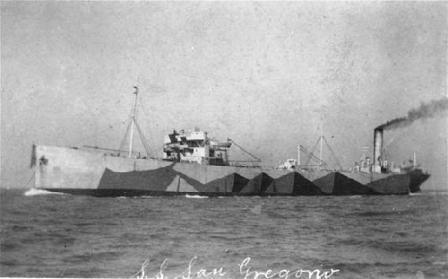
Tanker ss San Gregorio
29 January 1918 at Mary Gates Hospital, Port Arthur Greaser James Kirk discharged dead - tuberculosis. He entered the hospital on 5 December 1917
25 March 1918 re-entered service after repairs were completed
29 December 1918 arrived at Falmouth from Port Arthur, Texas
1 January 1919 berthed at Portland
3 January 1919 passed the Lloyds Signal Station on the Lizard sailing west
8 July 1919 passed Flamborough Head sailing north
18 July 1919 at Reval, Baltic Sea alongside HMS VINDICTIVE refuelling her with 365 tons FFO

HMS VINDICTIVE
28 July 1919 berthed at Portsmouth from sea - returning to sea later on the same day
3 October 1919 arrived at Port Arthur from London
8 October 1919 sailed Port Arthur, Texas for Falmouth
27 October 1919 passed the Lloyds Signal Station on the Lizard sailing east
1 November 1919 arrived at Hull from Port Arthur, Texas
9 February 1920 sold to British Tanker Co Ltd and renamed British Fern
10 February 1920 sailed the River Tyne for Port Arthur, Texas
6 March 1920 berthed at Port Arthur, Texas from Hull
29 March 1920 berthed at Avonmouth from Port Arthur
1 April 1920 sailed Avonmouth for Manchester
5 May 1920 sailed Port Arthur for London
25 May 1920 arrived London from Port Arthur, Texas
19 June 1920 sailed Southamton for Port Arthur, Texas
9 July 1920 arrived Port Arthur, Texas from Southampton
30 July 1920 arrived at Gravesend for Purfleet from Port Arthur, Texas
4 August 1920 sailed Gravesend
7 August 1920 sailed Plymouth for Port Arthur, Texas
26 August 1920 arrived at Port Arthur, Texas from Plymouth
29 August 1920 sailed Port Arthur, Texas to the UK
17 September 1920 arrived at Purfleet from Port Arthur, Texas
11 October, 1920 arrived Port Arthur, Texas
15 October 1920 sailed Port Arthur, Texas for London
3 November 1920 arrived at Purfleet from Port Arthur having saved six ship wrecked mariners from a Luneburg schooner 'Bernard B Conrad' at 45°50N 38°54W when the schooner was on passage from Luneburg, Labrador to Gibraltar (The Master, the Mate, a cook and three AB's). The crew of the schooner had abandoned her on 27 October 1920. Captain William G MacKay was the Master
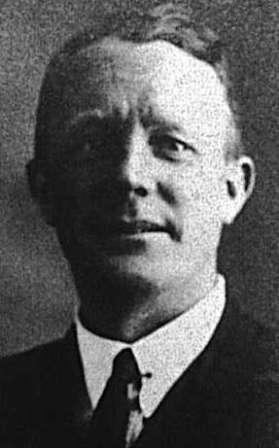
Captain William G MacKay
1 December 1920 arrived at Brunswick GA from London
5 December 1920 sailed Brunswick GA
21 December 1920 arrived at Gravesend for Purfleet from Brunswick
23 December 1920 berthed at Avonmouth
28 March 1921 at the North Wall, Avonmouth under going repairs
4 April 1921 sailed Swansea for Port Said
15 April 1921 arrived at Port Said
19 April 1921 sailed Port Said for Abadan
22 April 1921 arrived Aden
29 April 1921 arrived at Abadan from Swansea, Port Said and Aden
23 May 1921 sailed Swansea for London
6 June 1921 berthed at Purfleet with 2 passengers. Captain H Buck was the Master
13 June 1921 arrived at Grangemouth from Purfleet
10 July 1921 arrived at Port Arthur, Texas from London
13 July 1921 sailed Port Arthur, Texas for Devonport
15 July 1921 passed Key West, Florida
31 July 1921 arrived at Walton Bay from Port Arthur, Texas with 1 passenger. Captain William G MacKay was the Master
6 August 1921 arrived at Manchester from Walton Bay
9 August 1921 sailed Manchester for Abadan
14 September 1921 sailed Abadan for Fremantle, Western Australia
15 October 1921 as British Fern arrived Fremantle, Western Australia from Abadan to discharge 8,000 tons into new tanks for Anglo Persian Oil Company
25 October 1921 arrived Colombo, Ceylon from Fremantle, Western Australia
13 November 1921 arrived at Abadan
29 December 1921 arrived at Rangoon, Burma from Abadan
30 January 1922 sailed Abadan for Rangoon, Burma
17 May 1922 sailed Abadan for Bombay
23 May 1922 arrived at Bombay, India
21 June 1922 sailed Colombo, Ceylon for Melbourne
12 July 1922 at Melbourne from Abadan
16 July 1922 arrived Sydney, NSW, Australia from Melbourne

ss British Fern arriving at Sydney, NSW
20 July 1922 sailed Sydney, NSW, Australia for Abadan
11 August 1922 arrived at Colombo from Sydney, NSW, Australia
2 October 1922 arrived Aden from Abadan
9 October 1922 sailed Port Said for Marseilles
27 October 1922 arrived Port Said from Marseilles
30 October 1922 sailed Port Said
29 November 1922 called at Aden from Abadan
5 December 1922 arrived at Suez from Aden
6 December 1922 sailed Port Said for Le Havre
15 December 1922 passed Gibraltar
3 January 1923 passed the Lloyds Signal Station on the Lizard steaming westwards
19 January 1923 sailed Suez
31 January 1923 at Abadan
1 March 1923 arrived at Suez from Abadan
5 March 1923 sailed Suez for Abadan
6 April 1923 sailed Abadan for Karachi
2 July 1923 when on passage from Abadan to Swansea left Aden this day
17 July 1923 arrived at Suez
28 August 1923 at Bombay
9 September 1923 at Abadan
26 September 1923 arrived Aden from Abadan
29 September 1923 sailed Aden
October 1923 Captain Oxley in command as Master
15 October 1923 sailed Abadan to Sydney, Australia to discharge 7,500 tons of oil
19 November 1923 arrived at Sydney, NSW, Australia

24 November 1923 sailed Sydney, NSW, Australia for Bombay
25 December 1923 sailed Bombay for Abadan
14 May 1924 sailed Aden for Abadan
21 May 1924 at Abadan
6 June 1924 arrived at Aden from Abadan
5 September 1924 at Bombay
2 November 1924 arrived Aden from Abadan
12 November 1924 arrived at Abadan from Aden
25 November 1924 sailed Abadan for Aden
6 December 1924 sailed Aden
17 December 1924 sailed Abadan
19 January 1925 at Colombo, Ceylon
24 January 1925 sailed Madras
5 February 1925 at Abadan
3 March 1925 sailed Aden
7 April 1925 sailed Bombay
11 May 1925 at Port Said
27 May 1925 passed Peria
11 June 1925 at Bombay
12 July 1925 at Suez
5 August 1925 at Abadan
12 August 1925 sailed Abadan
21 August 1925 passed Perim
28 August 1925 sailed Port Said
6 September 1925 passed Sagres
18 September 1925 at Falmouth
17 October 1925 in contact by radio with Gibraltar
24 October 1925 at Venice
4 November 1925 at Port Said
10 November 1925 passed Perim
12 December 1925 at Aden
17 June 1926 arrived Abadan from Bombay
3 August 1926 sailed for Port Said from Abadan
3 November 1926 sailed Bombay
5 December 1926 arrived at Abadan
8 January 1927 passed Perim
2 February 1927 arrived at Aden from Abadan
27 February 1927 sailed Bombay
6 March 1927 arrived at Aden
2 May 1927 sailed Abadan for Aden
13 July 1927 at Karachi
15 August 1927 sailed Bombay for Abadan
10 October 1927 sailed Aden for Abadan
26 October 1927 arrived at Bombay
30 October 1927 sailed Bombay
7 November 1927 sailed Abadan for Bombay
14 November 1927 at Bombay
28 October 1928 sailed Abadan
30 December 1928 sailed Port Said
10 August 1929 in the Bay of Bengal at 15°00N 85°20E Fireman Ebrahim Shaboodeen discharged dead from heart failure
21 April 1930 arrived at Suez for Abadan
22 April 1930 arrived at Port Said from Abadan
15 July 1930 sailed Abadan for Colombo
7 October 1930 arrived at Falmouth
8 November 1930 passed Gibraltar sailing east bound
16 November 1930 arrived at Port Said
30 November 1930 arrived at Abadan from Falmouth
2 February 1931 passed Perim when on passage to Abadan
27 March 1931 sailed Aden for Abadan
13 September 1931 purchased for £8,000 for demolition by Iaminosuka Myaji, Osaka
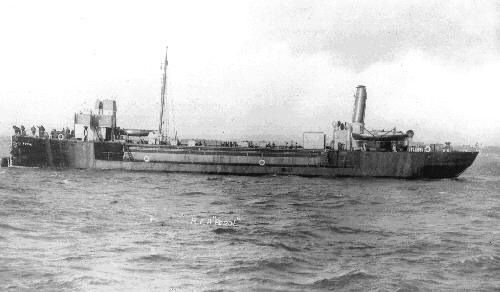
Previous name:
Subsequent name: OSAGE
Official Number: 136733
Class: FIRST 1000t ATTENDANT CLASS Oiler
Pennant No: N88 / X07 / X24
Laid down: 14 November 1913
Builder: H.M. Dockyard, Devonport
Launched: 3 October 1914
Into Service: January 1915
Out of service: 29 January 1920
Fate: Sold to British commercial interests and renamed
Items of historic interest involving this ship: -
Background Data: On the outbreak of WW1, the Admiralty embarked on a programme of tanker construction for the fledgling RFA Service and there were four ships in this Class, all of which were little more than powered barges. The early Swedish diesel engines in two of them gave endless trouble and ultimately, three of the Class were sold off at the end of the War as part of the Government Disposal Scheme. In April 1940, approval was given to build six 1,500 tons Fleet Attendant Tankers, of which two were intended to replace two of this Class and the rest to replace larger Fleet Attendant Tankers for freighting duties, but eventually to replace the other 1,000 tonners. As designed they were to have been 3,200 tons full load displacement, 263 ft (o.a.) x 38.5 ft x 16 ft, with steam engines developing 1,200 ihp giving a speed of 10 knots with 2,000 miles endurance. Cargo was to have been 1,500 tons of fuel oil, 100 tons of diesel oil and 50 tons of petrol. There were no slips available in the U.K. for building and building capacity was sought in Canada but the shipyards there could not cope either. In May 1940 the idea was abandoned.
3 October 1914 launched by H.M. Dockyard, Devonport as Yard Nr named FEROL. Was built on a covered slip and was the first ship built at Devonport with internal combustion engines
16 December 1914 Lieutenant Percival Skone-Rees RNR appointed in command
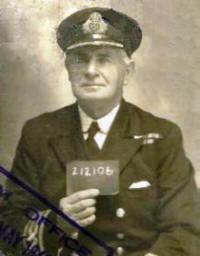
Lieutenant Percival Skone-Rees RNR
14 January 1915 at Devonport loaded 370 tons FFO as cargo
18 January 1915 on trials at Devonport - returning to No 4 jetty
19 January 1915 at Devonport tug Salvo damaged the ship on her port side while casting off
20 January 1915 at Devonport tug Salvo caused further damage to her port side while coming alongside
24 January 1915 sailed Devonport initally for Scapa Flow - after leaving Plymouth Sound suffered a defect in her steering and anchored off Falmouth while repairs were effected
25 January 1915 sailed Falmouth but suffered further defects and put in Kingstown, Ireland for repairs these took several days
3 February 1915 at Kingstown, Ireland refuelled HMS LOYAL with 67 tons FFO, HMS LAWFORD with 57 tons of FFO and HMS LYDIARD with 70 tons of FFO

HMS LOYAL
9 February 1915 sailed Kingstown but suffered further engine defects - put into Liverpool for repairs
16 February 1915 sailed from Liverpool to Birkenhead - collided with the pier head damaging her plating in the region of the bows.
21 February 1915 sailed Birkenhead towards Scapa Flow
27 February 1915 at Loch Laxford suffered further engine defects - repairs under taken
1 March 1915 sailed Loch Laxford for Long Hope, Orkney Islands arriving on 4 March 1915
10 March 1915 at Long Hope went alongside and replenished the following RN ships - HMS NATAL with 700 gallons of lub oil. HMS COCHRANE with 435 gallons of lub oil and HMS ACHILLES with 445 gallons of lub oil.
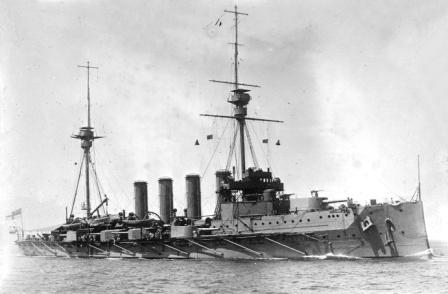
HMS ACHILLES
11 March 1915 at Long Hope alongside HMS CONQUEROR and refuelled her with 99 tons of FFO
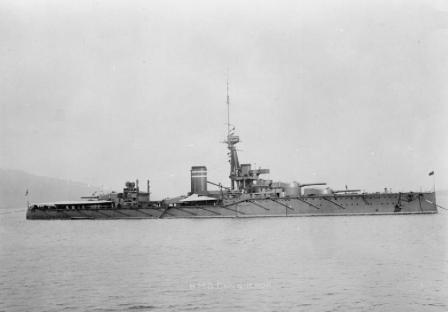
HMS CONQUEROR
13 March 1915 at Long Hope alongside RFA KHARKI to load lub oil. While the two ships were alongside both were damaged
19 March 1915 at Long Hope came alongside HMS SHANNON to refuel her. While coming alongside her starboard aft davit was carried away. Refuelled HMS SHANNON with 400 galls of lub oil.
20 March 1915 at Long Hope alongside RFA KHARKI to load lub oil
24 March 1915 at Long Hope came alongside HMS FAULKNER and refuelled her with 12 tons of FFO
26 March 1915 at Long Hope while coming alongside HMS ROYALIST to refuel her Ferol's starboard anchor made a hole in the side of the warship on her port side. ROYALIST then loaded 256 tons of FFO
10 July 1915 at Scapa Flow alongside HMS PHAETON refuelling her - supplied 45 tons of FFO

HMS PHAETON
15 July 1915 at Scapa Flow alongside HMS PHAETON refuelling her
4 August 1915 Engineer Lieutenant Wilfred Jefferies RNR appointed as Chief Engineer Officer
24 November 1915 off Rosyth with HMTB No: 36 alongside refuelling her with FFO
4 April 1916 at Bo'ness alongside HMS FEARLESS refuelling her - 16 tons of FFO supplied
19 April 1916 at Bo'ness alongside HMS FEARLESS refuelling her - 37 tons of FFO supplied
1 May 1916 at Bo'ness alongside HMS FEARLESS refuelling her - 27 tons of FFO supplied
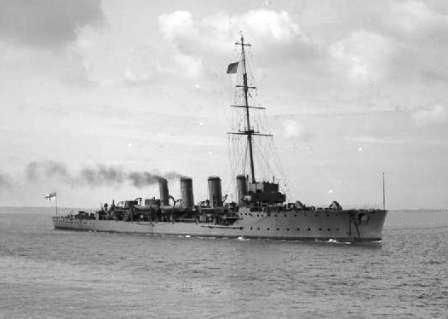
HMS FEARLESS
10 May 1916 at South Queensferry alongside HMS FEARLESS refuelling her - 42 tons of FFO supplied
22 May 1916 at South Queensferry alongside HMS FEARLESS refuelling her - 34 tons of FFO supplied
29 May 1916 at South Queensferry alongside HMS FEARLESS refuelling her - 32 tons of FFO supplied
12 June 1916 at Queensferry alongside HMS FEARLESS refuelling her - 34 tons of FFO supplied
8 July 1916 Lieutenant Charles H Noel RNR appointed in command
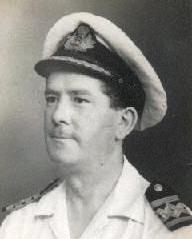
Lieutenant Charles H Noel RNR
6 August 1916 at Leith Roads alongside HMTB No: 35 refuelling her
22 August 1917 at Rosyth alongside HMS GALATEA refuelling her
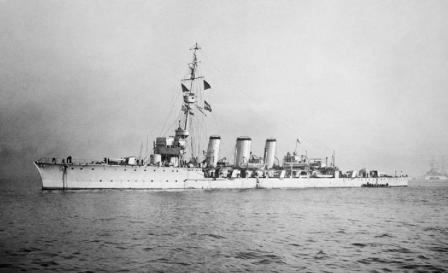
HMS GALATEA
12 October 1917 at Rosyth alongside HMS GALATEA refuelling her
19 October 1917 at Rosyth alongside HMS GALATEA refuelling her
1 January 1918 Lieutenant Allan H Furlong RNR appointed in command. He signed off on the 17 September 1918 when transfered to RFA CAROL
11 July 1918 Fireman S Birch logged as deserting. He had signed on on 3 June 1918
21 August 1918 in collision with RFA DISTOL both vessels considered to blame but the greater responsibility resting with RFA DISTOL
24 September 1918 Lieutenant Charles A Shepherd RNR appointed in command

Lieutenant Charles A Sherherd RNR
25 October 1918 at Rosyth alongside HMS GALATEA refuelling her
16 November 1918 berthed alongside HMS CARADOC which was anchored off Inch Keith, in the Forth and refuelled her with 113 tons FFO
17 November 1918 at Rosyth Dockyard berthed alongside HMS CARADOC to refuel her with 80 tons FFO
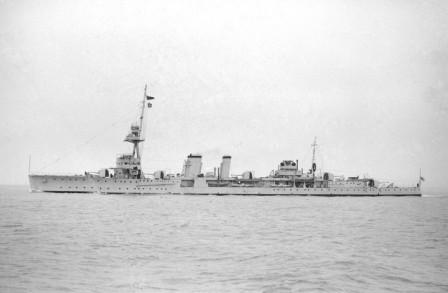
HMS CARADOC
26 November 1918 at Rosyth Dockyard berthed alongside HMS CARADOC to refuel her with 31 tons FFO
13 December 1918 at Rosyth Dockyard secured alongside HMS CASTOR

HMS CASTOR
1 January 1919 at anchor in the Firth of Forth - HMS TYPHOON and HMS SPEEDY came alongside to refuel
2 January 1919 at Firth of Forth anchorage came alongside RFA BURMA to load
3 January 1919 at Firth of Forth anchorage came alongside RFA MONTENOL to load. Then moved alongside HMS LION to refuel her
4 January 1919 at Firth of Forth anchorage came alongside RFA SLAVOL to load
6 January 1919 sailed Firth of Forth anchorage to Leith Docks
17 January 1919 while berthed at Leith Docks RFA RAPIDOL berthed alongside her.
22 April 1919 Lieutenant Charles H Noel RNR appointed in command (again)
26 April 1919 Donkeyman A Morris MMR 999360 logged as deserting. He had signed on on 20 April 1919
16 July 1919 Able Seaman John Cooke MMR 981246 logged as discharged to HMS Eaglet and deserted on route. He had signed on on 31 March 1919
6 October 1919 Mr G Nixon RFA appointed as Chief Engineer Officer
29 January 1920 purchased by Anglo American Oil Co Ltd, London was renamed OSAGE and was re-engined with 2 x 4 cyl Bolinder 16 “ x 18 “ diesel engines by J & C.G. Bolinder, Stockholm. 410 bhp. Speed 8 knots. Twin screws
9 March 1920 at Leith awaiting repairs but these were delayed by industrial action by boilermakers and iron workers
15 December 1920 sailed from Albert Dock, Hull for London in ballast
10 January 1921 arrived at Grangemouth from London
2 June 1921 sailed Grangemouth for Thameshaven in ballast
13 June 1921 arrived Grangemouth from London
12 December 1921 while en-route from Stockholm to the UK in ballast put into Brunsbuttelkoog with damage to her engine - repaired
1 March 1922 arrived at Sunderland from Hull
4 April 1922 arrived Grangemouth from Hull
15 April 1923 arrived at Salt End Jetty from Leith in ballast sailing the same day for Grangemouth with a cargo of kerosine
7 May 1923 berthed at Grangemouth from Hull
10 May 1923 berthed at Salt End Jetty, Hull from Grangemouth in ballast sailing the same day for Grangemouth loaded with benzine
23 January 1924 in collision with the British steamer PETWORTH at Liverpool and both vessels were badly damaged Osage listing heavily damaged amidhips port side. When the collision occured some of her crew and workmen on board jumped onto the PETWORTH.

Press report from the Dundee Courier of the 24 January 1924
24 April 1924 arrived at Salt End Jetty, Hull from Aberdeen in ballast
17 May 1924 arrived Aberdeen from Grangemouth
30 May 1924 arrived Aberdeen from Grangemouth with a cargo of motor spirit
12 August 1924 arrived at Salt End Jetty, Hull from Sunderland in ballast
4 September 1924 arrived at Aberdeen from Sunderland
23 November 1924 sailed Grangemouth to Hull in ballast
2 April 1925 berthed at Salt End Jetty, Hull in ballast from London
24 April 1925 sailed Salt End Jetty, Hull for Aberdeen
28 May 1925 arrived at Hull Roads from Aberdeen in ballast
20 August 1925 arrived at Grangemouth from Hull with a cargo of motor spirit sailing the same day for Aberdeen
25 August 1925 sailed Salt End Jetty, Hull with a cargo of motor spirit
28 August 1925 arrived at Grangemouth sailing the same day for Aberdeen
30 May 1926 sailed Salt End Jetty, Hull in ballast for Grangemouth
2 October 1926 sailed Aberdeen
17 January 1927 sailed Grangemouth for Inverness
17 February 1927 arrived at Grangemouth from Hull with a cargo of motor spirit
4 March 1927 sailed Grangemouth for Aberdeen
1 August 1927 sailed Hull for Grangemouth
5 January 1928 berthed at Aberdeen with a cargo of motor spirit
6 January 1928 sailed Aberdeen for London in ballast
16 January 1928 arrived at Hull Roads in ballast
20 January 1928 sailed Grangemouth with a cargo of motor spirit
1928 managers became J. Hamilton
14 May 1928 berthed at Grangemouth from Hull
13 January 1929 sailed Grangemouth for Aberdeen with a cargo of motor spirit arriving the next day
20 April 1929 berthed at Aberdeen from Grangemouth with a cargo of motor spirit
15 June 1929 having sailed from Aberdeen had to put back through engine trouble
16 June 1929 sailed from Aberdeen for Hull in ballast
28 June 1929 sailed Grangemouth for Hull in ballast
13 July 1929 arrived at Aberdeen from Sunderland
12 September 1929 sailed Grangemouth in ballast for Hull
30 September 1929 sailed Aberdeen to Hull in ballast
3 October 1929 arrived at Hull (Alexandra Dock)
19 October 1929 berthed at Alexandra Dock, Hull
26 January 1930 arrived in Hull Roads from the River Tyne
28 January 1930 sailed Hull to Grangemouth
31 January 1930 sailed Grangemouth for Hull in ballast
3 February 1930 berthed at Salt End Jetty, Hull from Grangemouth
4 February 1930 sailed Salt End Jetty, Hull for Sunderland
12 February 1930 arrived at Aberdeen
21 March 1930 sailed Hull for Grangemouth with a cargo of motor spirit
23 October 1930 berthed at Salt End Jetty, Hull in ballast
25 October 1930 arrived at Aberdeen from Grangemouth
26 October 1930 sailed Aberdeen in ballast for Hull
29 October 1930 sailed Salt End Jetty, Hull for Sunderland
16 January 1931 sailed Grangemouth with a cargo of motor spirit
1931 managers became P.J. Wolfe
20 August 1932 berthed at Grangemouth from Hull
30 November 1932 sailed the River Wear for Aberdeen
10 April 1933 sailed Aberdeen to Hull in ballast
7 July 1933 berthed at Sunderland from Hull with a cargo of 315 tons of motor spirit and 220 tons of kerosene
29 September 1933 arrived Sunderland from Hull with a cargo of 400 tons of petrol
7 February 1934 berthed at Hull from London with a cargo of motor spirit
10 March 1934 sailed Aberdeen to Sunderland with a cargo of motor spirit
11 May 1934 in collision at Butterman's Bay, Harwich with sailing barge Jock. No damage to the Osage but considerable damage to the bow of Jock - reported in the Casualty List, Times 12 May 1934
12 June 1934 arrived River Wear from Hull with a cargo of oil
4 September 1934 arrived River Wear from Hull with a cargo of petrol
19 April 1935 arrived Sunderland from Hull with a cargo of petrol
9 May 1935 passed the Lloyds Signal Station on Flamborough Head sailing south
22 June 1935 passed the Lloyds Signal Station on Flamborough Head sailing north
9 July 1935 arrived Sunderland from Hull with a cargo of 520 tons of petrol
1 August 1935 arrived Sunderland from Hull with a cargo of 980 tons of petrol
12 August 1935 arrived Sunderland from Hull with a cargo of 230 tons of petrol
28 August 1935 passed the Lloyds Signal Station on Flamborough Head sailing north
22 October 1935 passed the Lloyds Signal Station on Flamborough Head sailing south
30 March 1936 arrived the River Tees from Ipswich
20 June 1936 arrived Sunderland from Hull with a cargo of 320 tons of petrol
23 July 1936 arrived at Sunderland from Hull
23 December 1936 arrived Sunderland from Hull with a cargo of 710 tons of petrol
25 May 1937 berthed at Sunderland from Aberdeen in ballast
24 August 1937 arrived Sunderland from Hull with 287,000 gallons of petrol
29 October 1937 arrived Sunderland from Hull with a cargo of petrol
10 December 1937 arrived Sunderland from Hull with a cargo of petrol
31 July 1938 sailed the River Tees for Thameshaven
9 December 1938 arrived at Aberdeen from Hull via Sunderland with a cargo of petrol
27 December 1938 sailed Aberdeen for Hull
21 March 1939 arrived at Gravesend from Thames Haven
21 April 1939 at Smith Dock, River Tyne
9 June 1939 berthed at Avonmouth from Thames Haven
1 July 1939 passed the Lloyds Signal Station on the Lizard sailing west
7 July 1939 passed the Lloyds Signal Station on the Lizard sailing east
8 August 1939 berthed at Salt End Quay, Hull in ballast from Ipswich
18 December 1940 bombed and sunk 4nm NE Arklow Light Vessel off County Wicklow, Eire at 54º 52.2 N 01º 39.3 west while on passage from Belfast to Foynes with a cargo of petrol
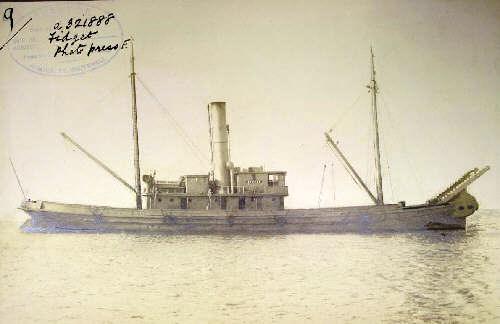
Previous name:
Subsequent name:
Class:
Pennant No: X20 / X25
Laid down:
Builder:
Launched:
Into Service: 1915
Out of service: August 1921
Fate: Sold commercially
Items of historic interest involving this ship: -
1915 purchased and deployed on Boom Defence duties at Scapa Flow
20 October 1915 Lieutenant Thomas Gilmour RNR appointed in command
26 November 1915 Engineer Lieutenant George Youngson RNR appointed as Chief Engineer Officer
30 May 1916 the following press cutting appeared in the Dundee Courier of this day

28 December 1916 Engineer Lieutenant George Youngson RNR appeared before a court martial charged with being absent without leave. The charge was adjudged to be proved and he was sentenced to be severely reprimanded and to be dismissed his ship.
16 August 1917 Engineer Lieutenant Adam McNaughton RNR appointed as Chief Engineer Officer
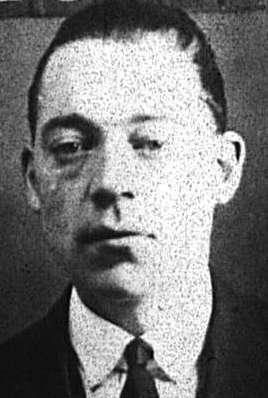
Engineer Lieutenant Adam McNaughton RNR
1 October 1918 John Young, Diver's Linesman MMR 891690 discharged dead off Scotland. He is buried in Charlton Cemetery, Dover and is also remembered with pride on the Dover Town War Memorial

Courtesy and © of The War Graves Photographic Project
30 August 1921 sold out of service by Auction at the Ocean Quay Depot, Devonport by Peter Hamley & Sons to J R Thompson. The Auction was advertised in the Western Morning News of the 4, 11, 13, 20 & 25 August 1921
Ships of the same name
Fidget. A wood screw gunboat of the “Cheerful” class, built by Joyce at Greenhithe and launched on the 7 April 1856. Broken up at Haslar in 1863.
Fidget. An iron screw gunboat of the “Ant” class, launched by Chatham Dockyard on the 13 March 1872, she was hulked in 1905.
Reproduced with permission of the MOD

Subsequent name:
Official Number: 378796
Class: FORT CLASS
Pennant No: A386
Laid down: 9 December 1975
Builder: Scotts Shipbuilding, Greenock
Launched: 9 March 1978
Into Service: 22 June 1979
Crew number: 90
Out of service:
Fate:
Items of historic interest involving this ship: -
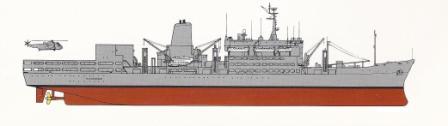
Background Data: An order for two new Fleet Replenishment Ships was announced in November 1971 and the ships in this Class provided up to-date replenishment facilities for both ammunition and general naval and victual ling stores. Both were fitted with extensive aviation facilities with a single spot flight deck and full hangar facilities. The roof of the hangar was also strengthened for use as an emergency landing spot which enabled them to operate up to four Sea King helicopters
9 December 1975 laid down as AEFS 04
9 March 1978 launched by Scotts Shipbuilding Co Ltd, Cartsdyke Yard, Greenock as Yard Nr: 738 named FORT AUSTIN.The Lady Sponsor was Mrs D.R.J. Stephens, wife of the Deputy Under Secretary of State for the Army. Named after one of Palmerston's Follies, a fort in the Plymouth area
11 May 1979 completed
18 June 1979 at Greenock (see note 1)
22 June 1979 entered operational service after acceptance from her builders
12 July 1979 arrived Plymouth for the first time
7 October 1979 her Ship’s Badge was officially presented to her
3 October 1079 on the River Tyne
13 December 1979 on the River Tyne
1980 along with RFA’s OLNA (3) and OLMEDA she was deployed to the Gulf during the Iran-Iraq conflict
14 August 1980 at Charleston (see note 1)
10 November 1980 at Plymouth
14 November 1980 Lynx HAS2 helicopter no: XZ242 – in the ships attached flight as front line replacement
20 January 1981 Sea King HAS1 helicopter no: XV665 – flight from the ship during anti-submarine exercises with HMS APOLLO in Arabian Gulf – tail rotor control problems ditched alongside and rolled inverted, one n.mile from the ship in Straits of Hormuz. The crew were rescued, and the helicopter secured by APOLLO and towed by sea boat to the ship then hoisted aboard
9 April 1981 at Haifa
24 April 1981 at Plymouth
26 June 1981 while berthed at Portland vessel visited by H.M. Queen Elizabeth and HRH the Duke of Edinburgh who honoured the Commodore with their presence at luncheon

25 September 1981 at Plymouth
October 1981 deployed together with HMS's GLAMORGAN, HMS AMBUSCADE and RFA PEARLEAF (2) on the Armilla Patrol
26 March 1982 received orders to divert to Gibraltar to load stores for HMS ENDURANCE
29 March 1982 returning to the UK from Armilla Patrol duties, she arrived at Gibraltar and then sailed to the South Atlantic with stores for HMS ENDURANCE and service during Operation Corporate - the Falklands Conflict. Was the first surface ship ordered south
6 April 1982 was the first Task Force ship to arrive at Ascension Island and loaded stores which had been delivered to the Island by C130 transport aircraft. Lynx HAS2 helicopter no: XZ242 – on the ship for delivery to HMS NEWCASTLE
8 April 1982 Wessex HU5 heicopter No: XT765 – to the ship
9 April 1982 sailed Ascension Island with 3 x Lynx and 2 x Wessex helicopters, 120 men of combined SAS/SBS force and an RN Surgical Team embarked to meet the Ice Patrol Ship HMS ENDURANCE
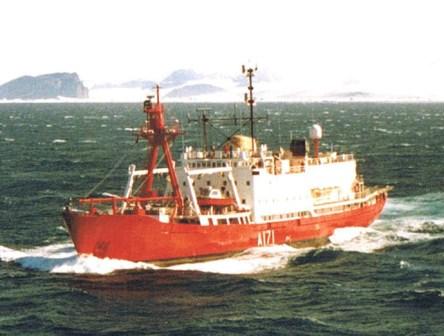
HMS ENDURANCE
12 April 1982 replenished HMS ENDURANCE then headed back north to meet the South Georgia Task Group
13 April 1982 rendezvoused with RFA TIDESPRING for a fuel transfer and to transfer food,ammunition and the SAS/SBS teams to the destroyer HMS ANTRIM and the frigate HMS PLYMOUTH and to transfer a full RN Surgical Support Team to RFA TIDESPRING in preparation for the retaking of South Georgia
16 April 1982 rendezvoused with TG 317.8/11 consisting of the destroyers HMS’s COVENTRY, GLAMORGAN, GLASGOW and SHEFFIELD and the frigates HMS’s ARROW and BRILLIANT which was also joined by RFA APPLELEAF(3). RASed with HMS BRILLIANT
17 April 1982 Lynx HAS2 helicopters no: XZ241 & XZ700 – in the ships attached flight
21 April 1982 arrived back at Ascension Island to restore
23 April 1982 sailed Ascension Island to rejoin the Carrier Battle Group
26 April 1982 entered the TEZ (Total Exclusion Zone) around the Falkland Islands
3 May 1982 rejoined the Carrier Battle Group
4 May 1982 embarked 170 survivors and the Lynx helicopter from the stricken destroyer HMS SHEFFIELD after the Exocet attack on her
5 May 1982 Lynx HAS2 helicopter no: XZ240 – in the ships attached flight
9 May 1982 RASed with HMS HERMES
16 May 1982 recovered a number of Special Forces and their equipment which had been parachuted into the South Atlantic from a Hercules transport aircraft
17 May 1982 RASed with RFA RESOURCE
21 May 1982 entered Falkland Sound along with the HMS FEARLESS Group and claimed a kill on an Argentinean aircraft in San Carlos Water
24 May 1982 near-missed by Argentinean bombs in San Carlos Water along with RFA’s RESOURCE and STROMNESS
25 May 1982 embarked survivors from the destroyer HMS COVENTRY and sailed San Carlos Water
2 June 1982 RASed with HMS INVINCIBLE
3 June 1982 was relieved by and RASed with RFA FORT GRANGE and RASed with HMS BRILLIANT, HMS GLASGOW, RFA RESOURCE and HMS INVINCIBLE
5 June 1982 began transferring stores to RFA FORT GRANGE
6 June 1982 sailed for South Georgia then back to the U.K
8 June 1982 arrived South Georgia
11 June 1982 sailed South Georgia for home
16 June 1982 RASed with RFA PLUMLEAF at 22°05S 18°56W receiving 704 tons of bunker fuel and arrived Ascension Island two days after the Argentinian surrender and was one of the first ships to return home after Operation Corporate
28 June 1982 arrived back in Devonport on completion of Operation Corporate duties
26 August 1982 Sea King HAS2 helicopter No: XV649 – on the ship
27 September 1982 Wessex HU5 helicopter No: XT760 – to 848 NAS C Flight on the ship
11 January 1983 at Plymouth
12 April 1983 at Glen Mallen
27 April 1983 at Portland
11 October 1983 at Port San Carlos, Falkland Islands
31 October 1083 at Port William, Falkland Islands
9 December 1983 at Plymouth
14 February 1984 at Portland
July 1984 Westland Wasp HAS1 helicopter No: XS795 – was airlifted to the ship by 826 NAS Sea King helicopter No: XZ571 for transit to the Falkland Is
13 December 1984 at Plymouth
28 January 1985 at Newcastle on the River Tyne
24 May 1985 was presented with her Falkland Islands 1982 Battle Honour at Plymouth by Mr K Pritchard CB, DGST (N)
19 February 1987 at Wallsend on Tyne
15 July 1987 at Portland
24 September 1987 at Plymouth
5 February 1988 at Plymouth
28 March 1988 at Glen Douglas
31 March 1988 Captain Shane Redmond OBE RFA appointed as Master
7 November 1988 berthed at North Shields, River Tyne
27 December 1988 at Plymouth
16 March 1989 berthed at Glen Mallen
16 July 1989 at Plymouth
4 August 1989 arrived at HMS MALABAR, Bermuda
5 August 1989 sailed Bermuda to ride out the impending arrival of Hurricane Dean in safer waters
7 August 1989 humanitarian aid - berthed alongside at HMS MALABAR, Bermuda and provided assistance in the aftermath of Hurricane Dean
11 August 1989 sailed Bermuda for the UK
19 August 1989 Captain Rex A Cooper RFA appointed as Commanding Officer
26 October 1989 at Plymouth
6 January 1990 at Plymouth
24 June 1990 Captain Shane Redmond OBE RFA appointed as Commanding Officer
12 February 1991 at Plymouth. Captain Peter J Lannin RFA appointed as Commanding Officer
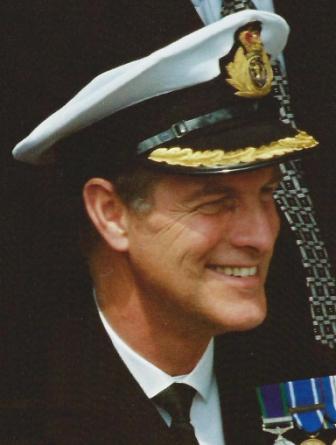
Captain Peter J Lannin RFA
8 March 1991 at Plymouth
28 April 1991 at Portland
20 July 1991 at Dubai
24 July 1991 at Jebel Ali
1 November 1991 at Crombie, River Forth
6 December 1991 at Portland
30 December 1991 at Glen Mallen
18 February 1992 at DM Crombie, River Forth
11 March 1992 Sea King HC4 helicopter no: ZD477 of 845 NAS attached to the ship
8 May 1992 at Plymouth
8 December 1992 at Plymouth
4 January 1993 Captain Shane Redmond OBE RFA appointed as Commanding Officer
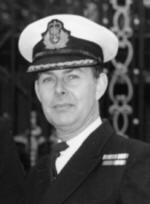
Captain Shane Redmond OBE RFA
19 January 1993 at DM Crombie, River Forth
18 August 1993 Captain Peter J Lannin RFA appointed as Commanding Officer
17 Movember 1993 at Plymouth
26 April 1994 at Bari
5 August 1995 at Trieste
16 November 1995 at Barcelona, Spain
9 April 1996 Captain Brian J Waters OBE RFA appointed as Commanding Officer
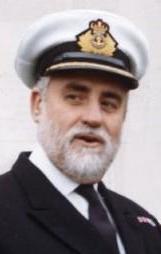
Captain Brian J Waters OBE RFA
2 December 1996 Captain Anthony F Pitt DSC RFA appointed as Commanding Officer
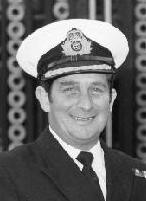
Captain Anthony F Pitt DSC RFA
January 1997 sailed U.K.as part of Task Group 327.01 - the Ocean Wave 97 Deployment to the Far East led by the carrier HMS ILLUSTRIOUS - along with RFA’s DILIGENCE, FORT GEORGE, OLNA (3), SIR GALAHAD(2), SIR GERAINT and SIR PERCIVALE
27 August 1997 Humanitarian aid - along with the carrier HMS ILLUSTRIOUS she stood by the French tanker ONCE which had an engine room fire in the Bay of Biscay
30 December 1997 Captain Peter Farmer RFA appointed as Commanding Officer
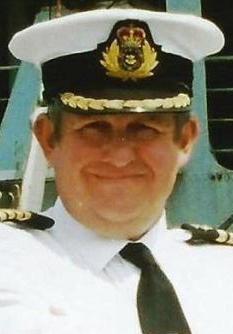
Captain Peter Farmer RFA
9 April 1998 Captain Peter J Lannin RFA appointed as Commanding Officer
31 August 1998 at Crombie, River Forth
19 October 1998 at Plymouth and Captain Alan T Roach RFA appointed as Commanding Officer
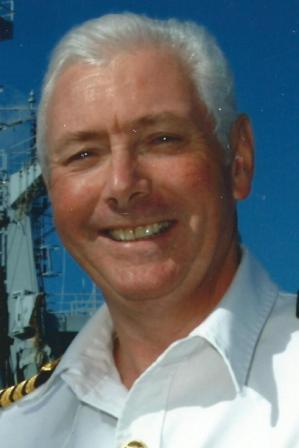
Captain Alan T Roach RFA
9 January 1999 sailed UK with the carrier HMS INVINCIBLE and the destroyer HMS NEWCASTLE for the Gulf Region
30 January 1999 to 1 April 1999 along with RFA BRAMBLELEAF (3) she was in Operation Magellanin the Persian Gulf - an RN/RFA Group deployed as a precautionary measure to counter continuing Iraqi intransigence over compliance with UN Security Council Resolutions
24 February 1999 at Bahrain
18 June 1999 at Vigo, Spain and Captain Pat Thompson OBE RFA appointed as Commanding Officer
13 September 1999 deployed in support of the Amphibious Task Group - part of Argonaut 99
11 December 1999 arrived at DM Crombie on return from the above deployment
12 November 2000 part of the Amphibious Ready Group led by the assault ship HMS OCEAN which arrived off the coast of Sierra Leone for Operation Silkman- a high visibility demonstration of the U.K. commitment to Sierra Leone - along with RFA’s ARGUS, SIR BEDIVERE and SIR TRISTRAM
5 August 2001 berthed at Glen Mallen Jetty, Loch Long
September 2001 deployed on the Argonaut 2001 task force together with HMS ILLUSTRIOUS, fourteen other Royal Naval Warships and RFA's FORT VICTORIA, BAYLEAF (3), SIR TRISTRAM, SIR BEDIVERE, SIR PERCIVALE, SIR GALAHAD (2), FORT ROSALIE (2), OAKLEAF (2) and DILIGENCE
2 September 2001 humanitarian aid - utilising a Sea King helicopter from the embarked 845 NAS she rescued 20 Moroccans in a powerless Zodiac inflatable boat which had been adrift for the previous two days in the Mediterranean about 100 miles east of Gibraltar .They were winched onto the helicopter and were flown back to the ship
3 September 2001 arrived at Cartagena, Spain and those rescued were handed over to the Spanish authorities. Berthed at Cartagena with RFA's SIR GALAHAD (2) and SIR TRISTRAM
21 November 2001 to 27 November 2001 berthed at Gibraltar
8 January 2002 at Portsmouth and Captain Pat Thompson OBE RFA appointed as Commanding Officer
27 February 2002 berthed at Glen Mallen
4 March 2002 berthed at Gibraltar
20 May 2002 to 23 May 2002 berthed at Barcelona, Spain
31 May 2002 berthed at Dubai
15 January 2003 sailed from the UK for Operation Telic - the 2nd Gulf War
24 January 2003 to 29 May 2003 deployed on Operation Telic- the 2nd Gulf War - along with 13 other RFA’s and had 4 x Sea King helicopters from 820 NAS embarked
19 February 2003 at Kuwait
19 July 2003 at Kuwait
29 May 2003 anchored off Greenock on completion of Operation Telicduties
27 January 2004 in dry dock at Hebburn on Tyne
20 July 2004 at Devonport
31 July 2004 berthed at Gibraltar with RFA SIR TRISTRAM to be present with HMS GRAFTON to celebrate the seizure of Gibraltar 300 years previously.
18 August 2004 at Devonport
28 January 2005 berthed at Glen Mallan
24 February 2005 while berthed at Glen Mallan, Scotland an Argentine sub-machine gun captured during the Falklands War and held as a souvenir on board was found to be missing from the ship. A MOD Police investigation was conducted
18 March 2005 berthed at Glen Mallan
11 April 2005 to 18 April 2005 with FOST
25 April 2005 berthed at Glen Mallan
4 May 2005 sailed from Glen Mallan
4 June 2005 at Douglas, Isle of Man for R & R
28 June 2005 took part in the International Fleet Review for Trafalgar 200 at Spithead along with eight other RFA’s
20 July 2005 arrived at Glen Mallan
30 August 2005 sailed Glen Mallan to anchor at Tail of Bank
2 September 2005 sailed from Tail of Bank to Glen Mallan
6 September 2005 sailed Glen Mallan
24 October 2005 sailed Glen Mallan
10 January 2006 alongside at Lisbon, Portugal
2006 part of Operation Vela - amphibious operations off the coast of West Africa led by the assault ship HMS OCEAN along with RFA’s DILIGENCE, MOUNTS BAY, OAKLEAF (2), SIR BEDIVERE and WAVE KNIGHT(2)
29 September 2006 Captain Anthony McNally RFA appointed as Commanding Officer until 16 November 2006
7 November 2006 with HMS ARGYLL and embarked 849 NAS together and in company of Spanish customs officers seized 1.33 tonnes of cocaine worth an estimated £53 million on the 950 - ton offshore supply vessel MV Orca II 360 miles off the Cape Verde Islands
18 November 2006 arrived at Falmouth Bay sailing later the same day for the Gareloch, River Clyde
5 February 2007 sailed Portland
6 February 2007 arrived Falmouth
9 February 2007 transitted the Straits of Gibraltar east bound
17 February 2007 transitted the Suez Canal with HMS CORNWALL
2007 in company with the frigate HMS CORNWALL, she met up with the legendary sailing yacht GYPSY MOTH IV off the coast of East Africa
4 March 2007 berthed at Salalah, Oman
24 April 2007 operating off Freetown with RFA's WAVE KNIGHT (2), GOLD ROVER and HMS OCEAN
May 2007 engaged in Operation Calash in the Middle East with HMS SUNDERLAND
June 2007 sailing from the Gulf with HMS SUNDERLAND returning to home waters
21 June 2007 arrived at Gibraltar
22 July 2007 arried A & P Appledore, Hebburn for refit - the refit included -
- Removal of the eight existing diesel generator sets and the installation of four new Wartsila replacements units.
- Upgrading of machinery space ventilation, main switchboard and service supply installations to accommodate the above.
- Renewal of four working air and starting air general compressors sets.
- Renewal of four cargo HVAC compressors sets.
- Renewal of reverse osmosis fresh water generation plant.
- Upgrading of the operating mechanisms to three of the six large cargo lifts, and one passenger lift
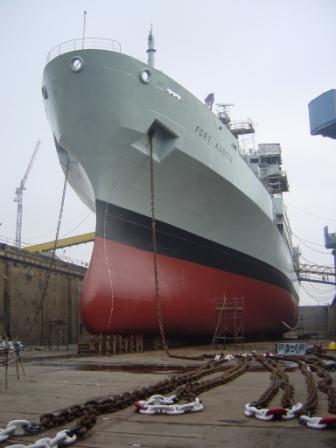
RFA Fort Austin while in refit
23 November 2007 completed trials after having been in refit at A&P Appledore, Hebburn on Tyne
21 January 2008 sailed Portsmouth as part of the Orion 08 Deployment to the Middle East led by the carrier HMS ILLUSTRIOUS along with RFA’s BAYLEAF (3) and WAVE KNIGHT (2)
28 January 2008 at Devonport and Captain (E) Robert Settle RFA appointed as Chief Engineer Officer
21 April 2008 to 2 May 2008 with HMS ILLUSTRIOUS, HMS WESTMINSTER, RFA WAVE KNIGHT (2) and the submarine HMS TRAFALGAR, along with FS SURCOUF, USS COLE, INS MYSORE, INS RAJPUT, INS GOMATI, INS ADITYA and INS SHISHUMAR involved in Indo-UK exercises, ‘KONKAN 2008’ off the west coast of India
7 June 2008 arrived Falmouth Bay from Portland
9 June 2008 sailed Falmouth Bay
11 June 2008 arrived Falmouth Bay for personnell transfer
3 August 2008 off Greenock
September 2008 with HMS ARGYLL in Home Waters seized 100 kg of cocaine worth £4 million.
13 September 2008 anchored off Douglas Bay
25 - 27 October 2008 made an official visit to Douglas, Isle of Man
17 November 2008 with HMS SOMERSET undertook a 'sea day' off Plymouth for the benefit of the press
4 December 2008 berthed at Glen Mallen
25 December 2008 still berthed at Glen Mallen
18 January 2009 at sea in the Clyde Area
February 2009 sailed on the Taurus 09 deployment lead by HMS BULWALK
3 March 2009 RASed with RFA Wave Ruler (2)
21 March 2009 RASed with RFA Wave Ruler (2)
23 March 2009 berthed at Izmir, Turkey together with RFA MOUNTS BAY and HMS OCEAN
31 May 2009 at Portsmouth Dockyard
14 July 2009 moved to No: 3 Basin, Portsmouth for lay-up
19 October 2010 announcement made by the Defence Secretary that she was to be be brought back into service in place of RFA FORT GEORGE as a result of the Strategic Defence and Security Review
27 May 2011 sailed Portsmouth under tow of the tugs Union Wrestler and Svitzer Pembrokefor Birkenhead and a refit at Cammel Lairds
31 May 2011 arrived under tow at Birkenhead
5 September 2012 sailed Birkenhead to sea
8 September 2012 anchored off DM Crombie, Fife
21 December 2012 arrived at Plymouth
17 January 2013 sailed from Plymouth
30 January 2013 moored on C Buoy, Plymouth Sound
11 February 2013 sailed DM Crombie down stream under the Forth Road Bridge to sea
17 March 2013 sailed Plymouth Sound
25 March 2013 at sea off Port Ellen, Island of Islay
26 March 2013 at sea between Scotland and Northern Ireland
28 March 2013 in the Firth of Clyde and then into Loch Long. Sailed Loch Long to Loch Striven
18 July 2013 off Portland
19 July 2013 arrived off Plymouth Sound
22 July 2013 stood by a ketch until a RNLI lifeboat arrived on scene and took the yacht in tow. The ketch was suffering various mechanical failures and experiencing trouble in drifting fog. The 30' yacht was enroute from Brixham to Newhaven and got into difficulties 4 miles SE of Straight Point in the approaches to the River Exe.
25 July 2013 sailed Plymouth Sound
26 July 2013 berthed at Cherbourg, France
29 July 2013 sailed Cherbourg, France
2 August 2013 passed under the Forth Rail Bridge to berth at Crombie

Courtesy and © of Jim Simpson
10 August 2013 sailed from DM Crombie down stream to join the Cougar 13 deployment
3 October 2013 deployed on Operation Kipion in the Persian Gulf until 30 May 2015
29 January 2014 sailed from Dubai
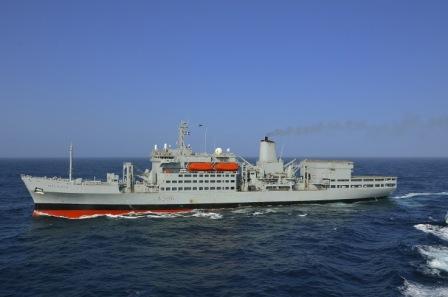
29 March 2014 Captain Ross G Ferris OBE MVO RFA appointed as Commanding Officer
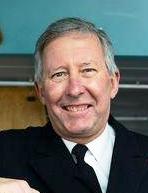
29 May 2014 berthed at Port Rashid, Dubai
11 June 2014 sailed Dubai
28 June 2014 Chief Officer (E) Russell M Farquhar RFA appointed acting Captain (E) and as Chief Engineer Officer
30 June 2014 arrived and anchored at Port Victoria, Seychelles
2 July 2014 sailed Port Victoria, Seychelles
20 July 2014 berthed at Dubai, UAE
21 July 2014 Chief Officer (X) Richard J N Horsefield RFA appointed Acting Captain (X) and as Commanding Officer
13 August 2014 Captain (X) Stephen J Norris RFA appointed as Commanding Officer
10 August 2014 sailed Dubai
25 August 2014 arrived at Bahrain
31 August 2014 sailed Bahrain
11 October 2014 sailed Mina Sulman
25 October 2014 Captain (E) Stuart M Peters RFA appointed as Chief Engineer Officer
6 November 2014 sailed Bahrain
5 December 2014 in the Arabian Gulf RASed with USS San Diego (LPD22)
11 December 2014 berthed at Al Mina, Dubai
12 December 2014 Captain Simon K Booth RFA appointed as Commanding Officer
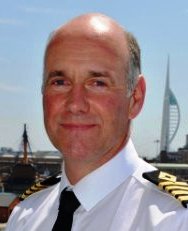
Captain Simon K Booth RFA
4 January 2015 sailed Dubai
10 January 2015 sailed Bahrain
15 January 2015 berthed at Bahrain
27 January 2015 sailed Bahrain
1 February 2015 arrived at Fujairah
2 February 2015 sailed Fujairah
1 March 2015 berthed at Bahrein
17 April 2015 Captain Stephen J Norris RFA appointed as Commanding Officer
21 April 2015 sailed Bahrein
10 May 2015 Captain (E) Richard M Maddock RFA appointed as Chief Engineer Officer
18 May 2015 sailed from Dubai
9 June 2015 berthed at DM Crombie
29 June 2015 berthed at Liverpool
16 March 2016 arrived at Liverpool
10 March 2017 in Parliament in answer to a question from Ms Flick Drummond, MP for Portsmouth South the Parliamentary Under Secretary of State Ms Harriett Baldwin advised the House that RFA Fort Austin was not currently deployed and was berthed alongside in the Liverpool area. It was currently planned that she will retire from the Service in 2024
1 April 2017 berthed moved at Birkenhead
15 August 2017 while in refit at Birkenhead a fire broke out on board. The crew were evacuated and the fire was extinguished by the local fire brigade
Note
1. Locations kindly provided by Bosun George Collings RFA (Retired) from his Discharge Book
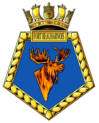
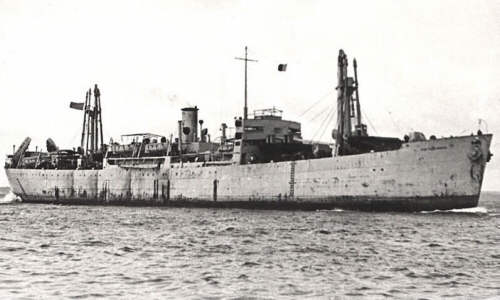
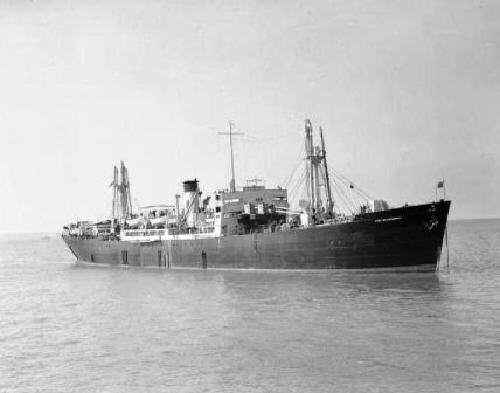
Lower image © Imperial War Museum (FL 13178)
Previous name: Fort Grand Rapids, Cornish Park
Official Number: 175606
Class: CANADIAN FORT CLASS Stores Ship
Pennant No: B586 / A285
Laid down:
Builder: West Coast Ship Builders, Vancouver, British Columbia, Canada
Launched: 31 August 1944
Into Service: 22 September 1948
Out of service: 23 April 1962 laid up at Malta
Fate: Broken up at Italy
Items of historic interest involving this ship: -
Background Data: After the outbreak of WW2, the first cargo vessels built in Canada for the War Effort were the “North Sands” type, the hulls of which conformed to original British working drawings supplied by the North Sands Shipyard of J.L.Thompson & Sons at Sunderland. Following experience gained from these ships, improved versions with a more economic operation were introduced. These were the ”Victory” and “Canadian” types. The “Victory” type was an oil burner and two water tube boilers were substituted for the original 3 Scotch boilers. Because of the then concerns about oil fuel supplies, the “Canadian” type had coal bunkers and alternate oil fuel capacity installed, but with a reversion to the original 3 Scotch boilers of the “North Sands” type. In 1943, when the shipping situation in the Pacific was becoming acute, the British Government ordered that a number of the ships of the Canadian building programme be completed as Stores Issuing Ships whose intended task would be to follow and victual naval units as part of the British Pacific Fleet Train. In all, sixteen ships were completed as Stores Issuing Ships as follows: three as Ammunition Carriers, two as Air Stores Issuing Ships, two as Naval Stores Issuing Ships and nine as refrigerated Victualling Stores Issuing Ships. All were managed by commercial companies with vast experience of Far Eastern Waters as Mercantile Fleet Auxiliaries with Merchant Navy Crews and a detachment of Stores Staff from the Victualling Division of the Admiralty under a Commander. On the refrigerated ships, the refrigerated space was in the tween decks and amounted to 111,480 cubic feet in 25 chambers. The lower holds were used for non-perishable items of stores, clothing, etc. After WW2, eight of these ships became RFA’s. They were only armed during WW2.
31 August 1944 launched as a “Victory” type by West Coast Shipbuilders Ltd, Vancouver as Yard Nr 146 named FORT GRAND RAPIDS for the Canadian Government (Park Steamship Co, Montreal, Managers)
29 October 1944 completed as a refrigerated VSIS named CORNISH PARK
8 November 1944 as Cornish Park sailed from Vancouver to Victoria, British Columbia
12 November 1944 sailed Victoria, British Columbia arriving Los Angeles on 17 November 1944
17 November 1944 sailed Los Angeles independently to Balboa arriving on 29 November 1944
29 November 1944 sailed Cristobal independently to New York
9 December 1944 sailed in convoy HX325 from New York to Southend loaded with lead and lumber arriving 23 December 1944
31 January 1945 as Cornish Park sailed Southend joining convoy ON282 from Liverpool to New York and then independently to Cristobal arriving 23 February 1945
24 February 1945 sailed Balboa independently to Antofagasta, Chile arriving 5 March 1945
9 March 1945 sailed Antofagasta, Chile independently to San Antonio arriving on 12 March 1945
23 March 1945 sailed Valpariso independently to Chanaral arriving 27 March 1945
2 April 1945 sailed Chanral to Antofagasta, Chile arriving on 3 April 1945
4 April 1945 sailed Antofagasta, Chile to Los Angeles arriving 24 April 1945
25 April 1945 sailed Los Angeles independently arriving Port Townsend, Washington State, USA on 1 May 1945
1945 sold to the Ministry of War Transport and managed by A Holt & Co, Liverpool and renamed FORT BEAUHARNOIS
3 December 1945 arrived at Sydney, Australia.
18 December 1945 sailed from Sydney, NSW, Australia to Newcastle, NSW and Manus arrived 26 December 1945
2 May 1946 arrived Sydney, NSW, Australia from Hong Kong
3 June 1946 sailed Sydney, NSW, Australia for Hong Kong
6 June 1946 in touch by radio with Rockhampton
12 July 1946 arrived at Yokohama
1947 placed under the management of Lyle Shipping Company, London
31 March 1947 Captain W D Wilson was the ship's Master
3 May 1947 sailed Hong Kong to Kure arriving 9 May 1947
9 May 1947 arrived at Kure, Japan and berthed alongside HMAS HOBART to supply general cargo to the warship
13 May 1947 at Kure, Japan 2nd Engineer Robert Muirhead Thompson discharged dead having suffered a heart attack. Buried in Yokohama War Cemetery - British section R D 4
13 May 1947 sailed Kure to Hong Kong arriving 22 May 1947
5 July 1947 sailed Hong Kong to Kure arriving 11 July 1947
16 July 1947 sailed Kure to Yokohama arriving 18 July 1947
2 August 1947 sailed from Yokohama to Kure arriving 5 August 1947
9 August 1947 sailed Kure to Hong Kong arriving 15 August 1947
30 August 1947 on passage from Hong Kong to exercise area as detailed below
2 September 1947 and 3 September 1947 together with RFA FORT SANDUSKY, RN and RAN ships together with US Navy Aircraft from Okinawa took part in Exercises Adgate Two and Three within an area 31°43N 127°34E and 29°26N 128°40E
5 September 1947 after exercise Adgate Three berthed at Kagoshima to replenish various ships which had taken part in the exercise
13 September 1947 sailed Kure to Sasebo arriving 15 September 1947
20 September 1947 sailed Sasebo to Kure arriving 25 September 1947
4 October 1947 sailed Kure to Hong Kong arriving 9 October 1947
24 December 1947 sailed Hong Kong to Sydney, NSW arriving 15 January 1948
13 February 1948 sailed Sydney, NSW to Melbourne arriving 15 February 1948
25 February 1948 sailed Melbourne to Fremantle arriving 4 March 1948 to load 2,131 gallon jars of rum
4 March 1948 berthed at Fremantle
5 March 1948 sailed Freemantle to Singapore arriving 15 March 1948
8 March 1948 the Kalgoorlie Miner newspaper reported that -

19 March 1948 sailed Singapore to Colombo arriving 25 March 1948
1 April 1948 sailed Colombo to Aden arriving 9 April 1948
10 April 1948 sailed Aden to Suez arriving 15 April 1948
16 April 1948 arrived at Port Said sailing the same day to London
30 April 1948 berthed at Tilbury, London with 6 passengers with Captain C(?) D Wilson as ship's Master
14 May 1948 sailed London to Portsmouth arriving the next day
1948 taken over by the Admiralty as an RFA and converted into a Store ship
1 June 1948 berthed at Portsmouth Harbour

RFA FORT BEAUHARNOIS in Portsmouth Harbour during 1948
24 July 1948 announced that the Home Fleet's Autumn Cruise to the West Indies and to South Africa. Among the ships taking part were to be HMS's DUKE OF YORK (Flagship of Vice Admiral Sir Rhoderick R McGrigor KCB), THESEUS, VENGEANCE, DIADEM, SOLEBAY, BULAWAYO and RFA FORT BEAUHARNOIS

HMS DUKE OF YORK
1 September 1948 Captain Thomas H Card RFA appointed as Master
22 September 1948 sailed from Portsmouth Harbour to San Fernando, Trinidad arriving 9 October 1948
18 October 1948 sailed San Fernando, Trinidad to Plymouth, Tobago arriving the same day
24 October 1948 sailed Plymouth, Tobago to Bridgetown, Barbados arriving 25 October 1948
2 November 1948 sailed Bridgetown, Barbados to Castries, St. Lucia arriving the next day
3 November 1948 sailed Castries, St Lucia to a port in Dominica arriving the next day
8 November 1948 sailed Dominica to Nassau, Bahamas arriving 13 November 1948
17 November 1948 sailed Nassau, Bahamas to Bermuda arriving 21 November 1948
26 November 1948 at Bermuda Police Court Refrigeration Greaser Ernest Edward Henry Hicks from the ship appeared charged with larceny of magazines from another member of the crew - he was convicted and fined 5/-
29 November 1948 sailed Bermuda to Antigua arriving 3 December 1948
5 December 1948 sailed Antigua to Fayal, Azores arriving 13 December 1948
14 December 1948 sailed Fayal, Azores to Spithead arriving 19 December 1948
20 December 1948 berthed at Portsmouth Harbour
14 January 1949 sailed from Portsmouth Harbour
15 February 1949 passed Lloyds Signal Station on the Lizard sailing westwards
30 March 1949 Mr Arthur L Barr RFA appointed as Chief Engineer Officer
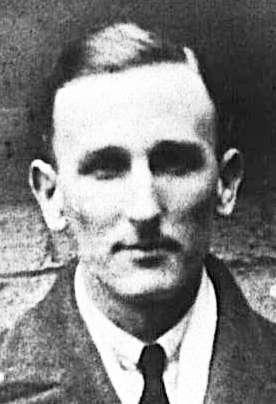
Chief Engineer Officer Arthur L Barr RFA
22 April 1949 arrived from the Outer Spit Buoy to 'C' mooring, Portsmouth Harbour
16 May 1949 sailed from Portsmouth Harbour
22 June 1949 Captain William B Browne OBE RFA appointed as Master
29 June 1949 passed Lloyds Signal Station on the Lizard sailing westwards
4 July 1949 passed Lloyds Signal Station on the Lizard sailing eastwards
6 July 1949 together with units of the Home Fleet and RFA BLACK RANGER commenced Exercise Verity in the Western Approaches
30 November 1949 Mr G A Calvert RFA appointed as Chief Engineer Officer
8 December 1949 berthed at Portsmouth Harbour
9 January 1950 sailed from Portsmouth Harbour. Shortly before she sailed the Portsmouth Evening News published an image of her alongside on South Railway Jetty

10 January 1950 berthed at Portsmouth Harbour.
20 March 1950 sailed from Portsmouth Harbour
23 May 1950 arrived at Malta from Devonport
26 May 1950 sailed Malta for Devonport
4 June 1950 berthed at Devonport from Malta
5 June 1950 the Yorkshire Post & Leeds Mercury reported -

31 July 1950 passed the Lloyds Signal station on the Lizard sailing east
4 August 1950 at Tilbury
16 October 1950 passed St Catherines Point sailing east bound
14 November 1950 berthed at Malta from Gibraltar with Prince Phillip's polo pony 'Ballarin', his car and 40 cases of personal effects as cargo. The Prince had been appointed to a shore position in the Royal Navy at Malta with his wife the then Princess Elizabeth
15 December 1950 passed the Lloyds Signal Station on the Lizard sailing east
2 February 1951 Mr Wilfred C Shortland RFA appointed as Chief Engineer Officer
4 May 1951 at Tilbury
11 May 1951 Mr George McBain RFA appointed as Chief Engineer Officer until 13 May 1951 when the ship was at Newport, Monmouthshire
July 1951 sailed from Bermuda returning Naval Stores to the UK upon the closure of the Royal Naval Dockyard - this was the first of four such voyages
27 July 1951 sailed Malta to Rosyth
26 February 1952 Mr Lionel W Pool RFA appointed as Chief Engineer Officer
4 March 1952 at Plymouth (see Note (2) below)
23 April 1952 at Chatham (see Note (2) below)
2 May 1952 sailed Chatham
14 May 1952 berthed at Malta
3 October 1952 in support of Operation Hurricane 1 - the first British test atomic bomb explosion at Monte Bello Islands off NW Australia - along with RFA’s FORT CONSTANTINE, FORT ROSALIE (1), GOLD RANGER, WAVE KING, WAVE PRINCE, WAVE RULER (1) and WAVE SOVEREIGN.
22 December 1952 berthed at Malta having arrived from Gibraltar
15 January 1953 Mr Allan D Harris RFA appointed as Chief Engineer Officer
4 February 1953 berthed at Chatham Dockyard
11 March 1953 sailed Malta for Gibraltar
27 July 1953 Mr Oscar Goodwin RFA appointed as Chief Engineer Officer
10 January 1954 a De Haviland Comet aircraft call sign YOKE PETER crashed into the Tyrhennian Sea to the south of Elba with the loss of 35 lives. Between February and May that year, RFA SEA SALVOR recovered parts of the wreckage.
8 April 1954 berthed at Chatham Dockyard
6 May 1954 Mr George McBain RFA appointed as Chief Engineer Officer
6 May 1954 the Shields Daily News reported ...

1 June 1954 Commodore William B Browne OBE RFA appointed Master
12 August 1954 arrived Malta with Rear Admiral Wilfred G Brittain CB to take up his appointment as Flag Officer Malta as a passenger
9 September 1954 passed the Lloyds Signal Station at Dover sailing east bound
23 September 1954 passed the Lloyds Signal Station at Dover sailing west bound
8 March 1955 Mr Charles M Morgan RFA (Commander (E) R.N.R. (ret)) appointed as Chief Engineer Officer
21 March 1955 sailed Chatham Dockyard
30 April 1955 passed the Lloyds Signal Station at Dover sailing east bound
16 October 1955 Captain Howard D Gausden DSO RFA appointed as Master
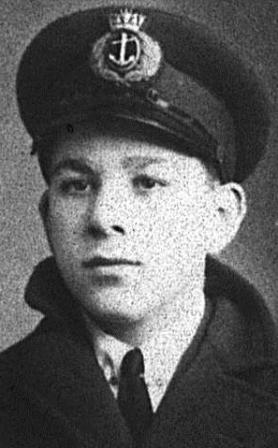
19 October 1955 passed the Lloyds Signal Station at Dover sailing east
5 November 1955 passed the Lloyds Signal Station at Dover sailing west signalling she was bound for Malta
15 December 1955 passed the Lloyds Signal Station at Dover sailing east
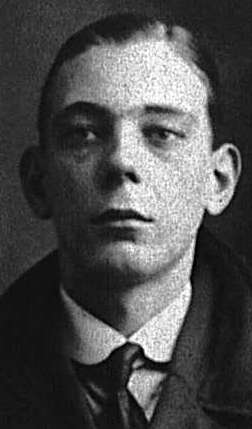
14 April 1956 Mr J Wilson RFA appointed as Chief Engineer Officer
15 May 1956 at 35°20N 37°50W 2nd Engineer Douglas Hermann Buckley RFA discharged dead from 2nd and 3rd degree scalds
23 June 1956 arrived at Port London, Christmas Island to support Operation Grapple- the British H-bomb test in the Pacific Ocean - after a voyage via Panama and Honolulu. Served with 16 other RFA’s during the test period.


RFA Fort Beauharnois at Christmas Island
1 May 1957 sailed Melbourne, Australia having loaded provisions for Operation Grapple on Christmas Island
18 November 1957 Commodore Thomas Elder CBE DSC RFA appointed as Master
29 November 1957 Mr Allan D Harris RFA appointed as Chief Engineer Officer
22 January 1958 deployed for duties in support of Operation Grapple on Christmas Island with 933 tons 15cwts of cargo
22 July 1958 Captain William R Parker RFA appointed as Master
22 August 1958 present at Christmas Island during atomic bomb tests
22 January 1959 Arrived Leith for refit and while there suffered a fire aboard,
16 February 1959 Captain Rowland K Hill OBE RFA appointed as Master

Captain Rowland K Hill OBE RFA
1 May 1959 deployed for the second time for duties in support of Operation Grapple on Christmas Island with 15 tons 2.75cwts of cargo
15 July 1959 together with USS Current (ARS 22) involved in the salvaging of MV Beaverbank stranded at the English Harbour entrance to Fanning Island at 3.51N 159.22W. Salvaged by 24 July 1959
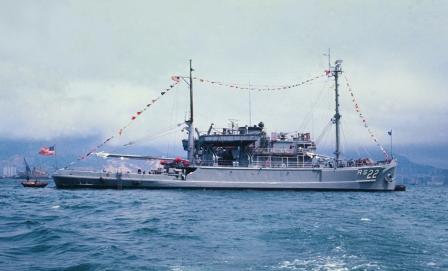
USS Current (ARS 22)
20 December 1959 Mr Hugh C F Sweenie RFA appointed as Chief Engineer Officer
1960 was employed carrying stores and official passengers to the Mediterranean and Far East
8 July 1960 berthed at Malta from Chatham
6 August 1960 Captain Douglas G Cox OBE RFA appointed as Master
16 August 1960 sailed Chatham to Aden and Singapore with 8 passengers
2 November 1960 sailed Malta to Gibraltar
3 November 1960 challenged by HMS BERMUDA 'What ship where bound'
14 December 1960 sailed Chatham to Malta and Singapore with 6 passengers
23 December 1960 berthed at Malta from Chatham
10 March 1961 grounded in fog at Yealm Head, 7 miles east of Plymouth
15 March 1961 at 44°54N 8°32W Ships Writer Robert Colin Louis Hughes discharged dead with heart failure while being invalided home on HMT Nevasa
20 March 1961 Captain Alfred M Uglow RFA appointed as Master until 30 March 1961
12 December 1961 Captain Douglas S Norrington OBE RD RFA (Commander RNR) appointed as Master
13 December 1961 at sea at 37°35N 09°17E Seaman 1 Sk Fakir Abdulrehman discharged dead - natural causes - heart failure - buried at sea
19 December 1961 Mr N Bothwell RFA appointed as Chief Engineer Officer
17 February 1962 berthed Devonport from Gibraltar and Malta with an eight month old donkey as cargo. The animal had been presented by HMS PHOENICIA, Malta to HMS EXCELLENT, Whale Island as a mascot
23 April 1962 laid up at Malta transferred to the MoT for disposal
July 1962 placed on the Disposal List
23 July 1962 advertised for sale 'as lying' at Malta in The Times of this day

8 November 1962 arrived La Spezia for demolition by Cantieri Navali Santa Maria
Notes:
- Prior to RFA service was a member of the British Pacific Fleet - hence the B pennant number
- From the Discharge Book of Fred W J Raddon

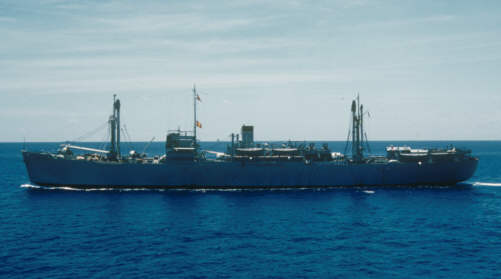
Fort Charlotte in the Indian Ocean
Previous name: Buffalo Park
Subsequent name:
Official Number: 175375
Class: CANADIAN FORT CLASS Stores Ship
Pennant No: B587 / A236
Laid down: 6 November 1943
Builder: North Van, North Vancouver, Canada
Launched: 12 February 1944
Into Service: 11 June 1948
Out of service: 1967 Laid up
Fate: Broken up
Items of historic interest involving this ship: -
Background Data: After the outbreak of WW2, the first cargo vessels built in Canada for the War Effort were the “North Sands” type, the hulls of which conformed to original British working drawings supplied by the North Sands Shipyard of J.L. Thompson & Sons at Sunderland. Following experience gained from these ships, improved versions with a more economic operation were introduced. These were the ”Victory” and “Canadian” types. The “Victory” type was an oil burner and two water tube boilers were substituted for the original 3 Scotch boilers. Because of the then concerns about oil fuel supplies, the “Canadian” type had coal bunkers and alternate oil fuel capacity installed, but with a reversion to the original three Scotch boilers of the “North Sands” type. In 1943, when the shipping situation in the Pacific was becoming acute, the British Government ordered that a number of the ships of the Canadian building programme be completed as Stores Issuing Ships whose intended task would be to follow and victual naval units as part of the British Pacific Fleet Train. In all, sixteen ships were completed as Stores Issuing Ships as follows: three as Ammunition Carriers, two as Air Stores Issuing Ships, two as Naval Stores Issuing Ships and nine as refrigerated Victualling Stores Issuing Ships. All were managed by commercial companies with vast experience of Far Eastern waters as Mercantile Fleet Auxiliaries with Merchant Navy Crews and a detachment of Stores Staff from the Victualling Division of the Admiralty under a Commander. On the refrigerated ships, the refrigerated space was in the tween decks and amounted to 111,480 cubic feet in twenty five chambers. The lower holds were used for non-perishable items of stores, clothing, etc. After WW2, eight of these ships became RFA’s. They were only armed during WW2.
12 February 1944 launched as a “Victory” type by North Vancouver Shiprepairers Ltd, North Vancouver as Yard Nr: 139 named BUFFALO PARK for the Canadian Government (Park Steamship Co, Montreal, Managers)
27 March 1944 registered at Montreal, Canada as ss Buffalo Park. Call sign VDYZ
6 April 1944 delivered by builders
23 April 1944 sailed Victoria, British Columbia independently to Los Angeles arriving 27 April 1944
28 April 1944 sailed Los Angeles independently to Cristobal
10 May 1944 sailed Cristobal independently to Curacao arriving on 13 May 1944
14 May 1944 sailed Curacao independently to Trinidad arriving the next day
20 May 1944 sailed Trinidad in convoy TJ 33 arriving Cape Town 17 June 1944
10 June 1944 at 23.50S 16.08W investigated by aircraft from USS SOLOMONS (CVE67) - identified
22 June 1944 sailed Cape Town independently to Port Elizabeth arriving two days later
1 July 1944 sailed Port Elizabeth independently to Durban arriving 3 July 1944
20 July 1944 sailed Durban independently to Cape Town arriving 23 July 1944
26 July 1944 sailed Cape Town independently to Port Harcourt arriving 4 August 1944
8 August 1944 sailed Port Harcourt independently to Takoradi arrived 11 August 1944
16 August 1944 sailed Takoradi independently to Trinidad arrived 30 August 1944
31 August 1944 sailed Trinidad independently to Cristobal arriving 4 September 1944
7 September 1944 sailed Balboa independently to Los Angeles arriving 16 September 1944
25 September 1944 sailed Los Angeles independently to Vancouver arriving 30 September 1944
21 October 1944 sailed Vancouver independently to Balboa arriving 5 November 1944
6 November 1944 sailed Cristobal independently to New York arriving 14 November 1944
21 November 1944 sailed in convoy HX321 from Halifax to Southend loaded with metal and wood
6 January 1945 sailed in convoy TBC30 to Milford Haven arriving on 9 January 1945
24 January 1945 sailed Milford Haven independently to Cardiff arriving the next day
10 February 1945 sailed Cardiff via Barry Roads to join convoy ON284 from Liverpool to Philadelphia arriving 1 March 1945
14 March 1945 sailed Philadelphia independently to Cristobal arriving on 21 March 1945
25 March 1945 sailed Balboa independently to Vancouver arriving 6 April 1945
1945 - acquired by the MoWT and renamed Fort Charlotte under initial management of Ellerman and Bucknall Steamship Co Ltd, London then under Eastern and Australian Steamship Co, London
27 September 1945 arrived at Vancouver
3 October 1945 arrived at Los Angeles
5 November 1945 at Manila
10 November 1945 at Hong Kong
8 December 1945 at Yokohama with HMAS ARUNTA alongside receiving naval stores

HMAS ARUNTA
2 January 1946 at Shanghai, China
12 January 1946 at Hong Kong
6 April 1946 at Colombo
18 April 1946 at Aden
26 April 1946 at Port Said
13 May 1946 at Alexandria
10 January 1947 at Malta
29 September 1947 arrived at Hobart, Tasmania
10 October 1947 transferred to the Admiralty
9 May 1948 berthed at Portsmouth Harbour
7 June 1948 sailed from Portsmouth Harbour
8 June 1948 passed the Lloyds Signal Station on the Lizard sailing west
9 June 1948 Captain Frank P Hennin OBE RFA appointed as Master
11 June 1948 transferred to RFA management at Gibraltar; converted into a NS/VSIS at Portsmouth Dockyard.
17 July 1948 at Barry South Wales. Mr Ronald C Putt RFA appointed as Chief Engineer Officer
26 August 1948 at Barry, South Wales. Mr E D Fielder RFA appointed as Chief Engineer Officer
5 December 1948 Fireman Nan Lung discharged dead. He died in the Royal Naval Hospital, Bighi, Malta from heart failure and is buried in Kalkara Royal Naval Cemetery, Malta
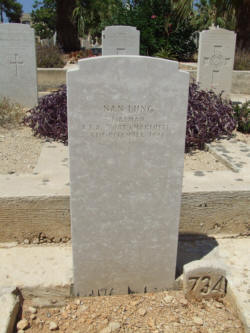
Image courtesy British War Graves
12 August 1949 sailed Singapore to Hong Kong with part of a 3 mile boom of 1,000 buoys that was constructed to provide Hong Kong with a defence from illegal shipping entering their waters. 350+ of the buoys weight 13 tons each while a further 600 weighed 1½ tons each. They were joined by steel cable
18 August 1949 arrived at Hong Kong
7 October 1949 the Straits Times of Singapore reported -

11 January 1950 Mr Henry S Edwards RFA appointed as Chief Engineer Officer
6 June 1950 at sea Seacunny Mohomad Baba discharged dead - heart failure
25 June 1950 saw service during the Korean War along with 18 other RFA’s and arrived from the 27/07/53 U.K. loaded with the bulk of War Reserves and replacements for what had already been expended 3 months after the outbreak of the War
6 July 1950 at Okinawa restored HMS TRIUMPH
22 July 1950 at Sasebo, Japan supplied HMS TRIUMPH with 126 tons of stores
27 July 1950 Captain Donald B C Ralph OBE DSC* RFA appointed as Master
8 August 1951 at Sasebo with HMAS MURCHISON alongside receiving naval stores
7 March 1952 Mr A Morton RFA appointed as Chief Engineer Officer
20 May 1952 Captain F G Edwards RFA appointed as Master
25 June 1952 Mr George G Stenhouse RFA appointed as Chief Engineer Officer
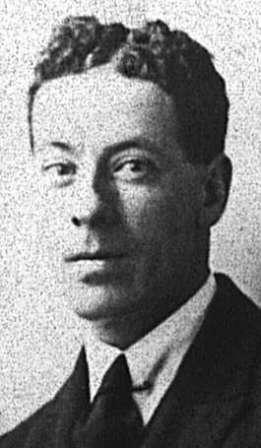
Chief Engineer Officer George G Stenhouse RFA
13 December 1952 alongside HMAS ANZAC and supplied with naval stores
28 and 29 November 1953 at Sasebo HMAS MURCHISON berthed alongside and was supplied with naval stores
7 October 1954 Mr A Morton RFA appointed as Chief Engineer Officer
12 October 1954 sailed Hong Kong with RFA WAVE PREMIER and 16 other RN and RAN ships in Operation Satex based on Seeadler Harbour, Manus Island
1 April 1955 Captain Herbert W Flint RFA appointed as Master
25 March 1956 in the company of RFA WAVE MASTER and nine RN vessel sailed from Hong Kong for exercises
6 June 1956 Captain Flint taken serious ill and collapsed at sea with a burst appendix some 400 miles from Singapore in the Karimata Strait. An RAF surgeon (Squadron Leader Agnes Bartels M.B., B.S., F.R.C.S., L.R.C.P., RAF) was sent by RAF Flying Boat to operate on him at sea. The Captain's life was saved. The Hartlepool Northern Daily Mail reported -

25 July 1956 Captain A R Wheeler RD RFA (Commander RNR) appointed as Master
31 October 1956 supported Operation Musketeer - the Suez Crisis - along with 34 other RFA’s.
4 July 1957 Mr Charles Scott DSC RFA appointed as Chief Engineer Officer
20 September 1957 Captain S Thomas RFA appointed as Master
15 November 1957 berthed at Honk Kong with families of Royal Australian Naval seaman as passengers
24 February 1958 to 1March 1958 involved in fleet exercises with RFA's WAVE MASTER, GOLD RANGER, FORT SANDUSKY, HMS NEWCASTLE and 9 other RN ships
1 May 1958 to 4 May 1958 in company with RFA's WAVE KNIGHT (1) and WAVE MASTER participated in Exercise Oceanlink - a major SEATO exercise - in the training areas north of Singapore which comprised an additional twenty one warships from Australia, New Zealand, Pakistan, UK and the USA
2 October 1958 2nd Steward Ho Fatt discharged dead at Singapore having suffered heart failure
5 October 1958 Mr A Morton RFA appointed as Chief Engineer Officer
17 December 1958 at Kwang Wah Hospital, Kowloon, Hong Kong Sailor Chung Chan discharged dead - natural causes
6 April 1959 off Singapore RASed with HMAS ANZAC
30 April 1959 while on passage from Manila to Hong Kong RASed with HMAS MELBOURNE
6 April 1960 and 7 April 1960 off Singapore engaged in RAS exercises together with RFA's RELIANT (2), RESURGENT, GOLD RANGER, OLNA (2) and HMAS's QUEENBOROUGH, ANZAC and TOBRUK
9 April 1960 Captain Albert E Curtain OBE RD RFA (Commander RNR (Retd)) appointed as Master
11 April 1960 off Singapore RASed with HMS's BELFAST and CAVALIER and HMAS's QUEENBOROUGH and VOYAGER
16 May 1960 off Singapore RASed with HMAS VOYAGER
19 May 1960 anchored in the Outer Roads, Singapore
4 March 1961 RASed with HMAS MELBOURNE
7 March 1961 RASed with HMAS MELBOURNE
4 April 1961 Mr E Burke RFA appointed as Chief Engineer Officer
19 April 1961 together with RFA WAVE SOVEREIGN RASed with HMAS's MELBOURNE and QUEENBOROUGH
27 May 1961 RASed with HMAS QUEENBOROUGH
July 1961 saw service during Operation Vantage - the Kuwait Crisis - along with 12 other RFA’s
30 January 1962 together with RFA EDDYROCK supported ships of the Commonwealth being lead by HMS WOODBRIDGE HAVEN in Exercise Minijet - a seven day mine clearance exercise
7 April 1962 Captain Leslie J Mack DSO RFA appointed as Master
6 May 1962 Mr G Thompson RFA appointed as Chief Engineer Officer
30 May 1962 at sea off Yokohama, Japan RAS'ed stores with HMAS PARRAMATTA
15 November 1962 with RFA's WAVE SOVEREIGN and WAVE RULER (1) and several RN, RAN and RNZN ships headed by HMS TIGER attended the Commonwealth Games, Perth, Western Australia
21 November 1962 berthed at Fremantle, Western Australia along with HMS/m ANCHORITE
1 December 1962 sailed from Fremantle with RFA WAVE SOVEREIGN and the RN, RAN and RNZN ships
27 April 1963 Mr C E Prentis RFA appointed as Chief Engineer Officer
21 May 1963 at Sea at 13°51N 112°15E Seaman Knut Malvin Kjerstad discharged dead from extensive burns
18 October 1963 a strike at Singapore Naval Base resulted in Fort Charlotte being diverted to Hong Kong for repairs.
1964 Captain C N Rennels RFA appointed as Master
10 February 1964 following the loss of HMAS VOYAGER (D04) with 82 of her crew being killed the Chinese crew of Fort Charlotte collected £16.00 for the 'Voyager Fund'
9 March 1964 during exercise Jet Train II towed by HMAS YARRA
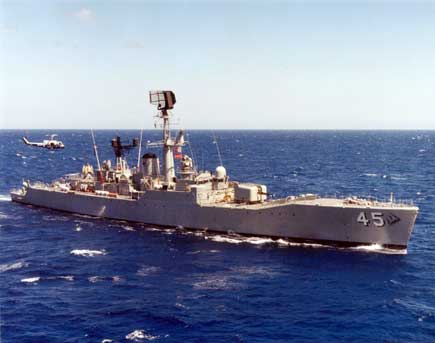
HMAS YARRA
27 May 1964 at Subic Bay, Phillippines with RFA's TIDESPRING (1), WAVE SOVEREIGN, RELIANT (2) and FORT ROSALIE (1) arrived and together with HMAS SUPPLY formed Task Group 490.7. RFA TIDEFLOW which should have joined the Task Group remained at Singapore due to a mechanical breakdown
January 1965 to 11 August 1965 in support of naval units performing patrols off East Malaysia, Singapore and in the Malacca Straits during the Indonesian Confrontation, along with RFA’s EDDYROCK, GOLD RANGER, TIDEREACH and WAVE SOVEREIGN.
29 April 1965 Captain Archibald Murchie RFA appointed as Master
3 May 1965 while on passage to Singapore RAS'ed with HMAS YARRA with naval stores
13 February 1966 Captain Archibald M M Telfer RFA appointed as Master
26 August 1966 Mr E S Brazier RFA appointed as Chief Engineer Officer
18 November 1967 and 25 November 1967 offered for sale 'As lying' at H M Dockyard Singapore by the Ministry of Transport in the UK Times newspapers of these days.
January 1968 sold to Singapore ship breakers for $670,000 (reported in the Straits Times)
June 1968 broken up at Singapore
Notes:
- Before RFA service was part of the British Pacific Fleet - hence the B pennant number

Official Number: 169996
Class: CANADIAN FORT CLASS Stores Ship
Pennant No: B578 / A300
Laid down:
Builder: Burrard, Vancouver, Canada
Launched: 11 March 1944
Into Service: 25 April 1944
Out of service: 1969
Fate: Broken up
Items of historic interest involving this ship: -
Background Data: After the outbreak of WW2, the first cargo vessels built in Canada for the War Effort were the “North Sands” type, the hulls of which conformed to original British working drawings supplied by the North Sands Shipyard of J.L. Thompson & Sons at Sunderland. Following experience gained from these ships, improved versions with a more economic operation were introduced. These were the ”Victory” and “Canadian” types. The “Victory” type was an oil burner and two water tube boilers were substituted for the original 3 Scotch boilers. Because of the then concerns about oil fuel supplies, the “Canadian” type had coal bunkers and alternate oil fuel capacity installed, but with a reversion to the original 3 Scotch boilers of the “North Sands” type. In 1943, when the shipping situation in the Pacific was becoming acute, the British Government ordered that a number of the ships of the Canadian building programme be completed as Stores Issuing Ships whose intended task would be to follow and victual naval units as part of the British Pacific Fleet Train. In all, 16 ships were completed as Stores Issuing Ships as follows: 3 as Ammunition Carriers, 2 as Air Stores Issuing Ships, 2 as Naval Stores Issuing Ships and 9 as refrigerated Victualling Stores Issuing Ships. All were managed by commercial companies with vast experience of Far Eastern Waters as Mercantile Fleet Auxiliaries with Merchant Navy Crews and a detachment of Stores Staff from the Victualling Division of the Admiralty under a Commander. On the refrigerated ships, the refrigerated space was in the tween decks and amounted to 111,480 cubic feet in 25 chambers. The lower holds were used for non-perishable items of stores, clothing, etc. After WW2, 8 of these ships became RFA’s. They were only armed during WW2.
11 March 1944 launched as a “Victory” type by Vancouver Dry Dock Co Ltd, Vancouver as Yard Nr: 207 named FORT CONSTANTINE for the MoWT.
25 April 1944 completed as a refrigerated VSIS by Burrard Dry Dock Co Ltd, Vancouver and placed under initial management of Ellerman and Bucknall Steamship Co Ltd, London
20 July 1944 at Colombo, Ceylon
8 August 1944 at Colombo, Ceylon Deck Topass Peter Chaudicunjan discharged dead from an aortic aneurysm
10 August 1944 at Colombo, Ceylon with HMAS GAWLER berthed alongside
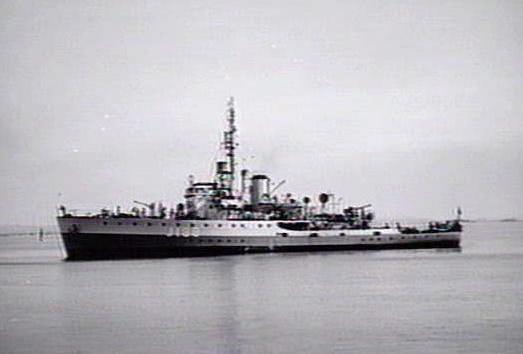
HMAS GAWLER
14 November 1944 sailed Colombo, Ceylon to Freemantle arriving 1 December 1944
4 December 1944 sailed Freemantle to Melbourne arriving 10 December 1944
16 December 1944 sailed Melbourne to Vancouver arriving 22 January 1945
7 September 1945 arrived at Manus Naval Base, Admiralty Islands
10 September 1945 sailed Manus Naval Base, Admiralty Islands
12 March 1946 sailed Hong Kong
29 January 1946 berthed at Fremantle, Western Australia
20 June 1946 at Hong Kong as a passenger Chief Steward Charles Christian discharged dead from Hypepyrexia followed by cardiac failure. When Chief Steward Christian collapsed he was taken to HMS VENERABLE where he was pronounced dead
22 September 1946 with HMS CAMPERDOWN, RFA's FORT ROSALIE (1) and WAVE SOVEREIGN sailed Kure, Japan
1 October 1946 at Kaimon Dake HMAS BATAAN alongside receiving provisions
30 October 1946 sailed Hong Kong for Singapore
7 April 1947 arrived Sydney, NSW from Hong Kong
2 June 1947 arrived Hong Kong from Sydney, NSW
16 July 1947 berthed at Sydney, NSW from Hong Kong
4 September 1947 berthed at Colombo from Sydney, NSW
6 September 1947 sailed Colombo, Ceylon
19 September 1947 sailed Suez
25 September 1947 berthed at Gibraltar
27 September 1947 sailed Gibraltar for Swansea
1 October 1947 berthed at Swansea from Sydney, NSW, Ceylon and Gibraltar with 15 passengers
1948 Managers now W.H. Seager & Co, Cardiff name unchanged
12 August 1948 berthed at Swansea
1949 acquired by the Admiralty
10 August 1949 Captain A Spencer RFA appointed as Master
22 November 1949 Mr William H MacFarlane RFA appointed at Chief Engineer Officer
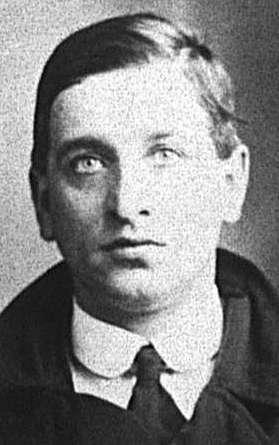
Chief Engineer Officer William H MacFarlane RFA
12 August 1949 at Cardiff
5 December 1949 transferred to RFA manning and management
11 January 1950 the Derby Daily Telegraph reported -

13 January 1950 at the General Hospital Colombo, Ceylon Engine Room Serang Soomar Oosman discharged dead from renal failure
21 January 1950 still at Colombo
22 January 1950 Mr R C Veitch RFA appointed as Chief Engineer Officer
7 February 1950 at Singapore
18 March 1950 at Singapore
15 April 1950 to 22 April 1950 at Colombo, Ceylon
20 May 1950 arrived Suez when on passage from Colombo to Plymouth
21 May 1950 sailed Port Said for Plymouth
5 June 1950 at Plymouth
28 June 1950 passed through the Solent while on passage to Southampton from Plymouth
29 June 1950 berthed at Southampton
1 August 1950 Mr Lionel W Pool RFA appointed as Chief Engineer Officer
8 August 1950 at Gibraltar
12 August 1950 at Malta GC
3 November 1950 at Colombo, Ceylon
23 November 1950 at Bombay, India
21 December 1950 berthed at Portsmouth Harbour and landed 2 DBS seaman
22 January 1951 sailed Portsmouth
6 March 1951 sailed Bermuda with the final remaining stores from the former Naval Dockyard there which had ceased to exist as such as from 1 March 1951
13 May 1951 arrived at Malta
19 May 1951 sailed Suez
4 June 1951 arrived Trincomalee, Ceylon
15 June 1951 arrived at Singapore
21 July 1951 sailed Hong Kong for Singapore
3 August 1951 sailed Singapore for Columbo, Ceylon
27 August 1951 sailed Trincomalee, Ceylon
9 September 1951 sailed Aden for Suez
16 October 1951 Captain George F Rutter RD RFA (Commander RNR (ret)) appointed as Master
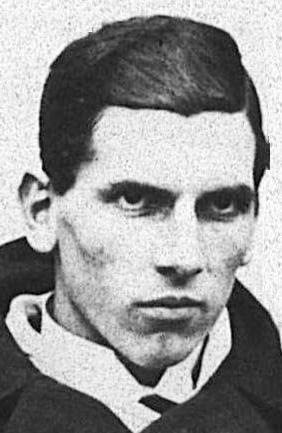
Captain George F Rutter RD RFA
12 December 1951 Mr George McBain RFA appointed as Chief Engineer Officer
31 December 1951 arrive Gibraltar
17 May 1952 sailed Malta with His Grace Mgr. Sir Michael Gonzi KBE LL.D, Metropolitan Archbishop of Malta and his Chaplain as passengers
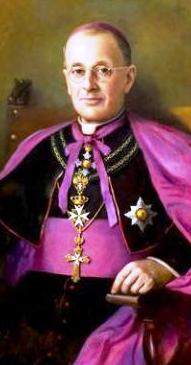
23 July 1952 sailed Sheerness to Malta, Trincomalee, Singapore and Hong Kong with 12 passengers
3 October 1952 in support of Operation Hurricane 1 - the first British test atomic bomb explosion at Monte Bello Islands off NW Australia - along with RFA’s FORT BEAUHARNOIS, FORT ROSALIE (1), GOLD RANGER, WAVE PRINCE, WAVE RULER (1) and WAVE SOVEREIGN
1 June 1953 Captain George Frederick Rutter RD RFA (Commander RNR (ret)) appointed as an Additional Officer of the Most Excellent Order of the British Empire (Military Division) (OBE) vide the London Gazette of the day on page 2947
29 September 1953 Mr Victor J Cooney RFA appointed as Chief Engineer Officer
15 February 1954 sailed Malta with Vice Admiral and Lady Elizabeth Davis as passengers. Vice Admiral Davis had just ended his appointment as Flag Officer Second in Command Mediterranean Station and Flag Officer (Air) Mediterranean
15 March 1954 Captain James H Chant RFA appointed as relieving Master under 19 March 1954
2 June 1954 passed Dover sailing west bound
7 June 1954 passed Gibraltar sailing east bound
21 June 1954 sailed Aden for Trincomalee, Ceylon
9 August 1954 at Queen Mary Hospital, Hong Kong Deck Tindal Sk Mohamed Nakwa discharged dead having suffered from a stroke
1 November 1954 Mr David L Walls RFA appointed as Chief Engineer Officer
3 December 1954 sailed Malta eastbound
12 July 1955 Captain Stanley C Kernick RFA appointed as Master
19 August 1955 passed Dover sailing east bound and arrived at Chatham Dockyard
7 September 1955 sailed Chatham for Singapore and Hong Kong with 11 passengers
17 January 1956 berthed at Devonport after a voyage from Hong Kong and Singapore with 10 passengers
18 February 1956 sailed Chatham to Trincomalee, Singapore and Hong Kong with 11 passengers
11 July 1956 Mr William J Brown OBE DSC RFA appointed as Chief Engineer Officer
September 1956 converted into a NS/VSIS
3 October 1956 Mr Charles Scott DSC RFA appointed as Chief Engineer Officer
2 January 1957 passed Dover sailing west bound
16 July 1957 in refit in the King George dry dock at Singapore Dockyard
30 July 1957 Mr V J Cooney RFA appointed as Chief Engineer Officer
1 October 1957 Captain Franklin G Edwards appointed as Master
Supported Operation Grapple- the British H-bomb test at Christmas Island in the Pacific Ocean - along with 16 other RFA’s
April 1957 a victualling dispute with the Lascar crew resulted in fresh food stores being delivered from Sydney, NSW and the dispute ending within seven days
15 July 1957 in refit in Singapore in the King George Dry Dock
14 January 1958 at Christmas Island Secunny Hoosein Janioo Baba discharged dead - drowned. Firemen P Ramulu and Shauker Narayan and Secunny Adbul Sattar all discharged dead missing from the ships boat presumed drowned
13 June 1958 berthed at Plymouth after a voyage from Hong Kong and Singapore with 12 passengers
21 September 1958 deployed for duties in connection with Operation Grapple at Christmas Island with 683 tons of cargo
17 August 1959 Captain Geoffrey B A Livesey RFA appointed as Master
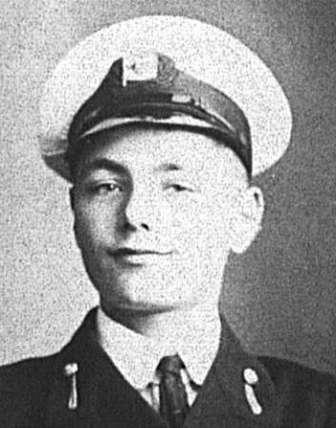
26 October 1959 arrived at Malta from the UK
11 January 1960 Mr David C Leathley OBE RFA appointed as Chief Engineer Officer
6 April 1960 berthed at Malta from Gibraltar
30 May 1960 berthed at Malta from Gibraltar
16 June 1960 involved in a collision with INS Beas south of Plymouth Sound. Slight damage to the Indian Naval Frigate
18 August 1960 Commodore Thomas Elder CBE DSC RFA appointed as Master
25 October 1960 sailed Chatham to Malta, Aden and Singapore with 12 passengers
4 November 1960 sailed from Malta for Aden
11 March 1961 sailed from Malta for Singapore
8 September 1961 Captain Frank A Shaw OBE RD RFA (Lieutenant Commander RNR (Rtd)) appointed as Master
8 January 1962 Mr A King RFA appointed as Chief Engineer Officer
18 December 1962 laid up at Devonport
August 1969 placed on disposal list at Devonport
27 August 1969 and 6 September 1969 offered for sale ‘as is – where is’ at Devonport by the Crown Agents Disposal Corporation, Canada in the Times newspaper of this day -

26 October 1969 arrived at Hamburg, Germany in tow for breaking up by Elkhart & Co GmbH
Notes:
- Prior to RFA service was part of the British Pacific Fleet - hence the B pennant number


Official Number: 180002
Class: CANADIAN FORT CLASS Stores Ship
Pennant No: B579 / A160
Laid down:
Builder: Burrard, North Vancouver, Canada
Launched: 28 June 1944
Into Service: 19 March 1951
Out of service: 1968
Fate: Broken up
Items of historic interest involving this ship: -
Background Data: After the outbreak of WW2, the first cargo vessels built in Canada for the War Effort were the “North Sands” type, the hulls of which conformed to original British working drawings supplied by the North Sands Shipyard of J.L.Thompson & Sons at Sunderland. Following experience gained from these ships, improved versions with a more economic operation were introduced. These were the ”Victory” and “Canadian” types. The “Victory” type was an oil burner and two water tube boilers were substituted for the original 3 Scotch boilers. Because of the then concerns about oil fuel supplies, the “Canadian” type had coal bunkers and alternate oil fuel capacity installed, but with a reversion to the original 3 Scotch boilers of the “North Sands” type. In 1943, when the shipping situation in the Pacific was becoming acute, the British Government ordered that a number of the ships of the Canadian building programme be completed as Stores Issuing Ships whose intended task would be to follow and victual naval units as part of the British Pacific Fleet Train. In all, sixteen ships were completed as Stores Issuing Ships as follows: three as Ammunition Carriers, two as Air Stores Issuing Ships, two as Naval Stores Issuing Ships and nine as refrigerated Victualling Stores Issuing Ships. All were managed by commercial companies with vast experience of Far Eastern Waters as Mercantile Fleet Auxiliaries with Merchant Navy Crews and a detachment of Stores Staff from the Victualling Division of the Admiralty under a Commander. On the refrigerated ships, the refrigerated space was in the tween decks and amounted to 111,480 cubic feet in 25 chambers. The lower holds were used for non-perishable items of stores, clothing, etc. After WW2, eight of these ships became RFA’s. They were only armed during WW2.
28 February 1944 launched as a “Victory” type by Burrard Dry Dock Co Ltd, Vancouver as Yard Nr: 206 named FORT DUNVEGAN for the MoWT
14 April 1944 completed as a refrigerated VSIS and placed under initial management of Ellerman and Bucknall Steamship Co Ltd, London
27 April 1944 sailed Vancouver independently arriving Los Angeles on 1 May 1944
2 May 1944 sailed Los Angeles independently arriving Sydney, NSW on 26 May 1944
4 June 1944 sailed Sydney NSW independently to Melbourne arriving two days later
13 June 1944 sailed Melbourne independently to Colombo arriving on 5 July 1944
10 August 1944 sailed Colombo independently arriving Trincomalee two days later
13 September 1944 sailed Trincomalee independently to Colombo arriving 15 September 1944
19 October 1944 sailed Colombo independently arriving Freemantle 4 November 1944
7 November 1944 sailed Freemantle independently arriving Sydney NSW 16 November 1944
30 November 1944 sailed Sydney NSW independently arriving Vancouver 30 December 1944
22 March 1945 sailed Vancouver independently via Williams Head arriving Los Angeles 29 March 1945
30 March 1945 sailed Los Angeles independently arriving Sydney NSW 24 April 1945
16 May 1945 sailed Sydney NSW independently arriving Manus Naval Base, Admiralty Islands on 24 May 1945
31 May 1945 anchored at Manus Naval Base, Admiralty Islands - included in the Naval Base return of ships in the harbour
1 July 1945 anchored at Manus Naval Base, Admiralty Islands - included in the Naval Base return of ships in the harbour
2 July 1945 at Seeadler Harbour, Admiralty Islands with HMAS BURNIE alongside for victualling stores
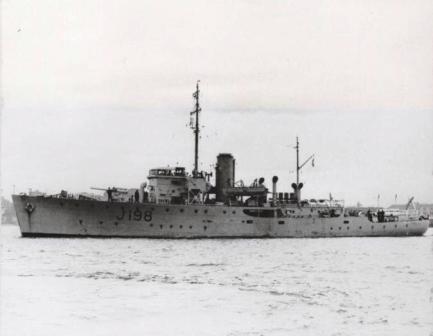
HMAS BURNIE
4 July 1945 and 5 July 1945 at Seeadler Harbour, Admiralty Islands with HMAS KALGOORIE alongside loading victualling stores
11 July 1945 at Seeadler Harbour, Admiralty Islands with HMAS BURNIE alongside for victualling stores
27 July 1945 arrived at Manus Naval Base, Admiralty Islands
1 August 1945 sailed Manus Naval Base, Admiralty Islands independently arriving Sydney NSW 9 August 1945
14 August 1945 undergoing repairs at Sydney which were completed on 21 September 1945
11 October 1945 sailed Sydney NSW independently arriving Manus Naval Base, Admiralty Islands 19 October 1945
25 October 1945 sailed Manus Naval Base, Admiralty Islands independently arriving Hong Kong 4 November 1945
11 November 1945 at Kowloon Bay, Hong Kong Quartermaster & Able Seaman Kenneth MacPhail discharged dead - drowned
4 January 1946 sailed Hong Kong to Singapore arriving 11 January 1946
27 January 1946 sailed Singapore to Sydney, NSW arriving 15 February 1946
20 February 1946 sailed Sydney to Newcastle returning to Sydney on the 22 February 1946
5 March 1946 sailed Syndey, NSW to Hong Kong
21 August 1946 arrived at Sydney, NSW, Australia with two Chinese youths, aged 15 and 16, who had stowed away on board at Hong Kong some three weeks previously. The youths appeared before the Children's Court and were remanded in custody at the Long Bay Detention Centre to await return to Hong Kong
27 September 1946 a Chinese cook onboard applied to the Water Police Court, Sydney, NSW to be allowed to have his contract recinded. The case was adjourned until 30 December 1946 on the condition that the cook could not be discharged - except lawfully - until the case was heard
19 October 1946 sailed Sydney, NSW for Townsville
21 October 1946 berthed at Townsville
22 October 1946 sailed Townsville for Singapore arriving 3 November 1946
3 November 1946 to 22 November 1946 at Singapore discharging stores
14 December 1946 sailed Colombo for Trincomalee
16 December 1946 arrived at Trincomalee
1946 to 1948 placed in reserve
26 May 1948 arrived at Malta from Colombo
22 June 1948 berthed at Sheerness from Colombo and Malta with 21 passengers. Captain Thomas L Vaughan was Master
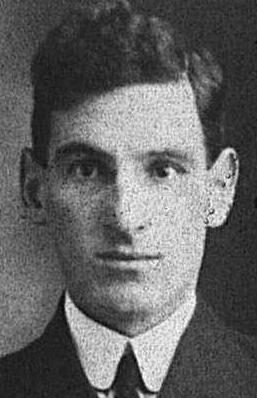
Captain Thomas L Vaughan
31 December 1948 acquired by the Admiralty
27 January 1949 berthed at Dunston, River Tyne
24 May 1949 still berthed at Dunston, River Tyne
22 June 1949 still berthed at Dunston, River Tyne
19 March 1951 transferred to RFA management. Captain Cecil R Rosen OBE RFA appointed as Master and Mr G A Calvert appointed as Chief Engineer Officer
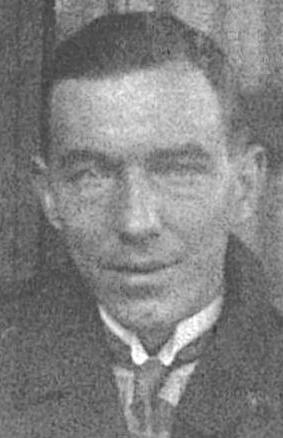
Captain Cecil R Rosen OBE RFA
11 August 1951 Captain Stanley G Kent OBE RFA appointed as Master
7 October 1951 first Commodore's Broad Pennant of Commodore Stanley G Kent OBE RFA hoisted on RFA Fort Dunvegan this day at Rosyth in the presence of Admiral Sir Philip Vian, Commander in Chief Home Fleet. The Tatler reported the event in its edition of 24 October 1951 -

21 November 1951 acted as the 'convoy' during Naval exercises off Gibraltar
3 December 1951 at Lisbon secured to the Naval Jetty with HMS St AUSTELL BAY alongside of her. Supplied Naval Stores to the warship.
23 January 1952 Mr Mortimer J Lawrence OBE DSC RFA appointed as Chief Engineer Officer
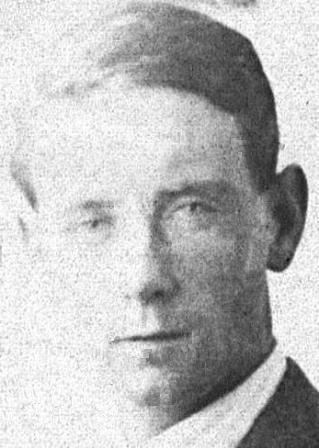
Chief Engineer Officer Mortimer J Lawrence OBE DSC RFA
17 May 1952 berthed at Malta from Trincomalee, Ceylon
24 September 1952 berthed at Malta
1 October 1952 sailed Malta with Vice Admiral G A B Hawkins MVO DSC as a passenger for the UK. Vice Admiral Hawkins had just handed over the appointment as Flag Officer, Malta and Admiral Superintendent, H M Dockyard, Malta
1 November 1952 at Chatham
15 April 1953 at Plymouth
1 June 1953 Radio Officer Arthur Reginald Winter RFA appointed as an Additional Member of the Most Excellent Order of the British Empire (Military Division) (MBE) vide the London Gazette of the day on page 2948
15 June 1953 took part in the Queen Elizabeth II Coronation Fleet Review at Spithead along with 6 other RFA’s
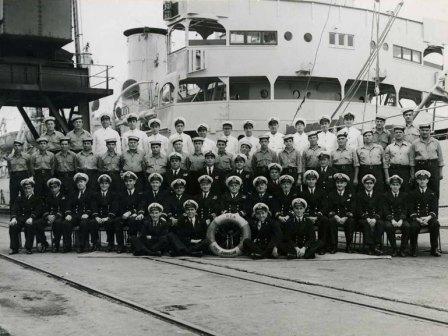
RFA Fort Dunvegan's crew - June 1953
21 October 1953 at Chatham
8 January 1954 sailed Chatham Dockyard
1 February 1954 Admiral Lord Mountbatten visited the ship to bid farewell to Commodore Kent RFA who was due to retire after 46 years in the Service.
18 February 1954 arrived Portsmouth Dockyard with six Gibraltar apes as part of its cargo for onward transportation to Belfast Zoo
19 February 1954 sailed Portsmouth Harbour for Rosyth
5 March 1954 at Rosyth
19 May 1954 when on passage from Chatham to Gibraltar anchored at Spithead after a fault was found in an engine room feed pipe. A new pipe was collected from Portsmouth Dockyard, fitted and the ship resumed its passage
20 August 1954 Captain Cyril F Cunningham RFA appointed Master
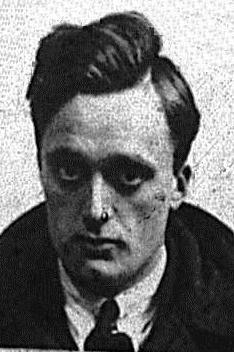
Captain Cyril F Cunningham RFA
10 March 1955 arrived Gibraltar
5 May 1955 arrived at Gibraltar
11 May 1955 berthed at Malta
21 May 1955 sailed Malta for the UK
29 June 1955 passed Dover sailing west bound
4 July 1955 arrived Gibraltar
11 August 1955 Captain Frank P Hennin OBE RFA appointed as Master
16 December 1955 berthed at Chatham Dockyard
28 December 1955 Mr Charles Scott DSC RFA appointed as Chief Engineer Officer
2 October 1956 Mr Oscar Goodwin RFA appointed as Chief Engineer Officer
31 October 1956 supported Operation Musketeer- the Suez Crisis - along with 34 other RFA’s
31 December 1956 Mr William J Brown OBE DSC RFA appointed as Chief Engineer Officer
29 August 1957 Mr J B D Payne RFA appointed as Chief Engineer Officer
21 October 1957 sailed Gibraltar for Devonport
1 December 1957 arrived Malta
16 December 1957 arrived Gibraltar sailing later the day for Rosyth
23 December 1957 arrived Rosyth
6 December 1958 Captain E E Laurence RFA appointed as Master
20 December 1958 Mr T J W Humphreys RFA appointed as Chief Engineer Officer
22 January 1959 Captain Emil E Sigwart RFA (Temporary Lieutenant Commander RNR) appointed as Master
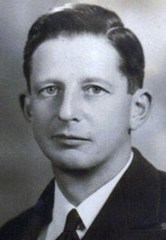
Captain Emil E Sigwart RFA
2 September 1959 berthed at Malta from Gibraltar
13 October 1959 at Chatham Dockyard
17 November 1959 sailed Malta for Gibraltar
30 November 1959 at Devonport
14 December 1959 Captain Frank A Shaw OBE RD RFA (Lieutenant Commander RNR) appointed as Master
30 December 1959 at Chatham Dockyard
1 January 1960 Mr F Barclay RFA appointed as Chief Engineer Officer
4 January 1960 sailed Chatham to Malta and Singapore with 7 passengers
1960 converted at Hong Kong into a temporary Air Stores Issuing Ship
8 October 1960 sailed Singapore for Trincomalee
14 October 1960 off Trincomalee passed mail to HMAS VAMPIRE by light jackstay
23 January 1961 Mr L Cochrane RFA appointed as Chief Engineer Officer
5 May 1961 RASed with HMAS QUEENBOROUGH
6 June 1961 Captain Frank C Holt RFA appointed as Master
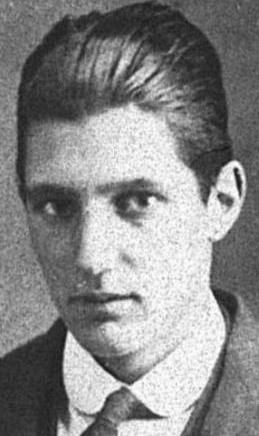
Captain Frank C Holt RFA
23 June 1961 customs officers and naval police searched the ship at Singapore and found 50 pounds weight of raw opium. No arrests were made
July 1961 converted at Hong Kong into a NS/VSIS and saw service during Operation Vantage - the Kuwait Crisis - along with 12 other RFA’s
6 August 1961 at 8.41N 109.16E Donkeyman Greaser Chong Sau discharged dead from natural causes
24 August 1961 at Singapore customs officers and police stopped a taxi on way to the ship containing three Hong Kong Chinese crew together with 22 pounds weight of raw opium
29 March 1962 Mr B W Edwards RFA appointed as Chief Engineer Officer
29 April 1962 while on passage to Manila RAS'ed with HMAS MELBOURNE
10 September 1962 off Brisbane, Australia together with RFA's WAVE MASTER, WAVE RULER (1), HMS and HMAS ships engaged in Operation Tuckerbox (II)
30 March 1963 Mr N Bothwell RFA appointed as Chief Engineer Officer
23 October 1963 Captain C G D Barker RFA appointed as Master
28 June 1964 Captain William H G Hine RFA appointed as Master
7 October 1964 Mr I M McFarlane RFA appointed as Chief Engineer Officer
3 December 1964 together with RFA TIDESURGE RASed with HMS CENTAUR
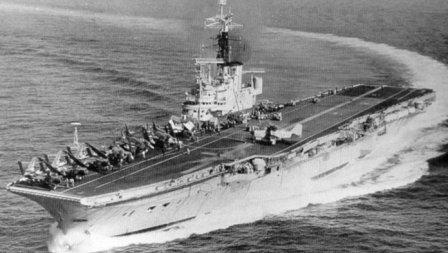
HMS CENTAUR
17 November 1965 Captain Walter Gibb MBE RFA appointed as Master
12 June 1966 together with RFA' s FORT LANGLEY and TIDESPRING (1) at anchor off the eastern side of Pu Tioman
5 August 1966 Mr J P Mair RFA appointed as Chief Engineer Officer
25 February 1967 light jackstay transfer with HMS RETENTLESS during the Beira Patrol
29 April 1967 heavy jackstay transfer with HMS RETENTLESS during the Beira Patrol
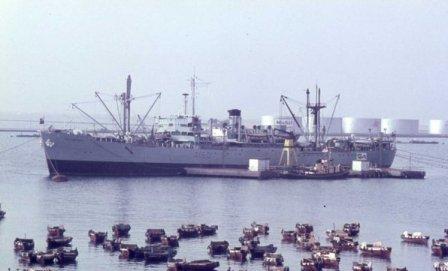
RFA Fort Duvegan at Aden in April 1967
10 September 1967 Captain Archibald Murchie RFA appointed as Master
15 September 1967 Mr L Cochrane RFA appointed as Chief Engineer Officer
February 1968 with other RFA's deployed to support RN ships during the Aden peace keeping operation at the hand over to an independent administration
1968 Broken up at Kaohsiung
Notes:
- Prior to RFA Service was part of the British Pacific Fleet - hence the B pennant number
Reproduced with permission of the MOD


Previous name: Queensborough Park
Official Number: 175614
Class: CANADIAN FORT CLASS Stores Ship
Pennant No: X141 / B588 / A229
Laid down:
Builder: West Coast Shipbuilding, Vancouver, British Columbia, Canada
Launched: 28 September 1944
Into Service: 16 September 1947
Out of service: April 1967 - laid up at Chatham
Fate: Broken up
Items of historic interest involving this ship: -
Background Data: After the outbreak of WW2, the first cargo vessels built in Canada for the War Effort were the “North Sands” type, the hulls of which conformed to original British working drawings supplied by the North Sands Shipyard of J.L. Thompson & Sons at Sunderland. Following experience gained from these ships, improved versions with a more economic operation were introduced. These were the ”Victory” and “Canadian” types. The “Victory” type was an oil burner and two water tube boilers were substituted for the original 3 Scotch boilers. Because of the then concerns about oil fuel supplies, the “Canadian” type had coal bunkers and alternate oil fuel capacity installed, but with a reversion to the original 3 Scotch boilers of the “North Sands” type. In 1943, when the shipping situation in the Pacific was becoming acute, the British Government ordered that a number of the ships of the Canadian building programme be completed as Stores Issuing Ships whose intended task would be to follow and victual naval units as part of the British Pacific Fleet Train. In all, 16 ships were completed as Stores Issuing Ships as follows: 3 as Ammunition Carriers, 2 as Air Stores Issuing Ships, 2 as Naval Stores Issuing Ships and 9 as refrigerated Victualling Stores Issuing Ships. All were managed by commercial companies with vast experience of Far Eastern Waters as Mercantile Fleet Auxiliaries with Merchant Navy Crews and a detachment of Stores Staff from the Victualling Division of the Admiralty under a Commander. On the refrigerated ships, the refrigerated space was in the tween decks and amounted to 111,480 cubic feet in 25 chambers. The lower holds were used for non-perishable items of stores, clothing, etc. After WW2, 8 of these ships became RFA’s. They were only armed during WW2.
28 September 1944 launched as a “Victory” type by West Coast Shipbuilders, Vancouver as Yard Nr 147 named QUEENSBOROUGH PARK for the Canadian Government ( Park Steamship Co, Montreal, Managers)
25 November 1944 completed as a refrigerated VSIS; acquired by the MoWT, renamed FORT DUQUESNE and placed under initial management of George Nisbet & Co, Glasgow
3 January 1945 as Queensborough Park sailed in convoy HX330 from New York to Tyne with a general cargo and lumber.
25 February 1945 as Queensborough Park sailed in convoy ON287 from the Clyde to sail independently to Panama
22 February 1947 sailed Colombo with 12 passengers
19 March 1947 passed Gibraltar when on passage from Trincomalee to Plymouth
24 March 1947 arrived at Plymouth Sound from Hong Kong and Colombo bringing 12 passengers and 16 Active Service Ratings. Captain A K Sanderson was the ship's Master
26 March 1947 the Daily Herald newspaper reported that -


28 March 1947 before Plymouth Magistrates' Court sailor Lo Seng pleaded guilty to attempting to evade customs duty on 107,600 cigarettes. He was fined £100 or three months imprisonment and ordered to pay £1,574 customs duty. He was not allowed time to pay
2 April 1947 before Plymouth Magistrates' Court sailor Yeung Hing charged with attempting to evade customs duty on 36,500 cigarettes. He was fined £100 and ordered to pay £533 14sh 9d customs duty. He was unable to pay and was sent to prison for 3 months
15 April 1947 having sailed Plymouth arrived Gravesend this day
1947 managers became Alfred Holt & Co, Liverpool
30 May 1947 the Hampshire Telegraph newspaper reported that -

30 July 1947 passed the Lloyds Signal Station on the Lizard sailing eastwards
27 August 1947 berthed at Portsmouth Harbour
8 September 1947 sailed from Portsmouth Harbour and passed the Lloyds Signal Station on the Lizard sailing westwards
10 September 1947 Mr Robert Blacklock RFA appointed as Chief Engineer Officer
15 September 1947 acquired by the Admiralty under RFA management
16 September 1947 took part in the Home Fleet Review on the Clyde along with RFA’s BLACK RANGER, PETROBUS and PRESTOL
6 October 1947 Captain Henry F Colbourne RFA appointed as Master
9 October 1947 at Barry
29 December 1947 Captain Leonard Elford RFA appointed as Master
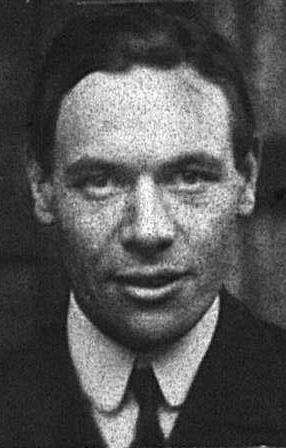
Captain Leonard Elford RFA
3 February 1948 sailed Barry to Newport, Wales arriving the same day
24 February 1948 sailed Newport, Wales to Rosyth Dockyard arriving 27 February 1948
3 April 1948 sailed Rosyth Dockyard to Gibraltar arriving 12 April 1948
15 April 1948 sailed Gibraltar to Malta arriving 19 April 1948
4 July 1948 sailed Malta to Poros arriving 6 July 1948
11 July 1948 sailed Poros to Salonika arriving the next day
15 July 1948 sailed Salonika to Phalerum Bay arriving the next day
18 July 1948 sailed Phalerum Bay for Argostoli arriving the next day
27 July 1948 sailed Argostoli to Malta arriving 29 July 1948
12 September 1948 arrived at Naples, Italy
17 September 1948 sailed Naples, Italy
23 September 1948 arrived at Nice, France
25 September 1948 at Cannes, France Supernumerary Leonard Harold discharged dead from accidental drowning. He was buried in Nice English Cemetery
16 March 1949 at Malta
16 July 1949 arrived at Rhodes
5 September 1949 Mr Reginald R Darroch RFA appointed as Chief Engineer Officer

Chief Engineer Officer Reginald R Darroch RFA
9 to 15 September 1949 at Genoa as part of the Mediterranean Fleet's Second Summer cruise with RFA BLUE RANGER
20 to 28 September 1949 at Aranei Bay as part of the Mediterranean Fleet's Second Summer cruise in part with RFA BLUE RANGER and RFA ROWANOL
29 September to 4 October 1949 at Naples as part of the Mediterranean Fleet's Second Summer cruise
5 to 10 October 1949 at Bizerta as part of the Mediterranean Fleet's Second Summer cruise
12 October 1949 returned to Malta
23 December 1949 at Sliema Creek, Malta moored alongside HMS GRAVELINES
28 December 1949 at Lazzarreto Creek, Malta moored alongside HMS GRAVELINES
31 December 1949 at Lazzarreto Creek, Malta moored alongside HMS GRAVELINES
13 September 1950 sailed Malta for Golfe Juan, France with His Grace Mgr. Michael Gonzi, Metropolitan Archbishop of Malta accompanied by Father Michael Licari Chaplain to His Grace as passengers
November to December 1950 fitted with a small helicopter landing platform by Malta Dockyard in preparation for forthcoming helicopter trials
3 December 1950 sailed Malta on completion of above for Hebburn-on-Tyne
10 January 1951 sailed Hebburn for Portland
11 January 1951 passed St Catherines Point sailing west bound
31 January 1951 and 4 February 1951 trials on Fort Duquesne off Portland and Plymouth using Dragon Fly helicopters from RNAS Gosport and RNAS Culdrose. The trials were conducted with 705 Fleet Air Arm Squadron in the Channel using two Dragonfly HR1 helicopters. The helicopters used were VX598 and VZ963. The worst possible weather was found and 180 successful landings and take-offs were achieved


5 February 1951 berthed at Portsmouth
17 February 1951 conducted further helicopter trials with the destroyer HMS SAVAGE in the Portland / Plymouth areas while on passage from Portland to Gibraltar
July 1951 Captain S Thomas RFA appointed as Master
28 July 1951 sailed Malta to the Red Sea and adjoining areas supporting RN ships in the area with refrigerated food
20 October 1951 sailed Aden to Suez
21 April 1952 with RFA BLUE RANGER and RN units, the pipe band of the Highland Light Infantry and a RAF Guard of seventy sailed Malta to visit Athens for a memorial ceremony to members of the Commonwealth Forces who had been killed in Greece during the Second World War.
23 to 26 September 1952 visited at Naples with HMS GLASGOW and other RN units during the Mediterranean Fleet's Summer cruise
1953 winner of the annual Bulawayo Cup for the most conspicuous efficiency in Fleet replenishment-at-sea in the Mediterranean area.
17 March 1953 Captain James Jolly RFA appointed as Master
30 June 1953 Mr D Cameron RFA appointed as Chief Engineer Officer
16 April 1954 arrived at Grand Harbour Malta with HMS's EAGLE, FORTH, BARFLEUR and ROSEBUCK at the end of the Mediterrean Fleets Sping Cruise - all arrived one day later than planned
1954 winner of the annual Bulawayo Cup
15 October 1954 at Malta Donkeyman Salvatore Zahra discharged dead - heart failure - natural causes
31 March 1955 Captain Ernest C Rogers RFA appointed as Master
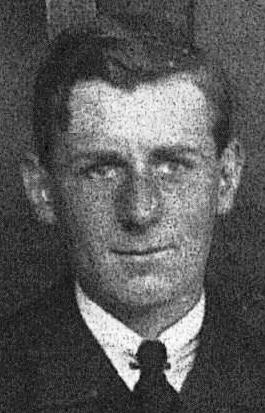
Captain Ernest C Rogers RFA
2 June 1955 together with HMS SHEFFIELD and other RN ships visited Alexandria, Egypt on a good will visit
1956 along with RFA OLNA (2) who played the German supply tanker ALTMARK, she starred in the film “Battle of the River Plate” where she played the German supply ship TACOMA that harboured Captain Langsdorff (played by Peter Finch) and his Crew following the scuttling of the pocket battleship GRAF SPEE off Montevideo in December 1939
29 August 1956 Mr Henry S Edwards RFA appointed as Chief Engineer Officer
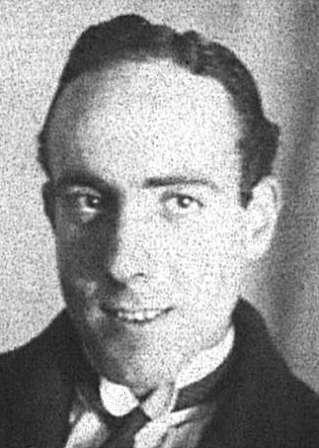
Chief Engineer Officer Henry S Edwards RFA
31 October 1956 supported Operation Musketeer- the Suez Crisis - along with 34 other RFA’s
18 December 1956 at Port Said - HMS ANZIO berthed alongside for stores
1957 winner of the annual Bulawayo Cup
January 1957 involved with other RFAs in clearance work of the Suez Canal
11 November 1957 Captain William F Curlett RFA appointed as Master
24 February 1958 Mr J B D Payne RFA appointed as Chief Engineer Officer
24 March 1958 arrived at Malta from the UK
1 April 1958 a fire was discovered onboard in a refrigerated cargo space. It was quickly brought under control by the Malta Dockyard Fire Brigade and the ship's company. Fire described in the Times of Malta on 2 April 1958 as 'minor'
27 October 1958 to 30 October 1958 off Malta involved in Exercise MEDASWEX26 together with RN units and RFA's BLUE RANGER and TIDESURGE
25 January 1959 at St Lukes Hospital, Malta Donkeyman Greaser Emmanuel Buttigieg discharged dead - natural causes
1959 winner of the annual Bulawayo Cup along with RFA FORT LANGLEY
5 May 1959 sailed Valencia for Malta
8 May 1959 berthed at Malta
May 1959 together with RFA WAVE PRINCE and HMS DEFENDER and other RN units together with Italian Navy Units involved in exercise off Augusta
9 June 1959 east of Gibraltar RASed with HMS CENTAUR
17 June 1959 berthed at Malta after taking part in exercise Sardex with units of the Royal Navy and RFA's FORT LANGLEY, WAVE VICTOR and WAVE SOVEREIGN
10 October 1959 with HMS BIRMINGHAM, HMS DAINTY, HMS DARING and HMS/m TALLY HO and RFA's FORT LANGLEY and RFA TIDE AUSTRAL sailed Malta to take part in Anglo-Spanish exercises in the Western Mediterranean
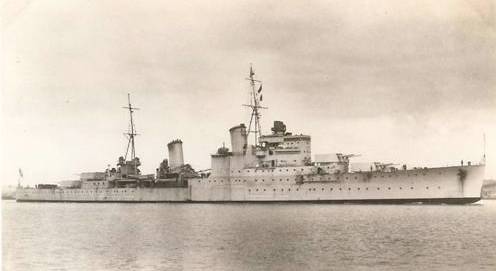
HMS BIRMINGHAM
1960 winner of the annual Bulawayo Cup along with RFA TIDE AUSTRAL
11 March 1960 Mr F B Hobson RFA appointed as Chief Engineer Officer
25 March 1960 Captain William R Parker RFA appointed as Master
22 June 1960 arrived at Malta from Palmas Bay, Sardinia
7 July 1960 sailed Malta for Athens
4 November 1960 arrived at Malta from Gibraltar
10 January 1961 off Malta RASed HMS BERMUDA with Naval Stores
4 April 1961 sailed Malta with HMS's HERMES and SUPRISE
17 April 1961 sailed Malta for Exercises with RN and other Allied ships together with RFA's WAVE BARON, TIDE AUSTRAL, SEA SALVOR and BROWN RANGER
1 June, 1962 berthed at Barcelona, Spain together with RFA FORT ROSALIE (1), RFA WAVE BARON and various RN units for an eight day visit
6 July 1962 together with HMS's HERMES and SCORPION and RFA TIDEREACH visited Beirut, Lebanon
25 October 1962 Mr L Cochrane RFA appointed as Chief Engineer Officer
11 February 1963 Captain Douglas S Norrington OBE RD RFA appointed as Master
11 September 1964 Captain Sydney E Clench RFA appointed as Master
4 January 1965 Her Ship’s Badge was officially presented to her - see above
12 March 1965 while on passage from Hong Kong to Singapore RASed with HMS EAGLE
9 December 1965 together with RFA FORT LANGLEY berthed at Fremantle, Western Australia and secured to the North Wharf
11 December 1965 together with RFA FORT LANGLEY sailed from Fremantle to Carnarvon
July 1966 Captain Charles Eric C Phipps RFA appointed as Master
4 October 1966 took part in Exercise Millsail - an advanced weapon exercise - in the Subic training areas, together with RFA's TIDESPRING (1), RESURGENT and FORT ROSALIE (1) together with various RN and RAN units
April 1967 placed in reserve at Chatham
29 June 1967 arrived in the Scheldte for breaking up by Jos Boel et Fils at Tamise
Notes:
- Prior to RFA service was part of the British Pacific Fleet - hence the B pennant number
Reproduced with permission of the MOD

Subsequent name:
Official Number: 722239
Class: FORT CLASS Auxiliary Oiler Replenishment Ship
Pennant No: A388
Laid down: 9 March 1989
Builder: Swan Hunter, Wallsend
Launched: 1 March 1991
Into Service: 16 July 1993
Out of service: June 2011
Fate: To ship breakers
Items of historic interest involving this ship: -
Background Data: The “one-stop” concept of the two ships in this Class dates back to 1978 with a Staff Target being generated in 1981. Feasibility studies were conducted by both the MoD and Industry, and a Staff Requirement was endorsed at the end of 1983. Ministerial approval was given in 1984 to invite Industry to tender for a provisional Class of six vessels. A wide range of shipbuilders and defence firms were invited to tender, but only two consortia submitted designs - Harland and Wolff (in association with Yarrow Shipbuilders) and Swan Hunter (in association with British Aerospace/Marconi). The tender submitted by Harland and Wolff was technically preferred by both the MoD and external consultants as it offered earlier delivery and a keener price. The Government announced on 24 April 1986 that a “design and build” contract had been awarded to Harland and Wolff to build the first ship of the Class. A second (and final) order was awarded to Swan Hunter the following year
18 December 1987 ordered
1 September 1988 her Ship’s Badge was officially presented to her
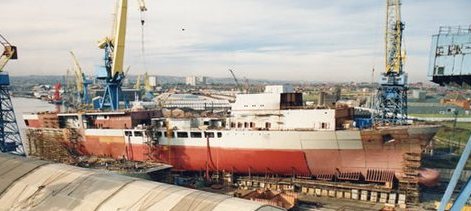
1 March 1991 launched by Swan Hunter Shipbuilders, Wallsend as Yard Nr: 129 named FORT GEORGE. Cost £130860 million - source MOD contract records.The Lady Sponsor was Lady Annie Slater, wife of Admiral Sir Jock Slater, the Commander in Chief Fleet
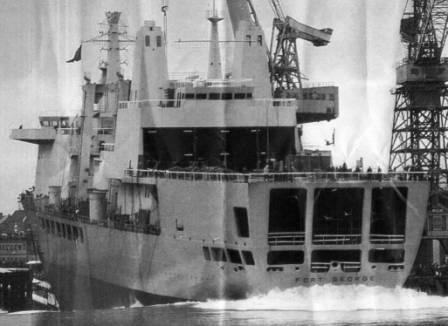
February 1992 the ship became affiliated with TS Ganges, the Cambridge Sea Cadet Unit.
16 July 1992 the National Audit Office reported that both of the FORT CLASS AOR’s were subject to delays and cost overruns, FORT GEORGE being four months behind schedule. Delays in the development of the command system for their air defence capability and difficulties in obtaining parts mean that neither AOR will go to sea with full air defence capabilities for some considerable time
9 January 1993 commenced sea trials
24 March 1993 ship formally affiliated with the South Tyneside Council. The Affiliation Cemermony took place at the Council Chamber from 1930hrs to 2200hrs this day.
30 March 1993 delivered by the builders to the RFA
11 April 1993 sailed Newcastle to Portland arriving 13 April 1993
26 April 1993 to 30 April 1993 involved in prelimitary safety training at and around Portland
4 May 1993 sailed Portland to Devonport arrived the same day
24 June 1993 sailed Portland on exercise berthed at Le Havre on 26 June 1993
28 June 1993 sailed Le Havre on exercises until 3 July 1993 when she berthed on Yonderberry Oil Fuel Jetty, Devonport
14 July 1993 sailed Devonport to Tyne Coal Terminal, arriving on 15 July 1993
16 July 1993 officially dedicated for RFA Service at Tyne Dock, South Shields
20 July 1993 sailed River Tyne via Portland to North Wall, Rosyth arriving on 26 July 1993
20 August 1993 sailed Rosyth via Rona DW Noise Range to A3 Buoy, Portland arriving on 27 August 1993
2 September 1993 sailed Portland to anchor off Bournemouth - the same day
3 September 1993 to D Buoy, Plymouth arriving on 4 September 1993
6 September 1993 moved to No 1 Jetty, Devonport
14 September 1993 sailed Devonport to Santa Cruz de Tenerife arriving alongside on 17 September 1993
21 September 1993 sailed Tenerife for exercises off the Island to Spithead on 3 October 1993
5 October 1993 Captain Anthony F Pitt DSC RFA appointed as Commanding Officer
Captain A F Pitt DSC RFA
7 October 1993 arrived Portsmouth
11 October 1993 sailed Portsmouth to undertake flying trials in the SW Approaches returning to Portsmouth on 25 October 1993
28 October 1993 sailed Portsmouth to Newcastle - Hebburn dry dock arriving 29 October 1993
1 December 1993 Captain Anthony F Pitt DSC RFA appointed as Commanding Officer
5 January 1994 sailed Newcastle to Spithead arriving 6 January 1994
7 January 1994 sailed Spithead for trials returning to Gosport Oil Fuel Depot the same day
10 January 1994 sailed Gosport to undertake First of Class flying trials returning to D Buoy, Plymouth on 19 January 1994
31 January 1994 sailed Devonport for trials in Torbay. To Portland on 5 February 1994 sailing the next day for further trials berthing on D Buoy, Plymouth Sound on 8 February 1994
15 February 1994 moved to Yonderberry Pier, Devonport and then on 19 February 1994 to No 5 basin
18 July 1994 Captain Anthony F Pitt DSC RFA appointed as Commanding Officer
1 August 1994 sailed Yonderberry Pier to run measured mile off Looe and other trials returning to Plymouth Sound on 8 August 1994
10 August 1994 sailed Plymouth Sound for further trials off Portland returning to 'C' Buoy, Plymouth Sound on 12 August 1994
16 August 1994 sailed Plymouth Sound to Portland for trials and then to Cherbourg arriving on 18 August 1994
22 August 1994 sailed Cherbourg to Portland for trials and then to Devonport No 1 Jetty on 26 August 1994
12 September 1994 Captain Peter J Lannin RFA appointed as Commanding Officer
Captain Peter J Lannin RFA
22 September 1994 sailed Plymouth Sound for further trials returning to 'C' Buoy, Plymouth Sound the next day
8 November 1994 sailed Plymouth Sound for shaft trials returning to No 1 Berth at Devonport on 11 November 1994
18 November 1994 sailed Deconport for full power trials and RAS trials with stores rigs with RFA Black Rover returning to Plymouth Sound on 1 December 1994
8 December 1994 moved from Plymouth Sound to Devonport Dockyard
5 January 1995 sailed Devonport to Portland and BOST returning to Devonport on 7 February 1995
14 February, 1995 sailed Devonport JMC and exercise Strong Resolve achoring at Trondheim Bay on 1 March 1995
2 March 1995 sailed Trondheim Bay to Rosyth Dockyard arriving 4 March 1995
31 March 1995 sailed Rosyth Dockyard to anchor in Kirkcaldy Bay
5 April 1995 sailed Kirkcaldy Bay to Rosyth Dockyard arriving 5 April 1995
7 April 1995 sailed Rosyth Dockyard variously to Gosport Oil Fuel Jetty arriving on 25 April 1995
27 April 1995 moved Gosport Oil Fuel Jetty to Portsmouth Dockyard
29 April 1995 sailed Portsmouth Dockyard to exercise Lemon Peel returning to Gosport Oil Fuel Jetty on 6 May 1995
11 May 1995 sailed Gosport Oil Fuel Jetty variously anchoring in Lyme Bay on 14 May 1995
15 May 1995 sailed Lyme Bay to exercise Hallser Link to alongside at Portland Harbour on 18 May 1995
22 May 1995 sailed Portland Harbour to take part in Exercise Lined Seas returning to Portland Harbour on 9 June 1995
12 June 1995 sailed Portland Harbour to Portsmouth Dockyard arriving 16 June 1995
22 June 1995 sailed Portsmouth Dockyard to No 22 Anchorage at Plymouth Sound arriving on 23 June 1995
7 July 1995 sailed Plymouth to Hebburn on Tyne arriving 9 July 1995
11 September 1995 Captain Peter A Taylor OBE RFA appointed as Commanding Officer
25 September 1995 sailed Hebburn on Tyne on sea trials returning to Hebburn on Tyne the next day
7 October 1995 sailed Hebburn on Tyne to Devonport via Ushant arriving 9 October 1995
31 October 1995 sailed Devonport to Glen Mallen via Ushant arriving 2 November 1995
10 November 1995 involved in an unberthing incident when departing Glen Mallen Jetty resulting very minor grazed paint on the ship's port quarter and minor disturbance to the corner of the jetty arriving at Plymouth on 17 November 1995
29 November 1995 sailed Plymouth SCXA to Plymouth BOST returning there on 13 December 1995
6 January 1996 at Plymouth
29 January 1996 sailed Plymouth ASWEX96 returning to Plymouth on 8 February 1996
20 February 1996 sailed Plymouth 'C' Buoy to Harstad arriving on 24 February 1996
27 February 1996 sailed Harstad on Exercise Battle Griffin with Flying Ops RASing with HMS Sheffield and berthing at Loch Striven on 16 March 1996
20 March 1996 sailed Loch Striven to Portsmouth arriving 27 March 1996
2 April 1996 cold move to Gosport Oil Fuel Jetty - moved back to Portsmouth on 10 April 1996
13 April 1996 sailed Portsmouth to Plymouth.
17 April 1996 sailed Plymouth RASed with RFA Black Rover and embarked 845 Sqn NAS and various RN units arriving at Sunny Point, North Carolina on 26 April 1996
26 April 1996 in collision with tug 'Charles D McAllister' while berthing at the Military Ocean Terminal, Sunny Point, North Carolina, United States of America. No apparent damaged suffered by tug. Fort George suffered indentation of approx 250mm localised between and in the region of frames 111 and 112 port side at 2 deck level
29 April 1996 sailed Sunny Point to Fort Storey, Virginia
3 May 1996 sailed Fort Storey, Virginia and RASed with RFA Oakleaf (2) then to Camp Pendleton, Virginia arriving on 4 May 1996
5 May 1996 sailed Camp Pendleton and RASed with RFA Sir Tristram and RFA Sir Galahad (2) and various USS units before anchoring at Morehead City, North Carolina on 7 May 1996
8 May 1996 sailed Morehead City, North Carolina - 12 May 1996 RASed with RFA OAKLEAF (2). 845 Sqd NAS disembarked. RASed with various USS units berthing at Cape Fear River on 15 May 1996
18 May 1996 sailed Cape Fear River to Norfolk Virginia arriving on 20 May 1996
13 June 1996 sailed Norfolk Virginia
17 June June 1996 while on passage from Norfolk, Viginia to Plymouth responded to a Mayday Call from the yacht Tiberius. Damage control party on yacht. Released from Mayday call by RCC, Norfolk, Virginia.
22 June 1996 RASed (S) with RFA Fort Victoria off Cape Finisterre
24 June 1996 berthed at 'C' Buoy Plymouth Sound
15 July 1996 deployed from Plymouth - SCXA - RASing with RFA Fort Grange on 18 July 1996 returning to Plymouth Sound on 20 July 1996
22 July 1996 sailed Plymouth - SCXA - Towing Exercise with RFA OLWEN on 25 July 1996 returning to Plymouth on 26 July 1996
12 August 1996 sailed Plymouth to Loch Striven arriving 14 August 1996
23 August 1996 sailed Loch Striven - various exercises with HMS LONDON to Plymouth 'C' Buoy on 10 October 1996
25 October 1996 sailed Plymouth to anchor in the Solent on the same day
29 October 1996 sailed the Solent to Loch Striven jetty arriving 31 October 1996
16 November 1996 sailed Loch Striven to South Coat Exercise Argas (FOST)
17 November 1996 suffered steering gear failure - repaired
22 November 1996 berthed on 'D' Buoy, Plymouth Sound
27 November 1996 sailed Plymouth Sound on Exercise Lobster Pot returning to 'C' Buoy, Plymouth Sound on 29 November 1996
5 December 1996 sailed Plymouth Sound on exercise returning the next day to 'C' Buoy
11 December 1996 sailed Plymouth Sound 'C' Buoy to Glen Mallan Jetty arriving the next day
4 January 1997 berthed at Glen Mallen
6 January 1997 sailed Glen Mallen to Loch Striven arriving the next day
7 January 1997 sailed Loch Striven to Plymouth arriving 9 January 1997 - moored on 'C' Buoy
15 January 1997 sailed Plymouth to Valencia, Spain arriving 22 January 1997 sailed as part of Task Group 327.01 - the Ocean Wave 97 Deploymentto the Far East led by the carrier HMS ILLUSTRIOUS - along with RFA’s DILIGENCE, FORT AUSTIN, OLNA (3), SIR GALAHAD(2), SIR GERAINT and SIR PERCIVALE
27 January 1997 sailed Valencia to Soudha Bay, Crete arriving 13 February 1997 - during this voyage 153 hours were spent sailing on a single engine or being totally stopped with engine problems
18 February 1997 sailed Soudha Bay to Suez Canal - transit the Canal and then to Jebel Ali arriving 2 March 1997
19 March 1997 sailed Jebel Ali to Singapore arriving 10 April 1997
15 April 1997 sailed Singapore to Hong Kong arriving 30 April 1997
3 May 1997 Captain Brian J Waters OBE RFA appointed as Commanding Officer
Captain Brian J Waters OBE RFA
6 May 1997 sailed Hong Kong to Pusan, South Korea arriving 24 May 1997
28 May 1997 sailed Pusan, South Korea to Sasebo, Japan arriving 30 May 1997
9 June 1997 sailed Sasebo, Japan to Kota Kinabalu arriving 17 June 1997
21 June 1997 sailed Kota Kinabalu to Freemantle, Australia arriving 15 July 1997
21 July 1997 sailed Freemantle, Australia to Diego Garcia arriving 2 August 1997. During voyage on 22 July 1997 suffered filter problems and sailed 4.6 hours on a single engine. Further filter problems and steering motor problems occured on 27 July 1997
4 August 1997 sailed Diego Garcia to Suez arriving 13 August 1997
14 August 1997 sailed Suez to Soudha Bay, Crete arriving on 16 August 1997
19 August 1997 sailed Soudha Bay, Crete to Portsmouth arriving 27 August 2007
13 September 1997 at Plymouth
19 September 1997 sailed Portsmouth to the Mediterranean on exercises and then Gibraltar arriving 10 October 1997
14 October 1997 sailed Gibraltar to Glen Mallen arriving 20 October 1997
24 October 1997 sailed Glen Mallen on exercises to Loch Striven arriving 7 November 1997
21 November 1997 sailed Loch Striven to Plymouth arriving 24 November 1997
1 December 1997 sailed Plymouth for the Plymouth Exercise area and then to DM Crombie arriving 8 December 1997
17 January 1998 sailed DM Crombie to Loch Striven arriving the next day
19 January 1998 sailed Loch Striven arriving the same day at Glen Mallan
21 January 1998 sailed Glen Mallan
26 January 1998 at Valencia, Spain
3 February 1998 berthed at Gibraltar
5 February 1998 sailed Gibraltar to Toulon arriving 9 February 1998
10 February 1998 sailed Toulon to Akrotiri Bay, Cyprus arriving 17 February 1998
18 February 1998 sailed Akrotiri Bay, Cyprus to Port Said arriving 20 February 1998 for Suez Canal transit
21 February 1998 sailed Suez for Dubai arriving 4 March 1998
6 March 1998 sailed Dubai for Suez and Akrotiri Bay, Cyprus arriving 19 March 1998
19 March 1998 sailed Akrotiri Bay, Cyprus to Split arriving 21 March 1998
23 March 1998 sailed Split to Plymouth berthing on 'C' Buoy on 30 March 1998
3 May 1998 sailed Plymouth Sound to La Corunna arriving 9 May 1998
11 May 1998 sailed La Corunna to Crombie arriving 18 May 1998
25 May 1998 sailed Crombie to Yonderberry Pier, Devonport arriving 28 May 1998
6 June 1998 cold move from Yonderbury Pier, Devonport to No 1 Jetty Devonport
18 June 1998 sailed Devonport to Tyne Tees Dockyard arriving 21 June 1998
6 November 1998 sailed Tyne Tees Dockyard to No Jetty, Devonport arriving 10 November 1998
21 November 1998 sailed Devonport to Loch Striven and then Glen Mallan arriving 23 November 1998
2 December 1998 berthed at Glen Mallan
5 December 1998 sailed Glen Mallan to Portland arriving 7 December 1998
7 December 1998 sailed on exercises returning to Portland and then to Plymouth 'D' Buoy on 18 December 1998
13 January 1999 sailed 'D' Buoy, Plymouth Sound on exercise and then to 'G3' anchorage Portland arriving 16 January 1999
17 January 1999 sailed Portland from 'G3' anchorage again on RAS exercises with three ships until 23 January 1999 berthed on 'D' Buoy, Plymouth Sound
25 January 1999 sailed 'D' Buoy, Plymouth undertaking further RAS exercises until 29 January 1999 berthing at Glen Mallen
9 February 1999 sailed Glen Mallen undertaking further RAS's until 14 February 1999 berthing at Loch Striven
16 February 1999 sailed Loch Striven to Glen Mallen arriving 18 February 1999
23 February 1999 sailed Glen Mallen taking part in JMC991 until 1 March 1999 anchoring off Stornaway
1 March 1999 to 4 March 1999 anchored off Stornaway
4 March 1999 sailed Stornaway to Loch Striven arriving on the next day
14 March 1999 sailed Loch Striven for exercises berthing on 'C' Buoy, Plymouth Sound on 19 March 1999
22 March 1999 sailed Plymouth 'C' Buoy for RASing with RN and other Allied ships returning to Plymouth Sound 'D' Buoy on 2 April 1999
6 April 1999 sailed Plymouth Sound RASing with RN, RFA and Allied ships berthing at Glen Mallen on 10 April 1999
15 April 1999 moved to Loch Striven
18 April 1999 sailed Loch Striven to RAS with RN ships berthing at Glen Mallen on 26 April 1999
23 May 1999 sailed Glen Mallen to RAS RN, RFA, US and other Allied ships returning to Glen Mallen on 2 June 1999
8 June 1999 sailed Glen Mallen to take part in JMC992 - RASing with RN and other Allied ships returning to Glen Mallen on 18 June 1999. On 13 June 1999 during RAS with HMS Chiddingfold was involved in an emergency breakaway
22 June 1999 sailed Glen Mallen for exercises with NAS 810 and a two day pumpover with RFA Bayleaf
9 July 1999 disembarked flight in Mounts Bay - then moved to Tor Bay
10 July 1999 sailed Tor Bay to Glen Mallen arriving on 12 July 1999
8 August 1999 sailed Glen Mallen to Plymouth berthing on 'D' Buoy on 10 August 1999
17 August 1999 sailed 'D' Buoy at Plymouth Sound returning to No 23 anchorage in Plymouth Sound on 19 August 1999
20 August 1999 sailed Plymouth Sound to RAS with RN Units and arrived at Alicante, Spain on 25 August 1999
27 August 1999 sailed Alicante, Spain to Augusta, Sicily with RN and Allied Units arriving 30 August 1999
4 September 1999 sailed Augusta, Sicily to Izmir, Turkey after RASing with RN Units arrived 7 September 1999
8 September 1999 sailed Izmir to Saros Bay RASing with RN and Allied Units arriving on 16 September 1999
18 September 1999 sailed Saros Bay to Soudha Bay, Crete RASing with RN and other units arriving on 26 September 1999
7 October 1999 sailed Soudha Bay, Crete
10 October 1999 undertook a pump over with RFA Olna
12 October 1999 anchored at Alexandria, Egypt
13 October 1999 sailed Alexandria, Egypt to RAS (various) returning on 24 October 1999
24 October 1999 moved to Arab's Gulf and anchored
27 October 1999 sailed Arab's Gulf to RAS (various) returning to the same anchorage later in the day
29 October 1999 sailed Arab's Gulf to RAS (various) to Mersin, Turkey on 4 November 1999
16 November 1999 sailed Mersin to pump over with RFA Oakleaf and then anchoring at Akrotiri on 17 November 1999
19 November 1999 sailed Akrotiri to Karystos Bay (anchorage) on 21 Noevmebr 1999
21 November 1999 sailed Karystos Bay to commence Exercise Western Approaches and RAS HMS OCEAN and then to anchor at Thessaloniki on 30 November 1999
1 December 1999 sailed Thessalonnika and RASed with HMS Edinburgh with fuel to Souda Bay on 2 December 1999
3 December 1999 sailed Souda Bay to Malaga, Spain arriving 7 December 1999
9 December 1999 sailed Malaga to Glen Mallen arriving on 12 Decenber 1999
13 January 2000 sailed Glen Mallen to r.v. with Task Group 1800 and RAS (various) until 24 January 2000 detached from Task Group 1800 - then on passage to Augusta, Italy arriving 28 January 2000
1 February 2000 sailed Augusta, Italy to Port Said arriving at anchorage on 4 February 2000
5 February 2000 transit of Suez Canal
6 February 2000 sailed Suez to Persian Gulf RASed enroute (various RN ships) to Dubai arriving on 14 February 2000
17 February 2000 sailed Dubai to Bahain arriving on 22 February 2000 (anchorage) during the passage RASed with HMS Illustrious
23 February 2000 sailed Bahrain - RASed with HMS Illustrious then to anchorage at Fujairah on 3 March 2000
4 March 2000 sailed Fujairah after loading stores, further loading stores at Muscat then to Beira arriving on 11 March 2000
11 March 2000 the ship was sent to Mozambique to help with disaster relief work following devestating floods with embarked assets of 820 NAS - Operation Barwood
14 March 2000 berthed alongside at Beira
15 March 2000 sailed Beira returning variously until 24 March 2000
24 March 2000 sailed Beira to Mombasa arriving on 27 March 2000
30 March 2000 sailed Mombasa to Suez arriving 6 April 2000
7 April 2000 transit Suez Canal northwards
8 April 2000 sailed Port Said to Augusta arriving 10 April 2000
16 April 2000 sailed Augusta to Cadiz - enroute RASed with HMS Gloucester - fuel and stores arriving at Cadiz on 20 April 2000
23 April 2000 sailed Cadiz to Brest - RASed with HMS Illustrious twice and conducted flying ops with the carrier on four days arriving Brest on 28 April 2000
30 April 2000 sailed Brest to join Exercise Linked Seas - detached on 7 May 2000 from Exercise Link Seas to join Operation Pallister including a pump over from RFA Bayleaf (3) on 15 May 2000
May 2000 she accompanied HMS Illustrious to Sierra Leone to support British Operations to restore stabability to that country - Operation Pallister
22 May 2000 berthed at Dakar
23 May 2000 sailed Dakar - Operation Palliser - returning on 31 May 2000
2 June 2000 sailed Dakar - Operation Palliser - returning on 9 June 2000
11 June 2000 sailed Dakar - Operation Palliser
16 June 2000 met RFA Brambleleaf for pump over
18 June 2000 RASed RFA Fort Austin and RFA Bedivere
19 June 2000 berthed at Las Palmas, Grand Canaria
22 June 2000 sailed Las Palmas to Plymouth arriving on 26 June 2000 moored to 'C' Buoy, Plymouth Sound
27 June 2000 sailed Plymouth Sound to Spithead arriving the next day
2 July 2000 sailed Spithead to the Irish Sea
3 July 2000 RAsed with RFA Brambleleaf
5 July 2000 berthed on 'C' Buoy, Plymouth Sound
7 July 2000 was presented with a Commendation from the Commander-in-Chief Fleet Admiral Sir Nigel Essenheigh by Commodore Peter J Lannin for her humanitarian relief work in both Mozambique and Sierra Leone
22 August 2000 sailed Plymouth Sound to Loch Striven arriving on 24 August 2000
25 August 2000 sailed Loch Striven to Glen Mallen arriving the same day
2 September 2000 sailed Glen Mallen
7 Septmber 2000 RASed with HMS Invincible
8 September 2000 berthed 'D' Buoy, Plymouth Sound
10 September 2000 sailed Plymouth Sound
21 September 2000 RASed with RFA Brambleleaf
26 September 2000 Humanitarian aid - in company with the carrier HMS INVINCIBLE, the destroyer HMS LIVERPOOL and the frigate HMS CUMBERLANDshe assisted survivors from the Greek ferry EXPRESS SAMINA which had struck prominent rocks off the island of Paros and had quickly sunk with the loss of 76 passengers and crew
28 September 2000 anchored at Akrotri Bay then sailed to Haifa, Israel arriving the next day
3 October 2000 sailed Haifa, Israel
8 October 2000 RASed with RFA Brambleleaf
9 October 2000 anchored at Akrotri Bay
11 October 2000 sailed Akrotri Bay to Augusta arriving 17 October 2000
21 October 2000 sailed Augusta
31 October 2000 RASed with RFA Brambleleaf
13 November 2000 berthed 'D' Buoy, Plymouth Sound
19 November 2000 sailed Plymouth Sound to Poole Bay anchorage arriving the next day
21 November 2000 sailed Poole Bay to Portland Harbour anchorage
23 November 2000 sailed Portland Harbour to Torquay Bay anchorage arriving the next day
27 November 2000 sailed Torquay Bay to Vigo arriving 6 December 2000
7 December 2000 sailed Vigo to Loch Striven arriving 11 December 2000
17 December 2000 sailed Loch Striven to Crombie arriving 19 December 2000
8 January 2001 sailed Crombie for exercises with 655 Squadron Army Air Corp arriving Plymouth 'D' Buoy on 17 January 2001
22 January 2001 sailed Plymouth for exercises with 819 Squadron NAS and RASing with various RN units before returning to Plymouth Sound on 1 February 2001
7 February 2001 sailed Devonport to take part in 'Thursday War'
12 February 2001 RASed with HMS ILLUSTRIOUS
14 February 2001 alongside at Glen Mallen
22 February 2001 moved berths from Glen Mallen to Loch Striven
2 March 2001 sailed Loch Striven - took part in Exercise Joint Winter - arrived Narvik 8 March 2001
11 March 2001 involved in minor berthing incident at Narvick, Norway when the ships accomodation ladder platform contacted a tubular steel upright supporting iron ore hopper which was over hung the jetty edge
11 March 2001 sailed Narvik - took part in Exercise Tartan Relief - arrived at Glen Mallen to destore 22 March 2001
3 April 2001 sailed Glen Mallen to Devonport arriving alongside 8 April 2001 after being delayed by bad weather
3 May 2001 sailed Yonderberry Oil Fuel Jetty, Devonport to Tyne Commission Quay arriving 5 May 2001 to await entry into dry dock
3 August 2001 sailed the River Tyne after refit to Devonport to restore arriving on 6 August 2001
13 August 2001 at Devonport
22 August 2001 sailed Devonport to Loch Striven arriving 24 August 2001
28 August 2001 moved berth from Loch Striven to Glen Mallan
14 September 2001 sailed Glen Mallan to Devonport arriving 21 September 2001
26 September 2001 to 28 September 2001 post refit training
1 October 2001 sailed Plymouth Sound to La Corunna arriving 5 October 2001
8 October 2001 sailed La Corunna to Plymouth arriving 12 October 2001
16 October 2001 to 25 October 2001 further training
27 October 2001 sailed Plymouth to Glen Mallen arriving 29 October 2001
8 November 2001 MOD reported that RFA Fort George had been awarded the Royal Navy Wilkinson Sword of Peace for 2000 for her above efforts in Mozambique
19 November 2001 sailed Glen Mallen - suffered engine defect and diverted to Plymouth for repairs arriving 23 November 2001
28 November 2001 sailed Plymouth with FOST staff onboard. In Gibraltar Bay 1 December 2001. FOST staff depart 6 December 2001 when anchored in Akrotiri Bay, Cyprus
6 December 2001 sailed Akrotiri Bay, Cyprus to Port Said arriving 7 December 2001
8 December 2001 transit of the Suez Canal from Port Said arriving Suez the next day
9 December 2001 sailed Suez to Salalah arriving 14 December 2001
16 December 2001 sailed Salalah to Mahe, Seychelles. While on passage King Neptune boarded for a Crossing the line ceremony on 22 December 2001.
23 December 2001 arrived at Mahe, Seychelles
2 January 2002 sailed Mahe, Seychelles to Dubai arriving 11 January 2002
14 January 2002 sailed Dubai to patrol
27 January 2002 while in the Arabian Sea her embarked Sea King helicopters from A Flight, 820 Squadron RNAS rescued 14 crew members of the mv Parvin Sagar a sinking 50 foot dhow - landed at Muscat via an Omani COast Guard Service launch
6 February 2002 took mv Zakat in tow to Dubai arriving on 11 February 2002
25 February 2002 sailed Dubai
11 March 2002 RASed HMS YORK
25 March 2002 moored alongside at Salalah
26 March 2002 sailed Salalah to Fujayrah - anchored off
2 April 2002 sailed Fujayrah after FLYEX anchored again
3 April 2002 RFA DILLIGENCE alongside
4 April 2002 sailed again RASed HMS's CAMBLETOWN and YORK returning to Dubai No 10 berth on 21 April 2002
1 May 2002 sailed Dubai to Salalah arriving on 18 May 2002
23 May 2002 sailed Salalah
25 May 2002 RASed (stern) HMS YORK
29 May 2002 anchored at Suez
30 May 2002 sailed Suez for Malaga, Spain
1 June 2002 RASed HMS YORK
4 June 2002 berthed alongside at Malaga
10 June 2002 sailed Malaga to Plymouth Sound - arriving 13 June 2002
18 June 2002 sailed Plymouth Sound to Loch Striven arriving 20 June 2002
25 June 2002 berthed at Loch Striven
27 June 2002 sailed Loch Striven for JMC. Embarked 820 Squadron NAS
3 July 2002 RASed HMS WESTMINSTER
16 July 2002 berthed at Crombie Jetty
17 July 2002 berthed at DM Crombie, River Forth
17 August 2002 sailed Crombie to Loch Striven arriving 20 August 2002
22 August 2002 sailed Loch Striven to Crombie Jetty arriving 24 August 2002
31 August 2002 sailed Crombie Jetty to anchor at Falmouth Bay arriving 7 September 2002 and discharged equiment and naval stores
8 September 2002 sailed Falmouth Bay anchorage to Weymouth Bay anchorage arriving 14 September 2002
15 September 2002 sailed Weymouth Bay to Cherbourg arriving 20 September 2002 secured alongside at Quay de France
22 September 2002 sailed Cherbourg to Spithead arriving the same day
23 September 2002 to 27 September 2002 sailed Spithead for Staff Course Sea Days (SCSD) returning to Spithead anchorage each night
28 September 2002 sailed Spithead anchorage to Crombie Jetty arriving 30 September 2002
2 October 2002 berthed at DM, Crombie, River Forth
22 October 2002 sailed Crombie Jetty to embark NAS flight
23 October 2002 returned to Combie Jetty to effect repairs
24 October 2002 sailed Crombie Jetty to Tail of the Bank anchorage arriving on 27 October 2002
28 October 2002 sailed Tail of the Bank for JMC until 7 November 2002
7 November 2002 berthed at Glen Mallen
4 December 2002 sailed Glen Mallen to berth on 'C' Buoy Plymouth Sound on 6 December 2002
10 December 2002 sailed Plymouth Sound for SCEXAS returning to Plymouth Sound 'D' Buoy on 13 December 2002
16 December 2002 sailed Plymouth for SCEXAS berthing at Victory Jetty, HMNB Portsmouth on 20 December 2002
3 January 2003 sailed HMNB Portsmouth to Southampton 38 Berth - arrived the same day
6 January 2003 sailed Southampton 38 berth for SCEXAS
9 January 2003 RASed with HMS Ocean
12 January 2003 secured alongside at Portland Harbour
14 January 2003 to sea SCEXAS
17 January 2003 secured to 'D' Buoy, Plymouth Sound
21 January 2003 sailed Plymouth SCEXAS as FOST tanker duties returning to 'C' Buoy Plymouth Sound on 24 January 2003
31 January 2003 sailed Plymouth SCEXAS as FOST tanker duties returning to No 1 Jetty Devonport Dockyard the next day
8 March 2003 saild Devonport Dockyard to Greenock for refit arriving on 10 March 2003
14 July 2003 Captain (E) Edward M Quigley RFA appointed as Chief Engineer Officer
3 August 2003 sailed Greenock for sea trials
6 August 2003 berthed Greenock in Inchgreen Drydock
2 September 2003 sailed Greenock for Sea trials and then berthing alongside Loch Striven Fuel Jetty on 4 September 2003
5 September 2003 sailed Loch Strievn Fuel Jetty to No 1 Jetty, Devonport arriving the next day
21 September 2003 sailed No 1 Jetty, Devonport to G3 anchorage at Portland arriving the next day
24 September 2003 sailed Portland anchorage to Loch Striven Fuel Jetty arriving 26 September 2003
1 October 2003 sailed Loch Striven Fuel Jetty for DG trials at Glen Mallen and then to 'D' Buoy Plymouth Sound arriving 12 October 2003
22 October 2003 sailed Plymouth for FOST until returning to 'D' Buoy on 29 October 2003
4 November 2003 sailed Plymouth Sound for FOST until returning to 'C' Buoy on 8 November 2003
9 November 2003 sailed Plymouth Sound for FOST until returning alongside at Portland on 14 November 2003
16 November 2003 sailed Portland for FOST until returning to Portsmouth on 20 November 2003
25 November 2003 sailed Portsmouth to Las Palmas arriving on 29 November 2003
2 December 2003 sailed Las Palmas to off the Azores on 5 December 2003
6 December 2003 off the Azores RASed with HMS Manchester
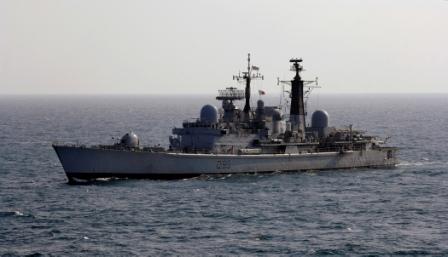
HMS MANCHESTER
10 December 2003 berthed alongside at Portland Harbour. Then sailed, same day, to South Shields arriving alongside on 12 December 2003
17 December 2003 sailed South Shields via the Pentland Firth to Glen Mallen arriving 23 December 2003
2 February 2004 at Crombie
6 March 2004 sailed Glen Mallen for Exercise Joint Winter 04 visiting Oslo on 25 March 2004
30 March 2004 sailed Oslo to Crombie arriving 31 March 2004
28 April 2004 sailed Crombie to Loch Striven Fuel Jetty arriving the next day
5 May 2004 sailed Loch Striven Fuel Jetty to Charleston arriving the next day
1 July 2004 at New York
6 July 2004 sailed New York for DM Crombie, River Forth arriving 15 July 2004
21 September 2004 at Plymouth
12 January 2005 sailled Loch Striven
17 January 2005 with four Merlin’s of 820 NAS exercised in the Channel for MARSTRIKE 05 Deployment with HMS INVINCIBLE and several frigates including the French Ship Guepratte
18 January 2005 sailed Portland on Marstrike 05 Deployment
10 February 2005 the ship rescued the only Yemeni survivor from a sunken fishing boat in the Red Sea who had been adrift on a crate for a week.
26 February 2005 RASed with FS Guepratte (F714)
March 2005 participated in Exercise Magis Carpet 05 off the Omani coast
17 April 2005 arrived at Loch Striven on completion of Marstrike 05 duties
21 May 2005 arrived at Gibraltar
28 June 2005 with Prince and Princess Michael of Kent embarked, she took part in the International Fleet Reviewfor Trafalgar 200 at Spithead along with RFA’s ARGUS, FORT VICTORIA, ORANGELEAF(3), SIR BEDIVERE, SIR GALAHAD (2), SIR TRISTRAM and WAVE RULER (2)
30 June 2005 sailed Spithead to Portland - anchored Portland anchorage the same day
5 July 2005 sailed sailed Portland Anchorage - overnight flying serials with 702 Sqd RNAS - to Plymouth Sound to load fresh water arriving 6 July 2005
6 July 2005 sailed Plymouth Sound to Brest, France - day and night flying serials with 702 Sqd Fleet Air Arm until 13 July 2005
13 July 2005 berthed at Brest, France
16 July 2005 sailed Brest, France - day and night flying serials with 702 Sqd Fleet Air Arm until 21 July 2005
21 July 2005 day and night flying serials with 702 and 848 Sqds Fleet Air Arm until 22 July 2005
22 July 2005 anchored at Portland sailing the same day to DM Crombie arriving 25 July 2005
4 August 2005 sailed DM Crombie to Leith arriving the same day
8 August 2005 sailed Leith to Brodick Bay anchorage, Isle of Arran arriving 10 August 2005
11 August 2005 sailed Brodick Bay anchorage, Isle of Arran to Spithead arriving 13 August 2005
15 August 2005 sailed Spithead to King George V dry dock, Southampton arriving the same day
12 September 2005 sailed King George V dry dock to Mounts Bay anchorage arriving 14 September 2005
15 September 2005 sailed Mounts Bay anchorage for day and night flying serials with 771 Sqd Fleet Air Arm returning to Mounts Bay anchorage on 17 September 2005
9 November 2005 sailed Portland to Crombie arriving on 13 November 2005
23 November 2005 HRH The Prince Edward, Earl of Wessex KCVO, Commodore in Chief RFA, visited the ship at the Defence Munitions Centre, Crombie, Fife
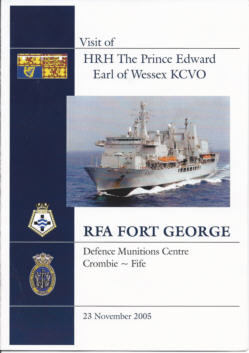
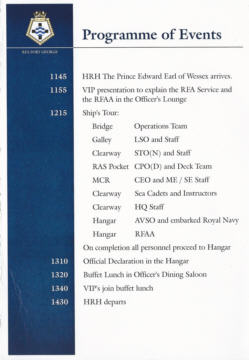
9 December 2005 berthed at Crombie
13 January 2006 sailed Crombie to Bigbury Bay arriving 15 January 2006
16 January 2006 sailed Bigbury Bay to Gibraltar arriving 20 January 2006 - made fast on the South Mole
7 February 2006 sailed Gibraltar
11 February 2006 RASed with HMS Illustrious while on passage from Gibraltar to Portland arriving 15 February 2006
23 March 2006 sailed Portland .
24 March 2006 embarked 824 Sqn RNAS enroute to Kristiansand for Exercise Brilliant Mariner.
25 March 2006 to 30 March 2006 took part in Exercise Brilliant Manner involving flying with 824 Sqn NAS
31 March 2006 arrived at Kristiansand berthed at No 13 berth
2 April 2006 sailed Kristiansand to continue Exercise Brilliant Manner involving flying with 824 Sqn NAS until 6 April 2006 arriving at Portland
26 April 2006 sailed Portland to Brodick Bay Anchorage arriving on 30 April 2006
2 May 2006 sailed Brodick Bay Anchorage to Loch Striven arriving the same day
22 May 2006 sailed Loch Striven to Portsmouth Middle Slip Jetty arriving 25 May 2006
28 May 2006 sailed Portsmouth Middle Slip Jetty to Portland anchorage arriving the same day
29 May 2006 engaged in exercises in the Portland area until 31 May 2006
1 June 2006 to Plymouth - berthed at Devonport Dockyard
7 June 2006 cold move to Yonderbury Oil Jetty
17 June 2006 sailed Yonderbury Oil Jetty for exercise with 820 Sqd NAS
22 June 2006 RASed with RFA Fort Austin
24 June 2006 anchored off Stornoway until 28 June 2006
29 June 2006 three helicopters from 820 Sqd NAS
30 June 2006 berthed at Glen Mallen JMC
4 July 2006 sailed Glen Mallen to Loch Striven arriving the same day
20 July 2006 sailed Loch Striven to Faslane arriving the same day
25 August 2006 sailed Faslane to Garelochhead arriving the same day
18 September 2006 sailed Garelochhead arriving the same day
26 September 2006 sailed Faslane to Garelochhead arriving the same day
18 October 2006 sailed Garelochhead to Tail of the Bank Anchorage A7 arriving the same day
24 October 2006 sailed Tail of the Bank anchorage to Garelochhead arriving the same day
2 November 2006 sailed Garelochhead to Princess Dock, Birkenhead arriving the next day
19 December 2006 sailed Princess Dock, Birkenhead to Loch Striven arriving the next day
5 January 2007 sailed Loch Striven to Tail of the Bank anchorage the same day
6 January 2007 sailed Tail of the Bank for testing equipment. Serials cancelled due to weather conditions - arrived Plymouth Sound made fast 'C' Buoy on 10 January 2007
16 January 2007 sailed Plymouth, conducting flying serials and other exercises. RASed with RFA Black Rover. Then passage to Crombie arriving 30 January 2007
2 March 2007 sailed Crombie to Plymouth Sound - 'C' Buoy - arriving 8 March 2007
18 March 2007 sailed Plymouth Sound and RASed with Allied ships, taking part in the Thursday War
19 March 2007 RASed with FGS Bayern - dry hook-up
20 March 2007 RASed with HMS SOUTHAMPTON - dry solids
21 March 2007 RASed with FGS Bayern - emergency break away also RASed with CS Almirante Cochrane - Test weight only
22 March 2007 RASed with FGS Bayern - emergency break away RASed a second time with FGS Bayern four hours later
23 March 2007 returned to Plymouth Sound 'C' Buoy
26 March 2007 sailed Plymouth Sound for exercises.
27 March 2007 undertook TOWing Exercises with HMS PORTLAND, Flying Exercise and RASed with FGS Augburg and Admirante Cochrane
28 March 2007 RASed with FGS Bayern and HMS PORTLAND.
29 March 2007 RASed with HMS PORTLAND (twice) and HMS SOUTHAMPTON
30 March 2007 exercise finished then on passage to Crombie arriving 2 April 2007
20 April 2007 sailed Crombie for exercise Neptune Warrior with 820 NAS and RASing with with HMS ILLUSTRIOUS (on 4 occasions), HMS MANCHESTER (twice) and HMS KENT(once).
3 May 2007 returned to Loch Striven
7 May 2007 sailed Loch Striven conducting flying operations
9 May 2007 RASed with HMS MANCHESTER
10 May 2007 arrived at Stavanger, Norway
13 May 2007 sailed Stavanger, Norway taking part in Exercise Noble Mariner in the Baltic Sea returning to Loch Striven on 29 May 2007
16 May 2007 RASed with HMS ILLUSTRIOUS -Avcat & Diesel
19 May 2007 RASed with HMS ILLUSTRIOUS (twice)
23 May RASed with HMS ILLUSTRIOUS
1 June 2007 sailed Loch Striven to Glen Mallen arriving the same day
22 June 2007 sailed Glen Mallen on exercises in the Irish Sea, Bristol Channel, off Plymouth returning to the Firth of Clyde (No 6 Anchorage) on 1 July 2007
24 June 2007 arrived at Devonport from Loch Long
27 June 2007 RASed with HMS's ILLUSTRIOUS and MANCHESTER
2 July 2007 sailed No 6 Anchorage, Firth of Clyde to Glen Mallen arriving the same day.
5 July 2007 sailed Glen Mallen to Mounts Bay anchorage arriving 12 July 2007
July 2007 with FOST
12 July 2007 moved from Mounts Bay anchorage to Falmouth Bay Anchorage and then to 'C' Buoy Plymouth Sound arriving on 13 July 2007
16 July 2007 sailed Plymouth 'C' Buoy returning to the same buoy the same day
19 July 2007 sailed Plymouth 'C' Buoy returning to the same buoy the next day
23 July 2007 sailed Plymouth 'C' Buoy returning to No 21 Anchorage, S Plymouth Break Water on 26 July 2007
24 July 2007 RASed - jackstay - with the Chilean Navy Frigate Admirante Lynch and RASed - fuel - with SAS Amatola
25 July 2007 RASed with HMS's ARGYLE, NOTTINGHAM and SAS Amatola
27 July 2007 sailed No 21 Anchorage, S Plymouth Break Water to 'C' Buoy, Plymouth Sound
3 August 2007 sailed 'C' Buoy, Plymouth Sound RASing with HMS Illustrious, HMS Clyde anchoring at Kirkcaldy Bay K2 Anchorage on 12 August 2007
6 August 2007 RASed with HMS's ILLUSTRIOUS and CLYDE
13 August 2007 sailed Kirkcaldy Bay K2 Anchorage to Crombie arriving the same day
18 September 2007 sailed Crombie to Loch Striven OFJ arriving 21 September 2007
23 September 2007 sailed Loch Striven OFJ to Mounts Bay Anchorage arriving 24 September 2007
24 September 2007 sailed Mounts Bay anchorage via Adriatic to take part in Exercise Noble Midas undertaking RAS's with various HM warships
1 October 2007 Humanitarian assistance: whilst enroute to a major NATO exercise in the Adriatic, she provided medical assistance to a passenger on the Italian ferry RIVIERA DEL COVERO and one of her embarked helicopters airlifted the patient to Split
2 October 2007 RASed with HMS's CHATHAM and YORK
5 October 2007 RASed with HMS's YORK, CHATHAM and SPS CANARIAS
7 October 2007 RASed with HMS's ILLUSTRIOUS
15 October 2007 passed Gibraltar westbound to anchor in Mounts Bay on 18 October 2007
19 October 2007 sailed Mounts Bay anchorage to Crombie arriving 21 October 2007
25 October 2007 sailed Crombie for exercises returning there on 27 October 2007
28 October 2007 sailed Crombie - RASed with HMS Illustrious
30 October 2007 RASed with RFA Orangeleaf
2 November 2007 arrived Leixoes
7 November 2007 sailed Leixoes to Rota arriving on 14 November 2007
17 November 2007 sailed Rota returning there on 23 November 2007
26 November 2007 sailed Rota to Loch Striven arriving 30 November 2007
5 January 2008 sailed Loch Striven to Glen Mallen arriving the same day
22 February 2008 at Devonport
1 April 2008 in Plymouth Sound
5 April 2008 berthed at Devonport Dockyard
9 May 2008 arrived Birkenhead and entered No:5 Dock for refit
June 2008 in refit at Northwestern Shiprepairers and Shipbuilders Limited (NSL) in Birkenhead, Wirral
22 October 2008 Captain James Murchie RFA appointed as Commanding Officer
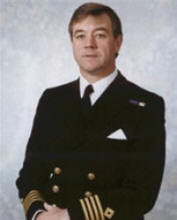
20 November 2008 one man and one woman were injured on board and hospitalised while the ship was under refit at Cammell Laird Shipyard, Birkenhead. The Police were investigating
28 November 2008 towed from No: 5 Dock to Gladstone Dock, Birkenhead
15 December 2008 Captain (E) Robert Settle RFA appointed as Chief Engineer Officer
16 December 2008 sailed Gladstone Dock, Liverpool for post refit sea trials and then to Loch Striven arriving on 19 December 2008
11 February 2009 sailed Loch Striven to Portsmouth arriving 13 February 2009
26 February 2009 sailed Portsmouth to Plymouth (5 & 6 Berth) arriving the next day
5 March 2009 sailed Plymouth to Portland arriving the next day for FOST
10 March 2009 sailed Portland to Plymouth Sound on 'D' Buoy arriving the same day
13 March 2009 sailed Plymouth Sound returning the same evening to 'C' Buoy
16 March 2009 sailed Plymouth Sound returning the next day to 'C' Buoy
18 March 2009 sailed Plymouth Sound returning the 20 March 2009 to 'C' Buoy
23 March 2009 sailed Plymouth Sound returning the same evening to 'C' Buoy
31 March 2009 sailed Plymouth Sound returning the next day to 'C' Buoy
1 April 2009 commenced OST until 14 April 2009 berthed at No 1 Jetty, Devonport
15 April 2009 sailed No 1 Jetty, Devonport to Portland arriving 17 April 2009
20 April 2009 sailed Portland to Yonderberry Oil Jetty, Devonport arriving 22 April 2009
24 April 2009 sailed Yonderberry Oil Jetty, Devonport to Loch Striven arriving 26 April 2009
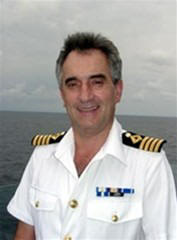
Captain Paul Kehoe RFA
8 May 2009 Captain D P Kehoe RFA appointed as Commanding Officer
15 May 2009 sailed Loch Striven to Crombie arriving 17 May 2009
24 May 2009 sailed Crombie to take up duties as FOST tanker SCEXA until 29 May 2009 arrived at Plymouth Sound 'C' Buoy
1 June 2009 continued as FOST tanker SCEXA
2 June 2009 as FOST tanker RASed HMS Monmouth
4 June 2009 as FOST tanker RASed HMS Monmouth
5 June 2009 secured to 'C' Buoy, Plymouth Sound
9 June 2009 sailed Plymouth to Mayport USA arriving 20 June 2009
24 June 2009 sailed Mayport to take up duites as APT(N)
25 June 2009 RASed HNLMS Van Amstel
29 June 2009 RASed with HMS IRON DUKE
1 July 2009 berthed alongside at Fort Lauderdale
5 July 2009 sailed Fort Lauderdale
6 July 2009 RASed RFA LARGS BAY
13 July 2009 RASed USS Hawes (FFG53)
15 July 2009 anchored at Little Bay, Montserrat
20 July 2009 sailed Montserrat
21 July 2009 RASed with HMS IRON DUKE
24 July 2009 RASed HMS MANCHESTER
26 July 2009 anchored Crocus Bay, Anguilla
29 July 2009 sailed Anguilla to Curacao arriving 3 August 2009
9 August 2009 sailed Curacao
10 August 2009 RASed HMAS BALLARAT
11 August 2009 RASed HMAS SYDNEY - emergency breakaway
17 August 2009 RASed with HMS IRON DUKE
21 August 2009 arrived Guantanamo Bay
25 August 2009 sailed Guantanamo Bay
28 August 2009 RASed with HMS IRON DUKE
2 September 2009 RASed with HMS IRON DUKE
7 September 2009 berthed at Trinidad
10 September 2009 sailed Trinidad
12 September 2009 RASed USS Hawes (FFG53)
15 September 2009 with HMS Iron Duke and a unit of the US Coast Guard they stopped a vessel mv Crystal found to be carrying five and a half tons of cocaine in 212 bales.
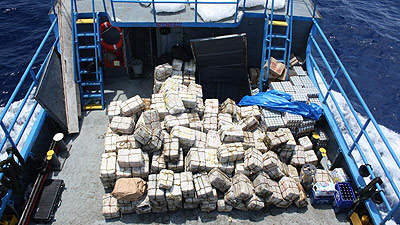
The drugs found hidden onboard were reported as being worth £240 million on the streets of the UK
16 September 2009 RASed with HMS IRON DUKE - emergency breakaway
18 September 2009 anchored off St Kitts
21 September 2009 sailed St Kitts to undertake further APT(N) duties
24 September 2009 anchored off Grenada
30 September 2009 sailed Grenada to undertake further APT(N) duties
5 October 2009 berthed at Curacao
9 October 2009 sailed Curacao to RAS with HMS IRON DUKE and then to return to UK waters
21 October 2009 RASed with HMS DARING
23 October 2009 berthed at Crombie
18 November 2009 sailed Crombie to Portland arriving the next day
20 November 2009 at Portland small fire onboard - extinguished
21 November 2009 off Portland flying ops conducted
22 November 2009 off Portland flying ops conducted - casualty on flight deck - moved to hospital for observation
23 November 2009 to 27 November 2009 between Portland and Plymouth flying ops conducted
27 November 2009 RASed with HMS ARK ROYAL
29 November 2009 FOST tanker variously deployed until 11 December 2009 when secured on D Buoy at Plymouth
30 November 2009 RASed with HMS ARK ROYAL and HMS CHATHAM
1 December 2009 RASed with HMS ST ALBANS and with FGS Niedersachen - emergency breakaway with the FGS ship
2 December 2009 RASed with FGS Niedersachen
3 December 2009 RASed with HMS CHATHAM and with FGS Niedersachen
8 December 2009 - RASed with HMS ARK ROYAL
9 December 2009 RASed with FGS Niedersachen twice - emergency breakawy on both occasions. RASed with HMS LIVERPOOL
10 December 2009 RASed with HMS ST. ALBANS and HMS ARK ROYAL
14 December 2009 sailed Plymouth. RASed with HMS ARK ROYAL - emergency breakaway
15 December 2009 RASed with HMS ST ALBANS
16 December 2009 RASed and VERTREP with HMS ARK ROYAL - stores
18 December 2009 alongside at Loch Striven
5 January 2010 sailed Loch Striven to Glen Mallan
24 January 2010 sailed Glen Mallen - Scexas to Mounts Bay arriving 5 February 2010
27 January 2010 RASed with HMS LIVERPOOL - emergency break away
28 January 2010 RASed with HMS LIVERPOOL
5 February 2010 sailed Mounts Bay to Crombie arriving 8 February 2010
March 2010 Captain Dale Worthington OBE RFA appointed as Commanding Officer
Captain Dale Worthington OBE RFA
15 April 2010 sailed Crombie to RAS with RN and other Allied naval units arriving at Loch Striven on 20 April 2010
22 April 2010 sailed Loch Striven as temporary flagship for the initial phase of the Auriga 10 Deployment until the arrival of the carrier HMS ARK ROYAL
16 April 2010 RASed with HMS ARK ROYAL and HMS LIVERPOOL
18 April 2010 RASed with RASed with HMS ARK ROYAL, HMS LIVERPOOL, HMS SUTHERLAND, HMS CUMBERLAND and other Allied ships
26 April 2010 RASed with USS Barry (DDG52) and HMS SUTHERLAND
30 April 2010 RASed with USS Barry (DDG52) and HMS SUTHERLAND
1 May 2010 RASed with USS Barry (DDG52)
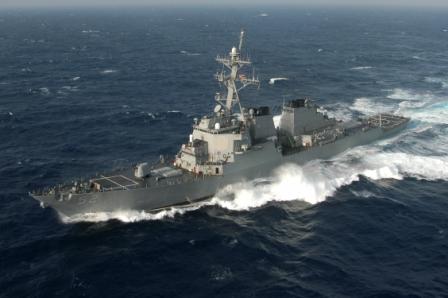
USS Barry (DDG52)
5 May 2010 RASed with HMS SUTHERLAND
6 May 2010 RASed with USS Barry and HMS SUTHERLAND
10 May 2010 RASed with USS Barry and HMS SUTHERLAND
11 May 2010 with other units (RN, US and French) of the Auriga multinational naval task group arrived at Norfolk, Virginia, USA for a three day visit
14 May 2010 sailed Norfolk, Virginia to take part in Exercise Capella Strike
17 May 2010 Jackstay transfer to HMS SUTHERLAND
18 May 2010 RASed USS Barry and HMS SUTHERLAND
20 May 2010 RASed and V/TREP with HMS ARK ROYAL
21 May 2010 RASed with USS Barry
23 May 2010 RASed with HMS SUTHERLAND and HMS LIVERPOOL
24 May 2010 RASed and V/TREP with HMS ARK ROYAL
25 May 2010 Jackstay transfer with HMS LIVERPOOL and RASed with USS Barry
26 May 2010 RASed with HMS LIVERPOOL and HMS ARK ROYAL
27 May 2010 pump over with USNS Kanawha (T-AO-196)
29 May 2010 berthed at Mayport, Florida
4 June 2010 sailed Mayport, Florida to take part in Exercise Seaswiti RASing with HMS ARK ROYAL and HMS LIVERPOOL
11 June 2010 berthed at Norfolk, Virginia
14 June 2010 sailed Norfolk Virginia to take part in Exercise Halcyon Rendevous berthing at Halifax NS on 23 June 2010
28 June 2010 anchored in the Bedford Basin, Halifax, Nova Scotia during the International Fleet Review
30 June 2010 sailed Halifax taking part in Exercise Kearsage arriving at Port Canaveral on 27 July 2010
2 August 2010 sailed Port Canaveral, RASed with various RN units arriving 13 August 2010 when 814 Squadron NAS disembarked thence to Crombie arriving 16 August 2010. During the deployment the ship conducted 75 fuelling replenishments at sea and 19 stores replenishments at sea
20 August 2010 sailed Crombie to Loch Striven via Rothsay Sound arriving on 23 August 2010
27 August 2010 sailed Loch Striven to Crombie arriving 29 August 2010
22 September 2010 sailed Crombie to Weymouth Bay arriving 24 September 2010
27 September 2010 sailed Weymouth Bay to Loch Striven arriving 1 October 2010
3 October 2010 sailed Loch Striven to take part in Exercise Joint Warrier 1 & 2 returning to Loch Striven on 13 October 2010 during the exercised with RN and other Allied units
13 October 2010 sailed Loch Striven to Broderick Bay anchorage arriving 15 October 2010
17 October 2010 sailed Broderick Bay to Glen Mallen and Tail of Bank anchorage
19 October 2010 announced by the Defence Secretary that she was to be withdrawn from service in April 2011 as part of the Strategic Defence and Security Review along with RFA’s BAYLEAF(3) and LARGS BAY
25 October 2010 secured alongside at Glen Mallen
2 November 2010 sailed Glen Mallen to Loch Striven arriving the same day
3 November 2010 sailed Loch Striven to Lyme Bay and then to Crombie arriving 20 November 2010
8 December 2010 sailed Crombie to the River Tyne
9 December 2010 berthed at Northumbrian Quay, North Tyneside
13 December 2010 sailed North Tyneside to Garelochhead arriving 15 December 2010 -
6 January 2011 sailed Garelochhead to Loch Striven arriving the same day
28 January 2011 sailed Loch Striven to Plymouth Sound
1 February 2011 berthed at Devonport to de-store prior to being laid up
22 February 2011 having destored sailed Devonport for Liverpool arriving 23 February 2011
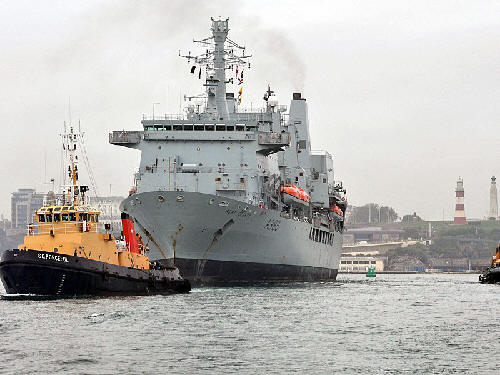
RFA Fort George sailing Plymouth for the last time on 22 February 2011
June 2011 donations amounting to £1,244.21 were made to Secretary of the Eyemouth RNLI life boat and to the Commanding Officer of the South Shields Sea Cadet Unit - TS Collingwood from the officers and crew of the Fort George by Chief Officer (X) Martyn Bunker RFA the ships last (XO). TS Collingwood was the ship's affiliated Sea Cadet Unit.
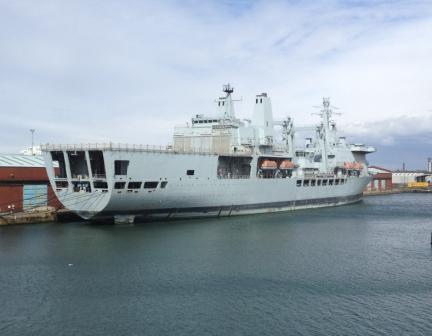
24 July 2012 offered for sale this day by the MOD Disposal Services Authority 'As is' at Liverpool
16 January 2013 sailed Liverpool under tow of the tug Christos XXIII this day to shipbreakers at Aliaga, Turkey
February 2013 berthed at Leyal Recycling Ltd, Aliaga, Turkey: -


Courtesy and © of Leyal Recycling Ltd
Notes:
The Navy had a requirement for at least 4 of this Class and had originally hoped for 6, but Defence Budgets reduced this to a Class of just 2
Reproduced with permission of the MOD

RFA Fort Grange entering Sydney, NSW, Australia 2 October 1986 © Kingsley Barr
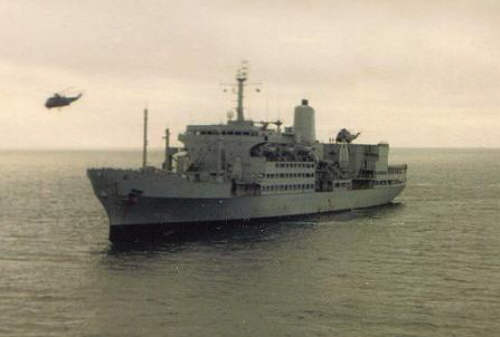
Lower image RFA Fort Grange during the Falklands War © Brian Bilverstone
Subsequent name: Fort Rosalie
Official Number: 377648
Class: FORT CLASS Ammunition, Food, Explosive Stores Ship
Pennant No: A385
Laid down: 9 November 1973
Builder: Scott's SB, Greenock
Launched: 9 December 1976
Into Service: 6 April 1978
Crew number: 90
Out of service:
Fate:
Items of historic interest involving this ship: -
Background Data: An order for two new Fleet Replenishment Ships was announced in November 1971 and the ships in this Class provided up to date replenishment facilities for both ammunition and general naval and victual ling stores. Both were fitted with extensive aviation facilities with a single spot flight deck and full hangar facilities. The roof of the hangar was also strengthened for use as an emergency landing spot which enabled them to operate up to four Sea King helicopters
November 1971 ordered
9 November 1973 laid down as AEFS 03
9 December 1976 launched by Scotts Shipbuilding Co Ltd., Cartsburn Yard, Greenock as Yard Nr: 737 named FORT GRANGE. The Lady Sponsor was Mrs E.M. Glue, wife of Mr G.T. Glue, DGST (N). Named after a Palmerston fort which is currently within the grounds of HMS SULTAN, Gosport, Hampshire
6 April 1978 completed and accepted into service. Was provided with the first Sea King Flight of 706 Squadron NAS to be permanently embarked aboard an RFA
11 April 1978 sailed Glen Douglas for Devonport
15 April 1978 arrival at Devonport
5 May 1978 sailed Devonport for Rig Trials
12 May 1978 arrived at Devonport
20 May 1978 sailed Devonport for First of Class Flying trials
31 May 1978 arrived at Devonport
8 June 1978 sailed Devonport for Mayport
15 June 1978 berthed at Mayport
17 June 1978 sailed Mayport to off Port Everglades received three Sea King Helicopters from HMS ARK ROYAL to assist with flying trials
27 June 1978 anchored off Union Island, Grenadies
28 June 1978 sailed Union Island
29 June 1978 at Roosevelt Roads
3 July 1978 sailed Roosevelt Roads
5 July 1978 berthed at Mayport
10 July 1978 sailed Mayport
18 July 1978 arrived at Plymouth
31 July 1978 sailed Plymouth
1 August 1978 at Greenock for refit and Guarantee Dry Docking
12 October 1978 sailed from Greenock
13 October 1978 arrived at Plymouth
28 October 1978 sailed Plymouth to FAlmouth arriving the same day
15 November 1978 sailed Falmouth for Exercises
16 November 1978 arrived at Plymouth
24 November 1978 sailed Plymouth
27 November 1978 arrived at Glen Douglas
11 December 1978 sailed Glen Douglas for Portland Exercise area
15 December 1978 berthed at Brest, France
18 December 1978 sailed Brest, France for the Portland Exercise Area
20 December 1978 berthed at Portland
4 January 1979 sailed Portland to Plymouth arriving the same day
7 January 1979 sailed Plymouth for degaussing within the harbour
8 January 1979 arrived at Portland
15 January 1979 sailed Portland for BOST in the Portland Exercise Area
20 January 1979 berthed at Portland
3 February 1979 sailed Portland for Exercise Test Gate
8 February 1979 berthed at Gibraltar
10 February 1979 sailed Gibraltar for exercises
16 February 1979 berthed at Gibraltar
19 February 1979 sailed Gibraltar for Exercise Spring Train 1979
5 March 1979 berthed at Gibraltar
7 March 1979 sailed Gibraltar
9 March 1979 berthed at Athens
13 March 1979 sailed Athens for Corfu arriving the same day
14 March 1979 sailed Corfu for Gibraltar
17 March 1979 berthed at Gibraltar
18 March 1979 sailed Gibraltar for Portland Exercise area
21 March 1979 arrived at Plymouth
30 April 1979 sailed Plymouth for weapon training
3 May 1979 arrived at Plymouth
9 May 1979 sailed Plymouth for Gibraltar diverted back to Plymouth
11 May 1979 at Plymouth
27 May 1979 sailed Plymouth
30 May 1979 arrived at Gibraltar sailing the same day
7 June 1979 arrived at Port Said and transitted the Suez Canal
8 June 1979 sailed Suez
15 June 1979 at Mahe, Seychelles
18 June 1979 sailed Mahe, Seychelles
21 June 1979 arrived at Peros Banhos Atoll
22 June 1979 sailed Peros Banhos Atoll for Diego Garcia arriving the same day
24 June 1979 sailed Diego Garcia
4 July 1979 at Hong Kong
9 July 1979 sailed Hong Kong
16 July 1979 along with RFA BACCHUS (3) she supported Operation Culex which was conducted following an influx of illegal immigrants in Hong Kong and delivered one Sea King helicopter
21 July 1979 berthed at Sydney, NSW
7 August 1979 sailed Sydney, NSW
11 August 1979 arrived at Auckland, New Zealand
18 August 1979 sailed Auckland, New Zealand for exercise
19 August 1979 at Auckland, New Zealand anchorage
21 August 1979 sailed Auckland, New Zealand
27 August 1979 anchored at Lautoka, Fiji
4 September 1979 sailed Fiji
13 September 1979 berthed at Sydney, NSW
17 September 1979 sailed Sydney, NSW for exercises
25 September 1079 berthed at Sydney, NSW
26 September 1979 sailed Sydney, NSW
28 September 1979 berthed at Brisbane, Queensland
3 October 1979 sailed Brisbane, Queensland
7 October 1979 her Ship’s Badge was officially presented to her
15 October 1979 arrived at Hong Kong
20 October 1979 sailed Hong Kong
24 October 1979 arrived at Singapore
3 November 1979 sailed Singapore
9 November 1979 arrived at Cochin
13 November 1979 sailed Cochin
27 November 1979 arrived at Suez Bay
28 November 1979 in transit Suez Canal and arrived at Port Said
29 November 1979 sailed Port Said
1 December 1979 arrived at Athens, Greece
4 December 1979 sailed Athens, Greece
10 December 1979 arrived at Gibraltar sailing the same day
13 December 1979 at Falmouth
14 December 1979 arrived at Plymouth
8 January 1980 exercise off Plymouth with HMS's RHYL and ARDENT
15 January 1980 exercises off Plymouth with HMS HERMES and RFA LYNESS
17 January 1980 anchored in Mounts Bay
17 January 1980 along with RFA GREY ROVER she was part of the RN Task Force which was sent to the Mediterranean to co-operate with the USN due to the Iranian crisis
19 January 1980 sailed from Mounts Bay to Gibraltar arriving 21 January 1980
8 February 1980 sailed Gibraltar for Palermo arriving 15 February 1980
19 February 1980 sailed Palermo for Salonika arriving 23 February 1980
26 February 1980 sailed Salonika for Naples arriving 29 February 1980
4 March 1980 sailed Salonika to Istanbul, Turkey arriving 14 March 1980
18 March 1980 sailed Salonika for Trieste arriving 21 March 1980
25 March 1980 sailed from Trieste for Gibraltar arriving 30 March 1980
31 March 1980 sailed Gibraltar to Mounts Bay and Portland arriving 2 April 1980
8 April 1980 sailed Portland to Plymouth arriving the same day
29 April 1980 sailed Plymouth for Glen Douglas arriving the next day
17 May 1980 sailed Glen Douglas for Southampton arriving 18 May 1980
11 August 1980 sailed Southampton for Portland arriving the same day
13 August 1980 sailed Portland
14 August 1980 arrived at Plymouth
31 August 1980 berthed at Devonport
12 September 1980 sailed Plymouth
15 September 1980 at Glen Douglas
25 September 1980 sailed Glen Douglas
26 September 1980 berthed at Portland
29 September 1980 to 30 October 1980 BOST in the Portland area
1 November 1980 sailed Portland
2 November 1980 at Stavanger, Norway
10 November 1980 sailed Stavanger to Plymouth
14 November 1980 engaged in searching for survivors from the Jersey registered fishing vessel Pietje Antje J117 which had sunk in a storm 20 nmiles SE of Start Point
16 November 1980 at Plymouth
19 November 1980 sailed Plymouth for Portland arriving 21 November 1980
24 November 1980 sailed Portland for the Portland Exercise areas until 5 December 1980 arried at Plymouth
5 January 1981 sailed Plymouth to off Andros Island, Bahamas via Antigua arriving 21 January 1981
22 January 1981 sailed from off Andros Island, Bahams to Fort Lauderdale, Florida
26 January 1981 sailed Fort Lauderdale, Florida to Norfolk, Virginia arriving 28 January 1981
4 February 1981 sailed Norfolk Virginia to Devonport arriving 13 February 1981
7 March 1981 sailed Devonport for Gibraltar arriving 10 March 1981
14 March 1981 sailed Gibraltar for Port Said arriving 20 March 1981 thence in transit through the Suez Canal
21 March 1981 sailed Suez to Mombasa arriving 31 March 1981
16 April 1981 deployed from Mombasa to the Gulf area until 8 June 1981 when arrived at Suez Bay
9 June 1981 transitted the Suez Canal
10 June 1981 sailed Port Said to Souda Bay arriving the next day
12 June 1981 sailed Souda Bay to Toulon arriving 15 June 1981
20 June 1981 sailed Toulon to Mounts Bay arriving 24 June 1981
25 June 1981 sailed Mounts Bay to Portland for DG Ranging
26 June 1981 arrived at Plymouth
15 July 1981 sailed Plymouth to Glen Douglas arriving the next day
18 July 1981 sailed Glen douglas to Charleston arriving 27 July 1981
30 July 1981 sailed Charleston to Mayport Naval Station, Jacksonville, Florida arriving the same day
3 August 1981 sailed Mayport Naval Station, Jacksonville, Florida to Fort Lauderdale arriving 5 August 1981
10 August 1981 sailed Fort Lauderdale to Port Canaveral arriving the next day
14 August 1981 sailed Port Canaveral to Norfolk arriving the next day
21 August 1981 sailed Norfolk to take part in Exercises Ocean Venture, Magic Sword North and Ocean Safari
31 August 1981 ship developed a ME defect at 60.62N 12.19W - stopped for two days
19 September 1981 berthed at El Ferrol, Spain
23 September 1981 sailed El Ferrol, Spain to Portland arriving the next day
2 October 1981 sailed Portland to the Plymouth Exercise area returning to Portland the next day
6 October 1981 sailed Portland to the Portland Exercise area returning to Portland on 8 October 1981
10 October 1981 sailed Portland for Exercise North West Axe returning to Portland on 16 October 1981
19 October 1981 sailed Portland anchoring in Mounts Bay over night then exercises in the Portland Exercise area until 30 October 1981
4 November 1981 sailed Portland to the Portland Exercise area returning to Portland on 12 November 1981
16 November 1981 sailed Portland for exercises arriving at Plymouth on 19 November 1981
23 November 1981 sailed Portland to the Portland Exercise area and off Ushant returning to Plymouth Sound (on 'D' Buoy) on 27 November 1981 remaining there for Christmas & New Year
4 January 1982 sailed Plymouth Sound
16 January 1982 arrived off Andros Island at 24º 43.5N 77º 44 W
17 January 1982 sailed Andros Island for Fort Lauderdale, Florida arriving the next day
24 January 1982 sailed Fort Lauderdale, Florida for Charleston, SC arriving the next day
27 January 1982 sailed Charleston SC for Glen Douglas arriving 8 February 1982
17 February 1982 sailed Glen Mallen for Plymouth arriving 19 February 1982 to de-store
13 March 1982 sailed Plymouth for refit at Smiths, North Shields arriving the next day
21 April 1982 Captain D Avrill CBE RFA appointed in command
23 April 1982 floated out of dry dock
25 April 1982 suffered a fire in the engine room during the refit - extinguished with the assistance of the local civil fire brigade
28 April 1982 suffered a second fire in the engine room - extinguished with the assistance of the local civil fire brigade
2 May 1982 completed trials and sailed the River Tyne to Plymouth
4 May 1982 berthed at No 1 berth, Devonport loading AVCAT
7 May 1982 NAV Thorsk secured alongside
8 May 1982 NAV Thorsk cleared away
9 May 1982 sailed Devonport for Glen Douglas
10 May 1982 arrived at Glen Douglas and berthed on Glen Mallen Jetty to load cargo
14 May 1982 sailed Glen Doulas for service during Operation Corporate - the Falklands Conflict - with 824 NAS C Flight embarked - 3 x Sea King HAS2 helicopters
22 May 1982 arrived Ascension Island
24 May 1982 sailed Ascension Island
25 May 1982 while on passage from Ascension to the TEZ (Total Exclusion Zone) ship stopped from 1815 to 1826 for main engine repairs
26 May 1982 main engine stopped again for further repairs between 1859 and 1929 - entered the TEZ (Total Exclusion Zone) around the Falkland Islands
31 May 1982 attacked by an Argentinian C -130 on its way to join the Carrier Battle Group
3 June 1982 joined the Carrier Battle Group to relieve RFA FORT AUSTIN
5 June 1982 commenced transferring stores from RFA FORT AUSTIN
6 June 1982 completed transfer of stores
9 June 1982 arrived San Carlos anchorage along with the ferry NORDIC FERRY
17 June 1982 in San Carlos Water with RFA SIR PERCIVALE berthed alongside transfering stores
18 June 1982 in San Carlos Water with RFA BLUE ROVER berthed alongside supplying 300 tons of fuel oil
19 June 1982 sailed San Carlos to Port Fitzroy
20 June 1982 sailed Port Fitzroy to San Carlos
23 June 1982 anchored in San Carlos water with RFA RESOURCE moored alongside
24 June 1982 tug Irishman secured alongside. RFA RESOURCE cast off
29 June 1982 sailed San Carlos Water
30 June 1982 Quartermaster William Frazer discharged dead - he suffered from an accute myocardial infraction. He was buried at sea at 52.02.6S 54.18.6W
3 July 1982 RASed (Vertrep) with HMS BRISTOL
4 July 1982 arrived at Port Stanley
5 July 1982 sailed Port Stanley
11 July 1982 the ships crash boat capsized throwing the 6 members of the crew into the sea. They were recovered. Also during a VERTREP with HMS LEEDS CASTLE with Sea King HAS1 helicopter No: XV698 suffered engine failure, ditched and sank in the South Atlantic Ocean - the crew were rescued. The helicopter was not salvaged
17 July 1982 at Port Stanley sailing for San Carlos the next day
28 July 1982 Captain Barry H Rutterford RFA appointed as Master
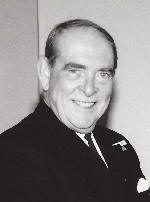
Captain Barry H Rutterford RFA
29 JUly 1982 sailed Port Stanley
31 July 1982 RASed (Vertrep) with HMS BRISTOL
6 August 1982 arrived at Berkley Sound
9 August 1982 sailed Berkley Sound
14 August 1982 arrived at Port Stanley
15 August 1982 sailed Port Stanley to Port San Carlos arriving the same day
18 August 1982 sailed Port San Carlos
22 August 1982 arrived at Berkley Sound then to Port Stanley and then to Port San Carlos
23 August 1982 at San Carlos Water alongside RFA REGENT
26 August 1982 sailed Port San Carlos to Port Stanley arriving 28 August 1982
1 September 1982 sailed Port Stanley returning there on 4 September 1982
5 September 1982 sailed Port Stanley for Port San Carlos arriving the same day
7 September 1982 sailed Port San Carlos returning there on 15 September 1982
17 September 1982 sailed Port San Carlos for Falmouth Bay arriving 1 October 1982
3 October 1982 arrived Plymouth Sound. on completion of Operation Corporate duties
8 November 1982 at Plymouth
21 November 1982 sailed Plymouth Sound for Ascension Island arriving 20 November 1982
30 November 1982 sailed Ascension Island for Port William Sound, Falkland Islands arriving 9 December 1982
13 December 1982 sailed Port William Sound for San Carlos Water arriving 18 December 1982
19 December 1982 sailed San Carlos Water to Port William Sound arriving the same day
22 December 1982 sailed Port William Sound for San Carlos Water arriving the same day
27 December 1982 sailed San Carlos Water for Port William Sound arriving the same day
30 December 1982 sailed Port William Sound for San Carlos Water arriving the next day
2 January 1983 sailed San Carlos Water for Port William Sound arriving the same day
4 January 1983 sailed Port William Sound to San Carlos Water arriving the next day
8 January 1983 sailed San Carlos Water to Port William Sound arriving the next day
13 January 1983 sailed Port William Sound to Bull Roads, Falkland Islands arriving the next day
15 January 1983 sailed Bull Roads to San Carlos Water arriving the next day
19 January 1983 sailed San Carlos Water to Swan Island anchorage arriving the next day
23 January 1983 sailed Swan Island anchorage to Port William, Stanley, Falkland Islands arriving the same day
24 January 1983 sailed Port William, Stanley, Falkland Islands to San Carlos Water arriving the same day
25 January 1983 sailed San Carlos Water to Roy Cove anchorage arriving 27 January 1983
11 April 1983 off the Falkland Islands with HMS ACTIVE and HMS CARDIFF
15 April 1983 at Port Stanley, Falkland Islands
9 May 1983 at Port Stanley, Falkland Islands
16 May 1983 sailed Port William to San Carlos Water
19 May 1983 sailed San Carlos Water to Port William, Stanley
22 May 1983 sailed Port William, Stanley to Fort Lauderdale, Floria arriving 4 June 1983
3 June 1983 time spent searching for an aircraft reported as having crashed into the sea off Cuba - nothing found
15 June 1983 sailed Fort Lauderdale, Florida to Charleston arriving the next day
17 June 1983 sailed Charleston to Plymouth Sound arriving 25 June 1983
30 June 1983 sailed Plymouth Sound to the River Clyde anchorage arriving the next day
10 July 1983 sailed River Clyde for Plymouth Sound arriving the next day
24 July 1983 sailed Plymouth Sound to Newcastle on Tyne arriving the next day
1 September 1983 Captain Rex A Cooper RFA appointed as Master
13 September 1983 undertook engine trials off the River Tyne
14 September 1983 sailed the River Tyne for Rosyth arriving the same day
28 September 1983 sailed Rosyth to Glen Mallan arriving the next day
4 October 1983 sailed Glen Mallan to Plymouth Sound arriving 6 October 1983
12 October 1983 at Portland
17 October 1983 until 25 October 1983 BOST in Portland Exercise areas
25 October 1983 arrived at Plymouth Sound
29 October 1983 sailed Plymouth Sound to Ascension Island arriving 8 November 1983
8 November 1983 sailed Ascension Island to San Carlos Water, Falkland Islands arriving 19 November 1983
22 November 1983 sailed San Carlos Water to Port William, Falkland Islands arriving 24 November 1983
28 November 1983 sailed Port William to San Carlos Water, Falkland Islands arriving the same day
30 November 1983 sailed San Carlos Water, Falkland Islands to Port William arriving 2 December 1983 returning to San Carlos Water the next day
21 January 1984 sailed Port William for Grytviken, South Georgia arriving 23 January 1984
24 January 1984 at Stromness, South Georgia
25 January 1984 sailed Stromness, South Georgia to San Carlos Water, Falkland Islands arriving 29 January 1984
15 February 1984 sailed Port William to San Carlos
16 February 1984 sailed San Carlos to Port Albermarle arriving the next day
19 February 1984 sailed Port Albermarle for Fitzroy
20 February 1984 sailed Fitzroy to Port William
25 February 1984 sailed Port William, Stanley to San Carlos Water
3 March 1984 at San Carlos Water, Falkland Islands
7 March 1984 sailed San Carlos Water, Falkland Islands for Ascension Island arriving 14 March 1984
15 March 1984 sailed Ascenion Island to Mounts Bay arriving 24 March 1984 then sailed to Glen Mallan arriving 26 March 1984
3 April 1984 sailed Glen Mallan to Portland arriving the next day
6 April 1984 sailed Portland to Plymouth Sound arriving the same day
25 April 1984 sailed Plymouth Sound to Portland (A3 Buoy) arriving 26 April 1984
30 April 1984 sailed Portland to Plymouth Sound (D Buoy) arriving the next day
14 May 1984 sailed Plymouth Sound to Portland (A3 Buoy) arriving the same day
18 May 1984 sailed Portland for Ascension Island arriving 26 May 1984
27 May 1984 sailed Ascension Island for San Carlos Water, Falkland Islands arriving 3 June 1984
4 June 1984 sailed San Carlos Water, Falkland Islands for Port William, Stanley, Falkland Islands arriving the next day
7 June 1984 sailed Port William, Stanley to San Carlos Water arriving the next day
12 August 1984 sailed San Carlos Water for Grytviken, South Georgia arriving 15 August 1984
16 August 1984 sailed Grytviken, South Georgia to Stromness arriving the same day
18 August 1984 sailed Stromness to Grytviken, South Georgia arriving the same day
19 August 1984 sailed Grytviken, South Georgia to Port William, Stanley, Falkland Islands arriving the 22 August 1984
23 August 1984 sailed Port William, Stanley, Falkland Islands to San Carlos Water arriving the same day
24 August 1984 sailed San Carlos Water, Falkland Islands to Ascension Island anchorage arriving 1 September 1984
1 September 1984 sailed Ascension Island anchorage to Funchal, Maderia anchorage arriving 6 September 1984 moving Wessex HU5 Helicopter No: XS521 to the UK at the same time
14 September 1984 sailed Funchal, Maderia anchorage to Plymouth Sound arriving 17 September 1984 - made fast to 'D' Buoy
24 September 1984 sailed Plymouth Sound to Portland arriving the same day - made fast to 'A3' Buoy
7 October 1984 sailed Portland to Plymouth Sound arriving the same day - made fast to 'D' Buoy
8 October 1984 sailed Plymouth Sound taking part in Exercise Autumn Train
20 October 1984 anchored off Gibraltar
23 October 1984 sailed Gibraltar to Plymouth Sound arriving 26 October 1984 - made fast to 'D' Buoy
30 October 1984 sailed Plymouth Sound to Rosyth arriving 1 November 1984 making fast to No: 3 buoy
6 November 1984 sailed Rosyth for JMC returning on 16 November 1984 making fast to No: 3 buoy (again)
11 April 1985 was presented with her Falkland Islands 1982 Battle Honour at Plymouth by Captain C.G. Butterworth CMS
16 April 1985 at Plymouth
12 May 1985 at Plymouth
23 November 1984 sailed Plymouth Sound to Charleston arriving 3 December 1984
5 December 1984 sailed Charleston to Glen Douglas arriving 13 December 1984
16 January 1985 sailed Glen Douglas for Bigbury Bay anchorage arriving the next day
18 January 1985 sailed Bigbury Bay anchorage to Plymouth arriving the same day
28 January 1985 sailed Plymouth to Rosyth arriving 1 February 1985
5 February 1985 deployed in Exercise JMC 851 returning to Rosyth on 15 February 1985
20 February 1985 sailed Rosyth on exercises berthing at Glen Mallen on 27 February 1985
7 March 1985 sailed Glen Mallen on Exercise Cold Winter 1985
22 March 1985 sailed Lyngen Fjord to Glen Mallen arriving 24 March 1985
3 April 1985 sailed Gken Mallen to Devonport arriving the next day
15 April 1985 sailed Devonport to Charleston arriving 25 April 1985
28 April 1985 sailed Charleston originally to Ascension Island but diverted to Bridgetown, Barbados arriving 3 May 1985
4 May 1985 sailed Bridgetown, Barbados to Ascension Island arriving 11 May 1985
13 May 1985 sailed Ascension Island to Port William Sound, Falkland Islands arriving 20 May 1985
25 May 1985 in San Carlos Water
3 June 1985 anchored off Port Howard, Falkland Islands
4 June 1985 sailed from the Port Howard anchorage
8 June 1985 at Port William Sound, Falkland Islands returning on 12 June 1985
21 June 1985 at South Georgia
25 June 1985 sailed from South Georgia
27 July 1985 anchored off Port Howard, Falkland Islands
13 August 1985 sailed from North Falkland Sound to Ascension Island arriving 22 August 1985
22 August 1985 sailed Ascension Island to Las Palmas arriving 29 August 1985
1 September 1985 sailed Las Palmas to Glen Douglas arriving 5 September 1985
14 September 1985 sailed Glen Douglas to Plymouth arriving 16 September 1985
19 October 1985 sailed Plymouth to Newcastle arriving 21 October 1985 for refit
29 January 1986 sailed Newcastle to Plymouth arriving 31 January 1986
18 February 1986 sailed Plymouth for Glen Douglas arriving 19 February 1986
25 February 1986 sailed Glen Douglas to Plymouth arriving 26 February 1986
3 March 1986 sailed Plymouth for Portland arriving 4 March 1986
11 March 1986 to 30 March 1986 Portland work up
2 April 1986 sailed Portland to Plymouth arriving 3 April 1986
14 April 1986 sailed Portsmouth as part of Task Group 318.4 - the Global 86 Deployment led by the carrier HMS ILLUSTRIOUS - along with RFA’s BAYLEAF(3) and OLMEDA
29 April 1986 arrived La Guaira
3 May 1986 sailed La Guaira to Acapulco via the Panama Canal (transitted on 6 May 1986) arriving 12 May 1986
14 May 1986 sailed Acapulco to San Diego arriving 9 May 1986
28 May 1986 sailed San Diego to Pearl Harbour, Hawaii arriving 18 June 1986
24 June 1986 sailed Pearl Harbour, Hawaii to Pusan, South Korea arriving 10 July 1986
14 July 1986 sailed Pusan, South Korea to Hong Kong arriving 19 Huly 1986
23 July 1986 sailed Hong Kong to anchor at Brunei Bay on 26 July 1986
28 July 1986 sailed Brunei Bay to Singapore arriving 31 July 1986
27 August 1986 sailed Singapore to Port Kelang arriving 2 September 1986
5 September 1986 sailed Port Kelang to Mackay, Queensland, Australia arriving 18 September 1986
24 September 1986 sailed Mackay, Queensland to Sydney, NSW via Jervis Bay arriving 29 September 1986
4 October 1986 TG 318.4 participated in the Australian Fleet Review in Sydney, NSW
13 October 1986 sailed Sydney NSW for Exercise Croweater and passage to Fremantle, Western Australia arriving 25 October 1986
30 October 1986 sailed Fremantle to Diego Garcia arriving 9 November 1986
10 November 1986 sailed Diego Garcia to Bombay arriving 14 November 1986
16 November 1986 sailed Bombay undertaking Exercise Sair Sareea. Anchoring off Khawr Al Hajr on 21 November 1986
22 November 1986 sailed and later returned to Khawr Al Jajr anchorage on 27 November 1986
29 November 1986 sailed Khawr Al Jajr anchorage to Suez Bay arriving 4 December 1986
5 December 1986 transit of Suez Canal
6 December 1986 sailed Port Said to anchorage at Akrotiri Bay, Cyprus
8 December 1986 sailed Akrotiri Bay, Cyprus to Gibraltar Bay arriving 12 December 1986
13 December 1986 sailed Gibraltar Bay to Plymouth arriving 15 December 1986
10 January 1987 sailed Plymouth to anchorage off Ardrossan arriving 11 January 1987
12 January 1986 berthed on Glen Douglas Jetty
17 January 1987 sailed from Glen Douglas to anchorage in Whitesand Bay on 18 January 1987
19 January 1987 arrived at Plymouth
9 February 1987 sailed Plymouth to anchorage at Portland arriving the same day
23 February 1987 sailed Portland to anchorage at Gibraltar arriving 28 February 1987
3 March 1987 sailed Gibraltar to D Buoy, Plymouth Sound arriving 5 March 1987
10 March 1987 sailed Plymouth for Exercise Cold Winter off Norway
22 March 1987 anchored at Oysundet, Norway during Exercise Cold Winter - day running
23 March 1987 anchored at Oysundet, Norway during Exercise Cold Winter - day running
25 March 1987 anchored at Fiskejord, Norway
26 March 1987 sailed Fiskejord, Norway for Spithead arriving 28 March 1987 and anchored
29 March 1987 sailed Spithead anchorage for Portland arriving the same day
30 March 1987 sailed Portland for Plymouth Sound arriving the next day - made fast to D Buoy
6 April 1987 sailed Plymouth Sound and anchored in Lyme Bay the same day
7 April 1987 sailed Lyme Bay to Portland arriving 9 April 1987
14 April 1987 and 15 April 1987 working for FOST at Portland
22 April 1987 sailed Portland for Devonport via the Bay of Biscay making fast to D Buoy, Plymouth Sound on 25 April 1987
28 April 1987 sailed Plymouth for exercises anchoring in Lyme Bay the next day
30 April 1987 arrived at Portland and made fast to A3 Buoy in Portland Harbour
4 May 1987 sailed Portland Harbour to Gibraltar Bay arriving and anchoring on 6 May 1987
11 May 1987 sailed Gibraltar Bay to Glen Douglas arriving 14 May 1987
29 May 1987 engaged in the Clyde Exercise Area
2 June 1987 sailed Glen Douglas arriving Plymouth Sound 15 June 1987 and making fast to 'D' Buoy
18 June 1987 sailed Plymouth Sound returning to 'D' Buoy the next day
23 June 1987 sailed Plymouth Sound to Gibraltar Bay arriving 25 June 1987 - anchored
29 June 1987 sailed Gibraltar Bay - Fleet Trial 109/86 - returning to anchor in Gibraltar Bay the next day
4 July 1987 sailed Gibraltar Bay to Glen Douglas arriving 7 July 1987
13 July 1987 sailed Glen Douglas for Devonport arriving 15 July 1987
25 July 1987 sailed Devonport for Glen Douglas arriving the next day
18 August 1987 sailed Glen Douglas for Devonport arriving 23 August 1987
20 September 1987 at Plymouth
29 January 1988 sailed Devonport for Glen Douglas arriving 1 February 1988
14 February 1988 sailed Glen Mallen for Portland arriving 16 February 1988
11 March 1988 sailed Portland to Plymouth Sound arriving the same day
22 March 1988 sailed Plymouth Sound to Souda Bay, Crete arriving 29 March 1988
30 March 1988 sailed Souda Bay, Crete to Port Said arriving 1 April 1988
2 April 1988 sailed Port Said, for Fujairah arriving 8 April 1988
11 April 1988 sailed Fujairah on Exercises and arrived at Suez Bay 23 April 1988
24 April 1988 sailed Port Said to Palermo arriving 26 April 1988
1 MAy 1988 sailed Palermo for Exercises and arrived at Devonport 16 May 1988
13 June 1988 sailed Plymouth as part of Task Group 318.1 - the Outback 88 Deployment led by the carrier HMS ARK ROYAL - along with RFA’s ORANGELEAF (3) and OLWEN (2) to Malta anchoring in St Paul's Bay on 25 June 1988
27 June 1988 sailed St Paul's Bay, Malta to anchor at Akrotiri, Cyprus on 28 June 1988
2 July 1988 sailed Akrotiri, Cyprus to Port Said anchorage arriving the same day
4 July 1988 after Suez Canal transit sailed Port Suez for Singapore arriving 23 July 1988
16 July 1988 major HDS (helicopter delivery service) undertaken using two Sea King Mk4s (SKA Commando version from 845 Naval Air Squadron) ‘leapfrogging’ from HMS ARK ROYAL via RFA FORT GRANGE and HMS EDINBURGH to Colombo in Sri Lanka (320 n.miles)
8 August 1988 sailed Singapore for Manila arrived 13 August 1988
19 August 1988 sailed Manila to Hong Kong arriving 21 August 1988
22 August 1988 at Hong Kong in collision with USS Omaha (SSN692) and USNS Sioux (T-AF-171)
1 September 1988 sailed Hong Kong to anchor at Platypus Bay, Newcastle, NSW arriving 21 September 1988
23 September 1988 sailed Platypus Bay, Newcastle to Sydney, NSW arriving 27 September 1988
7 October 1988 sailed Sydney, NSW for Jervis Bay anchorage arriving the next day
October 1988 HMS ARK ROYAL and RFA FORT GRANGE bound from Sydney, NSW for Melbourne but the Seamen’s Union announced a boycott of the ships and no tugs would be available and ships could not dock. Anchored at Melbourne 14 October 1988.
17 October 1988 sailed Melbourne anchorage for Fremantle where the crane drivers boycotted the ship. Arrived Fremantle 23 October 1988
2 November 1988 sailed Fremantle for Bombay arriving 16 November 1988
19 November 1988 sailed Bombay for Suez arriving 1 December 1988
2 December 1988 transit of the Suez Canal
3 December 1988 sailed Port Said to Augusta arriving 5 December 1988
6 December 1988 sailed Augusta to Gibraltar anchorage arriving 9 December 1988
10 December 1988 sailed to Gibraltar for Plymouth Sound arriving 13 December 1988
3 January 1989 sailed Plymouth Sound to Portland arriving the same day
10 January 1989 engaged in the Portland Exercise area until 19 January January 1989
20 January 1989 sailed Portland for Gibraltar anchorage arriving 27 January 1989
28 January 1989 sailed Gibraltar to Plymouth Sound arriving 30 January 1989
6 February 1989 sailed Plymouth Sound to Falmouth Bay anchorage arriving 8 February 1989
10 February 1989 sailed Falmouth Bay for exercises arriving at Plymouth Sound and making fast to 'D' Buoy on 18 February 1989
22 February 1989 sailed Plymouth Sound for futher exercises to Falmouth Bay anchorage arriving 10 March 1989
10 March 1989 sailed Falmouth Bay to Plymouth Sound making fast to 'C' Buoy the next day
2 April 1989 sailed Plymouth Sound to Gibraltar and Souda Bay, Crete arriving 8 April 1989
9 April 1989 sailed Souda Bay to Akrotiri Bay, Cyprus arriving the next day
11 April 1989 sailed Akrotiri Bay, Cyprus to Port Said arriving the same day
13 April 1989 sailed Port Suez for berth 64 at Jabal Ali arriving 20 April 1989
23 April 1989 sailed Jabal Ali for Suez Bay arriving 1 May 1989 and anchoring
3 May 1989 sailed Port Said for Souda Bay, Crete arriving the next day
5 May 1989 sailed Souda Bay, Crete to Gibraltar arriving 9 May 1989 and anchoring in the Bay
11 May 1989 sailed Gibraltar Bay to Funchal, Maderia arriving 13 May 1989
15 May 1989 sailed Funchal, Maderia to Portland arriving 18 May 1989 and making fast to A3 buoy
19 May 1989 sailed Portland to Gibraltar arriving 23 May 1989 and anchoring in the Bay
29 May 1989 sailed Gibraltar Bay to Portland arriving 31 May 1989 later the same day sailed to Plymouth Sound making fast to 'D' Buoy on 1 June 1989
14 June 1989 sailed Plymouth Sound to Glen Mallen arriving 16 June 1989
19 June 1989 sailed Glen Mallen engaging in JMC 892 until arriving at Plymouth Sound on 2 July 1989 and anchoring in No: 23 anchorage
13 July 1989 sailed Plymouth Sound to the Clyde Exercise areas and engaged in Exercise Lobster Pot until anchoring in St Brides Bay on 19 July 1989
21 July 1989 sailed St Brides Bay continuing with Exercise Lobster Pot until berthing at Glen Mallen on 22 July 1989
7 August 1989 sailed Glen Mallen to Plymouth Sound making fast to 'D' Buoy
23 January 1990 sailed Wallsend on Tyne to Plymouth arriving 24 January 1990
8 April 1990 sailed Plymouth to Glen Mallen arriving the next day
15 April 1990 sailed Glen Mallen to Portland arriving 16 April 1990 via Ushant
19 April 1990 at Portland on work up exercises until 3 May 1990
4 May 1990 sailed Portland to Earle arriving 11 May 1940
15 May 1990 sailed Earle to Charleston arriving 19 May 1990
30 May 1990 sailed Charleston to Halifax, NS arriving 15 June 1990
21 June 1990 sailed Halifax NS to Bermuda arriving 28 June 1990
2 July 1990 sailed Bermuda to Funchal, Maderia arriving 8 July 1990
10 July 1990 sailed Funchal, Maderia to Devonport arriving 13 July 1990
6 August 1990 at Plymouth
8 August 1990 decision taken to deploy her, along with RFA’s OLNA (3) and DILIGENCE to the Gulf following the Iraqi invasion of Kuwait
17 August 1990 at Plymouth
21 August 1990 sailed Plymouth for exercies berthing at Portland the next day
23 August 1990 sailed Portland for service during Operation Granby - the Gulf War - with 2 x Sea King HC4 helicopters from 846 NAS embarked - being no: ZF118 & ZF119
24 August 1990 along with RFA OLNA(3) she r/v off Gibraltar with HNMS’s WITTE DE WITH and PIETER FLORIS
30 August 1990 arrived at Port Said
31 August 1990 transitted the Suez Canal
1 September 1990 sailed Port Suez
8 September 1990 anchored at Fujayrah
10 September 1990 sailed Fujayrah to the Dubai area
16 September 1990 arrived at Jebel Ali
20 September 1990 sailed Jebel Ali
2 October 1990 berthed at Dubai
2 January 1991 berthed at Jebel Ali
11 April 1991 official Cease Fire comes into force
13 April 1991 berthed at Jebel Ali
1991 was awarded the Kuwait 1991 Battle Honour,along with 10 other RFA’s
23 April 1991 to 3 June 1991 Humanitarian relief - was in Operation Manna - the relief operations in Bangladesh following major damage and flooding in the wake of a cyclone
10 May 1991 Sea King HC4 Helicopter no: ZG820 – in ship at Al Jubayl to Cox’s Bazaar, Bangladesh during Operation Mana (see above)
1 June 1991 – Sea King HAS2 helicopter no: XZ577 with 826 NAS was assisting in relief operation following cyclone and floods in Bangladesh – rotor blades hit ship’s rigging – ditched and sank ahead of ship in Bay of Bengal off Cox’s Bazaar. No casualties.
28 June 1991 Chief Petty Officer (Deck) Michael Caley awarded the British Empire Medal (Military Division) details in the London Gazette of this date on page 30
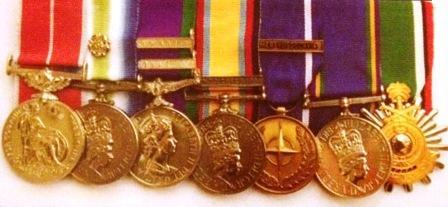
24 November 1991 at Devonport
23 April 1992 was at RNAD Crombie, River Forth
3 November 1992 Captain (E) Edward M Quigley RFA appointed as Chief Engineer Officer
17 January 1993 joined HMS ARK ROYAL deployed on peacekeeping and humanitarian aid duties in the Adriatic. 820NAS helicopters farmed out with four aircraft in RFA's FORT GRANGE and two in RFA OLWEN. This included RFA ARGUS acting as an interim LPH with six 105mm light guns from 29 Commando Regiment Royal Artillery, two batteries and HQ element of 94 Locating regiment RA and Mortar Locating Troop of 29 Cdeo Regiment RA + 176 vehicles and trailers and 329 military personnel.
24 April 1994 start of Operation Grapple at Split, Croatia and she was based there to act as an accommodation and storage ship for food and ammunition for the British Forces operating in Croatia
12 December 1994 was relieved at Split by RFA RESOURCE
6 July 1996 Captain David Gerrard RFA appointed as Commanding Officer
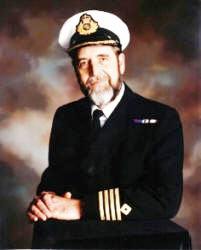
Captain David Gerrard RFA
14 December 1996 berthed at Malaga, Spain
5 April 1997 again arrived Split, Croatia
14 April 1997 replaced RFA RESOURCE on Operation Grapple duties
9 June 1998 Captain (E) E M Quigley RFA appointed as Chief Engineer Officer
October 1998 Captain Steven Hodgson RFA in command
6 October 1998 at Split
14 February 1999 while berthed alongside at Split, Croatia Staff Sergeant Jacqueline O'Rourke and Petty Officer John Walker were married
April 1999 Captain Jeremy R J Carew OBE RFA in command
17 April 1999 at Split
December 1999 Captain John Stones RFA in command
14 December 1999 at Split
6 January 2000 sailed Split for the UK on the termination of Operation Grapple duties there

RFA Fort Grange sailing from Split, Croatia
1 June 2000 renamed Fort Rosalie (2) to obviate confusion with RFA FORT GEORGE during a refit period on the Tyne
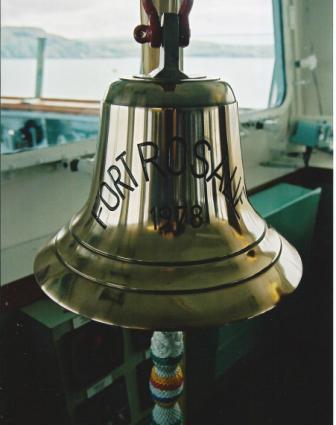
11 June 2000 undocked from Camel Lairds, Tyneside
12 June 2000 Captain C R Knapp RFA appointed Commanding Officer
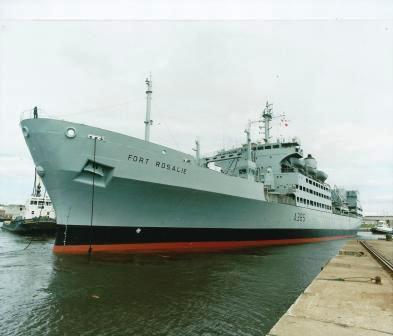
14 June 2000 sailed from the Tyne after official renaming
20 June 2000 arrived Gibraltar to act as an accommodation ship for the crew of the submarine HMS/m TIRELESS during the submarine’s lengthy repairs
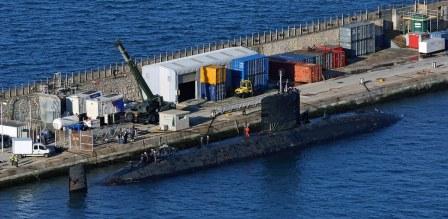
HMS/m TIRELESS
6 October 2000 berthed at Gibraltar
10 November 2000 at Gibraltar and Captain Pat Thompson OBE RFA appointed as Commanding Officer
24 November 2000 berthed at Gibraltar
30 March 2001 to 30 April 2001 berthed at Gibraltar
7 May 2001 sailed Gibraltar after supporting HMS/m Tireless
10 July 2001 berthed at Glen Mallan - Captain David Pitt RFA appointed as Commanding Officer
Captain David Pitt RFA
3 September 2001 sailed on the Argonaut 2001 deployment together with HMS ILLUSTRIOUS, fourteen other Royal Naval Warships and RFA's FORT VICTORIA, BAYLEAF (3), SIR TRISTRAM, SIR BEDIVERE, SIR PERCIVALE, SIR GALAHAD (2), FORT AUSTIN, OAKLEAF (2) and DILIGENCE
25 Novermber 2001 VERTREP with RFA FORT VICTORIA
29 November 2001 Captain (E) E M Quigley RFA appointed as Chief Engineer Officer
8 January 2002 Captain Pat Thompson OBE RFA appointed as Commanding Officer
31 March 2002 Captain David Pitt RFA appointed as Commanding Officer
20 April 2002 to 24 April 2002 berthed at Malaga, Spain
2 September 2002 to 5 September 2002 berthed at Cadiz, Spain
24 October 2002 in refit at Hebburn on Tyne, Captain Pat Thompson OBE RFA appointed as Commanding Officer
15 January 2003 sailed UK for service during Operation Telic - the 2nd Gulf War - along with 13 other RFA’s
9 February 2003 to 28 May 2003 deployed on Operation Telic
28 May 2003 arrived Plymouth Sound on completion of Operation Telic duties
21 June 2003 Captain D I Gough RFA appointed as Commanding Officer
16 December 2003 Captain J M Stones RFA appointed as Commanding Officer
5 April 2004 Captain D I Gough RFA appointed as Commanding Officer
1 September 2004 with RFA Sir Bedivere berthed at Tema Harbour, Accra, Ghana to off load supporting logistics and supplies for a bilateral military training exercise. The six-week exercise code-named "Ex-Western Rhumba 2004" is a joint military exercise aimed at practicing tactics, techniques and procedures required to operate in the jungle
23 October 2004 Temporary Acting Captain (X) Paul B Minter RFA appointed as Commanding Officer
Captain (X) Paul Minter RFA
8 November 2004 Temporary Acting Captain (X) Paul Minter RFA promoted Captain and remained in Command
12 January 2005 arrived Loch Striven and later sailed to anchor off Tail of Bank
16 January 2005 returned to Loch Striven from Tail of Bank
19 January 2005 Captain (X) J Murchie RFA appointed as Commanding Officer
27 February 2005 Captain (X) D I Gough RFA appointed as Commanding Officer
4 March 2005 berthed at Gibraltar
27 May 2005 sailed Gibraltar
31 May 2005 anchored off the Isle of Arran
August 2005 at Rosyth
30 May 2006 Captain (X) D I Gough RFA appointed as Commanding Officer
26 August 2006 at Devonport
5 September 2006 arrived Marchwood
3 October 2006 berthed at Norfolk Naval Base, VA
15 October 2006 arrived Marchwood from Norfolk, VA with a 20ft replica of Discovery aboard
20 October 2006 at Devonport
23 October 2006 sailed Devonport
24 October 2006 arrived Portsmouth
5 November 2006 Captain (X) I Pilling RFA appointed as Commanding Officer
14 November 2006 sailed Portsmouth
20 November 2006 commenced FOST work-up
1 December 2006 in Plymouth Sound
5 December 2006 anchored in Falmouth Bay
9 December 2006 berthed at Portland
11 December 2006 arrived at Devonport
15 December 2006 the Commodore in Chief HRH the Earl of Wessex visit the ship at Portland
12 February 2007 Captain (X) D I Gough RFA appointed as Commanding Officer
17 February 2007 at Loch Striven
27 March 2007 was granted the Freedom of the Borough of Tarnworth
5 April 2007 at the Clyde Area
6 April 2007 anchored in Douglas Bay, Isle of Man
May 2007 on Operation Carina 07 Deployment to the Baltic with RFA's LYME BAY and MOUNTS BAY
June 2007 following a collision between an Italian freighter and a French yacht off Finistere at the request of the French coastguards assisted the Italian freighter by keeping other vessels away from her as she made her way to Southampton in a damaged condition and in heavy weather
14 June 2007 paid a brief visit to Falmouth Bay
5 August 2007 at Brest, France
21 September 2007 in Exercise Grey Heron which commenced off Browndown, Solent along with RFA's LYME BAY and MOUNTS BAY
27 September 2007 sailed from the Solent to Weymouth Bay anchorage
5 December 2007 at DM, Crombie, River Forth
10 December 2007 Captain (X) S P Smart RFA appointed as Commanding Officer
January 2008 arrived Birkenhead for a lengthy refit
19 July 2008 suffered a fire while undergoing refit at Birkenhead
5 December 2008 Captain (X) W G Tait RFA appointed as Commanding Officer
8 January 2009 ship visited by the Defence Secretary John Hutton as she was coming to the end of a refit at Birkenhead
10 January 2009 towed from Birkenhead No: 7 dock to an alongside berth at Birkenhead
17 April 2009 Captain (X) R G Ferris OBE RFA appointed as Commanding Officer
April 2009 at Devonport with FOST
20 June 2009 to 25 June 2009 together with RFA MOUNTS BAY, HMS's WESTMINSTER and LANCASTER together with INS Delhi, INS Brahmaputra and the Indian Navy replenshipment ship INS Aditya enaged in Exercise KONKAN in the English Channel
29 June 2009 at Glen Mallen
14 July 2009 visited Cherbourg, France for a port visit
29 July 2009 anchored off Pothoustock, Cornwall after being engaged in exercises in Falmouth Bay
12 October 2009 sailed from Portland. RASed with RFA Wave Ruler (2)
27 January 2010 while at sea off Portsmouth Sergeant Andrew Pearson, Royal Marines fell while attempting to board the ship from a RIB and died from a combination of having his breathing restricted, falling from a height and drowning. An inquest touching on the cause of his death was held at Portsmouth on the 23 August 2011 where a verdict of 'accidental death' was returned by the jury.
19 -23 March 2010 paid an informal visit to Den Helder
5 May 2010 Temporary Acting Captain (X) Vernon Ramsey-Smith RFA appointed as Commanding Officer
Captain Vernon Ramsey-Smith RFA
16 June 2010 members of the ships company attended a ceremony at the Commonwealth Cemetery at La Boule, France
17 June 2010 Commanding Officer and a party made up from all sections of the ships company attended the commemorative service at the Lancastria memorial on the sea front in St. Nazaire, where wreaths were laid by the Commanding Officer Captain Vernon Ramsey-Smith for the RFA and by 2/O Ian Gill for the Royal Navy, alongside those of the various Lancastria associations, families and affiliates.
3 September 2010 berthed at Greenock
4 September 2010 ship open to the public between 10am and 4pm at the Clydeport GOT Terminal with 3000+ visitors
5 September 2010 sailed Greenock
19 February 2011 in Plymouth Sound
8 June 2011 off Cyprus loaded an Apache helicopter and ferried it to HMS OCEAN off Libya
10 August 2011 entered Grand Harbour, Malta and berthed alongside Dock No 2 at French Creek
24 October 2011 anchored off Kirkcaldy, Scotland
27 November 2011 entered Plymouth Sound and moored to C Bouy
28 November 2011 sailed Plymouth Sound to sea returned later the same day
29 November 2010 Captain (X) R G Ferris OBE RFA appointed as Commanding Officer
17 June 2011 Captain (X) P Hanton RFA appointed as Commanding Officer
8 November 2011 Captain (X) R G Ferris OBE RFA appointed as Commanding Officer
20 January 2012 berthed at Grenada to provide support to the seventh UK-Caribbean Ministerial Forum
15 February 2012 at Guntanamo Bay to refuel loading 246,000 gallons
23 February 2012 and 24 February 2012 at Bridgetown, Barbados the Prince Edward, the Commodore in Chief of the RFA with the Countess of Wessex made a formal visit to the Island from the ship hosting a reception on board
25 February 2012 at Kingstown, St Vincent and the Grenadines the Prince Edward, the Commodore in Chief of the RFA with the Countess of Wessex received the Governor-General His Excelency Sir Frederick Ballantyne GCMG on board
28 February 2012 at Port of Spain Trinidad the Prince and Princess Edward, Earl and Countess of Wessex made a formal visit to the Islands from the ship
20 April 2012 berthed at Road Town, British Virgin Islands
19 May 2012 Captain (X) M Gould RFA appointed as Commanding Officer
13 June 2012 berthed at Havana, Cuba to strengthen counter-narcotics collaboration work between UK and Cuban authorities. The visit coincided with Cuba's British culture week and the 250th anniversary of the Battle of Havana when British forces laid siege to Havana in June 1762 during the Seven Years' War with Spain. The ship's company took time to lay a wreath at the Jose Marti Memorial in Havana, which honours a martyr of the revolution against Spanish control. RFA staff visited a cigar factory and historic buildings and, in exchange, more than 900 Cubans visited the ship.
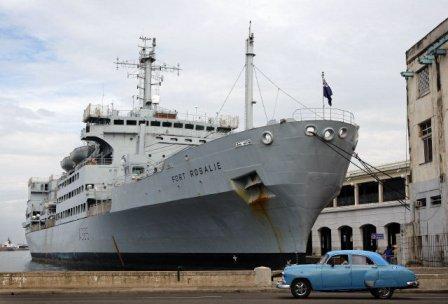
RFA Fort Rosalie alongside at Havanna, Cuba
8 July 2012 berthed at Kings Wharf, Bermuda with RFA ARGUS
11 July 2012 sailed Kings Wharf, Bermuda
26 August 2012 arrived at Plymouth Sound
27 August 2012 sailed Plymouth Sound to sea
7 September 2012 deployed on Operation Kipion in the Persian Gulf until 3 January 2013
15 September 2012 Captain (X) D J M Worthington OBE RFA appointed as Commanding Officer
12 December 2012 deployed in the Gulf of Oman
16 December 2012 off Djibouti


The above 3 images of RFA Fort Rosalie courtesy and © of Captain Shaun Jones OBE RFA
29 December 2012 arrived Gibraltar Bay, sailing into the North Atlantic later the same day
3 January 2013 berthed at Glen Mallan, Scotland with the assistance of the tug SD Impetus
5 January 2013 sailed from Glen Mallan, Scotland
6 January 2013 arrived at Liverpool
30 May 2014 berthed at Birkenhead
3 October 2015 Captain (X) M R Sayer RFA appointed as Commanding Offocer
10 September 2015 Captain (E) Stuart M Peters RFA appointed as Chief Engineer Officer
17 October 2015 Captain (X) S K Booth RFA appointed as Commanding Officer
24 October 2015 Captain (X) M R Sayer RFA appointed as Commanding Officer
15 December 2015 Captain (X) Nigel A Budd RFA appointed as Commanding Officer

Captain (X) Nigel A Budd RFA
2January 2016 Captain (X) David A Eagles RFA appointed as Commanding Officer
11 January 2016 Captain (E) Richard M Maddock RFA appointed as Chief Engineer Officer
3 February 2016 Captain (X) Jonathan P Huxley RFA appointed as Commanding Officer
5 February 2016 Captain (E) Paul W Greenough RFA appointed as Chief Engineer Officer
28 February 2016 at Portland and Captain (X) G A Patterson RFA appointed as Commanding Officer
21 March 2016 at Portland Captain (X) Peter N Selby RFA appointed as Commanding Officer
2 April 2016 Captain (E) Richard S Graham RFA appointed as Chief Engineer Officer
18 April 2016 Temporary Acting Captain (X) M A Lawrence RFA appointed as Commanding Officer
31 May 2016 berthed at Devonport
4 June 2016 Captain (X) Jeremy A Macanley RFA appointed as Commanding Officer

RFA Fort Rosalie (2) berthing at Brest, France
9 July 2016 sailed Brest, France
12 July 2016 arrived at Cobh, Republic of Ireland for Volvo Cork Week
15 September 2016 Captain (E) Richard S Graham RFA appointed as Chief Engineer Officer
22 September 2016 Captain (X) Jonathan P Huxley RFA appointed as Commanding Officer
10 October 2016 sailed from Portland Harbour
14 October 2016 arrived at Birkenhead
4 November 2016 at Birkenhead and Captain (X) Gerard A Patterson RFA appointed as Commanding Officer
24 January 2017 Captain (E) Nicholas W Fox RFA appointed as Chief Engineer Officer
6 March 2017 sailed Plymouth for Portland arriving the next day
13 March 2017 sailed Portland to Plymouth arriving the same day
15 March 2017 berthed at Portland
22 March 2017 at Portland
7 April 2017 Captain (X) Gerard A Patterson RFA appointed as Commanding Officer
11 April 2017 sailed Portland
24 April 2017 sailed Loch Striven
28 April 2017 berthed at Portland
29 May 2017 Captain (X) Jonathan P Huxley RFA appointed as Commanding Officer
2 June 2017 Captain (E) James K Hardy RFA appointed as Chief Engineer Officer
21 July 2017 secured to D Buoy, Plymouth Sound
24 July 2017 sailed Plymouth Sound
28 July 2017 berthed at Portland
25 August 2017 arrived Plymouth Sound making fast to "D" Buoy
1 September 2017 sailed Plymouth Sound returning the same day
25 September 2017 sailed Plymouth Sound
7 October 2017 deployed on Operation Kipion in the Persian Gulf
8 October 2017 transitted the Suez Canal into the Red Sea. 2nd Officer (SE) Garry Hogg RFA discharged dead from natural causes
11 October 2017 escorted through the Bab el Mandeb Strait from the Red Sea by USS Howard (DDG83) together with USS America (LHA6)
18 October 2017 arrived at Dubai sailing the same day
19 October 2017 2nd Officer (SE) Garry Hogg RFA repatriated to his family at RAF Brize Norton
20 October 2017 berthed at Dubai
29 October 1917 at Dubai Marine James Holloway of 42 Commando, Royal Marines discharged dead

Marine James Holloway
8 November 1917 Marine James Holloway of 42 Commando, Royal Marines repatriated to his family at RAF Brize Norton
18 November 2017 sailed Dubai
30 November 2017 arrived at Fujairah and berthed
1 December 2017 sailed Fujairah
27 December 2017 sailed Muscat
29 December 2017 arrived at Salalah
3 January 2018 in the Arabian Sea provided helicopter assistance at night to HMAS WARRAMUNGA so that a boarding party from the Australian warship might board a vessel in international waters. The ship was found to be carrying 3.5 tonnes of illegal narcotics which was seized

Petty Officer Leslie Floyd, RAN examines the narcotics find
10 January 2018 berthed at Dubai
14 January 2018 sailed Dubai
15 January 2018 arrived at Sitrah Anchorage, Bahrein
16 January 2018 sailed Khalifa Bin Salman, Bahrein
3 February 2018 sailed Dubai
4 February 2018 anchored at Sitrah, Bahrein
9 February 2018 RASed with USNS Guadalupe
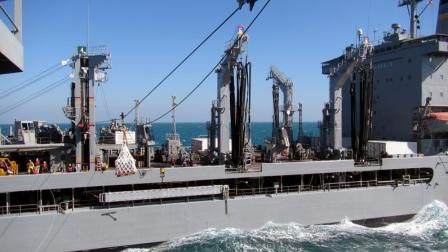
11 February 2018 berthed at Bahrein
13 February 2018 sailed Bahrein
16 February 2018 arrived at Dubai

An MH-60S Sea Hawk helicopter flown by Helicopter Sea Combat Squadron 6 collects supplies from RFA Fort Rosalie (2) in the Gulf and delivers them to USS Theodore Roosevelt
During her time with the US 5th Fleet, RFA Fort Rosalie (2) transferred 254 pallets of stores, weighing 87,500kg
28 February 2018 Captain (E) Craig A Holden RFA appointed as Chief Engineer Officer
6 March 2018 sailed Dubai
24 March 2018 sailed Duqm
7 April 2018 anchored at Suez
18 April 2018 berthed at Tangiers, Morroco
20 April 2018 sailed from Tangiers, Morroco
24 April 2018 berthed at Crombie, River Forth
7 May 2018 Captain (X) Gerard A Patterson RFA appointed as Commanding Officer
8 June 2018 berthed at Birkenhead
Reproduced with permission of the MOD

Previous name: Montebello Park
Subsequent name:
Official Number: 180495
Class: CANADIAN FORT CLASS Stores Ship
Pennant No: A230 B532
Laid down: 22 June 1944
Builder: Victoria MD, Victoria, British Columbia, Canada
Launched: 31 October 1944
Completed: 28 December 1944
Into RFA Service: 18 May 1954
Out of service: 1970
Fate: Broken up
Items of historic interest involving this ship: -
Background Data: After the outbreak of WW2, the first cargo vessels built in Canada for the War Effort were the “North Sands” type, the hulls of which conformed to original British working drawings supplied by the North Sands Shipyard of J.L. Thompson & Sons at Sunderland. Following experience gained from these ships, improved versions with a more economic operation were introduced. These were the ”Victory” and “Canadian” types. The “Victory” type was an oil burner and two water tube boilers were substituted for the original 3 Scotch boilers. Because of the then concerns about oil fuel supplies, the “Canadian” type had coal bunkers and alternate oil fuel capacity installed, but with a reversion to the original 3 Scotch boilers of the “North Sands” type. In 1943, when the shipping situation in the Pacific was becoming acute, the British Government ordered that a number of the ships of the Canadian building programme be completed as Stores Issuing Ships whose intended task would be to follow and victual naval units as part of the British Pacific Fleet Train. In all, 16 ships were completed as Stores Issuing Ships as follows: 3 as Ammunition Carriers, 2 as Air Stores Issuing Ships, 2 as Naval Stores Issuing Ships and 9 as refrigerated Victualling Stores Issuing Ships. All were managed by commercial companies with vast experience of Far Eastern Waters as Mercantile Fleet Auxiliaries with Merchant Navy Crews and a detachment of Stores Staff from the Victualling Division of the Admiralty under a Commander. On the refrigerated ships, the refrigerated space was in the tween decks and amounted to 111,480 cubic feet in 25 chambers. The lower holds were used for non-perishable items of stores, clothing, etc. After WW2, 8 of these ships became RFA’s. They were only armed during WW2
18 May 1945 completed as an Air Stores Issuing Ship, acquired by the MoWT, renamed FORT LANGLEY and placed under initial management of Alfred Holt & Co, Liverpool. On completion she was completely stored at Victoria with British and USN aircraft spares and sailed direct to join the Pacific Fleet Train, arriving in time for the closing stages of the War against Japan. She also ferried reserve aircraft and spares for Fleet Air Arm Squadrons from Sydney to Manus or Leyte.
24 June 1945 sailed San Francisco to Pearl Harbour
3 July 1945 sailed Pearl Harbour to Manus arriving 16 July 1945
16 September 1945 sailed Manus to Brisbane arriving 23 September 1945
21 October 1945 sailed Brisbane to Sydney, NSW arriving the next day
3 July 1947 at Sydney, NSW
16 September 1947 sailed Sydney, NSW for Singapore
1948 Managers became George Nisbet & Co, Glasgow
29 April 1948 passed the Lloyds Signal Station on the Lizard sailing west
16 September 1949 at Hong Kong
20 October 1949 arrived at Mombassa
30 November 1949 arrived at Malta
12 January 1950 passed Gibraltar sailing east bound
19 January 1950 arrived at Port Said while on passage from Plymouth to Lake Timsah
17 February 1950 sailed Lake Timsah for Malta
20 February 1950 arrived at Malta
24 February 1950 sailed Malta for Plymouth
1 March 1950 passed Gibraltar
18 April 1950 at Greenock, River Clyde
19 April 1950 sailed Glasgow for Devonport
20 April 1950 passed the Lloyds Signal Station on the Lizard sailing east
10 May 1950 arrived at Malta
17 May 1950 arrived at Port Said
19 May 1950 sailed Suez for Trincomalee, Ceylon
25 June 1950 to 27 July 1953 saw service during the Korean War
5 November 1950 berthed at Perth, Western Australia
25 November 1950 sailed Port of Fremantle for Melbourne after loading stores
3 February 1951 arrived at Gage Roads, Port of Fremantle from Melbourne
8 July 1951 at Ruchill Hospital, Glasgow Sailor's Cook Chan Chow discharged dead from cancer of the throat
28 July 1951 anchored Holy Loch
25 January 1953 at the Royal Naval Asian Hospital, Singapore Greaser Ip Chun discharged dead from pneumonia and other matters all natural causes
11Sptember 1953 at 60 Buoy, Sasebo Harbour with HMAS CULGOA alongside being reammunitioned

HMAS CULGOA
5 November 1953 arrived Hong Kong from Sasebo then sailed to Leith for refit
22 February 1954 Captain Rowland K Hill OBE RFA appointed as Master
Captain Rowland K Hill OBE RFA
23 February 1954 transferred to Admiralty ownership, name unchanged
3 May 1954 Mr A B Tate RFA appointed as Chief Engineer Officer
May 1954 transferred to RFA management and converted into an ASIS
22 December 1954 the Officers and crew made a donation of $405 to the Singapore Flood Relief Fund
15 November 1955 Mr L Cochrane RFA appointed as Chief Engineer Officer
4 May 1957 Captain Hubert G Carkeet RFA appointed as Master
17 April 1958 Fireman's Boy Fai Ling discharged dead apparently from a heart attack
6 August 1958 Captain D A C Butler RFA appointed as Master
12 December 1958 Second Officer Philip H Banks RFA discharged dead. Buried in Kalkara Royal Naval Cemetery, Malta.
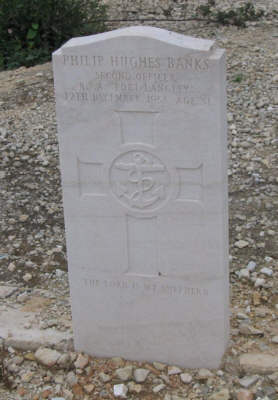
31 December 1958 in Grand Harbour, Malta the ships motor boat was pulling away from the Gozo landing steps when about 20 yards off shore the boats engine stopped. An examination found that the body of Steward Ronal Walker (19) of HMS VICTORIOUS had become entangled in the propellor. Police and a diver from HMS FORTH were called and recovered the body.
1959 along with RFA FORT DUQUESNE she was the winner of the annual Bulawayo Cup for the most conspicuous efficiency in replenishment-at-sea in the Mediterranean area
13 January 1959 RASed with HMS BERMUDA off Malta
20 January 1959 RASed with HMS BERMUDA off La Spezia
21 January 1959 the Doctor from HMS BERMUDA transfered by light jackstay to treat an injured crew member returning to HMS BERMUDA later that day
9 March 1959 RASed with HMS CENTAUR off Malta
HMS CENTAUR
17 June 1959 berthed at Malta after taking part in exercise Sardex with units of the Royal Navy and RFA's Fort DUQUESNE, WAVE SOVERIGN and WAVE VICTOR
10 October 1959 with HMS's BIRMINGHAM, DAINTY, DARING and HMS/m TALLY HO and RFA's TIDE AUSTRAL and RFA FORT DUQUESNE sailed Malta to take part in Anglo-Spanish exercises in the Western Mediterranean
HMS BIRMINGHAM
11 January 1960 Mr B C Jeremiah RFA appointed as Chief Engineer Officer
14 January 1960 Captain Frank C Holt RFA appointed as Master
Captain Frank C Holt RFA
4 May 1960 Captain Norman R McLeod RFA appointed as Master

Captain Norman R McLeod RFA
14 September 1960 Captain J D G Gray RFA appointed as Master
October 1960 RASed with HMS CAPRICE off Pulau Tiomen
15 September 1961 Mr W P Garrick RFA appointed as Chief Engineer Officer
29 April 1962 while on passage to Manila RAS'ed with HMAS MELBOURNE
21 April 1963 Captain Robert H Venning RFA appointed as Master
14 August 1963 Mr J W Ritchie RFA appointed as Chief Engineer Officer
16 September 1963 at 0.12N 68.42E Assistant Steward Chan Wan Lang discharged dead from natural causes
1964 her Ship’s Badge was officially presented to her
6 March 1964 during exercise Jet supplied HMAS YARRA with ammunition by jackstay transfer
7 November 1964 Captain Alf Waters RFA appointed as Master
9 November 1964 Mr N Bothwell RFA appointed as Chief Engineer Officer
3 June 1965 the ship was searched on arrival at Singapore by Customs who found 135lbs of opium. The ship had arrived from Hong Kong. Three of the Chinese crew were arrested
12 August 1965 off the Johore Shoal Buoy supplied HMAS YARRA with ammunition by jackstay transfer
9 December 1965 together with RFA FORT DUQUESNE berthed at Fremantle, Western Australia and secured to the North Wharf
11 December 1965 together with RFA FORT DUQUESNE sailed from Fremantle for Carnarvon
April 1966 a proposal to fit air conditioning to the ship for the safe transportation of Polaris missiles east of Suez was rejected by the Amiralty Board - PRO ADM 1/28354 refers
15 July 1966 Captain William R Town RFA appointed as Master
12 June 1966 together with RFA's TIDESPRING (1) and FORT DUNVEGAN at anchor off the eastern side of Pu Tioman
26 August 1966 Mr W B Jones RFA appointed as Chief Engineer Officer
1967 was converted at Chatham Dockyard for the freighting of missiles and other Polaris material supporting the Navy’s fleet of Polaris-armed submarines
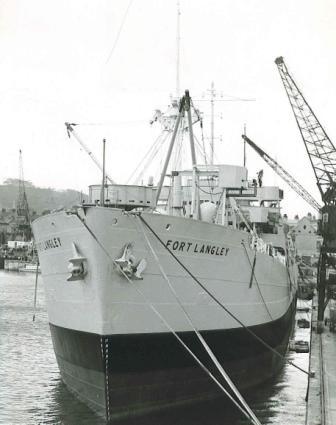
25 August 1967 Captain D de Vere Moulds RFA appointed as Master
21 September 1967 Mr P W Scott RFA appointed as Chief Engineer Officer
4 November 1967 berthed at the US Naval Supply Centre at Charleston, South Carolina to commence a Polaris material support shuttle service between the USA and RNAD Coulport, Scotland.
31 December 1967 Captain John Logan RFA appointed as Master
15 January 1968 during a 'hurricane' which hit Scotland a crane near the Firth of Clyde Dry Dock crashed onto Fort Langley causing damage to the superstructure. No one was injured

2 July 1968 Mr Peter Otway RFA appointed as Chief Engineer Officer
2 May 1969 Mr Ronald C Putt MID RFA appointed as Chief Engineer Officer
5 May 1969 sailed Portland for RNAD, Coulport, Loch Long arriving 8 May 1969
9 May 1969 sailed RNAD, Coulport, Loch Long for Portland arriving 11 May 1969
16 May 1969 sailed Portland for RNAD, Coulport, Loch Long arriving 19 May 1969
21 May 1969 sailed RNAD, Coulport, Loch Long for Bermuda arriving 3 June 1969
12 June 1969 sailed Bermuda for Charlestown NC arriving 15 June 1969
19 June 1969 sailed Charlestown NC for RNAD, Coulport, Loch Long arriving 3 July 1969
18 July 1969 sailed RNAD, Coulport, Loch Long for Bermuda arriving 1 August 1969
8 August 1969 sailed Bermuda for Charlestown NC arriving 12 August 1969
16 August 1969 sailed Charlestown NC for RNAD, Coulport, Loch Long arriving 30 August 1969
16 September 1969 sailed RNAD, Coulport, Loch Long for Bermuda arriving 30 September 1969
3 October 1969 sailed Bermuda for Charlestown NC arriving 6 October 1969
11 October 1969 sailed Charlestown NC to RNAD, Coulport, Loch Long arriving 27 October 1969
4 November 1969 sailed RNAD, Coulport, Loch Long for Devonport arriving 6 November 1969 to destore pending disposal.
February 1970 laid up, purchased by Marine Salvage Co Ltd, Port Colbourne, Ontario then resold to Spanish breakers
17 July 1970 sailed Devonport in tow for the breakers
21 July 1970 arrived at Bilbao, Spain for breaking up by Hierros Arbulu
August 1970 demolition begun
Notes: -
- Served in the British Pacfic Fleet Train - hence the 'B' pennant number
RFA Fort Rosalie (1)
Reproduced with permission of the MOD

Official Number: 180636
Class: CANADIAN FORT CLASS Stores Ship
Pennant No: X142 / B559 / A186
Laid down: 29 August 1944
Builder: United Shipyards Limited, Montreal, Canada
Launched: 18 November 1944
Into Service: 20 November 1947
Out of service: 1 May 1972
Fate: Broken up
Items of historic interest involving this ship: -
Background Data: After the outbreak of WW2, the first cargo vessels built in Canada for the War Effort were the “North Sands” type, the hulls of which conformed to original British working drawings supplied by the North Sands Shipyard of J.L. Thompson & Sons at Sunderland. Following experience gained from these ships, improved versions with a more economic operation were introduced. These were the ”Victory” and “Canadian” types. The “Victory” type was an oil burner and two water tube boilers were substituted for the original three Scotch boilers. Because of the then concerns about oil fuel supplies, the “Canadian” type had coal bunkers and alternate oil fuel capacity installed, but with a reversion to the original three Scotch boilers of the “North Sands” type. In 1943, when the shipping situation in the Pacific was becoming acute, the British Government ordered that a number of the ships of the Canadian building programme be completed as Stores Issuing Ships whose intended task would be to follow and victual naval units as part of the British Pacific Fleet Train. In all, sixteen ships were completed as Stores Issuing Ships as follows: three as Ammunition Carriers, two as Air Stores Issuing Ships, two as Naval Stores Issuing Ships and nine as refrigerated Victualling Stores Issuing Ships. All were managed by commercial companies with vast experience of Far Eastern Waters as Mercantile Fleet Auxiliaries with Merchant Navy Crews and a detachment of Stores Staff from the Victualling Division of the Admiralty under a Commander. On the refrigerated ships, the refrigerated space was in the tween decks and amounted to 111,480 cubic feet in 25 chambers. The lower holds were used for non-perishable items of stores, clothing, etc. After WW2, eight of these ships became RFA’s. They were only armed during WW2.
18 November 1944 launched as a “Canadian” type by United Shipyards Ltd, Montreal as Yard Nr: 43 named FORT ROSALIE (1) for the MoWT

Kindly donated by Chris Dale & RFA Nostalgia
7 April 1945 completed as an Ammunition Carrier and placed under initial management of Ellerman and Bucknall Steamship Co Ltd, London and served with the British Pacific Fleet Train
12 July 1945 sailed Montreal
26 July 1945 arrived at Liverpool
23 August 1945 sailed Liverpool
18 September 1945 sailed Balboa, Panama for Pearl Harbour
1 October 1945 entered Pearl Harbour
12 October 1945 at Eniwetok Atoll, Marshall Islands
21 October 1945 berthed at the Naval Base at Manus, Admiralty Islands
4 November 1945 arrived at Shanghai, China
12 November 1945 sailed Shanghai, China
27 November 1945 at sea at 28°17N 125°53E Fireman Jainodeen Sk Mohammed discharged dead - natural causes
26 December 1945 at Hong Kong Quartermaster John McDonald discharged dead - reported missing believed killed or drowned
11 January 1946 at Hong Kong Lascar Seaman Eusoof Ahmed Calloo discharged dead from natural causes
28 March 1946 the ship's Master was Captain John Blewett
May 1946 Naval Rating were used to load Naval Stores for Hong Kong during a dockers strike in Sydney, NSW Australia
20 July 1946 arrived at Yokohama
22 September 1946 with HMS CAMPERDOWN, RFA's WAVE SOVEREIGN and FORT CONSTANTINE sailed Kure, Japan
18 November 1946 sailed Hong Kong for Colombo
7 December 1946 sailed Colombo to Sydney, NSW, Australia
25 December 1946 while on passage from Fremantle to Sydney called at Albany, Australia to land a sick member of the crew. Sailed the same day for Sydney, NSW
30 January 1947 sailed Sydney, NSW for Portsmouth, England
22 March 1947 passed Gibraltar when on passge to Devonport from Brisbane
11 July 1947 passed Dunnet Head sailing west
30 July 1947 passed the Lloyds Signal Station on the Lizard sailing east bound
15 August 1947 at Portland, Dorset Lascar Doulat Khan x Doraf Ali discharged dead having apparently suffered heart failure
17 November 1947 Captain Thomas Elder DSC RFA appointed as Master
18 November 1947 passed the Lloyds Signal Station on the Lizard sailing east bound
20 November 1947 berthed at Portsmouth Harbour - transferred to the Admiralty, under RFA management and was converted into an ASIS
1 December 1947 Mr George C Dunning RFA appointed as Chief Engineer Officer
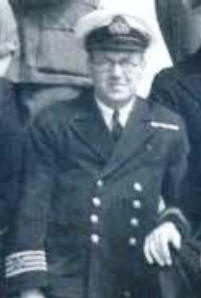
Chief Engineer Officer George C Dunning RFA
7 May 1948 berthed at Portsmouth Harbour
7 July 1948 at 24°26N 36°05E Bhandary Ramjan Joagnoo discharged dead from TB
31 July 1948 arrived at Bombay, India from Devonport
January 1949 home ported at RN Armanents Depot, Bull Point, Plymouth - vide AFO 2070/49
3 January 1949 arrived at Malta after passage from Plymouth
3 April 1949 sailed Gibraltar for Plymouth
9 May 1949 berthed at Portsmouth Harbour
10 August 1949 Mr I Cameron RFA appointed as Chief Engineer Officer
5 October 1949 passed Gibraltar from Plymouth when on passage to Sydney, NSW
13 December 1949 berthed at No: 8 North Wharf, Fremantle, Australia to load 1,400 tons of ammunition for Sydney, NSW
9 January 1950 arrived at and anchored off Melbourne
7 March 1950 berthed at No 3 Naval Buoy, Sydney, NSW, Australia
13 March 1950 sailed Sydney, NSW, Australia for Singapore
20 March 1950 berthed at Townsville, Queensland with engine defects - the local fire service maintained a 24 hour guard on her due to her explosives cargo. She sailed the next day for Singapore
14 April 1950 sailed Singapore
12 May 1950 sailed Port Said
18 May 1950 while on passage from Seletar to Plymouth left Malta this day
21 June 1950 Captain Stanley C Kernick RFA appointed as Master
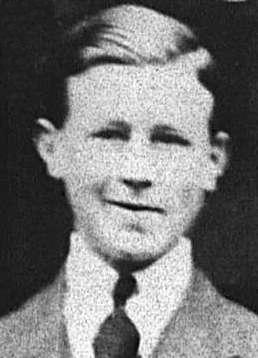
22 June 1950 passed the Lloyds Signal Station on the Lizard sailing west bound
24 June 1950 from Plymouth arrived at Newport Docks
25 June 1950 to 27 July 1953 saw service during the Korean War for more than 18 months, along with 18 other RFA’s
10 July 1950 berthed at Portsmouth Harbour
15 July 1950 towed from Portsmouth Harbour to Spithead under tow of the tugs Alligator, Careful and Restive
19 July 1950 anchored at Spithead
21 July 1950 arrived at Plymouth from Spithead to load further cargo following an explosion at the Naval Armanents Depot, Bedenham, Fareham Creek

Press cutting from The Times 17 July 1950
8 August 1950 passed Gibraltar sailing east bound
23 August 1950 at 12°45N 51°23E Fireman Abdoorman Mohammed Essack discharged dead from cardiac failure
5 September 1950 berthed at Singapore
11 August 1951 following an explosion on a Barge in Portsmouth Harbour and a major explosion on a Barge in Gibraltar Harbour the later which resulted in the sinking of NAV BEDENHAM a signal was received from the Admiralty to dispose of 1,000 unstable Torpex Depth Charges - part of the ships cargo. This hazardous operation was completed successfully in waters between Japan and Korea
16 October 1951 at Sasebo with HMAS MURCHISON alongside receiving ammunition
25 November 1951 at sea between Kure and Sasebo RASed with HMAS MURCHISON supplying ammunition
31.December 1951 at Sasebo received stores from HMAS MURCHISON which had been brought from Hong Kong

Captain Stanley C Kernick RFA and some of his Officers in May 1952
June 1952 returned to the UK after Korean Operations. Prior to leaving on her homeward voyage the Master received a signal from Admiral A Scott-Moncrief - Far East Command -
"During the past eighteen months FORT ROSALIE has rendered exceptional service to the Fleet involving hard work and little limelight. We are all very grateful. I wish the Ship's company and armament staff a very happy return home"
and from
2. Admiral G Dyer - Commander in Chief, United Nations Escort & Blockade Force C.T.F.95
"Your fine work for Ships of this command is sincerely appreciated. Your effort and those of other Auxiliaries are often unsung but of vital importance to carrying the war to the enemy. God speed and good luck to each of you"
23 August 1952 the Galloway Gazette reported -

1 September 1952 Captain A R Wheeler RD RFA (Lieutenant Commander RNR) appointed as Master
3 October 1952 in support of Operation Hurricane 1 - the first British test atomic bomb explosion at Monte Bello Islands off NW Australia - along with RFA’s FORT BEAUHARNOIS, FORT CONSTANTINE, GOLD RANGER, WAVE PRINCE, WAVE RULER (1) and WAVE SOVEREIGN
7 November 1952 in a very long article on the Allied Ships in the Korean War the Portsmouth Evening News reported -

25 November 1952 at Glasgow (see note (3) below)
12 December 1952 Mr Wilfred C Shortland RFA appointed as Chief Engineer Officer
28 December 1952 berthed at the Military Port at Cairnryan
6 May 1953 at Sasebo reammunitioned HMAS CULGOA alongside
2 September 1953 a crew member appeared before Singapore Fifth Police Court for smoking onboard while the ship was discharging ammunition at Singapore Naval Base - he was fined $1
11 May 1954 while on passage from Singapore to Penang used by RNA Service to dump old depth charges. She was escorted by HMS WHITESAND BAY
15 November 1954 at Leith (see note (3) below)
16 November 1954 Captain Emil E Sigwart RFA (Temporary Lieutenant Commander RNR) appointed as Master
Captain Emil E Sigwart RFA
7 February 1955 passed the Lloyds Signal Station at Dover sailing east bound
10 February 1955 at Chatham caused damage to South Lock Wall while berthing. Scoring marks on ships plates
2 September 1955 Mr J McI Lumsden RFA appointed as Chief Engineer Officer
10 January 1957 sailed Portsmouth with AWRE stores for Jamaica and then Christmas Island
1 October 1956 Captain J Dines RD RFA (Commander RNR) appointed as Master
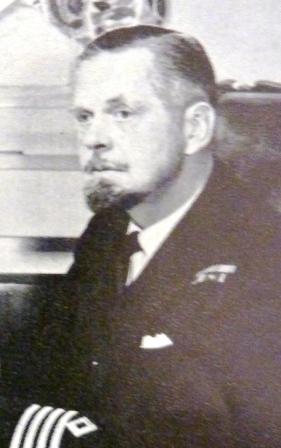
8 October 1956 Mr Harry G May RFA appointed as Chief Engineer Officer
27 December 1956 sailed the UK with Naval Stores for Christmas Island
involved in Operation Grapple at Christmas Island in the Pacific Ocean - the British H-bomb - along with 16 other RFA’s
11 August 1957 General Servant Perdo Diaz discharged dead - natural causes
17 April 1958 Mr J W Ritchie RFA appointed as Chief Engineer Officer
13 August 1958 Commodore Thomas Elder CBE DSC RFA appointed as Master
1 April 1959 Captain Leslie J Mack DSO RFA appointed as Master
22 June 1960 arrived at Malta from Palmas Bay, Sardinia
7 July 1960 sailed Malta for Rhodes
29 July 1960 berthed at Malta with RFA's FORT DUQUESNE and RFA WAVE KNIGHT (1) after fleet exercises
26 September 1960 at New York City Sailor Lall Ming discharged dead. His body was washed ashore and it was found he had drowned.
14 November 1960 Mr G Thompson RFA appointed as Chief Engineer Officer
15 December 1960 Captain Howard D Gausden DSO OBE RFA appointed as Master
22 May 1961 berthed at Malta from Gibraltar
18 August 1961 berthed at Malta from Ajaccio together with RFA Wave Knight (1) and HMS DUCHESS
24 November 1961 Mr A Morton RFA appointed as Chief Engineer Officer
1 June 1962 together with RFA's WAVE BARON and FORT DUQUESNE and various RN warships berthed at Barcleona, Spain for an eight day visit
7 July 1962 sailed Malta for Gibraltar and the UK
14 September 1962 Captain George Robson RFA appointed as Master
October 1962 restored and sea trials in the Plymouth area
November 1962 further storing at RNAD Milford Haven. Sailed Milford Haven to Middle East and Far East stations via the South Atlantic
December 1962 at Freetown (for bunkers), Ascension Island, Cape Town (bunkers)
23 December 1962 arrived at RNAD Mombassa - cross stored with RFA FORT LANGLEY who she relieved on station.
January 1963 sailed Monbassa
27 January 1963 arrived Singapore.
February 1963 sailed Singapore for the Andaman Sea
27 February 1963 took part in Exercise JET63 with RN and RAN units
17 March 1963 Exercise JET63 completed and sailed to Hong Kong
17 April 1963 sailed from Singapore to USN Philippine exercise area
24 April 1963 Took part in SEATO Exercise 'Sea Serpent' with units of the RN, RAN, RNZN, USN and Phillippine Navy
8 May 1963 Exercise 'Sea Serpent' completed. Ships anchored in Manila Bay.
11 May 1963 returned to Singapore
June to July 1963 involved in exercises off Singapore supporting Far East Fleet ships visiting Hong Kong and Manila
31 July 1963 at Singapore Winchman/Sailor Chan Hi discharged dead - natural causes
August 1963 storing at Singapore - both armaments and victualling stores for RN units in the Persian Gulf. Sailed for the Middle East calling at Karachi for bunkers
September 1963 in the Persian Gulf and at Bahrain
October 1963 two day RAS with RFA FORT LANGLEY off Socotra Islands . Stand off Aden for two weeks then deployed to Mombassa
November 1963 Sailed Mombassa to support ships exercising. To Karachi and then return to Mombassa
December 1963 at Mombassa cross stored with RFA FORT LANGLEY who was relieving her on station. Sailed to Gan to RAS with RFA WAVE SOVEREIGN
19 December 1963 Mr David Meikle RFA appointed as Chief Engineer Officer
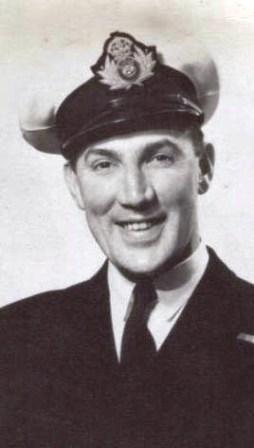
Chief Engineer Officer David Meikle RFA
25 December 1963 anchored Malacca Strait
26 December 1963 anchored off Singapore
27 December 1963 alongside RNAD Singapore to destore
January 1964 to April 1964 refit in H.M. Dockyard, Singapore
April 1964 restore and trials
6 May 1964 Captain Sydney S F Dalgleish OBE RFA appointed as Master
8 May 1964 RAS with FORT SANDUSKY cancelled due to the deployment of the FORT SANDUSKY to the Seychelles
18 May 1964 sailed Singapore for SEATO Exercise 'Ligtas' off the island of Mindoro, Philippines
27 May 1964 at Subic Bay, Phillippines with RFA's TIDESPRING (1), WAVE SOVEREIGN, RELIANT (2) and FORT CHARLOTTE arrived and together with HMAS SUPPLY formed Task Group 490.7. RFA TIDEFLOW which should have joined the Task Group remained at Singapore due to a mechanical breakdown
4 June 1964 arrived Hong Kong with the Far East Fleet
5 June 1964 Fireman Cheung Ying discharged dead - natural causes - had previously been transfered to HMS BULWALK for treatment and this aircraft carrier was off Margarin Bay, Phillipines at the time of his death
30 June 1964 berthed at Singapore
24 July to 7 August 1964 Exercise 'FORTEX' 1964
August to October 1964 Singapore station ammunition ship
October/November 1964 deployed in support of Indonesian confrontation visited Kutching, Labaun and Hong Kong
13 October 1964 Mr A Morton RFA appointed as Chief Engineer Officer
December 1964 berthed at Singapore
15 January 1965 while en-route to the UK and off Muka Head, Malaya a crew member suffered a perforated stomach ulcer. He was medevaced off the ship by a RAAF helicopter operating from RAF Butterworth.
27 January 1965 her Ship’s Badge was officially presented to her
February 1965 visit to Hong Kong cancelled - visited Australia instead (at Darwin for 8 days) - returned to Singapore
11 March 1965 together with RFA's WAVE SOVEREIGN and TIDFESURGE joined in the Singapore Exercise area with HM Ships ALAX, LINCOLN, ZEST, BARROSA, CAESAR, CARYSFORT and WHITY plus HMAS PARRAMATTA for exercises
24 March 1965 RASed with HMAS SUPPLY (ex RFA TIDE AUSTRAL) - received 254 tons of FFO
21 April 1965 Mr S P Awati RFA appointed as Chief Engineer Officer
5 April 1965 berthed at Hong Kong
20 April 1965 sailed Hong Kong
26 April 1965 berthed at Singapore
May 1965 deployed to Manilla
7 May to 22 May 1965 SEATO Exercise 'Sea Horse'
30 March 1966 Mr J Ross RFA appointed as Chief Engineer Officer - sailed Singapore
2 September 1966 Captain R J Lockwood RFA appointed as Master
4 October 1966 commenced to take part in Exercise Millsail - an advanced weapon exercise - in the Subic training areas, together with RFA's TIDESPRING, FORT DUQUESNE and RESURGENT together with various RN and RAN units
18 May 1967 Mr J A Swallow RFA appointed as Chief Engineer Officer
30 October 1967 Captain Basil V Dobbie RFA appointed as Master
27 December 1967 at Bahrein
25 April 1968 at Hong Kong
2 May 1968 Mr B W Edwards RFA appointed as Chief Engineer Officer
21 August 1968 with RFA TARBATNESS joined in Exercise "Winged Foot" together with RFA's OLNA (3) and REGENT and RN and RAN ships off Penang
10 November 1969 off Singapore RASed with HMAS YARRA supplying 174 shells and 180 cartridges
19 December 1969 in the Subic Bay exercise area RASed with HMAS YARRA by heavy Jackstay
10 February 1971 during Operation FEBEX between Singapore and Hong Kong RASed ammunition with HMAS YARRA
1 May 1972 de-stored out of service and laid up at Rosyth Dockyard, Scotland
24 January 1973 sailed Rosyth in tow for Spanish breakers along with RFA FORT SANDUSKY
10 February 1973 arrived at Castellon, Spain for breaking up by Varela Davalillo
March 1973 breaking up began
Notes:
- Additional information kindly supplied by Mr Michael Dyson
- Prior to RFA service was a member of the British Pactific Fleet - hence the B pennant number
- From the Discharge Book of Fred W J Raddon
RFA Fort Rosalie (2)
Items of historic interest involving this ship: -
For details of RFA Fort Rosalie (2) please see RFA Fort Grange

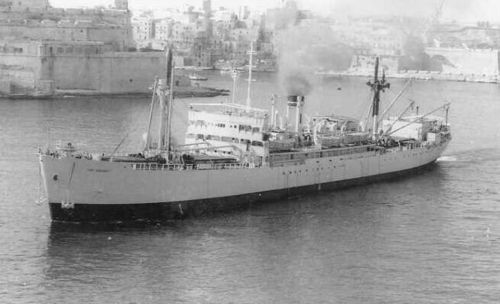
Subsequent name:
Official Number: 180649
Class: CANADIAN FORT CLASS Stores Ship
Pennant No: B560 / A316
Laid down: 11 February 1944
Builder: United Shipyards, Montreal, Canada
Launched: 25 November 1944
Into Service: 13 January 1949
Out of service: 13 February 1972
Fate: Broken up
Items of historic interest involving this ship: -
Background Data: After the outbreak of WW2, the first cargo vessels built in Canada for the War Effort were the “North Sands” type, the hulls of which conformed to original British working drawings supplied by the North Sands Shipyard of J.L. Thompson & Sons at Sunderland. Following experience gained from these ships, improved versions with a more economic operation were introduced. These were the ”Victory” and “Canadian” types. The “Victory” type was an oil burner and two water tube boilers were substituted for the original 3 Scotch boilers. Because of the then concerns about oil fuel supplies, the “Canadian” type had coal bunkers and alternate oil fuel capacity installed, but with a reversion to the original 3 Scotch boilers of the “North Sands” type. In 1943, when the shipping situation in the Pacific was becoming acute, the British Government ordered that a number of the ships of the Canadian building programme be completed as Stores Issuing Ships whose intended task would be to follow and victual naval units as part of the British Pacific Fleet Train. In all, 16 ships were completed as Stores Issuing Ships as follows: 3 as Ammunition Carriers, 2 as Air Stores Issuing Ships, 2 as Naval Stores Issuing Ships and 9 as refrigerated Victualling Stores Issuing Ships. All were managed by commercial companies with vast experience of Far Eastern Waters as Mercantile Fleet Auxiliaries with Merchant Navy Crews and a detachment of Stores Staff from the Victualling Division of the Admiralty under a Commander. On the refrigerated ships, the refrigerated space was in the tween decks and amounted to 111,480 cubic feet in 25 chambers. The lower holds were used for non-perishable items of stores, clothing, etc. After WW2, 8 of these ships became RFA’s. They were only armed during WW2.
25 November 1944 launched as a “Canadian” type by United Shipyards Ltd, Montreal as Yard Nr: 44 named FORT SANDUSKY for the MoWT
1 August 1945 completed as an Ammunition Carrier and placed under initial management of Ellerman and Bucknall Steamship Co Ltd, London
6 August 1945 sailed Montreal
17 August 1945 arrived at Liverpool from Montreal
19 September 1945 sailed Liverpool for Far Eastern ports
30 September 1945 arrived at Port Said
11 October 1945 arrived at Bombay
1 February 1946 at the Outer Anchorage, Yokohama with HMAS ARUNTA alongside collecting Naval Stores
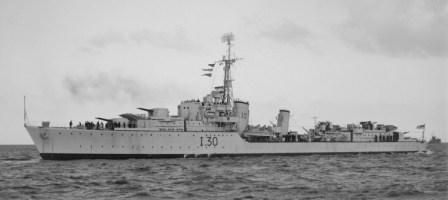
HMAS ARUNTA
24 June 1946 Chief Engineer Officer John Chorlton Bagshaw, Ellerman and Bucknall Steamship Co Ltd, London, appointed as an Officer of the Most Excelent Order of the British Empire (Civil Division) and Chief Steward Benjamin J Smith awarded the British Empire Medal (Civil Division) in the Birthday Honours List 1946 - details published in the London Gazette of this day

Chief Engineer Officer John Chorlton Bagshaw OBE
26 July 1946 berthed at Brisbane, Queensland, Australia from Hong Kong
2 August 1946 arrived at Sydney, NSW, Australia from Brisbane
27 September 1946 sailed Sydney, NSW, Australia for Hong Kong
2 September 1947 and 3 September 1947 together with RFA FORT BEAUHARNOIS, RN and RAN ships together with US Navy Aircraft from Okinawa took part in Exercises Adgate Two and Three within an area 31°43N 127°34E and 29°26N 128°40E
3 February 1948 while on passage from Hong Kong to Devonport arrived at Gibraltar this day
1948 managers became W.H. Seager & Co Ltd, Cardiff
23 April 1948 passed the Lloyds Signal Station on the Lizard sailing west
25 December 1948 Mr C A Herbert RFA appointed as Chief Engineer Officer
8 January 1949 Captain Murray W Westlake DSC RD RFA (Commander RNR) appointed as Master

Captain Murray W Westlake DSC RD RFA
13 January 1949 transferred to the Admiralty, under RFA management and was converted into an ASIS at Portsmouth Dockyard - AFO 2070/49 refers - base ported RN Armament Depot, Bull Point, Plymouth. Not designed to undertake replenishment at sea. Added to the list of RFA as per AFO 3458/48
1 March 1949 Captain William W Peddle RFA appointed as Master
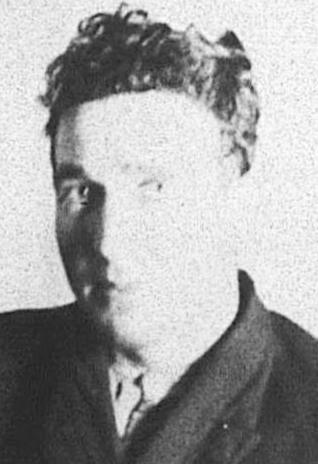
Captain William W Peddle RFA
6 May 1949 passed the Lloyds Signal Station on the Lizard sailing east
22 May 1949 while on passage from Plymouth to Trincomalee passed Gibraltar this day
30 June 1949 arrived Mombassa from Plymouth while on passafe to Trincomalee
8 August 1949 at sea at 6°54N 78°43E Fireman Sk Esmail Abdoola discharged dead - natural causes
22 June 1950 sailed Malta for Plymouth
25 June 1950 to 27 July 1953 saw service during the Korean War for more than 18 months, along with 18 other RFA’s
28 August 1950 Captain Emil E Sigwart RFA (Temporary Lieutenant Commander RNR) appointed as Master
Captain Emil E Sigwart RFA
27 December 1950 arrived Sydney, NSW, Australia from Singapore
19 February 1951 sailed Sydney, NSW, Australia for Singapore
20 March 1951 arrived Fremantle, Australia from Melbourne
6 April 1951 in Gage Roads, Fremantle
28 August 1951 Captain Rowland K Hill OBE RFA appointed as Master
Captain Rowland K Hill OBE RFA
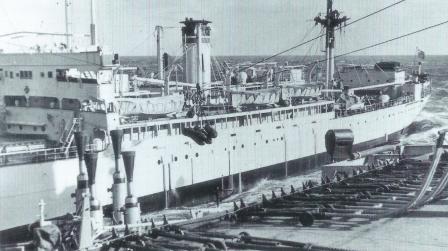
RFA Fort Sandusky during the Korean War supplies 500lbs to HMS GLORY
1951 was involved in supporting Allied forces during the Korean War although she did not receive a battle honour
4 December 1951 berthed at Malta bringing 1,200 tons of ammunition from Milford Haven
9 June 1953 berthed on the Admiralty Quay, River Tyne
28 June 1953 Captain Cecil H Grainger MID RFA appointed as Master
29 June 1953 Mr Allan D Harris RFA appointed as Chief Engineer Officer
23 July 1953 engaging crew at the South Shields Shipping Office
30 July 1953 sailed River Tyne for Rosyth
9 September 1953 arrived at Malta from the UK
14 May 1954 Captain William H G Hine RFA appointed Master
3 January 1955 Mr Philip E Bassadona RFA appointed as Chief Engineer Officer
4 February 1955 Captain D A C Butler RFA appointed as Master
10 June 1955 sailed Singapore together with RFA GOLD RANGER and RFA FORT CHARLOTTE to take part with, RN, RAN and RNZN units in ANZAM Maritime Exercise (2) in the South China Sea
25 March 1956 sailed from Singapore together with RFA WAVE KNIGHT (1) to be involved with RN, RAN and RNZN units and aircraft from the RAAF and RNZAF in Exercise Monsoon in the South China Sea
24 April 1956 at Hospital in Singapore Seaman 1st class Ismail Yusoff Zagady discharged dead - natural causes
7 June 1956 berthed at Stranraer after a voyage from Singapore and Trincomalee with 12 passengers
1 August 1956 refit being accelerated (from a Top Secret signal from the Admiralty to C in C Mediterranean copied to C in C East Indies & FOME)
13 August 1956 Captain T G Hill RD RFA (Lieutenant Commander RNR) appointed as Master
6 September 1956 Mr David L Walls RFA appointed as Chief Engineer Officer
8 September 1956 C in C Mediterranean signalled the Admiralty requiring the ships cargo to be increased so that she could operate in a forward area, should the need arise, without the need to transfer stocks from RFA AMHERST. The signal required the cargo to be increased by
10 September 1956 at Cairn Ryan, Scotland Seaman 1st Class Sk Ahmed Sk Yusuf discharged dead having suffered a stroke
31 October 1956 in support of Operation Musketeer - the Suez Crisis - and was part of Task Force 325.8 - the Logistics Group supporting the carriers - along with RFA’s OLNA (2), RETAINER, TIDERACE and TIDERANGE
28 October 1957 Captain Raymond V Boodle RFA appointed as Master
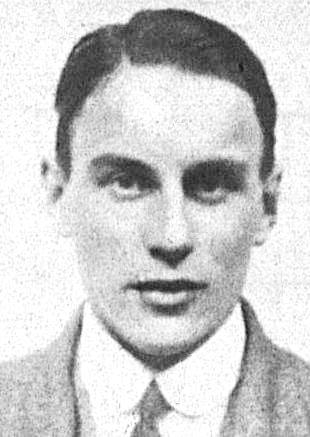
Captain Raymond V Boodle RFA
24 February 1958 to 1 March 1958 involved in fleet exercises with RFA's WAVE MASTER, FORT CHARLOTTE, GOLD RANGER, HMS NNEWCASTLE and 9 other RN ships
1958 towed HMEAS BASSINGHAM from Aden to Mombassa - the tow broke twice in foul weather
23 June 1959 Captain Douglas S Norrington RD RFA (Commander RNR) appointed as Master
18 August 1959 Mr J A Ferguson RFA appointed as Chief Engineer Officer
19 December 1959 RASed with HMS BELFAST and HMAS's QUICKMATCH and VENDETTA
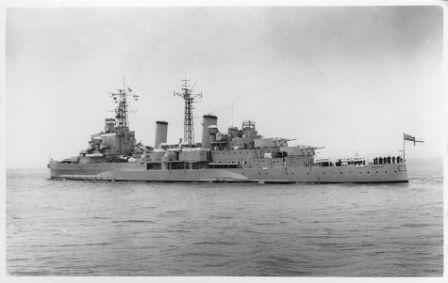
HMS BELFAST
7 January 1960 RASed with HMAS QUICKMATCH supplying 4" ammunition and seperately a heaving line transfer of mail with the same ship
15 April 1960 between Singapore and Hong Kong RASed with HMS CAVALIER
10 June 1960 Captain William R Town RFA appointed as Master
3 January 1961 Mr F A Essam RFA appointed as Chief Engineer Officer
19 January 1961 Captain Ronald V Warren DSC RFA appointed as Master
Captain Ronald V Warren DSC RFA
kindly donated by Mrs Susan Henry
July 1961 saw service during Operation Vantage - the Kuwait Crisis - along with 12 other RFA’s
30 October 1961 Mr J W Ritchie RFA appointed as Chief Engineer Officer
6 December 1961 Engineroom Tindall Jasoodeen Hasson Mea discharged dead at 3°12S 56°41E with heart failure. Buried at sea
4 April 1962 Captain James H Chant RFA appointed as Master
25 July 1962 arrived Malta from Gibraltar
22 September 1962 sailed Malta for Istanbul, Turkey
17 January 1963 sailed Malta to Taranto with RFA WAVE KNIGHT (1)
30 January 1963 Captain Nicholas B J Stapleton RD RFA appointed as Master

Captain Nicholas B J Stapleton RD RFA
24 April 1963 at Sea at 34º 38N 23º 43E 2nd Steward Gabriel Labiche discharged dead having been found to be missing from the ship - believed lost over the side
13 October 1963 C A Herbert RFA appointed as Chief Engineer Officer
31 December 1964 Captain P T Taylor RFA appointed Master
21 January 1965 Mr J G Yuill RFA appointed as Chief Engineer Officer
30 January 1965 in the Singapore Straits RAS'ed (A) with HMAS DERWENT
12 March 1965 in the Persian Gulf RAS'ed ammunition with HMS MOWHAWK
14 June 1966 Mr L Cochrane RFA appointed as Chief Engineer Officer
6 October 1966 Captain O J Coulthard RFA appointed as Master
22 June 1967 Mr R C Veitch RFA appointed as Chief Engineer Officer
10 September 1967 Captain J H McLoughlin RFA appointed as Master
11 October 1967 to 25 January 1968 was part of Task Force 318 - the Aden Task Force -which was formed to cover the final British military withdrawal from Aden code named Operation Magister, along with 9 other RFA’s and was engaged in the final Fleet Review along with 5 of the other RFA’s involved
2 May 1968 Mr R J D'Souza RFA appointed as Chief Engineer Officer
16 August 1968 Captain John C Moffat RFA appointed as Master
6 December 1968 Captain Barry H Rutterford RFA appointed as Master
Captain Barry H Rutterford RFA
21 February 1969 at Hong Kong
7 April 1969 at Singapore
10 November 1969 Mr Ronald C Putt MID RFA appointed as Chief Engineer Officer
20 November 1969 sailed Devonport for Freetown arriving 1 December 1969
3 December 1969 sailed Freetown for Cape Town arriving 16 December 1969
20 December 1969 sailed Cape Town to Mombasa arriving 31 December 1969
7 January 1970 sailed Mombasa to RAF Gan arriving 11 January 1970
12 January 1970 sailed RAF Gan to Singapore arriving 20 January 1970
30 March 1970 arrived at RAF Gan
3 May 1970 arrived at RAF Gan
13 May 1970 at Singapore
7 July 1970 at Singapore
11 January 1971 at Portsmouth
1 September 1971 at Hong Kong
31 October 1971 took part in the final steam past in the Singapore Straits after the closure of the naval base there along with 6 other RFA’s
13 February 1972 arrived Rosyth to discharge, destore and await disposal
24 January 1973 sailed Rosyth in tow for Spanish breakers along with RFA FORT ROSALIE (1).
10 February 1973 arrived Castellon, Spain for breaking up by Varela Davalillo
Notes: -
- Allocated a British Pacific Fleet Train Pennant number - hence the 'B' pennant number above
Reproduced with permission of the MOD


Subsequent name:
Official Number: 722240
Class: FORT CLASS Auxiliary Oiler Replenishment Ship
Pennant No: A387
Laid down: 4 April 1988
Builder: Harland & Wolff, Belfast
Launched: 12 June 1990
Into Service: 24 June 1994
Crew Number 89
Out of service:
Fate:
Items of historic interest involving this ship: -
Background Data: The “one-stop” concept of the two ships in this Class dates back to 1978 with a Staff Target being generated in 1981. Feasibility studies were conducted by both the MoD and Industry, and a Staff Requirement was endorsed at the end of 1983. Ministerial approval was given in 1984 to invite Industry to tender for a provisional Class of six vessels. A wide range of shipbuilders and defence firms were invited to tender, but only two consortia submitted designs - Harland and Wolff (in association with Yarrow Shipbuilders) and Swan Hunter (in association with British Aerospace/Marconi). The tender submitted by Harland and Wolff was technically preferred by both the MoD and external consultants as it offered earlier delivery and a keener price. The Government announced on 24 April 1986 that a “design and build” contract had been awarded to Harland and Wolff to build the first ship of the Class. A second (and final) order was awarded to Swan Hunter the following year
24 April 1986 ordered
17 November 1987 her Ship’s Badge was officially presented to her .
15 September 1988 laid down in the large dry dock by Harland & Wolff Ltd, Belfast as Yard Nr 1727
9 January 1989 Mr Robert Settle RFA appointed Chief Engineer Officer
Chief Engineer Officer Robert Settle RFA
10 July 1989 Captain (E) Robert Settle RFA appointed as Chief Engineer Officer
4 May 1990 floated out
June 1990 Captain Shane Redmond OBE RFA appointed as Commanding Officer
19 June 1990 officially named FORT VICTORIA by HRH Duchess of York
6 September 1990 became the victim of two IRA bombs in her engine room. One was defused the other exploded causing damage and flooding
29 June 1992 sailed Belfast on Contractor’s Sea Trials 2 years later than originally planned
6 July 1992 arrived Birkenhead for completion and for rectification of damage sustained during sea trials. The Builders sub-contracted the work to Cammell Laird Shipbuilders Ltd due to the heavy backlog of shipbuilding work at Belfast
16 July 1992 the National Audit Office announced that both of the FORT CLASS AOR’s were subject to delays and cost overruns, FORT VICTORIA 32 months behind schedule and more than £63m over budget. Delays in the development of the command system for their air defence capabilities and difficulties in obtaining parts mean that neither AOR will go to sea with full air defence capabilities for some considerable time. The NAO also concluded that problems resulting from the privatisation of the shipyard have played a significant part in the delay in delivery and the cost overrun
31 July 1992 adopted by the Metropolitan Borough of Barnsley
March 1993 Cammell Laird Shipbuilders Ltd closed down
24 March 1993 ship handed over to the MoD (N). Captain Shane Redmond OBE RFA appointed as Commanding Officer
5 April 1993 sailed Birkenhead with between 15,000 and 20,000 items incomplete
7 April 1993 arrived Portsmouth Dockyard for completion and defect rectification in D Lock by FMRO, 3 years behind schedule and £70m over budget
4 August 1993 sailed Portsmouth for trials after completion at a total cost of £200m
12 August 1993 returned to Portsmouth after numerous systems’ failures had resulted in having to anchor in Weymouth Bay to carry out temporary repairs
7 January 1994 finally sailed Portsmouth for her long-overdue Part 1V Sea Trials
19 February 1994 at Portland and Captain Alan T Roach RFA appointed as Commanding Officer
Captain Alan T Roach RFA
31 March 1994 at Portsmouth
29 April 1994 Captain (E) Robert Settle RFA appointed as Chief Engineer Officer
23 June 1994 at Portsmouth and Captain Shane Redmond OBE RFA appointed as Commanding Officer
24 August 1994 1st Officer (E) Phillip L Bandy RFA discharged dead
25 August 1994 fire broke out in the cargo main pump room while at Torpoint, Cornwall. No casualties
13 September 1994 sailed Devonport after repairs
27 September 1994 at Glen Mallen and Captain Alan T Roach RFA appointed as Commanding Officer
30 December 1994 berthed at DM Crombie
17 February 1995 at Loch Ewe
27 February 1995 humanitarian aid - rescued the eleven crew members of the Norwegian trawler ROALDNES which sank off Aslasund. The crew were kept in the ship’s hospital overnight before being flown back to Norway the following day
30 March 1995 berthed at Loch Striven
9 June 1995 berthed at DM Crombie
21 July 1995 at DM Crombie, Firth of Forth and Captain R J Carew OBE RFA appointed as Commanding Officer
25 August 1995 at Plymouth
15 December 1995 at Glen Mallen and Captain Alan T Roach RFA appointed as Commanding Officer
25 June 1996 at Gibraltar and Captain Peter Lannin RFA appointed as Commanding Officer
Captain Peter Lannin RFA
5 July 1996 Captain S F Hodgson RFA appointed as Commanding Officer
28 November 1996 Captain David M Pitt RFA appointed as Commanding Officer
7 March 1997 at Loch Striven
27 April 1997 Captain Jeremy R J Carew OBE RFA appointed as Commanding Officer
5 June 1997 Captain David Gerrard RFA appointed as Commanding Officer
Captain David Gerrard RFA
2 September 1997 sailed Portsmouth for the Gulf supporting the carrier HMS INVINCIBLE
12 September 1997 at Malaga, Spain
14 November 1997 to 17 April 1998 along with the carrier HMS INVINCIBLE served on Operation Bolton - deployment to the Gulf to enforce UN Resolutions against Iraq
10 December 1997 at Crete
23 December 1997 Captain Nigel A Jones RFA appointed as Commanding Officer
8 January 1998 Captain Christopher Knapp RFA appointed as Commanding Officer
18 January 1998 transitted the Suez Canal southbound and met up with the frigate HMS COVENTRY at the southern end of the Red Sea for a fast passage to the Gulf
26 January 1998 entered the Straits of Hormuz
17 April 1998 departed the Gulf Areas for the U.K
13 May 1998 berthed at Glen Mallon
17 July 1998 with HMS MARLBOROUGH visited Latakia, Syria
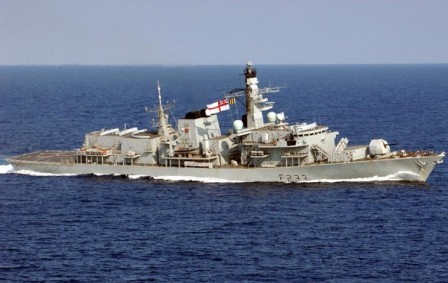
HMS MARLBOROUGH
5 September 1998 Captain P A Taylor OBE RFA appointed as Commanding Officer
1999 during a refit at Rosyth she was fitted with the Phalanx close-in weapon system with guns on her hangar and bridge roof
4 June 1999 at Rosyth
July 1999 Captain Nigel A Jones RFA appointed as Commanding Officer
13 August 1999 berthed at Glen Mallen
1 December 1999 Captain Alan T Roach RFA appointed as Commanding Officer
27 January 2000 at DM Crombie, River Forth
28 April 2000 at Plymouth
2 May 2000 sailed U.K. as part of Task Group 2000 - the Eastern Adventure Deployment circumnavigation of the globe led by the frigate HMS CORNWALL - along with RFA’s BAYLEAF(3) and DILIGENCE
20 June 2000 at Singapore
19 July 2000 at Singapore and Captain P A Taylor OBE RFA appointed as Commanding Officer
7 August 2000 with RN and French naval units paid a visit to Hong Kong
17 March 2001 Captain J Murchie RFA appointed as Commanding Officer
11 May 2001 to 14 May 2001 berthed at Vigo, Spain
5 August 2001 berthed at the Oil Fuel Jetty, Loch Striven
23 August 2001 Captain (X) R L Williams RFA appointed as Commanding Officer
3 September 2001 sailed on the Argonaut 2001 deployment together with HMS ILLUSTRIOUS, fourteen other Royal Naval Warships and RFA's FORT ROSALIE (2), BAYLEAF (3), SIR TRISTRAM, SIR BEDIVERE, SIR PERCIVALE, SIR GALAHAD (2), FORT AUSTIN, OAKLEAF (2) and DILIGENCE
10 January 2002 berthed at Gibraltar
2002 the ship and Barnsley celebrated their 10th anniversary with a Naval Parade through the town
2 August 2002 Captain (X) J Murchie RFA appointed as Commanding Officer. The ship was at Plymouth
29 September 2002 at Augusta and Captain (X) R L Williams RFA appointed as Commanding Officer
28 October 2002 to 2 November 2002 berthed at Barcelona
15 December 2002 at DM Crombie
15 January 2003 at DM Crombie
18 January 2003 deployed on Operation Telic - the 2nd Gulf War - along with 13 other RFA’s with 4 x Merlin helicopters from No. 814 NAS embarked
26 April 2003 Captain (X) J Murchie RFA appointed as Commanding Officer
2 May 2003 to 8 May 2003 berthed at Gibraltar
18 May 2003 returned to Crombie on completion of Operation Telic duties
2003 following participation in Operation Telic her ensign was presented to the Borough of Barnsley and this is displayed in the foyer of Barnsley Town Hall
16 October 2003 at Glen Mallen
20 October 2003 Captain (X) R L Williams RFA appointed as Commanding Officer
17 November 2003 RASed HMS INVINCIBLE in the North Sea
28 August 2004 at Falmouth berthed at Dutchy Wharf
10 September 2004 while at Falmouth a Maritime and Coastguard Agency (MCA) surveyor, and a lifeboat crew member, sustained back injuries during a planned lifeboat exercise drill. The on-load release gear was operated without another check being made on the boat’s distance above the water. This resulted in the boat freefalling a distance of about 1.2m, before striking the water. The impact with the water resulted in one crewman being hospitalised due to a fractured vertebrae, and the surveyor suffering a back injury which required subsequent medical assistance
12 November 2004 at Falmouth berthed at the docks with the assistance of the Cardiff Harbour tug Hallgarth. Captain (X) William M Walworth RFA appointed as Commanding Officer
23 November 2004 sailed Falmouth with the assistance of the Cardiff Harbour tug Hallgarth.
24 November 2004 at Portland Harbour
9 January 2005 arrived at Devonport from Loch Striven
20 January 2005 completed FOST training and sailed for Portland
28 January 2005 at Glen Mallen
18 February 2005 arrived at the Clyde area to participate in Exercise JMC 051
21 February 2005 sailed Clyde area for Exercise JMC 051
11 March 2005 at Crombie
28 March 2005 commenced FOST tanker support
4 April 2005 completed FOST tanker support
14 April 2005 arrived Aalborg
5 May 2005 arrived at Glen Mallen
10 May 2005 sailed Glen Mallen to Loch Striven arriving the same day
11 May 2005 sailed Loch Striven
28 June 2005 took part in the International Fleet Review for Trafalgar 200 at Spithead along with RFA’s ARGUS, FORT GEORGE, ORANGELEAF (3), SIR BEDIVERE, SIR GALAHAD (2), SIR TRISTRAM and WAVE RULER (2)
12 July 2005 Temporary Acting Captain (X) Paul B Minter RFA appointed as Commanding Officer
Captain (X) Paul B Minter RFA
20 July 2005 visited by HRH the Prince of Wales and the Duchess of Cornwall
9 August 2005 arrived Loch Striven Oil fuel Depot
11 August 2005 sailed from Loch Striven Oil fuel Depot
`12 August 2005 arrived DM at Crombie
29 August 2005 sailed DM at Crombie
1 September 2005 arrived at Loch Striven Oil fuel Depot
5 September 2005 Captain (X) William M Walworth OBE RFA appointed as Commanding Officer
3 November 2005 arrived Glen Mallen
14 November 2005 sailed Glen Mallen
2 December 2005 Captain (X) Nigel A Jones RFA appointed as Commanding Officer
1 January 2006 alongside at Bahrain
29 January 2006 Captain (X) W G Tait RFA appointed as Commanding Officer
10 February 2006 at DM Crombie
26 February 2006 Captain (X) William M Walworth OBE RFA appointed as Commanding Officer
29 March 2006 sailed Portsmouth as part of the Aquila 06 Deployment to the Middle East led by the carrier HMS ILLUSTRIOUS- along with RFA’s BRAMBLELEAF(3) and DILIGENCE
17 May 2006 involved with RN and Indian Navy units in Operation Konkan, a training operation off Goa, India
13 June 2006 during Operation Aquilain the northern Indian Ocean, she conducted a fresh water RAS with the Pakistani dhow SUBHANALLAH
16 July 2006 supported Operation Highbrow - the evacuation of British nationals from the Lebanon - with the carrier HMS ILLUSTRIOUS, the assault ship HMS BULWARK, the destroyers HMS GLOUCESTER and HMS YORK and the frigate HMS ST ALBANS
14 August 2006 at SM Crombie
30 August 2006 Captain (X) Duncan L Lamb RFA appointed as Commanding Officer
7 October 2006 in Plymouth Sound
11 October 2006 to 13 October 2006 at Cherbourg, France
19 October 2006 at Plymouth Sound
12 December 2006 with RN units involved in a search off Portland Bill, Dorset for a fisherman who had fallen overboard from a fishing vessel. Not found despite over 6 hours of searching
11 February 2007 alongside at Loch Striven Oil Fuel Depot
1 March 2007 Captain (X) W G Tait RFA appointed as Commanding Officer
16 March 2007 at Crombie
1 April 2007 arrived at the Clyde area
14 May 2007 arrived at Portsmouth
18 June 2007 at Portsmouth in No 3 basin
9 October 2008 moved from No: 3 basin, Portsmouth Dockyard to North West Wall, Portsmouth
27 October 2008 sailed under tow from Portsmouth Dockyard for a refit in Birkenhead
20 November 2008 at Birkenhead
16 January 2009 towed from Canada Dock to Cammell Laird No: 5 Dock, Birkenhead
1 February 2009 moved to Langton Dock, Birkenhead
13 April 2009 moved from Canada Dock to Cammell Laird No: 5 Dock, Birkenhead
10 September 2009 suffered a fire in a cargo store area near the engine room while under refit at Cammell Lairds - fire contained and no one was injured
12 October 2009 Captain (X) Rob W Dorey RFA appointed as Commanding Officer
1 November 2009 conducting sea trials in the Irish Sea post refit
12 November 2009 at Loch Striven and Captain (X) Paul S Whyte MBE RFA appointed as Commanding Officer
22 November 2009 off Crombie, River Forth
10 November 2009 while in refit at Liverpool at NE Canada Dock an employee of a Cammell Lairds supplier fell some 24 feet to his death in the engine room
12 November 2009 Captain (X) Paul S Whyte MBE RFA appointed as Commanding Officer
11 November 2009 sailed Liverpool after refit
12 March 2010 at Portsmouth
15 May 2010 berthed on the River Tyne
22 May 2010 at Portland
25 May 2010 Captain (X) C G Clarke MBE RFA appointed as Commanding Officer
11 August 2010 Captain (X) Rob W Dorey RFA appointed as Commanding Officer
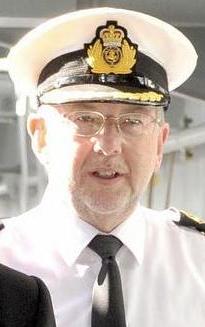
Captain (X) Rob W Dorey RFA
18 October 2010 while conducting piracy patrols as part of Combined Task Force (CTF) 151 off the coast of Somalia the ship identified a "suspicious whaler towing a skiff". The whaler contained a significant amount of fuel barrels and when approached by the ships helicopter, four of the nine passengers tried to hide themselves from view. Suspecting that they may have found a Pirate Action Group (PAG), Fort Victoria was granted approval to conduct a boarding by the CTF 151 Commander, Rear Admiral Sinan Ertugral, Turkish Navy. Royal Marines from the Fleet Protection Group (FPGRM) approached, the suspected pirates attempted to flee for shore but were rapidly surrounded, the Royal marines found they were carrying six AK-47s, a rocket-propelled grenade launcher with four warheads and six RPG booster charges along with hand-held GPS units, mobile phones and other equipment. The nine suspects were transferred to the smaller skiff, and the Royal Marines disabled the outboard engine and gave them oars, Once they were safely ashore, the whaler was rigged with explosives and destroyed along with other confiscated pirate paraphernalia.
13 November 2010 while conducting piracy patrols as part of Combined Task Force (CTF) 151 (Operation Ocean Shield) between the coast of Somalia and the Seychelles detected another boat with ten pirates with ammunition and ladders. The pirates admitted to throwing their firearms over the side. The pirates were returned to Somalia, the boat, ammunition and ladders were seized
8 February 2011 Captain (X) Ian N Pilling RFA appointed as Commanding Officer
27 May 2011 Temporary Acting Captain (E) Mike New RFA appointed as Chief Engineer Officer
1 June 2011 deployed on Operation Kipion in the Persian Gulf until 20 June 2011
12 September 2011 Captain (X) Shaun Jones RFA appointed as Commanding Officer
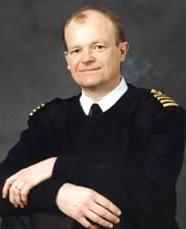
Captain Shaun Jones RFA
12 October 2011 while conducting piracy patrols as part of Combined Task Force (CTF) 151 (Operation Ocean Shield) off the coast of Somalia and in company with the USS De Wert (FFG45) stopped, boarded and released from the clutches of pirates who had seized the Italian bulk carrier the 56,000 ton MV Montecristo. Eleven pirates were detailed
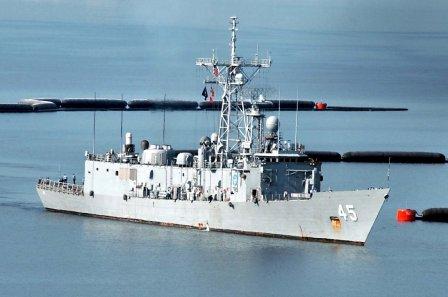
USS De Wert (FFG45)
14 October 2011 some 200 (320km) off the coast of Somalia, together with HMS SOMERSET closed on a pirate dhow mother ship Hibid Fidi which was boarded. Four suspected pirates were detained and handed over to the Italian authorities. The genuine crew of the dhow were released
31 October 2011 anchored off Mahe, Seychelles
2 November 2011 alongside at Victoria, Mahe, Seychelles
28 December 2011 alongside at Dubai
2 January 2012 sailed Dubai
10 January 2012 off Somalia forced a gang of pirates to abandon an attempt to hijack cargo ships by identifying a hijaked ship - mv Liquid Velvet - which had sailed from Somalia to act as a 'mother ship' by a gang of pirates. The mv Liquid Velvet returned to her anchorage off Somalia when her way was cut off when it was 90 miles off the coast.
13 January 2012 off Somalia in a join Royal Marine (from the RFA Fort Victoria) / USS Carney operation 13 suspected pirates were detained in a dhow in which a cache of weapons were discovered


© Daily Mail
28 January 2012 deployed on Operation Kipion in the Persian Gulf until 22 November 2013
5 February 2012 RASed with RFA WAVE KNIGHT (2)
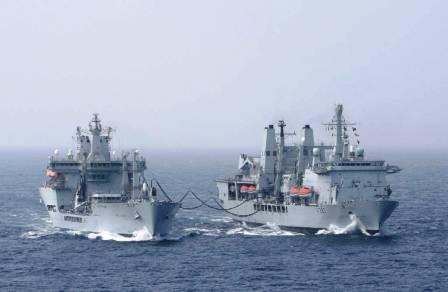
23 February 2012 alongside at Port Rashid, UAE
26 February 2012 Captain I N Pilling RFA appointed as Commanding Officer
16 April 2012 RASed with USS Porter (DDG78) in the Gulf of Aden
21 April 2012 operating with USS Abraham Lincoln (CVN72) in the Arabian Sea
3 May 2012 members of the US Helicopter Maritime Strike Squadron Severn Severn (HSM-77) "Sabrehawks" from USS Abraham Lincoln (CVN72) with one MH-60R helicopter under the command of Lieutenant Commander Aric "Bull" Edmondson USN embarked on RFA Fort Victoria

18 June 2012 at Mina Salaman on RFA Fort Victoria when Republic of Korea Navy Rear Adm. Anho Chung, relieves Royal Thai navy Rear Adm. Tanin Likitawong, commander of Combined Task Force (CTF) 151 as Vice Adm. John Miller, commander of U.S. Naval Forces Central Command/U.S. 5th Fleet/Combined Maritime Forces, looks on during a change of command ceremony
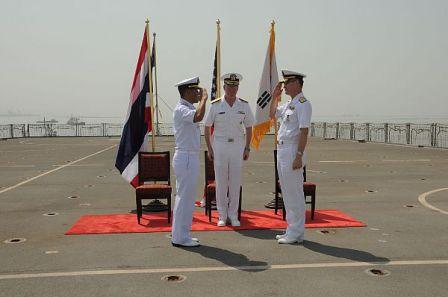
27 July 2012 Fort Victoria's adopted town - Barnsley's Sea Cadet Unit led by their Commanding Officer rang the bell donated by the ship to the town to mark the commencement of the Olympic Games in London
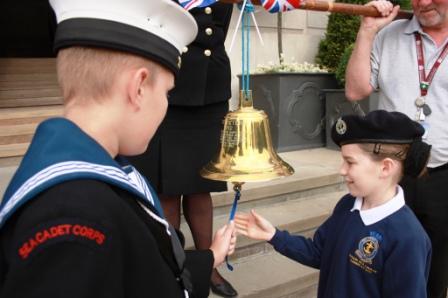
2 August 2012 Temporary Acting Captain (E) Mike New RFA appointed as Chief Engineer Officer
5 August 2012 sailed Dubai to sea
20 August 2012 Captain (X) Shaun Jones OBE RFA appointed as Commanding Officer
24 September 2012 berthed at Dubai - and dry docked


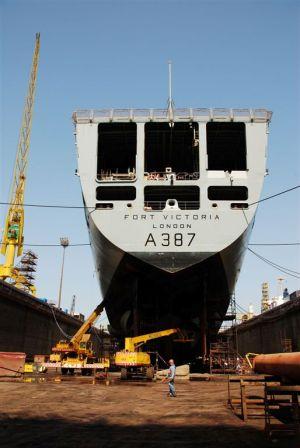
Above six images copyright © Shaun P.Jones
28 September 2012 in the Operational Honours List of this day Captain (X) Shaun Jones RFA appointed by Her Majesty the Queen to be an Officer of the Most Excellent Order of the British Empire (Civil Division) (OBE). Chief Officer (X) Simon K Booth RFA and 1st Officer (X) Duncan K Vernoum RFA both awarded a Command Joint Operations (CJO) Commendation for OP Capri 2. 1st Officer (X) Anthony C Day RFA and Petty Officer Allister F Strachan RFA both received a Fleet Commander's Commendation. Two of the UK embedded forces were also in receipt of awards - Major Adam Whitmarsh, Royal Marines received the Queen's Commendation for Valuable Service and Lieutenant Alistair J Thompson, Royal Navy and Petty Officer (Reg) Carol Morton-Harrowsmith received a Commander Joint Operations (CJO) Commendation
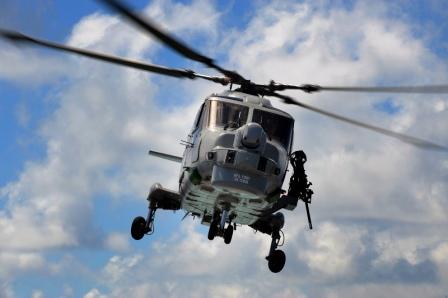
RFA Fort Victoria's embedded helicopter
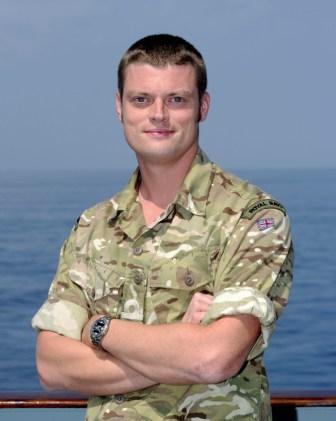
RFA Fort Victoria's embedded pilot - Lieutenant Alistair J Thompsn, Royal Navy
29 November 2012 sailed from and later berthed at Dubai
3 December 2012 to 8 December 2012 off Dubai with sea trials
9 December 2012 to 10 December 2012 at Jebel Ali
11 December 2012 sailed from Jebel Ali for Djibouti
15 December 2012 to 19 December 2012 berthed at Djibouti
20 December 2012 to 27 December 2012 at sea supporting Coalition Navies (Kipion Ready Tanker)
27 December 2012 to 2 January 2013 berthed at Fujairah
3 January 2013 at sea supporting Coalition Navies (Kipion Ready Tanker)
5 January 2013 RASed with USS Jason Dunham (DDG109)
17 January 2013 to 21 January 2013 berthed at Bahrain
22 January 2013 to 27 January 2013 at sea supporting Coalition Navies (Kipion Ready Tanker)
28 January 2013 berthed at Jebel Ali
29 January 2013 to 7 February 2013 at sea supporting Coalition Navies (Kipion Ready Tanker)
8 February 2013 to 28 February 2013 berthed at Al Hadd, Muharrag, Bahrain
28 February 2013 Captain (X) Kevin D Rimell RFA appointed as Commanding Officer
2 March 2013 at sea supporting Coalition Navies (Kipion Ready Tanker)
April 2013 became the seagoing headquarters of Rear Admiral Giam Hock Koon of the Republic of Singapore Navy and his command staff of Commbined Task Force CTF151 for three months
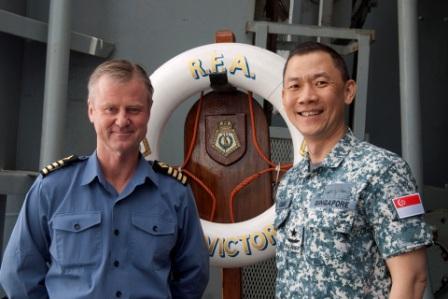
10 April 2013 RASed with USS Kearsarge (LHD3)

RFA Fort Victoria about to RAS with USS Kearsarge (LHD3)
18 April 2013 berthed alongside at Salalah
26 May 2013 berthed alongside at Jebel Ali
26 June 2013 RASed with USS Gonzales (DDG66) in the Indian Ocean
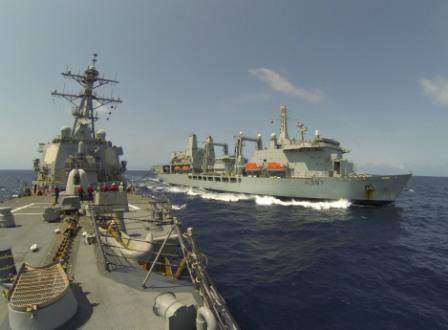
USS Gonzalez (DDG66) RASes with RFA Fort Victoria
13 July 2013 RASed with HMAS NEWCASTLE in the Gulf of Aden
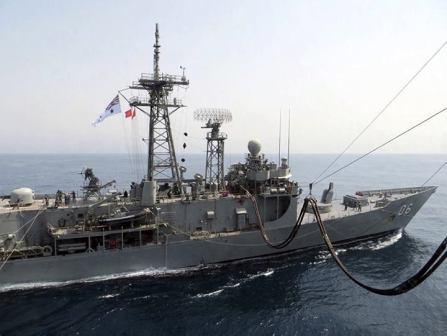
HMAS Newcastle RASing with RFA Fort Victoria © Commonwealth of Australia
24 July 2013 sailed Dubai, United Arab Emirates
28 July 2013 Captain (X) Shaun P Jones OBE RFA appointed as Commanding Officer
30 July 2013 alongside at Port Rashid, Dubai, United Arab Emirates
13 August 2013 in the Arabian Sea RASed with HMAS NEWCASTLE
1 September 2013 sailed Jebel Ali
4 September 2013 berthed at Mina Salman, Bahrain
15 September 2013 berthed at Djibouti
22 October 2013 in the Indian Ocean and with HMAS MELBOURNE and the South Korean destroyer ROKS Wang Geon effected the detention of nine pirates in two boats together with their equipment
22 November 2013 - arrived at Port Said - northbound
30 November 2013 anchored in Gibraltar Bay off the south arm of the Dockyard
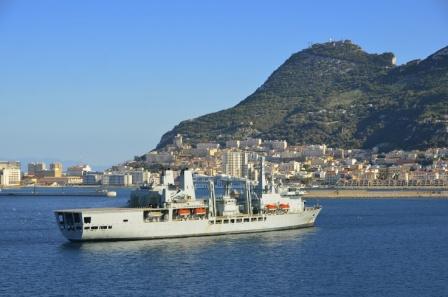
© Captain Shaun Jones OBE RFA
3 December 2013 sailed from Gibraltar
9 December 2013 berthed at Crombie, River Forth after stopping 20 armed pirate groups and seizing more than 50 pirates having completed a 40 month deployment. Away from the UK for 1,197 days she acted as Britain's leading warrior against 21st century piracy in the Indian Ocean
16 December 2013 sailed Crombie, River Forth
18 December 2013 berthed at Loch Striven Oil Fuel Depot
12 January 2014 arrived at Birkenhead for refit
17 March 2014 Chief Officer (E) Geoffrey B New RFA appointed Acting Captain (E) and as Chief Engineer Officer
1 October 2014 in refit at Birkenhead


both © Captain Shaun Jones OBE RFA
11 December 2014 Captain (X) Shaun P Jones OBE RFA appointed as Commanding officer
13 January 2015 moved from Birkenhead into the River Mersey and berthed on Liverpool's Cruise Liner terminal
17 January 2015 sailed Liverpool
19 January 2015 berthed at Loch Striven Oil Fuel Depot
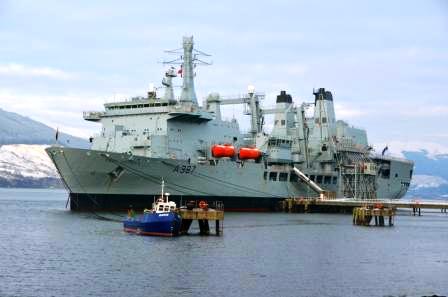
© Captain Shaun Jones OBE RFA
24 January 2015 sailed Loch Striven Oil Fuel Depot
27 January 2015 berthed at Garelochhead
30 January 2015 sailed Garelochhead and anchored off Gourock
31 January 2015 sailed Gourock anchorage
2 February 2015 anchored at Scapa Flow
3 February 2015 sailed Scapa Flow anchorage
4 February 2015 moored off DM Crombie, Firth of Forth
27 February 2015 sailed DM Crombie, Firth of Forth
2 March 2015 berthed DM Crombie, Firth of Forth
5 March 2015 Captain (X) Kevin D Rimell RFA appointed as Commanding Officer
6 March 2015 sailed DM Crombie, Firth of Forth
17 March 2015 arrived at Plymouth Sound
18 March 2015 sailed from Plymouth Sound
24 March 2015 berthed at Loch Striven
28 March 2015 sailed Loch Striven
2 April 2015 arrived at Plymouth Sound
14 April 2015 sailed Plymouth Sound
16 April 2015 at Plymouth Sound
19 April 2015 sailed Plymouth Sound
22 April 2015 at Plymouth Sound
23 April 2015 sailed Plymouth Sound
29 April 2015 arrived at Plymouth Sound
30 April 2015 sailed from Plymouth Sound
2 May 2015 arrived DM at Crombie, Fife

RFA Fort Victoria alongside at DM Crombie
5 May 2015 Captain (E) Peter R Dear RFA appointed as Chief Engineer Officer
14 May 2015 sailed DM Crombie
16 May 2015 off the North Foreland light sailing south
25 May 2015 deployed on Operation Kipion in the Persian Gulf until 2 April 2016
5 June 2015 berthed at Dubai
3 July 2015 Captain Stephen J Norris RFA appointed as Commanding Officer
17 July 2015 RASed with RFA CARDIGAN BAY off Djibouti
15 August 2015 RFA FORT VICTORIA acknowledged the 70th Anniversary of VJ Day
9 October 2015 Captain (X) Kevin D Rimell RFA appointed as Commanding Officer
16 October 2015 Captain (E) Michael G New RFA appointed as Chief Engineer Officer
1 November 2015 berthed at Duqum, Oman
7 November 2015 berthed at Dubai
20 November 2015 at Oman
1 December 2015 berthed at Bahrein
4 December 2015 RASed with USS Kearsarge (LHD3) supplying 541,000 gallons of diesel and 138,500 gallons of aviation fuel
USS Kearsarge (LHD3) approaching RFA FORT VICTORIA
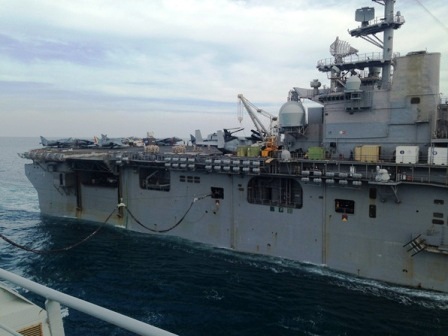
USS Kearsarge (LSD3) RASing with RFA FORT VICTORIA
23 December 2015 berthed at Dubai
28 December 2015 sailed from Dubai
14 January 2016 sailed Duqm
22 January 2016 berthed at Fujairah
26 January 2016 sailed Fujairah
22 February 2016 Captain Stephen Norris RFA appointed as Commanding Officer
27 February 2016 berthed at Dubai
9 March 2016 Leading Air Engineering Technician (LAET) Callum Onions, one of the embarked Royal Navy team, was recognised for his ability to operate in the absence of his Senior Rate on RFA Fort Victoria with an Endeavour Award by stepping up to the mark to ensure no loss of capability was encountered by the Ship's command team. The award was made by Lieutenant Commander Chris Roberts Royal Navy at HMS CULDROSE
2 April 2016 arrived at Suez. After transitting the Suez Canal sailed from Port Said
3 April 2016 Captain (E) Michael S Hill RFA appointed as Chief Engineer Officer
21 April 2016 berthed at Piraeus, Greece
27 April 2016 sailed from Piraeus, Greece - for Hyperlink see
8 May 2016 berthed at Souda Bay, Crete
12 May 2016 arrived at Port Said and deployed on Operation Kipion in the Persian Gulf until 14 July 2017
14 May 2016 the ships crew carried out a mammoth charity row to raise money for those in need while transiting the Suez Canal – a distance of 164 kilometers. 3rd Officer Drew Arnold created a challenge to raise funds for Médecins Sans Frontières.
The Ship took 11 hours 41 minutes to transit the Canal and so the challenge was to row 164km in less time. All elements of the Ship’s Company were represented including the RFA, Maritime Aviation Support Force (MASF), the Fleet Electronic Warfare Support Group (FEWSG) and 45 Commando Force Protection took up this daunting challenge.
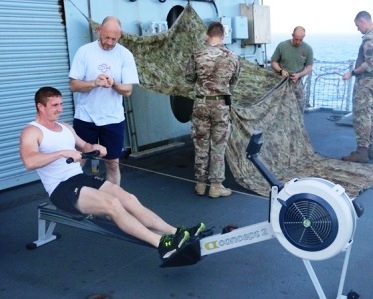
Due to rising temperatures the marathon row started at 8.00 am with three teams of four people, rowing for one hour at a time. What made this challenge even tougher was the fact that there was only one rowing machine so the volunteers had to work throughout the day, including the hottest period from mid-morning to late afternoon.The row was successfully completed, with the crew finishing the 164 km in 11 hours 14 minutes, 27 minutes ahead of the Ship’s Suez transit time. So far in excess of £300 has been raised for Médecins Sans Frontières
14 May 2016 arrived at Suez
22 May 2016 arrived at Fujairah
27 May 2016 sailed Fujairah
10 June 2016 sailed from Fujairah
11 June 2016 arrived at Duqm
15 June 2016 arrived at Duqm
18 June 2016 sailed Duqm
1 July 2016 Captain (X) Kevin D Rimmell RFA appointed as Commanding Officer
19 July 2016 Captain (E) Michael S Hill RFA appointed as Chief Engineer Officer
4 August 2016 sailed Dubai arriving at Fujairah later in the day
5 August 2016 sailed Fujairah
6 August 2016 arrived at Duqm
9 August 2016 sailed Duqm
22 August 2016 arrived at Fujairah
23 August 2016 sailed from Fujairah
24 October 2016 sailed Dubai
27 October 2016 arrived at Fujairah
28 October 2016 sailed from Fujairah
16 November 2016 Captain (X) Robert H Allan OBE RFA appointed as Commanding Officer
16 December 2016 arrived at Fujairah
20 February 2017 berthed at Port Rashid, Dubai, UAE
13 March 2017 in the Arabian Sea working with USS Laboon (DDG58) a stateless dhow was tracked and stopped and 278 kilograms of pure uncut heroin was seized. The seizure was worth about £40 million

USS Laboon (DDG58)
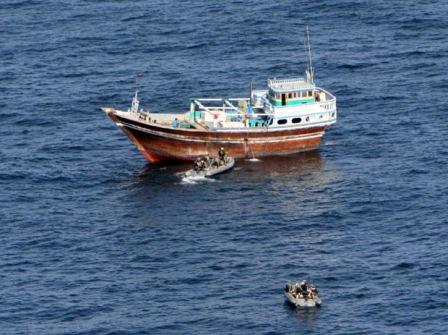
The dhow being boarded
4 May 2017 Captain (X) Kevin D Rimell RFA appointed as Commanding Officer
23 May 2017 berthed at Port Rashid, Dubai, UAE
29 May 2017 sailed from Port Rashid, Dubai, UAE
26 June 2017 Captain (E) Craig A Holden RFA appointed as Chief Engineer Officer
30 June 2017 sailed from Port Rashid, Dubai, UAE
21 July 2017 off Crete
23 August 2017 berthed at the oil fuel depot at Loch Striven
4 September 2017 at sea off the Island of Anglesea. Later berthing at Birkenhead
7 November 2017 Captain (E) David A Wardell RFA appointed as Chief Engineer Officer
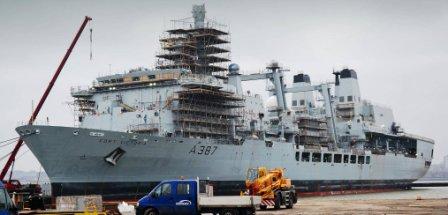
Notes:
The Navy had a requirement for at least 4 of this Class of ship and had originally hoped to have 6 of them but Defence Budgets reduced the Class to just 2. FORT VICTORIA was built in 29 sections


Official Number: 140341
Class: SECOND 2000t BELGOL CLASS Tanker
Pennant No: X58 / X26 / A126
Laid down:
Builder: McMillan, Dumbarton
Launched: 21 May 1917
Into Service: 31 August 1917
Out of service: 1958
Fate: Broken up
Items of historic interest involving this ship: -
Background Data: There were ten ships in this Class, all Admiralty designed of which 5 were named after Allied countries while the other five were given names indicating power or speed, all with the OL suffix. Three of them, RFA’s FRANCOL, MONTENOL and SERBOL had upright funnels with a single tall mast close by, while the remainder had a raking funnel and two raking masts. During WW2 the mainmast was removed from these.
25 February 1917 Engineer Lieutenant Ernest K Horsley RNR appointed as Chief Engineer Officer
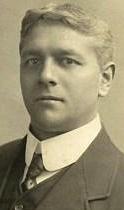
Engineer Lieutenant Ernest K Horsley RNR
21 May 1917 launched by A. Macmillan & Sons, Dumbarton as Yard Nr: 467 named FORTOL
1 August 1917 Lieutenant John C Hawick RNR appointed in command
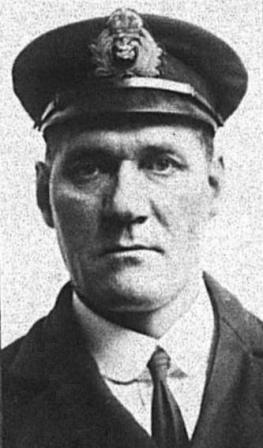
Lieutenant John C Hawick RNR
25 August 1917 at London registered as FORTOL under reference 160/17 in the Registry
29 August 1917 Able Seaman Thomas Toole logged as deserting from the ship. He has signed on the ship on the 24 August 1917
12 September 1917 Fireman James Scharah and Pumpman William Stant both logged as deserting. Fireman Scharah had signed on on the 24 August 1917 and Pumpman Stant had signed on on the 26 August 1917
13 September 1917 Leading Fireman Thomas Kay and Leading Fireman Edward Styles both logged as deserting. Both had signed on on the 12 August 1917
14 September 1917 Signalman and Able Seaman C V Batchelor logged as deserting. He had signed on on the 15 August 1917
4 October 1917 Greaser James McKenna logged as deserting. He had signed on on the 14 September 1917
18 October 1917 Greaser Frank Holland logged as deserting. He had signed on on the 24 August 1917
3 November 1917 Bosun Charles Turbet logged as deserting. He had signed on on the 12 August 1917
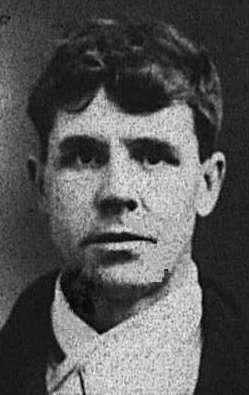
Bosun Charles Turbet
11 November 1917 Greaser Thomas Coe logged as deserting. He had signed on on the 24 August 1917
27 December 1917 at Liverpool
8 January 1918 Lieutenant John C Hawick RNR appeared before Liverpool Magistrates' Court charged with pumping water minged with petroleum into Liverpool Docks on 27 December 1917. He was convicted and fined £5 with 10 guineas costs

Liverpool Echo press report of 8 January 1918
31 January 1918 Able Seaman George Ellison logged as deserting from the ship. He had signed on the ship on the 24 August 1917
2 February 1918 Fireman W Nash logged as deserting at Liverpool. He had signed on on the 12 November 1917
11 March 1918 Fireman Arthur Bright logged as deserting. He had signed on on the 10 February 1918.
12 April 1918 Fireman Jas Lyng logged as deserting. He had signed on on the 5 April 1918
23 August 1918 midstream in the River Mersey refuelling HMS ACHILLES alongside with 400 tons of FFO
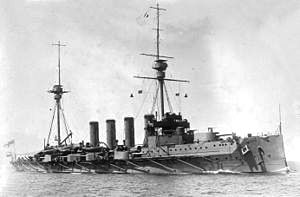
HMS ACHILLES
25 October 1918 Able Seaman Edward Baldwin MMR 664763 logged as deserting while at Belfast. He had signed on on 5 February 1918

Able Seaman Edward Baldwin MMR 664763
1 November 1918 anchored at Tail of the Bank. Moved alongside RFA DREDGOL to load 256 tons of bunkers
4 November 1918 and 5 November 1918 moved from anchorage to alongside RFA DREDGOL at Greenock to load 2,200 tons of cargo. On completion moved alongside the wharf at Rothsay Basin. Cast off and moved up the River Clyde to Old Kilpatrick oil wharf
6 November 1918 discharged 2,200 tons of cargo. Sailed to the anchorage at Tail of the Bank and berthed alongside ss War Prophet to load cargo
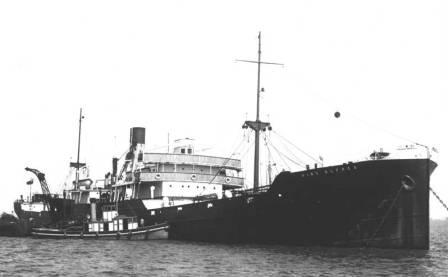
ss War Prophet
7 November 1918 completed loading 2,222 tons of FFO and cast off from ss War Prophet. Sailed up the Clyde to Old Kilpatrick oil wharf to discharge
8 November 1918 sailed down stream to anchor off Princes Pier
27 November 1918 sailed Glasgow down stream to Tail of the Bank
28 November 1918 sailed the River Clyde in ballast to sea
26 December 1918 at Old Kilpatrick oil wharf. Sailed down river to Tail of the Bank. ss War Rajput came alongside
27 December 1918 at Tail of the Bank with ss War Rajput alongside.
29 December 1918 at Tail of the Bank with ss War Prophet alongside. ss War Prophet cast off and ship moved up the Clyde to Old Kilpatrick oil wharf
30 December 1918 at Old Kilpatrick oil wharf
31 December 1918 alongside RFA DREDGOL. Cast off at 11:50hrs sailed up the Clyde to Old Kilpatrick oil wharf
11 February 1919 Fireman Alfred Reed MMR 918492 logged as deserting. He had signed on on 7 December 1917

Fireman Alfred Reed MMR 918492
14 February 1919 3rd Officer J E J Holden RFA discharged dead. He died at Larbert Hospital, Stirlingshire, Scotland. He had signed on on the 26 February 1918
11 March 1919 berthed at Portsmouth
12 March 1919 sailed Portsmouth to sea
4 April 1919 sailed Sheerness
15 April 1919 Engineer Sub Lieutenant Frederick P Atkins RNR appeared before a court martial charged with (a) drunk on board ship and (b) Act to the prejudice of good order and naval discipline in drinking intoxicating liquors to such excess as to produce illness, by which he was unfitted for this discharge of his duty. The charges were adjudged to be not proved and he was acquitted. Engineer Sub Lieutenant Frederick P Atkins RNR had previously served on RFA Rapidol
24 April 1919 Greaser James Mahoney logged as deserting. He had signed on on the 27 February 1919
29 April 1919 arrived at Sheerness
21 June 1919 at Scapa Flow
1 November 1919 Able Seaman J W Mould MMR 1011631, Fireman D Mind MMR 1008152 and Fireman C E Rigby MMR 1008155 all logged as deserting while at Invergordon. Each had signed on on 23 August 1919
22 November 1919 Assistant Steward Harry Riley MMR 996773 logged as deserting while at Grangemouth. He had signed on on 23 August 1919
On an unknown date Ordinary Seaman William Bolton was logged as deserting. He was arrested and sent to Chatham Detention Quarters. He had signed on on 24 August 1917.
On an unknown date Fireman David McCulloch was logged as deserting. He had signed on on 24 September 1917
2 February 1920 at the outer harbour, Libau, in the Baltic while acting as the base oiler - HMS TORBAY alongside to be refuelled - 115 tons FFO and 1 ton of culinary coal supplied. FS L'Auere alongside to be refuelled - 75 tons FFO supplied. Fresh and salt water pipes burst on the fore well deck
4 February 1920 at the outer harbour, Libau, in the Baltic while acting as the base oiler - HMS SERENE alongside to be refuelled - 50 tons FFO supplied
9 February 1920 at the outer harbour, Libau, in the Baltic while acting as the base oiler - moved alongside HMS CALEDON and refuelled her - 210 tons of FFO supplied. Then moved to anchorage where HMS's TORQUOISE and STURDY came alonside to be refuelled. A total of 282 tons of FFO supplied to these two ships
10 February 1920 at the outer harbour, Libau, in the Baltic while acting as the base oiler - FS Meuse alongside to be refuelled - 67 tons FFO supplied
12 February 1920 at the outer harbour, Libau, in the Baltic while acting as the base oiler - HMS TENEDOS alongside to be refuelled - 112 tons FFO supplied
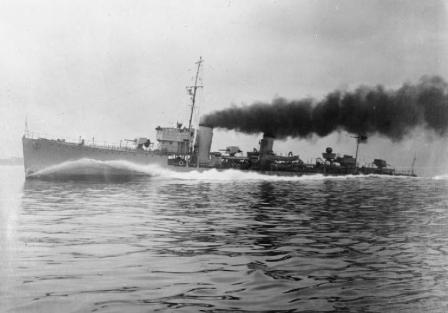
HMS TENEDOS
18 February 1920 at the outer harbour, Libau, in the Baltic while acting as the base oiler - HMS's TENEDOS and TYRIAN alongside to be refuelled - 159 tons FFO supplied
19 February 1920 at the outer harbour, Libau, in the Baltic while acting as the base oiler - HMS TORQUOISE alongside for naval stores and 50 gallons of parafin
21 February 1920 at the outer harbour, Libau, in the Baltic while acting as the base oiler - FS's Meurse and L'Anere alongside to be refuelled - a total of 130 tons FFO supplied
22 February 1920 at the outer harbour, Libau, in the Baltic while acting as the base oiler - HMS TOURMALINE alongside to be refuelled - 109 tons of FFO supplied
23 February 1920 in the Baltic issued 255 tons of FFO from No: 4 tank to the ships bunkers. Able Seamen Manson, Moore and Hill, Ordinary Seaman Miller and Signalman Hunter absent without leave ashore
25 February 1920 in the Baltic AB Manson, OS Miller and Signalman Hunter each fined 2 days pay. AB's Moore and Hill both fined 1 days pay
31 May 1920 berthed at Portsmouth
26 June 1920 Mr William D Hewitt RFA appointed as Chief Engineer Officer
16 July 1920 berthed at Portsmouth sailing the same day to sea
1 September 1920 at anchor at Acapulco Bay
8 September 1920 at Acapulco transfered 223 tons of FFO from the ships cargo to her bunkers
9 September 1920 at Acapulco moored alongside HMS RENOWN while she was at anchor to refuel her - supplied 1,876 tons of FFO. Whilst alongside HMS RENOWN with a heavy ground swell two timber floats which were used as fenders on RENOWN were damaged.
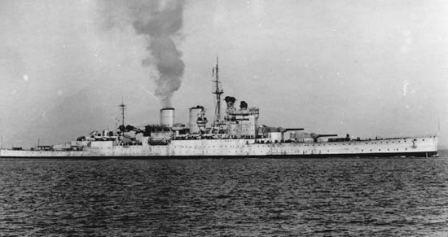
HMS RENOWN
Fortol suffered damage also with several plates, rivets and frames distorted inside the buoyance tank on the starboard side, in No 5 tank and in the starboard bunker tank.
10 September 1920 sailed Acapulco Bay
15 September 1920 anchored off Balboa
16 September 1920 transitted the Panama Canal from Balboa to Cristobal. Anchored in Colon Bay
17 September 1920 moved from Colon Bay to the Oil Wharf in Colon Harbour
18 September 1920 alongside the Oil Wharf at Colon and loaded 100 tons of FFO for bunkers. Sailed for Trinidad
22 September 1920 anchored off Port of Spain, Trinidad
24 September 1920 anchored off Port of Spain, Trinidad cleaned starboard tanks
27 September 1920 anchored off Port of Spain, Trinidad starboard plates being repaired after damage being caused when alongside HMS RENOWN
29 September 1920 at Trinidad - oil barge alongside loaded 70 tons of FFO for bunkers
29 October 1920 berthed at Portsmouth Harbour from Trinidad
8 December 1920 at Portsmouth alongside HMS MALAYA to refuel her
18 December 1920 sailed from Portsmouth Harbour for Queenstown, Ireland in ballast
23 December 1920 berthed at Portsmouth Harbour
3 January 1921 sailed Portsmouth Harbour returning the same day
21 January 1921 sailed Portsmouth Harbour
2 June 1921 at Rathmullen, Co Donegal, Ireland Leading Fireman Ernest Atkinson Turner discharged dead having been accidentally drowned
10 June 1921 the Derry Journal published a letter from the ship -
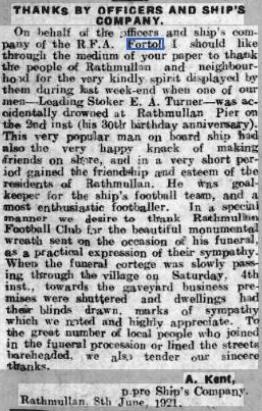
15 August 1921 berthed at Portsmouth Harbour
14 October 1921 sailed Portsmouth Harbour
11 November 1921 at the RN Hospital Chatham 2nd Steward William John Thomas discharged dead - natural causes
13 March 1922 berthed at Grangemouth from Rosyth in ballast
15 March 1922 sailed Grangemouth for Sheerness with a cargo of FFO
1 April 1922 berthed at Portsmouth Harbour
2 April 1922 sailed Portsmouth Harbour
1 July 1922 arrived at Plymouth from Dover
14 July 1922 berthed at Portsmouth Harbour, sailing from the same later the same day
1 August 1922 berthed at Grangemouth from Devonport in ballast
10 August 1922 sailed Plymouth for Gibraltar
9 November 1922 berthed at Devonport
2 December 1922 at Plymouth Police Court Donkeyman George Rosam appeared and pleaded Guilty to stealing £3 4sh 1½d the property of Mess Steward Arthur Minas. The money was found in the possession of the accused by Police. He was sentenced to 2 months hard labour

Press report from Western Morning Mail 4 December 1922
9 January 1923 sailed from Devonport to assist RFA WAR KRISHNA which had reported she had lost her propellor some 600 miles out in the Atlantic
11 January 1923 passed the Lloyds Signal Station on the Lizard sailing east towing RFA WAR KRISHNA
15 January 1923 RFA WAR KRISHNA arrived at Plymouth in tow of RFA FORTOL
16 January 1923 the Western Morning News published an image of RFA WAR KRISHNA with RFA FORTOL alongside

24 November 1923 at Devonport alongside HMS HOOD - Battle Cruiser - supplied 3,465 tons of FFO
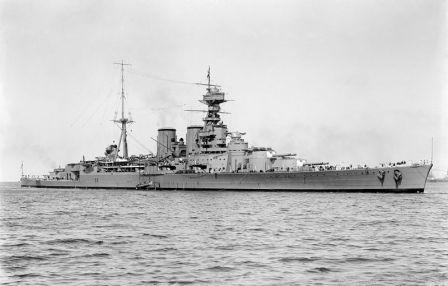
HMS HOOD
2 January 1924 sailed Devonport for Pembroke Dock
15 January 1924 sailed Plymouth
16 January 1924 berthed at Portsmouth Harbour
17 January 1924 sailed from Portsmouth Harbour
18 January 1924 berthed at Portsmouth Harbour and sailed again later the same day
26 January 1924 berthed at Portsmouth Harbour
29 January 1924 sailed from Portsmouth Harbour
16 April 1924 berthed at Portsmouth Harbour
18 April 1924 sailed from Portsmouth Harbour
25 April 1924 berthed at Portsmouth Harbour
28 April 1924 sailed from Portsmouth Harbour
8 May 1924 berthed at Portsmouth Harbour
9 May 1924 sailed from Portsmouth Harbour
21 May 1924 passed the Lloyds Signal Station on the Lizard saling east bound
23 May 1924 berthed at Portsmouth Harbour
26 May 1924 sailed from Portsmouth Harbour
7 June 1924 passed the Lloyds Signal Station on the Lizard sailing east and arrived at Plymouth from Old Kilpatrick Oil Fuel Depot, River Clyde
13 June 1924 sailed Devonport for the River Clyde
10 July 1924 Captain Frank J Delamotte RFA appointed as Master
22 November 1924 arrived at Plymouth from Portland
13 December 1924 Mr G A Calvert RFA appointed as Chief Engineer Officer
16 December 1924 together with RFA SCOTOL sailed Devonport for Milford Haven
21 May 1925 Captain Stanley G Kent RFA appointed as Master
1 January 1927 Captain Charles L Cutsforth RD RFA appointed as Master
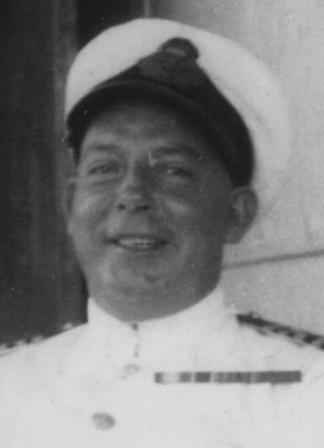
Captain Charles L Cutsforth RD RFA
29 January 1927 to 4 February 1927 alongside the oil wharf in HM Dockyard, Singapore
In April 1927 RFA Fortol was operating with HMS MANTIS on the Yangtze River, China when they came under deliberate rifle fire when proceeding below Nanking. HMS MANTIS returned fire with machine guns. There were no casualties among the crew

Report of 16 April 1927 from Yorkshire Post newspaper
1 June 1927 Captain William H Green RFA appointed as Master
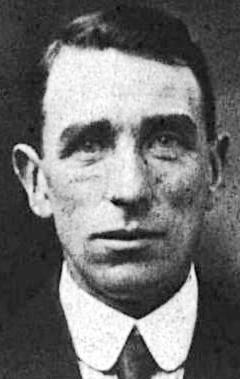
Captain William H Green RFA
22 June 1927 Mr Robert Blacklock RFA appointed as Chief Engineer Officer
5 March 1928 at Hong Kong a RFA Dinner Dance was held at Crawford's Restaurant and was voted a great success - Officers and their Ladies from RFA's BELGOL, FORTOL, FRANCOL, RUTHENIA and KHARKI attended
28 October 1929 alongside the oil wharf in HM Dockyard, Singapore
25 November 1929 at Gibraltar from Port Said with fuel oil cargo for the UK
10 December 1929 Captain John W Pegden RFA appointed as Master
19 December 1929 Mr J A Macintosh RFA appointed as Chief Engineer Officer
11 January 1930 sailed from Portsmouth Harbour
28 February 1930 involved in a collision in the Bay of Gibraltar with the White Star liner Calgaric. Both ships suffered some damage
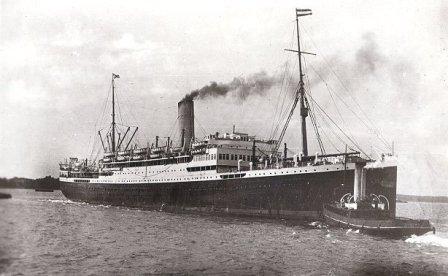
White Star liner Calgaric
3 March 1930 following the collision of the 28 February 1930 (see above) an enquiry was held in HM Dockyard Gibraltar. Pending the result of the enquiry the Chief Officer of the Fortol, Chief Officer Thomas G Bennett RFA, took command temporarily. The ship's Master - Captain John W Pegden RFA returned to England
4 March 1930 Captain Cecil R Rosen RFA appointed as Master
15 March 1930 arrived at Gibraltar in ballast from Palma
28 April 1930 in No: 3 Dock, Devonport Dockyard
23 August 1930 passed the Lloyds Signal Station on the Lizard sailing east
9 December 1930 berthed at Portsmouth Harbour
18 December 1930 Captain John B Hurst RFA appointed as Master
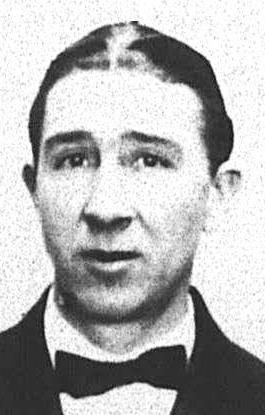
Captain John B Hurst RFA
7 October 1930 Mr James Paton RFA appointed as Chief Engineer Officer
14 January 1931 sailed from Portsmouth Harbour
15 January 1931 arrived at Plymouth
17 January 1931 berthed at Portsmouth Harbour
27 January 1931 sailed from Portsmouth Harbour
3 February 1931 berthed at Portsmouth Harbour
6 February 1931 sailed from Portsmouth Harbour
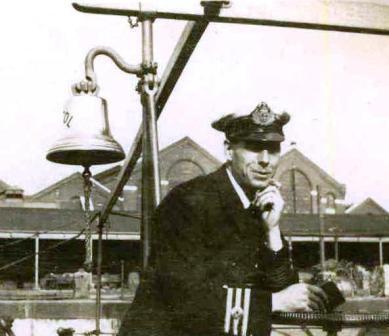
2nd Engineer Officer James Glen
13 February 1931 berthed at Portsmouth Harbour
17 February 1931 sailed from Portsmouth Harbour
23 February 1931 passed the Lloyds Signal Station on the Lizard sailing east
24 February 1931 berthed at Gosport Oil Fuel Jetty, Portsmouth Harbour
28 February 1931 sailed from Gosport Oil Fuel Jetty, Portsmouth Harbour
1 March 1931 passed the Lloyds Signal Station on the Lizard sailing west
11 March 1931 berthed at Portsmouth Harbour
8 April 1931 sailed from Portsmouth Harbour
2 May 1931 berthed at Portsmouth Harbour and sailed to sea the next day
4 May 1931 passed the Lloyds Signal Station on the Lizard sailing west
11 May 1931 berthed at Portsmouth Harbour
12 June 1931 berthed on South Railway Jetty, Portsmouth Harbour
3 July 1931 berthed on Gosport Oil Fuel Jetty
8 September 1931 sailed from Portsmouth Harbour
25 September 1931 passed the Lloyds Signal Station on the Lizard sailing east
2 October 1931 passed the Lloyds Signal Station on the Lizard sailing east
3 October 1931 berthed at Portsmouth Harbour
14 October 1931 berthed at Portsmouth Harbour
27 October 1931 moored on No: 5 buoy, Portsmouth Harbour
19 November 1931 Mr George C Dunning RFA appointed as Chief Engineer Officer
25 November 1931 in No: 3 Basin Portsmouth Dockyard together with RFA PRESTOL
18 December 1931 sailed from Portsmouth Harbour
21 December 1931 in reserve at Rosyth for next four years
1935 converted into a white oil carrier for service in the Gulf of Suez / Aden areas and then resumed black oil duties when RFA GREEN RANGER entered service
7 June 1935 berthed at Grangemouth from Rosyth in ballast
16 October 1935 Captain John P Tugwood DSC RD RFA appointed as Master
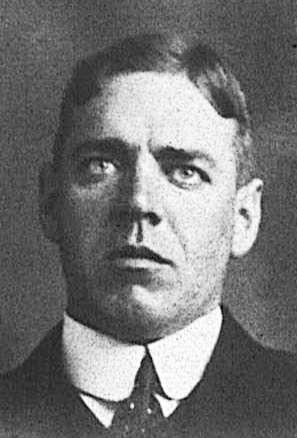
Captain John P Tugwood DSC RD RFA
23 October 1935 Mr Matthew Blair RFA appointed as Chief Engineer Officer
26 November 1935 sailed Grangemouth to Rosyth
3 January 1936 Captain Murray W Westlake RFA (Lieutenant RNR) appointed as Master
Captain Murray W Westlake RFA
1 February 1936 has paravanes fitted and the Admiralty wrote to the Grangemouth Dock Company who under took the work
10 February 1936 Captain Murray W Westlake RFA the ships Master promoted Lieutenant Commander RNR
2 August 1936 arrived Gibraltar from Suez to discharge her cargo
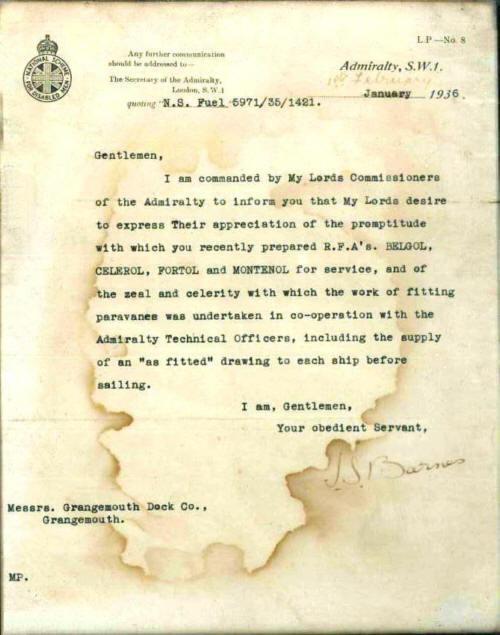
Courtesy Falkirk Council Archives
26 January 1937 RFA Fortol was in dry dock at Devonport when fire broke out under the vessel. Fire extinguished. No casualties or damage.
1 April 1938 again re-entered service
21 September 1938 passed the Lloyds Signal Station on the Lizard sailing west under the tow of the tug Neptunia
20 April 1939 Mr T McGregor RFA appointed as Chief Engineer Officer
19 May 1939 Captain Thomas Elder RFA appointed as Master
3 September 1939 in reserve at Devonport at outbreak of WW2
24 December 1939 sailed Mauritius with HMS GLOUCESTER and HMS EAGLE for the Seychelles. The RN ships formed part of Force I
13 March 1940 at Colombo, Ceylon
14 to 21 July 1940 in port at Mauritius
22 July 1941 Mr Frederick O Brims RFA appointed as Chief Engineer Officer to 26 July 1943
Chief Engineer Officer Frederick O Brims RFA taken earlier in his sea going career
20 December 1941 Captain Herbert Walker Flint RFA appointed as Master
8 April 1942 sailed Freetown in convoy ST19 arriving Takoradi on 13 April 1942
May 1942 at Cape Town and Simonstown in refit through to July 1942
24 July 1942 at the E G Hospital, Cape Town Deck Bhandry Hassan Ahmed discharged dead with meningitis
25 July 1942 under going repairs at Cape Town. Completed 2 August 1942
20 August 1942 at St. Helena HMS CATTERICK, an escort from convoy WS21 on passage south to Cape Town etc., came alongside to refuel in the lee of the Island

HMS CATTERICK
21 August 1942 at St. Helena HMS PETARD, also an escort from convoy WS21 on passage south to Cape Town etc., came alongside to refuel in the lee of the Island
26 August 1942 in the South Atlantic ss Beechwood was sunk by U130 - the Master was taken by the U-Boat. Thrity six members of the crew, five gunners and one stowaway were rescued by RFA FORTOL and landed at Freetown.
25 September 1942 after trials she was ordered to proceed to Freetown via Ascension Island
7 November 1942 at Connaught Hospital, Freetown Fireman Vallee Caramdeen discharged dead from cancer of the bladder
12 March 1943 sailed Freetown in convoy SL126 to St Vincent, Cape Verde Islands as the Escort Oiler
16 March 1943 arrived at Etienne escorted by HMS's BIRDLIP and BUTSER
17 March 1943 at Etienne refuelled HMS's SPEY and ROTHER and then sailed being escorted by the two warships
19 March 1943 while escorted by HMS BURDOCK left convoy SL126 to rendevous with convoy OS44
22 March 1943 berthed at St.Vincent, Cape Verde Islands and off loaded 1,216 tons of FFO
23 March 1943 sailed under the escort of HMS BUTSER St.Vincent, Cape Verde Islands for Freetown arriving on the 27 March 1943
31 March 1943 sailed Freetown under the escort of HMS BUTSER
20 April 1943 sailed Freetown in convoy SL 128 to Dakar arriving 30 April 1943
6 June 1943 on passage from Gibraltar to Freetown in Convoy RG 8
13 June 1943 sailed Freetown in convoy SL131 and r/v with convoy MKS15 to arrive Gibraltar 26 June 1943
17 June 1943 Mr J Hall RFA appointed as Chief Engineer Officer
24 June 1943 arrived Gibraltar
29 June 1943 under going repairs at Gibraltar. Completed 30 June 1943 (?)
25 September 1943 acted as Escort oiler on convoy MKS 25 from Gibraltar to Liverpool.
29 November 1943 Captain William R Parker RFA appointed as Acting Master
30 December 1943 under going repairs on the Clyde which were completed on 9 January 1944
18 April 1944 sailed from Reykjavik, Iceland in convoy RU 116 to Loch Ewe, in ballast, arriving on the 23 April 1944
31 May 1944 at Milford Haven outer harbour with USS Susan B Anthony (AP72) alongside to refuel. The USS Susan B Anthony was mined and sank off Omaha Beach on 7 June 1944
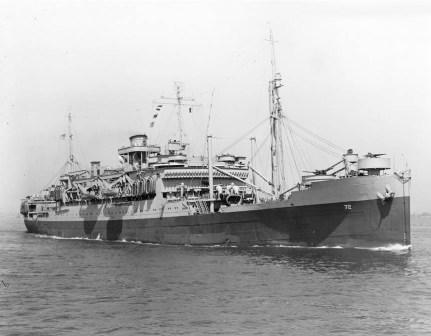
28 August 1944 Mr George Bray RFA appointed as Acting Chief Engineer Officer

Acting Chief Engineer Officer George Bray (image taken in 1918)
13 December 1944 Captain Emil E Sigwart RFA (Temporary Lieutenant Commander RNR) appointed as Master
Captain Emil E Sigwart RFA
7 May 1945 sailed from Scapa Flow with HMS QUEEN (Flagship) plus nine other RN ships to the Skaggerak to accept the surrender of the German Fleet on the 8 May 1945 (VE Day) - Operation Cleaver
12 July 1945 berthed at Portsmouth Harbour
14 September 1945 sailed from Portsmouth Harbour returning to her berth the next day
22 September 1945 sailed from Portsmouth Harbour
24 September 1945 passed the Lloyds Signal Station on Flamborough Head sailing north when on passge from Portsmouth. Later berthed at South Shields Oil Wharf, River Tyne
26 October 1945 at North Shields
16 November 1945 Mr James E Hawthorn RFA appointed as Chief Engineer Officer
Chief Engineer Officer James E Hawthorn RFA
20 December 1945 sailed the River Tyne for Portsmouth
14 January 1946 Captain Francis J King RFA appointed as Master
13 February 1946 arrived at Grangemouth
27 April 1946 at Rosyth
4 October 1946 Chief Engineer Officer James E Hawthorn RFA discharged dead
28 October 1946 at Rosyth
19 November 1946 at Dunfermline Police Court Fireman James R Robertson from RFA Fortol admitted a breach of the peace the previous day at a restaurant . He was fined £3

Press report from the Evening Telegraph 19 November 1946
22 December 1946 entered and berthed at Portsmouth Harbour
30 January 1947 Captain Emil E Sigwart RFA (Temporary Lieutenant Commander RNR) appointed as Master
4 February 1947 Mr James Paton OBE RFA appointed as Chief Engineer Officer
19 August 1947 off Charlestown while Fortol was receiving fuel oil from HMS CAMPAINIA Able Seaman Joseph Smith and another crew member left the ship in a two seater canoe. They were then seen floating in the Forth AB Smith had died from accidental drowning - discharged dead. The other seaman was rescued and taken to hospital. There was no sign of the canoe

Press cutting from the Evening Telegraph of 20 August 1947
14 November 1947 Captain Cyril F Cunningham RFA appointed as Master
Captain Cyril F Cunningham RFA
22 November 1947 Mr George G Stenhouse RFA appointed as Chief Engineer Officer
Chief Engineer George G Stenhouse RFA
21 September 1948 passed the Lloyds Signal Station on the Lizard under tow sailing west
19 April 1949 Donkeyman Greaser George Abbotts discharged dead at Port Edgar from a stroke
6 July 1949 passed the Lloyds Signal Station on Flamborough Head sailing north
17 January 1950 laid up at Devonport
June 1958 sold to the British Iron and Steel Corporation for scrap
27 June 1958 sailed Devonport in tow of the British tug MERCHANTMAN after handover to the breakers
6 August 1958 arrived for breaking up at Rosyth by Shipbreaking Industries Ltd..
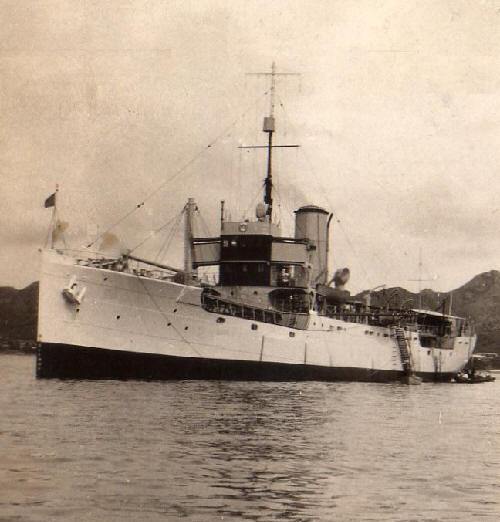
Official Number: 140441
Class: SECOND 2,000t BELGOL CLASS Tanker
Pennant No: X67 / X 27
Laid down:
Builder: Earle’s Shipbuilding & Engineering Co Ltd, Hull
Launched: 18 October 1917
Into Service: 18 December 1917
Out of service: 4 March 1942
Fate: Sunk by Japanese armed forces
Items of historic interest involving this ship: -
Background Data: There were ten ships in this Class, all Admiralty designed of which five were named after Allied countries while the other five were given names indicating power or speed, all with the OL suffix. three of them, RFA’s FRANCOL, MONTENOL and SERBOL had upright funnels with a single tall mast close by, while the remainder had a raking funnel and two raking masts. During WW2 the mainmast was removed from these.
26 July 1917 Engineer Lieutenant Frederick C Pavitt RNR appointed as Chief Engineer Officer
18 October 1917 launched by Earle’s Shipbuilding & Engineering Co Ltd, Hull as Yard Nr: 624 named FRANCOL
9 November 1917 Lieutenant William T Williams RNR appointed in command
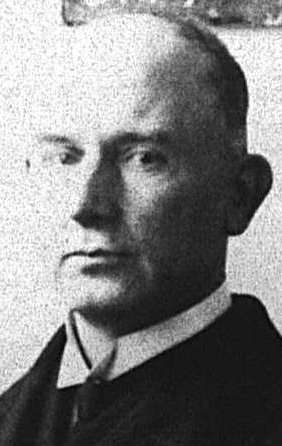
Lieutenant William T Williams RNR
11 December 1917 at London registered as FRANCOL under reference 409/17 in the Register
18 December 1917 completed
23 April 1918 Fireman Robert Bateson MMR 384716 logged as a deserter. He had signed on the ship on 5 December 1917. He was arrested on 27 April 1918.
24 April 1918 Able Seaman Thomas Cousins MMR 82035, Greaser Jno Jones, Fireman Thomas McArdle MMR 865981 and Greaser J Jones logged as deserting the ship. Able Seaman Cousins and Greaser Jno Jones both had signed on on 23 November 1917. Fireman McArdle had signed on on 9 January 1918. Greaser Jones had signed on on 1 April 1918.
9 June 1918 Able Seaman Beu Sweeten MMR 927290 logged as a deserter. He had signed on on the 5 December 1917.
10 June 1918 Greaser Jas Graham MMR 943636 logged as a deserter. He had signed on on the 5 December 1917
21 June 1918 Pumpman John Thomas MMR 842984 and Greaser Henry Granite MMR 896460 both logged as deserting the ship. Both had signed on on the 23 November 1917
28 June 1918 Ordinary Seaman Robert Pasher MMR 927204 logged as a deserter. He had signed on on the 5 December 1917.
9 September 1918 Ordinary Seaman K Liversay logged as a deserter. He had signed on on the 1 July 1918
12 September 1918 Stoker A Sykes MMR 957505 logged as a deserter. He had signed on on the 1 July 1918
18 January 1919 sailed Portsmouth to sea
26 January 1919 at Milford Haven 2nd Cook Tam Yow discharged dead from pneumonia
6 February 1919 arrived at Sheerness
5 June 1919 Greaser Thomas Hinch MMR 969349 logged as an absentee

Greaser Thomas Hinch MMR 969349
28 July 1919 at Biorko Sound, Baltic Sea alongside HMS VINDICTIVE refuelling her with petrol and oil in drums
29 July 1919 at Biorko Sound, Baltic Sea alongside HMS CLEOPATRA

HMS CLEOPATRA
18 August 1919 at Biorko Sound, Baltic Sea alongside HMS VINDICTIVE refuelling her
20 August 1919 sailed from at Biorko Sound, Baltic Sea
3 September 1919 at Biorko Sound, Baltic Sea alongside HMS VINDICTIVE refuelling her. RFA TURMOIL (1) alongside at the same time
19 September 1919 at Biorko Sound, Baltic Sea alongside HMS VINDICTIVE refuelling her 440 tons FFO
9 October 1919 arrived at Biorko Sound, Baltic Sea
18 October 1919 at Biorko Sound, Baltic Sea alongside HMS VINDICTIVE refuelling her 295 tons FFO

HMS VINDICTIVE
1 November 1919 Captain William T Williams RFA appointed as Master under a Board of Trade Agreement - previously had been in command as Lieutenant RNR since 9 November 1917. Discharged on 25 January 1920
5 November 1919 at Biorko Sound, Baltic Sea alongside HMS EREBUS refuelling her 275 tons FFO
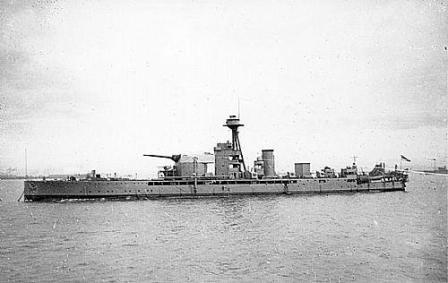
HMS EREBUS
15 November 1919 at Riga, Latvia alongside HMS DRAGON to refuel her
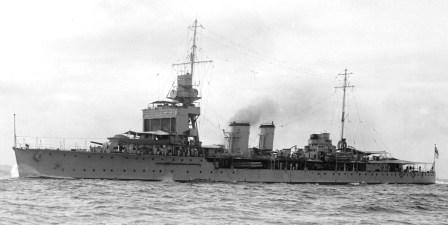
HMS DRAGON
23 November 1919 at Riga, Latvia alongside HMS DRAGON to refuel her
24 November 1919 at Riga, Latvia RFA CELEROL arrived and came alongside FRANCOL. Both then sailed
1 December 1919 Able Seaman Andrew Horgan MMR 1012510 logged as an absentee in Copenhagen.
6 December 1919 Greaser Victor Bardot MMR 878865 and Fireman Hugh McCann MMR 974452 both logged as deserting. Greaser Bardot had signed on on 9 August 1919 and Firemnan McCann had signed on on 14 September 1919

Fireman Hugh McCann
27 December 1919 - a tragegy occured at Pembroke Dock -

Press cutting from the Aberdeen Journal of 30 December 1919
Able Seaman James Campbell, Able Seaman Patrick Romayne, aged 27, Greaser Charles Sheehan MMR 713819, aged 31 all discharged dead. AB Romayne and Greaser Sheeran are both buried in Pembroke Dock (Llanion) Cemetery. AB Campbell is remembered on the Chatham Naval Memorial. Ordinary Seaman John Tyler MMR 883964 discharged dead. He is remembered on the Plymouth Naval Memorial. AB Trehayne, AB Campbell, Greaser Sheehan and OS Tyler were all accidentally drowned in Pembroke Dock. Greaser Sheeman's body was recovered on 6 March 1920


Greaser Charles Sheeran Able Seaman Patrick Romayne
Both images courtesy and © of The War Graves Photographic Project
26 January 1920 Captain Richard Narramore Smardon RFA appointed as Master
26 January 1920 2nd Cook Tam Yow discharged dead. He had signed on on 23 January 1920
28 January 1920 Mr R McWhannel RFA appointed as Chief Engineer Officer
7 March 1920 arrived at Aden with HM Submarines L2, L8, L19, L20, L22 and L33
21 March 1920 at Colombo, Ceylon alongside HMS CAROLINE refuelling her
14 April 1920 arrived at Hong Kong
20 May 1920 at Kobe, Japan alongside HMS HAWKINS to refuel her and deliver naval stores

HMS HAWKINS
25 May 1920 at Wei-hai-Wei secured alongside HMS CAIRO to refuel her
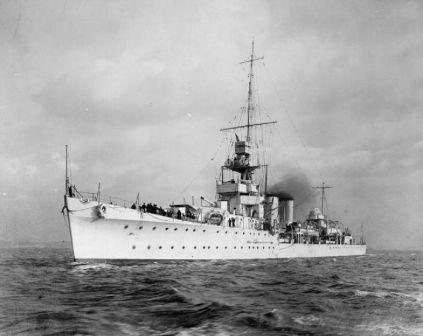
HMS CAIRO
27 May 1920 at Wei-hai-Wei secured alongside HMS CARLISLE to refuel her - 278 tons of FFO supplied
1 June 1920 at Wei-hai-Wei secured alongside HMS HAWKINS to refuel her
8 June 1920 off Wei-hai-Wei target towing for HMS HAWKINS sub calibre shoot
10 June 1920 off Wei-hai-Wei target towing for HMS HAWKINS sub calibre shoot also as a torpedo target for the same ship
6 July 1920 at Wei-hai-Wei target alongside HMS HAWKINS and later alongside HMS AMBROSE
7 July 1920 at Wei-hai-Wei secured alongside HMS's CAIRO, CARLISLE and HAWKINS to refuel each. Supplied 700 tons of FFO to HMS HAWKINS and 410 tons to HMS CARLISLE
9 July 1920 off Wei-hai-Wei towing target for full calibre practice by HMS CAIRO
20 July 1920 at Wei-hai-Wei alongside HMS's COLOMBO & CURLEW to refuel them - HMS COLOMBO supplied with 400 tons FFO
22 July 1920 sailed Wei-hai-Wei
30 July 1920 off Wei-hai-Wei towing target for full calibre practice by HMS CAIRO and HMS HAWKINS
12 August 1920 at Wei-hai-Wei secured alongside HMS's CAIRO, HAWKINS, CURLEW and COLOMBO to refuel each of them. Supplied 420 tons of FFO to HMS COLOMBO
9 October 1920 at Wei-hai-Wei alongside HMS COLOMBO to refuel her - supplied 454 tons FFO
1 November 1920 at Wusung alongside HMS COLOMBO to refuel her - supplied 360 tons FFO
2 November 1920 at Shanghai secured alongside HMS HAWKINS to refuel her
11 November 1920 at Shanghai berthed alongside HMS SCARAB to refuel her 103 tons of FFO issued
30 November 1920 at Yangtzepoo with HMS SCARAB berthed alongside to refuel her
1 December 1920 HMS SCARAB slipped
11 December 1920 Captain John Gow RFA appointed as Master. Previously Master of RFA TREFOIL
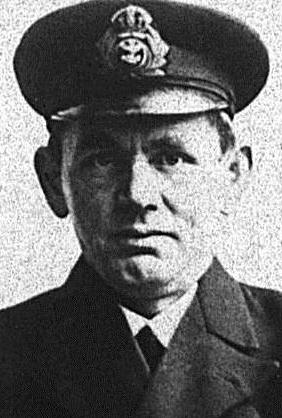
Captain John Gow RFA
15 December 1920 at Shangahi alongside HMS COLOMBO to refuel her
25 December 1920 arrived at Hong Kong
28 December 1920 at Hong Kong moved berth
24 January 1921 conducted OAS experiments with the cruiser HMS CAIRO off Hong Kong transferring 143 tons of FFO
31 January 1921 at Hong Kong sailed towing target for full calibre practice by HMS's CAIRO and CARLISLE
2 February 1921 at Hong Kong berthed alongside HMS HAWKINS to refuel her
13 March 1921 at Hong Kong berthed alongside HMS CURLEW to refuel her
16 April 1921 at Hong Kong RFA KHARKI secured alongside
12 May 1921 sailed from Wei-hai-Wei with BP target in tow with HMS HAWKINS and HM Submarines L3 and L9. Returned to Wei-hai-Wei four hours later still towing the target. At Wei-hai-Wei a working party from HMS COLOMBO came onboard
17 May 1921 at Wei-hai-Wei alongside HMS HAWKINS to refuel her but the swell prevented this occuring and FRANCOL cast off
18 May 1921 at Wei-hai-Wei alongside HMS HAWKINS to refuel her
20 May 1921 off Wei-hai-Wei towed target for HMS HAWKINS to carry out full calibre shoot
30 May 1921 at Wei-hai-Wei with work party onboard from HMS AMBROSE. Then sailed towing BP target. Returned and anchored at 16:00hrs the same day
17 June 1921 at Wei-hai-Wei with work party onboard from HMS AMBROSE
20 June 1921 Captain Edward Gatley RFA appointed as Master. Previously Master of RFA KHARKI
25 June 1921 at Wei-hai-Wei alongside HMS HAWKINS to refuel her
27 June 1921 sailed Wei-hai-Wei
6 July 1921 at Wei-hai-Wei with HMS/m L1 berthed alongside
9 July 1921 off Wei-hai-Wei towed target for HMS HAWKINS to carry out full calibre shoot
21 July 1921 down river from Wusung alongside HMS COLOMBO to refuel her and supply stores - supplied 800 tons of FFO
23 July 1921 at Shanghai, China 2nd Engineer Officer James William Campbell discharged dead. His death certificate gives the cause of death as 'General Paralysis of the Insane'
12 August 1921 at Wei-hai-Wei alongside HMS TITANIA to refuel her with HM submarines berthed outboard of her and then alongside HMS's COLOMBO and CURLEW to refuel them supplying HMS COLOMBO with 458 tons of FFO
13 August 1921 at Wei-hai-Wei alongside HMS HAWKINS to refuel her
29 August 1921 at Wei-hai-Wei alongside HMS CURLEW to refuel her
14 September 1921 at Wei-hai-Wei alongside HMS's HAWKINS and COLOMBO to refuel them. Supplied HMS COLOMBO with 289 tons of FFO
21 September 1921 2nd Engineer J W Campbell RFA discharged dead. He had signed on on 26 January 1920
22 September 1921 off Wei-hai-Wei towed BP target for HMS HAWKINS to carry out full calibre shoot
30 September 1921 at Wei-hai-Wei alongside HMS's HAWKINS and COLOMBO to refuel them. Supplied HMS COLOMBO with 180 tons of FFO
1 October 1921 sailed Wei-hai-Wei
17 October 1921 at Masampo challenged by HMS HAWKINS. Also berthed alongside HMS COLOMBO to refuel her. Supplied 608 tons of FFO
20 October 1921 at Masampo alongside HMS HAWKINS to refuel her
23 November 1921 arrived at Hong Kong
30 December 1921 at Hong Kong alongside HMS HAWKINS to refuel her
5 January 1922 Captain John P Tugwood DSC RD RFA appointed as Master
Captain John P Tugwood DSC RD RFA
6 January 1922 at Jones Cove towing battle practice target for HMS BLUEBELL
9 January 1922 at Hong Kong with HMS TARANTULA moored alongside to be refuelled
19 February 1922 berthed at Singapore. Sailed 23 February 1922 for Rangoon
15 March 1922 off Hong Kong towed target for HMS DURBAN to carry out full calibre shoot
6 May 1922 at Hong Kong entering dry dock
25 May 1922 at Hong Kong secured to No: 8 buoy
14 June 1922 arrived at Wei-hai-Wei
17 June 1922 off Wei-hai-Wei towing target for HMS BLUEBELL
4 July 1922 and 5 July 1922 off Wei-hai-Wei towed target for HMS HAWKINS to carry out full calibre shoot
5 August 1922 sailed Wei-hai-Wei
15 August 1922 alongside HMS DURBAN to refuel her at Hong Kong
18 August 1922 at Wei-Hai-Wei
19 September 1922 at Wei-hai-Wei berthed alongside HMS HAWKINS
27 September 1922 and 28 September 1922 off Wei-hai-Wei towed target for HMS HAWKINS and other ships in the Cruiser Squadron to carry out full calibre shoot
11 October 1922 at Wei-hai-Wei alongside HMS HAWKINS to refuel her
16 October 1922 sailed from Wei-hai-Wei
25 January 1923 off Hong Kong towing target for HMS DIOMEDE for a full calibre shoot
13 March 1923 at Hong Kong target party from HMS DIOMEDE boarded
29 March 1923 at Yokohama, Japan alongside HMS DIOMEDE to refuel her
20 April 1923 arrived Wei-Hai-Wei
24 April 1923 sailed Wei-Hai-Wei towing target for sub-calibre shoot by HMS DIOMEDE. Returned to Wei-Hai-Wei
26 April 1923 sailed Wei-Hai-Wei towing target for sub-calibre shoot by HMS DIOMEDE. Returned to Wei-Hai-Wei
27 April 1923 HMS DESPATCH transfered S A Ammunition to RFA FRANCOL at Wei-Hai-Wei
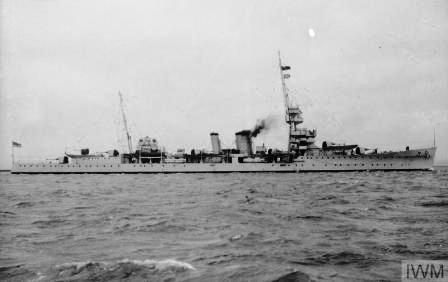
HMS DESPATCH
2 May 1923 alongside HMS DIOMEDE and HMS DESPATCH to refuel them at Wei-Hai-Wei
5 May 1923 at Wei-Hai-Wei alongside HMS DURBAN to refuel her and the sailed to Hong Kong
20 June 1923 sailed Hong Kong
24 June 1923 arrived Wei-Hai-Wei
2 August 1923 Mr David E Morgan MIMarE RFA appointed as Chief Engineer Officer
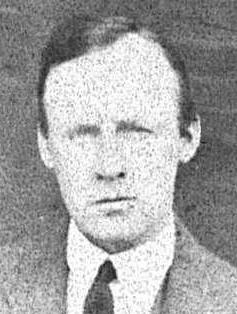
Chief Engineer Officer Daivid E Morgan MIMarE RFA
15 August 1923 at Wei-Hai-Wei alongside HMS DURBAN to refuel her
18 August 1923 at Wei-Hai-Wei alongside HMS HAWKINS to refuel her
21 August 1923 off Wei-hai-Wei towed target for HMS HAWKINS to carry out full calibre shoot
14 September 1923 at Yokohama, Japan alongside HMS HAWKINS to refuel her
27 September 1923 at Yokohama, Japan alongside HMS DURBAN to refuel her
6 June 1924 Captain Stanley B Spillett RFA appointed as Master
Captain Stanley B Spillett RFA
20 June 1924 at Royal Naval Hospital, Liu Kung, Wei-Hai-Wei, China Captain Edward Gattey RFA discharged dead from cerebal malaria. He was buried in the Royal Naval Cemetery, Wei-Hai-Wei
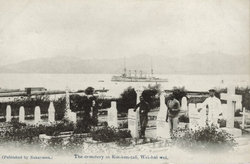
Royal Naval Cemetery, Wei-Hai-Wei
1925 had the lower portion of her forehold fitted out as a temporary magazine
22 April 1925 Chief Engineer Officer David E Morgan MIMarE RFA married Miss Ethel M Smith, Sister in the Government Civil Hospital which took place at the Wesleyan Methodist Church, Wanchi, Hong Kong
4 June 1925 Mr Edward B Morton RFA appointed as Chief Engineer Officer
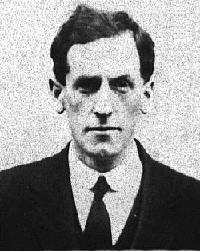
Chief Engineer Officer Edward B Morton RFA
9 January 1926 in the company of HMS FOXGLOVE arrived at Wei-hai-Wei from Hong Kong
19 October 1927 Captain Donald R McCutchan RFA appointed as Master
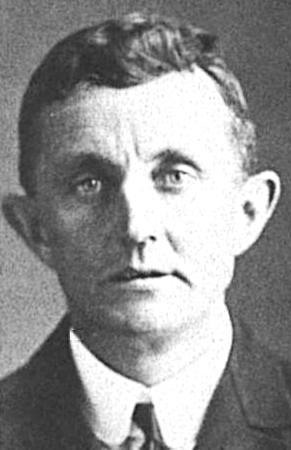
Captain Donald R McCutchan RFA
5 March 1928 at Hong Kong a RFA Dinner Dance was held at Crawford's Restaurant and was voted a great success - Officers and their Ladies from RFA's BELGOL, FORTOL, FRANCOL, RUTHENIA and KHARKI attended
10 May 1928 Captain Frederick J Connolly RFA appointed as Master
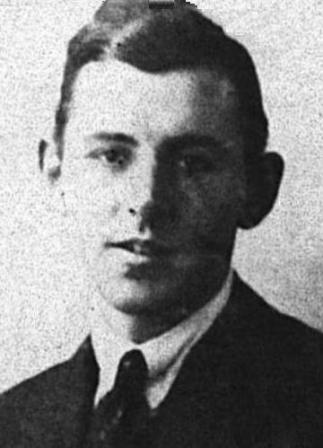
Captain Frederick J Connolly RFA
12 March 1929 Captain Frederick J Connolly RFA discharged dead at Hong Kong - buried at the Protestant Cemetery, Hong Kong on 14 March 1929 with mourners from the RFA's FRANCOL, KHARKI, FORTOL and officers from the Naval Stores Department from HM Dockyard.

The grave of Captain Frederick J Connolly RFA in Hong Kong
9 May 1931 Captain Nathan Colbridge RFA appointed as Master and Mr William C Elliott RFA appointed as Chief Engineer Officer
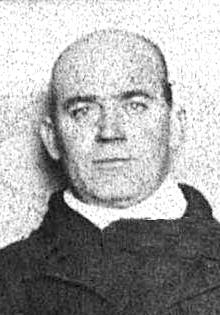
Captain Nathan Colbridge RFA
4 February 1932 Captain Cecil R Rosen RFA appointed as Master
13 February 1934 Mr William W Ridgway RFA appointed as Chief Engineer Officer
22 March 1935 Captain I Evans RFA appointed as Master
24 October 1935 at Hong Kong
14 April 1936 at Hong Kong
28 December 1936 at Hong Kong
8 January 1937 Mr Wilfred C Shortland appointed as Chief Engineer Officer
December 1937 Captain Charles J Leach RFA appointed as Master
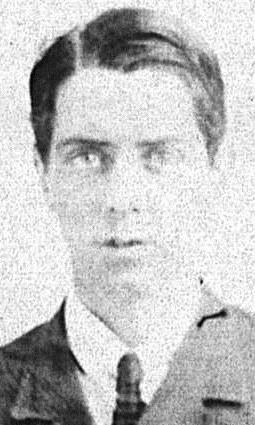
Captain Charles J Leach RFA
12 January 1938 Captain A Spencer RFA appointed as Master
18 August 1938 at Wei-hai-Wei berthed on HMS DORTSETSHIRE refuelling her
3 December 1938 at Hong Kong berthed on HMS DORTSETSHIRE refuelling her
7 January 1939 Captain Frederick G Drake RFA appointed as Master
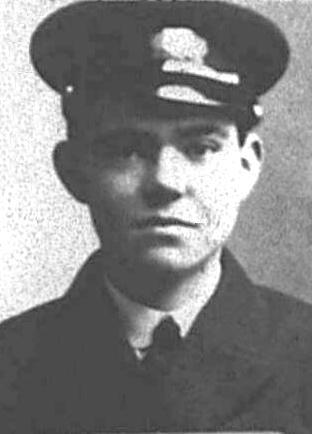
25 May 1939 Mr Arthur A Robson RFA appointed as Chief Engineer Officer
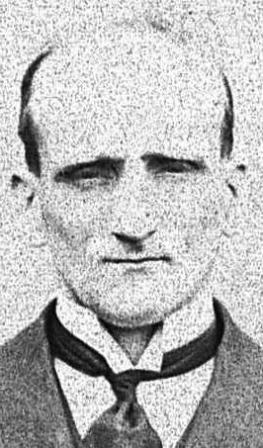
Chief Engineer Officer Arthur A. Robson RFA
3 September 1939 at Hong Kong on the outbreak of WW2
14 October 1939 at Hong Kong berthed on HMS DORTSETSHIRE refuelling her
17 October 1939 sailed Hong Kong
17 December 1939 in collision with HMS BIRMINGHAM while refuelling her. The BIRMINGHAM had to have her bow repaired and a propeller replaced in Hong Kong
HMS BIRMINGHAM
12 November 1940 Seaman Gunner Basil Schofield appeared before the Marine Court, Hong Kong charged with being absent from the FRANCOL since since 30 October 1940. He pleaded Guilty and was sentenced to be returned to the ship
July 1941 Captain John H Burman RFA appointed as Master
11 December 1941 refueled USS Alden DD211 at Singapore
January 1942 served as the Eastern Fleet Oiler along with RFA RUTHENIA at Singapore
16 January 1942 anchored at Singapore Roads with HMAS MARYBOROUGH alongside being refuelled
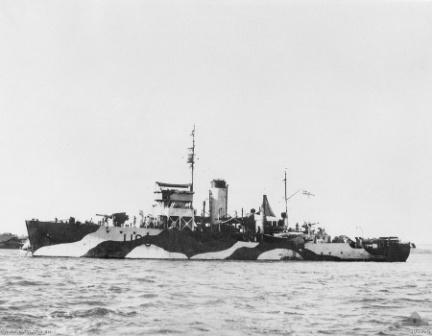
HMAS MARYBOROUGH
30 January 1942 towed the Insect class gunboat HMS GRASSHOPPER from the Singapore Naval Base to Kepple Harbour
1 February 1942 anchored at Singapore Roads with HMAS MARYBOROUGH alongside being refuelled
10 February 1942 received instructions to sail to Batavia after embarking Dockyard personnel. Sailed at 16:30hrs with 75 naval and Dockyard personnel onboard
12 February 1942 arrived at Tandjong Priok
25 February 1942 the cargo from the damaged RFA WAR SIRDAR was transferred to her
27 February 1942 sailed Tandjong Priok in the Dutch East Indies, along with RFA WAR SIRDAR in convoy with the Depot Ship HMS ANKING, carrying a full load of Australian troops, the minesweeper MMS.51 and escorted by the Australian sloop HMAS YARRA and the Indian sloop HMIS JUMNA
2 March 1942 sailed Tjilatjap with escorts
3 March 1942 while on passage to Fremantle, in position 11.00 S 109.00 E near Tjilatjap, 300 miles south of Java, the above convoy was attacked by the Japanese heavy cruisers ATAGO, TAKAO and MAYA together with the destroyers ARASHI and HOWAKI and in the ensuing battle, which lasted only 90 minutes,all 4 ships were sunk. There were only 13 survivors from FRANCOL all of whom became PoW’s. Those lost are remembered on the Tower Hill Memorial, the Hong Kong Memorial and the Plymouth Naval Memorial.
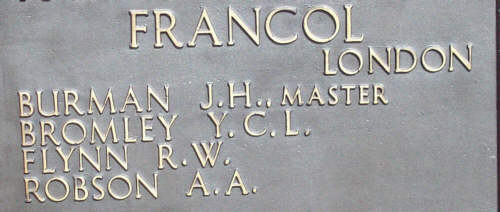
Those named on the Tower Hill Memorial, London
12 March 1943 the Sunderland Daily Echo newspaper reported -


Subsequent name:
Official Number: 168273
Class: FRESH CLASS Water Carrier
Pennant No: X107 / A213
Laid down: 19 June 1941
Builder: Lytham Shipbuilding, Lytham
Launched: 5 November 1941
Into Service: 17 April 1942
Out of service: 2 January 1946 ceased to be classed as an RFA
Fate: Broken up
Items of historic interest involving this ship: -
Background Data: There were fouteen vessels in this Class, designed by H.M. Dockyard, Devonport to the order of the RFA. The design was based on that of the earlier BLOSSOM and FOUNTAIN Classes but with an additional salvage and fire-fighting capability. They were originally operated by the Director of Victualling and were maintained at RN bases in the U.K. and Mediterranean where they were employed principally in replenishing warships’ freshwater supplies and also, from time to time, in fire fighting and salvage work. A total of 236 tons of fresh water could be carried in six tanks. Most of them saw only limited service under the RFA ensign, manned by RFA crews working under Board of Trade (Home Trade) Agreements, before being transferred to the control of the Captains of the Dockyards on Yard Craft Agreements. In 1959 they were brought under the authority of the newly-formed Port Auxiliary Service which in turn became the Royal Maritime Auxiliary Service. Originally all coal-fired, four of the Class were converted to oil-burning in 1961
5 November 1941 launched by Lytham Shipbuilding & Engineering Co, Lytham as Yard Nr: 868 named FRESHBROOK for the Admiralty (Director of Stores)
12 March 1942 Mr W Leishman appointed as Chief Engineer Officer
14 March 1942 Captain E Owen appointed as Master
17 April 1942 completed at a cost of £29,330 and taken over by the RFA
24 April 1942 sailed Loch Ewe in escorted convoy WN274 arriving at Methil on 26 April 1942
28 May 1942 sailed Loch Ewe in convoy UR26 under tow of tug Empire Larch to Reykjavik arriving on 2 June 1942
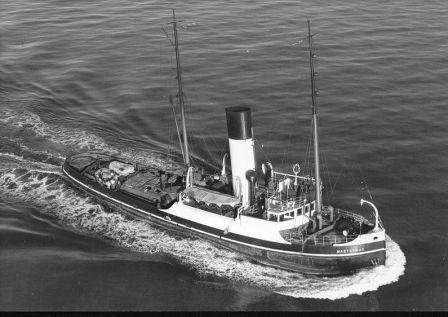
Tug Empire Larch after War time service and renamed Masterman
7 October 1942 Admiralty war diary for this day reports that when coming alongside vessel Drangley which was at anchor the Freshbrook damaged the vessel's starboard side 2 feet above the deck.
16 March 1943 Mr F Colyer appointed as Chief Engineer Officer
20 March 1943 at Hvaljordur, Iceland outboard of RFA BELGOL which was moored alongside of USS Vulcan. BELGOL refuelling the US warship and Freshbrook supplying her with fresh water
24 January 1944 Captain A Campbell appointed as Master
4 August 1944 at Reykjavik, Iceland Able Seaman William Munro came onboard drunk, entered the Chief Officer's cabin and threatened to assault him - logged
24 August 1944 at Reykjavik, Iceland moored alongside HMS TRONDIX for a boiler clean
7 September 1944 at Reykjavik, Iceland Able Seaman S Cronin insensibly drunk and unable to do his duty - logged
17 September 1944 at Reykjavik, Iceland alongside USCGC Algonquin supplying fresh water
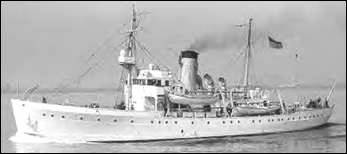
USCGC Algonquin
23 November 1944 Mr L G E Cross RFA appointed as Chief Engineer Officer
13 February 1945 at Reykjavik, Iceland Able Seaman S Cronin for continous neglet of his duty, insobriety and incompedence - having been warned on various occasions to no avail - paid off
Between May 1945 and July 1945 signed on crew members from Iceland, Norway and the Faroe Islands
19 July 1945 at Greenock with Captain John M Maclean RFA as Master
13 November 1945 sailed Gourock to Milford Haven arriving 17 November 1945
20 November 1945 sailed Milford Haven to Falmouth arriving 22 November 1945
23 November 1945 off the Lizard while bound for Sheerness signalled she had engine trouble and required the immediate assistance of a tug to tow her into Falmouth

Press Cutting from Western Morning News 23 November 1945
28 November 1945 sailed Falmouth to Portland arriving the next day
1 December 1945 sailed Portland to Sheerness arriving 3 December 1945
19 December 1945 at Chatham berthed alongside No 9 berth when she took a dangerous list to starboard. The port bilge keel apparently fouled some under water obstruction. The helm was put hard a port - ebbing tide and the ship was moored head to tide. Ship righted upon an even keel very rapidly and cleared the obstruction. Divers were requested to check the port side of the ship and to see what the obstruction was.
2 January 1946 ceased to be classed as an RFA and was taken over by the Director of Victualling
19 January 1946 at Chatham - paid off
20 January 1949 at H.M. Dockyard, Sheerness alongside HMS CROSSBOW supplying fresh water
24 August 1951 at H.M. Dockyard, Sheerness alongside HMS MANXMAN supplying fresh water
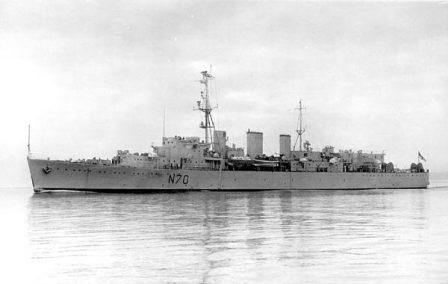
HMS MANXMAN
10 January 1963 offered for sale in the Times of this day "as lying" at H.M. Dockyard, Chatham

March 1963 purchased by Park Stanton & Co Ltd, London name unchanged
21 October 1963 arrived in the New Waterway in tow of the British tug KESTREL for demolition by Dutch breakers

Previous name:
Subsequent name:
Official Number: 169811
Class: FRESH CLASS Water Carrier
Pennant No: X60
Laid down: 7 July 1943
Builder: Lytham Shipbuilding, Lytham
Launched: 29 October 1943
Into Service: 1 April 1944
Out of service: 5 November 1945 Ceased to be classed as an RFA
Fate: Broken up
Items of historic interest involving this ship: -
Background Data: There were fourteen vessels in this Class, designed by H.M. Dockyard, Devonport to the order of the RFA. The design was based on that of the earlier BLOSSOM and FOUNTAIN CLASSES but with an additional salvage and fire-fighting capability. They were originally operated by the Director of Victualling and were maintained at RN bases in the U.K. and Mediterranean where they were employed principally in replenishing warships’ freshwater supplies and also, from time to time, in fire fighting and salvage work. A total of two thundred and thirty six tons of fresh water could be carried in six tanks. Most of them saw only limited service under the RFA ensign, manned by RFA crews working under Board of Trade (Home Trade) Agreements, before being transferred to the control of the Captains of the Dockyards on Yard Craft Agreements. In 1959 they were brought under the authority of the newly-formed Port Auxiliary Service which in turn became the Royal Maritime Auxiliary Service. Originally all coal-fired, four of the Class were converted to oil-burning in 1961
29 October 1943 launched by Lytham Shipbuilding & Engineering Co, Lytham as Yard Nr: 874 named FRESHBURN for the Admiralty (Director of Stores)
February 1944 Captain T E Roberts appointed as Master
23 February 1944 Mr J Greenfield appointed as Chief Engineer Officer
1 April 1944 completed and taken over by the RFA
31 July 1944 at Jenny Cliff Bay, Plymouth alongside USS Bannock (ATF41) and supplied 2,688 gallons of fresh water to her
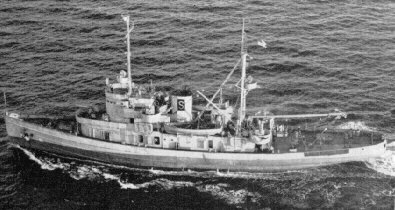
USS Bannock (ATF41)
4 September 1944 at Plymouth alongside HMS BELLONA supplying her with fresh water
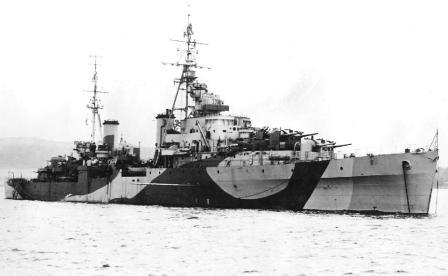
HMS BELLONA
5 September 1944 at Plymouth alongside HMS BELLONA supplying her with fresh water
7 September 1944 at Plymouth alongside HMS BELLONA supplying her with fresh water
12 September 1944 at Plymouth alongside HMS BELLONA supplying her with fresh water
17 September 1944 at Plymouth alongside HMS BELLONA supplying her with fresh water
5 November 1945 ceased to be classed as an RFA and was taken over by the Director of Victualling
1945 to 1974 based at Devonport
1 January 1947 Captain Frederick George Andrews, the ship's Master awarded the British Empire Medal in the New Years Honours List of this day
15 January 1970 at Plymouth Sound alongside RFA REGENT supplying 195 tons of water
16 January 1970 at Plymouth Sound alongside RFA REGENT supplying 210 tons of water
1974 to 1979 based at Chatham
March 1982 on the Disposal List at Chatham; sold to Davies & Newman Ltd, London
11 April 1982 left Chatham having been sold to Dutch breakers Rijsdijk-boss at Hendrik-ido-Ambacht for £6,125 and was subsequently broken up in Holland

Previous name:
Subsequent name:
Official Number: 168298
Class: FRESH CLASS Water Carrier
Pennant No: X109
Laid down: 6 November 1941
Builder: Lytham Shipbuilding, Lytham
Launched: 16 March 1942
Into Service: 22 July 1942
Out of service: 1971
Fate: Stricken
Items of historic interest involving this ship: -
Background Data: There were 14 vessels in this Class, designed by H.M. Dockyard, Devonport to the order of the RFA. The design was based on that of the earlier BLOSSOM and FOUNTAIN CLASSES but with an additional salvage and fire-fighting capability. They were originally operated by the Director of Victualling and were maintained at RN bases in the U.K. and Mediterranean where they were employed principally in replenishing warships’ freshwater supplies and also, from time to time, in fire fighting and salvage work. A total of 236 tons of fresh water could be carried in 6 tanks. Most of them saw only limited service under the RFA ensign, manned by RFA crews working under Board of Trade (Home Trade) Agreements, before being transferred to the control of the Captains of the Dockyards on Yard Craft Agreements. In 1959 they were brought under the authority of the newly-formed Port Auxiliary Service which in turn became the Royal Maritime Auxiliary Service. Originally all coal-fired, 4 of the Class were converted to oil-burning in 1961
22 February 1942 original launch date was delayed due to floating ice in Lytham Creek. Taken over from the Admiralty (Director of Stores) by the RFA
16 March 1942 launched by Lytham Shipbuilding & Engineering Co, Lytham as Yard Nr: 869 named FRESHENER
10 July 1942 Captain Edward H O Herliky RFA appointed in command. He had previous served on RFA Polmont. Engineer Brian H C Goodman also appointed

22 July 1942 completed at a cost of £29,333.
24 July 1942 sailed Fleetwood to Town Quay, Birkenhead arriving the same day
28 July 1942 sailed Birkenhead to Kirkwall arriving 31 July 1942
6 March 1943 Captain Percy A Barfoot RFA appointed as Master
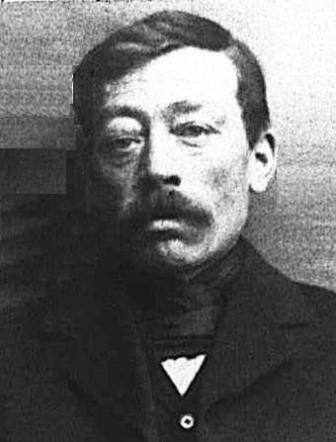
Captain Percy A Barfoot RFA
based at Kirwall and at Scapa Flow
8 September 1945 at Lyness
27 December 1945 at Leith Docks
4 January 1946 at Rosyth
7 March 1946 at Portsmouth
7 March 1946 ceased to be classed as an RFA and was taken over by the Director of Fuelling
1950 to 1960 based at Gibraltar
1961 was converted to oil fuel burning
1963 based at Gibraltar
1971 on the Disposal List. Fate unknown but reported sunk as a target

Subsequent name:
Official Number: 168228
Class: FRESH CLASS Water Carrier
Pennant No: X102
Laid down: 26 March 1940
Builder: Lytham Shipbuilding, Lytham
Launched: 6 July 1940
Into Service: 10 December 1940
Out of service: 9 November 1945
Fate: Sold out of service
Items of historic interest involving this ship: -
Background Data: There were fourteen vessels in this Class, designed by H.M. Dockyard, Devonport to the order of the RFA. The design was based on that of the earlier BLOSSOM and FOUNTAIN CLASSES but with an additional salvage and fire-fighting capability. They were originally operated by the Director of Victualling and were maintained at RN bases in the U.K. and Mediterranean where they were employed principally in replenishing warships’ freshwater supplies and also, from time to time, in fire fighting and salvage work. A total of 236 tons of fresh water could be carried in six tanks. Most of them saw only limited service under the RFA ensign, manned by RFA crews working under Board of Trade (Home Trade) Agreements, before being transferred to the control of the Captains of the Dockyards on Yard Craft Agreements. In 1959 they were brought under the authority of the newly-formed Port Auxiliary Service which in turn became the Royal Maritime Auxiliary Service. Originally all coal-fired, four of the Class were converted to oil-burning in 1961
6 July 1940 Launched by Lytham Shipbuilding & Engineering Co, Lytham as Yard Nr 863 named FRESHET for the Admiralty (Director of Stores)
10 December 1940 completed at a cost of £24,162 and was taken over by the RFA
17 December 1940 sailed Fleetwood for Greenock
1941 to 1942 based at Londonderry
5 October 1941 Captain David Cook RFA appointed as Master
19 November 1941 Mr H Newton appointed as Chief Engineer Officer
28 December 1942 sailed Loch Ewe in Convoy UR 4 in tow of HM tug FRISKY
2 January 1942 arrived at Reykjavik in convoy UR4
23 April 1942 at Hvalfjordur, Iceland made fast alongside USS Melville supplying her with fresh water
1943 to 1944 based Iceland
7 July 1943 Mr J Bethune appointed as Chief Engineer Officer
25 October 1943 Captain H T Sawyer appointed as Master
14 January 1944 Mr T H Brewster appointed as Chief Engineer Officer
1945 to 1946 based at Plymouth
9 November 1945 ceased to be classed as an RFA and was taken over by the Director of Fuelling
1946 based at Portsmouth where she replaced the earlier water boats EMPIRE BILLOW and PELTER
1961 converted to oil fuel burning
4 January 1963 offered for sale 'as lying' in HM Dockyard, Portsmouth in The Times of this day

1971 on the Disposal List. Fate unknown but reported sunk as a target

Subsequent name:
Official Number: 169906
Class: FRESH CLASS Water Carrier
Pennant No: X63
Laid down: November 1943
Builder: Lytham Shipbuilding & Engineering Co, Lytham
Launched: 23 March 1944
Into Service: 18 July 1944
Out of service: 16 August 1967
Fate: Broken Up
Items of historic interest involving this ship: -
Background Data: There were fourteen vessels in this Class, designed by H.M. Dockyard, Devonport to the order of the RFA. The design was based on that of the earlier BLOSSOM and FOUNTAIN CLASSES but with an additional salvage and fire-fighting capability. They were originally operated by the Director of Victualling and were maintained at RN bases in the U.K. and Mediterranean where they were employed principally in replenishing warships’ freshwater supplies and also, from time to time, in fire fighting and salvage work. A total of 236 tons of fresh water could be carried in six tanks. Most of them saw only limited service under the RFA ensign, manned by RFA crews working under Board of Trade (Home Trade) Agreements, before being transferred to the control of the Captains of the Dockyards on Yard Craft Agreements. In 1959 they were brought under the authority of the newly-formed Port Auxiliary Service which in turn became the Royal Maritime Auxiliary Service. Originally all coal-fired, four of the Class were converted to oil-burning in 1961
23 March 1944 launched by Lytham Shipbuilding & Engineering Co, Lytham as Yard Nr: 875 named FRESHFORD for the Admiralty (Director of Stores)
18 July 1944 completed and was taken over by the RFA
15 September 1944 at Scapa Flow alongside HMS INDEFACTIGABLE supplying her with fresh water
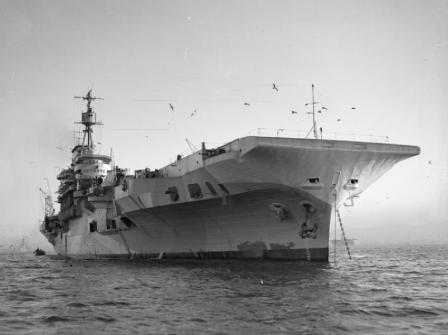
HMS INDEFACTIGABLE
1945 to 1946 based at Scapa Flow
17 January 1946 ceased to be classed as an RFA and was taken over by the Director of Fuelling
1946 to 1967 based at Portsmouth
5 September 1949 sailed Blyth for Invergordon
1 November 1949 sailed Blyth for Portsmouth
13 December 1960 at Portsmouth Harbour alongside HMS KEPPEL supplying water
May 1967 on the Disposal List at Portsmouth
14 June 1967 offered for sale in the Times newspaper 'as lying' at H. M. Dockyard, Portsmouth of this day

16 August 1967 sold and broken up at Antwerp (Jos de Smedt)

Official Number: 168333
Class: FRESH CLASS Water Carrier
Pennant No: X120
Laid down: 18 March 1942
Builder: Lytham Shipbuilding, Lytham
Launched: 15 July 1942
Into Service: 14 November 1942
Fate: Broken Up
Items of historic interest involving this ship: -
Background Data: There were fourteen vessels in this Class, designed by H.M. Dockyard, Devonport to the order of the RFA. The design was based on that of the earlier BLOSSOM and FOUNTAIN CLASSES but with an additional salvage and fire-fighting capability. They were originally operated by the Director of Victualling and were maintained at RN bases in the U.K. and Mediterranean where they were employed principally in replenishing warships’ freshwater supplies and also, from time to time, in fire fighting and salvage work. A total of 236 tons of fresh water could be carried in six tanks. Most of them saw only limited service under the RFA ensign, manned by RFA crews working under Board of Trade (Home Trade) Agreements, before being transferred to the control of the Captains of the Dockyards on Yard Craft Agreements. In 1959 they were brought under the authority of the newly-formed Port Auxiliary Service which in turn became the Royal Maritime Auxiliary Service. Originally all coal-fired, four of the Class were converted to oil-burning in 1961
15 July 1942 launched by Lytham Shipbuilding & Engineering Co, Lytham as Yard Nr: 870 named FRESHLAKE for the Admiralty (Director of Stores)
19 October 1942 Captain William G Aubert appointed as Master
14 November 1942 completed at a cost of £29,333 and was taken over by the RFA
9 January 1943 Mr J B Hatcher appointed as Chief Engineer Officer
4 June 1943 sailed Methil in unescorted convoy EN238 arriving at Loch Ewe two days later
8 August 1944 sailed Reykjavik in unescorted convoy RU130 arriving at Loch Ewe 12 August 1944
1944 to 1945 based at Iceland
1945 based at Scapa Flow
1945 to 1960 based at Devonport
4 August 1945 passed the Lloyds Signal Station on the Lizard sailing east
22 February 1946 ceased to be classed as an RFA and was taken over by the Director of Fuelling
31 July 1947 passed the Lloyds Signal Station on the Lizard sailing east
7 February 1953 assisted RFA RIPPLEDYKE and from the 17 February 1953 RFA EDDYCLIFF in the supply of water to the area around Sheerness, Kent after serious flooding
1963 to 1979 based at Chatham and on the Clyde
1979 on the Disposal List at Chatham
18 December 1979 purchased by Gerassinos Phetouris, Piraeus for further service but …
9 August 1980 reported to be lying at the Queensborough Yard of Liguria Maritime Ltd for demolition
August 1980 Broken Up
Notes:
Was used in a film about the German invasion of the Channel Islands in which she appeared as a refugee boat

Subsequent name:
Official Number: 168407
Class: FRESH CLASS Water Carrier
Pennant No: X117
Laid down: 16 July 1942
Builder: Lytham Shipbuilding, Lytham
Launched: 23 November 1942
Into Service: 22 March 1943
Fate: Broken up
Items of historic interest involving this ship: -
Background Data: There were fourteen vessels in this Class, designed by H.M. Dockyard, Devonport to the order of the RFA. The design was based on that of the earlier BLOSSOM and FOUNTAIN CLASSES but with an additional salvage and fire-fighting capability. They were originally operated by the Director of Victualling and were maintained at RN bases in the U.K. and Mediterranean where they were employed principally in replenishing warships’ freshwater supplies and also, from time to time, in fire fighting and salvage work. A total of 236 tons of fresh water could be carried in six tanks. Most of them saw only limited service under the RFA ensign, manned by RFA crews working under Board of Trade (Home Trade) Agreements, before being transferred to the control of the Captains of the Dockyards on Yard Craft Agreements. In 1959 they were brought under the authority of the newly-formed Port Auxiliary Service which in turn became the Royal Maritime Auxiliary Service. Originally all coal-fired, four of the Class were converted to oil-burning in 1961
23 November 1942 launched by Lytham Shipbuilding & Engineering Co, Lytham as Yard Nr: 871 named FRESHMERE for the Admiralty (Director of Stores)
11 March 1943 Captain E Herliby RFA appointed as Master
22 March 1943 completed and was taken over by the RFA
6 August 1943 at Scapa Flow alongside HMS CEYLON supplying her with fresh water
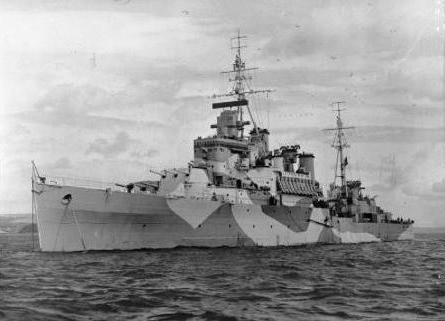
HMS CEYLON
8 August 1943 at Scapa Flow alongside HMS CEYLON supplying her with fresh water
16 August 1943 at Scapa Flow alongside HMS LONDON supplying her with fresh water later berthing on HMS CEYLON to supply fresh water
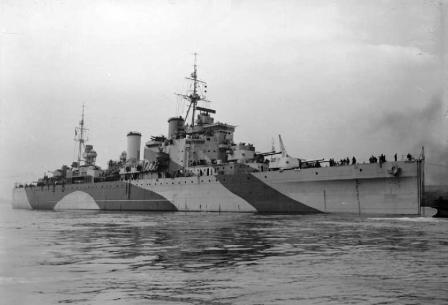
HMS LONDON
18 August 1943 at Scapa Flow alongside HMS CEYLON supplying her with fresh water
21 August 1943 at Scapa Flow alongside HMS LONDON supplying her with fresh water later berthing on HMS CEYLON to supply fresh water
23 August 1943 at Scapa Flow alongside HMS LONDON supplying her with fresh water
24 August 1943 at Scapa Flow alongside HMS CEYLON supplying her with fresh water
28 August 1943 at Scapa Flow alongside HMS CEYLON supplying her with fresh water
29 August 1943 at Scapa Flow alongside HMS CEYLON supplying her with fresh water
30 August 1943 at Scapa Flow alongside HMS CEYLON supplying her with fresh water
3 September 1943 at Scapa Flow alongside HMS CEYLON supplying her with fresh water
13 September 1943 at Scapa Flow alongside HMS LONDON supplying her with fresh water
16 September 1943 at Scapa Flow alongside HMS LONDON supplying her with fresh water
18 September 1943 at Scapa Flow alongside HMS LONDON supplying her with fresh water
8 January 1944 at Scapa Flow alongside HMS BELLONA supplying her with fresh water
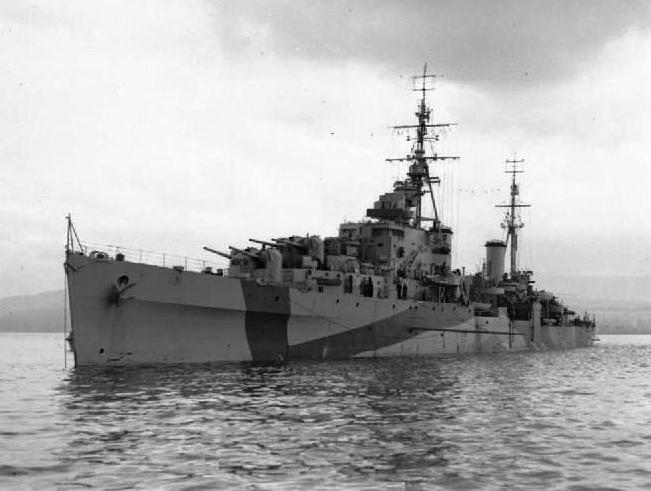
10 January 1944 at Scapa Flow alongside HMS BELLONA supplying her with fresh water
11 January 1944 at Scapa Flow alongside HMS BELLONA supplying her with fresh water
30 July 1944 at Scapa Flow alongside HMS INDEFACTIGABLE supplying her with fresh water
3 September 1944 at Scapa Flow alongside HMS INDEFACTIGABLE supplying her with fresh water
4 September 1944 at Scapa Flow alongside HMS INDEFACTIGABLE supplying her with fresh water
5 September 1944 at Scapa Flow alongside HMS INDEFACTIGABLE supplying her with fresh water
7 September 1944 at Scapa Flow alongside HMS INDEFACTIGABLE supplying her with fresh water
8 September 1944 at Scapa Flow alongside HMS INDEFACTIGABLE supplying her with fresh water
9 September 1944 at Scapa Flow alongside HMS INDEFACTIGABLE supplying her with fresh water
13 September 1944 at Scapa Flow alongside HMS INDEFACTIGABLE supplying her with fresh water
14 September 1944 at Scapa Flow alongside HMS INDEFACTIGABLE supplying her with fresh water
11 June 1946 ceased to be classed as an RFA and was taken over by the Director of Fuelling
1950 to 1960 based at Greenock
16 June 1961 at Rothesay alongside HMS BLACKWOOD supplying fresh water
17 June 1961 at Rothesay alongside HMS BLACKWOOD supplying fresh water
19 June 1961 at Rothesay alongside HMS BLACKWOOD supplying fresh water
21 June 1961 at Tail of Bank alongside HMS BLACKWOOD supplying fresh water at the same time as RFA ROWANOL was alongside refuelling her
23 June 1961 at Rothesay alongside HMS BLACKWOOD supplying fresh water
1963 based at Rosyth where she replaced the earlier water boat FOUNTAIN
1964 to 1970 based on the Clyde
11 February 1967 in collision with HMS GURKHA in harbour (Portland?)
1970 to 1975 based at Rosyth where she was replaced by RMAS WATERCOURSE in 1974
1975 laid up in Kirkcaldy Harbour, Fife and offered for sale
December 1975 Purchased by J.T. Leavesley for breaking up
1976 Broken up

Previous name:
Subsequent name: Dunkmous
Official Number: 180790
Class:
Pennant No: X76
Laid down:
Builder: Lytham Shipbuilding, Lytham
Launched: 28 August 1945
Into Service: 22 December 1945
Out of service: 1977
Fate: Sold out of service
Items of historic interest involving this ship: -
Background Data: There were 14 vessels in this Class, designed by H.M. Dockyard, Devonport to the order of the RFA. The design was based on that of the earlier BLOSSOMand FOUNTAIN CLASSES but with an additional salvage and fire-fighting capability. They were originally operated by the Director of Victualling and were maintained at RN bases in the U.K. and Mediterranean where they were employed principally in replenishing warships’ freshwater supplies and also, from time to time, in fire fighting and salvage work. A total of 236 tons of fresh water could be carried in 6 tanks. Most of them saw only limited service under the RFA ensign, manned by RFA crews working under Board of Trade (Home Trade) Agreements, before being transferred to the control of the Captains of the Dockyards on Yard Craft Agreements. In 1959 they were brought under the authority of the newly-formed Port Auxiliary Service which in turn became the Royal Maritime Auxiliary Service. Originally all coal-fired, 4 of the Class were converted to oil-burning in 1961
28 August 1945 launched by Lytham Shipbuilding & Engineering Co, Lytham as Yard Nr 878 named FRESHPOND for the Admiralty (Director of Stores)
22 December 1945 completed and was taken over by the RFA
16 September 1946 ceased to be classed as an RFA and was taken over by the Director of Fuelling
1954 to 1977 based at Plymouth
21 April 1959 at Devonport alongside HMS CENTAUR loading fresh water into her. When she slipped she caused slight damage to Centaur - no damage to Freshpond
HMS CENTAUR
21 January 1966 in collision with the frigate HMS RELENTLESS at Devonport

HMS RELENTLESS
5 January 1970 at Plymouth Sound alongside RFA REGENT supplying 108 tons of water
July 1977 sold for further service in Panama and was renamed DUNKMOUS.

Subsequent name:
Official Number: 168463
Class: FRESH CLASS Water Carrier
Pennant No: X99
Laid down: 26 November 1942
Builder: Lytham Shipbuilding, Lytham
Launched: 11 March 1943
Into Service: 3 July 1943
Out of service:
Fate: Sunk
Items of historic interest involving this ship: -
Background Data: There were 14 vessels in this Class, designed by H.M. Dockyard, Devonport to the order of the RFA. The design was based on that of the earlier BLOSSOMand FOUNTAIN CLASSES but with an additional salvage and fire-fighting capability. They were originally operated by the Director of Victualling and were maintained at RN bases in the U.K. and Mediterranean where they were employed principally in replenishing warships’ freshwater supplies and also, from time to time, in fire fighting and salvage work. A total of 236 tons of fresh water could be carried in 6 tanks. Most of them saw only limited service under the RFA ensign, manned by RFA crews working under Board of Trade (Home Trade) Agreements, before being transferred to the control of the Captains of the Dockyards on Yard Craft Agreements. In 1959 they were brought under the authority of the newly-formed Port Auxiliary Service which in turn became the Royal Maritime Auxiliary Service. Originally all coal-fired, 4 of the Class were converted to oil-burning in 1961
11 March 1943 Launched by Lytham Shipbuilding & Engineering Co, Lytham as Yard Nr 872 named FRESHPOOL for the Admiralty (Director of Stores)
26 June 1943 Mr C Forbes appointed as Chief Engineer Officer
30 June 1943 at Fleetwood
3 July 1943 completed and was taken over by the RFA and sailed Fleetwood to Tower Quay, Birkenhead arriving the same day
9 July 1943 sailed Liverpool to Scapa Flow arriving 14 July 1943
24 July 1943 sailed Lyness to Kirkwall arriving the same day
12 August 1943 sailed Kirkwall to Lyness arriving the same day
27 September 1943 at Lyness, Orkney Cook-Steward L Chambers threatened and attempted to assault Able Seaman R Moat using a broken tumbler as a weapon. He further threatened Chief Officer D Flucker. The Orkney Police were called and in subsequent proceedings at Kirkwall Court on 28 September 1943 Chambers was sentenced £3.0.0 fine or 20 days imprisonment in-lieu. Signed off articles on 29 September 1943 last day on pay 27 September 1943
17 November 1943 sailed Lyness to Inverness arriving the next day
31 December 1943 at Inverness
4 January 1944 Captain David Cook RFA appointed as Master
29 March 1944 at Loch Dochfour, Inverness
15 April 1944 at Inverness
17 April 1944 Chief Engineer Officer C Forbes discharged sick and signed off at Inverness
18 April 1944 at Loch Ness
21 April 1944 at Oban Mr Robert S Gibb RFA appointed as Chief Engineer Officer
5 May 1944 berthed at Portsmouth Harbour
29 June 1944 at Portsmouth Harbour with new Artcles being signed
5 July 1944 at the Solent Able Seaman M E Parker logged for using insulting and obscene language towards the Chief Officer. Fined 10/-
18 July 1944 at the Solent Cook/Steward H Gardener slipped while desending the focastle ladder injuring his right ankle. Examined by the Surgeon from HMS Vectis and later discharged to Ryde County Hospital
21 July 1944 at the Solent Donkeyman Greaser J Beard discharged to Hospital with a suspected Appendicitis
1 August 1944 Donkeyman Greaser Saunders having been absent without leave since 28 July 1944 was reported to the Police at Southampton and still not being traced was reported as a deserter on 8 August 1944
15 August 1944 at Portsmouth Able Seaman E Parker was logged for using insolent and obscene language to the Chief Engineer Officer and fined £1.0.0. He further refused to carry out an order given by the Chief Officer and was fined 10/-. He further refused to appear before the Master twice and was fined £1.0.0
16 August 1944 at Portsmouth Able Seaman E Parker again refused to appear before the Master. He was refused shore leave but left the ship with his effects and was therefore regarded as a deserter
30 August 1944 at Cowes Roads Donkeyman Greaser W J Tyers went ashore without leave. Not having returned by 4 September 1944 he was reported to the Police by the Master at Southampton
5 September 1944 at Cowes Roads Donkeyman Greaser W J Tyers returned to the ship, was logged for being absent without leave for six days and fined £3.0.0
3 November 1944 at Cowes Roads
7 December 1944 at Victoria Dock, London
10 December 1944 sailed Southend in convoy TBC3 to Milford Haven arriving 13 December 1944
18 December 1944 at Cowes Roads
27 December 1945 at Dover. Captain Norman Dakin RFA was Master and Mr Thomas H Brewster RFA was the Chief Engineer Officer
30 May 1946 at Portsmouth ceased to be classed as an RFA and was taken over by the Director of Fuelling
3 June 1946 at Portsmouth
21 September 1948 passed the Lloyds Signal Station on the Lizard sailing west
1950 to 1971 based at Greenock
14 June 1955 used to test and commission a new slipway at Stornaway
14 January 1957 in refit at James Watt Dock, Greenock
August 1968 In collision with the British tug THUNDERER on the River Clyde after suffering a steering gear failure
1971 to 1975 based at Portland as a target
1975 sunk as a target off Portland

Previous name:
Subsequent name:
Official Number: 169994
Class: FRESH CLASS Water Carrier
Pennant No: X47
Laid down: March 1944
Builder: Lytham Shipbuilding, Lytham
Launched: 22 August 1944
Into Service: 22 December 1944
Out of service:
Fate: 1969 sold
Items of historic interest involving this ship: -
Background Data: There were fourteen vessels in this Class, designed by H.M. Dockyard, Devonport to the order of the RFA. The design was based on that of the earlier BLOSSOM and FOUNTAIN CLASSES but with an additional salvage and fire-fighting capability. They were originally operated by the Director of Victualling and were maintained at RN bases in the U.K. and Mediterranean where they were employed principally in replenishing warships’ freshwater supplies and also, from time to time, in fire fighting and salvage work. A total of 236 tons of fresh water could be carried in six tanks. Most of them saw only limited service under the RFA ensign, manned by RFA crews working under Board of Trade (Home Trade) Agreements, before being transferred to the control of the Captains of the Dockyards on Yard Craft Agreements. In 1959 they were brought under the authority of the newly-formed Port Auxiliary Service which in turn became the Royal Maritime Auxiliary Service. Originally all coal-fired, four of the Class were converted to oil-burning in 1961
28 August 1944 launched by Lytham Shipbuilding & Engineering Co, Lytham as Yard Nr 876 named FRESHTARN for the Admiralty (Director of Stores)
22 December 1944 completed and was taken over by the RFA
1945 to 1946 based at Scapa Flow
13 March 1946 ceased to be classed as an RFA and was taken over by the Director of Victualling
1946 to 1948 based at Rosyth
20 August 1947 Donkeyman John Pimley discharged dead. He is remembered with pride on the Tower Hill Memorial on Panel 51
1950 to 1969 based at Portsmouth
4 October 1951 at Portland Harbour alongside HMS RELENTLESS supplying fresh water
HMS RELENTLESS
5 October 1951 at Portland Harbour alongside HMS RELENTLESS supplying fresh water
13 October 1951 at Portland Harbour alongside HMS RELENTLESS supplying fresh water
15 October 1951 at Portland Harbour alongside HMS RELENTLESS supplying fresh water
9 December 1960 at Portsmouth alongside HMS BLACKWOOD suppling fresh water
June 1967 on the Disposal List at Portsmouth.
12 July 1967 offered for sale 'as lying' at H M Dockyard, Portsmouth in the Times of this day
1969 sold
No Image
Currently
Available
Subsequent name: Porto Grande
Class: FRESH CLASS Water Carrier
Pennant No: A 349
Laid down: 29 November 1939
Builder: Lytham Shipbuilding, Lytham
Launched: 23 March 1940
Into Service: 10 September 1940
Out of service: 1946
Fate: 1968 sold out of service
Items of historic interest involving this ship: -
Background Data: There were 14 vessels in this Class, designed by H.M. Dockyard, Devonport to the order of the RFA. The design was based on that of the earlier BLOSSOM and FOUNTAIN CLASSES but with an additional salvage and fire-fighting capability. They were originally operated by the Director of Victualling and were maintained at RN bases in the U.K. and Mediterranean where they were employed principally in replenishing warships’ freshwater supplies and also, from time to time, in fire fighting and salvage work. A total of 236 tons of fresh water could be carried in 6 tanks. Most of them saw only limited service under the RFA ensign, manned by RFA crews working under Board of Trade (Home Trade) Agreements, before being transferred to the control of the Captains of the Dockyards on Yard Craft Agreements. In 1959 they were brought under the authority of the newly-formed Port Auxiliary Service which in turn became the Royal Maritime Auxiliary Service. Originally all coal-fired, 4 of the Class were converted to oil-burning in 1961
23 March 1940 launched by Lytham Shipbuilding & Engineering Co, Lytham as Yard Nr: 862 named FRESHWATER for the Admiralty (Director of Stores)
10 September 1940 completed at a cost of £24,162 and was taken over by the RFA
11 September 1940 sailed sailed Fleetwood for Chatham
10 September 1944 sailed Seine Bay in convoy FBC78 to Weymouth Bay arriving the next day
1946 ceased to be classed as an RFA and was taken over by the Director of Victualling
1946 based at Chatham
29 January 1949 at Sheerness alongside HMS SUPERB supplying fresh water
1950 to 1960 based at Sheerness
17 March 1952 at Stangate Creek, Sheerness alongside HMS PLYM
21 March 1952 at Stangate Creek, Sheerness alongside HMS PLYM
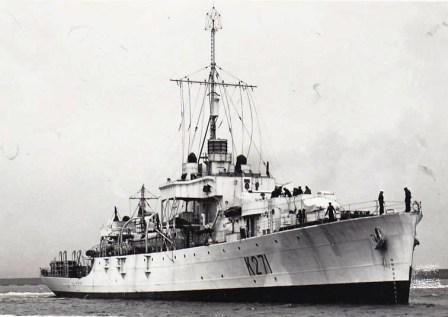
HMS PLYM
28 March 1952 at Stangate Creek, Sheerness alongside HMS PLYM - supplied 26 tons of water
24 April 1952 at Stangate Creek, Sheerness alongside HMS PLYM - supplied 20 tons of water
29 April 1952 at Stangate Creek, Sheerness alongside HMS PLYM - supplied 30 tons of water
6 May 1952 at Stangate Creek, Sheerness alongside HMS PLYM - supplied 20 tons of water
8 May 1952 at Stangate Creek, Sheerness alongside HMS PLYM - supplied 14 tons of water
15 June 1953 took part in the Coronation Fleet Reviewat Spithead along with 7 other RFA’s
27 April 1959 at Devonport alongside HMS CENTAUR supplying water
17 January 1961 at Lymington Pier Steward Hector Rice discharged dead - stroke
1961 converted to oil fuel burning
1963 to 1967 based at Gibraltar
May 1967 on the Disposal List at Gibraltar
14 June 1967 offered for sale 'as lying' at H M Dockyard, Gibraltar in the Times of this day
1968 purchased by Ferro & Cia Ltda, St Vincent, Cape Verde Islands and renamed PORTO GRANDE
18 July 2009 berthed at Mindelo, Cape Verde Islands
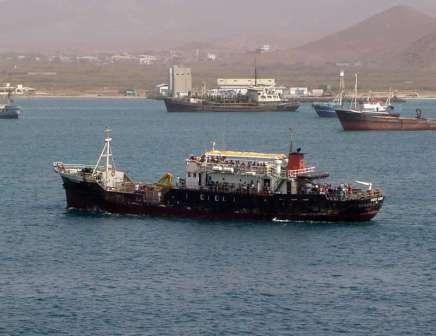
16 April 2013 berthed at Palmeria Bay, Sal Island, Cape Verde Islands
18 May 2013 berthed at Mindelo, Cape Verde Islands

Class: FRESH CLASS Water Carrier
Pennant No: X121
Laid down: 18 March 1943
Builder: Lytham Shipbuilding, Lytham
Launched: 2 July 1943
Into Service: 30 October 1943
Out of service: 29 January 1968
Fate: Sold and broken up
Items of historic interest involving this ship: -
Background Data: There were 14 vessels in this Class, designed by H.M. Dockyard, Devonport to the order of the RFA. The design was based on that of the earlier BLOSSOM and FOUNTAIN CLASSES but with an additional salvage and fire-fighting capability. They were originally operated by the Director of Victualling and were maintained at RN bases in the U.K. and Mediterranean where they were employed principally in replenishing warships’ freshwater supplies and also, from time to time, in fire fighting and salvage work. A total of 236 tons of fresh water could be carried in 6 tanks. Most of them saw only limited service under the RFA ensign, manned by RFA crews working under Board of Trade (Home Trade) Agreements, before being transferred to the control of the Captains of the Dockyards on Yard Craft Agreements. In 1959 they were brought under the authority of the newly-formed Port Auxiliary Service which in turn became the Royal Maritime Auxiliary Service. Originally all coal-fired, 4 of the Class were converted to oil-burning in 1961
2 July 1943 launched by Lytham Shipbuilding & Engineering Co, Lytham as Yard Nr: 873 named FRESHWELL for the Admiralty (Director of Stores)
23 October 1943 Captain P Guy MBE RFA appointed as Master
30 October 1943 completed and was taken over by the RFA
based at Scapa Flow
16 February 1944 Mr W Thomas RFA appointed as Chief Engineer Officer
12 May 1944 Captain David Cook RFA appointed as Master
17 April 1945 while coming alongside RFA MIXOL, which was berthed on Lyness Jetty, her starboard anchor holded the Mixol's port quarter, sheering rivets, bending frame and deck stringers
23 July 1945 arrived at Grangemouth
27 July 1945 sailed Grangemouth
27 August 1945 sailed Grangemouth
based at Rosyth
1 February 1946 ceased to be classed as an RFA and was taken over by the Director of Victualling
1946 based at Gosport
2 July 1947 passed the Lloyds Signal Station on the Lizard sailing west
based at Portland. Alternated with RMAS FRESHTARN from Portsmouth. Replaced the earlier water boats EMPIRE BARNABY and EMPIRE FULHAMand was in turn replaced by RMAS WATERSIDE and RMAS WATERMAN
14 December 1964 was alleged to have caused damage to ss CONDOVISITY at Portsmouth
November 1967 on the Disposal List at Pembroke Dock
25 November 1967 offered for sale in the Times of this day 'As lying' at Pembroke Dock by the Ministry of Transport
29 January 1968 sold and broken up at Passage West - Haubowline Industries