

Ships starting with G
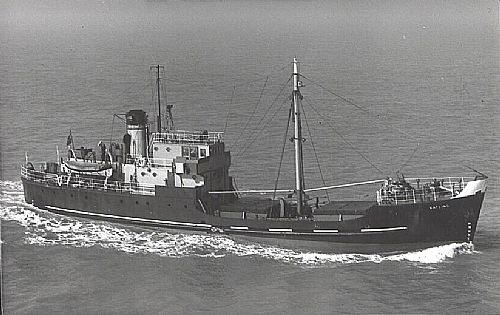
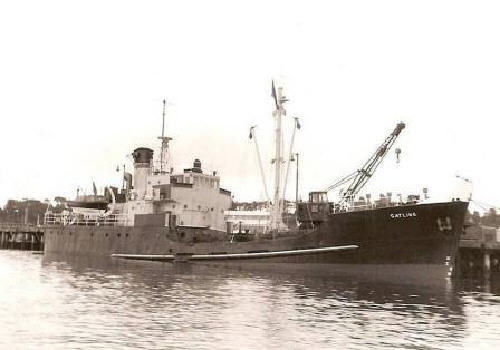
Lower image courtesy of Rossbay - NAV Gatling at Lisahally
Subsequent name:
Official Number 180827
Class: GATLING CLASS Armament Stores Carrier
Pennant No: A376
Laid down:
Builder: Lobnitz & Co Ltd, Renfrew
Launched: 9 July 1945
Into Service: 25 October 1945
Out of service: January 1970
Fate: Scrapped 2 March 1970
Items of historic interest involving this ship: -
Background Information: - One of a group of five coasters which were not normally classed as RFA’s They are included here as the ancestors of the more modern ammunition ships These five ships were designed by the Director of Naval Construction to the requirements of the Naval Armament Department. They were designed for Pacific Operations to carry ammunition from larger ships offshore which were of too deep a draught to go close inshore to the coastal areas or small harbours and had their bottoms strengthened to permit grounding when loaded if required. This was a 1943 plan connected with a future invasion of Japan. As there was no requirement to carry large naval guns they were provided with two cargo holds. The order for them was placed in October 1944 and none of them was completed before the end of hostilities, which meant that only one of them (GATLING) was needed to proceed to the Far east to assist in the rehabilitation of Singapore. GATLING and NORDENFELT were completed to mercantile standards and were registered and classed with Lloyds Register and were run on National Maritime Board conditions, while the other three were on “Yard Craft” Dockyard agreements and were completed with naval style accommodation.
9 July 1945 launched by Lobnitz & Co Ltd, Renfrew as Yard Nr: 1085 named GATLING
25 October 1945 completed to Mercantile Standards
9 June 1946 arrived Singapore to assist in that port’s rehabilitation
9 August 1948 berthed at Trincomalee
23 August 1948 Mr Charles F Richards appointed as Chief Engineer Officer when the ship was at Trincomalee. He remained as Chief Engineer Officer until 8 October 1949 at Trincomalee when he was discharged sick
4 September 1948 berthed at Karachi
17 November 1948 at Bombay
14 December 1948 at Cochin - Chief Officer A Hawkins promoted and appointed as Master
15 November 1949 Captain Alfred M Conrade appointed as Master while the ship was at Trincomalee
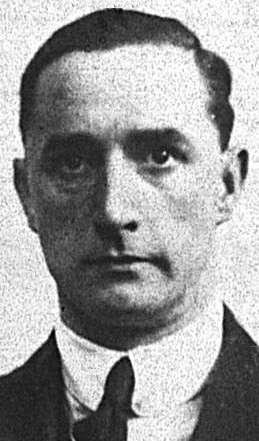
Captain Alfred M Conrade
23 November 1949 Mr R Wallsworth appointed as Chief Engineer Officer
27 February 1950 arrived at Port Said
15 March 1950 arrived at Malta
5 April 1950 berthed at Portsmouth Harbour
11 May 1950 Captain Walter H E G Praill appointed as Master
17 May 1950 Mr J P Dean appointed as Chief Engineer Officer
29 July 1950 berthed at Rosyth
12 August 1950 arrived at South Shields
25 August 1950 at Milford Haven
28 August 1950 Mr D Williams appointed as Chief Engineer Officer
27 October 1950 berthed at Belfast
3 November 1950 at Rosyth
1 July 1952 passed the Lloyds Signal station on Flamorough Head sailing south bound
30 December 1952 Captain Walter H E G Praill appointed as Master
18 April 1953 Mr W T Green appointed as Chief Engineer Officer
18 June 1953 took part in the Spithead Fleet Review in line H with RFA's FORT DUNVEGAN, AMHERST and OLNA (2)
5 July 1955 while on passage to Portsmouth and 10 miles south of Portland found the body of a man floating in the sea. Recovered the body and he was landed at the Royal Naval Hospital, Haslar
January 1970 on the Disposal List
2 March 1970 arrived Passage West in tow for demolition by Haulbowline Industries Ltd
Notes:
- Based at Naval Armaments Depots at Singapore and Priddy's Hard between 1945 and 1959
Reproduced with permission of the MOD

Official Number: 168175
Class: RANGER CLASS Fleet Attendant Oiler
Pennant No: X30 / A130
Laid down: 14 May 1940
Builder: Caledon, Dundee
Launched: 12 March 1941
Into Service: 4 July 1941
Out of service: July 1973
Fate: Broken up at Hong Kong
Items of historic interest involving this ship: -
Background Data: The six ships in this Class were designed in the mid - 1930’s by Rowland Baker as replacements for the 2,000t BELGOL CLASS and were the first Admiralty-designed tankers since the 1917 5,000t FAST LEAF CLASS. As originally built, for camouflage purposes, they had canvas deckhouses, a dummy plate funnel forward, their foremast was on the starboard bow, the wheelhouse was offset to port, and in some cases their genuine funnel was cut low and was on the port quarter, fitted with a spark arrester. Originally armed with 1 x 4” LA, 1 x 12 pdr HA/LA and several Lewis guns, as the War progressed the armament fits altered and finally averaged 1 x 4” HA, 1 x 40mm Bofors and 4 x single 20mm Oerlikons. These vessels served extensively as Escort Tankers on the Russian Convoys, Norwegain coastal raids, Malta Convoys and with the British Pacific Fleet. Apart from GRAY RANGER which became a War Loss, the Class had exceptionally long Service lives and were finally replaced by the ROVER CLASS
12 March 1941 launched by Caledon Shipbuilding Co Ltd, Dundee as Yard Nr 389 named GOLD RANGER
March 1941 Mr Reginald R Darroch RFA appointed as Chief Engineer Officer

Chief Engineer Officer Reginald R Darroch RFA
27 May 1941 at London registered as GOLD RANGER with reference 139/41 in the Register
26 June 1941 Captain Percival H Brooke RFA appointed as Master
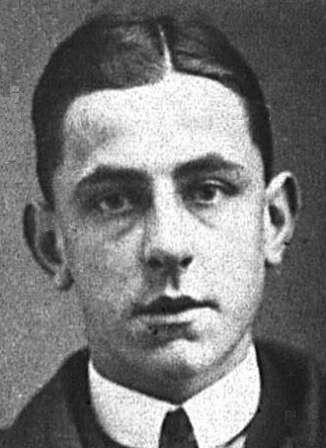
Captain Percival H Brooke RFA
4 July 1941 completed
5 July 1941 sailed Dundee to join the Fleet Fuelling Service arriving at Grangemouth the same day
7 July 1941 sailed Grangemouth
11 July 1941 at Leith Docks
27 July 1941 arrived Methil Roads
31 July 1941 sailed Methil Roads
8 August 1941 arrived Scapa Flow for OAS trials remaining there until 9 December 1941
August 1941 undertook OAS trials with the heavy cruiser HMS BERWICK using the Trough Method
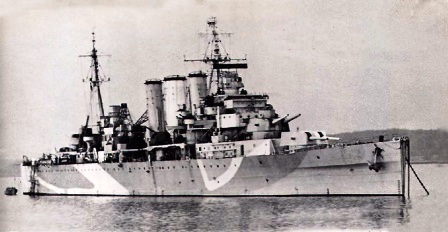
HMS BERWICK
3 November 1941 at Scapa Flow alongside HMS DUKE OF YORK to refuel her with 551 tons of FFO
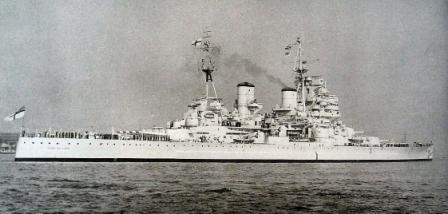
HMS DUKE OF YORK
12 December 1941 sailed Lyness to the Clyde arriving the next day
15 December 1941 at Glasgow for repairs remaining on the Clyde and area until early January 1942
12 January 1942 Admiralty reported she had loaded 1,000 tons of Admiralty FFO prior to sailing as a convoy refuelling tanker to Freetown - Source Admiralty War Diary of this date
18 January 1942 directed to be part of Convoy OS 17 from Liverpool but did not sail.
29 January 1942 refuelled from RFA DEWDALE (1)
8 February 1942 arrived at Freetown
19 April 1942 sailed Freetown in escorted convoy ST20. The convoy dispersed on 21 April 1942
25 May 1942 arrived Freetown
22 October 1942 Captain Raymond V Boodle RFA appointed as Master
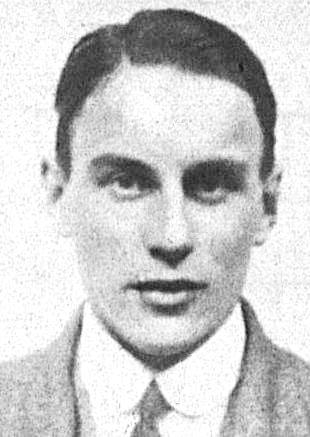
Captain Raymond V Boodle RFA
4 January 1943 ordered to sail from the East Indies to act as Fleet Attendant Oiler at Durban. At Kilindini with HMAS NIZAM alongside being refuelled
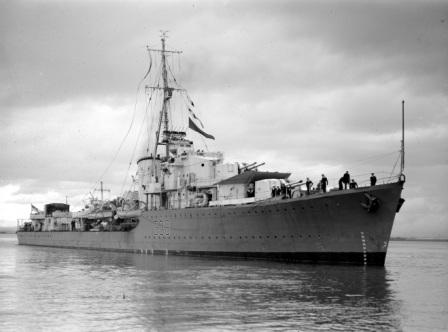
HMAS Nizam
8 January 1943 sailed Mombasa for refit in Durban
17 January 1943 arrived Durban for refit. RFA ARNDALE refitted at the same time
8 March 1943 docked in the dry dock at Durban, South Africa
11 March 1943 undocked from the dry dock at Durban, South Africa
17 April 1943 sailed Durban independently to Mombasa arriving on 23 April 1943
14 July 1943 at Kilindini alongside HMS FROBISHER refuelling her
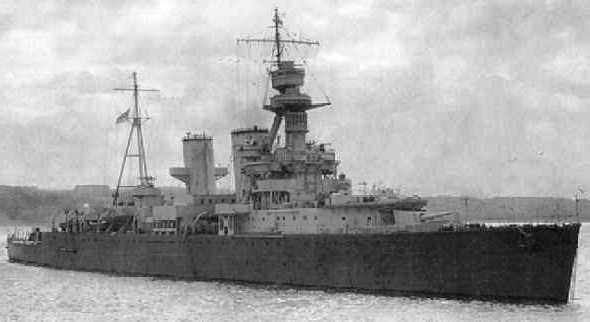
HMS FROBISHER
23 July 1943 at Kilindini alongside HMS FROBISHER refuelling her
14 November 1943 sailed Mombasa
17 November 1943 returned back at Mombasa
17 February 1944 Mr Harry F Duce DSC RFA appointed as Chief Engineer Officer

Chief Engineer Officer Harry F Duce DSC RFA
13 June 1944 docked in the dry dock at Durban, South Africa
17 June 1944 undocked from the dry dock at Durban, South Africa
7 April 1945 sailed Mombasa independently to Colombo arriving on 16 April 1945
15 April 1945 allocated for duty in Operation Dracula and to be the base oiler at Rangoon, Burma when the port had been captured
17 April 1945 sailed Colombo independently to Trincomalee arriving on 19 April 1945
26 April 1945 sailed Trincomalee
1 May 1945 arrived at Kyaukpyu, Yangon Island, Burma
2 May 1945 took part in Operation Dracula - the entry into Rangoon - along with RFA ECHODALE
3 May 1945 Captain Ernest C Rogers RFA appointed as Master
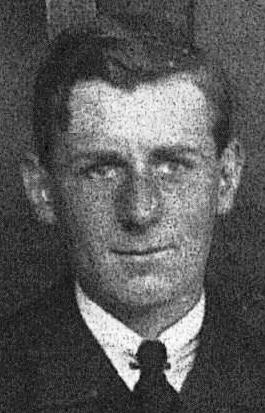
Captain Ernest C Rogers RFA
4 May 1945 sailed Kyaukpyu in convoy KRS1A arriving at Rangoon on 19 May 1945
19 May 1945 sailed Rangoon independently to Trincomalee arriving 25 May 1945
26 June 1945 sailed Trincomalee independently to Bombay arriving 1 July 1945
7 July 1945 under going repairs at Bombay Dockyard completed 20 August 1945
26 July 1945 Mr J A McKenzie RFA appointed Chief Engineer Officer
24 September 1946 struck by a practice torpedo in Portland Harbour during test firing
15 October 1946 Captain Douglas N J Williams RFA (Lieut-Commander RNR) appointed as Master
28 November 1946 Mr W E Burke RFA appointed as Chief Engineer Officer
27 October 1947 Mr William H Macfarlane RFA appointed as Chief Engineer Officer
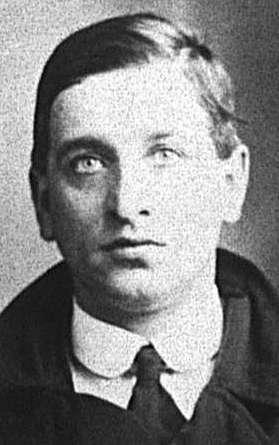
Chief Engineer Officer William H MacFarlane RFA
29 January 1948 at Port Stanley, Falkland Islands the RRS John Biscoe alongside being refuelled
31 January 1948 sailed from Port Stanley, Falkland Islands to Bermuda
6 May 1948 Captain William R Parker RFA appointed as Master - remained in command until 31 March 1950 and then from 12 April 1950 until 26 May 1950
27 July 1948 reported by radio that she had, together with HMS's SHEFFIELD and SPARROW ridden out a hurricane and were making passage to Bermuda Dockyard
8 October 1948 sailed from Bermuda with RN ships shortly before what was described as the most destructive hurricane to hit the Island for 20 years arrived. She safely rode out the hurricane at sea before returning to the Island.
Between 1949 and 1950 Gold Ranger was based in the West Indies and during this period she made a number of excursions to the Antarctic in support of various expeditions
31 January 1949 sailed with HMS's GLASGOW, JAMAICA, SNIPE. SPARROW, BIGBURY BAY, WHITESANDS BAY, the tugs EMINENT, FREEBOOTER and JUSTICE together with the Harbour Service Vessel MOORPOUT to the West Indies
21 February 1949 sailed Trinidad
28 March 1949 sailed Kingston, Jamaica
30 March 1949 involved in exercises with UK, US and Canadian Naval units off the US Naval Base at Guatanamo Bay, Cuba

Press Cutting from The Times newspaper 6 April 1949
7 October 1949 at the Royal Naval Hospital, Bermuda Fireman James Foster Pigott discharged dead - heart failure following a hernia operation. Buried in the Royal Naval Cemetery, Bermuda
26 November 1949 sailed Port Stanley, Falkland Islands with RRS JOHN BISCOE to the South Shetlands and Deception Island in Antarctica for Operation Corkscrew - providing aviation fuel at Deception Island, Antarctica for aircraft being used by the Falkland Island Dependencies Survey
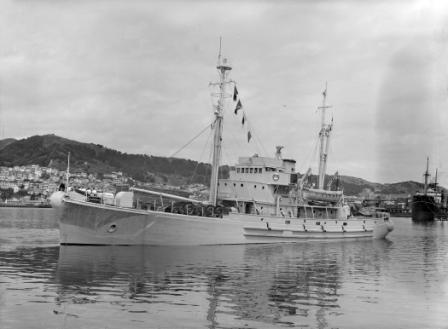
RRS John Biscoe in 1956 after being renamed HMNZS Endeavour
2 December 1949 anchored at Whalers' Bay, Deception Island and off loaded stores and drums of fuel ashore. The John Biscoe off loaded two aircraft for use by the team based there

Press report from the Kalgoorie Miner newspaper
8 December 1949 sailed Deception Island for Port Stanley, Falkland Islands
16 February 1950 Mr W E Burke RFA appointed as Chief Engineer Officer
1 December 1950 passed the Lloyds Signal Station on the Lizard sailing east
2 December 1950 arrived at Plymouth from Aruba
13 December 1950 Captain James H Chant RFA appointed as Master
26 December 1950 in dock at Immingham along with RFA's BLACK RANGER and FORTOL
7 March 1951 Mr D S Wood RFA appointed as Chief Engineer Officer
31 August 1951 involved in major naval exercises with the Home Fleet around the UK and off Gibraltar
28 September 1951 at Invergordon HMS St AUSTELL BAY berthed alongside to refuel
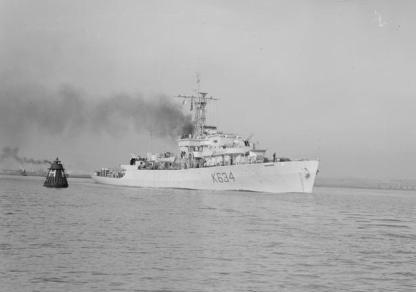
HMS St AUSTELL BAY
1 October 1951 sailed from Invergordon together with twenty four RN ships and the tug Mediator
10 October 1951 sailed Invergordon for the Home Fleet Autumn Cruise together with
10 January 1952 Mr W H Macfarlane RFA appointed as Chief Engineer Officer
13 June 1952 arrived the River Tyne from Killingholme berthing at Wallsend Slipway
15 September 1952 sailed Rosyth with RFA WAVE PREMIER and UK, US, Canadian and New Zealand naval units to take part in Operation Mainbrace
18 September 1952 berthed at Rosyth
19 September 1952 at Rosyth with USS Fred T Berry (DDE 858) alongside refuelling her
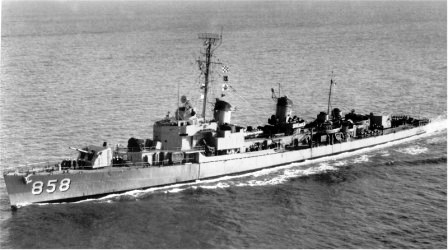
USS Fred T Berry (DDE 858)
20 September 1952 sailed Rosyth to take part in Operation Mainbrace (Part 2)
3 October 1952 took part in Operation Hurricane 1- the first British atomic bomb tests at the Monte Bello Islands off NW Australia - along with 6 other RFA’s
13 October 1952 Mr R C Veitch RFA appointed as Chief Engineer Officer
16 February 1953 Captain Alfred M Uglow RFA appointed as Master
11 September 1953 Captain Leslie G Rowling DSC RFA appointed as Master
14 October 1953 arrived the River Tyne
16 October 1953 sailed Sunderland for Sheerness
2 November 1953 arrived the River Tyne
10 November 1953 sailed the River Tyne for Sheerness
28 December 1953 Mr C D Reid RFA appointed as Chief Engineer Officer
21 April 1954 Mr J C Calvert RFA appointed as Chief Engineer Officer
27 April 1954 at Taedong Do HMAS MURCHISON berthed alongside and was replenished with fresh water
11 June 1954 at Taedong Do HMAS MURCHISON berthed alongside and was refuelled with fuel and replenished with fresh water
23 March 1955 at Tung Wah Hospital, Hong Kong Sailor Pang Fook discharged dead from meningitis
1 June 1955 South of Lombok, Indonesia RASed with HMAS WARRAMUNGA (astern) and HMAS ARUNTA (abeam)
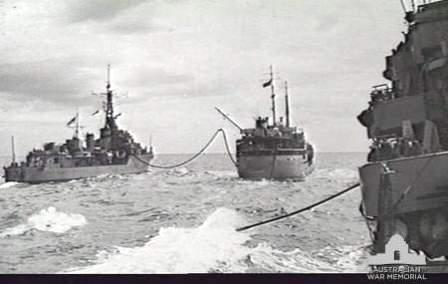
Image copyright:© Australian War Memorial
14 July 1955 Mr Lionel W Pool RFA appointed as Chief Engineer Officer
16 August 1955 took part in Exercise Comex between Kure and Kagoshima with RN Units. RASed with HMS St BRIDES BAY
15 March 1956 Captain Stephen J Pethurst RFA appointed as Master
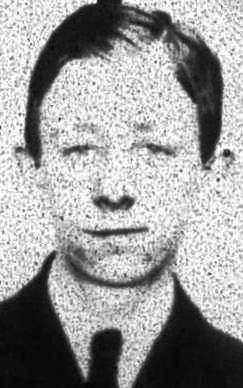
31 October 1956 in Operation Musketeer - the Suez Crisis - along with 34 other RFA’s
4 December 1956 together with RFA WAVE SOVERIGN and RN Units engaged in patrol duites in the Red Sea
9 July 1957 Mr J Brett RFA appointed as Chief Engineer Officer
4 August 1957 RAS'ed with HMS LOCH FADA at Khor Kuwai, Persian Gulf
22 November 1957 Captain R J Lockwood RFA appointed as Master
1957 to 1960 supported Operation Grapple - the British H-bomb test at Christmas Island in the Pacific Ocean - along with 16 other RFA’s

24 February 1958 to 1March 1958 involved in fleet exercises with RFA's WAVE MASTER, FORT CHARLOTTE, FORT SANDUSKY, HMS NEWCASTLE and 9 other RN ships
25 March 1958 berthed at Jesselton with HMNZS ROYALIST
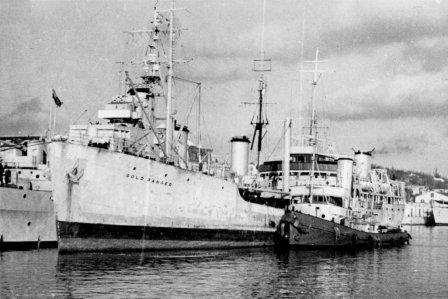
17 February 1959 RAS'ed HMS CAVALIER between Hong Kong and Singapore
30 April 1959 Captain Nicholas B J Stapleton RD RFA (Lieut-Commander RNR) appointed as Master

Captain Nicholas B J Stapleton RD RFA
10 June 1959 after release from Exercise Saddleup and while on way to Sandakan RAS HMAS's ANZAC and TOBRUK
16 June 1959 RASed with HMAS's ANZAC and TOBRUK and RN ships
2 July 1959 during exercises with RN and RAN ships RASed with HMAS's ANZAC and TOBRUK
23 December 1959 RASed with HMAS QUICKMATCH
2 January 1960 RASed with HMAS VENDETTA astern and HMAS QUICKMATCH abeam
6 January 1960 RASed with HMAS QUICKMATCH
18 February 1960 RASed with HMAS QUEENBOROUGH abeam and HMAS QUIBERON astern
23 March 1960 Mr R E Davies RFA appointed as Chief Engineer Officer
25 March 1960 at Hong Kong alongside HMAS QUEENBOROUGH to refuel her
6 April 1960 and 7 April 1960 off Singapore engaged in RAS exercises together with RFA's RELIANT (2), RESURGENT, FORT CHARLOTTE, OLNA (2) and HMAS's QUEENBOROUGH, ANZAC and TOBRUK
16 May 1960 off Singapore RASed with HMAS VOYAGER
19 July 1960 off Pulo Aur RASed HMAS VAMPIRE
5 August 1960 together with HMS ALBION and RFA's WAVE MASTER, TIDEFLOW, RETAINER and FORT DUNVEGAN entered Telok Tekek
24 December 1960 4th Engineer Norman George Cowell RFA discharged dead - he is buried in Kranji Military Cemetery, Singapore in Plot 14 Row D Grave 17
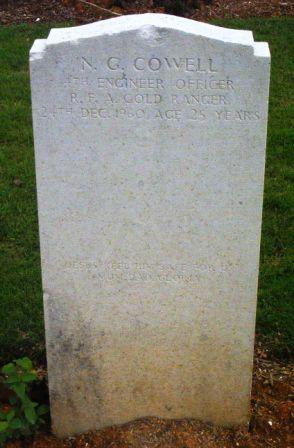
Image supplied by Tony Beck with thanks
13 March 1961 at Trincomalee, Ceylon with HMAS's QUEENBOROUGH and QUICKMATCH alongside being refuelled
18 March 1961 Captain Dan de V Moulds RFA appointed as Master
4 May 1961 Mr J Scott RFA appointed as Chief Engineer Officer
July 1961 provided support during Operation Vantage - the Kuwait Crisis - along with 12 other RFA’s
7 April 1962 Captain Walter Gibb MBE RFA appointed as Master
23 May 1962 with RN units was engaged on anti pirate patrols in the Tawau area and off the Celebes
4 June 1962 berthed at SIngapore Naval Base
14 June 1962 Mr C D Reid RFA appointed as Chief Engineer Officer
29 March 1963 Captain B H Lawrence RFA appointed as Master
9 June 1963 at Thomas Road Hospital Singapore Chief Cook Cheng Wang Cheous discharged dead - natural causes
16 August 1963 Captain Charles Stuart Bonshaw Irwin DSO DSC RD RFA (Lieutenant Commander RNR (ret)) appointed as Master

28 January 1964 her Ship‘s Badge was officially presented to her
6 June 1964 while on passage from Jesselton Harbour to Singapore RAS'ed with HMAS's PARRAMATTA, SYDNEY and YARRA
31 July 1964 Mr J R Ramsey RFA appointed as Chief Engineer Officer
5 September 1964 refuelled HMAS's IBIS, TEAL and GULL
25 October 1964 at Tawau anchorage alongside HMAS IBIS to refuel her
30 October 1964 at Tawau anchorage alongside HMAS IBIS to refuel her
2 November 1964 at Tawau anchorage alongside HMAS IBIS to refuel her
6 November 1964 at Tawau anchorage alongside HMAS IBIS to refuel her
19 December 1964 at Tawau anchorage alongside HMAS DERWENT to refuel her
25 December 1964 Christmas Day spent at anchor 6 miles east of Tawau
January 1965 to 11 August 1965 provided support to RN units from the Far East Fleet and units of an Inshore Squadron during the Indonesian Confrontation along with RFA’s EDDYROCK, FORT CHARLOTTE, TIDEREACH and WAVE SOVEREIGN
13 January 1965 at 5.00N 130.00E refuelled HMAS's GULL and HAWK
2 February 1965 alongside HMAS DUCHESS while anchored off Tawau Jetty refuelling her
27 March 1965 berthed at Singapore Naval Base with HMAS PARRAMATTA alongside
29 May 1965 anchored off Tawau with HMAS PARRAMATTA berthed alongside being refuelled
20 June 1965 off Boreno RAS'ed with HMAS YARRA
13 July 1965 off Tawau RAS'ed with HMAS YARRA
1 August 1965 at 5N 130E refuelled HMAS's GULL and HAWK alongside
21 August 1965 off Sipidan Island at 04.35N 19.35E while on passage from Hong Kong to Manus RAS'ed with HMAS's YARRA and PARRAMATTA
1 September 1965 Captain G Bray MBE RFA appointed as Master
12 September 1965 Mr R C Veitch RFA appointed as Chief Engineer Officer
13 September 1965 to the south of Sibutu Passage RAS'ed with HMAS DUCHESS and VENDETTA
16 October 1965 in the Moro Gulf (off Philippines East Coast) RASed with HMAS CURLEW
20 December 1965 in the Singapore Strait RAS'ed with HMAS DUCHESS
8 February 1966 in lee of Sibutu Passage refuelled HMAS's HAWK and GULL
2 March 1966 off Tawau RASed with HMAS's DERWENT and VAMPIRE
21 March 1966 off Tawau RASed with HMAS DERWENT
7 April 1966 Captain J G M Coull RFA appointed as Master
April 1966 off Tawau undertook night patrols under the direction of HMAS DERWENT
15 June 1966 refuelled HMAS GULL
24 July 1966 RASed with HMAS DERWENT and then for practice also RASed astern
23 August 1966 at Labuan refuelled HMAS PARRAMATTA
15 September 1966 off Johore Shoal Buoy refuelled HMAS's HAWK, CURLEW and GULL
21 October 1966 refuelled HMAS's HAWK, CURLEW and SNIPE while on passage from Tacloban, Phillipines to Singapore
25 October 1966 off Luzon RASed with HMAS PARRAMATTA
7 February 1967 RASed with HMAS HAWK
9 February 1967 together with HMS MANXMAN and HMAS GULL off the Bankok River
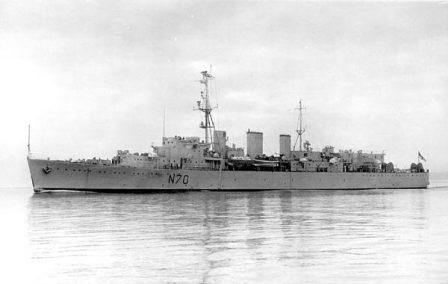
HMS MANXMAN
13 March 1967 together with HMS DARTINGTON and HMAS GULL alongside each other at the Fleet Anchorage. The cast off each other on 14 March 1967
22 March 1967 Captain C W P Summer RFA appointed as Master
26 April 1967 Mr Ronald C Putt MID RFA appointed as Chief Engineer Officer
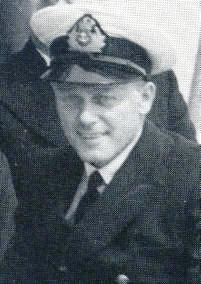
Chief Engineer Officer Ronald C Putt MID RFA
5 May 1967 at Singapore Dockyard
15 June 1967 sailed Singapore returning 17 June 1967
19 June 1967 sailed Singapore for exercises returning 23 June 1967
2 July 1967 sailed SIngapore for exercises berthing at Manila on 8 July 1967
10 July 1967 sailed Manila for Exercise Sea Dog arriving Linguyan Gulf 11 July 1967
12 July 1967 sailed Linguyan Gulf for Subic Bay arriving 13 July 1967
13 July 1967 sailed Subic Bay to Linguyan Gulf arriving 14 July 1967
19 July 1967 sailed Linguyan Gulf returning to Singapore 28 July 1967
1 August 1967 sailed Singapore for RASing returning 4 August 1967
18 August 1967 sailed Singapore for RASing returning 21 August 1967
22 August 1967 sailed Singapore for Ko Phanghan arriving 25 August 1967
28 August 1967 sailed Ko Phanghan for Hong Kong arriving 4 September 1967
17 September 1967 sailed Hong Kong for Singapore arriving 26 September 1967
The insigna of the Dragon Squadron (6MCMS) was displayed on her funnel
28 Septmeber 1967 sailed Singapore returning the following day
October 1967 together with RFA TIDEPOOL RASed with HMS DAMPIER during the Survey ship return to the UK
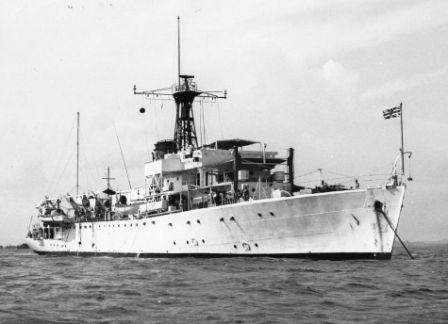
HMS DAMPIER
23 October 1967 involved in the rescue of an Indonesian ship Perak which was adrift in the Nicobar Strait. She towed the Perak with 19 crew on board to Sabang. North Sumatra
27 October 1967 at Singapore Dockyard
13 November 1967 sailed Singapore returning 18 November 1967
23 November 1967 sailed Singapore returning the next day
26 November 1967 sailed Singapore returning 9 December 1967. Sailed later the same day berthing at Penang on 11 December 1967
14 December 1967 sailed Penang berthing at Singapore on 16 December 1967
19 December 1967 sailed Singapore returning there on 22 December 1967
2 January 1968 sailed Singapore returning there on 5 January 1968
9 January 1968 sailed Singapore returning 12 January 1968
16 January 1968 off Singapore RASed with HMAS YARRA
February 1968 Captain R M Miller RFA appointed as Master
5 February 1968 in the vicinity of the Johore Shoal Buoy alongside HMAS SYDNEY refuelling her
4 March 1968 sailed Singapore Naval Base for Yokosuka US Naval Base, Japan arriving 15 March 1968
23 March 1968 sailed Yokosuka US Naval Base, Japan for Kure, Japan arriving 25 March 1968
29 March 1968 sailed Kure, Japan for Hong Kong arriving 2 April 1968 inadvertenly entered, by one mile, waters claimed by the Government of Communist China and was escorted to the International shipping lane to Hong Kong by Chinese gun boats
7 April 1968 sailed Hong Kong to Singapore arriving 17 April 1968
18 April 1968 sailed Singapore returning the next day
23 April 1968 sailed Singapore for Jahore Bay returning to SIngapore 30 April 1968
4 May 1968 sailed Singapore for Manus arriving 14 May 1968
15 May 1968 sailed Manus to Darwin, Northern Territories, Australia arriving 24 May 1968
29 May 1968 sailed Darwin, Northern Territories, Australia to Singapore Naval Base arriving 6 June 1968
11 June 1968 sailed Singapore Naval Base returning 14 June 1968
17 June 1968 sailed Singapore Naval Base returning on 26 June 1968
18 August 1968 Mr G R Henderson RFA appointed as Chief Engineer Officer
26 August 1968 at Singapore Dockyard entered refit
2 November 1968 in the Singapore Strait RAS'ed with HMAS DUCHESS
22 November 1968 off the Johore Shoal Buoy RAS'ed with HMAS DUCHESS
19 October 1969 in the Java Sea RASed with HMAS YARRA
December 1969 Captain E G May DSC RFA appointed as Master
22 March 1970 RASed with HMNZS Taranaki while on passage from Hong Kong to Manila
30 October 1970 RASed with HMAS SYDNEY and then sailed for Singapore
2 November 1970 north east of Singapore RASed with HMAS's SYDNEY and VENDETTA
1 April 1971 off Singapore RASed with HMAS YARRA
4 May 1971 berthed at Singapore
31 October 1971 took part in the final steam past of seventeen ships from the RN, RAN, RNZN and RFA Far East Fleet in the Singapore Straits after the closure of the naval base there which also included RFA’s FORT SANDUSKY, OLNA (3), RELIANT (2), RESOURCE, STROMNESS, TIDEFLOW and TIDEPOOL. Immediately afterwards for three hectic days she participated in Operation Curtaincall - a combined RN, RAN, RNZN and RFA Fleet Exercise off the NW coast of Malaysia
20 June 1972 berthed at Simonstown Dockyard, South Africa
21 August 1972 berthed at Simonstown Dockyard, South Africa
23 September 1972 2nd Officer Malcolm Douglas Cameron Lee RFA discharged dead after an accident in Singapore -he was buried at sea
22 December 1972 arrived Singapore for the last time to destore and to be laid up
7 March 1973 offered for sale this day in the Straits Times, Singapore
5 April 1973 on the Disposal List
July 1973 sold out of service to Tunas Tankers & Bunkering Service Pte Ltd under the Singapore flag
March 1977 broken up at Hong Kong by Lee Sing & Co Ltd
Reproduced with permission of the MOD
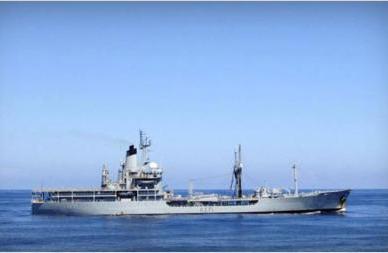
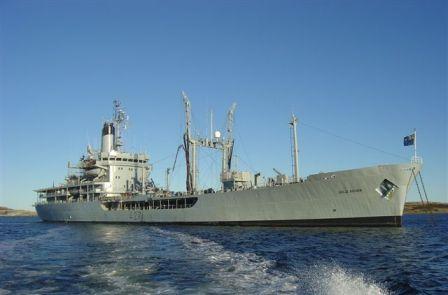
Subsequent name:
Official Number: 363145
Class: ROVER CLASS Small Fleet Tanker
Pennant No: A271
Laid down:
Builder: Swan Hunter, Wallsend
Launched: 7 March 1973
Into Service: 22 March 1974
Out of service: 6 March 2017
Fate:
Items of historic interest involving this ship: -
Background Data: In 1967, tenders were invited for what eventually turned out to be five ships in this Class. Owing to unsatisfactory performance from the original engines, which had been a political decision, the first three ships in the Class were re-engined in 1974. The final two ships differed slightly from the earlier three and had improved accommodation standards and different stern anchor arrangements
7 March 1973 launched by Swan Hunter Shipbuilders Ltd, Wallsend as Yard Nr: 59 named GOLD ROVER. The Lady Sponsor was Mrs M. Lovett, the wife of Mr P.J. Lovett MBE, the then DST (AS)
6 December 1973 her Ship’s Badge was officially presented to her
9 March 1974 Captain Barry H Rutterford RFA appointed as Master
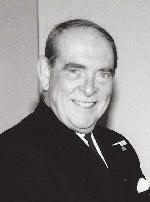
Captain Barry H Rutterford RFA
22 March 1974 completed at a cost of £7.7m and accepted in the RFA service
23 March 1974 sailed the River Tyne to the Isle of Grain berthing on BP No: 5 berth. Loaded 3,899 tons of diesel as cargo
24 March 1974 sailed the Isle of Grain
25 March 1974 anchored at Spithead
26 March 1974 berthed alongside the Gosport Oil Fuel Jetty
30 March 1974 loaded 347 tons of AVCAT as cargo
9 April 1974 sailed Gosport Oil Fuel Jetty to Plymouth Sound
11 April 1974 sailed Plymouth Sound to Gibraltar
17 April 1974 berthed on Nr: 50 berth on the South Arm at Gibraltar Dockyard
19 April 1974 loaded 1,249 tons of FFO as cargo
23 April 1974 sailed Gibraltar
26 April 1974 arrived at Portland
1 May 1974 to 3 May 1974 deployed in the Portland Exercise Area
3 May 1974 berthed alongside at Portland
6 May 1974 to 10 May 1974 deployed in the Portland Exercise Area
10 May 1974 secured to A2 Buoy at Portland Harbour
13 May 1974 deployed to the Portland Exercise Area
17 May 1974 arrived at Plymouth Sound
20 May 1974 deployed to the Plymouth Exercise Area
21 May 1974 at Plymouth Sound with RMAS WATERFOWL alongside receiving 48 tons of sullage

RMAS Waterfowl
22 May 1974 to 26 May 1974 deployed to the Plymouth and Portland Exercise Areas
26 May 1974 arrived at Portland
28 May 1974 deployed to the Portland Exercise Area
1 June 1974 secured to A2 Buoy, Portland Harbour
3 June 1974 to 12 June 1974 deployed to the Portland Exercise Area
13 June 1974 sailed Portland to Gibraltar Exercise Area
16 June 1974 arrived at Gibraltar moored alongside at 22/23 berths
17 June 1974 sailed Gibraltar to the Gibraltar Exercise Area
27 June 1974 moored alongside at 22 berth, Gibraltar
2 July 1974 sailed Gibraltar to Civitavicchia
5 July 1974 berthed at Civitavicchia
8 July 1974 sailed Civitavicchia to Gaeta
9 July 1974 sailed Gaeta to Elba, Portoferracio
10 July 1974 until 30 September 1974 stood by off Cyprus following a coup d’etat attempt and subsequent Turkish invasion with a Task Force including the carrier HMS HERMES with 41 Commando Royal Marines and RFA’s OLNA (3), OLWEN (2) and REGENT
13 July 1974 sailed Elba to Malta
15 July 1974 berthed at Malta
16 July 1974 sailed Malta to Livorno and the Malta Exercise Area
21 July 1974 sailed for Cyprus
22 July 1975 along with RFA’s TARBATNESS and TIDESPRING (1) sailed from the U.K. as part of Task Group 317.3 led by the guided missile destroyer HMS GLAMORGAN
1 August 1975 with RFA’s TARBATNESS and TIDESPRING (1) berthed at Malta as part of Task Group 317.3 led by the guided missile destroyer HMS GLAMORGAN
4 August 1975 with RFA’s TARBATNESS and TIDESPRING (1) sailed from Malta for exercises with HMS GLAMORGAN and other RN ships
October 1975 involved in exercises with Royal Navy, Royal Australian Navy and Royal Malaysian Navy ships in the South China Sea
20 October 1975 during a helicopter transfer a Wessex HAS1 number XM328 had her main rotor blade damaged when a mail sack blew through the rotor disc
24 June 1977 to 29 June 1977 took part in the Silver Jubilee Fleet Review at Spithead with eight other RFA's and units of the Royal Navy and foreign navies
16 August 1977 Captain Rex A Cooper RFA appointed as Master
5 September 1977 carried out successful feasibility abeam refuelling trials with the British merchant tanker BRITISH TAMAR which was earmarked for duties in wartime as a Convoy Escort Oiler, to establish whether or not an RFA oiler could load its own cargo tanks by accepting fuel from commercial products tankers underway without the need for prior fitting of specialised RAS equipment on the commercial vessel
18 June 1978 at Portsmouth Harbour berthed outboard of RFA PLUMLEAF (2)
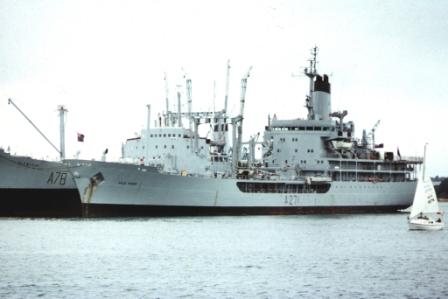
© Tim Webb – used with permission
9 May 1980 at Belfast
25 July 1980 at Portland
12 November 1980 at Portland
8 May 1981 at Portland
10 July 1981 at Portland
11 September 1981 at Portland as FOST tanker
25 March 1982 at Portland
1982 did not see service during the Falklands Conflict as she was out in Singapore at the time
25 July 1982 at Portland
29 July 1982 assisted a Special Forces demonstration in Poole Bay
1 August 1982 at Portland
28 January 1983 at Portland
22 June 1984 in Portland Exercise area
25 June 1984 sailed Portland
29 June 1984 berthed at Portland
2 July 1984 sailed Portland
7 July 1984 berthed at Portland
11 July 1984 sailed Portland
13 July 1984 berthed at Portland
16 July 1984 sailed Portland
19 July 1984 berthed at Portland
23 July 1984 sailed Portland
2 August 1984 berthed at Portland
13 August 1984 sailed Portland
15 August 1984 berthed at Copenhagen
20 August 1984 sailed from Copenhagen
23 August 1984 berthed at Plymouth and engaged in Plymouth Navy Days until 28 August 1984
28 August 1984 sailed Plymouth
31 August 1984 berthed at Portland
5 September 1984 sailed Portland
7 September 1984 berthed at Portland
10 September 1984 sailed Portland
14 September 1984 berthed at Portsmouth
20 September 1984 sailed Portsmouth
24 September 1984 arrived and anchored in Gibraltar Bay prior to entering Gibraltar Dockyard for refit
1 November 1984 Mr Edward M Quigley RFA appointed as Chief Engineer Officer
14 November 1984 sailed Gibraltar after refit - the last RFA to be refitted in the HM Dockyard there
19 November 1984 arrived off the Nab Tower prior to entering Portsmouth Dockyard
30 November 1984 sailed Portsmouth for Portland arriving the same day
3 December 1984 sailed Portland for BOST '84'
4 December 1984 berthed at Portland
10 December 1984 sailed Portland for BOST '84'
13 December 1984 berthed at Portland
17 December 1984 sailed Portland for BOST '84'
20 December 1984 berthed at Rosyth Dockyard
29 December 1984 sailed Rosyth Dockyard
3 January 1985 berthed at Portland
8 January 1985 sailed Portland returning 11 January 1985
14 January 1985 sailed Portland returning 18 January 1985
22 January 1985 sailed Portland returning 25 January 1985
28 January 1985 sailed Portland returning 1 February 1985
6 February 1985 sailed Portland returning 8 February 1985
12 February 1985 sailed Portland returning 17 February 1985
4 April 1985 sailed Portland
5 April 1985 entered Ijmueden Locks and berthed at Amsterdam
9 April 1985 sailed Amsterdam
10 April 1985 berthed at Portland
18 July 1985 sailed Nassau, Bahamas to Belize arriving 18 July 1985
25 July 1985 sailed Belize to Bridgedown, Barbados arriving 31 July 1985
4 August 1985 sailed Bridgetown, Barbados to Carriacou arriving the next day
7 August 1985 Carriacou to Virgin Gorda arriving the next day
10 August 1985 sailed Virgin Gorda to St Thomas arriving the same day
12 August 1985 sailed St Thomas to Roosevelt Roads arriving the next day
14 August 1985 sailed Roosevelt Roads to San Juan, Puerto Rico arriving 16 August 1985
19 August 1985 sailed San Juan, Puerto Rico
31 August 1985 berthed at Pensacola after avoiding Hurricane Elena in the Gulf of Mexico
2 September 1985 sailed Pensacola
6 September 1985 anchored off Georgetown, Grand Cayman
8 September 1985 sailed Grand Cayman Gordoa
12 September 1985 anchored in Vieus Fort Bay, St Lucia
13 September 1985 berthed at Castries, St Lucia
17 September 1985 sailed from Castries, St. Lucia
18 September 1985 arrived at Roosevelt Roads, Puerto Rico
21 September 1985 sailed Roosevelt Roads
23 September 1985 arrived at Montego Bay, Jamaica
26 September 1985 sailed Montego Bay, Jamaica to St Thomas
30 September 1985 sailed St Thomas for Portsmouth
10 October 1986 arrived at Portsmouth
21 October 1985 sailed Portsmouth for Portland Harbour arriving the same day - anchored at G3
16 April 1986 at Portland
9 June 1986 humanitarian relief - was in Operation Jubilee along with the frigate HMS ARIADNE after heavy rains in Jamaica
1 December 1986 at Portsmouth
August 1987 off Gourock
4 March 1989 at Portland
26 July 1990 Captain Brian J Waters RFA appointed as Commanding Officer
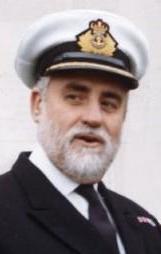
Captain Brian J Waters RFA
20 November 1990 Captain Peter Robinson RFA appointed as Commanding Officer
1 December 1990 lost her rudder in severe weather in the South Atlantic and sent out a distress call. Some of her crew were airlifted off and she managed to get to anchor seventeen miles east of Lively island to ride out the storm then towed by the tug Oil Mariner to Montevideo for repairs
1 March 1992 at Plymouth
18 April 1992 Humanitarian aid - along with the frigate HMS CAMPBELTOWN, she assisted the Panamanian-registered tanker WORLD HITACHI ZOSEN on fire after a collision off West Africa with the bulk carrier CLIPPER PIONEER
25 August 1992 at East Cove Military Port, Falkland Islands
15 April 1995 Captain Peter A Robinson RFA appointed as Commanding Officer

Captain Peter A Robinson RFA
11 October 1995 at Montevideo
13 March 1996 at the Falkland Islands
13 April 1996 put on standby off Liberia after breakdown in civil rule in that country
22 May 1996 Captain (E) Robert Settle RFA appointed as Chief Engineer Officer
16 October 1996 Humanitarian aid - rescued three St Vincent nationals adrift in an open boat
12 April 1998 at Buenos Aires
16 April 1998 at Falkland Islands
20 July 1998 sailed Montevideo for the East Cove, Falkland Islands
28 July 1998 berthed at East Cove, Falkland Islands
11 August 1998 sailed East Cove, Falkland Islands on patrol returning 14 August 1998
18 August 1998 sailed East Cove Main Jetty, Falkland Islands
20 August 1998 anchored off Bird Island, South Georgia
23 August 1998 arrived at Fortuna Bay, South Georgia
25 August 1998 sailed South Gerogia for the Falkland Islands
28 August 1998 berthed at the Ro-Ro Jetty, East Cove, Falkland Islands
31 August 1998 sailed the Ro-Ro Jetty, East Cove, Falkland Islands
2 September 1998 returned to the Ro-Ro Jetty, East Cove, Falkland Islands with Main Engine defect
9 September 1998 sailed the Ro-Ro Jetty, East Cove, Falkland Islands on patrol
12 September 1998 anchored in San Carlos Water, Falkland Islands
17 September 1998 berthed on the Ro-Ro Jetty, East Cove, Falkland Islands
22 September 1998 Captain Roger Robinson-Brown RFA appointed as Commanding Officer
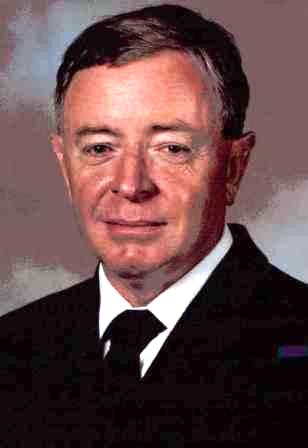
Captain Roger Robinson-Brown RFA
6 October 1998 anchored in Queen Charlotte Bay, Falkland Islands
9 October 1998 berthed at the Ro-Ro Jetty, East Cove, Falkland Islands
24 October 1998 made fast to Port William Buoy, Stanley, Falkland Islands
2 to 4 November 1998 Humanitarian aid - whilst supporting the frigate HMS SUTHERLAND she acted as a helicopter refuelling point off South Georgia during the evacuation of a seriously ill woman from the cruise liner EXPLORER
15 September 1999 sailed Mayport naval base to avoid Hurricane Floyd bearing down on the port.
18 January 2000 towed back to Plymouth by two RMAS tugs when she broke down off the Lizard Point.
15 February 2000 rescued trawler taking in water in the English Channel after pan pan alert from Brixham coast guard
28 May 2001 along with RFA’s TIDESPRING (1), SIR PERCIVALE and DILIGENCE she featured on a postage stamp issued by South Georgia and the South Sandwich Isles
13 November 2001 Humanitarian aid - rescued 4 crew from the yacht BON SOCOUR in the North Atlantic
23 February 2002 Captain Peter Farmer RFA appointed as Commanding Officer
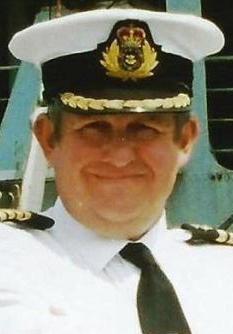
Captain Peter Farmer RFA
23 August 2002 to 26 August 2002 berthed Gibraltar
27 August 2002 Captain Roger Robinson-Brown RFA appointed as Commanding Officer
14 October 2002 to 20 December 2002 in refit
6 January 2003 at Plymouth
1 April 2003 in Plymouth Sound
4 April 2003 alongside at Devonport
16 May 2003 to 17 May 2003 berthed at Gibraltar
May 2003 visited Freetown, Sierra Leone
11 December 2003 visited Luanda, Angola with HMS GLASGOW for a courtesy call
28 March 2004 Captain Shaun Jones RFA appointed as Commanding Officer
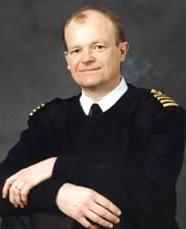
Captain Shaun Jones RFA
3 April 2004 at Port Stanley, Falkland Islands
20 May 2004 anchored off Ascension Island
22 May 2004 undertook a towing exercise (TOWEX) with HMS CARDIFF
13 June 2004 alongside at Montevideo, Uruguay
17 July 2004 at Port Stanley, Falkland Islands
29 September 2004 Captain Paul Kehoe RFA appointed Commanding Officer
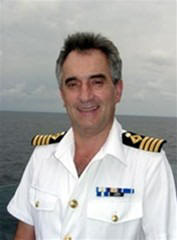
Captain Paul Kehoe RFA
29 March 2005 Captain (E) Robert J Smith RFA appointed as Chief Engineer Officer
11 April 2005 berthed at Devonport
3 July 2005 alongside on the River Tyne in refit
4 September 2005 alongside on the River Tyne in refit
28 November 2005 berthed at Devonport
December 2005 in company with the frigate HMS IRON DUKE, met up with solo yachtswoman Ellen MacArthur 2 degrees north of the equator on her yacht B & Q
13 April 2006 Captain (E) Robert J Smith RFA appointed as Chief Engineer Officer
1 June 2006 accompanied the frigate HMS CHATHAM to Lagos to mark the 50th Anniversary of the Nigerian Navy at their Fleet Reviewby President Obassango
28 June 2006 involved in exercises with Brazillian frigate BNS Bossio and HMS Liverpool off Brazil
29 July 2006 berthed alongside at Rio de Janeiro
6 October 2006 while supporting the frigate HMS ARGYLL in a multi-national operation off West Africa, intercepted mv STER 11 seized 1.8 tonnes of cocaine off the coast of West Africa worth an estimated £60 million
1 March 2007 Captain Anthony McNally RFA appointed as Commanding Officer until 10 July 2007
22 March 2007 Captain (E) Robert J Smith RFA appointed as Chief Engineer Officer
13 June 2007 with HRH Prince Edward embarked the Captain and a contingent of the crew attended a memorial service at Fitzroy, East Falkland to those killed on RFA SIR GALAHAD (1) and RFA SIR TRISTRAM during the Falklands War
8 July 2007 Captain (X) Paul B Minter RFA appointed as Commanding Officer
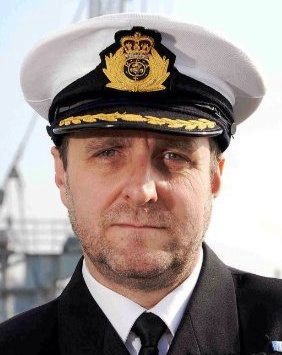
Captain (X) Paul Minter RFA
30 October 2007 arrived at Tristan da Cunha with HMS SOUTHAMPTON
19 November 2007 Captain Paul B Minter RFA, Commanding Officer of the Gold Rover presented a copy of 'No Sea to Rough' to the Governor of St. Helena
16 December 2007 arrived at Tristan da Cunha after having been tasked to urgently resupply drugs and medical stores to the island after 271 members of the islands population suffered a viral infection which depleted stocks to a dangerous level
13 March 2008 Captain (E) Robert J Smith RFA appointed as Chief Engineer Officer
17 April 2008 berthed at Gibraltar from Freetown
20 April 2008 Captain (X) Paul B Minter RFA appointed as Commanding Officer
21 April 2008 sailed Gibraltar for Portsmouth
4 November 2008 Captain (X) Paul B Minter RFA appointed as Commanding Officer
25 January 2009 alongside at Rio De Janeiro, Brazil
29 April 2009 visited the Island of St. Helena where wreaths were laid at the RFA Darkdale memorial on the Island's Cenotaph in the capital Jamestown
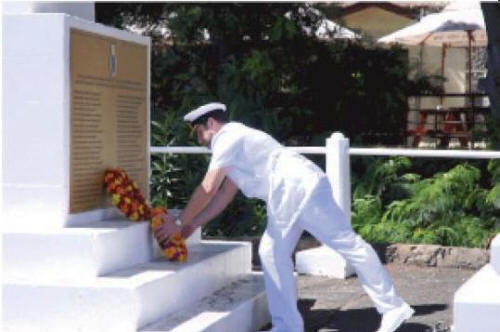
Captain Paul Minter RFA laying his wreath at the RFA Darkdale memorial
© The St. Helena Independent acknowledged
6 May 2009 South Atlantic - found yacht 'Sea Jade' reported long overdue enroute from St. Helena to Capte Town. As Falklands Island news service reported 'Found needle in field of haystacks'. Yacht was reported with faulty steering and damage to the rigging and had been believed to have been lost in very heavy weather until the successful search undertaken by Gold Rover
20 August 2009 Captain (E) Robert Settle RFA appointed as Chief Engineer Officer
14 October 2009 Captain (X) Paul B Minter RFA appointed as Commanding Officer
12 January 2010 berthed at East Cove Military Port, Falkland Islands with HMS YORK outboard
14 January 2010 sailed East Cove Military Port, Falkland Islands
30 January 2010 anchored off Jamestown, St. Helena
26 February 2010 berthed at Devonport
10 November 2010 berthed at Birkenhead
3 March 2011 Captain (X) Nigel Budd RFA appointed Commanding Officer
24 April 2011 joined Lyme Regis and Weymouth RNLI Lifeboats, Sidmouth Independent Lifeboat, Coastguard Rescue helicopters from Lee-on-Solent in the search for a missing diver reported to be a man aged 61 and from Bristol, was in an eight-strong group of visiting and local divers operating from a charter boat out of Lyme Regis. Not found - diver given up for dead
26 April 2011 entered Plymouth Sound
8 July 2011 berthed on Yonderberry Pier, Devonport
3 August 2011 Captain (X) Nigel Budd RFA appointed Commanding Officer
28 August 2011 alongside at Las Palmas
17 January 2012 Captain (X) David J Buck RFA appointed as Commanding Officer

Captain (X) David J Buck RFA
17 May 2012 Captain (X) Nigel Budd RFA appointed Commanding Officer
22 July 2012 at Simon's Town
13 November 2012 at East Cove, Falkland Islands
20 December 2012 berthed at Simon's Town, South Africa sailing on 18 January 2013
14 January 2013 Captain (X) Nigel Budd RFA appointed Commanding Officer
28 February 2013 at East Cove, Falkland Islands
17 April 2013 berthed at Abijan, Ivory Coast sailing again on 20 April 2013
28 April 2013 berthed at Luanda, Angola sailing again on 1 May 2013
5 May 2013 berthed at Walvis Bay sailing again on 8 May 2013
23 May 2013 berthed at Las Palmas, Canary Islands sailing again on 26 May 2013
31 May 2013 berthed at Devonport
25 June 2013 Captain (X) Nigel Budd RFA appointed Commanding Officer
28 June 2013 sailed Devonport to Liverpool arriving 1 July 2013
28 March 2014 at Birkenhead
13 April 2014 moved from No: 6 Dry Dock at Birkenhead to Transmere Basin
27 April 2014 arrived at Liverpool
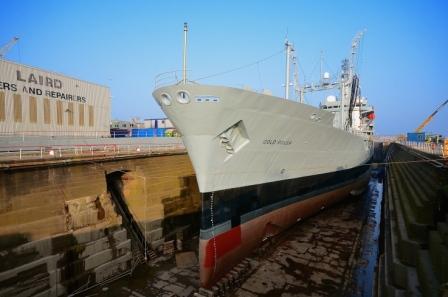
13 May 2014 sailed Liverpool after refit for Loch Striven
16 May 2014 having sailed from Loch Striven passing Cloch Point, Gourock
21 May 2014 sailed Glenmallen assisted by tugs SD Dependable and SD Resourceful to Falmouth Bay arriving the next day
23 May 2014 sailed Falmouth Bay to Portland
24 May 2014 at Portland
9 June 2014 sailed Portland
12 June 2014 berthed at Portland
14 June 2014 Captain Shaun P Jones OBE RFA appointed as Commanding Officer
16 June 2014 sailed Portland for Plymouth Sound
20 June 2014 arrived Plymouth Sound
30 June 2014 sailed Plymouth Sound
10 July 2014 RASed with USS Oscar Austin (DDG79)
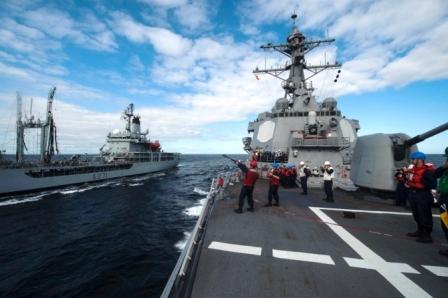
16 July 2014 RASed with RFA Wave Knight (2) in FOST Training Area

18 July 2014 berthed at Portland
11 August 2014 sailed Portland
13 August 2014 arrived at Plymouth Sound sailing the next day
18 August 2014 berthed at Loch Striven Oil Fuel Depot assisted by the tug SD Reliable
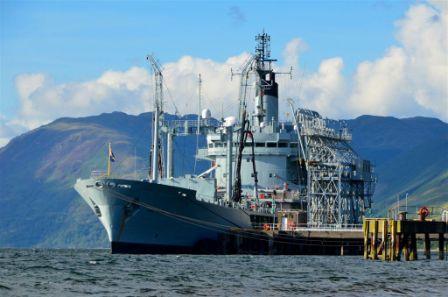

26 September 2014 berthed at Portland Harbour
12 October 2014 Captain (E) Nigel M Sim RFA appointed as Chief Engineer Officer

Captain (E) Nigel M Sim RFA
19 October 2014 berthed alongside at Portland Harbour
27 October 2014 sailed Portland Harbour
1 November 2014 in the North Atlantic in company with HMS DRAGON
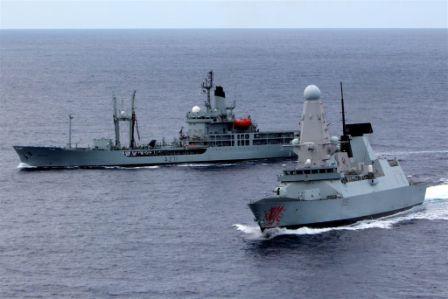
9 November 2014 berthed at Caracas Bay, Curacao
12 November 2014 sailed Caracas Bay, Curacao
14 November 2014 anchored off Colon, Republic of Panama
15 November 2014 transitted the Panama Canal
17 November 2014 berthed at Rodman, Balboa, Panama City
19 November 2014 sailed Balboa into the Pacific Ocean
27 November 2014 in the Pacific Ocean RAS'ed with HMS DRAGON
6 December 2014 Captain (X) Philip T Hanton RFA appointed as Commanding Officer
6 December 2014 at East Cove, Falkland Islands
15 December 2014 RAS'ed with HMS CLYDE
6 February 2015 berthed at Simons Town, South Africa
26 February 2015 sailed Simons Town, South Africa
4 March 2015 berthed in Cape Town, South Africa
13 March 2015 sailed Cape Town, South AFrica
19 March 2015 anchored in Cape Lopez Bay, off Port Gentil, Gabon
21 March 2015 sailed Cape Lopez Bay
4 April 2015 berthed at Dakar
6 April 2015 sailed Dakar
12 April 2015 berthed at Sao Vicente, Cape Verde Islands. Captain (X) Peter N Selby RFA appointed as Commanding Officer & Captain (E) Roger M Parnell RFA appointed as Chief Engineer Officer
14 April 2015 sailed Sao Vicente, Cape Verde Islands
4 May 2015 berthed in the outer basin of Simon's Town Dockyard, South Africa
25 May 2015 sailed Simon's Town Dockyard, South Africa
20 June 2015 berthed at Falkland Islands. Leading Hand (Cook) Thomas Logan discharged dead
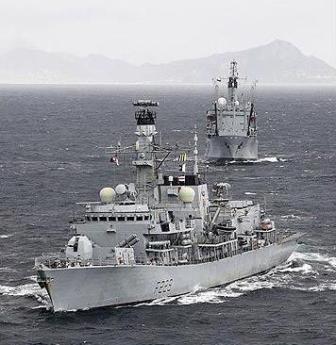
RFA Gold Rover and HMS Lancaster on exercises in the South Atlantic
10 July 2015 Captain (X) Richard Taylor RFA appointed as Commanding Officer
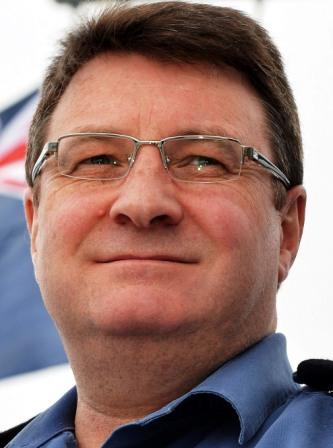
Captain (X) Richard Taylor RFA
13 August 2015 berthed at Simon's Town Dockyard, South Africa
2 September 2015 Captain (X) Peter N Selby RFA appointed as Commanding Officer
5 September 2015 at Simon's Town Dockyard, South Africa
8 September 2015 Captain (E) Martin J Stone RFA appointed as Chief Engineer Officer
14 September 2015 sailed Simon's Town, South Africa to engaged in exercises with RN and SA Naval units
23 September 2015 berthed Cape Town
28 September 2015 sailed Cape Town
4 October 2015 berthed at Lobito, Angola
8 October 2015 sailed from Lobito, Angola
13 October 2015 with HMS LANCASTER anchored off Jamestown, St Helena
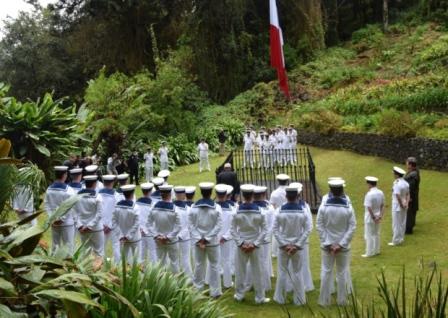
Some of crew of RFA Gold Rover and HMS Lancaster at Napoleon's empty tomb
15 October 2015 sailed Jamestown, St. Helena to Ascension Island
22 October 2015 arrived at Kortu-Gon, Tema, Ghana
25 October 2015 sailed Tema, Ghana
2 November 2015 berthed at Lome, Togo
5 November 2015 sailed from Lome, Togo
8 November 2015 RASed with HMS LANCASTER
12 November 2015 anchored off Ascension Island
18 November 2015 sailing off Florianopolis, Brazil
19 November 2015 berthed at Rio de Janerio, Brazil
1 December 2015 sailed Rio de Janerio, Brazil
11 December 2015 berthed at Simonstown, South Africa
7 February 2016 Captain (E) Peter R G Dear RFA appointed as Chief Engineer Officer
29 February 2016 sailed Simonstown, South Africa
6 March 2016 passed St. Helena
8 March 2016 anchored off Ascension Island
11 March 2016 sailed from Ascension Island
26 March 2016 berthed at Sekondi-Takoradi
30 March 2016 sailed Sekondi-Takoradi
8 April 2016 anchored off Georgetown, Ascension Island
12 April 2016 sailed from the anchorage off Georgetown, Ascension Island
17 April 2016 arrived off Georgetown, Ascension Island sailing later the same day
24 April 2016 off the coast of the State of Santa Catarina, Brazil
20 May 2016 arrived at Jamestown, St. Helena
30 May 2016 sailed the anchorage off Jamestown. St. Helena
6 June 2016 in the South Atlantic off the coast Brazil
7 June 2016 berthed at Rio de Janerio, Brazil. Captain (E) Martin J Stone RFA appointed as Chief Engineer Officer
13 June 2016 sailed from Rio de Janerio, Brazil
20 June 2016 arrived at Ascension Island
21 June 2016 sailed from Ascension Island
1 July 2016 berthed at Simonstown, South Africa
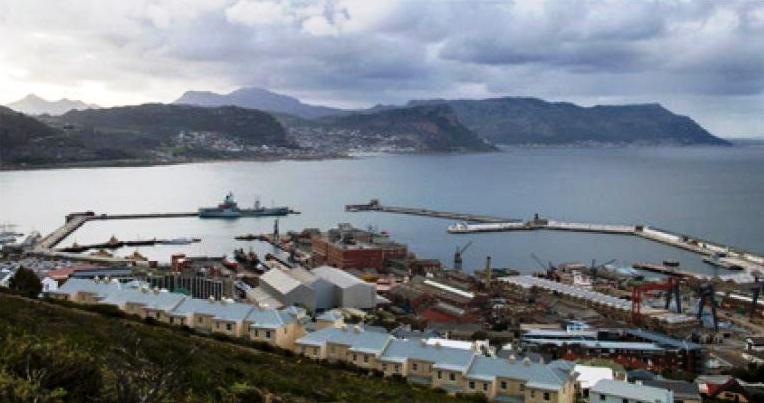
Simonstown Dockyard with RFA Gold Rover alongside - July 2016
© Mike Loverock
20 July 2016 Captain (X) Richard Taylor RFA appointed as Commanding Officer
8 August 2016 sailed Simonstown
15 August 2016 anchored off Ascension Island sailing later the same day
19 August 2016 berthed at Lomé, Togo. Captain (X) Richard Taylor RFA was invited to inspect a Guard from the Togo Navy
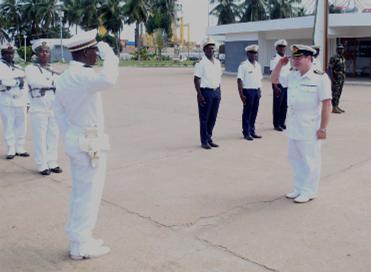
The ship's football team played a side from the Togo Navy and lost 3 goals to 1
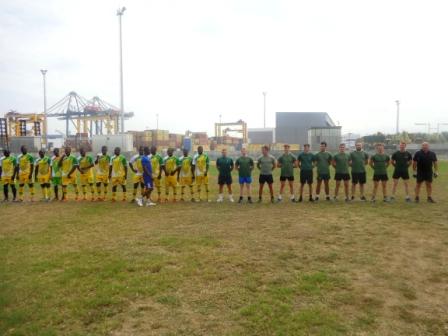
Togo Navy Football team & RFA Gold Rover's Football team
20 August 2016 sailed Lomé, Togo
23 August 2016 berthed at Tema, Ghana
25 August 2016 sailed from Tema, Ghana
30 August 2016 berthed at Lobito, Angola with a reception on board for senior members of the Angolan Naval, Army and Police, and His Excellency the Mayor of Lobito Senhor Alberto N’Gongo also attending
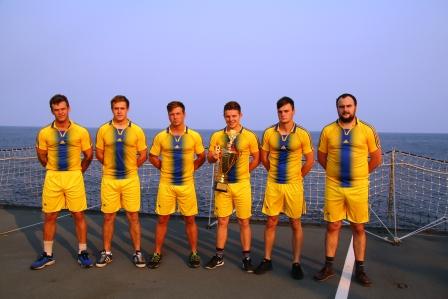
The ships 7-a-side football team with their winners trophy after playing an Angolan Naval team
2 September 2016 sailed Lobito, Angola
7 September 2016 berthed at Simontown Dockyard, South Africa
12 September 2016 the Captain and other ships Officers attended a Battle of Britain service at the Dockyard Church at Simonstown
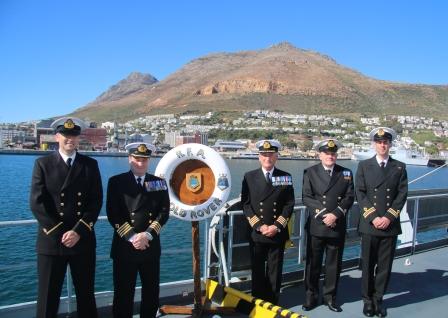
Captain & Ships Officers after attending the Battle of Britain Church Service at the Dockyard Church, Simonstown
7 October 2016 sailed from Simonstown
October 2016 deployed in support of a French Operation CORYMBE together with the FS Dixmude and Ivorian ship Sekongo
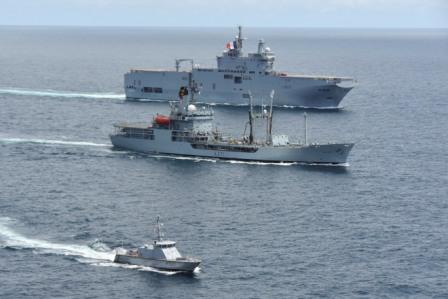
FS Dixmude, RFA Gold Rover and Ivorian ship Sekongo
19 October 2016 berthed at Abidjan, Ivory Coast. The Commanding Officer inspected a Ivorian Navy Guard of Honour and the ships football team lost 5-2 against the Ivorian Navy
21 October 2016 sailed from Abidjan, Ivory Coast
21 October 2016 and 22 October 2016 RAS approaches and dry hook ups with FS Dixmude
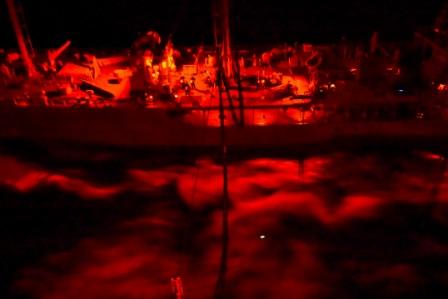
23 October 2016 RASed with FS Dixmude
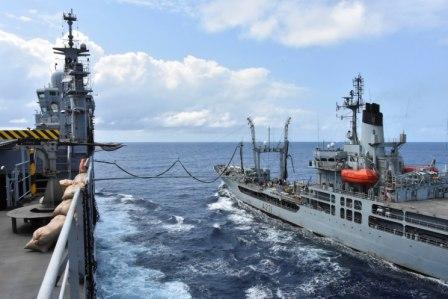
RFA Gold Rover and the French Naval Helicoper ship FS Dixmunde RAS off the coast of West Africa
1 November 2016 berthed at Simonstown Dockyard, South Africa
8 November 2016 sailed from Simonstown Dockyard, South Africa for the last time
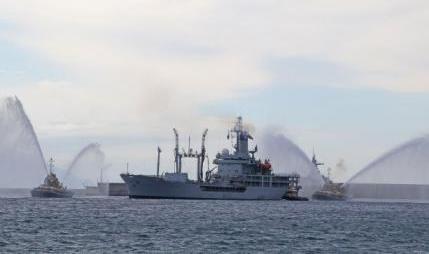
RFA Gold Rover sails from Simontown for the last time
24 November 2016 off Terra del Fuego
29 November 2016 together with HMS PORTLAND anchored off Valpariso, Chile. Captain Jonathan P Huxley RFA appointed as Commanding Officer
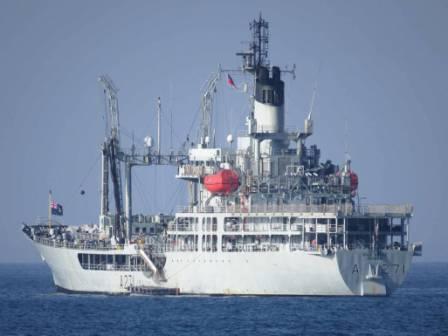
RFA Gold Rover at anchor off Valpariso, Chile
9 December 2016 off Punta Arenas
25 December 2016 at East Cove, Falkland Islands
14 January 2017 anchored off Edinburgh, Tristan da Cunha
15 January 2017 sailed from Tristan da Cunha
23 January 2017 berthed at Rio de Janeiro
27 January 2017 sailed from Rio de Janeiro
3 February 2017 arrived at Ascension Island
5 February 2017 RASed with HMS PORTLAND
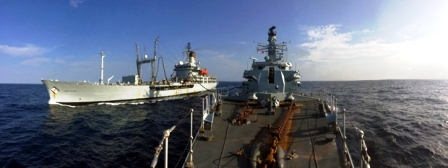
16 February 2017 berthed at Portland
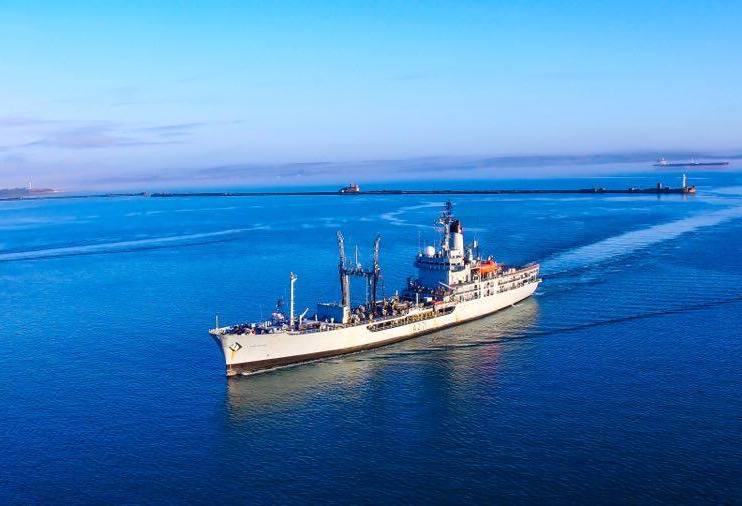
21 February 2017 sailed from Portland Harbour
22 February 2017 berthed at Portsmouth Dock Yard to pay off, destore and be laid up
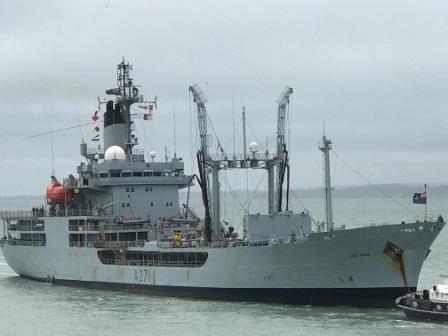
6 March 2017 End of Service Ceremony at Portsmouth Dockyard
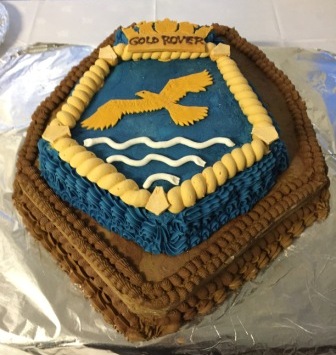
29 August 2017 The Defence Equipment Sales Authority (DESA) invited expressions of interest from companies interested in receiving an invitation to tender in respect to the proposed sale for the sole purpose of recycling of the former RFA ship Gold Rover (A271)
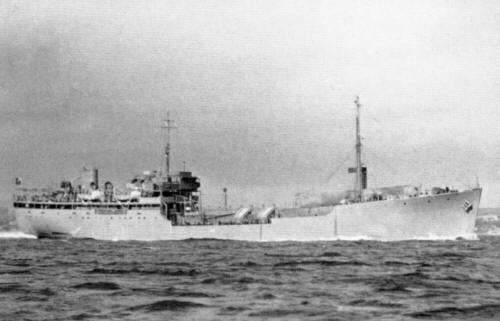
Official Number: 168210
Class: RANGER CLASS Fleet Attendant Oiler
Pennant No:
Laid down: 24 June 1940
Builder: Caledon Shipbuilding & Engineering Company, Dundee
Launched: 27 May 1941
Into Service: 25 September 1941
Out of service: 22 September 1942
Fate: Sunk
Items of historic interest involving this ship: -
Background Data: The six ships in this Class were designed in the mid -1930’s by Rowland Baker as replacements for the 2000t BELGOL CLASS and were the first Admiralty-designed tankers since the 1917 5000t FAST LEAF CLASS. As originally built, for camouflage purposes, they had canvas deckhouses, a dummy plate funnel forward, their foremast was on the starboard bow, the wheelhouse was offset to port, and in some cases their genuine funnel was cut low and was on the port quarter, fitted with a spark arrester. Originally armed with 1 x 4” LA, 1 x 12 pdr HA/LA and several Lewis guns, as the War progressed the armament fits altered and finally averaged 1 x 4” HA, 1 x 40mm Bofors and 4 x single 20mm Oerlikons. These vessels served extensively as Escort Tankers on the Russian Convoys, Norwegian coastal raids, Malta Convoys and with the British Pacific Fleet. Apart from GRAY RANGER,which became a War Loss, the Class had exceptionally long Service lives and were finally replaced by the ROVER CLASS
28 August 1939 ordered
24 June 1940 laid down
27 May 1941 launched by Caledon Shipbuilding Co Ltd, Dundee as Yard Nr: 390 named GRAY RANGER
11 July 1941 Mr David L S Hood RFA appointed as Chief Engineer Officer
22 August 1941 at London registered as GRAY RANGER under reference 179/41 in the Registry
1 September 1941 Captain Howard D Gausden RFA appointed as Master
The ship was fitted with special arrangements for OAS using captured German buoyant rubber hose and the new British self-rendering winch. The German equipment had been transferred from EMPIRE GARDEN the former German oiler GEDANIA which had been captured by the Ocean Boarding Vessel HMS MARSDALE on 4 June 1941 near Iceland. GEDANIA had been converted by the Kriegsmarine at St Nazaire to carry fuel and supplies to German commerce raiders in the Atlantic and to bring back prisoners taken from sunken ships
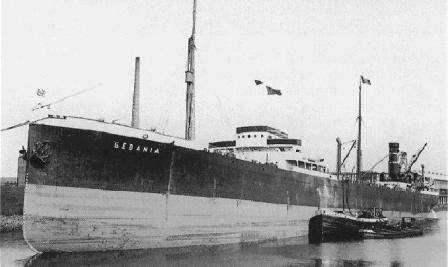
25 September 1941 completed. Joined the Fleet Fuelling Service
29 September 1941 sailed Dundee to Leith arriving the same day
1 October 1941 German OAS gear from the captured German fleet supply ship GEDANIA was transferred to her at Leith, together with a report of the rubber hose trials conducted in the Clyde area on 4 September
4 October 1941 sailed Leith to Rosyth arriving on the same day
7 October 1941 sailed Rosyth to Grangemeouth arriving the same day
7 October 1941 sailed Grangemouth to Rosyth arriving the same day
8 October 1941 sailed Rosyth to Methil Roads arriving the same day
10 October 1941 sailed Methil Roads to Scapa Flow arriving the same day
28 October 1941 conducted OAS trials with RFA EMPIRE SALVAGE
5 November 1941 at Scapa Flow Able Seaman Jos P Love logged and fined 5/- for assaulting the Bosun
21 December 1941 sailed Scapa Flow in company with the Belgian landing ship PRINS ALBERT to support Operation Anklet- the second Commando raid on the Lofoten Islands
22 December 1941 arrived Sullom Voe
23 December 1941 sailed Lerwick for Operation Anklet in company with the Belgian landing ship PRINS ALBERT escorted by HM destroyers ESKIMO and LAMERTON
28 December 1941 at Scapa Flow in collision with HMS ASHANTI while the warship was attempting to berth alongside starboard - both starboard lifeboats damaged and became unsericeable
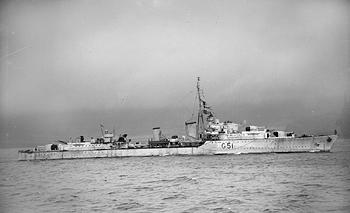
HMS ASHANTI
31 December 1941 conducted OAS trials with the destroyer HMS BEDOUIN using the captured German hose and reported satisfactory results
1 January 1942 arrived Scapa Flow on completion of Operation Anklet with RFA BLACK RANGER
7 February 1942 sailed Scapa Flow for Sullom Voe escorted by the escort destroyer HMS CHIDDINGFORD
6 March 1942 at Scapa Flow alongside HMS FROBISHER refuelling her - supplied 620 tons of FFO
20 March 1942 at Scapa Flow alongside HMS FROBISHER refuelling her - supplied 330 tons of FFO
10 April 1942 sailed Oban in convoy PQ15 initially to Reykjavik
13 April 1942 was damaged whilst going alongside the carrier HMS ILLUSTRIOUS
24 April 1942 sailed Scapa Flow under the escort of HMS LEDBURY
26 April 1942 sailed Reykjavik to join Convoy PQ 15 consisting of 25 merchantmen as Force Q along with the escorts HMS's ULSTER QUEEN, LEDBURY, STURGEON to Murmansk
29 April 1942 along with HMS's ULSTER QUEEN, LEDBURY, STURGEON joined convoy PQ 15
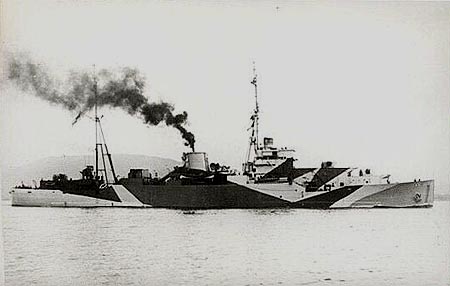
HMS ULSTER QUEEN
1 May 1942 detached from Convoy PQ 15 to join the homeward bound Convoy QP11
6 May 1952 detached to Lerwick with the escort destroyer HMS LEDBURY to replenish the diesel fuel stocks there
8 May 1942 arrived Lerwick with HMS's LEDBURY and VENEMOUS. HMS VENEMOUS berthed alongside and was oiled
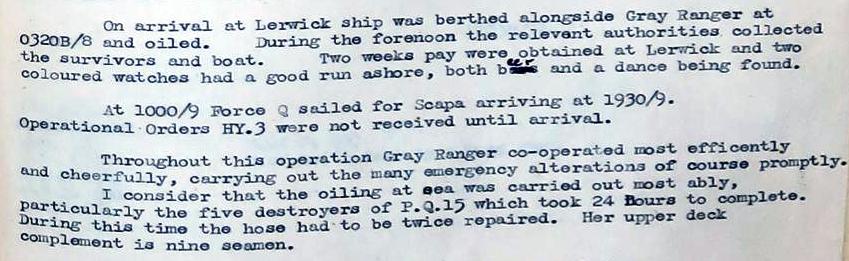
The CO of HMS Venemous' ROP reports on RFA Gray Ranger
9 May 1942 sailed Lerwick for Scapa Flow arriving later the same day - escorted by HMS LEDBURY
11 June 1942 exercised with USS WAINWRIGHT (DD419) RASing astern
23 June 1942 sailed Scapa Flow under the escort of HMS's HALCYON, BRITOMART, and SALAMANDER proceeded to Hvalfjord
26 June 1942 arrived at Hvalfjord with HMS's HALCYON, BRITOMART, and SALAMANDER
27 June 1942 sailed Reykjavik to Murmansk in convoy PQ17 consisting of 36 merchantmen along with RFA ALDERSDALE
29 June 1942 struck submerged ice floes which buckled her bows and flooded her fore peak. The cargo was shifted in order to raise the damaged part out of the water as far as possible. She was ordered to return to port, being replaced by RFA ALDERSDALE (which was later sunk, one of the 24 ships lost in total)
2 July 1942 joined Convoy QP13 consisting of 35 merchantmen as Force Q along with the destroyer HMS DOUGLAS
6 July 1942 at 71º 23N 3º07W RASed with HMS LEAMINGTON and other destroyers
9 July 1942 arrived Scapa Flow. Donkeyman Greaser W G Bell was logged for using insulting and contemptuous language to the Chief Officer Mr W Holt - he was fined 5/-. Donkeyman Greaser J Paterson was logged for using insulting and contemptuous language to the Chief Officer Mr W Holt - he also was fined 5/-
14 July 1942 at Scapa Flow alongside HMS KING GEORGE V refuelling her
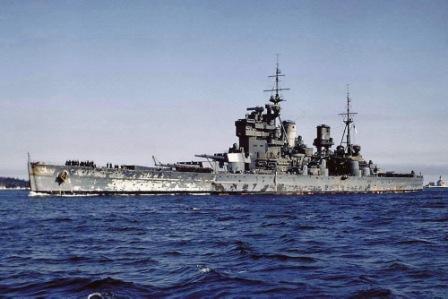
HMS KING GEORGE V
17 July 1942 at Scapa Flow alongside HMS KING GEORGE V refuelling her
21 July 1942 sailed Loch Ewe to Methil in convoy WN312 arriving 23 July 1942. RFA WAR BHARATA was in the same convoy.
23 July 1942 sailed Methil to the River Tyne arriving the next day
25 July 1942 repairs commenced. Donkeyman Greaser N Forsyth was logged for being stoke hold watch keeper from midnight until 0400hrs and was found asleep on deck at 0130hrs in a state of intoxication. He was fined 5/-.
28 July 1942 Donkeyman Greaser N Forsyth was logged for being stoke hold watch keeper from midnight until 0400hrs on 26 July 1942 left the ship at 18.30hrs on 25 July 1942 and did not return until 14.00hrs on 27 July 1942. He was fined 5/-
16 August 1942 repairs completed
17 August 1942 sailed the River Tyne to Methil in convoy FN787 arriving the next day
19 August 1942 sailed Methil to Loch Ewe in convoy EN126 arriving 21 August 1942
25 August 1942 arrived Newcastle for repairs having struck an iceberg while part of Convoy PQ17.
2 September 1942 sailed Loch Ewe to Archangel in convoy PQ18 as escort oiler with RFA BLACK RANGER and RFA OLIGARTH
13 September 1942 sailed Archangel as escort oiler in convoy QP14 together with RFA BLACK RANGER and RFA OLIGARTH
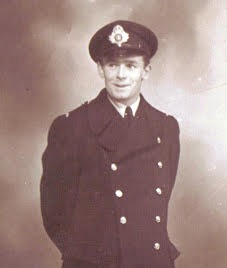
22 September 1942 torpedoed and sunk at approximately 70N 11W by the German submarine U435 (Kapitänleutnant Siegfried Strelow) while part of Convoy QP14. Six of the crew were killed - their details are shown in the Roll of Honour for 1942 - they are also all remembered with pride on the Tower Hill Memorial. 2nd Radio Officer Frank E Burtenshaw RFA is also remembered with pride on the Abergwili War Memorial, Carmarthen. Engineer Officer Ronald McLeod RFA is also remembered with pride on a memorial in Dundee (Balgay) Cemetery.
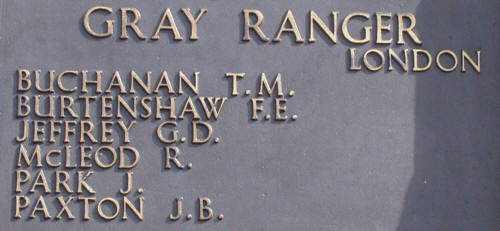
The Tower Hill Memorial
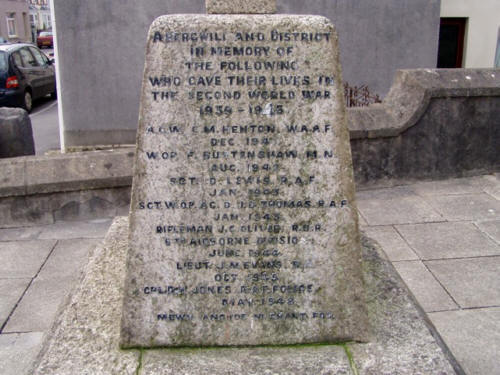
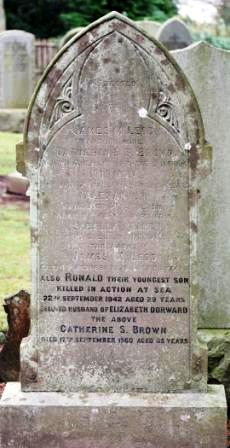
Thirty three survivors from RFA Gray Ranger were rescued by the Convoy Rescue Ship Rathlin. Rathin's success of rescuing sailors from sunken ships during this convoy resulted in 210 survivors being taken on board. The rescue ships crew of 71 (plus one dog) resulted in food shortages. Permission was given for Rathlin and another convoy rescue ship Zamalek to leave the convoy and sail under escort to Iceland. They arrived at Seidisfjord late on the 23 September 1942
26 September 1942 the survivors were finally landed at Gourock
1 December 1942 in the London Gazette of this day Captain Howard D Gausden RFA was awarded the Distinguished Service Order for services during North Russian Convoy PQ18 in September 1942
16 February 1943 in the London Gazette of this day Chief Officer William Ronald Holt RFA and Chief Engineer Officer David Lindley Smith Hood RFA were both awarded Distinguished Service Cross' and Boatswain James Lawson was awarded the Distinuished Service Medal for services during Operation EV covering North Russian Convoys PQ18 and QP14 in September 1942
27 July 1943 in the London Gazette of this day Petty Officer George Alfred Bright P/JX165000 was awarded the Distinuished Service Medal for services during North Russian Convoys PQ15 and QP14 in September 1942
Notes:
She was sunk within minutes of the American freighter BELLINGHAM and the British ship OCEAN VOICE which was carrying the Convoy Commodore.


Official Number: 168231
Class: RANGER CLASS Fleet Attendant Oiler
Pennant No: X 42 / B 515 / A 152
Laid down: 23 September 1940
Builder: Caledon, Dundee
Launched: 22 August 1941
Into Service: 4 December 1941
Out of service:
Fate: 18 November 1962 ran aground when under tow - total loss.
Items of historic interest involving this ship: -
Background Data: The six ships in this Class were designed in the mid -1930’s by Rowland Baker as replacements for the 2000t BELGOL CLASSand were the first Admiralty-designed tankers since the 1917 5000t FAST LEAF CLASS. As originally built, for camouflage purposes, they had canvas deckhouses, a dummy plate funnel forward, their foremast was on the starboard bow, the wheelhouse was offset to port, and in some cases their genuine funnel was cut low and was on the port quarter, fitted with a spark arrester. Originally armed with 1 x 4” LA, 1 x 12 pdr HA/LA and several Lewis guns, as the War progressed the armament fits altered and finally averaged 1 x 4” HA, 1 x 40mm Bofors and 4 x single 20mm Oerlikons. These vessels served extensively as Escort Tankers on the Russian Convoys, Norwegian coastal raids, Malta Convoys and with the British Pacific Fleet. Apart from GRAY RANGER which became a War Loss, the Class had exceptionally long Service lives and were finally replaced by the ROVER CLASS
28 August 1939 ordered
23 September 1940 laid down
21 August 1941 launched by Caledon Shipbuilding Co Ltd, Dundee as Yard Nr: 391 named GREEN RANGER
27 August 1941 at London registered as GREEN RANGER with a reference 207/41 in the Registry
24 October 1941 Mr J J Moore RFA appointed as Chief Engineer Officer
November 1941 Captain Horace W Taylor RFA appointed as Master
4 December 1941 completed and joined the Fleet Fuelling Service as an Aviation Spirit Carrier. She was the Navy’s first large spirit carrier with white oil. She spent many years out East, based firstly at Mombasa
20 February 1942 scheduled to sail from Methil in escorted convoy EN49 to Oban but did not sail
23 February 1942 sailed Oban in escorted convoy OS20 to Freetown arriving 12 March 1942
15 May 1942 sailed Cape Town independently to Mombasa arriving 27 May 1942
18 July 1942 sailed Freetown independently to Takoradi arriving 24 July 1942
25 July 1942 sailed Takoradi independently to Lagos arriving 26 July 1942
12 August 1942 sailed Lagos independently to Cape Town arriving 23 August 1942
9 September 1942 sailed Cape Town independently to Mombasa arriving 21 September 1942
1 November 1942 24 of her Ratings, along with 29 Ratings from RFA EAGLESDALE and 1 Officer from RFA ARNDALE were being repatriated to the UK aboard the MOWT troopship ss MENDOZA when she was torpedoed and sunk by the German submarine U-178 70 miles ENE of Durban in position 29°13 S 32°13 E whilst sailing independently from Mombasa to Durban - one of the Green Ranger's crew - Able Seaman Sydney David Fawns Cochrane discharged dead. He is remembered with pride on the Tower Hill Memorial

17 January 1943 as reported in the Admiralty War Diary of this date Green Ranger was to be converted from a spirit tanker to carry fuel oil. It was directed she sail to Bombay with a full load of aviation spirit for a refit, docking and the conversion work as it was not possible to undertake the work at Kilindini
1 February 1943 sailed Kilindini independently arriving Addu Atoll arriving 11 February 1943
14 February 1943 sailed Addu Atoll in escorted convoy A3 to Colombo arriving 18 February 1943
19 February 1943 sailed Colombo independently to Trincomalee arriving on 21 February 1943
28 February 1943 sailed Trincomalee independently to Colombo arriving on 1 March 1943
2 March 1943 sailed Colombo in escorted convoy MB27 to Bombay arriving 6 March 1943
19 March 1943 sailed Colombo independently to Trincomalee arriving 20 March 1943
15 April 1943 sailed Bombay independently to Bandar Abbas arriving 20 April 1943
21 April 1943 sailed Banda Abbas independently to Abadan arriving 23 April 1943
24 April 1943 sailed Abadan
28 April 1943 sailed Bandar Abbas in convoy PA35 to Aden arriving 6 May 1943
6 May 1943 sailed Aden independently to Suez arriving 10 May 1943
12 May 1943 arrived and then sailed Port Said independently to Alexandria arriving 14 May 1943
15 May 1943 sailed Alexandria in convoy MW28 to Malta arriving 21 May 1943
20 May 1943 in Operation Husky - Naval Operation Orders dated this day - Appendix 1 - shows GREEN RANGER would be based at Malta together with RFA BROWN RANGER to provide Furnace Fuel Oil and part stowage for 100 octane spirit
3 June 1943 sailed Alexandria in convoy XTG1 to Sousse arriving 10 June 1943
13 September 1943 refueled Italian Battleships "Italia" and "Vittorio Veneto" at Mersa Sarobh prior to them sailing to Alexandria
14 October 1943 Captain George S Perry RFA appointed as Master

Captain George S Perry RFA
25 November 1943 in dry dock No 5 at French Creek, Malta
26 November 1943 Captain Horace W Taylor RFA discharged dead. He was cremated at Golders Green Crematorium
18 December 1943 sailed Malta in escorted convoy UGS25 to Port Said arriving 21 December 1943
7 January 1944 sailed Abadan independently to Colombo arriving 16 January 1944
16 January 1944 sailed Colombo independently to Trincomalee arriving the next day
18 January 1944 C in C East Indies reported by signal to the Admiralty that Green Ranger had many defects and was unsuitable to join the British Pacific Fleet until she had a refit and was provided with modern oiling at sea gear. He intended to arrange for the ship to undergo a refit at Bombay which could last two months
3 March 1944 at Trincomalee Harbour, Ceylon alongside HMS QUEEN ELIZABETH refuelling her
7 April 1944 at Trincomalee Harbour, Ceylon USS Fanning (DD385) alongside to refuel

USS FANNING (DD385)
4 November 1944 Mr William E Burke RFA appointed as Chief Engineer Officer
25 November 1944 sailed Trincomalee independently arriving the next day
10 December 1944 sailed Colombo independently to Trincomalee 12 December 1944
1 February 1945 sailed Trincomalee independently to Bombay arriving 6 February 1945
February/March/April 1945 undergoing repairs at Bombay
16 April 1945 sailed Bombay independently to Colombo arriving 19 April 1945
26 April 1945 sailed Colombo independently to Darwin towing HMS BARBAIN arriving 15 May 1945. She was directed on arrival off Darwin to slip HMS BARBAIN to allow her to enter harbour under her own steam. It was estimated their SOA would be 10kts - details from the Admiralty War Diary
18 May 1945 sailed Darwin independently to Manus arriving 24 May 1945
1 July 1945 at Manus in harbour with RFA RAPIDOL
11 July 1945 at Seeadler Harbour, Admiralty Islands HMAS BURNIE alongside for replenishment of water
HMAS BURNIE
1 August 1945 at Manus in harbour with RFA BACCHUS (2), RFA BROWN RANGER, RFA RAPIDOL, with RFA WAVE MONARCH
August 1945 was attached to the British Pacific Fleet along with RFA’s ARNDALE, BACCHUS (2), BISHOPDALE, BROWN RANGER, CEDARDALE, DINGLEDALE, EASEDALE, EMPIRE SALVAGE, RAPIDOL, SERBOL, WAVE EMPEROR, WAVE GOVERNOR, WAVE KING, WAVE MONARCH and HMS (later RFA) OLNA (2)
30 August 1945 sailed Manus independently to Hong Kong arriving on 9 September 1945
13 October 1945 arrived Manus
17 November 1945 Captain Robert D Almond RFA (Lieutenant Commander RNR) appointed as Master. Remained in command until 9 March 1946

Captain Robert D Almond RFA
14 February 1946 arrived at Dreger (Papua New Guinea)
22 Febbruary 1946 sailed Dreger (Papua New Guinea) to Port Moresby arriving 24 February 1946
26 March 1946 arrived Bombay from Port Moresby
4 April 1946 sailed Bombay to Abadan arriving 8 April 1946
29 April 1946 passed Gibraltar sailing west bound
12 June 1946 Captain Ernest W J Rousell RFA appointed as Master

23 August 1946 Mr D S Wood RFA appointed as Chief Engineer Officer
24 September 1946 was accidentally struck by a torpedo fitted with a dummy warhead in Portland Harbour
27 September 1946 the Hampshire Telegraph reported ...

25 October 1947 Mr A B Tate RFA appointed as Chief Engineer Officer
31 October 1947 Captain Edward E A Le Sage RFA appointed as Master

21 September 1948 arrived at Singapore
4 August 1949 Mr Harry F Duce DSC RFA appointed as Chief Engineer Officer
Chief Engineer Officer Harry F Duce DSC RFA
7 October 1949 the Straits Times of Singapore reported -

9 February 1950 Captain E Payne RFA appointed as Master
25 June 1950 to the 27 July 1953 saw service during the Korean War along with 18 other RFA’s and was awarded the Korea 1951-52 Battle Honour. Became part of the British Fleet Train as part of the U.S. 7th Fleet and formed Task Force 77 based at Sassebo
6 July 1950 refuelled HMS TRIUMPH at Okinawa, Japan along with RFA FORT CONSTANTINE which supplied the aircraft carrier with stores

HMS TRIUMPH
6 January 1951 Mr J G Simpson RFA appointed as Chief Engineer Officer
12 March 1951 at Sasebo, Japan moored alongside USS Orleck (DD 886) refuelling her - the US ships log shows she received 150,472 gallons of fuel oil

USS Orleck (DD 886)
13 June 1951 received contaminated AVGAS fuel off loaded from HMS GLORY which had come from RFA WAVE PREMIER
27 June 1951 refuelled HMS GLORY
25 September 1951 at Kure, Japan berthed alongside HMS OCEAN and refuelled her
14 October 1951 at Inchon together with RFA WAVE PREMIER refuelled RN warships including HMS THESEUS
29 October 1951 escorted to the west coast of Korea by HMAS MURCHISON
2 November 1951 off Mogudeki Island with HMAS MURCHISON alongside being refuelled
18 November 1951 at Sasebo, Japan Assistant Steward Ng Tsui Chung discharged dead from natural causes while being treated on RFA Maine (4)
23 November 1951 at Fox Anchorage refuelled USS Edmonds alongside
29 February 1952 Captain Frederick G Evans RFA appointed as Master
18 March 1952 refuelled HMS GLORY
5 April 1952 refuelled HMS GLORY
20 May 1952 in the London Gazette of this day on page 2788 Captain Eric Payne RFA was awarded a 'Mention in Dispatches'
25 September 1952 at Kure, Japan refuelled HMS OCEAN alongside
14 October 1952 at Sasebo, Japan refuelled HMS OCEAN with AVGAS alongside
October 1952 at Sasebo, Japan the Masters and Officers of RFA's WAVE SOVEREIGN and GREEN RANGER and the then MFA FORT LANGLEY received an RPC from the Wardroom of HMS OCEAN
Awarded the Battle Honour Korea
11 June 1953 at Kure, Japan with HMAS CULGOA berthed alongside and refuelled
18 August 1953 at Kure, Japan with HMAS CULGOA berthed alongside and refuelled
7 September 1953 Mr Harry F Duce DSC RFA appointed as Chief Engineer Officer
5 November 1953 at Kure, Japan with HMAS CULGOA berthed alongside and being refuelled
6 November 1953 at Kure, Japan HMAS CULGOA slipped
11 December 1953 Captain Hubert G Carkeet RFA appointed Master
13 January 1954 at Taedong Do HMAS MURCHISON berthed alongside and was refuelled
11 February 1954 at Taedong Do HMAS MURCHISON berthed alongside and was refuelled
19 February 1954 at Taedong Do HMAS MURCHISON berthed alongside and was refuelled
15 March 1954 at Taedong Do HMAS MURCHISON berthed alongside and was refuelled
4 June 1954 arrived at Malta while on passage from the Far East to the UK flying a paying off pennant
16 June 1954 berthed at Immingham from Gibraltar
31 August 1954 passed the Lloyds SIgnal Station at Dover sailing west bound
28 November 1954 Mr George Bray RFA appointed as Chief Engineer Officer

Chief Engineer Officer George Bray RFA (image taken in 1918)
February 1955 Captain A H Mackenzie RFA appointed as Master
8 September 1955 arrived at Immingham from Hamburg
22 September 1955 Captain Frank S Samson RFA appointed Master

Captain Frank S Samson RFA
29 November 1955 sailed Malta with RFA BLUE RANGER and HMS ARK ROYAL for Toulon
8 December 1955 arrived at Malta with RFA BLUE RANGER and HMS ARK ROYAL from Toulon
5 March 1956 Captain Henry O L'Estrange DSC RD RFA (Commander RNR) appointed as Master and Mr J Ross RFA appointed as Chief Engineer Officer
31 July 1956 was chartered for supplying fuel to US and Canadian Arctic stations accompanied by the ice breaker D'Iberville
13 June 1957 passed the Lloyds Signal Station on Flamborough Head sailing south bound for Shell Haven
26 July 1957 arrived at Sheerness
31 July 1957 in collision with the Norwegian BUCCANEER in fog off Beachy Head, but managed to reach Southampton safely
6 September 1957 Captain George Robson RFA appointed as Master
12 September 1957 Mr E Smeaton RFA appointed as Chief Engineer Officer
18 September 1957 sailed Southampton for Christmas Island
24 September 1957 put into the River Tagus, Lisbon with engine trouble
1957 to 1958 supported Operation Grapple - the British H-bomb test at Christmas Island in the Pacific Ocean - along with 16 other RFA’s
18 September 1957 deployed on Operation Grapple carrying 125 tons 18.25 cwt of cargo to Chrismas Island
14 April 1958 RASed with HMS CARDIGAN BAY while she was on passage from Hong Kong to Bankok
17 April 1958 RAS'ed with HMS St. BRIDES BAY while the RN ship was on passage between Hong Kong and Sasebo
1958 to 1962 laid up in Operational Reserve at Devonport
18 November 1962 whilst on her way from Reserve to refit at Cardiff in tow of the tug CASWELL in a Force 8 gale, the tow broke and was blown ashore off Mansley Cliff, North Devon. Her Crew of 7 were rescued by breeches buoy


8 December 1962 she broke in two overnight and became a total loss

Notes:
1. Was part of the British Pacific Fleet Train - hence the B-pennant number
2. The Minister of Transport’s Shield was awarded to the Hartland (Devon) Lifesaving Apparatus Co for affording the best wreck service in 1962/63
Reproduced with permission of the MOD

Subsequent name: KRI Arun
Official Number: 337864
Class: ROVER CLASS Small Fleet Tanker
Pennant No: A268 / 903
Laid down: 28 February 1968
Builder: Swan Hunter, Hebburn on Tyne
Launched: 19 December 1968
Into Service: 15 August 1969
Out of service: 1992
Fate: In service with Indonesian Navy as 'KRI Arun'
Items of historic interest involving this ship: -
Background Data: In 1967, tenders were invited for what eventually turned out to be five ships in this Class. Owing to unsatisfactory performance from the original engines, which had been a political decision, the first three ships in the Class were re-engined in 1974. The final two ships differed slightly from the earlier three and had improved accommodation standards and different stern anchor arrangements.
January 1968 ordered
28 February 1968 laid down
19 December 1968 launched by Swan Hunter Shipbuilders Ltd, Hebburn as Yard Nr: 6 named GREEN ROVER. The Lady Sponsor was Mrs R.H. Shipway, the wife of the Director of Fuel, Movements & Transport (Naval)
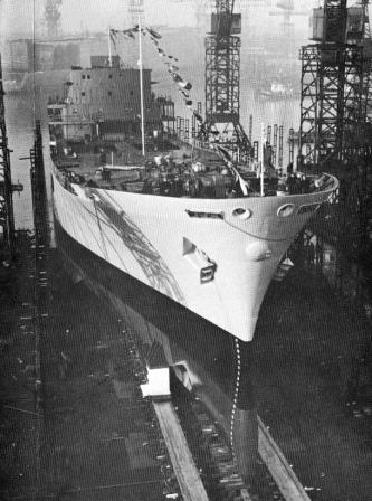
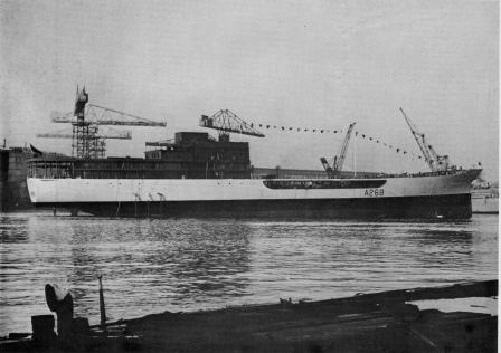
March 1969 Captain Archibald Proudlock RFA appointed as Master and Mr R Cann RFA appointed as Chief Engineer Officer
9 July 1969 her Ship’s Badge was officially presented to her
15 August 1969 completed at a cost of £3m
16 August 1969 was accepted from the builders. 2 months ahead of the original planned date
17 August 1969 sailed from the Tyne after acceptance from the builders and proceeded to Chatham for Navy Days there
31 August 1969 to 1 September 1969 at Chatham Dockyard open to the public during Navy Days. 13,371 members of the public visited the ship
September 1969 towed the disabled RFA APPLELEAF (2) from the North Atlantic to Devonport where she underwent extended repairs
1 January 1970 at Portsmouth
12 January 1970 sailed Portsmouth to the Great Nore and anchored
13 January 1970 sailed from her anchorage at the Great Nore to the Isle of Grain
14 January 1970 at the Isle of Grain loaded 4,691 tons of diesol as cargo then sailed the same day to Gosport Oil Fuel Jetty
15 January 1970 at Gosport Oil Fuel Jetty loaded 2,675 tons of diesol and 2,460 tons of FFO
19 January 1970 sailed Gosport Oil Fuel Jetty to Portland and secured to A3 buoy
20 January 1970 to 22 January 1970 engaged in exercises with RN ships in the Portland Exercise Area
23 January 1970 sailed Portland to Spithead anchorage
24 January 1970 berthed at Gosport Oil Fuel Jetty from Spithead anchorage
27 January 1970 sailed Gosport Oil Fuel Jetty to Spithead anchorage
28 January 1970 berthed at Gosport Oil Fuel Jetty from Spithead anchorage
2 February 1970 sailed Gosport Oil Fuel Jetty to alongside at Portland
3 February 1970 alongside at Portland with RFA BLACK RANGER berthed alongside
4 February 1970 to 26 February 1970 day sailing to the Portland Exercise area
26 February 1970 anchored at Spithead
27 February 1970 entered Portsmouth Harbour - No 1 berth at Fountain Lake
5 March 1970 moved to alongside RFA TIDEFLOW on Gosport Oil Fuel Jetty. Loaded 2,577 tons of FFO and sailed
8 March 1970 berthed at Gibraltar on berths 47/48 on the South Mole
11 March 1970 sailed Gibraltar
13 March 1970 entered French Creek, Malta berthed starboard side to on Canteen Wharf
16 March 1970 sailed Malta for Augusta
17 March 1970 loaded cargo at Augusta
18 March 1970 sailed Augusta
20 March 1970 passed Gibraltar
23 March 1970 anchored at Spithead
24 March 1970 berthed alongside Gosport Oil Jetty
10 April 1970 sailed Gosport Oil Fuel Jetty
12 April 1970 berthed at No: 6 Berth, Faslane
14 April 1970 sailed Faslane to Belfast Lough arriving the same day
15 April 1970 sailed Belfast Lough
17 April 1970 to 24 April 1970 engaged in exercises in the Cromarty Firth
25 April 1970 berthed at Aarhus - 7 basin
28 April 1970 sailed Aarhus to Rosyth
30 April 1970 berthed at Rosyth Dockyard - south arm
6 May 1970 sailed Rosyth to Tayport returning to Rosyth the next day
8 May 1970 sailed Rosyth to Sunderland
9 May 1970 berthed at Hudson Dock, Sunderland to back up the Sunderland Careers Exhibition
15 May 1970 sailed Sunderland to Portland
16 May 1970 arrived at Portland
17 May 1970 engaged in day sailing in the Portland Exercise area until 5 June 1970
5 June 1970 sailed Portland to Gibraltar arriving 7 June 1970 berthing on the South Arm of the Dockyard in No: 47 berth
18 June 1970 sailed Gibraltar
21 June 1970 berthed on A3 buoy, Portland Harbour
22 June 1970 to 25 June 1970 engaged in day sailing in the Portland Exercise area
26 June 1970 sailed Portland to Gosport Oil Fuel Jetty
30 June 1970 sailed Gosport Oil Fuel Jetty to A3 buoy, Portland Harbour
8 December 1970 berthed at Simonstown Dockyard, South Africa
4 April 1971 RASed with HMAS SYDNEY while she was on passage from Australia to Vung Tau, Vietnam
12 September 1971 carried out deck landing trials with the new Harrier Jump Jet while Green Rover was moored at Greenwich Pier
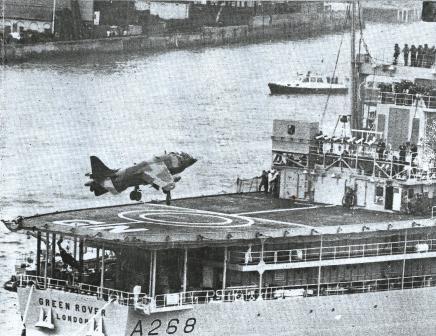
December 1971 visited Jamestown, St. Helena
19 February 1972 R/V'ed with HMS MIVERVA
20 June 1973 deployed in support of RN units off Iceland during 2nd Cod War until 25 June 1973
29 June 1973 deployed in support of RN units off Iceland during 2nd Cod War until 4 July 1973
8 July 1973 deployed in support of RN units off Iceland during 2nd Cod War until 11 July 1973
27 July 1973 deployed in support of RN units off Iceland during 2nd Cod War until 30 July 1973
4 August 1973 deployed in support of RN units off Iceland during 2nd Cod War until 9 August 1973
14 August 1973 deployed in support of RN units off Iceland during 2nd Cod War until 19 August 1973
26 August 1973 deployed in support of RN units off Iceland during 2nd Cod War until 2 September 1973
6 September 1973 deployed in support of RN units off Iceland during 2nd Cod War until 14 September 1973
19 September 1973 deployed in support of RN units off Iceland during 2nd Cod War until 22 September 1973
December 1973 re-engined with 2 x 16 cyl Pielstick 400 x 460mm diesel engines by Crossley Premier Engines Ltd, Manchester. 15360 bhp. Speed now 19½ knots
17 September 1974 along with RFA’s OLNA (3) and STROMNESS, sailed Portsmouth as part of TaskGroup 317.2 led by the helicopter cruiser HMS BLAKE
29 March 1975 to 26 April 1975 humanitarian aid - was part of Operation Stellaalong with the frigate HMS LOWESTOFT - the evacuation of refugees from Vietnam
24 November 1975 to 1 June 1976 provided support during the Third Cod War - the Fishing Dispute with Iceland
14 April 1976 at Faslane
11 October 1976 at Loch Striven
25 January 1977 Along with RFA’s STROMNESS and TIDEPOOL sailed Devonport as part of Task Group 317.5 led by the helicopter cruiser HMS TIGER
31 May 1977 at Chatham Dockyard
31 May 1978 along with RFA’s STROMNESS and TIDESPRING sailed Portsmouth as part of Task Group 317.7 led by the helicopter cruiser HMS BLAKE
5 July 1978 to 7 July 1978 With the frigate HMS JUNO was present off the Virgin Islands owing to internal security problems
19 April 1980 to 21 April 1980 at Portland berthed outboard of RFA BRAMBLELEAF (3)
7 August 1980 to 12 August 1980 involved with the frigate HMS SCYLLA off Cayman Islands providing humantarian relief in the wake of Hurricane Allen
18 February 1981 at North Shields
22 August 1981 at Chatham Dockyard
1982 was one of the very few RFA vessels which did not see service during the Falklands Conflict
16 May 1985 the Greek Government refused permission for Green Rover to use refueling facilities at Souda Bay, Crete while the ship was taking part in a NATO Exercise 'Distant Hammer'. The Greek Government was boycotting the NATO Exercise. The ship was deployed to Izmir, Turkey instead
18 August 1985 transferred 1350 gallons of fuel to Richard Branson’s VIRGIN ATLANTIC CHALLENGER during its Blue Riband attempt. Unfortunately the 32-ton vessel overturned just 140 miles (224km) short of its target, the Isles of Scilly off Cornwall and sank just 4 hours later without completing its Atlantic crossing
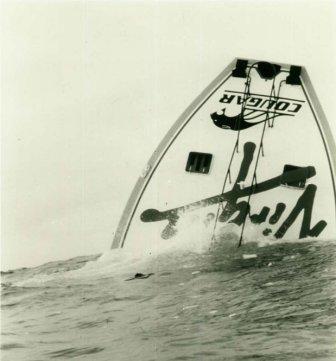
12 March 1987 Mr Robert Settle RFA appointed Chief Engineer Officer
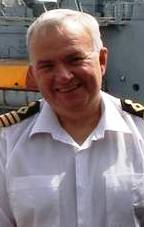
Chief Engineer Officer Robert Settle RFA
September 1987 sailed Portsmouth Harbour
19 May 1988 entered Portsmouth Harbour
27 May 1988 placed in reserve on 30 days notice and was laid up in No 3 Basin
7 April 1992 purchased by her builders who then resold her to the Indonesian Navy for £6m
9 April 1992 was towed from Portsmouth to the Tyne renamed C to be taken in hand for a 4 month refurbishment before re-entering service for her new owners. She became the Flagship of the Training Commander
10 March 1993 at Portsmouth
22 October 1993 with other Indonesian Naval units berthed at Sydney, NSW on a visit to RAN Navy
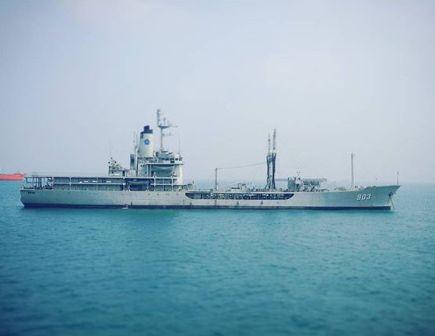
KRI ARUN 903
24 April 2000 At least 900 people comprising of local elite, religious and community leaders launch a reconciliation effort on aboard to reduce religious tension in Maluku
11 November 2000 used as a Vice Presidential Yacht by Megawati Sukarnoputri the Vice President of Indonesia for two days in the city of Ambon and Tual, Southeast Maluku District. 112 Navy personnel were deployed to secure the KRI Arun
28 June 2004 caught Hong Kong flagged motor vessel Law Kit Ting carrying about 300 kilogrammes of live Napoleon fish. The ship was also carrying 1.5 tons of group and live lobsters. The ship did not have the necessary authorities to catch this type of fish
14 October 2004 to 17 October 2004 visited Perth, Western Australia with two other units of the Indonesian Navy. The three ships were under the command of Commodore Agus Suhartono, Commander of the Command Task Group
9 December 2004 with two other ships from the Indonesian Navy held joint exercises with the Royal Brunei Armed Forces
February 2006 KRI Arun and two other ships of the Indonesian Navy impounded fourteen Chinese and Thai as well as nine Indonesian-flagged vessels after catching them red-handed fishing illegally in the Aru Sea, Maluku Province. All of the apprehended vessels were held at the Navy`s bases in Timika and Merauke, Papua Province pending legal proceedings. The Chinese flagged vessels` names were KM Hai Wang, KM Dech Alsung, MV Qiong Yu Wanyu-01, MV Qiong Yu Wanyu-02, MV Hai Xing-01 and MV Hai Xing-02, and the Thai-flagged ones MV Phong Thip Piyapoom, MV Phong Thip Cholphum, MV Por Ruanglarp, MV Netchantri-12, MV Or Apirachainapiee, MV Apirachainapiee-05, MV Sea Hunter, and MV Chaipichitnapiee-12
30 December 2006 a ship with 25 crew members was reported to have sunk in the Suar mandalika waters some 30 nautical miles of South Kalimantan at the early hours "The East Java naval base has sent KRI Arun, another warship and an aircraft to help rescue the victims
23 May 2007 involved in Naval and Army exercises 'Striker Quick Reaction Force' in Tarakan, East Kalimantan (Kaltim) to enhance the capabilities, skills and professionalism of the Indonesian Forces
10 April 2008 arrested a tramp ship belonging to a Chinese national in the Fak-Fak waters, Papua province. MV Fuyuan Yu F 80 1,344 GT vessel was skippered by Cheng Kong Zhang and had served as a tramper to collect fish catch. It was reported she had the capacity of carry 1,000 tons
12 August 2009 to 20 August 2009 took part in Exercise Sail Bunaken activities with 24 other ships from 14 countries
9 October 2012 at Surabaya, Indonesia Navy Colonel (P) Eko Joko Wijono took over command
Command hand over
19 March 2018 during a replenishment at sea with KRI Dr Soeharso (990) a list developed. The Arun was towed back to the Eastern Fleets Semanpur pier at Surabaya by two coastal tug boats. No casualties were reported

Notes:
1. KRI = Kapal Republik Indonesia = Republic of Indonesia Ship
2. Was one of the 17 tankers employed in the Mozchan on Beira Patrol duties
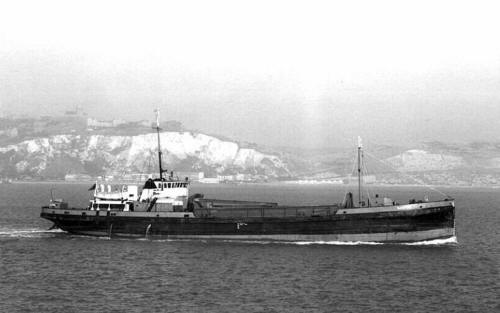
RFA Greenol as the sand dredger Seastone
Previous name: Thames Conservancy Hopper No.6, PLA Hopper No.6
Subsequent name: PLA Hopper No.6, James No.46, Seastone
Official Number: 123823
Class: ex-PLA HOPPER
Pennant No: X28
Laid down:
Builder: Fleming & Ferguson, Paisley
Launched: 26 March 1907
Into Service: 9 September 1916
Out of service:
Fate: Broken up February 1982
Items of historic interest involving this ship: -
Background Data: As WW1 progressed, the demand for fuelling ships became more acute and the 6 vessels in this Class were all formerly PLA Hoppers, used for working with the dredgers in London. They lent themselves to rapid conversion into tankers by plating over the bottom sludge door joints and by installing a pipeline and a pump. They were all coal burners that had been built on the River Clyde and after acquisition by the Admiralty, they were renamed after salient features of the River Thames and their new names used the leading parts of the names of London boroughs. In 1920 they were all returned to the PLA and they resumed their previous names. They are all recorded in official records as Royal Fleet Auxiliaries
13 February 1907 launched by Fleming & Ferguson Ltd, Paisley as Yard Nr: 355 named THAMES CONSERVANCY HOPPER No: 6 for the Conservators of the River Thames, London
March 1907 completed
2 May 1907 registered in London as number 71/1907 in the Registry Book
1909 renamed PORT OF LONDON AUTHORITY HOPPER No: 6 by the Port of London Authority, London
9 September 1916 chartered by the Admiralty, converted into a tanker and renamed RFA GREENOL, The Admiralty paid for hire of this ship at £240 per month
3 October 1916 Engineer Sub Lieutenant T S King RNR appointed as Chief Engineer Officer. He was discharged to RFA Sunhill on 19 May 1919
30 November 1916 Lieutenant James Tedham RNR appointed in command. He was discharged to RFA Sunhill on 19 May 1919.
8 January 1917 Engineer Sub Lieutenant John G W Brown RNR appointed as Chief Engineer Officer
22 Novermber 1917 at Liverpool alongside HMS COCHRANE refuelling her with 367 tons of FFO
HMS COCHRANE
26 August 1918 Fireman W Melvin MMR 903375 logged as deserting. He had signed on on 19 September 1917
1920 returned to her owners and resumed her previous name
1927 purchased by C.H. Campbell Ltd, London
1928 sold to James Dredging and renamed James No 46
October 1930 re-engined with a T. 3 cyl 13” 21½“& 35” x 27” by A. Hall & Co Ltd, Aberdeen. 100 nhp
6 March 1939 arrived at Grangemouth from Rosyth
15 March 1939 sailed Grangemouth for Rosyth
12 April 1939 sailed Grangemouth for Rosyth
15 June 1939 arrived at Grangemouth from Rosyth in ballast
2 July 1939 sailed Grangemouth for Rosyth
1961 sold to Foremost Dredging and renamed Seastone and converted to sand suction dredger
Reproduced with permission of the MOD


Previous name:
Subsequent name:
Official Number: 338950
Class: ROVER CLASS Small Fleet Tanker
Pennant No: A269
Laid down: 28 February 1968
Builder: Swan Hunter, Hebburn on Tyne
Launched: 17 April 1969
Into Service: 10 April 1970
Out of service: 15 March 2006
Fate: Arrived at ship breakers at Liverpool 18 October 2009
Items of historic interest involving this ship: -
Background Data: In 1967, tenders were invited for what eventually turned out to be five ships in this Class. Owing to unsatisfactory performance from the original engines, which had been a political decision, the first three ships in the Class were re-engined in 1974. The final two ships differed slightly from the earlier three and had improved accommodation standards and different stern anchor arrangements
17 April 1969 launched by Swan Hunter Shipbuilders Ltd, Hebburn as Yard Nr: 7 named GREY ROVER. The Lady Sponsor was Lady Parker ,the wife of Vice Admiral Sir John Parker KBE,CB,DSC who was Flag Officer Medway
9 July 1969 her Ship’s Badge was officially presented to her
10 April 1970 completed and accepted three months later than the original planned date
September 1970 took over from RFA BLACK RANGER as the FOST tanker
July 1972 anchored in Hollesley Bay near Orfordness in support of the Army’s Operation Polex 72 - the pumping of 2000 tons of jet fuel, ferried in dracones towed by workboats to a nearby off-shore pumping station, through a specially constructed 12 mile pipeline to USAF Bases at Bentwaters and Woodbridge
17 July, 1973 at Campletown
28 July 1973 was struck below the waterline by the Canadian submarine HMCS Okanagan - images of the result of this collision can be found
August 1973 dry docked at Govan, Glasgow
15 October 1973 deployed in support of RN units off Iceland during 2nd Cod War until 18 October 1973
28 October 1973 deployed in support of RN units off Iceland during 2nd Cod War until 31 October 1973
4 November 1973 deployed in support of RN units off Iceland during 2nd Cod War until 13 November 1973
17 January 1974 at Faslane
12 March 1974 at Faslane
April 1974 re-engined with 2 x 16 cyl Pielstick 400 x 460mm diesel engines by Crossley Premier Engines Ltd, Manchester. 15360 bhp. Speed now 19½ knots
25 April 1976 carried out abeam refuelling trials which involved just the connection of hoses, with the British merchant tanker BRITISH TAMAR
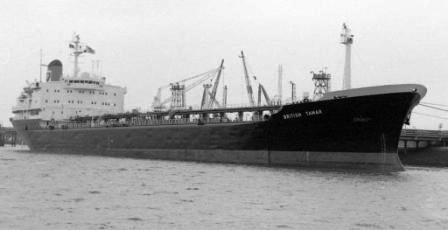
British merchant tanker BRITISH TAMAR
17 June 1976 to 22 June 1976 along with RFA STROMNESS and the frigates HMS EXMOUTH and HMS MERMAID she stood by off the Lebanon to evacuate British nationals
23 April 1977 with HM Royal Yacht BRITANNIA moored in Grand Harbour, Malta
June 1977 Captain Roy B Mathews RFA in command
17 June 1977 at Wallsend on Tyne
5 September 1977 along with RFA’s REGENT, TARBATNESS and TIDEPOOL sailed Portsmouth as part of Task group 317.6 led by the helicopter cruiser HMS TIGER
3 June 1978 berthed at Portland
22 September 1978 berthed on the River Tyne
14 October 1978 at Portsmouth
7 December 1978 to 9 December 1978 whilst part of Task Group 332.1 on passage from Karachi to the Seychelles was ordered to loiter off Iran owing to civilian unrest and the possible evacuation of British nationals which resulted in the overthrow of the Shah
17 January 1980 due to the Iranian Crisis was part of the RN Task Force which was despatched to the Mediterranean to co-operate with the USN along with RFA FORT GRANGE
14 July 1980 at Chatham Dockyard
29 July 1980 at Faslane
11 September 1980 Captain Shane Redmond RFA appointed as Master
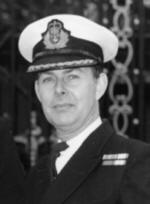
Captain Shane Redmond RFA
23 June 1981 off Portland Bill the ashes of the late 2nd Officer Roger B Thomas RFA, who died on 10 June 1981, were scattered in the presence of his parents and several RFA Officers
December 1981 Captain Ollie G Lynch RFA in command
18 December 1981 at Portsmouth
7 April 1982 was established as the resident work-up tanker in the Portland Area
April to June 1982 during Operation Corporate - the Falklands Conflict - she was the only operational RFA tanker which remained on the Home Coast. She carried out RAS trials with STUFT ships en route to the Falkland Islands in the SW Approaches to the English Channel whilst herself based at Portland. The smallest vessel worked with was the trawler FARNELLA and the largest was the liner QUEEN ELIZABETH 2
25 April 1982 off Plymouth undertook a trial RAS with Stuft ship mv Atlantic Conveyor before the ships departure to the Falklands War
May 1982 undertook a trial RAS with the RMS QE2 prior to the troop ships departure to the Falklands War
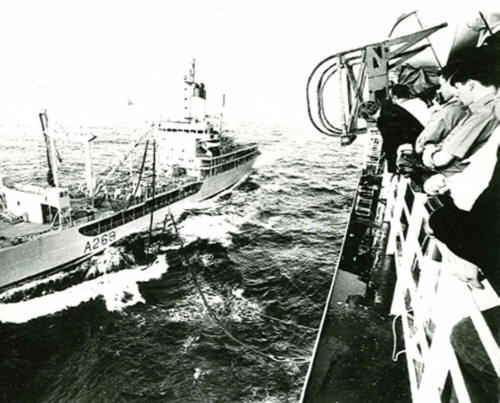
19 May 1982 off Plymouth RASed with the STUFT Sealink Ferry St Edmuund
24 June 1982 at Portsmouth
21 December 1982 at Portsmouth
10 August 1983 to 16 August 1983 was diverted from Armilla Patrol duties in the Gulf, along with the frigates HMS ANDROMEDA and HMNZS WAIKATO to the vicinity of the Chagos Archipelago in the Indian Ocean owing to illegal incursions in the area
December 1983 ordered to Cyprus along with the frigates HMS ACHILLES and HMS ANDROMEDA to support Operation Offcut - naval support to British troops in the multi-national force in the Lebanon, along with RFA’s BLUE ROVER, BRAMBLELEAF (3) and later RELIANT(3)
8 December 1983 released from Operation Offcut and returned to the U.K.
6 January 1984 berthed on Gosport Oil Fuel Jetty
9 April 1984 at Faslane
2 August 1984 berthed at Rosyth when a 'bomb threat' was received by the Master and by the Chief Engineer Officer. Later Steward George Selby from the ship appeared before Dunfermaline Sheriff Court and admitted making the hoax call. He was find £500.00
Article from the Daily Telegraph of 3 August 1984
25 September 1984 a team from the ship fought a fire on motor yacht YANKEE CLIPPER in Freeport in the Bahamas
13 December 1984 berthed on the River Tyne
26 July 1985 at Plymouth
24 January 1986 at Portsmouth
March 1986 RASed with HNMS Isaac Sweers off the Hebrides
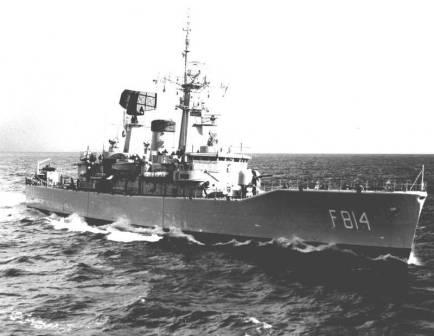
6 June 1986 at Portsmouth
17 April 1987 at Portland
31 July 1987 at Gosport Oilfuel Jetty
30 April 1900 at Plymouth
4 June 1990 at Plymouth
21 September 1990 at Plymouth
2 December 1990 berthed at East Cove Military Port, East Falkland
27 January 1994 berthed at Cape Town, South Africa in company with HMS NORFOLK for a five day visit. Both ships were open to the public and 53,000 visitors came onboard both ships
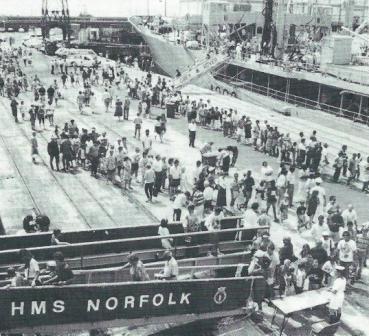
Grey Rover and Norfolk open to the public
19 March 1994 berthed at the East Cove Military Port, East Falkland
April 1994 whilst on patrol off South Georgia she rescued the single-handed yachtswoman Anne Lise Guy and her boat WILDFLOWER
14 April 1994 the Times newspaper reported -
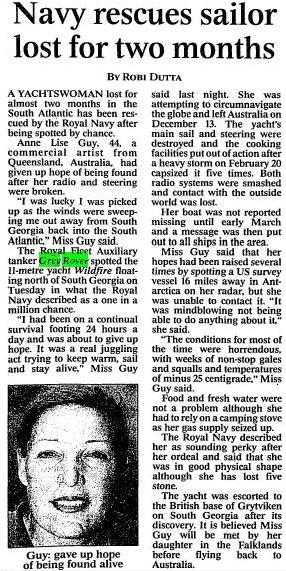
10 May 1994 humanitarian aid - assisted 28 surviving crew of the Chilean vessel FIRO SURE V after a severe fire had killed two and injured many others and escorted the vessel back to Grytviken
4 July 1994 berthed at the East Cove Military Port, East Falkland
15 July 1994 berthed at the Falkland Islands
24 January 1995 at Port Stanley, Falkland Islands
29 May 1995 at Port Stanley, Falkland Islands
7 January 1998 off the Falkland Islands
8 June 1998 at Plymouth
15 June 1998 to 27 November 1998 in refit
28 March 1999 Captain (E) Edward M Quigley RFA appointed as Chief Engineer Officer
22 December 1999 at Cape Town, South Africa
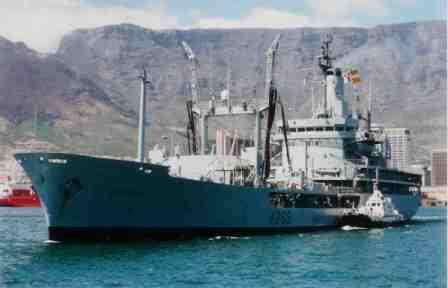
17 February 2000 at Tenerife Captain Trevor J Iles RFA appointed in command
27 July 2000 at Falkland Islands
14 December 2000 at East Cove Military Port, Falkland Islands and Captain Trevor J Iles RFA appointed in command
18 June 2001 to 20 August 2001 routine docking at Wallsend
20 August 2001 Captain (X) Paul Whyte RFA appointed as Commanding Officer

Captain (X) Paul Whyte RFA
1 November 2001 berthed at Devonport
7 December 2001 Sea King HC4 helicopter no: ZD476 – main blade strike when fast roping to bridge wing of ship, made an emergency landing on Dorset beach
21 February 2002 berthed at East Cove, Falkland Islands
20 March 2002 to 25 March 2002 berthed at Las Palmas
12 April 2002 berthed at Lagos, Nigeria
19 July 2002 berthed at East Cove, Falkland Islands, Captain (X) Paul Whyte RFA appointed as Commanding Officer
2 January 2003 berthed at East Cove, Falkland Islands
13 January 2003 anchored off Tristan da Cunha
30 January 2003 to 20 April 2003 was retasked from the South Atlantic for Operation Telic - the 2nd Gulf War - along with 13 other RFA‘s
13 February 2003 berthed at Dubai. Captain Anthony McNally RFA appointed as Commanding Officer until 1 August 2003
26 April 2003 berthed at Port Klang
29 May to 3 June 2003 visited ports in South Korea with HMS LIVERPOOL
5 June 2003 berthed at Tokyo
1 July 2003 berthed at Yokyo with HMS's LIVERPOOL and MARLBOROUGH
7 July 2003 berthed at Port Blair with HMS LIVERPOOL
8 August 2003 returned to Plymouth on completion of Operation Telic duties
30 November 2003 Captain Anthony McNally RFA appointed as Commanding Officer until 7 June 2004
25 March 2004 berthed at Gibraltar from Southampton
2004 conducted the first RAS with a unit of the Singapore Navy.
18 June 2004 with HMS EXETER visited Qingdao, Shangdong Province, People's Republic of China and the North Sea Fleet of the Peoples Liberation Army Navy
2 July 2004 engaged in tri-nations naval exercise together with HMS EXETER, USS Cowpens (CG63), USS Harpers Ferry (LSD49) and two Russian vessels off the coast of Vladivostok, Russia
July 2004 berthed at the United States Naval Facility, Yokosuka for a self maintenance period.
23 September 2004 berthed at Goa, India
4 January 2005 Captain Anthony McNally RFA appointed as Commanding Officer until 1 July 2005
1 July 2005 Captain Shaun Jones RFA appointed as Commanding Officer
Captain Shaun Jones RFA
July 2005 at Port Stanley, Falkland Islands
August 2005 berthed alongside at Montevideo
October 2005 at South Georgia
18 November 2005 Captain Anthony Macnally RFA appointed as Commanding Officer
8 December 2005 sailed Port Stanley, Falklands Islands for Rio de Janeiro, Brazil for Christmas and New Years Holidays
2 February 2006 whilst supporting the destroyer HMS SOUTHAMPTON was involved in a major £350 million drugs bust in the SW Caribbean which involved the merchant ship RAMPAGE,from which 3.5t of cocaine was seized
15 March 2006 arrived Portsmouth for the last time after destoring in Scotland and was decommissioned
20 February 2008 the ships bell was sold at Bonhams, London for £480 including premium
May 2009 at Portsmouth Harbour
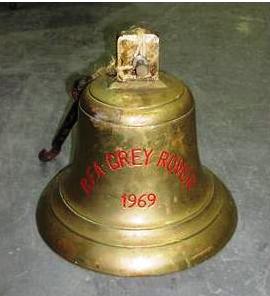
14 October 2009 left Portsmouth under tow of the tug Braveheart to the breakers yard.
18 October 2009 arrived at Canada Graving Dock, Liverpool Bay for demolition by Leavesley International
RFA Growler (1)
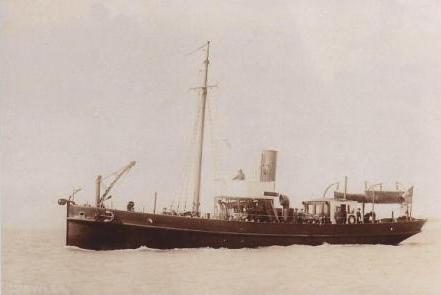
RFA Growler (1)
Previous name: Marquess of Anglesey
Subsequent name: Branksea
Official Number 145367
Class: Naval Stores Carrier
Pennant No: X29
Laid down:
Builder: Edwards & Symes, Millwall
Launched: 1890
Into Service: 1914
Out of service: 30 November 1921
Fate: Sold out of service
Items of historic interest involving this ship: -
1890 Launched by Edwards & Symes, Millwall as Yard Nr: 220 named MARQUESS OF ANGLESEY
1890 completed
October 1891 War Department ship
26 October 1905 arrived Portsmouth Harbour
5 September 1906 sailed Portsmouth Harbour
11 October 1906 sailed Portsmouth Harbour
8 December 1906 sailed Portsmouth Harbour
15 August 1907 sailed Portsmouth Harbour
21 July 1909 passed the Lloyds Signal Station on the Lizard sailing east
3 September 1910 arrived at Portsmouth Dockyard
15 December 1910 sailed Portsmouth Harbour
2 August 1912 arrived at Portsmouth Dockyard
7 February 1913 sailed Portsmouth Dockyard
22 February 1913 arrived at Portsmouth Dockyard
18 March 1913 berthed at Portsmouth Dockyard
8 May 1913 berthed at Portsmouth Dockyard
17 May 1913 at Portsmouth Dockyard moved berths into No: 1 Basin
1914 Naval Stores ship in World War 1 renamed GROWLER
April 1914 Captain J H Skinner RFA appointed as Master
15 May 1914 arrived at Portsmouth Harbour
17 May 1914 arrived at Portsmouth Harbour then sailed the same day
December 1919 Navy List shows the Master to be J H Skinner Esq - no date of appointment shown
30 November 1921 sold out of service and sold to H.J. Beazley
1922 sold to William A. Wilson, 16 Carlton Road, Southampton and renamed Branksea
15 October 1925 Captain Edward C Diaper discharged dead ashore in Weymouth
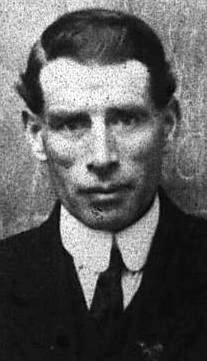
Captain Edward C Diaper
1927 owners now Branksea S.S. Co. (G.I. Corbu Manager)
20 April 1927 berthed at Brixham
31 August 1927 ashore in thick fog at Lannacombe, near Start Point while on passage from Par to Terneuzen, Holland with china clay. Torbay life boat was launched to rescue the crew
8 September 1927 refloated
2 May 1928 sold to Dundee Sand and Lighterage & Co Ltd. 21 Dock Street, Dundee (Charles M Murdock Manager) name unchanged
4 May 1928 Press Report from the Dundee Evening Telegraph -
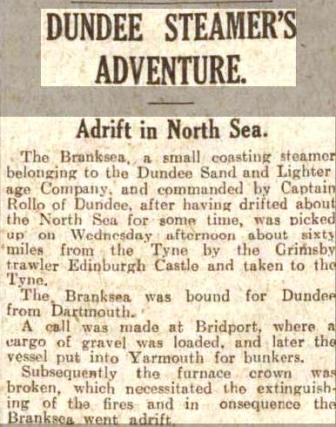
14 May 1928 arrived at Earl Grey dock, Dundee in tow
10 March 1933 berthed at Earl Grey dock, Dundee
15 March 1933 sailed Perth
6 February 1935 while moored at Earl Grey dock with the crew ashore a fire broke out on board - the fire was quickly extinguished
5 December 1935 press report from the Sunderland Daily Echo & Shipping Gazette on the ship sinking
7 December 1935 ship refloated
16 May 1936 while grabbing for sand in the River Tay found the body of Mrs Mary Cruickshank floating in the water. Mrs Cruickshank had been reported missing since 10 April 1936. The body was recovered and brought ashore
1940 owned by Tay Sand Co. Ltd name unchanged
20 August 1940 while under the tow of tug Prizeman enroute to Scapa Flow sank at 57'00''N 02'02''W three miles off Girdleness. Cause Unknown. No losses
Tug Prizeman
RFA Growler (2)

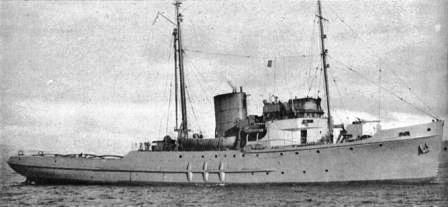 HMS Growler in wartime with deck gun forward
Subsequent name: Caroline Moller, Castle Peak, Growler, Welshman, Martial
Official Number: 181186
Class: BUSTLER Class Fleet Tug
Pennant No: W105 / B743 / A111
Laid down: 31 January 1942
Builder: Henry Robb, Leith
Launched: 10 September 1942
Into Service: 16 May 1943
Out of service: 1977
Fate: Broken up
Items of historic interest involving this ship: -
Background Data: At the outbreak of WW2 there was a need for modern Fleet Tugs to augment the existing numbers, and experience dictated use of a proven, pre-war design to be built in a commercial shipyard. The answer was provided by Henry Robb of Leith who built 8 ships of this Class for the Royal Navy , making them the first RN Fleet Tugs powered by 2 x 8 cylinder diesel engines. The tugs were ordered in pairs. Oil fuel capacity was 405 tons which gave a range of about 1700 miles. As completed, the Class was armed with 1 x 12 pdr AA gun, 1 x 2 pdr AA, 2 x 20 mm AA and 4 x Lewis .303 machine guns and had a complement of 42. They were designed for ocean towing, salvage and rescue and had a 30 ton bollard pull but were not suitable fior harbour work. Early in the War they were involved in trials of pressure-minesweeping methods, where a dumb barge was towed behind the tug with the aim of exploding mines intended for merchant ships and warships. Unfortunately the pressure wave created by the tug alone was sufficient to detonate the mines, so the trials were abandoned. Post-War, the Class was ripe for commercial charter and eventually 6 of the Class saw service as RFA’s
10 September 1942 launched by Henry Robb Ltd, Leith as Yard Nr: 328 named HMS GROWLER by Mrs Colin Sarel
18 March 1943 sailed Methil in convoy EN206 arriving at Loch Ewe on 20 March 1943
April 1943 the Commanding Officer was Temporary Lieutenant Commander William M Dobbie RNR
20 April 1943 in the Admiralty War Diary of this date it was reported to the C in C Western Approaches that the ship Lena Luckenbach had been in collision with another ship at 55°10N 09°40W. The Lena Luckenbach was holded between 1 and 2 holds, was down by the head and might sink but initally was making her way towards Londonderry. Her crew then abandoned her to take passage on the ss Lightning to Liverpool. Rescue tug Growler was sailed with best speed from Campletown to take the Lena Luckenbach in tow
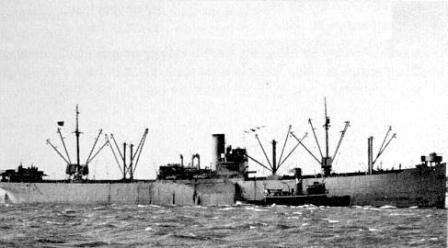
ss Lena Luckenbach
30 April 1943 Convoy ON181 sailed Liverpool to New York City. Additional escorts (Escort Group B3) including HMT Growler joined the convoy on 1 May 1943 until 12 May 1943
8 May 1943 during the convoy ON181 was sent to HMS DANEMAN, an escort trawler, which was taking in water into the engine room and boiler room and had no power. Taken in tow.
9 May 1943 the tow between Growler and HMS DANEMAN parted. Thirty one of the crew were saved by Growler. Thirteen others were picked up by the FS Renoncule - two were dead. Four were missing and not recovered
13 May 1943 sailed New York in Convoy HX 239 as Rescue Tug
20 June 1943 sailed the Clyde to Londonderry towing LST406,
28 October 1943 joined Convoy MKS27G which had sailed Gibraltar on the 14 October 1943 as escort for its arrival into Liverpool
24 December 1943 sailed Campbeltown to Moville to rendezvous with an outward-bound convoy which left the next day
30 December 1943 accidently rammed by the tanker Donna Bella. While badly damaged she made Iceland for temporary repairs before returning to Princes Dock, Glasgow
February 1944 returned to Campbeltown
February 1944 sailed Campbeltown to Moville to rendezvous with an outward-bound convoy which left the next day to St Johns, Newfoundland returning to Campbeltown in March 1944
April 1944 sailed Campbeltown to the Gareloch and towed the French Battleship Courbet to Devonport to be converted into a breakwater during the Allied landing in Normandy
7 June 1944 sailed Weymouth with RFA SAMSONIA (as HMS Samsonia) towing the old French Battleship Courbet to act as a breakwater during the Allied landing in Normandy
10 June 1944 sailed from where Courbet had been scuttled with her Captain and crew to Portsmouth
19 July 1944 sailed Portsmouth in convoy FTC41 to Southend arriving the next day
27 July 1944 sailed Seine Bay in convoy FTC49 to Southend arriving the next day
December 1944 towed AFD38 and a compressor barge from Great Yarmouth to Harwich
27 December 1944 reported in the Admiralty War Diary for this day - Rescue tug Growler was enroute to Rouen to assist tug Empire Jane and Empire Silas to tow the ship Ole Wegger down the River Seine. Strict instruction were given that co-operation with the relevant authorities to ensure the safe passage of this tow as any unforseen accident would close the port of Rouen for an indefinite period
23 January 1945 sailed Antwerp in convoy ATM44 arriving at Southend the following day
4 May 1945 was part of Force 135 for Operation Nestegg - the Channel Islands Liberation
22 May 1945 sailed Liverpool in convoy OS130KM until it dispersed at 47°56N 8°39W on 24 May 1945 HMS REWARD (which became RFA Reward) was in the same convoy
12 February 1946 towed submarine U181 (then Japanese I07) to the Malacca Straits for sinking at 03°05N 100°41E
29 November 1946 Sub-Lieutenant (E) William Gennis RNVR discharged dead. He is remembered with pride on the Liverpool Naval Memorial.
April 1947 chartered to Moller Towages Ltd., Shanghai and renamed Caroline Moller
22 September 1947 with two other tugs managed to pull the 4,000 ton Shell Oil tanker Cyrena off a reef off Katvia Island, New Guinea
9 December 1948 berthed at Fremantle
14 December 1948 sailed North Wharf, Fremantle towing the fire damaged ss Cecil G Sellars to Singapore and then Hong Kong
16 December 1948 put into Champion Bay, Western Australia and anchored off Geralton with engine problems
10 January 1949 sailed from Champion Bay, Western Australia with the fire damaged ss Cecil G Sellars in tow after her engines were repaired
22 June 1949 arrived at the Schilpad Reef in the Arafura Sea north of Australia and rescued the crew of the ss Inchmark which had run aground and became a total loss.
1 July 1949 arrived at Hong Kong after attempting salvage operations on the British ship Inchmark which had gone aground at 07°05S 132°03E and became a total loss on 29 May 1949
2 July 1949 the Canberra Times reported -
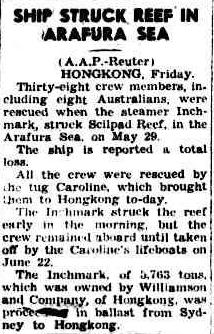
21 July 1949 guaranteed safe conduct was given by the Nationalist Chinese Government for the Caroline Moller to go to Shanghai to tow the bomb damaged Blue Funnel Steamer Anchlises to Kobe, Japan for repairs.
29 July 1949 sailed Shanghai to Kobe, Japan with ss Anchlises in tow - arrived 4 August 1949
26 December 1950 sailed Hong Kong to assist an Pan-American ship 'Islas Visayas bound to Amoy, China. The Islas Visayas reported she had been boarded by pirates.
16 January 1952 took in tow the British freighter Admiral Chase between Colombo and Sumatra again after the tow broke. The ship was being towed to Hong Kong for engine repairs
3 May 1952 rechartered by Moller Towages Ltd to Hong Kong Salvage & Towing Co Ltd and renamed Castle Peak
11 August 1952 sailed Hong Kong to salvage the freighter Plymouth Star which was aground off Wenchow, China
8 February 1953 berthed at Sydney, NSW from Formosa
27 February 1953 sailed Sydney, NSW to Japan with ss Dilga and ss Dundula in tow to ship breakers. The tugs Master was Captain Waites
6 April 1953 arrived at Yokohama from Sydney, NSW towing the ss Dilga and ss Dundula for delivery to the ship breakers
22 November 1953 towed the British Registered freighter Tefkros into Hong Kong from the Formosa Strait with a broken rudder
6 December 1954 returned to the Admiralty and renamed HMS GROWLER - pennant number A111
12 April 1955 arrived at Blyth from Trieste
1957 transferred to the RFA as RFA GROWLER
6 May 1957 off Yorkshire coast standing by two fender barges, her tow, which had broken away of the tug the previous day in heavy weather
21 August 1957 passed Flamborough Head sailing north bound. Signalled she was bound for Middlesborough
5 October 1957 with RFA ENFORCER towed AFD22 from Falmouth to Sheerness Dockyard
1958 to 1963 chartered to United Towing Company Ltd and renamed Welshman
2 June 1958 assisted in towing the battleship HMS HOWE to the breakers yard at Inverkeithing when the Howe ran aground while approaching the facility
10 November 1958 in collision with the paddle tug GRINDER at Portsmouth
19 November 1959 arrived at Hong Kong towing the USS Shamrock Bay to the ship breakers there
31 August 1961 Captain Ernest Bond - the tug Master - discharged dead - he collapsed on the bridge while the vessel was on passage from Canada to Genoa
15 December 1961 sailed the Tyne towing a 2800 ton mobile oil platform 'Admar Constructor'
4 January 1962 lost the tow with the 'Admar Constructor' in heavy weather off the coast of Spain.
23 October 1963 returned to the Admiralty at Devonport and renamed RFA CYCLONE - pennant number A111
4 January 1965 Mr A Daw appointed as Chief Engineer Officer
June 1965 suffered collision damage at Swansea - no further details
19 June 1965 Captain F Murray appointed as Master
14 December 1965 sailed Portsmouth with HMS/m's SEA SCOUT and SERAPH in tow to Briton Ferry for demolition
16 December 1965 while towing HMS/m SERAPH to the breakers at Briton Ferry the tow parted. A naval crew were flown by helicopter to the submarine and the tow was re-attached
10 February 1966 arrived with tow at Briton Ferry
21 March 1966 sailed Portsmouth with HMS BERRY HEAD in tow for Devonport
10 July 1966 arrived at Devonport from the Middle East with HMS KEDLESTON in tow
10 July 1967 Captain D M Gentle appointed as Master
7 August 1967 sailed Portsmouth with HMS/m SOLEBAY in tow for demolition
11 August 1967 arrived at Troon with HMS/m SOLEBAY
23 September 1967 sailed Devonport with HMS URSA in tow for Newport for demolition
23 September 1969 to 26 September 1969 alongside at Portsmouth Harbour with ETV Whimbrel outside of her
1971 transferred to the PAS
21 April 1973 towed ship Arquina which had been badly damaged by fire into Teneriffe for examination
1977 laid up Gibraltar
October 1982 on Disposal List at Gibraltar
16 April 1983 sold to Eagle Tugs Ltd (Shipmarc Ltd, Managers), Georgetown, Grand Cayman and based at Mombasa and renamed Martial
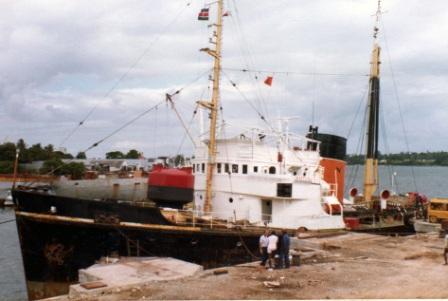
30 January 1985 arrived Gadani Beach, Karachi for breaking up by Adam Hardware Industries (Private) Limited, Karachi
Notes:
- Was part of the British Pacific Fleet hence the B pennant number
Ships of the same name
Growler. A gun vessel launched by Perry’s, Blackwall on the 10 April 1797, 169 bm, 76 x 22.5 feet, armed with 10 x 18 pdr Carronade, 12 x 9 pdr. Captured by the French off Dungeness on the 20 December 1797.
Growler. A gun-brig of 178 bm launched by Adam’s, Bucklers Hard on the 10 August 1804, 80 x 22.5 feet armed with 10 x 18 pdr carronades, 2 x 12 pdr. Sold out of service on the 31 May 1815.
Battle Honours for this Vessel: BASQUE ROADS 1809, GROIX ISLANDS 1812.
Growler. A wood paddle sloop of 1,059 bm launched by Chatham Dockyard on the 20 July 1841, 180 x 36 feet. Broken up in 1854.
Growler. A mortar vessel of 117 bm, 65 x 21 feet armed with 1 x 13 inch mortar, launched by Wigram, Blackwall on the 31 March 1855, renamed MV 4 on the 19 October 1855. Transferred to Chatham as a landing stage on the 16 December 1863.
Battle Honours for this Vessel: BALTIC 1855.
Growler. A wood screw gunboat of the “Albacore” class, launched by Wigram, Blackwall on the 8 May 1856. Broken up at Malta in August 1864.
Growler. Composite screw gun vessel of 584 tons launched by Laurie, Glasgow on the 1 December 1868, 155 x 25 feet armed with 1 x 7 inch, 1 x 64 pdr and 2 x 20 pdr. Sold in November 1887.