

Heroes of the RFA
In the history of the Royal Fleet Auxiliary Service the officers and men have repeatedly shown their gallantry and their bravery on many occasions not only during war but also at times of peace.
These acts have been recognised by the Sovereign with the awards of Orders, Medals and Decorations.
We recognise and salute these Heroes of the Royal Fleet Auxiliary Service and have pride in reporting on their deeds and actions which brought them fame and recognition and in some cases even took their lives.
This section is not complete and more will be added on the site as quickly as they can be prepared.
RFA Sir Geraint, under the command of Captain David E Lawrence RFA, was one of the first members of the amphibious task group  and was present in San Carlos Water throughout the period of intense air attack immediately after the landing on May 21. Day after day the lightly armed ship was subjected to fierce attack by large numbers of enemy aircraft using cannon, rockets and bombs.

John Thomas Allan, from South Shields, served during the Great War as a Donkeyman in the Royal Fleet Auxiliary, and was serving aboard the fleet oiler R.F.A. Mixol, having joined this ship on 18 October 1916.
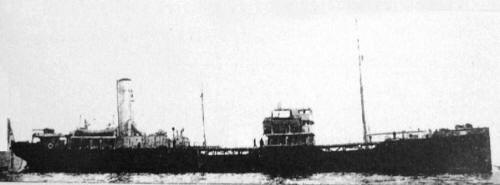
On 23 May 1963 at about 2210hrs a Seaman S Smith, who was serving on board the RFA Wave Prince which was berthed in Hong Kong Harbour, was sitting on the second uppermost guardrail on the starboard aft upper deck in the company of Assistant Cook Arthur Boyle when Seaman Smith lost his balance and fell overboard from a height of approximately 15 feet into the harbour.
On 4 April 1942 RFA Plumleaf was alongside at Palatorial Wharf, Grand Harbour, Malta when she was struck by bombs and sank.
On the 8 June 1982 at the height of the Falklands conflict, RFA Sir Galahad was at anchor in Port Pleasant, about 3 cables from RFA Sir Tristram and about a mile from Fitzroy, preparing to disembark elements of the Welsh Guards. At about 17:15 Z, five Skyhawk jets of the Argentinean Air Force commenced an attack on the two LSL’s at anchor.
 Queens Gallantry Medal
Chief Officer Christopher Onslow Smith RFA
Chief Petty Officer (Deck) John Thomas Olley RFA
Queens Commendation for Brave Conduct
Third Engineer Officer Roger Kenneth Stevens RFA
Seaman Grade 1A Reginald Frederick Williams RFA
Seaman Grade 1B Barry Edward Knowland RFA
Seaman Grade 1B Wesley Smith RFA
Commodore Samuel Clark DUNLOP C.B.E., D.S.O., RFA
 Commodore Dunlop was the senior officer of the RFA and the Commanding Officer of RFA Fort Austin.
His ship was the first to be deployed south in the operation to regain possession of the Falkland Islands in 1982 and supported the Task Force throughout the operations.
 At the start of the Falklands War in 1982 RFA Sir Percivale was among the first to sail with the Amphibious Task Group from England. She operated in the waters immediately around the Falkland Islands from D-Day, 21 May 1982, to the eventual fall of Port Stanley on 14 June 1982.
 On the 8th June 1982 at the height of the Falklands conflict, RFA Sir Galahad was at anchor in Port Pleasant, about 3 cables from RFA Sir Tristram and about a mile from Fitzroy, preparing to disembark elements of the Welsh Guards. At about 17:15 Z, five Skyhawk jets of the Argentinean Air Force commenced an attack on the two LSL’s at anchor.
Read more: Second Engineer Officer Paul Anderson Henry, GM. RFA
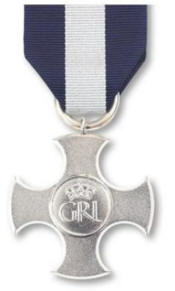 In August 1914, while underage, David Hood joined the Army and underwent training at Plymouth, Devon. By March 1915 Private David Hood joined his battalion – the 2nd Battalion Argyll and Sutherland Highlanders – who were serving on the Western Front and were attached to the 19th Brigade, 6th Division. The Battalion had gone to war in France and Flanders, landing at Boulogne on 14 August 1914 and as such these original troops were ‘Old Contemptibles’.
 From 21 May to 8 June 1982 during the Falklands War RFA Sir Galahad suffered attacks by enemy aircraft. Throughout this period, Captain Roberts took personal charge of the fighting and safety of his ship, crew and embarked force passengers. On two occasions his ship suffered severe bomb damage and had to be abandoned. Captain Roberts organising and controlling each operation. On the first occasion, a 1,000 lb unexploded bomb remained in the ship which was subsequently made safe and removed .
During World War 1 German and Austrian merchant ships interned in ports of non belligerent countries had parts of their machinery removed to prevent them sailing.
 In early 1915 in Las Palmas in the Canary Islands the German ship Macedonia was in such detention by the Spanish Government. It had been there since the start of the conflict. Somehow the crew managed to get the engines started and the ship sailed out of Spanish captivity.
On 28 March 1915 she was stopped in the North Atlantic by the Royal Navy and with a prize crew sent to Gibraltar. The Prize Court awarded the Macedonia to the Admiralty who renamed the ship Polgowan. The Polgowan was handed over to the RFA and was used as a store ship.
 Captain Shane Redmond took command of the Fleet Tanker, RFA Tidespring in January 1982 prior to Exercise Springtrain in the Atlantic. On completion of this exercise RFA Tidespring, with the majority of the fleet put in to Gibraltar for crew R and R. On the 2nd of April 1982 the ship sailed from Gibraltar in company with HMS Antrim and Plymouth as Task Group 317.8 for Ascension Island in response to a threat in the South Atlantic from Argentinean personnel who had landed on South Georgia illegally.
Chief Engineer Alexander Ballantyne OBE RFA
Second Engineer William John Littledale MBE RFA
T/Second Engineer William Herbert Victor Davies MBE RFA
The Norwegian Campaign was the name used by the Allies – United Kingdom and France – for their first direct land confrontation with the military forces of Nazi Germany in World War II. The conflict occurred in Norway between 9 April and 10 June 1940.
Second Officer Lester Newman RFA
Able Seaman Thomas MacCulloch Maclean RFA
Able Seaman David Stewart Sorby RFA
Able Seaman Robert Kennedy RFA
Ordinary Seaman Charles Reside RFA
Donkeyman Arthur Williams RFA

In mid March 1926, the schooner Cecil Junior from St John’s, Newfoundland was homeward bound from Seville, Spain with a cargo of salt. In mid Atlantic the Cecil Junior ran into a succession of gales and heavy seas, and on the 18th March whilst fighting the weather, the schooners rudder was smashed and the vessel began to take on water.
Henry Owen L’Estrange was born in Southern Ireland in 1912 and after being educated at home and at Castlepark Prep school in Dublin, he joined his elder brother in the Merchant Navy.
In 1926 Henry L’Estrange joined the training ship HMS Conway at Liverpool and on completion of his studies he became an indentured apprentice with Alfred Holt of Liverpool, serving his time on ‘Blue Funnel’ line ships. On completion of his training Henry remained with Holt’s as a fourth mate until 1934, when ships and jobs started to be reduced, during the great depression. Henry found and secured a job with the War Department fleet at Watchet in Somerset, where he spent a year as a temporary mate on a target towing vessel.
 RFA Sir Tristram, commanded by Captain ‘Robin’ Green, at the start of the Falklands War joined the Amphibious Task Group at Ascension Island on the 29th April 1982 and rapidly took up the challenge.