

Official Number: 168210
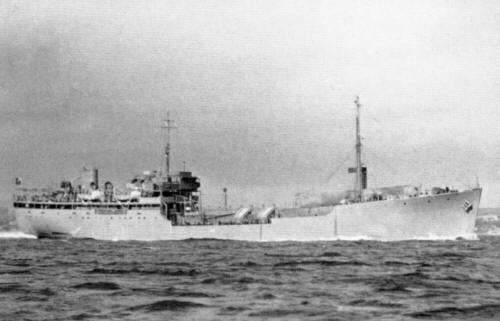
Class: RANGER CLASS Fleet Attendant Oiler
Pennant No:
Laid down: 24 June 1940
Builder: Caledon Shipbuilding & Engineering Company, Dundee
Launched: 27 May 1941
Into Service: 25 September 1941
Out of service: 22 September 1942
Fate: Sunk
Items of historic interest involving this ship: -
Background Data: The six ships in this Class were designed in the mid -1930’s by Rowland Baker as replacements for the 2000t BELGOL CLASS and were the first Admiralty-designed tankers since the 1917 5000t FAST LEAF CLASS. As originally built, for camouflage purposes, they had canvas deckhouses, a dummy plate funnel forward, their foremast was on the starboard bow, the wheelhouse was offset to port, and in some cases their genuine funnel was cut low and was on the port quarter, fitted with a spark arrester. Originally armed with 1 x 4” LA, 1 x 12 pdr HA/LA and several Lewis guns, as the War progressed the armament fits altered and finally averaged 1 x 4” HA, 1 x 40mm Bofors and 4 x single 20mm Oerlikons. These vessels served extensively as Escort Tankers on the Russian Convoys, Norwegian coastal raids, Malta Convoys and with the British Pacific Fleet. Apart from GRAY RANGER,which became a War Loss, the Class had exceptionally long Service lives and were finally replaced by the ROVER CLASS
28 August 1939 ordered
24 June 1940 laid down
27 May 1941 launched by Caledon Shipbuilding Co Ltd, Dundee as Yard Nr: 390 named GRAY RANGER
11 July 1941 Mr David L S Hood RFA appointed as Chief Engineer Officer
22 August 1941 at London registered as GRAY RANGER under reference 179/41 in the Registry
1 September 1941 Captain Howard D Gausden RFA appointed as Master
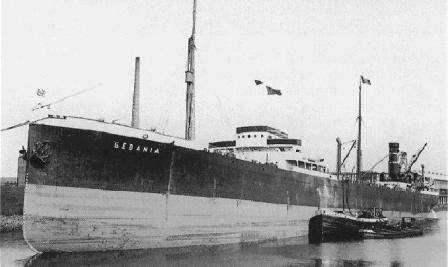
The ship was fitted with special arrangements for OAS using captured German buoyant rubber hose and the new British self-rendering winch. The German equipment had been transferred from EMPIRE GARDEN the former German oiler GEDANIA which had been captured by the Ocean Boarding Vessel HMS MARSDALE on 4 June 1941 near Iceland. GEDANIA had been converted by the Kriegsmarine at St Nazaire to carry fuel and supplies to German commerce raiders in the Atlantic and to bring back prisoners taken from sunken ships
25 September 1941 completed. Joined the Fleet Fuelling Service
29 September 1941 sailed Dundee to Leith arriving the same day
1 October 1941 German OAS gear from the captured German fleet supply ship GEDANIA was transferred to her at Leith, together with a report of the rubber hose trials conducted in the Clyde area on 4 September
4 October 1941 sailed Leith to Rosyth arriving on the same day
7 October 1941 sailed Rosyth to Grangemeouth arriving the same day
7 October 1941 sailed Grangemouth to Rosyth arriving the same day
8 October 1941 sailed Rosyth to Methil Roads arriving the same day
10 October 1941 sailed Methil Roads to Scapa Flow arriving the same day
28 October 1941 conducted OAS trials with RFA EMPIRE SALVAGE
5 November 1941 at Scapa Flow Able Seaman Jos P Love logged and fined 5/- for assaulting the Bosun
21 December 1941 sailed Scapa Flow in company with the Belgian landing ship PRINS ALBERT to support Operation Anklet- the second Commando raid on the Lofoten Islands
22 December 1941 arrived Sullom Voe
23 December 1941 sailed Lerwick for Operation Anklet in company with the Belgian landing ship PRINS ALBERT escorted by HM destroyers ESKIMO and LAMERTON
28 December 1941 at Scapa Flow in collision with HMS ASHANTI while the warship was attempting to berth alongside starboard - both starboard lifeboats damaged and became unsericeable
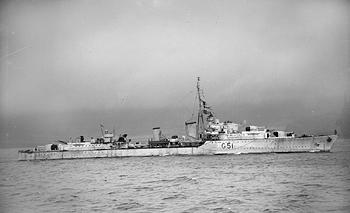
HMS ASHANTI
31 December 1941 conducted OAS trials with the destroyer HMS BEDOUIN using the captured German hose and reported satisfactory results
1 January 1942 arrived Scapa Flow on completion of Operation Anklet with RFA BLACK RANGER
7 February 1942 sailed Scapa Flow for Sullom Voe escorted by the escort destroyer HMS CHIDDINGFORD
6 March 1942 at Scapa Flow alongside HMS FROBISHER refuelling her - supplied 620 tons of FFO
20 March 1942 at Scapa Flow alongside HMS FROBISHER refuelling her - supplied 330 tons of FFO
10 April 1942 sailed Oban in convoy PQ15 initially to Reykjavik
13 April 1942 was damaged whilst going alongside the carrier HMS ILLUSTRIOUS
24 April 1942 sailed Scapa Flow under the escort of HMS LEDBURY
26 April 1942 sailed Reykjavik to join Convoy PQ 15 consisting of 25 merchantmen as Force Q along with the escorts HMS's ULSTER QUEEN, LEDBURY, STURGEON to Murmansk
29 April 1942 along with HMS's ULSTER QUEEN, LEDBURY, STURGEON joined convoy PQ 15
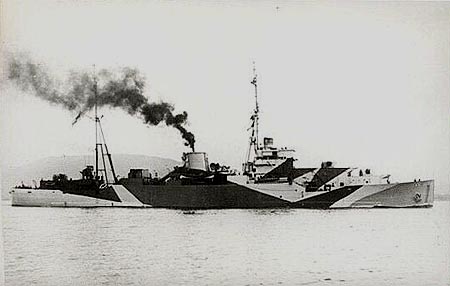
HMS ULSTER QUEEN
1 May 1942 detached from Convoy PQ 15 to join the homeward bound Convoy QP11
6 May 1952 detached to Lerwick with the escort destroyer HMS LEDBURY to replenish the diesel fuel stocks there
8 May 1942 arrived Lerwick with HMS's LEDBURY and VENEMOUS. HMS VENEMOUS berthed alongside and was oiled
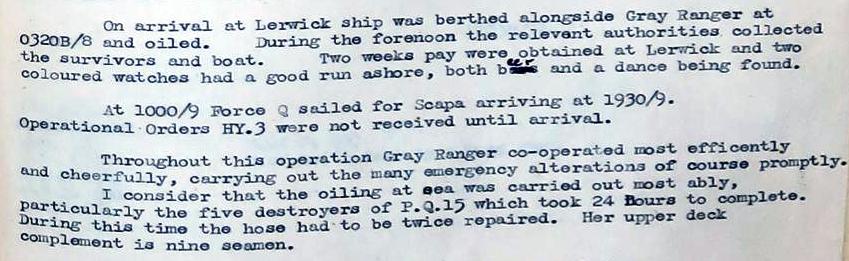
The CO of HMS Venemous' ROP reports on RFA Gray Ranger
9 May 1942 sailed Lerwick for Scapa Flow arriving later the same day - escorted by HMS LEDBURY
11 June 1942 exercised with USS WAINWRIGHT (DD419) RASing astern
23 June 1942 sailed Scapa Flow under the escort of HMS's HALCYON, BRITOMART, and SALAMANDER proceeded to Hvalfjord
26 June 1942 arrived at Hvalfjord with HMS's HALCYON, BRITOMART, and SALAMANDER
27 June 1942 sailed Reykjavik to Murmansk in convoy PQ17 consisting of 36 merchantmen along with RFA ALDERSDALE
29 June 1942 struck submerged ice floes which buckled her bows and flooded her fore peak. The cargo was shifted in order to raise the damaged part out of the water as far as possible. She was ordered to return to port, being replaced by RFA ALDERSDALE (which was later sunk, one of the 24 ships lost in total)
2 July 1942 joined Convoy QP13 consisting of 35 merchantmen as Force Q along with the destroyer HMS DOUGLAS
6 July 1942 at 71º 23N 3º07W RASed with HMS LEAMINGTON and other destroyers
9 July 1942 arrived Scapa Flow. Donkeyman Greaser W G Bell was logged for using insulting and contemptuous language to the Chief Officer Mr W Holt - he was fined 5/-. Donkeyman Greaser J Paterson was logged for using insulting and contemptuous language to the Chief Officer Mr W Holt - he also was fined 5/-
14 July 1942 at Scapa Flow alongside HMS KING GEORGE V refuelling her
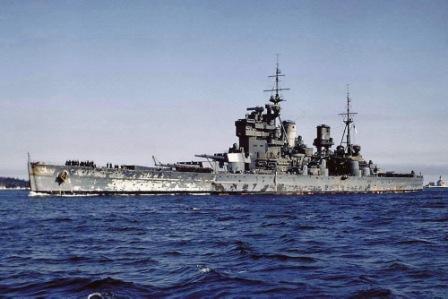
HMS KING GEORGE V
17 July 1942 at Scapa Flow alongside HMS KING GEORGE V refuelling her
21 July 1942 sailed Loch Ewe to Methil in convoy WN312 arriving 23 July 1942. RFA WAR BHARATA was in the same convoy.
23 July 1942 sailed Methil to the River Tyne arriving the next day
25 July 1942 repairs commenced. Donkeyman Greaser N Forsyth was logged for being stoke hold watch keeper from midnight until 0400hrs and was found asleep on deck at 0130hrs in a state of intoxication. He was fined 5/-.
28 July 1942 Donkeyman Greaser N Forsyth was logged for being stoke hold watch keeper from midnight until 0400hrs on 26 July 1942 left the ship at 18.30hrs on 25 July 1942 and did not return until 14.00hrs on 27 July 1942. He was fined 5/-
16 August 1942 repairs completed
17 August 1942 sailed the River Tyne to Methil in convoy FN787 arriving the next day
19 August 1942 sailed Methil to Loch Ewe in convoy EN126 arriving 21 August 1942
25 August 1942 arrived Newcastle for repairs having struck an iceberg while part of Convoy PQ17.
2 September 1942 sailed Loch Ewe to Archangel in convoy PQ18 as escort oiler with RFA BLACK RANGER and RFA OLIGARTH
13 September 1942 sailed Archangel as escort oiler in convoy QP14 together with RFA BLACK RANGER and RFA OLIGARTH
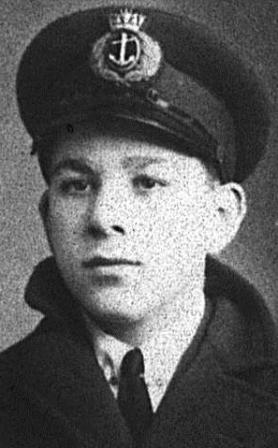
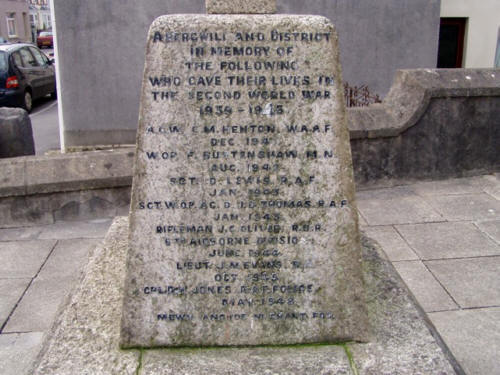
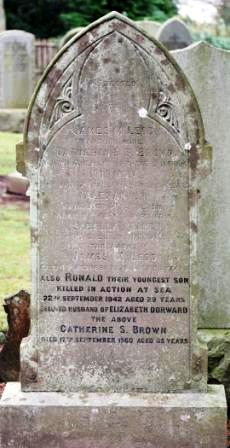
22 September 1942 torpedoed and sunk at approximately 70N 11W by the German submarine U435 (Kapitänleutnant Siegfried Strelow) while part of Convoy QP14. Six of the crew were killed - their details are shown in the Roll of Honour for 1942 - they are also all remembered with pride on the Tower Hill Memorial. 2nd Radio Officer Frank E Burtenshaw RFA is also remembered with pride on the Abergwili War Memorial, Carmarthen. Engineer Officer Ronald McLeod RFA is also remembered with pride on a memorial in Dundee (Balgay) Cemetery.
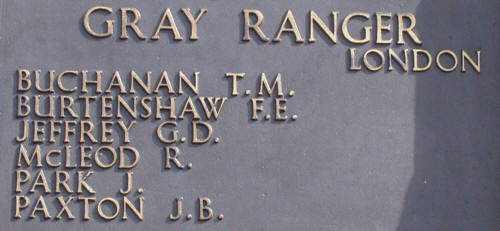
The Tower Hill Memorial
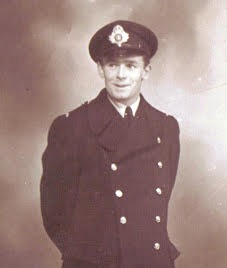
Thirty three survivors from RFA Gray Ranger were rescued by the Convoy Rescue Ship Rathlin. Rathin's success of rescuing sailors from sunken ships during this convoy resulted in 210 survivors being taken on board. The rescue ships crew of 71 (plus one dog) resulted in food shortages. Permission was given for Rathlin and another convoy rescue ship Zamalek to leave the convoy and sail under escort to Iceland. They arrived at Seidisfjord late on the 23 September 1942
26 September 1942 the survivors were finally landed at Gourock
1 December 1942 in the London Gazette of this day Captain Howard D Gausden RFA was awarded the Distinguished Service Order for services during North Russian Convoy PQ18 in September 1942
16 February 1943 in the London Gazette of this day Chief Officer William Ronald Holt RFA and Chief Engineer Officer David Lindley Smith Hood RFA were both awarded Distinguished Service Cross' and Boatswain James Lawson was awarded the Distinuished Service Medal for services during Operation EV covering North Russian Convoys PQ18 and QP14 in September 1942
27 July 1943 in the London Gazette of this day Petty Officer George Alfred Bright P/JX165000 was awarded the Distinuished Service Medal for services during North Russian Convoys PQ15 and QP14 in September 1942
Notes:
She was sunk within minutes of the American freighter BELLINGHAM and the British ship OCEAN VOICE which was carrying the Convoy Commodore.