

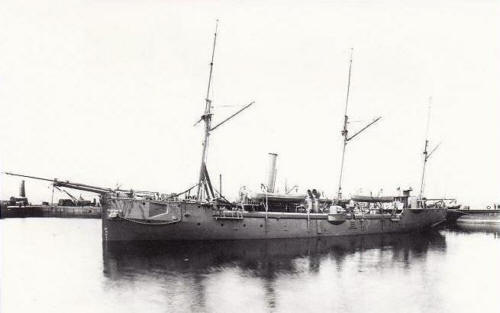
Previous name: HMS Thrush
Subsequent name:
Class: REDBREAST CLASS Gunboat (originally) then Salvage vessel
Pennant No: C 76 / X 36
Laid down:
Builder: Scotts, Greenock
Launched: 22 June 1889
Into Service: 1916
Out of service: 11 April 1917
Fate: Foundered
Items of historic interest involving this ship: -
Background Data: She was one of a Class of 9 gunboats 2 of which were converted into Salvage Ships, designed by Sir William Henry White, the Royal Navy Director of Naval Construction in 1888, which were the last of the composite-hulled gunboats built for the Royal Navy. The Class consisted of HM ships GOLDFINCH, LAPWING, MAGPIE, REDBREAST, REDPOLE, RINGDOVE, SPARROW, THRUSH and WIDGEON
22 June 1889 launched by Scott & Co, Greenock as Yard Nr 262 as the composite gunboat HMS THRUSH
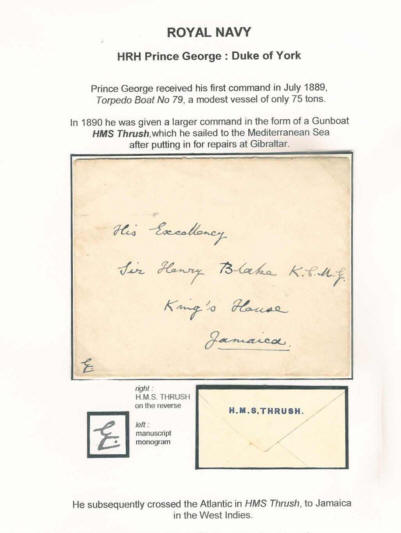
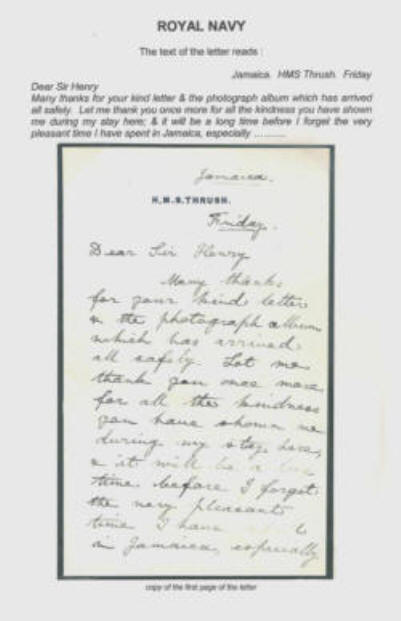
16 April 1889 Lieutenant HRH Prince George of Wales Royal Navy appointed in command.
March 1890 commissioned and was based at Chatham. Cost £39,000
19 May 1890 sailed Chatham
7 June 1890 put into Ferrol, Spain due to heavy weather in the Atlantic
9 June 1890 sailed Ferrol, Spain for Gibraltar
25 June 1890 sailed Gibraltar for the West Indies
29 June 1890 arrived at Las Palmas
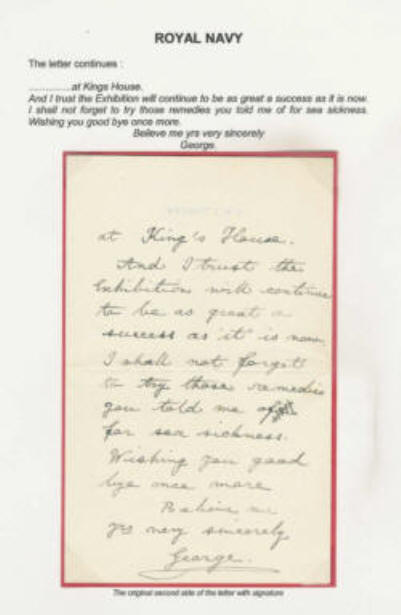
1891 to 1902 based on the North America and West Indies Station followed by a spell on the Cape of Good Hope Station
March 1891 sailed from Barbados to Bermuda
9 April 1894 Stoker George Edward Barnes discharged dead. He is buried at Grave Island or to use its correct name Chapwani Island, it is situated a few kilometers offshore between Zanzibar town and Chunguu (Prison Island)
27 August 1896 saw service during the Anglo-Zanzibar War - famous as being the shortest war in recorded history
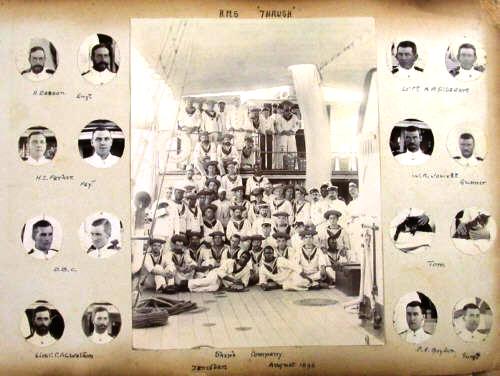
HMS Thursh - ships company at Zanzabar 1896 including the ships cat 'Tom'
3 to 5 November 1898 called at Tristan de Cunha there collecting the crew of the wrecked British Barque Glenhuntley and delivering them to Simonstown on 15 November 1898
1 May 1899 Petty Officer 2nd Class P Anthony, Able Seaman H H Ridge and Able Seaman Charles A Harris all discharged dead. They were all drowned and are buried at Grave Island or to use its correct name Chapwani Island, it is situated a few kilometers offshore between Zanzibar town and Chunguu (Prison Island)
18 July 1899 Krooman John Williams discharged dead. He is buried at Grave Island or to use its correct name Chapwani Island, it is situated a few kilometers offshore between Zanzibar town and Chunguu (Prison Island)
October 1899 her Commanding Officer was Lieutenant Warren H D'Oyly Royal Navy
3 June 1900 conveyed the coffin of Mary Henrietta Kingsley, a British Nurse, aged 38 who had died of typhoid while nursing Boer prisoners at Cape Town, South Africa to sea from Simonstown for burial at sea some 3 miles off shore
28 to 30 January 1903 visited Tristan Da Cunha
May 1903 to 1905 became an RNR Training Vessel
April 1906 to 1914 transferred to the Coastguard and was renamed THRUSH
27 December 1909 sailed Queenstown, Ireland to search for the steam trawler Monarch some eighty miles off the Blasket Islands which had suffered an engine failure and had no food onboard
15 April 1910 passed Brow Head, County Cork, Ireland
1 June 1912 Coastguard Chief Officer F Baker appointed in command
30 June 1914 sailed Queenstown
1 February 1915 Coastguard Chief Officer J W Steer appointed
26 December 1915 together with RFA STEADFAST at Rosyth salvaged the dredger Venezia
31 December 1915 Engineer Lieutenant William W Hewitt RNR appointed as Chief Engineer Officer
1 June 1916 Lieutenant Charles E Browne RNR appointed in command
June 1916 became a RFA salvage vessel name unchanged
13 July 1916 at North of the Shetlands gave salvage assistance to ss Strathclyde which had struck a rock. Temporary repairs effected to allow the ship to sail to Dundee to discharge its cargo
6 August 1916 the Whaler Icewhale was salvaged at Macduff and moved to Invergordon for repairs to be completed when the RFA Thrush left to salvage HMS BLONDE at the Skerries
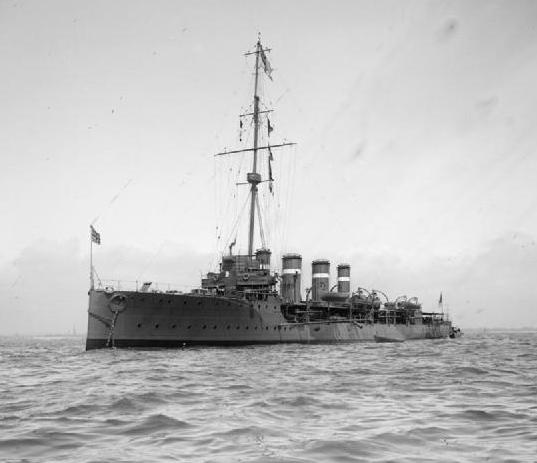
HMS BLONDE
10 August 1916 at the Skerries salvaged HMS BLONDE
21 August 1916 together with RFA MOLLUSC at Bridlington salvaged 7 x 6" guns, 1 x HA gun, searchlights and other gear from HMS FALMOUTH which had been sunk in the North Sea by the German Submarine U63
29 January 1917 while under the command of Lieutenant Commander Ivo James Kay RNR attended the scene of the sinking of HMS/m K13 in the Gareloch and in the subsequent rescue of 49 of the crew including the submarine's Commanding Officer. The day following the rescue all the crew of Thrush together with those rescue received congratulatory telegrams from H.M. King George V
11 April 1917 foundered off County Antrim, Northern Ireland during a snow storm with the loss of eight members of the crew the rest being rescued by breeches buoy.
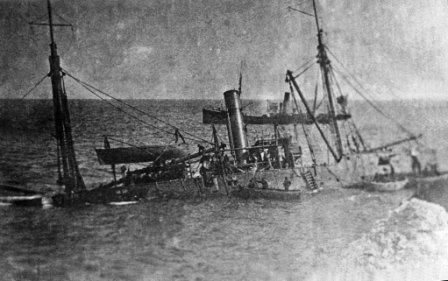
Rescue attempts being made as RFA Thrush sinks
Those who drowned were: -
Assistant Steward William J W Bridgewater MMR, Assistant Motor Engineer Lionel F Burnell MMR and Assistant Motor Engineer Frederick W Faircloth MMR and who are all buried in Glenarm New Cemetery, County Antrim
The CWGC Grave record for this cemetery states -
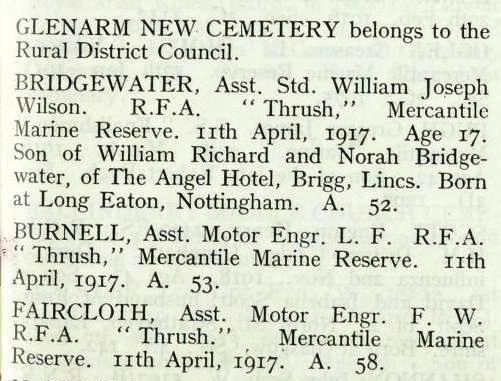
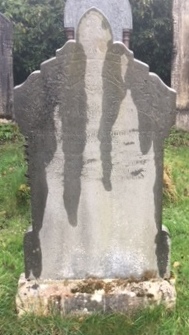
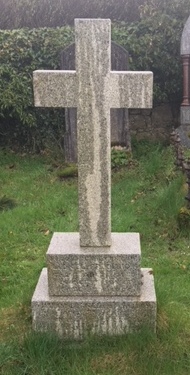
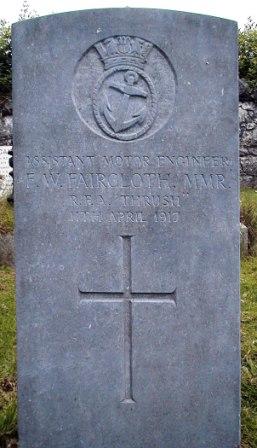
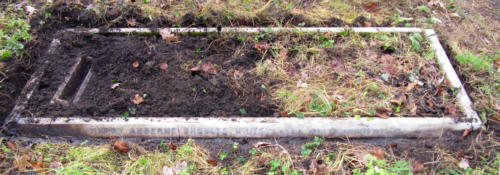
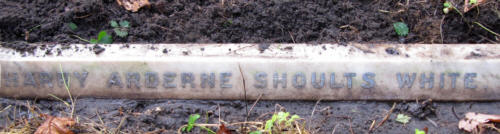
Engineer Harry A S White AMIAE MMR is buried on 17 April 1917 in plot 14. 5 St. Mary's Churchyard, Merton.
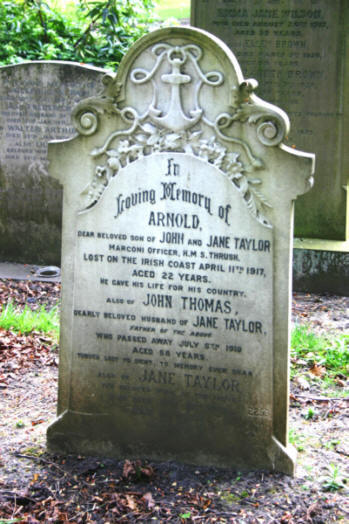
Wireless Telegraph Operator Arnold Taylor MMR is buried in Manchester Southern Cemetery.
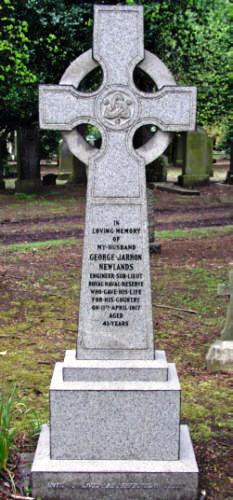
Engineer Sub-Lieutenant George J Newlands RNR is buried in Edinburgh (Comley Bank) Cemetery, Scotland.
Assistant Motor Engineer George Lionel Harvey MMR is buried in Southend-on-Sea (Sutton Road) Cemetery
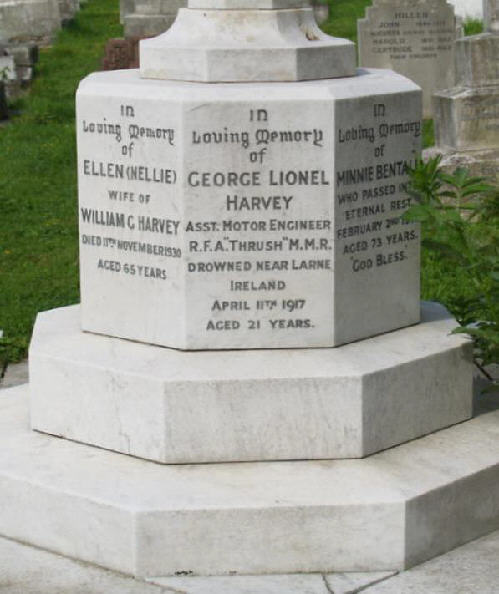
and Assistant Motor Engineer Herbert M Coombes MMR is buried in Manor Park Cemetery, East London
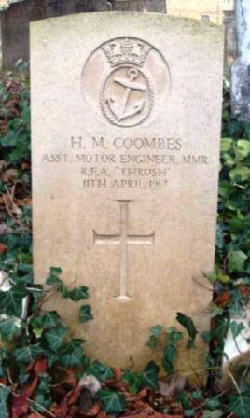
August 1993 her ships bell was recovered by divers
Notes:
The Anglo-Zanzibar War came about when Sultan Hamad bin Thuwaini died on 25/08/1896 and his nephew Khalid bin Bargarsh seized power in what amounted to a coup d’etat. The British, who had sovereignty over the Island, favoured another candidate who would have co-operated with their colonial administration and issued an ultimatum which demanded that Bargarssh should stand down. He refused, and instead assembled an army of 2800 men and the former Sultan’s armed yacht HMS GLASGOWwhich was anchored in the harbour. Two days later, the British assembled 5 warships in front of the Palace - the protected cruisers HM ships ST GEORGE, PHILOMEL and RACOONand the gunboats HM ships SPARROW and THRUSH - and landed a force of 900 Royal Marines and as soon as the ultimatum ran out, they opened fire at 0900. HMS GLASGOWwas soon sunk and with the Palace being destroyed around him, Bargarsh beat a hasty retreat and sought refuge at the German Consulate. The shelling ceased after 45 minutes thus making the War the shortest one in history.
Ships of the same name
Thrush. (ex Revenue Brig Prince of Wales) renamed on the 12 September 1806, a brig sloop of 307 bm, reduced to a powder hulk in October 1809 at Port Royal, Jamaica. Wrecked in July 1815.
Thrush. A wood screw gun vessel of the “Clown” class, launched by Briggs of Sunderland on the 12 May 1856. Broken up in 1864.