

Previous name: Lake Champlain HMS King George V (dummy battleship)
Subsequent name: Regina, Choran Maru
Official Number: 110650
Class: Stores Ship / Water Carrier / Oiler
Pennant No: X06 / X60
Laid down:
Builder: Barclay Curle & Company, Glasgow
Launched: 31 March 1900
Into Service: 1915
Out of service: 1942 (but see below)
Fate: Scuttled at Singapore during Japanese invasion. Salvaged, repaired and used as Japanese troopship
Items of historic interest involving this ship: -
Background Data:
She was originally built as a passenger ship for commercial owners and had the distinction of being the first British liner to leave on a North Atlantic crossing with a permanently-installed W/T set up. On the outbreak of WW1 she was initially requisitioned then later purchased by the Admiralty whom she served in a variety of roles before ending her days as an oil fuel jetty and pumping station at Singapore, where she was deliberately scuttled on the Japanese invasion
31 March 1900 launched by Barclay Curle & Co Ltd, Whiteinch as Yard Nr: 422 named LAKE CHAMPLAIN for the Beaver Line Service to Canada of Elder Dempster & Co Ltd, Liverpool. The nominal owners were the British & African Steam Navigation Co Ltd.
4 May 1900 completed. Carried 100 x 1st, 80 x 2nd and 500 x Steerage Class passengers
15 May 1900 sailed on her maiden voyage from Liverpool to Quebec and Montreal
12 June 1900 berthed at Liverpool from Montreal and Quebec
19 June 1900 sailed from Liverpool to Quebec and Montreal
27 June 1900 passed Cape Race
24 July 1900 sailed from Liverpool to Quebec and Montreal. Captain William Stewart was Master
25 July 1900 passed Malin Head
7 August 1900 at Montreal Trimmer Michael Clarke discharged dead - drowned
11 August 1900 sailed Montreal for Liverpool
28 August 1900 sailed from Liverpool for Londonderry, Quebec and Montreal
29 August 1900 sailed Moville, Lough Foyle for Quebec
14 September 1900 sailed Montreal for Liverpool
2 October 1900 sailed from Liverpool for Quebec and Montreal
11 October 1900 at 50°00N 59°30W passenger Anna Olsen discharged dead - appendicitus
6 November 1900 sailed from Liverpool for Quebec and Montreal
20 November 1900 at 52°32N 18°03W Able Seaman William J Scott discharged dead - fell down the hold
12 December 1900 The Royal Canadian Regiment embarked at Liverpool and sailed for Canada via Queenstown, Ireland
8 January 1901 arrived at Queenstown from Halifax and St. Johns
22 January 1901 sailed from Liverpool to Quebec and Montreal
19 February 1901 when on passage from St John, NB to Liverpool passed Brow Head
16 April 1901 sailed from Liverpool to Quebec
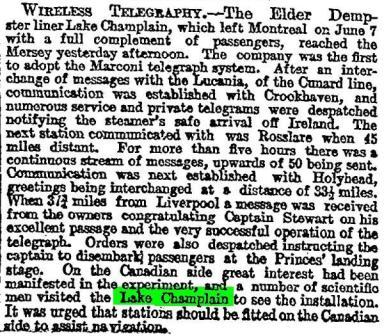
21 May 1901 she made history by leaving Liverpool as the first British liner to leave on a North Atlantic crossing with a permanently-installed wireless telegraphy setup. Among the passengers were a number of Mennonite immigrants.
2 June 1901 berthed at Quebec, PQ
7 June 1901 sailed Montreal for Liverpool
14 June 1901 when on passage from Montreal for Queenstown and Liverpool passed Brow Head
17 June 1901 arrived at Liverpool
18 June 1901 the Times newspaper reported ...
25 June 1901 sailed from Liverpool for Quebec and Montreal
26 June 1901 when on passage from Liverpool for Quebec and Montreal passed Brow Head
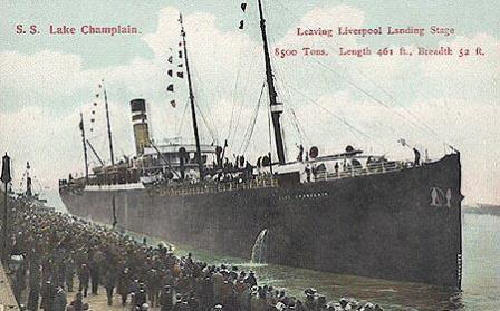
30 July 1901 sailed from Liverpool to Quebec and Montreal
31 July 1901 passed Roche's Point
9 August 1901 when on passage to Montreal passed Cape Chatte
3 September 1901 sailed Liverpool for Quebec and Montreal
11 September 1901 when on passage from Liverpool for Montreal passed Fame Point
14 September 1901 at Montreal General Hospital Steward Herbert Preston discharged dead - natural causes
26 October 1901 at Montreal Steward Alfred Eccles discharged dead - fractured skull
6 May 1902 sailed from Liverpool to Quebec
17 May 1902 berthed at Montreal from Liverpool
17 June 1902 passed Cape Race while on passage from Liverpool for Monteal
20 July 1902 at 54°35N 44°52W passenger Leiser Friedman (infant) discharged dead - natural causes
19 August 1902 sailed Liverpool
25 August 1902 passed Cape Magdelen while on passage from Liverpool for Monteal
23 September 1902 sailed Liverpool to Quebec arriving 2 October 1902. Among the passengers were a number of Mennonite immigrants.
3 October 1902 sailed Monteal to Liverpool
7 November 1902 at Quebec passenger Julianne Damer (child) discharged dead - natural causes
28 December 1902 at 44°00N 54°19W passenger H W Russell discharged dead - pneumonia
1902 she was taken up for Boer War Transport duties to South Africa
5 January 1903 at Liverpool Able Seaman Edward Newman discharged dead - drowned
6 April 1903 ownership passed to Canadian Pacific Railway Co, Liverpool - name unchanged
14 April 1903 made her first Canadian Pacific sailing
25 April 1903 due to heavy ice preventing her berthing at Montreal put into Halifax. The Captain reported that he had made several attempts to force a passage through the Gulf, but was driven back by ice; after two days of vain efforts trying to get through he decided to make for Halifax
25 April 1903 at Halifax, Nova Scotia Harbour passenger Martha Lutowska (child) discharged dead - natural causes
29 May 1903 at 47°30N 59°15W passenger Fanny Woodcock discharged dead - natural causes
24 June 1903 passed Rathlin Island while on passage from Liverpool to Montreal
28 July 1903 sailed Liverpool for Canada
10 November 1903 sailed Liverpool for Canada
8 December 1903 berthed at Liverpool from St. John, New Brunswick, Canada
22 December 1903 sailed Liverpool for Canada
18 March 1904 at 54°05N 20°30W passenger William Summerfield discharged dead - he fell or jumped overboard - drowned
13 April 1904 berthed at Liverpool from St John, New Brunswick, Canada
13 May 1904 at Montreal Trimmer Jaz Kelly discharged dead - drowned
19 June 1904 berthed at Liverpool from Quebec, Canada
2 October 1904 berthed at Liverpool from Canada
7 February 1905 sailed from Liverpool for St John's NB
17 August 1905 at 48°50N 63°30W passenger Alberta Ball (infant) discharged dead - natural causes
20 September 1905 at 46°41N 52°39W Assistant Steward George Skillicorn discharged dead - pneumonia
9 October 1905 berthed at Liverpool from Montreal and Quebec
13 November 1905 berthed at Liverpool from Montreal and Quebec
13 December 1905 at 44°15N 53°40W passenger Peter Teies discharged dead - pneumonia
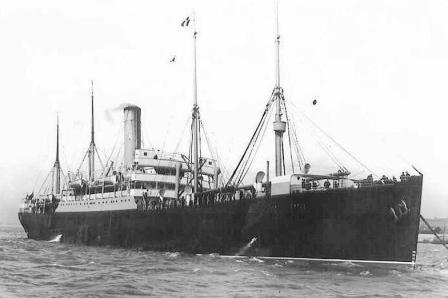
1906 converted to carry 150 x 2nd and 1000 x 3rd Class passengers
27 January 1906 at 50°50N 24°04W passenger William Walbourne discharged dead - natural causes
30 January 1906 berthed at Liverpool from St John New Brunswick with 83 passengers
13 February 1906 sailed Liverpool for Canada
19 February 1906 at 50°30N 32°00W passenger Edward John Drew (infant) discharged dead - natural causes
5 March 1906 sailed Haliafx to Liverpool arriving 15 March 1906
8 May 1906 sailed Liverpool for Canada
19 May 1906 berthed at Quebec from Liverpool
21 November 1906 sailed Liverpool with 77 immigrants organised by the Salvation Army
20 Deccember 1906 at 52°08N 6°18W passenger Thomas H Morton discharged dead - tuberculosis
21 January 1907 at 42°18N 60°00W passenger Nils Anderson dischared dead - missing at sea presumed drowned
13 February 1907 sailed Liverpool for Canada with a party of immigrants organised by the Salvation Army
27 March 1907 sailed Liverpool for Belfast
28 March 1907 sailed Belfast for St John's NB
30 March 1907 at 54°49N 17°26W passenger William Cheeseman discharged dead - jumped overboard and was drowned
8 May 1907 sailed Liverpool to Canada
19 June 1907 sailed Liverpool for Quebec and Montreal
30 June 1907 arrived at Montreal
31 July 1907 sailed Liverpool to Canada with a party of 176 immigrants from Woolwich
23 October 1907 sailed Liverpool to Canada
10 November 1907 off Richeleau River, St Lawrence passenger William Sherman discharged dead - found hanged
26 February 1908 sailed Liverpool to Canada
1 March 1908 at 54°22N 20°10W passenger Alice Curwen discharged dead - cardiac failure
8 April 1908 sailed Liverpool to Canada
1 June 1908 berthed at Quebec from Liverpool
1 July 1908 sailed Liverpool
28 November 1908 at 51°15N 30°40W passenger James Jenkins discharged dead - natural causes
7 May 1909 damaged by ice and put into St John's, Newfoundland
21 July 1909 berthed at Liverpool from Montreal and Quebec
31 August 1909 berthed at Liverpool from Montreal & Quebec, Canada with 142 passengers8 December 1909 sailed Liverpool for St John, N.B.
19 December 1909 arrived at St John, N.B. from Liverpool
16 March 1910 sailed Liverpool for St Johns, N.B.
11 April 1910 at 54°58N 14°44W passenger Mary Green (child) discharged dead - natural causes
19 June 1910 berthed at Liverpool from Montreal and Quebec
12 August 1910 sailed Liverpool for St Johns, N.B.
5 September 1910 at 54°38'N 44°36'W passenger Elizabeth Jane Glynn (infant) discharged dead - natural causes
April 1911 in collision with an iceberg which caused little damage and she proceeded to St John’s, Nova Scotia
27 April 1911 sailed Liverpool for Canadian ports
25 May 1911 sailed Liverpool for Canadian ports
23 June 1911 sailed Liverpool for Quebec, Canada
18 July 1911 berthed at Liverpool from Montreal, Canada with 311 passengers. Captain G Webster was the Master
20 July 1911 sailed Liverpool for Canadian ports
17 August 1911 sailed Liverpool for Canadian ports
14 September 1911 sailed Liverpool for Canadian ports
12 October 1911 sailed Liverpool for Canadian ports
9 November 1911 sailed Liverpool for Canadian ports
25 April 1912 sailed Liverpool to Belfast, Quebec and Montreal, Canada with 337 passengers. Captain H G Kendall was Master
26 April 1912 sailed Belfast
2 May 1912 at 48°26N 45°51N passenger William Drew discharged dead
25 May 1912 sailed Liverpool to Belfast, Quebec and Montreal, Canada with 710 passengers. Captain H G Kendall was Master
17 June 1912 at 50°41N 40°17W passenger Elizabeth McCallum discharged dead - heart failure
26 June 1912 sailed Liverpool to Belfast, Quebec and Montreal, Canada with 583 passengers. Captain H G Kendall was Master
3 July 1912 when on passage to Montreal from Liverpool signalled Cape Race when 70 nmiles to the east
25 July 1912 sailed Liverpool to Belfast, Quebec and Montreal, Canada with 440 passengers. Captain H G Kendall was Master
3 September 1912 grounded opposite Dominion Park, Montreal
15 October 1912 berthed at Liverpool from Montreal
19 November 1912 berthed at Liverpool from Montreal, Canada with 599 passengers with Captain H G Kendall as Master
30 January 1913 when on passage from Antwerp passed Prawle Point
7 March 1913 renamed RUTHENIA after an Austrian Province as her owners had negotiated an agreement with the Austrian State Railways for a passenger and cargo service from Trieste to St John, N.B. and she was transferred to this new run
23 March 1913 at Naples when on passage from Trieste to St Johns
26 March 1913 during an Atlantic crossing reproted a very large iceberg at 44°23'N 43°43'W
3 May 1913 sailed Naples for St John N.B.
1 June 1913 at 32°16'N 30°00'W passenger George Paruearas discharged dead - pneumonia
4 June 1913 arrived Quebec, Canada from Trieste
10 July 1913 sailed Trieste for Montreal, Canada
18 July 1913 at 36°20'N 3°21'W passenger George P Peslemesoglon discharged dead from heart failure
24 October 1913 at Naples
24 November 1913 sailed Trieste, Palermo and Naples to Montreal and Quebec
29 November 1913 sailed Montreal
7 December 1913 at 44°48'N 37°27'W pasenger Stefan Naviotsky discharged dead - endocarditis
12 January 1914 sailed Naples for St John NB
7 April 1914 berthed at Liverpool from St Johns, NB., Quebec and Montreal, Canada
16 April 1914 sailed Liverpool to Belfast, Quebec and Montral, Canada with 276 passengers. Captain Henry G Kendall was Master
17 April 1914 sailed Belfast to Quebec and Montral, Canada with 276 passengers. Captain Henry G Kendall was Master
30 April 1914 at Montreal, Canada
7 May 1914 sailed Montreal
19 May 1914 passed the Old Head of Kinsail
20 May 1914 berthed at Liverpool from Quebec and Montreal, Canada with 59 passengers
1 July 1914 arrived at Montreal from Antwerp
August 1914 was hired by the Admiralty for service as a British Expeditionary Force transport and was renamed REGINA for a short while
22 August 1914 while sea at 38°50N 9°06E Labourer Alonzi Allessandro discharged dead - jumped over the side and drowned
13 September 1914 sailed Liverpool to Quebec and Montreal, Canada with 117 passengers. Captain J Gillies was Master
29 September 1914 17th Battalion (Nova Scotia Highlanders) embarked with a compliment of 39 officers and 717 other ranks, under the command of Lieutenant-Colonel S.G. Robertson and sailed on 3 October 1914
5 October 1914 at 46°05N 53°48W Private James Nichols, Royal Warwickshire Regiment discharged dead - suffering from Ludwig's Angina
14 October 1914 arrived at Plymouth and the Canadian troops disembarked at Devonport on 21 October 1914
4 November 1914 arrived Belfast for conversion into the Dummy Battleship HMS KING GEORGE V and on completion of conversion was based at Loch Ewe.
6 July 1915 she paid off at Govan on disbandment of the DBS Squadron, was converted into a Stores Ship and Water Carrier and served at Scapa Flow under her previous name RUTHENIA.
20 October 1915 Engineer Lieutenant Commander William Gibb RNR appointed as Chief Engineer Officer
1 January 1916 at Govan fitting our for service in the Mediterrean
5 January 1916 Lieutenant Alexander C Birch RNR appointed in command
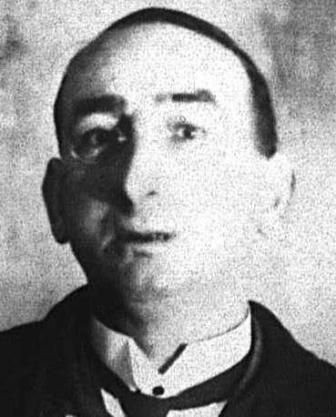
Lieutenant Alexander C Birch RNR
29 January 1916 she was purchased outright by the Admiralty
13 December 1916 at Scapa Flow sailors from HMS RENOWN onboard drawing Naval Stores
21 August 1917 Stoker Robert Smith RNR circulated in the Police Gazette of this day for desertion on 4 August 1917
2 April 1918 Stoker John Laverick and Stoker Alexander Moore both circulated in the Police Gazette of this day on page 6 for desertion on 17 March 1918
6 June 1918 at Scapa Flow with a working party from HMS COMMONWEALTH drawing Naval Stores

HMS COMMONWEALTH
1918 was fitted with cylindrical tanks to carry 5,000 tons of oil
8 October 1918 Able Seaman William Wilson MMR circulated as wanted in the Police Gazette for desertion on 15 September 1918
24 March 1919 at anchor at Longhope, Scapa Flow with NAV ISLEFORD alongside
15 September 1919 alongside on No: 1 Jetty at Devonport
15 December 1919 secured to No: 2 buoy at Devonport
1919 as an oiler and was sent to the China Station where she spent the winters at Hong Kong and the summers at Wei-Hai-Wei.
28 June 1920 Mr Thomas Perrett RFA appointed as Chief Engineer Officer
27 July 1920 Captain Percival Skone-Rees RFA appointed as Master
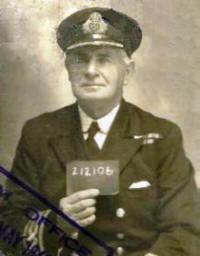
Captain Percival Skone-Rees RFA
8 April 1921 at Hong Kong berthed alongside HMS CURLEW to replenish her
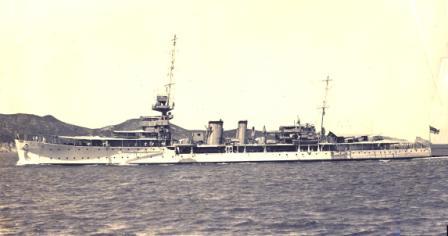
HMS CURLEW
18 April 1921 at Hong Kong berthed alongside HMS HAWKINS to replenish her
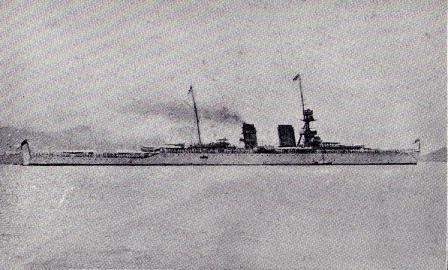
6 October 1921 at Woosung berthed alongside HMS CURLEW to replenish her
16 October 1921 at Vine Point with HMS MANTIS alongside
3 November 1921 at Woosung Roads
6 April 1922 at Hong Kong alongside HMS DURBAN to replenish her
26 April 1922 at Hong Kong with HMS HAWKINS alongside
11 May 1922 arrived at Wei-Hai-Wei - details of her arrival from the log book of HMS AMBROSE
12 May 1922 at Wei-Hai-Wei alongside HMS CURLEW to refuel her
17 May 1922 at Wei-Hai-Wei alongside HMS HAWKINS and oiled her
5 July 1922 at Wei-Hai-Wei alongside HMS HAWKINS to refuel her
19 July 1922 alongside HMS CURLEW to refuel her
11 July 1922 sailed from Wei-Hai-Wei
29 August 1922 at Hong Kong entered dry dock
7 September 1922 undocked
28 September 1922 at Hong Kong with HMS's CICALA and HOLLYHOCK alongside
8 December 1922 at Hong Kong with HMS CARLISLE alongside
1 February 1923 at Hong Kong HMS TARANTULA came alongside to be refuelled
14 February 1923 at Hong Kong HMS TARANTULA came alongside to be refuelled
17 April 1923 at Hong Kong HMS TARANTULA came alongside to be refuelled
7 June 1923 at Wei-Hai-Wei Naval Hospital Fitter To Far discharged dead having suffered from smallpox. He had signed on at Hong Kong on 17 May 1923
27 June 1923 at Wei-Hai-Wei received stores party onboard from HMS DURBAN then moved alongside HMS DESPATCH causing damage to the cruiser
13 and 14 August 1923 at Wei-Hai-Wei received stores party onboard from HMS DURBAN and a stores party from HMS AMBROSE returned 'empties'
20 August 1923 sailed Wei-Hai-Wei
5 September 1923 at Hong Kong HMS TARANTULA came alongside to be refuelled
16 June 1924 Captain Richard D Williams RFA appointed as Master
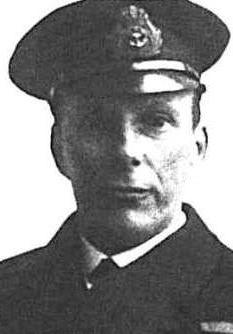
Captain Richard D Williams RFA
5 December 1924 Hong Kong Police searched the ship resulting in a large quantity of opium valued at $4,000 being seized. Two members of the crew - a sailor and a fireman were taken into custody to be charged before the local Magistrate in due course
1927 she was laid up at Singapore with worn out boilers and converted for service as an oil fuel jetty and pumping station at the Woodlands Naval Tank Storage facility near the Johore Causeway
5 March 1928 at Hong Kong a RFA Dinner Dance was held at Crawford's Restaurant and was voted a great success - Officers and their Ladies from RFA's BELGOL, FORTOL, FRANCOL, RUTHENIA and KHARKI attended
11 February 1929 Captain Eric Parker RFA appointed as Master until 28 March 1929
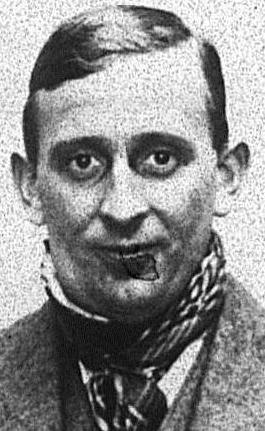
Captain Eric Parker RFA
March 1929 arrived at Singapore from Hong Kong to be based at Seletar
16 January 1940 at Singapore with RFA PEARLEAF (1) alongside her and with HMS FALMOUTH alongside being refuelled by Pearleaf
21 October 1940 at Singapore with HMAS VOYAGER alongside to refuel
6 December 1941 at Singapore with the tanker British Judge alongside and HMAS MANOORA outboard being refuelled
10 December 1941 at Singapore with HMAS MARYBOROUGH alongside to refuel
16 February 1942 was deliberately scuttled on the Japanese invasion but was raised by them and she was named CHORAN MARU
3 March 1943 at Seletar Naval Base her tanks were removed, primitive accommodation was added
10 June 1943 change in accomodation complete. Registered in the Kure Naval District as a specially installed transport ship (oil supply)
26 June 1943 sailed Singapore
28 June 1943 arrived Palembang, Sumatra to load fuel oil
1 July 1943 sailed Palembang, Sumatra
5 July 1943 berthed at Singapore to discharge
16 July 1943 sailed Singapore
17 July 1943 arrived at Palembang, Sumatra to load fuel oil
22 July 1943 sailed Palembang, Sumatra
24 July 1943 berthed at Singapore to discharge
5 August 1943 sailed Singapore
6 August 1943 arrived at Palembang, Sumatra to load fuel oil
8 August 1943 sailed Palembang, Sumatra
10 August 1943 berthed at Singapore to discharge
18 August 1943 sailed Singapore
19 August 1943 arrived at Palembang, Sumatra to load fuel oil
19 January 1944 berthed at Singapore to discharge
27 January 1944 sailed Singapore
28 January 1944 arrived at Palembang, Sumatra to load fuel oil
30 January 1944 sailed Palembang, Sumatra with tanker Unkai Maru No: 5
1 February 1944 berthed at Singapore to discharge
6 February 1944 sailed Singapore
7 February 1944 arrived at Palembang, Sumatra to load fuel oil
9 February 1944 sailed Palembang, Sumatra
11 February 1944 berthed at Singapore to discharge
15 February 1944 sailed Singapore
16 February 1944 arrived at Palembang, Sumatra to load fuel oil
19 February 1944 sailed Palembang, Sumatra
20 February 1944 arrives at Kepuluan Lingga
22 February 1944 refuels the Heavy Cruiser Tone with 1,774 tons of fuel
24 February 1944 sailed Linggua
25 February 1944 arrived at Palembang, Sumatra to load fuel oil
27 February 1944 sailed Palembang, Sumatra
1 March 1944 arrives at Lingga anchorage refuels the Heavy Cruiser Tone with 130 tons of fuel
3 March 1944 sailed Linggua
4 March 1944 arrived at Palembang, Sumatra to load fuel oil
7 March 1944 sailed Palembang, Sumatra
9 March 1944 berthed at Singapore to discharge
12 March 1944 sailed Singapore
13 March 1944 arrived at Palembang, Sumatra to load fuel oil
15 March 1944 sailed Palembang, Sumatra
17 March 1944 arrives at Lingga anchorage
19 March 1944 sailed Linggua
20 March 1944 arrived at Palembang, Sumatra to load fuel oil
22 March 1944 sailed Palembang, Sumatra
24 March 1944 arrives at Lingga anchorage
26 March 1944 sailed Linggua
28 March 1944 arrived at Palembang, Sumatra to load fuel oil
31 March 1944 sailed Palembang, Sumatra
1 April 1944 underwent modifications at Singapore
11 April 1944 refuels the Cruiser Atago with fuel oil
15 May 1944 at Lingga refuels the Cruiser Atago with fuel oil
1945 was recovered by the Royal Navy at Singapopre and was used to transport POW's and her name reverted to RUTHENIA
30 October 1946 she ran aground off Pladjoe in the Moesi River and 3 attempts were made by the tugs EMPIRE COURIER and GRIPER to pull her off
12 November 1946 she was finally refloated with the united efforts of 3 tugs, an Indonesian dredger and much heavy ground tackle and repairs were effected
22 May 1947 sailed Singapore to Kure with 5,000 Japanese Prisoners of War as passengers
6 August 1947 loaded a further 5,500 Japanese Prisoners of War at Singapore for the third repatriation trip of prisoners of war to Japan
12 March 1949 after serving at Vladivostock, she returned to Singapore and was sold to BISCO for scrap.
3 April 1949 sailed Singapore in tow of the tug ENGLISHMAN
18 June 1949 arrived at Dalmuir for partial breaking up by W.H. Arnott Young & Co Ltd.
18 July 1949 was towed to Troon for final demolition
Notes:
When Elder Dempster sold their Canadian interests (Beaver Line) to the Canadian Pacific Railway Co for the sum of £1,417,500, a total of 14 ships plus 3 tugs were involved in the deal and these were as follows: LAKE CHAMPLAIN (RUTHENIA), LAKE ERIE (SAXOL), LAKE MANITOBA, LAKE MICHIGAN, MILWAUKEE, MONTCALM (CRENELLA), MONTEAGLE, MONTEREY, MONTEZUMA (ABADOL), MONTORT, MONTREAL, MOUNT ROYAL (RANGOL), MOUNT TEMPLE & MONTROSE and the 3 Liverpool tugs AFRICAN, BEAVER & OTTER