

Reproduced with permission of the MOD


Previous name:
Subsequent name: Sir G
Official Number: 334551
Class: SIR LANCELOT CLASS Landing Ship Logistics
Pennant No: L3027
Laid down: 8 January 1966
Builder: Stephen, Linthouse
Launched: 26 January 1967
Into Service: January 1970
Out of service: 1 May 2003
Fate: Scrapped in India 12 December 2005
Items of historic interest involving this ship: -
Background Data: In December 1961 the following announcement was made: War Office Military Supply Ship: “A 6000t ocean-going twin screw military supply vessel has been ordered by the MOT from the Fairfield Shipbuilding and Engineering Co Ltd at Govan, who are to develop the final specifications of the ship, which is expected to cost about £1 million. Building will start around February 1962 and the ship is expected to be in service late in 1963 or early in 1964. The design calls for a fast troop and vehicle carrier capable of discharging onto beaches. She will have bow and stern loading facilities for tanks and military vehicles, ramp loading hatches, cargo handling cranes and provision for carrying and launching pontoons. A helicopter will be carried aft, and on completion she will have a Merchant Navy crew and will be managed by the British India Steam Navigation Co Ltd. In March 1963 it was announced that tenders were to be invited for a further two vessels at a cost of £2 million each and all three would then replace thirteen former Tank Landing Ships and would be part of an eventual Class of five or six ships, all of which would be named after Knights of the Round Table. The final three vessels were ordered in April 1965, and in December 1968 it was announced that as from January 1970, the management of these six vessels, as well as that of one ex-LST, would be transferred to the RFA
8 January 1966 laid down as LSL 04
26 January 1967 launched by Alexander Stephen & Sons Ltd, Linthouse as Yard Nr: 691 named SIR GERAINT for the Ministry of Transport
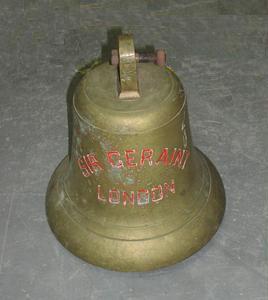
12 July 1967 completed and placed under management of British India Steam Navigation Co Ltd., London
1 June 1969 sailed Malta with the 3rd Parachute Regiment onboard to take part in Operation Express in the Cyprus area
16 December 1969 was berthed at Marchwood Military Port and loaded equipment for 52 Port Squadron RCT and awaited orders to sail to Tobruk with eight members of the Squadron. The orders were then cancelled and the troops disembarked and the equipment was discharged. The ship then sailed empty save for about 100 MWT packing cases
16 January 1970 berthed at Tobruk from the UK to load military cargo, ammunition and 43 vehicles during the withdrawl of British Forces from Libya
19 January 1970 sailed from Tobruk for the UK to discharge
5 February 1970 berthed at Tobruk from the UK to load military cargo, ammunition, 40 vehicles and 2 passengers during the withdrawl of British Forces from Libya
7 February 1970 sailed Tobruk for the UK to discharge
5 March 1970 management transferred to the RFA
24 March 1970 berthed at Tobruk from the UK to load military cargo, 48 vehicles and 327 passengers during the withdrawl of British Forces from Libya
28 March 1970 sailed with RFA EMPIRE GULL from Tobruk for the final withdrawl of British Forces from Libya
19 October 1970 berthed at Malta
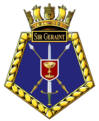
25 January 1971 her Ship’s Badge was officially presented to her
3 May 1971 at Campbletown with HMS FEARLESS and HMS CAVALIER engaged in Exercise Moon Lady and involved the 2nd Battalion Royal Irish Rangers
6 May 1971 the embarked troops landed at the islands of Falster and Zeeland, Denmark for Army Exercises
26 January 1972 to 7 February 1972 along with HMS's FEARLESS and RFA’s SIR BEDIVERE and SIR TRISTRAM she was part of the British Amphibious Task Force patrolling off British Honduras to provide an anti-invasion force
April 1972 freighted large quantities of service equipment and belongings from Malta following Mr Mintoff’s ultimatum and the evacuation of British forces from the island
25 May 1973 sailed from Malta
17 August 1973 at Pinto Wharf, Malta the steveadores being used to assist in the unloading of cargo claimed they had delayed the work through industrial action
28 November 1973 at Chatham
28 June 1974 at Marchwood Military Port
23 May 1976 until 7 June 1976 at Pitcairn Island, Pacific Ocean
1977 was the first ship to berth at the new ships berth at RAF Akrotiri, Cyprus which had been built by a team from the Royal Engineers during 1976
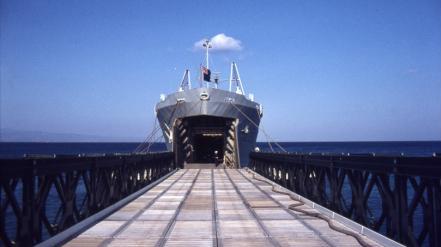
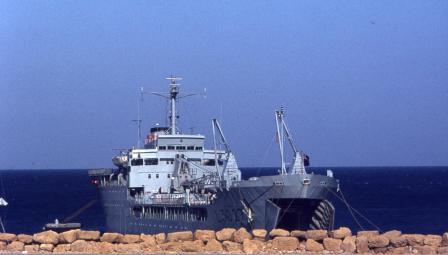
May 1977 was in Operation Pallium - was deployed to Pitcairn Island with a detachment of Royal Engineers with machinery and materials to improve landing facilities in Botany Bay and to improve some roads
24 June 1977 to 29 June 1977 took part in the Silver Jubilee Fleet Review at Spithead with eight other RFA's and units of the Royal Navy and foreign navies. Carried Official guests from Southampton Ocean Terminal along the lines of ship being reviewed by HM the Queen and returned them to Southampton Ocean Terminal
4 September 1977 at Marchwood Military Port
6 October 1977 at Marchwood Military Port
21 June 1979 in collision with the German tanker Tarpenbek in the English Channel 5.5 miles south west of Selsey Bill in thick fog. The Tarpenbek sank
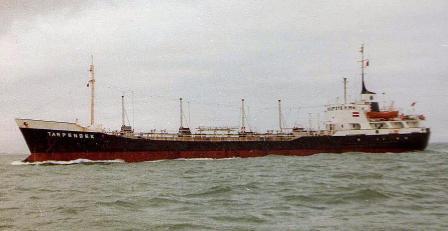
German tanker mv Tarpenbek
30 May 1980 arrived at Glasgow from Belfast with 570 men of the 1st Battalion, The Royal Scots after a four month tour of duty in the province
7 August 1980 at a Board of Trade enquiry at Southampton into the above collision the Master of the Sir Geraint was deemed to be at fault
19 June 1981 secured to the Netley Buoys, Southampton Water
1 April 1982 at Devonport berthed alongside No: 1 jetty
2 April 1982 destoring ship prior to entering dry-dock
3 April 1982 restoring ship
4 April 1982 at Devonport loading 616 tons of bunkers, 76 tons of fresh water, ammunition and vehicles
5 April 1982 at Devonport loaded a further 141 tons of bunkers
6 April 1982 sailed Devonport for service during Operation Corporate - the Falklands Conflict - with 450 Royal Marines and 3 Gazelle helicopters embarked
7 April 1982 the Amphibious Landing Group assembled at sea and other ships were RFA’s SIR LANCELOT, SIR PERCIVALE, SIR GALAHAD (1), SIR TRISTRAM and PEARLEAF (2)
11 April 1982 Amphibious Landing Group joined by RFA STROMNESS
19 April 1982 arrived and anchored off Ascension Island
24 April 1982 off Ascension Island berthed alongside RMAS TYPHOON loading fresh water to her
29 April 1982 sailed Ascension Island in company with RFA’s SIR GALAHAD (1), SIR LANCELOT, SIR PERCIVALE ,SIR TRISTRAM and PLUMLEAF (2) and HM ships FEARLESS, INTREPID and ANTELOPE with troops and stores for the Falkland Islands
8 May 1982 entered the TEZ around the Falkland Islands
11 May 1982 RASed with RFA PLUMLEAF (2) at 41°52S 32°31W receiving 312 tons of bunker fuel
21 May 1982 anchored in San Carlos Water with the Amphibious Landing Group
26 May 1982 sailed San Carlos Water
5 June 1982 in San Carlos Water berthed alongside RFA BLUE ROVER and received 405 tons of bunker fuel
8 June 1982 assisted in the salvage of her sister RFA SIR TRISTRAM which had grounded damaged in Fitzroy Creek after an Argentinian air attack
10 June 1982 anchored in Teal Inlet
12 June 1982 in San Carlos Water berthed alongside the STUFT mv Elk and also later RFA BLUE ROVER
13 June 1982 in Teal Inlet discharging cargo
14 June 1982 in San Carlos Water alongside RFA OLNA (3)
15 June 1982 in San Carlos Water berthed alongside the STUFT mv Elk
17 June 1982 anchored at Port Pleasant Water
19 June 1982 until 25 June 1982 at Port Pleasant Water with RFA SIR TRISTRAM berthed alongside
26 June 1982 at Port William berthed along STUFT mv Fort Toronto
28 June 1982 at Port Stanley berthed alongside STUFT mv Baltic Ferry
29 June 1982 at Port Stanley berthed alongside RFA SIR LANCELOT
30 June 1982 sailed from the Falkland Islands
10 July 1982 arrived at Ascension Island berthed alongside STUFT mv ALVEGA loaded 190 tons of bunker fuel
11 July 1982 sailed Ascension Island for Marchwood Military Port
23 July 1982 berthed at Marchwood Military Port at the end of her Operation Corporate service
24 July 1982 discharged cargo and loaded 115 tons of fresh water
28 July 1982 sailed Marchwood Military Port to Devonport arriving the next day berthing in No: 4 basin
3 August 1982 at Devonport discharged 300 tons of bunker fuel
4 August 1982 at Devonport discharged remaining 70 tons of bunker fuel
9 August 1982 at Devonport cold move to No 9 dry dock - ship in dockyard hands in refit
22 September 1982 at Devonport No: 9 dry dock flooded up - ship still in dockyard hands in refit
10 June 1983 sailed from the Falkland Islands with, as part of its cargo, one Beech T34C Mentor aircraft which had been disabled by D Squadron, 22 SAS Regiment when they visited Pebble Island during Operation Corporate
4 July 1983 berthed at Marchwood Military Port
25 September 1984 was awarded her Falkland Islands 1982 Battle Honour at Marchwood by Mr A Kemp DST (SF)
10 September 1985 at Port Stanley, Falkland Islands
10 March 1986 at Marchwood Military Port
21 June 1986 at Marchwood Military Port
7 July 1987 Captain Brian J Waters RFA appointed as Master
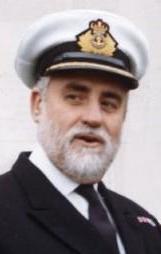
Captain Brian J Waters RFA
31 August 1988 together with all the other LSL's with the exception of RFA SIR LANCELOT was involved in Exercise Teamwork 88
12 September 1988 during Exercise Teamwork 88 with a full load of troops embarked, she ran aground about 22:45 local time near Kvalholmen at the entrance to the Hemnefjorden in Norway. German and Dutch minesweepers tried to pull her off, but only succeeded in turning her through 180 degrees. The tide fell and left her stuck fast. A decision was made to wait for high tide, but new attempts the following morning again proved unsuccessful
13 September 1988 further participation in the Exercise was cancelled and RMAS SALMASTER was sent to Norway from the UK to assist her. Divers found the LSL to have an 18 ft. split in her hull that required patching by SALMASTER’s crew, before she could be refloated by two Nato minesweepers and a tug which finally pulled her clear about 1400 local time and she anchored nearby before being taken for emergency docking at Alesund a few days later. Various stores, guns and ammunition were loaded into SALMASTER for return to the UK. She entered the floating dry dock at Fiskerstrand near Alesund for temporary repairs before proceeding to the Tyne for refit and permanent repairs
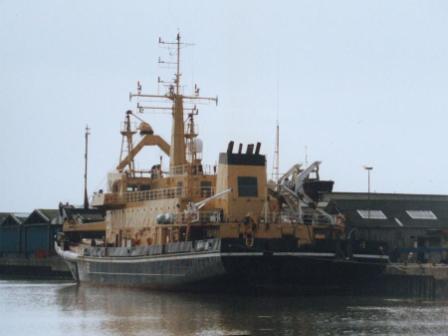
RMAS SALMASTER - A186
11 December 1990 at Marchwood and Captain Pat Thompson RFA appointed as Commanding Officer
15 June 1991 at Antwerp
4 January 1992 together with RFA's SIR GALAHAD (2) and SIR TRISTRAM sailed Devonport for Exercises off Norway
10 July 1992 at North Shields and Captain Pat Thompson RFA appointed as Commanding Officer
26 January 1993 berthed at Marchwood Military Port
19 April 1993 arrived at Devonport sailing the same day with RFA SIR TRISTRAM
1 May 1993 Captain David Gerrard RFA appointed as Commanding Officer
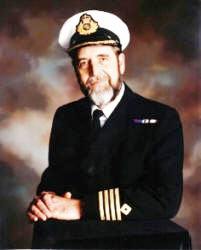
Captain David Gerrard RFA
4 May 1993 arrived at Milbay Docks, Plymouth sailing the same day in company with RFA's SIR BEDIVERE and SIR TRISTRAM
2 July 1993 berthed at Marchwood Military Port
20 September 1993 berthed at Portsmouth Dockyard
9 October 1993 berthed at Marchwood Military Port
1 December 1993 berthed at Split
6 December 1993 Captain (E) Edward M Quigley RFA appointed as Chief Engineer Officer
25 December 1993 alongside at Split
April/May 1994 participated in Exercise Dynamic impart 94 in the the Mediterrean with RFA's SIR GALAHAD (2) and SIR TRISTRAM
3 June 1994 at Portland and Captain Pat Thompson RFA appointed as Commanding Officer
13 June 1994 berthed at Marchwood Military Port
15 June 1994 sailed from Marchwood Military Port
23 June 1994 berthed at Marchwood Military Port
10 July 1994 berthed at Marchwood Military Port
29 July 1994 sailed from Marchwood Military Port
30 September 1994 alongside at Marchwood Military Port
7 October 1994 sailed from Marchwood Military Port
3 November 1994 berthed at Marchwood Military Port
8 November 1994 sailed from Marchwood Military Port
8 December 1994 whilst on passage from Antwerp to Marchwood Military Port, she had to divert to Dover to carry out emergency repairs to her bow doors
3 January 1995 berthed and sailed from Devonport
January 1995 Captain Richard L Williams RFA was in command
10 January 1995 berthed at Devonport
25 January 1995 berthed and sailed Devonport
3 March 1995 at Kristiansund, Norway
13 March 1995 berthed at Marchwood Military Port
20 March 1995 sailed from Marchwood Military Port
28 March 1995 berthed at Marchwood Military Port
9 April 1995 at Marchwood Military Port
21 April 1995 berthed and sailed from Devonport
16 May 1995 anchored in Plymouth Sound
17 May 1995 sailed from Plymouth Sound
20 May 1995 berthed at Marchwood Military Port
May 1995 engaged in Exercise Destined Glory 95
June 1995 Captain N A Jones RFA was in command and engaged in JMC952
15 June 1995 arrived at Devonport
11 July 1995 sailed from Devonport
14 July 1995 berthed at Marchwood Military Port
14 September 1995 berthed at Marchwood Military Port
11 October 1995 berthed at Marchwood Military Port
19 October 1995 sailed from Marchwood Military Port
29 October 1995 arrived at Plymouth Sound for work up
15 December 1995 arrived at Devonport
29 January 1996 arrived at Devonport
12 February 1996 sailed from Devonport
19 March 1996 arrived at Devonport
4 April 1996 sailed Devonport
15 April 1996 arrived at Millbay Docks, Plymouth
16 April 1996 sailed from Milbay Docks, Plymouth
31 July 1996 berthed at Marchwood Military Port
3 August 1996 arrived at Devonport
19 September 1996 berthed at Marchwood Military Port
26 September 1996 sailed from Marchwood Military Port
16 October 1996 at Greenock and Captain Alan T Roach RFA appointed in command
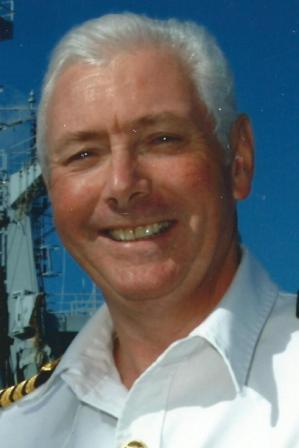
Captain Alan T Roach RFA
18 November 1996 berthed at Marchwood Military Port
19 November 1996 sailed from Marchwood Military Port
16 January 1997 sailed U.K. as part of Task Group 327.01 - the Ocean Wave 97 Deployment to the Far East led by the carrier HMS ILLUSTRIOUS - along with RFA’s DILIGENCE, FORT AUSTIN, FORT GEORGE, OLNA (3), SIR GALAHAD (2) and SIR PERCIVALE
1 February 1997 transitted the Suez Canal southbound
18 February 1997 at Cochin
20 March 1997 at Singapore
17 June 1997 at Manila
7 July 1997 at Singapore
August 1997 Captain Jeremy R J Carew OBE RFA was in command
15 August 1997 at Cape Town
May 1998 on passage to Cyprus
1998 during a voyage from the UK to Texas she encountered very heavy weather which allowed water to enter her bow door space through a hole in the top. As a result all of the Class were fitted with CCTV
25 July 1999 berthed at Marchwood Military Port
27 August 1999 berthed at Marchwood Military Port
11 December 1999 arrived Marchwood Military Port to unload after Exercise Bright Star off the coast of Egypt
May 2000 to July 2002 during this period she was part of Operation Palliser- support to British forces in Sierra Leone - along with RFA’s SIR TRISTRAM and SIR PERCIVALE at different times. She arrived at Freetown in 04/01
18 May 2000 berthed at Grand Harbour, Malta. Temporary Acting Captain (E) Mike New RFA appointed as Chief Engineer Officer
30 June 2000 at Marchwood Military Port
12 July 2000 at Portsmouth Dockyard
30 July 2000 at Marchwood Military Port
3 September 2000 sailed Devonport as support ship to HMS's MIDDLETON, PEMBROKE & SANDOWN
5 October 2000 at Marchwood Military Port
28 April 2001 at Marchwood Military Port
14 May 2001 arrived Devonport for FOST training
5 May 2001 at Marchwood Military Port
23 May 2001 to 24 May 2001 berthed at Santa Cruz, Spain
19 July 2001 Temporary Acting Captain (E) Mike New RFA appointed as Chief Engineer Officer
25 October 2001 Captain Roger Robinson-Brown RFA appointed as Commanding Officer
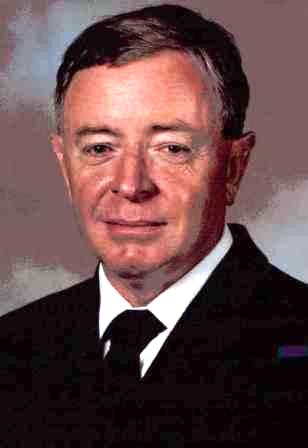
Captain Roger Robinson-Brown RFA
25 December 2001 at Freetown, Sierra Leone
25 January 2002 Captain (E) Robert Settle RFA appointed as Chief Engineer Officer
28 July 2002 finally sailed from Freetown at the end of Operation Silkman
6 August 2002 arrived Marchwood for the very last time
16 September 2002 arrived Portsmouth for lay up at extended readiness
1 May 2003 was officially withdrawn from service and was handed over to DRSO for disposal
January 2005 purchased by Babcock Support Services
9 April 2005 laid up at Southampton along with RFA SIR PERCIVALE awaiting disposal
9 July 2005 at Marchwood Military Port purchased by Malvern Shipping Corporation (Regency Projects Ltd, Managers) Panama and renamed SIR G. Was repaired by new owners to bring her back into Class
11 October 2005 sailed Marchwood to Middlesborough
16 October 2005 at Middlesbrough to load scrap prior to sailing to Pakistani breakers
22 December 2005 arrived at Gadani Beach, Balochistan, Pakistan for breaking up by Bismillah Maritime Breakers
Notes:
Was named after one of the 35 Knights of the Round Table in Arthurian legend. The son of Erbin, he became King of Dumnonia (Devon) and was finally killed by the Saxons