

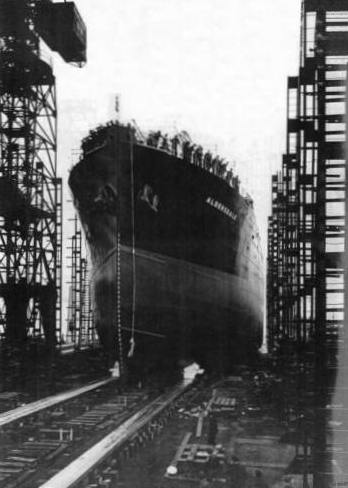
The launch of RFA Aldersdale
Official Number 165572
Class: 1st DALE CLASS Freighting Tanker
Pennant No: X34
Laid down: September 1936
Builder: Cammell Laird & Co Ltd, Birkenhead
Launched: 7 July 1936
Into Service: 17 September 1937
Out of service: 7 July 1942
Fate: Sunk by torpedo
Items of historic interest involving this ship: -
Background Data: Originally there were to have been nineteen ships in this Class. The first six were purchased off the stocks from the British Tanker Co Ltd whilst building at the instigation of the then Director of Stores, Sir William Gick, who was concerned at the age of the RFA Fleet and ships that were approaching the end of their economic lives. A further two ships were purchased from Anglo Saxon Petroleum Co Ltd for evaluation purposes. At the outbreak of WW2, a further eleven ships were acquired from the MoWT war programme although one of these, to have been named EPPINGDALE, which had been registered in London as EMPIRE GOLD on 21/02/43 and intended for transfer to the Admiralty for manning and management as an RFA and despite five Officers being appointed to her, the intended transfer was cancelled the following day and she thus never entered RFA service. Three of this Class were converted into LSG’s and were then reconverted back into tankers at the end of the War.
1936 ordered by the British Tanker Company Ltd, London
7 July 1937 launched by Cammell Laird & Co Ltd, Birkenhead as Yard Nr: 1025 named ALDERSDALE for the Admiralty
8 July 1937 the Sunderland Daily Echo & Shipping Gazette reported -

25 August 1937 Captain Charles H Noel RFA appointed as Master
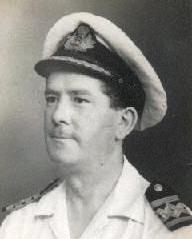
Captain Charles H Noel RFA
14 September 1937 Mr William R Forster RFA appointed as Chief Engineer Officer

Chief Engineer Officer William R Forster RFA
17 September 1937 completed and taken over from the builders
18 September 1937 commenced her maiden voyage from Greenock to Abadan
1 December 1937 arrived at Plymouth from Abadan
7 December 1937 sailed Plymouth to Birkenhead
January 1938 fitted with defensive armament
15 September 1938 Mr Mortimer J Lawrence RFA appointed as Chief Engineer Officer
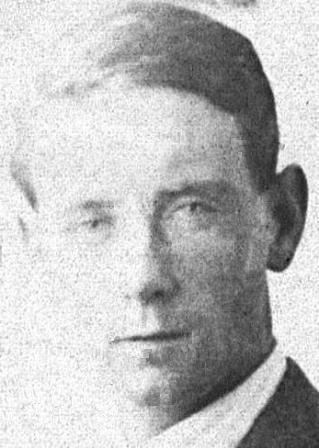
Chief Engineer Officer Mortimer J Lawrence RFA
3 November 1938 arrived at Plymouth from Trinidad
November 1938 defensive armament fitting completed by the builders and gun trials carried out
22 November 1938 Captain Harry W R Fowler RFA appointed as Master
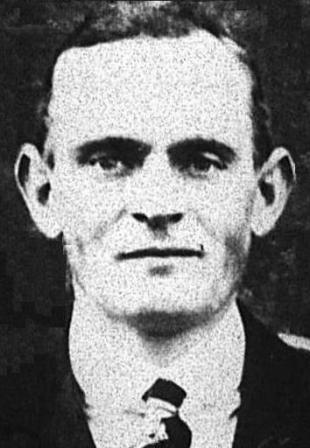
Captain Harry W R Fowler RFA
26 November 1938 sailed Liverpool for Abadan
9 May 1939 arrived at Swansea
14 May 1939 arrived at Liverpool from Swansea
28 May 1939 Captain Thomas H Card RFA appointed as Master
3 June 1939 sailed from Liverpool for Abadan
27 June 1939 sailed Abadan
5 September 1939 sailed Port Said in convoy Blue 1 which also contained RFA ABBEYDALE to Gibraltar arriving on 20 September 1939
26 September 1939 sailed Gibraltar in escorted convoy HG1 which also contained RFA‘s ABBEYDALE and SERBOL bound for Liverpool
29 September 1939 detached from escorted convoy HG1 for Trinidad
7 October 1939 at Port of Spain, Trinidad
10 October 1939 sailed Trinidad independently to Freetown arriving 29 October 1939
3 November 1939 sailed Freetown to Trinidad independently arriving on 14 November 1939
18 November 1939 sailed Trinidad to Halifax arriving on 26 November 1939
4 December 1939 sailed Halifax in escorted convoy HX11 to Plymouth with FFO arriving 18 December 1939
26 December 1939 sailed Plymouth independently to Cardiff arriving the next day
4 January 1940 under repair at Cardiff. Repairs completed 12 January 1940
12 January 1940 sailed Cardiff independently to Milford Haven arriving the same day
12 January 1940 sailed Milford Haven to join escorted convoy OB70 which was reformed at sea as convoy OG014 sailing to Gibraltar arriving 19 January 1940
24 January 1940 sailed Gibraltar in escoted convoy HG16 to Portland arriving 2 February 1940
11 February 1940 sailed Portland in escorted convoy OA89 to Plymouth arriving the same day
12 February 1940 sailed Plymouth rejoining escorted escort convoy OA89. This convoy dispersed the next day and then Aldersdale sailed independently to Trinidad arriving 28 February 1940
2 March 1940 sailed Trinidad independently to Halifax arriving 14 March 1940
18 March 1940 sailed Halifax in escorted convoy HX28 to Scapa Flow arriving 3 April 1940
10 April 1940 arrived at Sullom Voe escorted by the French destroyers Brestois and Boulonnais
11 April 1940 sailed Sullom Voe to Scapa Flow escorted by HMS HYPERION
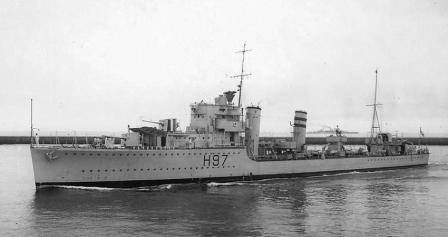
HMS HYPERION
19 April 1940 sailed escorted from Scapa Flow to the Faroe Islands arriving 24 April 1940
24 April 1940 was damaged by the cruiser HMS AURORA while serving in Northern Waters. Arrived at Skelfjord escorted by the destroyers HMS's BEAGLE and VOLUNTEER
4 May 1940 sailed Skelfjord escorted by the destroyer HMS DIANA for Scapa Flow
9 May 1940 arrived the River Clyde anchorage
15 May 1950 sailed the Clyde anchorage for Glasgow arriving the same day
27 May 1940 sailed the Glasgow for the River Clyde anchorage
30 May 1940 sailed escorted by the anti submarine trawler ELM from the River Clyde to the Scapa Flow arriving 2 June 1940
25 July 1940 under repair on the River Clyde. Repairs completed 8 August 1940
17 September 1940 sailed from the Clyde in convoy WN16 bound Methil and detached for Scapa Flow with a cargo of FFO
2 October 1940 Captain Thomas C Robinson RFA (Lieutenant Commander RN (Rtd) appointed as Master
4 October 1940 in collision with the British CIRCE SHELL
25 November 1940 in collision with the British ATHELEMPRESS
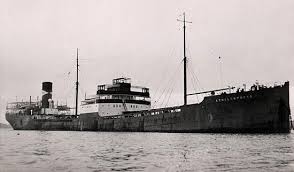
ATHELEMPRESS
22 December 1940 in collision with the British Booth Line ship ss BENEDICT
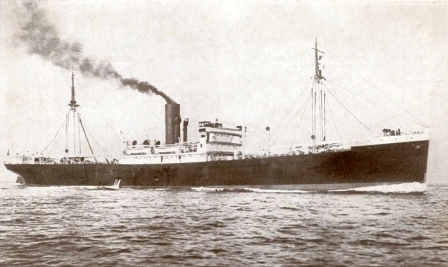
BENEDICT
29 November 1940 RAS'ed, as an experiment, with HMS EXMOOR using the stirrup method while both ships were at anchor
22 February 1941 at Scapa Flow with HMAS NIZAM alongside being refuelled

HMAS NIZAM
28 February 1941 Mr William J Brown RFA appointed as Chief Engineer Officer
14 March 1941 at Scapa Flow with HMAS NESTOR alongside being refuelled

HMAS NESTOR
19 March 1941 at Scapa Flow with HMAS NESTOR alongside being refuelled
24 March 1941 at Scapa Flow with HMAS NESTOR alongside being refuelled
17 April 1941 conducted OAS trials with the cruiser HMS EXETER in the open sea
19 April 1941 was allocated Fleet Attendant Duties in Norwegian Waters along with RFA OLIGARCH. She was the initial support ship for the 5 or 6 Halcyon Class minesweepers based in the Kola Inlet which were used to cover the homeward-bound convoys
22 May 1941 Captain David A Rees RFA appointed as Master
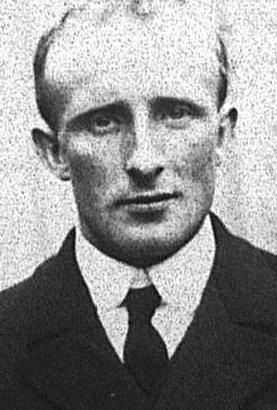
Captain David A Rees RFA
3 June 1941 arrived at Reykjavik, Iceland with an escort
11 August 1941 sailed Havalfjord with escort
12 August 1941 allocated for Operation Dervish - the first Convoy carrying aid to Russia
13 August 1941 arrived at Seidisfjord still with the escort
21 August 1941 sailed Hvalfjordur on Operation Dervish- the convoy consisted of six ships
31 August 1941 Operation Dervish Convoy arrived Archangel.
1 September 1941 while supporting the 1st Cruiser Squadron she touched an uncharted shoal in Sardau Bay, Spitzbergen. A Notice to Mariners was issued by the Hydrographer
15 September 1941 arrived Hvalfjordur escorted by the destroyer HMS ESCAPADE
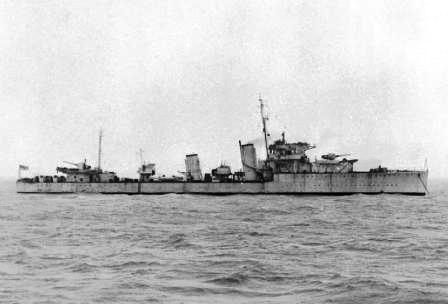
HMS ESCAPADE
23 September 1941 sailed Reykjavik, Iceland with an escort to the River Clyde arriving 29 September 1941
16 December 1941 sailed the River Clyde independently to Loch Ewe arriving 18 December 1941
19 December 1941 sailed Loch Ewe in an unescorted Convoy UR2
25 December 1941 Convoy UR2 arrived Reykjavik where her superstructure was damaged when she was fouled by the Norwegian tanker SVENOR which had broken adrift during a squall
7 March 1942 sailed Reykjavik, Iceland with an escort
15 March 1942 her bows were badly damaged by ice
26 March 1942 sailed Oban for Reykjavik to join escorted Convoy PQ14 arriving on 31 March 1942
8 April 1942 sailed Reykjavik as Escort oiler on convoy PQ14 for Murmansk and sheduled to arrive on 19 April 1942
13 April 1942 the Convoy ran into heavy ice consisting of growlers and were unable to extricate themselves due to dense fog. 11 ships, including RFA ALDERSDALE were so badly damaged by ice that they were forced to return to Hvalfjordur
20 April 1942 sailed Seidisfjord with the escort HMS WHEATLAND
24 April 1942 arrived the Clyde under the escort of HMS WHEATLAND
3 May 1942 under repair on the Clyde - repairs completed 4 June 1942
5 May 1942 Captain Archibald Hobson RFA appointed as Master
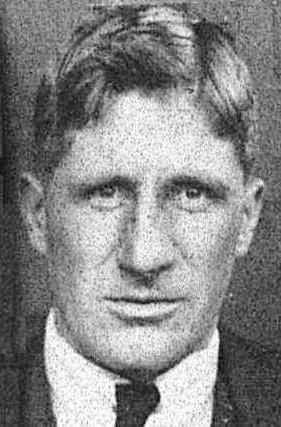
Captain Archibald Hobson RFA
16 June 1942 sailed from the Clyde under escort to Loch Ewe arriving 19 June 1942
22 June 1942 arrived Reykjavik under escort
27 June 1942 sailed Hvalfjord, Iceland in escorted convoy PQ17 to Arkanglesk, Russia the Convoy consisting of 39 merchantmen along with RFA GRAY RANGER
30 June 1942 served as a replacement for RFA GRAY RANGER which had suffered damage after a growler had split her bow open and she had to return to port for repairs
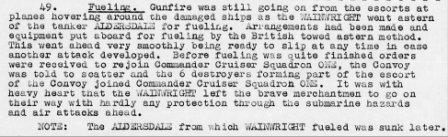
4 July 1942 RASed astern USS Wainwright (DD419). Whilst refuelling the destroyer HMS SOMALI, Convoy PQ 17 was ordered to scatter by the Admiralty due to heavy German units believed to be putting to sea
5 July 1942 bombed by 3 Junkers aircraft from astern in position 77°00N 22°00E in the Barents Sea. She was carrying a part cargo of aviation spirit. The first and second scored some near misses which shook but did not stop her and they machine gunned the decks and bridge. The 3rd plane came in at an even lower angle of attack and a terrific explosion appeared to lift the ship out of the water and her engines were wrecked and immediately stopped and she rapidly started taking in water and abandoned by the crew. 54 of the survivors were picked up by HMS SALAMANDER
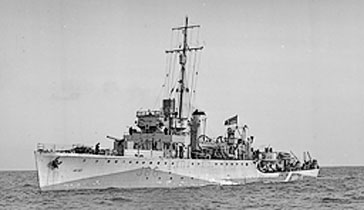
HMS SALAMANDER
6 July 1942 Captain Don P Moon USN, Officer in Command of the US Navy's Destroyer Squadron Eight on USS Wainwright (DD419) after being directed to cease protecting the merchant ships which formed convoy PQ17 at the time the Convoy was ordered to scatter, said, in his official report -
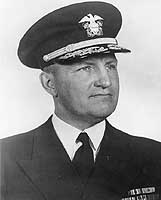
Captain Don P Moon USN (as a Rear Admiral later in the war)
7 July 1942 the drifting wreck was attacked by gunfire by German submarine U457 (Fregattenkaptan Karl Brandenburg) at 75.00°N 45°00E which then fired 1 torpedo and the wreck broke in two and sank stern first at about 0700 local time - there were no fatalities
24 August 1942 at Kola Inlet - USS Rodman (DD456) received onboard the following officers and crew members from RFA Aldersdale for passage to the River Clyde
Captain Archibald Hobson RFA, Chief Engineer Officer W J Brown RFA, Chief Officer G O W Evans RFA, LS A Chapman, AB J Davis, AB A Tomlinson, AB H Postlethwaite, AB H Tubey, AB T Urwin
22 December 1942 in the London Gazette of this day on page 5568 Captain Archibald Hobson RFA, Chief Engineer Officer William John Brown RFA and Chief Officer Griffiths Owain Wyn Evans RFA were each awarded the Distinguished Service Order and Boatswain Dennis Vance and Pumpman Kenneth Richardson were both awarded the Distinguished Service Medal
Notes:
1. She was originally destined to be one of a Class of what was to become 93 tankers over a 15 year period.