Ire fortiter quo nemo ante iit.

 
Remembering
Reilly, Michael, Boatswain, RFA Race Fisher, Died 4th of September 1917

RFA Historical SocietyBringing the History and Honour of the Royal Fleet Auxiliary Service to a wider audience, recording the deeds of the Service and the people who have served in it.

As one of the 16 guests currently online we hope that you enjoy reading about some of the rich history of the Royal Fleet Auxiliary Service, its ships and the men and women throughout the 105 years of it's existence.

We will endeavour to add more for your enjoyment, as and when it becomes available, but would like to ask you, our audience for stories from your time at sea, remember, your story of today's RFA, is tomorrows history and we would like to record as much as possible, so this site is perpetuated for future generations.

Ship Of The Month

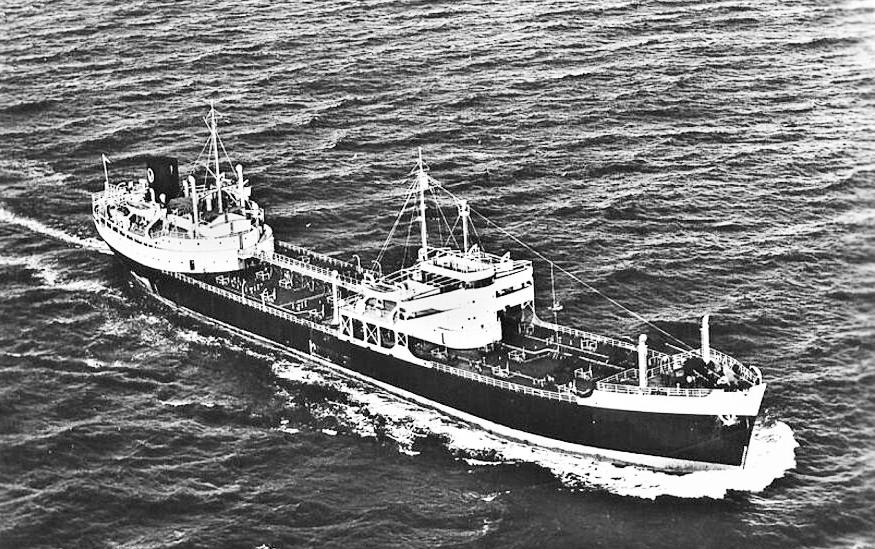
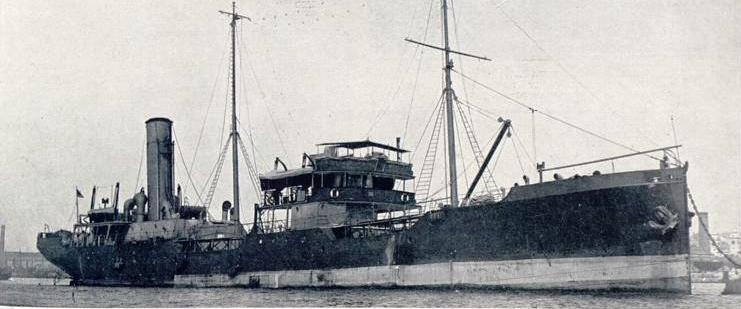
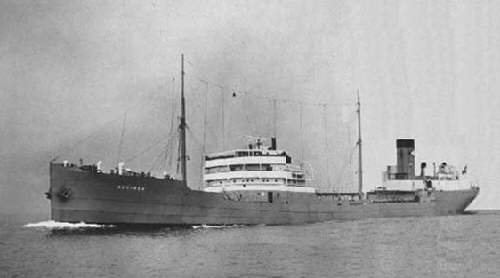
RFA Mixol

Previous name: 
Subsequent name:               Whitebrook.  Irene M

Class:

Pennant No:                            X 02  /  X43  /  A143

Laid down:
Builder:                                    Caledon Ship Building & Eng Co.

Launched:                               17 July 1916
Into Service:                            October 1916 
Out of service:                         1948
Fate:                                          Sold commercially


Items of historic interest involving this ship: -


1 September 1916 Lieutenant W H Harvey RNR appointed in command. He signed off on 17 August 1917 to take command of RFA Vitol and subsequently RFA Dredgol. He was demobilised on 28 January 1920

19 September 1916 4th Engineer Albert T Warne RFA was appointed to RFA Mixol. He was appointed as 3rd Engineer on 31 January 1917 and 2nd Engineer on the 27 July 1917. He was also appointed Engineer Sub-Lieutenant RNR


AT_Warne_1


Engineer Sub-Lieutenant Albert T Warne RNR


Mixol_DisA


Engineer Sub-Lieutenant Albert T Warne RNR's discharge book

Note the ship's rubber stamp shows it's name as HMS Mixol Royal Fleet Auxiliary


17 May 1917 Fireman P Shinnock logged as deserted while the ship was at Glasgow

12 August 1917 Lieutenant William J D Read RNR appointed in command He signed off on 16 May 1918 to take command of RFA Thermol where he signed off on 31 December 1919.

20 September 1917 Ship's Cook  H Humphreys logged as deserted.

18 March 1918 Engineer Sub-Lieutenant Albert T Warne RNR discharged at Scapa Flow to RFA Burma

16 May 1918 Lieutenant D E A Jones RNR appointed in command. He signed off on 23 January 1919 when he took command of RFA Black Dragon in Gibraltar.


untitled

Lieutenant D E A Jones RNR


1 November 1919 Captain H Young Third RFA appointed Master until 31 March 1920. He then took command of RFA Philol

1 April 1920 Chief Officer W Seymour Biggs RFA appointed as Acting Master until 16 April 1920

18 April 1920 Captain W Watson RFA appointed as Master - resigned from Admiralty Service 28 April 1920

28 April 1920 Captain R D Williams RFA appointed as Master previously on RFA Appleleaf.

7 August 1920 Master, Officers and crew signed a Home Trade Agreement

30 October 1920 on Yard Craft Agreement

3 September 1939 in reserve at Devonport

13 September 1939 sailed Rosyth for Scapa Flow under the escort of HMS Matabele - arrived on 14 September 1939

7 May 1940 Captain E Mills RFA appointed as Master

26 May 1940 Mr F Easey, RFA, Chief Engineer Officer discharged dead. He is buried in the New MacHar Cemetery, Aberdeenshire


Easey_F

Courtesy and © of The War Graves Photographic Project


11 November 1940 Mr L Cowell RFA appointed as Chief Engineer Officer

2 December 1940 sailed Methil in convoy EN35 to Oban - arrived on 6 December 1940

7 December 1940 arrived  the Clyde

10 March 1941 under repair at the Clyde

November 1941 Captain E E A Le Sage RFA appointed as Master

13 November 1941 Captain E W J Rousell RFA appointed as Master

25 February 1942 Mr R B Burgh RFA appointed as Chief Engineer Officer

9 September 1942 Captain E M Rae RFA appointed as Master

2 January 1943 Mr J Cook RFA appointed as Chief Engineer Officer

6 March 1943 sailed Loch Ewe in convoy WN401 to Methil  - arrived on 7 March 1943

6 May 1943 sailed Methil in convoy EN225 to Scapa Flow  - arrived on 7 May 1943

19 February 1944 Mr C N Ansell OBE RFA appointed as Chief Engineer Officer

18 April 1944 sailed Loch Ewe in convoy WN572 to Methil  - arrived 20 April 1944

28 December 1945 HM King George VI inspected the Master, Officers and men of the Mixol and the Black Ranger on the quarter deck of HMS Rodney while reviewing the Home Fleet in the Firth of Forth off Rosyth.

14 February 1946 Captain A J D Gosney RFA appointed as Master

16 April 1946 Mr J Hall RFA appointed as Chief Engineer Officer

3 August 1947 Mr G A Calvert RFA appointed as Chief Engineer Officer

19 September 1947 Captain Douglas S Norrington RD RFA (Lieut-Commander RNR) appointed as Master

27 December 1952 arrived at Antwerp for breaking up

 
ROYAL NAVY 1 - KRIEGSMARINE 0

In early 1940 the Dutch ship builders Rotterdam Dry Dock Company at Rotterdam were building a 10,746 ton tanker to be named Papendrecht for her owners Van Ommeren’s Scheeps. (Yard No 220). The ship was launched on 17 April 1940 and construction continued but on 10 May 1940 German Forces invaded Holland and the country surrendered six days later.

Read more...
 
“O” Boat Engine rooms

The RFA Service having passed through the Wave, Old Tide and New Tide classes of steam ship from 1945 to 1963 saved the best to the end before all RFA steam ship construction ceased in favour of motor ships. The three ships built in 1965 were easily the best steam RFA’s and possibly some of the best British steam ships ever built. I cannot comment or Resource or Regent as I never went onboard them but I do know they were a totally different animal, Foster Wheeler boilers and English Electric turbines – one wonders why the change from reliable B & W boilers and PAMETRADA turbines successfully used in the New tides and all the additional training necessary for two distinct classes of ship.

Read more...
 
Convoy Rescue Ships Service

The Background to the Requirement for Rescue Ships:


by


James R. Smith

 RFA Historical Society member


During WW2 the British merchant Navy suffered enormous losses in both ships and personnel – a total of 32,952 registered seamen which equated to a 17.8% loss of total strength.

Read more...
 
The story of the ‘Darkdale’


The following story is a very moving account of the sinking of the tanker ‘RFA Darkdale’ off Saint Helena on the early morning 22nd October 1941, it is told by Arthur ‘Steve’ Stevens a native of Saint Helena, who served as a Merchant Seaman during the Second World War, later settling in England.  The story tells of the events of that tragic morning, as well as Steve’s endeavours to erect a permanent memorial to those who lost their lives.


Read more...
 
Bombed but not out
Bombed but not out
Convoy WP 169 left Milford Haven on the 9th June 1942, amongst the ships on this small coastal convoy was RFA Ennerdale bound for Portsmouth where the convoy was due on the 11th June.
Image Ennerdale
RFA Ennerdale
On the evening of the 10th June whilst the convoy was approximately 10 miles from Portland Bill, they were attacked by up to nine enemy twin engine bombers.  As the enemy planes swept across the starboard beam of Ennerdale they were engaged by the starboard guns and the fire was so accurate that the planes veered off across the stern releasing bombs as they went, the bombs fell in the sea close to the stern off the ship, but did no immediate damage.
Image Heinkel 111
German Heinkel 111
The planes then climbed away from the ships in preparation for another attack, though before they came round again an object was seen off the port quarter.  Within a few minutes one of the enemy bombers was spotted making a run in over the starboard bow, as it came within range all of Ennerdale’s guns opened fire and the bomber was seen to sustain damage to the port wing of the aircraft.  The plane dropped a stick of one or two bombs close to the starboard bow, the bombs passed under the ship and detonated close to the port side, a tremendous concussion was felt throughout the ship and a plume of water was seen to shoot up to about 75 feet, as it feel back it cascaded over the ship flooding the bridge.
Image Convoy under attack
Convoy under attack
A few minutes later another plane approached the convoy from ahead and was again engaged by all guns, this plane was also hit by very accurate fire from the convoy and passed close to Ennerdale without dropping his bombs. As the attacking aircraft flew away the ship resumed her course, and it was then found that she was taking in water in one of the deep tanks which fortunately was empty at the time.
On closer inspection it was found that the shell plating on the port side between frame 168 and 170, was dished in, inspection of the forward pump room found that the three cargo pumps had also received damage from the bomb blast, the damage put this pump room out of action as the forward pump had its steam lines split at the connections and the pipe cradles were also damaged, as well as the cylinder feet, suction valves and three way casting for the filling and discharge lines.  The centre pump, which was used for lubricating oil, had the cylinder feet and the three way valve damaged and unserviceable, and the after pump had sustained damage to the mountings.
The damage was reported to the Admiralty, who decided to put her into a dry dock to assess the damage that could not be seen, repairs were quickly made to the ship and she was soon back at sea and steaming for the 

Convoy WP 169 sailed from Milford Haven on 9th June 1942, amongst the ships on this small coastal convoy was RFA Ennerdale bound for Portsmouth where the convoy was due on 11th June.

Read more...
 
One stop replenishment is history


For those familiar with the modern RFA fleet the sight of the two One-stop replenishment ships, RFA’s Fort Victoria and Fort George are an awe inspiring sight, these huge vessels are capable of supplying fuel, food, ammunition and other stores to Royal Navy ships whilst underway, and can extend the operational range of modern warships to allow them to conduct protracted operations anywhere in the world.

Read more...
 
Seven crew jump ship – literally

The Police in the USA reported in July 1954 that seven Chinese members of the crew of RFA Surf Pioneer had jumped ship while she was berthed at Baton Rouge, Louisiana loading oil.


Read more...
 
The Editors of www.historicalrfa.org and the Committee of the RFA Historical Society wish to make clear that this site is the product of private research and is not affiliated to any other organisation.  Any opinions expressed on this website are those of the individuals concerned and may not necessarily reflect those of the Editors.

Should any person wish to use or copy any part of this site, it's images or articles then written permission must be obtained from the Editors.


Powered by WebRing.